Alaska Beacon

Alaska Beacon is part of States Newsroom, a network of news bureaus supported by grants and a coalition of donors as a 501c(3) public charity. Alaska Beacon maintains editorial independence. Contact Editor Claire Stremple for questions: info@alaskabeacon.com. Follow Alaska Beacon on Facebook, Bluesky and Twitter.

Gubernatorial candidates spar over gas pipeline, fiscal plans and other issues at Anchorage debate

Gubernatorial candidates at an Anchorage debate on Tuesday use signs to indicate their votes on a ballot measure about a new constitutional convention. Opposing the idea of a convention to rewrite the state’s constitution are, from left, former Gov. Bill Walker, an independent, and former state Rep. Les Gara, a Democrat. In favor of the convention are incumbent Gov. Mike Dunleavy and former Kenai Peninsula Borough Mayor Charlie Pierce, both Republicans. The four appeared at a debate held by the Resource Development Council for Alaska. (Photo by Yereth Rosen/Alaska Beacon)

Gov. Mike Dunleavy tangled with his challengers Tuesday in an Anchorage debate that featured the first joint appearance of all four gubernatorial candidates on the ballot.

At the debate, held by the Resource Development Council for Alaska, sparks flew over several issues. One was the long-desired but never-built pipeline shipping massive reserves of North Slope natural gas to markets.

Republican Dunleavy accused independent Bill Walker, his predecessor and current challenger, of pursuing a project that was an “illusion” and “nothing real.” And the incumbent governor said, in contrast, his progress has been solid.

“We’ve never been closer to a gasline than we are today,” he said, touting past permitting, federal loan guarantees and ongoing meetings in Asia and Texas.

“This will be the first time and we’re this close to a private-sector-led project, as opposed to a project in which members’ of this organization’s arms have been twisted and some maybe threatened,” he said. “Don’t be surprised if in the very near future — the very near future – there’s an announcement that’s real, not one that’s make-believe.”

Walker accused Dunleavy of abandoning momentum for a liquefied natural gas project that had been building for years.

When he left office in 2018, Walker said, there were 15 memorandums of understanding signed – albeit non-binding – that included giant companies like Exxon Mobil and Tokyo Gas Co. Ltd.

“The largest buyers of LNG in the world all came and signed up and said we want a piece of this project. After I left, those were allowed to expire. I received calls from Mr. Hirose, the president of Tokyo Gas, about a month when I was out of office, that said, `What happened, our calls aren’t returned, what’s going on?’”

Former Rep. Les Gara, the Democratic candidate for governor, scoffed at Dunleavy’s promise of a big announcement.

“You haven’t heard a word about the gas pipeline from this governor for his first three years. Only during this election have you started to hear interest again in a gasline. Come on,” Gara said to the audience.

He said that while he has supported various governors’ gas pipeline plans, the project has to be modernized for an age when carbon emissions and global climate change are top concerns.

“You have to get out of the 1960s mindset. If you’re just going to promote the same old project, it’s not going to happen, just like it hasn’t happened,” Gara said. He urged the use of emerging technology to sequester carbon resulting from natural gas production. “The world is asking for clean energy. They’re not asking for 1960s energy anymore.”

Former Kenai Peninsula Borough Mayor Charlie Pierce, making a rare debate appearance, did harken back to decades past, including the boom oil and gas years in Cook Inlet. Now there’s a possibility of LNG imports into a region that once was an exporter, he said. “I thought that would be a very embarrassing day in the state of Alaska where we have a tanker, an LNG tanker that fills from a port, probably from Canada, produced in Canada, that offloads into Alaska,” he said.

Sparks also over fiscal issues, mostly between Gara and Dunleavy

Gara said the lack of a meaningful fiscal plan has cascading effects through the state, including no dependable capital budget, lackluster funding of education and hardships on the less fortunate, and “people are leaving in droves.” Any recent bump up in the Alaska fiscal situation is due only to Russia’s invasion of Ukraine and subsequent oil price increase, which “is not a fiscal plan,” he said. He was particularly critical of Dunleavy’s attempt in 2019 to cut 41% of state funding for the University of Alaska system.

Dunleavy defended his fiscal record. “We are in better shape today fiscally than we were when I came into office. I inherited a $1.6 billion deficit,” he said. Since then, the state’s bond rating has improved and other indicators are up, he said. “We’re in better shape today than we were four years ago, and we’ll be in even better shape four years from now, when I’m your governor.”

Walker said he coped with hard fiscal times. When he got into office in 2014, Alaska North Slope crude was selling for $26 a barrel. He said he helped shepherd in a new approach to drawing from the Alaska Permanent Fund, the state’s oil-wealth fund, that brought a $4.3 billion deficit to about $1 billion and drastically reduced the state’s dependence on fluctuating oil revenues. The new system depends on drawing a fixed percentage of the fund’s total market value each year.

“I come back into office, we’ll finish that job on having a fiscal plan,” he said.

In the aftermath of Russia’s invasion of Ukraine, Alaska North Slope crude prices jumped above $120 a barrel at points in the spring and summer but more recently have hovered in the low- to mid-90s, according to the state Department of Revenue.

The debate covered other issues, including fisheries management, workforce development, mining, timber and promotion of tourism.

Gara blasted Dunleavy for his support of the Pebble Mine, which the Democrat said damages Alaska’s reputation, among other things.

“It’s wrong to push the Pebble Mine when that’s a danger to the greatest remaining salmon runs in the world. That’s what this governor is doing. He’s giving this state a black eye.” He said.

Gara also blasted Dunleavy’s fishery policies, which he said are allowing over 1,000 tons of halibut and over 500,000 chum salmon to be dumped “dead to the bottom of the ocean.” Dunleavy responded by pointing to the bycatch task force he appointed to study the problem and make recommendations.

The debate featured what might have been Dunleavy’s clearest statement yet on his position on a rewrite of the state’s constitution.

In a lightning-round session, Dunleavy and Pierce both held up “yes” signs conveying their intention to vote for a new constitutional convention. Walker and Gara held up “no” signs to convey their intentions. The question of holding a new constitutional convention goes before Alaska voters every 10 years, and so far voters have rejected the idea.

Tuesday’s event was the first debate event that featured Pierce with all three of the other candidates. Pierce has been elusive, and Dunleavy has committed to attending only five debates, one of which he missed as he engaged with the response to the mid-September storm in western Alaska.

When he spoke, Pierce spend a lot of time reminiscing about past good times in Alaska, including catches of big salmon from Kenai River runs that are dwindling, North Slope oil production that peaked in the late 1980s at 2 million barrels a day, and the large amounts of federal money that the late U.S. Sen. Ted Stevens, who died in 2010, used to secure for Alaska.

In his closing statement, Pierce invoked the late Rep. Don Young and urged conservative votes in not just the gubernatorial race but also in the race for the U.S. House seat now held by Democrat and special election winner Mary Peltola.

“I’m going to take the liberty to tell you that I love the color red,” Pierce said. He asked the audience to consider what Young “would tell you about his replacement” and to vote their consciences. “What I’m going to encourage you to do is rank the red,” he said, a phrase Alaska Republicans have used to urge voters to rank party members in the election.

This story has been updated to correct the day of the debate, which was Tuesday.
White House Arctic strategy puts new emphasis on national defense and threats posed by Russia

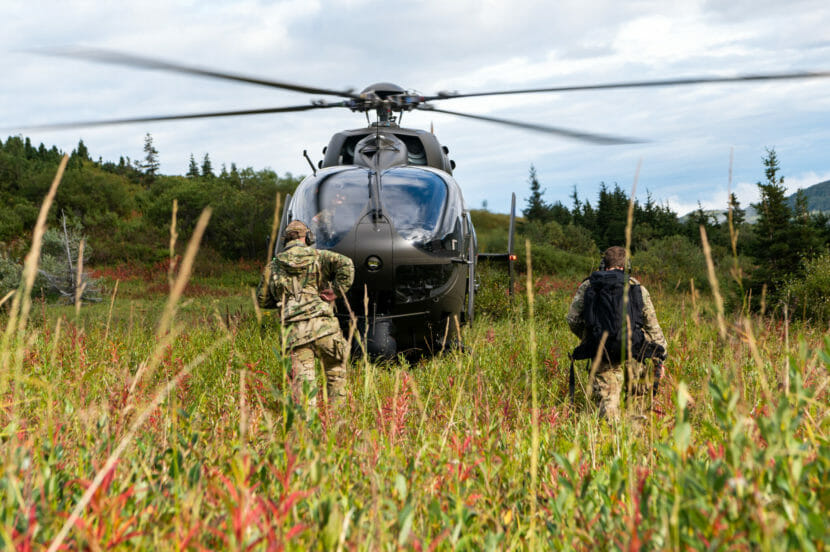
U.S. Air Force Tech. Sgt. Anthony Downs and Staff Sgt. Derek Bolton, staff weather officers assigned to one of the AIr Force’s combat weather squadrons, walk toward an Alaska National Guard helicopter during training on Aug. 25 at Joint Base Elmendorf-Richardson in Anchorage. The new White House Arctic strategy released on Friday emphasizes national defense and the threats posed by Russian aggression. (Photo by Senior Airman Patrick Sullivan/U.S. AIr Force)

A new Arctic strategy released on Friday by the White House acknowledges some big changes in the region over the past decade — the rise of military threats posed by Russia, the largest Arctic nation.

A heavier emphasis on national defense is the biggest difference between the new Biden administration strategy and its predecessor, released in 2013 by the Obama administration.

The 15-page document says the strategy “acknowledges increasing strategic competition in the Arctic since 2013, exacerbated by Russia’s unprovoked war in Ukraine, and seeks to position the United States to both effectively compete and manage tensions.”

Security is identified as the first of four strategic pillars guiding White House policies on Arctic affairs. The others are climate change and environmental protection, sustainable economic development and international cooperation and governance.

While the 2013 strategy also identified security as one of the policy pillars, that document did not mention Russia as a security threat. The new strategy, in contrast, makes multiple specific references to Russia.

“Russia’s war of aggression against Ukraine has rendered government-to government cooperation with Russia in the Arctic virtually impossible at present,” the new strategy says in one of those references.

To achieve national strategic goals, the new White House document lists several concrete policies.

To help Alaska Native communities threatened by climate change, for example, the administration plans to make it easier to get access to federal resources to build resilience. That includes more coordination work with tribal governments, Native corporations, the Alaska state government and other entities, the document says.

To promote economic development, the White House “will support development of much-needed infrastructure in Alaska that serves responsible development, food security, stable housing, climate resilience, and national defense needs as driven by requirements,” the document says. It lists telecommunications and the planned deep-draft port in Nome as key infrastructure investments.

To boost security and protect the national interest, “the United States will enhance and exercise both our military and civilian capabilities in the Arctic as required to deter threats and to anticipate, prevent, and respond to both natural and human-made incidents,” the new strategy says.

Alaska’s two U.S. senators gave the new strategy mixed reviews.

In statements, Sen. Lisa Murkowski and Sen. Dan Sullivan, both Republicans, said they welcomed the new emphasis on national defense.

Sen. Lisa Murkowski said the strategy contains many “positive elements.”

“For example, I’m pleased with the administration’s emphasis on security, infrastructure, climate adaptation and resilience, greater consultation with the State of Alaska and Alaska Native Tribes and Corporations, and its elevation of Arctic diplomacy through the creation of the Arctic Ambassador position — all of which I have called for,” she said in a statement. The heavier emphasis on military security is appropriate, as has been demonstrated by the recent incident in which two Russians sailed over the Bering to Alaska’s St. Lawrence Island to request asylum, she said.

However, she criticized it for what she characterized as too little discussion of resource development and an omission of oil and gas development.

Sullivan, in his statement, said he appreciated the “full-throated support for increasing America’s operational capabilities, infrastructure, and Coast Guard and naval vessels in the Arctic, and for elevating the voices and interests of the people who actually live in the Arctic—Alaskans who’ve inhabited these lands for millennia.”

However, he faulted the document for its emphasis on climate change, which he said shows the Biden administration “will continue to focus on shutting down responsible resource development, like oil, natural gas, and critical minerals in Alaska.”

Sullivan, in his statement, dismissed the 2013 strategy as being “filled with mostly pictures,” though that Obama administration document did not include a single image other than the presidential seal. However, a Department of Defense Arctic strategy released in November of 2013 did contain illustrations.

This story originally appeared in the Alaska Beacon and is republished here with permission.

As people die in Alaska prisons, reform advocates are calling for independent investigation

Goose Creek Correctional Center
Goose Creek Correctional Center. (Photo by Ellen Lockyer/Alaska Public Media)

Prison reform advocates are calling on Alaska Gov. Mike Dunleavy’s administration to order an independent review of the state Department of Corrections. The department recently reported its 15th in-custody death this year. William Hensley III, 34, died on Sunday at Goose Creek Correctional Center in Wasilla after a month in custody.

With this death, Corrections matches the highest number of in-custody deaths the department has seen in the past decade. In 2015, 15 people died in Corrections custody.

“These are people and they’re dying at an alarming rate,” said Angela Hall, founder of Supporting Our Loved Ones Group, which provides peer support for families of incarcerated people. “We’re in the dark a lot of times about why these deaths are occurring.”

Hall is also a member of the American Civil Liberties Union of Alaska’s Prison Reform Action Network. Both Hall and the ACLU of Alaska want to see an independent review of the Department of Corrections, similar to the administrative review then-Gov. Bill Walker requested in 2015, which found numerous problems contributing to deaths within the state’s prisons and jails.

“You have to look at the system holistically because other conditions of confinement issues can lead to dangerous situations for incarcerated people and staff,” said Megan Edge, communications director for the ACLU of Alaska and director of the ACLU of Alaska’s Prison Project.

“There are people dying in DOC custody. This is not a one-off situation; it’s related to other things and how the system is holistically functioning,” she said.

The ACLU of Alaska Prison Project, which launched last month, is developing a response plan.

“We are working with families whose loved ones have died in state prisons and jails and working to contact more. We are coordinating our efforts with other legal partners and community members. Together, we hope to find answers and develop meaningful solutions that put an end to the practices that have allowed 15 people, who were not sentenced to death, to die in the Alaska prison system,” Edge said.

Governor spokesperson Jeff Turner said in an email Tuesday, “The Governor’s office has not received a request from the ACLU of Alaska for a review of DOC,” and did not respond when asked if a review is something the governor’s office would consider doing in response to the high number of in-custody deaths.

Advocate wants answers

While some deaths of people in incarceration is expected, Hall said what’s been happening recently is different and concerning.

“It seems to be that a lot of these recent ones haven’t been there very long and so we don’t know what the cause is. It seems like there might be an issue with how people are being funneled into the jails and into the prisons, when they really probably need to be treated for health issues,” she said.

Of the 15 deaths to occur in Corrections custody so far this year, several individuals have been in their 20s or 30s and died after only a short time in state care. Two deaths in August occurred after less than 24 hours.

From the time someone is initially arrested to when they’re transferred to Corrections to being in Corrections care, Hall suspects there are issues that need to be addressed.

“I’m curious as to where this breakdown is occurring? Is it when they’re initially taken into custody? Or is it when they get transferred to DOC?” she said. “We’re not just supposed to ignore the fact that these folks may have some mental health issues or medical issues that need addressing, and not just stick them in a jail cell or a prison cell and ignore the fact that they may be really ill.”

Like several others to die in Corrections custody this year, Hensley was unsentenced. He had been in custody since Sept. 1, according to the department’s press release. About half the people in custody in Corrections facilities are unsentenced.

“This is really disturbing because these people haven’t even been convicted and tried or sentenced for a crime, and here they are dying in custody,” Hall said.

Corrections internally reviews each death

The Alaska State Troopers investigate every in-custody death and the State Medical Examiner’s Office determines the cause. Citing confidentiality, Corrections does not release medical information.

In addition to the troopers, Corrections conducts its own confidential internal investigation “to determine the cause and circumstances surrounding the death as well as any related deficiencies in policies, procedures or practices,” according to its death of prisoner policy and procedure.

“DOC takes every death seriously which is why we conduct an internal review to ensure policies and best practices are followed. Each death that occurs in a DOC facility profoundly affects staff and inmates alike,” Betsy Holley, Alaska Department of Corrections public information officer, said in an email.

Holley said Corrections remands close to 30,000 individuals each year, “many of whom enter our facilities with preexisting, and in some cases, very complicated medical, mental health and substance use related issues.”

Holley said people who are incarcerated in state facilities are “an exceptionally ill and complex patient population.”

Corrections makes every effort to meet the needs of the population by assessing an individual’s needs on intake, upon request from those within and outside our system, when transfers occur and throughout each individual’s incarceration, Holley said.

“DOC has constitutional and statutory obligations to provide health care to offenders who are placed in the custody of Alaska DOC,” she said.

“We have a variety of healthcare professionals who are trained to recognize and treat symptoms of seriously complex medical issues that are further complicated by years of substance abuse and lack of access to adequate healthcare. The Department is constantly looking at ways to ensure the safety and wellbeing of the individuals in our custody.”

Interim Revenue Commissioner Deven Mitchell is new CEO of Alaska Permanent Fund Corp.

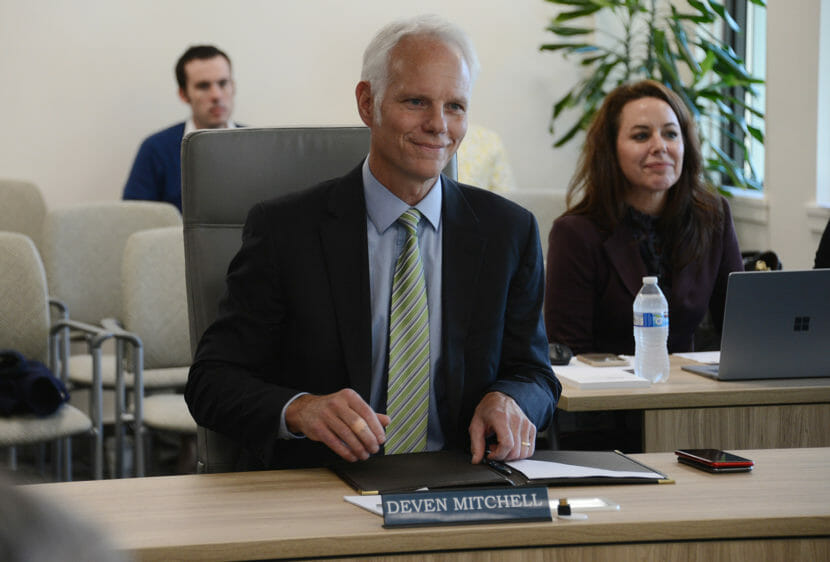
Deven Mitchell, seen during his Monday interview with the Alaska Permanent Fund Corp. board of trustees, was named the corporation’s new CEO late Monday. (Photo by James Brooks/Alaska Beacon)

The Alaska Permanent Fund Corp. board of trustees has named Deven Mitchell, the interim head of the Alaska Department of Revenue, as the corporation’s new CEO.

The board voted unanimously on Monday evening to approve the pick and direct interim CEO Valerie Mertz to open salary negotiations with Mitchell.

The decision came at the end of a special meeting that included hours of closed-door debate and a day of public interviews with three finalists.

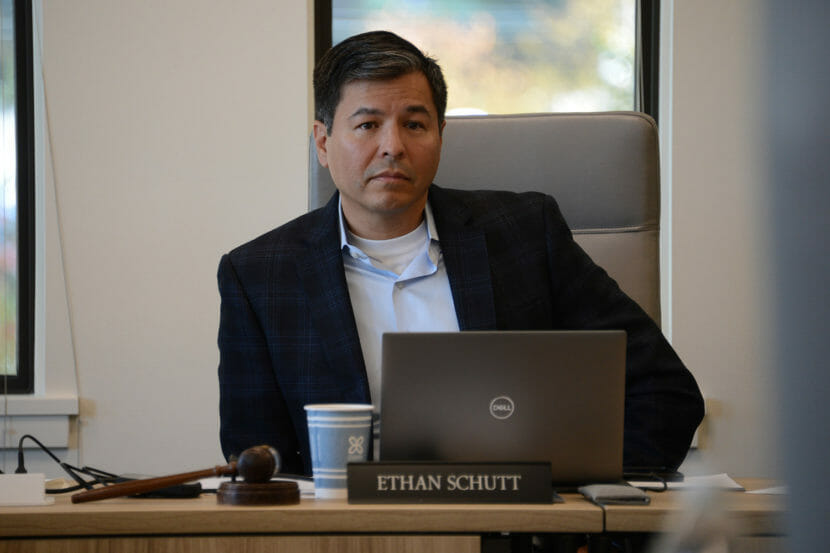
Alaska Permanent Fund Corp. board chairman Ethan Schutt is seen during a special board meeting on Monday, Oct. 3, 2022, in Juneau. (Photo by James Brooks/Alaska Beacon)

Board chairman Ethan Schutt said Mitchell’s 30 years of state service, including time as head of the Alaska Municipal Bond Bank Authority and as the state’s debt manager, were important to the selection, as was his reputation for honesty in front of the Alaska Legislature.

“He’s got a long history representing the state in important and sometimes innovative financial matters. So that reputation and his reputation across the state and with the Legislature and across various administrations was very important to us,” Schutt said.

The board’s pick of Mitchell ended a 10-month replacement process required when the board fired former CEO Angela Rodell in December after a series of conflicts caused board members to lose confidence in Rodell.

Rodell claimed her firing was “political retribution” by the administration of Gov. Mike Dunleavy, but a special investigation ordered by the Alaska Legislature found last month that the governor did not order her dismissal.

“My bottom line is he is an excellent, excellent choice,” said Sen. Natasha von Imhof, R-Anchorage and chair of the Legislative Budget and Audit Committee, which has oversight of the Permanent Fund corporation.

Former Anchorage Republican state legislator Jennifer Johnston was among those who  criticized Rodell’s firing and the length of time that the corporation went without a CEO.

On Tuesday, she said the selection of Cordova-born and Juneau-raised Mitchell is a good move.

“He’s lived in the state all of his life, and he understands Alaska and understands the long-term purpose of the fund, and he’s got a financial background. That’s what’s needed,” she said.

Mitchell has worked under multiple gubernatorial administrations, including Republican, Democratic and independent officials.

“I don’t feel like it’s a political appointment, and I think that’s very important,” Johnston said.

Mitchell’s start date and their salary are subject to negotiations with the corporation, but he is likely to be one of the state’s highest-paid employees when finished.

Rodell earned $386,513 in salary in 2021, not counting additional expenses. In a special meeting earlier this year, preliminary findings indicated Permanent Fund employees are underpaid when compared to similar positions in the Lower 48. An in-depth salary study was commissioned earlier this year.

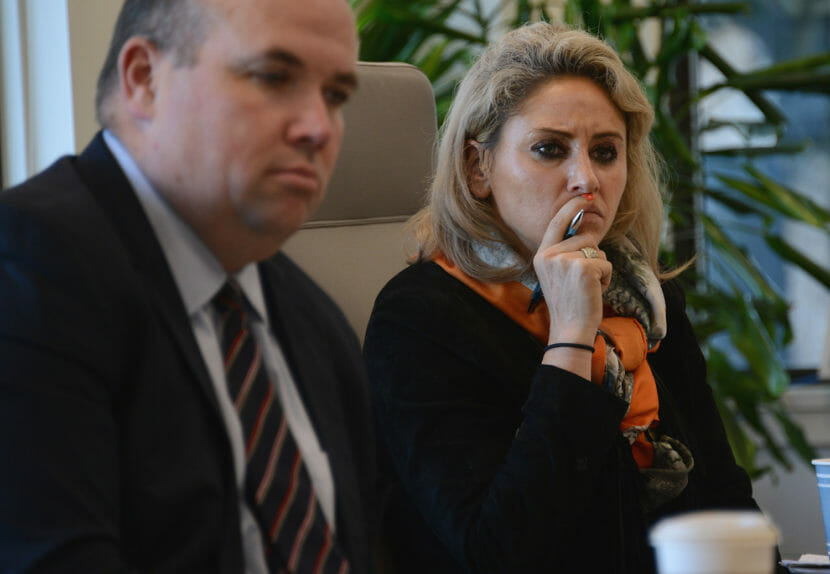
Ellie Rubenstein, member of the Alaska Permanent Fund Corp. board of trustees, is seen during a special meeting on Monday, Oct. 3, 2022, in Juneau. In the foreground is Marcus Frampton, the corporation’s chief investment officer. (Photo by James Brooks/Alaska Beacon)

The $72 billion Permanent Fund Corp. is Alaska’s most closely watched state-owned corporation because of its importance to the state economy. An annual transfer from the Permanent Fund to the state treasury represents between half and two-thirds of the state’s general purpose revenue, depending on the price of oil.

That transfer pays for government services and jobs that employ thousands of Alaskans, and it funds the annual Permanent Fund dividend.

Investments managed by Permanent Fund Corp. must return sufficient revenue to compensate for the annual transfer. If not, the amount of money available for dividends and services will decline over the long term, causing service cuts or tax increases.

Members of the board of trustees have previously said they believe the corporation’s CEO should primarily focus on managing staff, and investment decisions should be left to the corporation’s CIO, Marcus Frampton.

Mitchell lacks significant investment experience, and Schutt said that wasn’t an attribute the board was looking for.

He said the board wanted someone who could hire and build an investment team, and that Mitchell’s knowledge of state government and his relationship with the Legislature are positive attributes.

“It was very, very nice to have that package,” Schutt said.

To replace Rodell, the corporation’s board hired an executive search firm, People AK, on a $76,000 contract earlier this year, and that firm received between “120 and 130” applications, staff for the company said Monday.

Between “80 and 90 hit technical competency” based on a review of resumes and qualifications, and phone interviews narrowed the applicant pool to 10.

Those names were forwarded to a hiring committee that included APFC board members and staff, which narrowed the number of applicants to a final three, who were interviewed Monday.

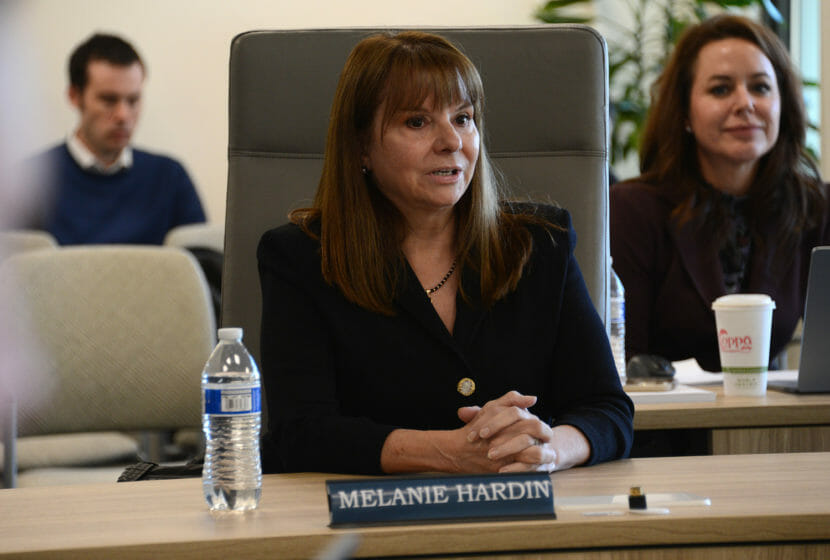
Melanie Hardin sits for an interview with the Alaska Permanent Fund Corp. board of directors on Monday, Oct. 3, 2022, as she seeks to become the state-owned corporation’s new CEO. (Photo by James Brooks/Alaska Beacon)

In addition to Mitchell, the final options included Alaska Industrial Development and Export Authority Chief Investment Officer Morgan Neff, and Melanie Hardin, a Verizon executive who formerly worked for Charles Schwab in London.

Mitchell said he submitted his application in early August, a month before he was named interim commissioner of the Alaska Department of Revenue. Responding to a trustee’s question, he said he sent in his application, went sheep hunting, and didn’t inform departing Commissioner Lucinda Mahoney until late August.

By statute, the revenue commissioner occupies a seat on the Permanent Fund Corp. board, and Mitchell recused himself from CEO discussions and most meeting activities.

“There was no backroom engineering and there was no communication from the governor’s office,” Schutt said.

Mitchell has 30 years of experience in a variety of roles at the Department of Revenue and pointed out that the department and the APFC frequently trade staff, even at the CEO level. Rodell, the prior CEO, was state treasurer and state revenue commissioner before being hired in 2015. One key difference: Rodell was out of that role when she was hired; Mitchell will move from one job to the other.

Mitchell said the bond bank’s board president encouraged him to apply for the job, as did Larry Persily, a former Department of Revenue official, itinerant journalist and energy expert who now works as a special policy adviser for Rep. Mary Peltola, D-Alaska.

Persily and Mitchell met in passing at an airport. Persily said he told Mitchell that if the board was looking for an investment expert, he probably wasn’t the right fit, but if they were looking for someone to manage people and appear in front of the Alaska Legislature, he had the right experience.

Schutt said that in the coming months, the board won’t be looking at investment returns as a measure of Mitchell’s success or failure. Instead, the board will look at the new CEO’s interactions with the board and with staff.

In particular, Mitchell will have to address a significant number of vacant positions at the corporation and seek to fill those roles with new hires or rehires. The corporation is also in the middle of its budgeting process for the next fiscal year.

“I think the board and the staff, to a person, are really excited to have someone coming in now and moving toward a positive and optimistic future for the APFC. We really, really are excited to kind of turn the page and focus on the positive,” Schutt said.

This story originally appeared in the Alaska Beacon and is republished here with permission.

Alaska Legislature’s new social media policy nixes banning and blocking

A woman stands to speak on the House floor at the Alaska Capitol
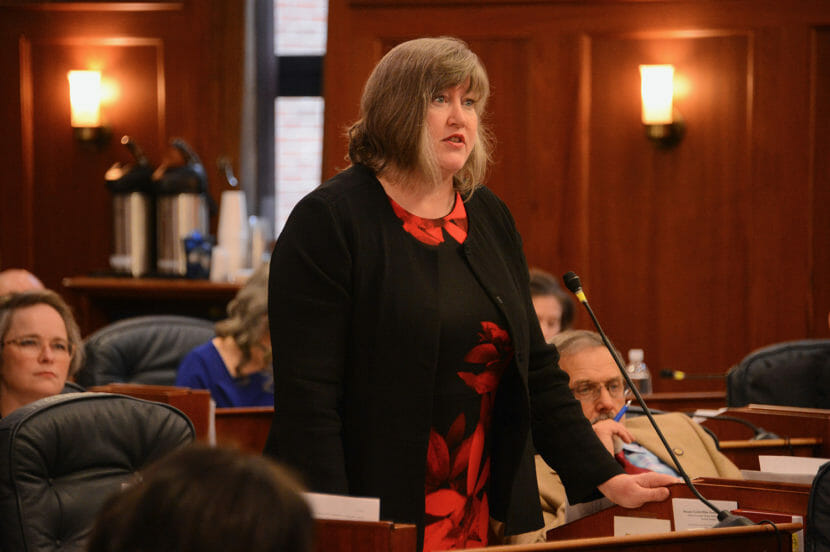
Rep. Sara Hannan, D-Juneau, speaks on the floor of the Alaska House of Representatives on Wednesday, May 4, 2022 at the Alaska State Capitol in Juneau, Alaska. (James Brooks / Alaska Beacon)

If Alaska’s state legislators remove constituents’ comments or block them on social media, they may forfeit state-paid legal protection, according to a new social media policy adopted Friday.

A House-Senate panel voted 8-3 in favor of adopting the new policy on behalf of the entire Legislature.

Rep. Matt Claman, D-Anchorage, said the new policy means “that the Legislature is not going to be put in a position of always having to represent representatives who may or may not handle their social media properly.”

Over the past year, three state lawmakers have been sued for blocking comments on their social media accounts. One case, against Senate President Peter Micciche, R-Soldotna, was dropped after Micciche lifted the person’s ban. Another, against Sen. Lora Reinbold, R-Eagle River, has already gone to trial and is awaiting a judge’s verdict.

The Legislature’s existing social media policy dates from 2011, and the lawsuits drove interest in an update.

The revised guidance — officially, they’re just recommendations — says that lawmakers shouldn’t use a personal account to talk about legislative matters.

If a legislator does use social media, the policy calls for them to create an official account and instructs them to “not open the account to comments or other interactions with the public.”

“If you choose to ignore the above guideline,” the policy states, “then do not filter, delete, or hide any comments and do not block or ban any persons.”

If a legislator does that anyway, “you personally assume all risk and responsibility for legal defense of that action.”

Sen. Shelley Hughes, R-Palmer, spoke against the new policy, saying it amounts to inviting the public to a town hall meeting, then barring the door before people can enter.

Sen. Mike Shower, R-Wasilla, also spoke against the new guidelines, saying that they are a significant tool to push information and shutting down two-way communication is “shutting off what really is the way of the future.”

Sen. Click Bishop, R-Fairbanks, voted in favor of the policy and said that it may be amended in the future.

“I’m not being flippant here to my colleagues, but it’s not the Ten Commandments. It’s not written in stone, and it can be reviewed by the 33rd Legislature,” he said.

This story originally appeared in the Alaska Beacon and is republished here with permission.

Correction: In an earlier version of this story, the photo caption incorrectly said that Hannon represents Anchorage.

His grandmother was forbidden to speak Lingít in school. Now, school is helping him reclaim it.

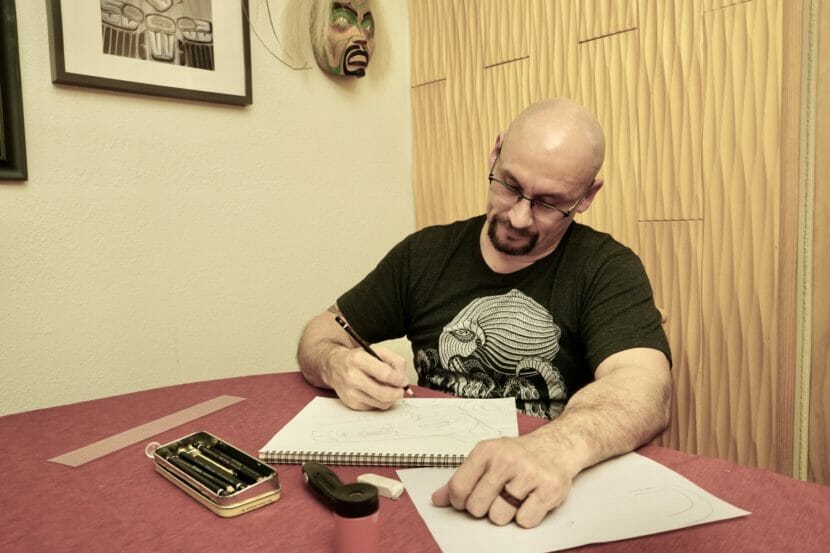
Eechdaa Dave Ketah, originally from Ketchikan, is a teacher and artist in Portland, Oregon. He’s taking Lingít language classes at the University of Alaska Southeast. “Having the opportunity to learn the language has been so powerful in my journey,” he says. (Photo provided by Eechdaa Dave Ketah)

The class assignment was to write a letter to anyone they wanted. In Lingít. Eechdaa Dave Ketah chose his late grandmother, the person who spoke Lingít to him when he was growing up in Ketchikan.

“And I was telling her that it’s hard learning the language at this point in my life, and one thing that makes it even harder is that I have to pay for it,” Ketah said, describing what he wrote. “White people took the language from us and now they’re charging us to get it back.”

Or: “Sgóon ḵaa sháade náḵx’i dleitx kaa sitee. Tlél has ushk’é ka Lingít yoo x̱ʼatángi has aawatáw. Yeedát Lingít x̱ʼatángi natoo.eich,” he wrote in the letter.

Ketah is a high school teacher in Portland, Oregon. He’s been taking online Lingít language classes at the University of Alaska Southeast since 2020. He started out as a beginner and is now in advanced Lingít learning the language his family spoke for thousands of years, but that he didn’t grow up speaking.

Ketah initially wanted to learn the language as a way to connect with his culture; he had felt detached from it living outside Southeast Alaska for so long. But it’s turned into so much more. Learning to speak Lingít is a way to connect to his ancestors, including his late grandmother, who had been taught to hide her culture and her language.

“Having the opportunity to learn the language has been so powerful in my journey,” Ketah said.

School, which forbade his grandmother from speaking Lingít, is now a place that’s making this type of personal journey even more accessible. A few months after that letter writing assignment, UAS announced over the summer it would be offering Alaska Native language classes tuition-free. It’s an effort that had been in the works for a few years. Funding from Sealaska Heritage Institute is making it possible.

Students currently taking non-credit classes in Lingít, Xaat Kíl or Smʼalgya̱x – traditional languages of Southeast Alaska – are no longer required to pay any tuition or fees.

“The University of Alaska Southeast is committed to recognizing and acknowledging historical wrongs endured by Alaska Native Communities. We are making sure Indigenous people don’t have to pay to learn their own language. It’s so important in the work towards language revitalization and overall healing,” UAS Dean of the School of Arts and Sciences Carin Silkaitis said in the announcement.

X̱’unei Lance Twitchell, professor of Alaska Native languages at UAS, has been part of the multi-year effort to make the language classes tuition-free. In finding a way to make it happen, he said the conversations would “come back to historical accountability on the part of governments and education as a system for playing a role in the attempted elimination of Indigenous languages.”

When it comes to endangered languages, Twitchell said, it’s not equitable to get money out of the population of people who have been oppressed.

“There’s so much trauma involved with language learning and recovery as Indigenous peoples that it just didn’t make sense to look at things from this sort of financial perspective,” he said.

Taking down the barrier of cost is working. UAS language professors say enrollment has gone up for both non-credit classes and for-credit classes. UAS still charges tuition and fees for for-credit classes. When Twitchell first joined UAS in 2011, enrollment was in the 30s or 40s. They were happy when it reached 70. “And I remember when we got up to 100,” he said.

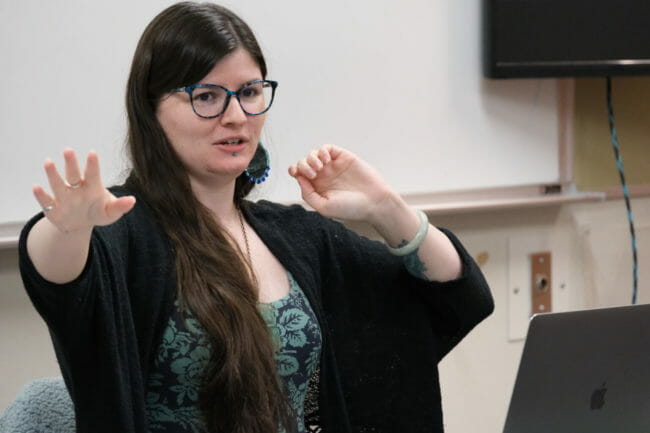
Éedaa Heather Burge teaches a beginning Lingít class at the University of Alaska Southeast on Sept. 20, 2022. (Photo by Lisa Phu/Alaska Beacon)

Now, enrollment is nearing 300. More than 130 language students are taking for-credit classes and about 150 are taking the non-credit option.

Éedaa Heather Burge, assistant professor of Alaska Native languages at UAS, said classes usually capped at 30 students in previous semesters. This semester, one of her beginning Lingít classes has 70 students. Higher demand and bigger classes come with its own challenges, but it’s a fantastic problem to have, she said.

“To have your classes be in such high demand that we’re struggling to keep up, it’s an exciting problem,” she said. “I do think long term, we need to hire more people to be able to teach these classes if the demand continues to be this high.”

Ketah, who’s seeing this growth and revitalization from outside Alaska, is amazed.

“It might be being a little bit hyperbolic, but it’s like everybody wants to learn, whereas back in my youth, it just wasn’t something that people were excited about,” Ketah said.

‘Trained to do that’

As a kid in Ketchikan, Ketah used to visit his grandmother, Eva Ketah, a couple times a week.

“I spent an awful lot of time with my grandmother. I loved going over to her house. Every time I would visit with her it felt like she was trying to immerse me in the culture,” he said.

When the two of them were together, “we picked berries, she would feed me traditional foods and speak Lingít to me,” he described. “It would be all of this stuff that was about her youth, where she came from.”

But Ketah remembers a peculiar thing that his grandmother would do.

“Things would abruptly change. Food would be put away, she’d go back to speaking English, and then there’d be a knock at the door. It didn’t matter who it was. It could be another Lingít person. It could be a family friend, an acquaintance, whoever, but as soon as somebody else would come, it was hidden,” he said.

Ketah’s grandmother lived on a hillside that was accessible by a long staircase, which allowed her to see someone coming from a long distance.

The peculiar thing happened a few more times before Ketah asked his grandmother about it.

“I asked her, ‘Grandma, when other people come by, why do you stop doing anything that’s Lingít?’” Ketah said, thinking back 40 years.

“She said, ‘Because we were trained to do that.’”

Ketah, 10 years old at the time, was bewildered by her answer, but he didn’t know how to ask what she meant. Decades later, though, he’s been able to piece that memory with other memories and stories his grandmother told him.

“‘Trained to do that’ was a euphemism for: It was beaten out of her.” Ketah said.

His grandmother’s home

Ketah said his grandmother’s family is originally from Sʼeek Heení, Warm Chuck Inlet on Heceta Island on the northwestern side of Prince of Wales Island, before they moved to Klawock.

“The reason why she left Warm Chuck Inlet to go to Klawock was because government agents came and told her mother and all of the other mothers of children, ‘You need to put your kids in school,’” he recounted.  “They would say, ‘If you don’t put your kids in school, we’ll put you in jail. And then after you’re in jail, we’ll put your kids in school anyway.’ And so, there was no choice in the matter.”

The school in Klawock, Ketah said, had a mix of kids who stayed there all the time and kids who had family in the community and went home on the weekends, like his grandmother.

“Teachers would say, ‘Now, when you kids go home, if anybody is breaking the rules – and that’s the school rules – if they’re speaking the Lingít language, or wearing Lingít clothes, or participating in the any of these cultural things, then you tell us when you come back to school,’” he said.

The kids were taught to inform on each other. Even a kid who had not broken the rules but failed to turn in another kid who had would get punished.

“And the penalties were physical beatings. So that happened to my grandma and all of her contemporaries,” he said.

Ketah said those wounds echoed into his dad’s childhood and into his own.

In addition to learning the language as an adult, Ketah has also been establishing himself as a Lingít carver and Alaska Native artist. This past summer, he did a residency at the Sheldon Jackson Museum in Sitka and his work was recently part of an exhibit at the Washington State History Museum.

Within the past couple of years, as Ketah has embarked in this expanded learning of his culture, he asked his dad, “‘Why didn’t you ever teach me any of this stuff?’”

His dad said, “‘Because my parents never taught us. We asked, but they wouldn’t.’”

Ketah knows now that by not teaching about their language or their culture, his grandparents were trying to protect their children.

“They were convinced that the way forward was to completely adopt the white way.”

‘I can speak my language in my school’

When Ketah learned enough Lingít, he went into the high school in Portland where he teaches and started his class saying yakʼéi tsʼootaat, or good morning.

“I was able to speak the Lingít language in, what my grandmother would call, a white man school and I’m not punished. As a matter of fact, they can’t touch me for anything that I do that’s related to my culture. And that’s incredible to me that we are able to overcome all that dark history and I can speak my language in my school,” Ketah said.

Each time he speaks Lingít in a school setting, he feels like he’s redeeming what his grandmother and other relatives endured. Despite everything they went through, Ketah said, the language lives on and he gets to be a part of it.

“I don’t think of it only as a privilege, I think of it as a responsibility because I have that freedom,” he said. “My ancestors didn’t do it because they couldn’t. And that’s why I should do it. Because I can.”

When Ketah was a kid and his grandmother spoke Lingít to him, he could only understand a few words, which is “heartbreaking” to him. He was never able to speak to her in their language.

But there are a couple video recordings from the 1990s that his uncle made of his grandmother and grandfather. “There is an awful lot of Lingít being spoken,” Ketah said, “that I understand completely now.”

Site notifications
Update notification options
Subscribe to notifications