Alaska Beacon

Alaska Beacon is part of States Newsroom, a network of news bureaus supported by grants and a coalition of donors as a 501c(3) public charity. Alaska Beacon maintains editorial independence. Contact Editor Claire Stremple for questions: info@alaskabeacon.com. Follow Alaska Beacon on Facebook, Bluesky and Twitter.

On Utqiagvik’s edge, an observatory measures the gases that are warming the Arctic and the planet

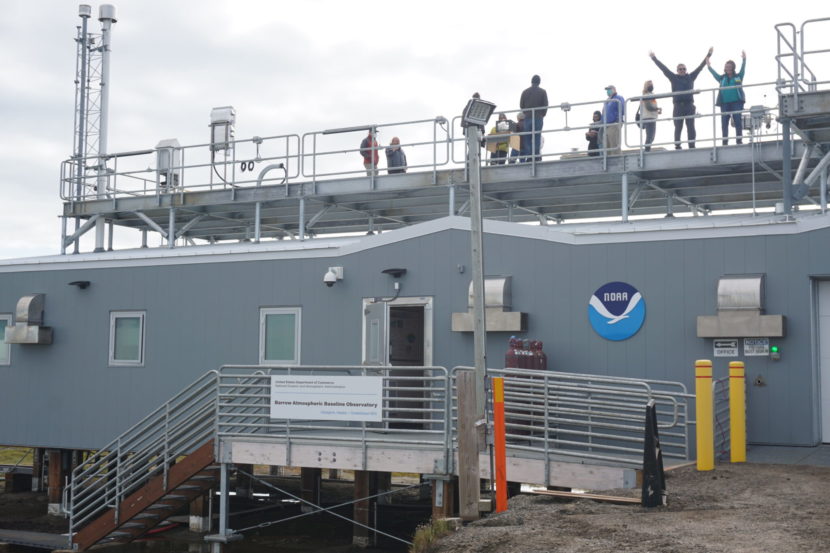
People stand and wave on top of a gray observatory building with the NOAA seal on it
Visitors take in the view on Aug.4 from the roof of the newly upgraded Barrow Atmospheric Baseline Observatory. The roof, with its unobstructed views of usually snow-covered tundra, is the site where technicians can track albedo, the measurement of solar heat reflection. As snow and ice diminish, so does albedo, and more heat is absorbed in the Arctic, feeding into a self-reinforcing warming cycle. (Photo by Yereth Rosen/Alaska Beacon)

For nearly 50 years, the National Oceanic and Atmospheric Administration laboratory on the outskirts of the nation’s northernmost community has tracked a steady rise of carbon dioxide in the atmosphere, the byproduct of fossil-fuel burning that is enveloping the Earth and trapping its heat.

Now the NOAA Barrow Atmospheric Baseline Observatory has a new, expanded, state-of-the art facility, with space for more research and experimentation and — finally — some creature comforts like flush toilets. Though the 2,730-square-foot building was completed in late 2020, NOAA hosted an official opening ceremony Friday, an event postponed by the COVID-19 pandemic.

While expansion to new and improved space that allows more science work to be conducted is good news, what is happening in the air it measures is less happy.

Now carbon dioxide levels here, as measured in parts per million, veer between the high 300s and close to 430, varying by season with the cycles of summer tundra plant growth and winter dormancy. Those seasonal changes shift the tundra landscape from being a temporary carbon sink to being a temporary carbon source.

That compares to conditions in 1973, when the Barrow observatory was just a rustic 960-square-foot structure and when carbon dioxide levels in the air ranged between about 325 and 336 parts per million, varying by season.
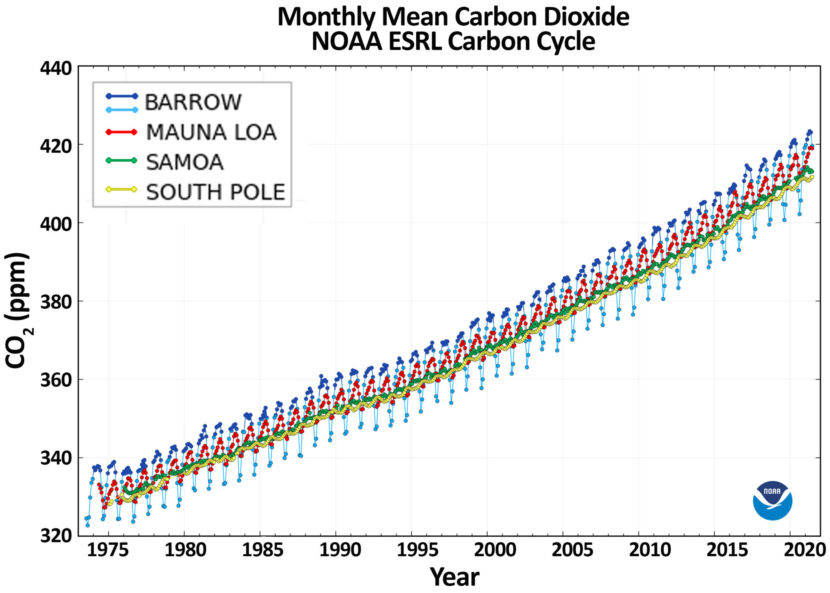
A graph showing a steady rise in carbon dioxide levels in the atmosphere from 1975-2020.
Carbon dioxide levels measured at NOAA’s four observatories have risen steadily since the 1970s. Readings at the Barrow Atmospheric Baseline Observatory at Utqiagvik show the widest seasonal variations, the product of tundra plant growth and dormancy. (Graph provided by NOAA)

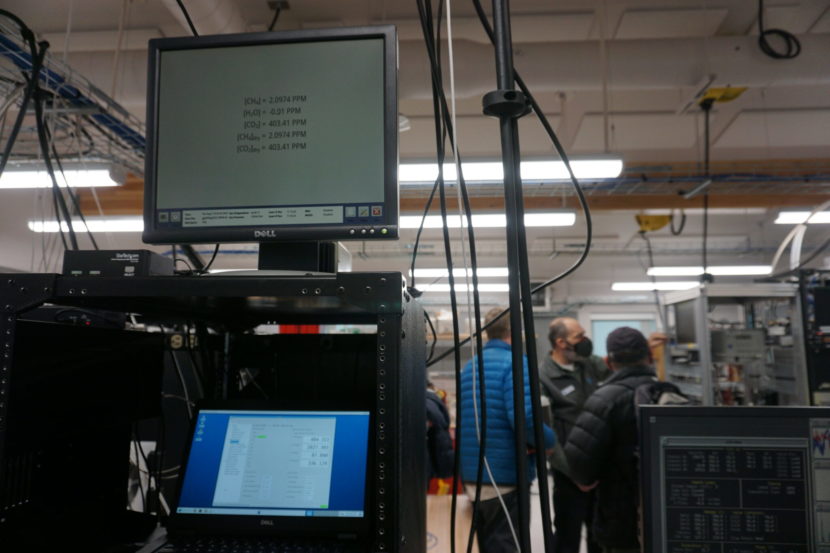
Even on that early August day with sunny skies and green plants on the tundra still photosynthesizing and thus absorbing carbon from the air, the atmospheric CO2 levels at this Arctic location measured 402.57 parts per million.

“We’re over 400 and it’s not going back,” said Bryan Thomas, the station chief at the observatory. He remembers when 400 parts per million — a level first hit in 2012 — was considered the threshold that might shock people into climate action. Readings well above 400 have now become routine.

“When I stop and think about it, it makes me sad. We could have done more sooner. But now is a better time than never,” he said.

The Barrow Atmospheric Baseline Observatory is one of four such NOAA remote baseline observatories that measure the global atmosphere from the Arctic to the Antarctic. The three others are at Mauna Loa in Hawaii, in American Samoa and at the South Pole.

Last year, the global average for atmospheric carbon as measured by all four observatories set a record for the annual average, 414 parts per million. That compares to about 280 parts per million prior to the Industrial Age, according to NOAA.

“It keeps going up,” said Brian Vasel, director of operations at NOAA’s Global Monitoring Laboratory in Boulder, Colorado, who was in Utqiagvik for the opening celebration.
Computer monitors in a lab, with people standing in the background
As station manager Bryan Thomas talks to visitors, a screen shows the carbon dioxide levels of 402.57 parts per million measured on Aug. 4 in the air outside the Barrow Atmospheric Baseline Observatory. (Photo by Yereth Rosen/Alaska Beacon)

Gases, particulates, solar reflection and permafrost are monitored

Much more than carbon dioxide gets monitored at the Barrow observatory and at its three sister observatories. There are constant readings for methane and water vapor, which are also greenhouse gases.

For the Barrow observatory, an important task is measuring particulates in the air, like black carbon and similar brown carbon, varieties of soot that darken snow and ice and reduce their ability to reflect solar heat. Dark colors absorb solar heat, and darker snow and ice melts more quickly. From the rooftop, NOAA technicians measure the degree to which the white landscape reflects the sun rather than absorbs it, a phenomenon called albedo.

The more expansive space at the new Barrow lab accommodates equipment to track permafrost temperatures and the movements within permafrost that are enabled by warming. And air sampling is enhanced by a new sensor-equipped tower outside the building that is 100 feet high, replacing the old 60-foot tower.

The observatories also measure chlorofluorocarbons, chemicals that eat away at the high-stratospheric ozone layer that protects the Earth and its inhabitants against solar radiation. A treaty signed in 1987, the Montreal Protocol, phased out and ultimately banned the ozone-depleting chemicals, and readings at the Barrow observatory and elsewhere tracked their decrease in the following years. But progress has not always been smooth.

The Alaska site caught a disturbing trend that started in about 2013. The level of a chlorofluorocarbon known as CFC-11 in the atmosphere unexpectedly slowed what had been a steep and steady decline that started with the treaty. That pointed to loopholes or outright violations of the Montreal Protocol.
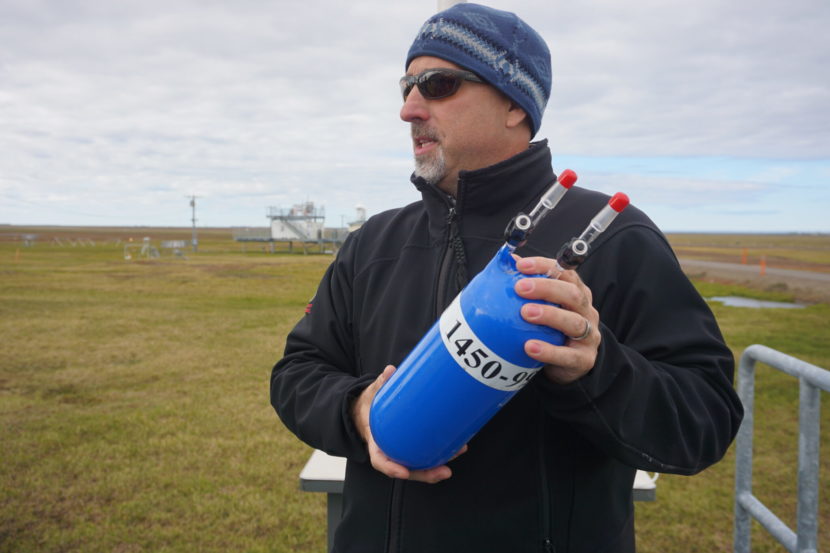
A man stands on the tundra holding a blue canister
Brian Vasel, director of operations at NOAA’s Global Monitoring Laboratory, holds a flask of the type that is used to ship air samples between the Barrow Atmospheric Baseline Observatory and the organization’s main lab in Boulder, Colorado. Behind Vasel, at the Barrow site on Aug. 4, is a neighboring environmental lab operated by the U.S. Department of Energy. (Photo by Yereth Rosen/Alaska Beacon)

The Barrow observatory was the first of the four to record the flattening trend that was later picked up worldwide. That wave-like pattern helped scientists pinpoint the source of the CFCs: east Asia. Corrective actions followed, and by 2018 CFC levels were back on their expected rate of decline.

“If we hadn’t been able to monitor that, we wouldn’t have been able to recover and get back on the trajectory,” Thomas said.

Aside from sampling on premises, the Barrow observatory sends samples to NOAA’s laboratory in Boulder, and the Boulder laboratory sends sealed air samples by barge to be used as controls. The Barrow observatory samples analyzed in Boulder are part of a worldwide system that ships to the site. “We are the world’s center for measuring CO2,” Vasel said.

High-latitude location in fast-warming Arctic is critical

The location of the Barrow Atmospheric Baseline Observatory is deliberate.

It lies about five miles north of the main part of Utqiagvik, on a strip of tundra between the Chukchi Sea and Elson Lagoon, far away from any significant development in existence or likely to happen in the future. Prevailing winds that come over the ocean from the west make the air there some of the purest on Earth and best for sampling and for giving a picture of how conditions at that high latitude affect the rest of the planet. Its Arctic location is critical, as the Arctic is warming at four times the global rate, according to the most recent calculations.

“We appreciate that we’re a very small part of the Arctic. But we have to pay attention to the whole Arctic and the whole world,” Thomas said.

As for the North Slope oil fields to the east, they are generally too far away to skew the readings, Thomas said. There are occasional shifts in wind that bring in dust and potentially other materials from Utqiagvik in the south, he said, but NOAA staffers know when that happens and adjust accordingly.
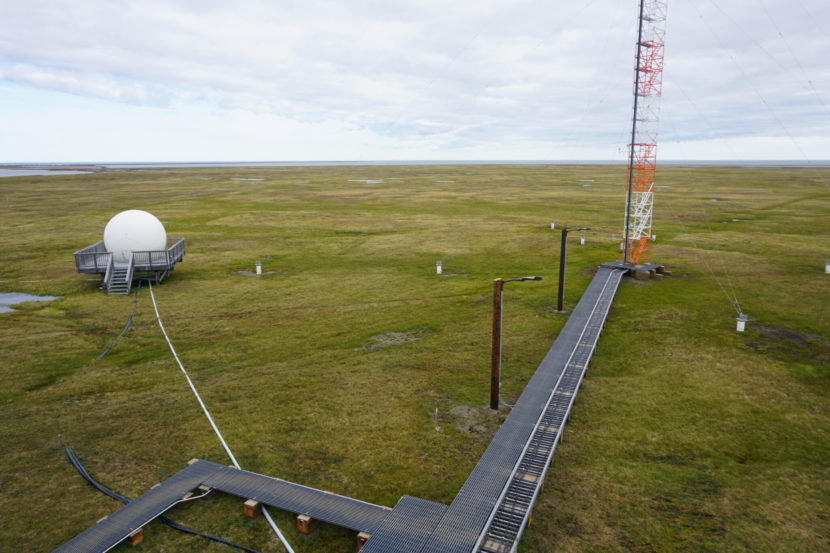
A white sphere and an open tower on the tundra, accessed by walkways
A new 100-foot tower equipped with a variety of sensors to record weather and atmospheric conditions rises from the tundra at the Barrow Atmospheric Baseline Observatory. The tower, seen on Aug. 4, replaces a smaller version used for decades. Next to it is one of the round satellite downlinks. (Photo by Yereth Rosen/Alaska Beacon)

One factor that is affecting the carbon dioxide readings is the greening of the tundra. Of the four key NOAA observatories, the Barrow observatory has the biggest seasonal swings, and those are getting wider as tundra vegetation becomes more plentiful.

More plant growth means more photosynthesis and more carbon absorption in the sunny summer, but it also means more release of carbon into the atmosphere from plants that decay or die as winter darkness arrives. Warmer permafrost has an effect, too, allowing long-trapped carbon gases to stream up from the ground. There is growing scientific evidence that the release of carbon in the winter is outstripping the seasonal carbon absorption in the summer. A landmark 2019 study found that the warmer winters have already turned the world’s northern permafrost regions from being a net carbon sink into a new carbon source.

A more recent study, led by Donatella Zona of San Diego State University, presents a pessimistic outlook for the ability of tundra plants, like the lichen and sedges outside the Barrow Atmospheric Baseline Observatory, to work harder through absorbing carbon dioxide in the summer.
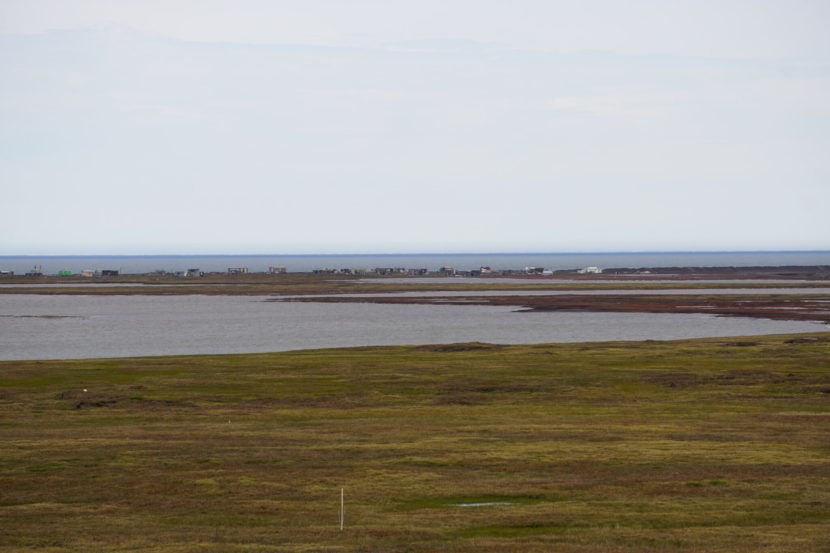
Open tundra and coastline with Utqiagvik in the distance
There is no major development near NOAA’s Barrow Atmospheric Baseline Observatory, but on the distant horizon, seen here on Aug. 4, are camps used by Utqiagvik residents for gathering of traditional wild foods. Beyond the cabin and campsites is the Chukchi Sea. (Photo by Yereth Rosen/Alaska Beacon)

While there are more plants growing on the ground and they are emerging and photosynthesizing earlier, they are also losing their ability to photosynthesize and grow later in the summer, indicating that the growing season is not really longer but only shifting in time, according to the study.

Zona likened the plants’ energy to human energy. “When you wake up earlier in the morning, you are tired earlier in the evening,” she said in an online presentation to a science conference held last week in Utqiagvik to mark the 75th anniversary of the Naval Arctic Research Laboratory established north of town.

The impetus for the study, Zona said, was a puzzling finding about the “breathing” of the tundra – the lack of any significant increase in carbon uptake that would be expected to be tied to earlier snowmelt and earlier plant emergence. But there has been a marked increase in carbon respiration from the tundra, she said.

Something that is not contributing to local carbon emissions in any significant way is the new observatory laboratory itself. It was designed and built by UIC Nappairit LLC, a unit of the Native-owned Ukpeaġvik Iñupiat Corporation, as a LEED-certified building. The certification comes from the U.S. Green Building Council and is a widely used ranking system for structures with minimal carbon footprints and other environmental impacts.
Indigenous knowledge entwined with Arctic research for 75 years in Utqiaġvik

""
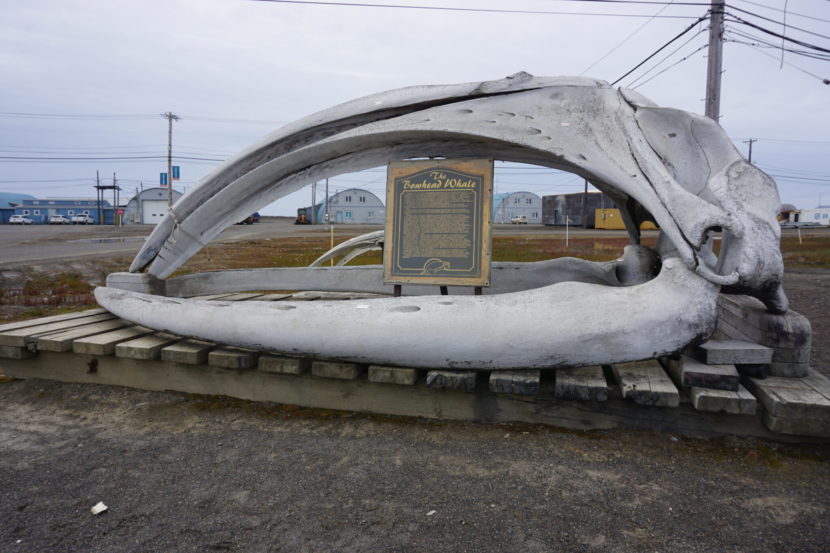
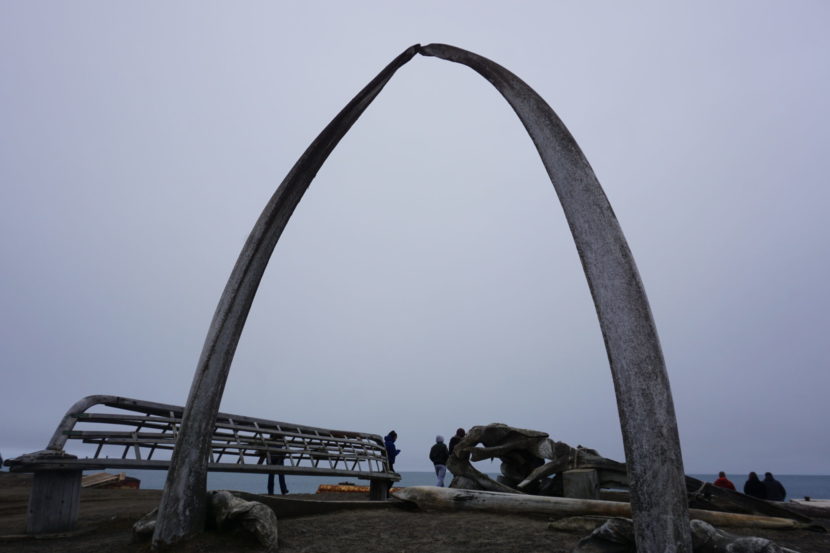
Scientists attending a conference marking the 75th anniversary of the Naval Arctic Research Laboratory walk on the beach at Utqiagvik’s iconic whalebone arch during an Aug. 2 tour of the city. (Photo by Yereth Rosen/Alaska Beacon)

In the nation’s northernmost community, about 100 scientists, engineers and other Arctic experts are gathered this week to celebrate a cutting-edge research program that started in the 1940s.

The event in Utqiaġvik, also known by its former name of Barrow, is a conference marking the 75th anniversary of the Naval Arctic Research Laboratory, or NARL. The institution was originally created to support oil and gas exploration on the North Slope, but in short order became a world-class center for Arctic science.

Beyond establishing Utqiaġvik as an Arctic research heavyweight, NARL has another legacy: respect for Indigenous knowledge and partnership, a characteristic missing in much of the scientific world.

“The NARL facility has been a huge part of our North Slope Iñupiat community for 75 years,” said Pearl Brower, president of the Ukpeaġvik Iñupiat, or UIC, the local Native corporation. It is a mutually beneficial relationship, she said in a welcoming address.

“Indigenous people are the first ecologists, the first scientists of our lands. When we entwine generations with firsthand knowledge of place with western scientific models, we are stronger and more informed,” she said.

A woman speaks from behind a lectern
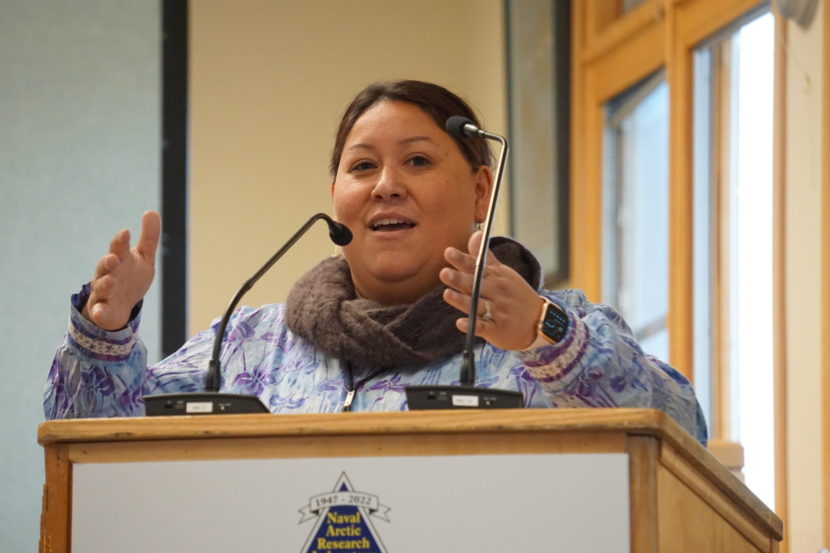
Pearl Brower, president of the Ukpeaġvik Iñupiat Corporation, speaks to visiting scientists at an Aug. 1 welcoming event kicking off a week-long conference marking the 75th anniversary of the Naval Arctic Research Laboratory. (Photo by Yereth Rosen/Alaska Beacon)

Brower calls herself a third-generation NARL associate. Her grandfather, Harry Brower Sr., worked as both a carpenter and a local science adviser at the facility, and her father, Price Brower, contributed with a similar combination of facility support and science advice. Brower remembers being a little girl hanging around the NARL cafeteria, wandering the buildings and looking at the animal samples, mostly fetuses of marine mammals like seals, that were preserved in jars. “It was a little bit morbid, but it was so cool to see,” said Brower, who was president of Iḷisaġvik College, a tribal college in Utqiaġvik, prior to her appointment this spring as UIC president and chief executive officer.

Officially, NARL no longer exists as a formal entity – even though the site, about five miles north of the town’s center, continues to be called “NARL” by locals. The Naval operation officially disbanded about 40 years ago, and it has spun off into a collection of modern research and academic institutions. UIC owns the property and buildings, and its science department operates the modern Barrow Arctic Research Center in the general NARL area. UIC rents space to Iḷisaġvik College, which operates on the grounds. Other facilities in the general area include the National Oceanic and Atmospheric Administration’s Barrow Observatory, which has measured atmospheric carbon for nearly 50 years, and U.S. Geological and U.S. Department of Energy research sites. Structures range from old Quonset huts to gleaming modern lab buildings to high-tech towers and domes supporting atmospheric testing equipment.

The long-term nature of work at the NARL site is appropriate, because knowing the Arctic is a long-term commitment, local leaders told visiting scientists attending the anniversary conference.

“The lessons that we learned growing up make us the experts in the Arctic that we are today,” Nagruk Harcharek, UIC vice president of Arctic development, said in a Tuesday session. “Remember that there is a database of knowledge stored in the minds of the people in the villages in which you operate.”

The partnership produced some tangible results. Some of the earliest published research papers resulting from NARL research, for example, credited a local Indigenous partner as a formal co-author. Simon Paneak, a North Slope cultural leader, is listed as co-author of papers on bird migrations, general ecology of the region and ptarmigans.

The skull of a bowhead whale displayed on pallets
A bowhead whale skull, seen on Aug. 3, is displayed at the entrance of Iḷisaġvik College in Utqiaġvik. The tribal college is located on grounds previously occupied by the Naval Arctic Research Laboratory. Iḷisaġvik College is one of several academic and research instiutions now operating at the site about 5 miles north of downtown Utqiagvik. NARL helped lay the groundwork for the various science-focused organizations now operating at the site. (Photo by Yereth Rosen/Alaska Beacon)

Decades later, other science organizations and projects have now concluded that they need to create similar partnerships. Some have established programs that strive for what is referred to as “co-production of knowledge.”

One program ties university researchers with Kotzebue residents. Called Ikaaġvik Sikukun, or Ice Bridges, it gives research leadership to the local elders. The National Science Foundation is operating a program called “Navigating the New Arctic” that seeks to incorporate Indigenous science and give Indigenous people more control over research undertaken in their area.

But the need for such relationships and long-term commitments clashes with what Utqiaġvik-raised geologist Richard Glenn called a “built-in defect in the system that funds research. To get that funding, scientists have to compete against each other for grants, which are usually doled out in short-term increments, he said.

“Science in America is cowboy science,” said Glenn, a longtime Iñupiat leader who recently retired from a senior vice president position at the Iñupiat-owned Arctic Slope Regional Corp. Often, he said, a winning project that seems attractive to funders ”is not likely to be the research priority of the community.”

Glenn has been working to bridge that gap, serving as a volunteer bringing together Western scientists and Inupiat experts. Such efforts are part of the “NARL effect,” he said, the mingling and cooperation among different people, “all of whom are focusing on our Arctic environment.”

A lot of NARL and its legacy is the product of chance, Glenn said. It’s chance that even brought the NARL facility to Barrow in the first place.

The genesis was the 1923 action by the administration of U.S. President Warren G. Harding to designate the surrounding region as Naval Petroleum Reserve 4, one in a series of land units set aside as possible sources of energy for the nation’s military forces.

“So they drew this big boundary around the traditional homeland of many, many families and called it the petroleum reserve,” Glenn said.

It wasn’t until the 1940s that the Navy solidified plans for actual oil and gas exploration. The original intent was for an exploration camp to be established at Cape Simpson, a site with natural oil seeps that lies east of Point Barrow along the Beaufort Sea coast, Glenn said. But bad weather there forced a retreat to the Chukchi Side and ultimate settlement near Utqiaġvik, he said.

A group of people standing by the shore
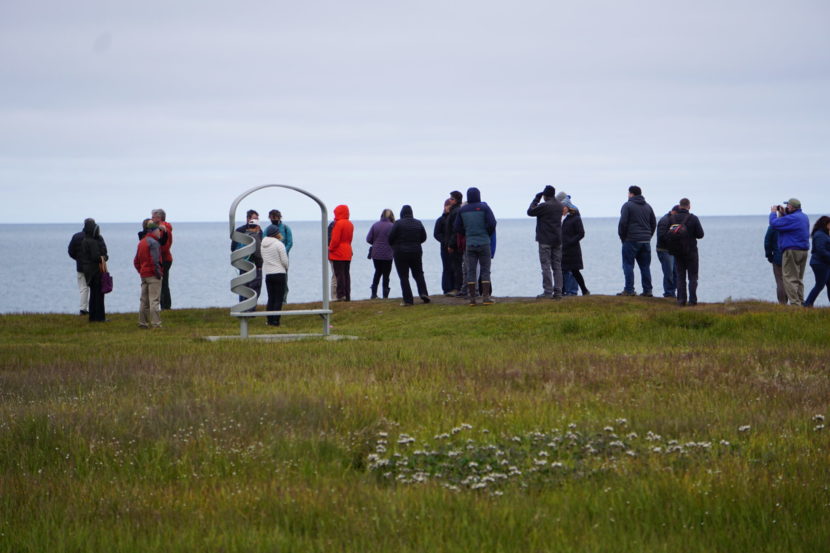
Scientists visiting Utqiagvik for a weeklong conference marking the 75th anniversary ot the Naval Arctic Research Center look out at the Chukchi Sea on Aug. 2 from the top of a coastal bluff that is crumbling because of permafrost thaw. (Photo by Yereth Rosen/Alaska Beacon)

The mission quickly expanded beyond oil and gas exploration.

Study at NARL of freeze-tolerant creatures – research initially done with the idea of finding better ways to prepare Navy aviators for Arctic conditions – led to examination of below-ice gas contents. And that led to a conclusion about a new way to quantify ancient atmospheres by studying gas bubbles trapped in glacier ice.

Since then, analysis of gases in polar ice has become a foundation of research that reconstructs ancient atmospheres and environments. It has also become critical to the study of climate change, which is accentuated in the Arctic and is driving much of the Arctic research.

Climate change, in turn, is driving world events and makes the NARL legacy and the work of its successor organization even more important, said Michael Sfraga, chair of the U.S. Arctic Research Commission and moderator of one of the anniversary event’s opening sessions. The commission advises the president and Congress on Arctic research.

“We are probably gathered at the most consequential time for the Arctic,” Sfraga said.

Alaska Permanent Fund Corp. posts negative returns for first time since 2012

""
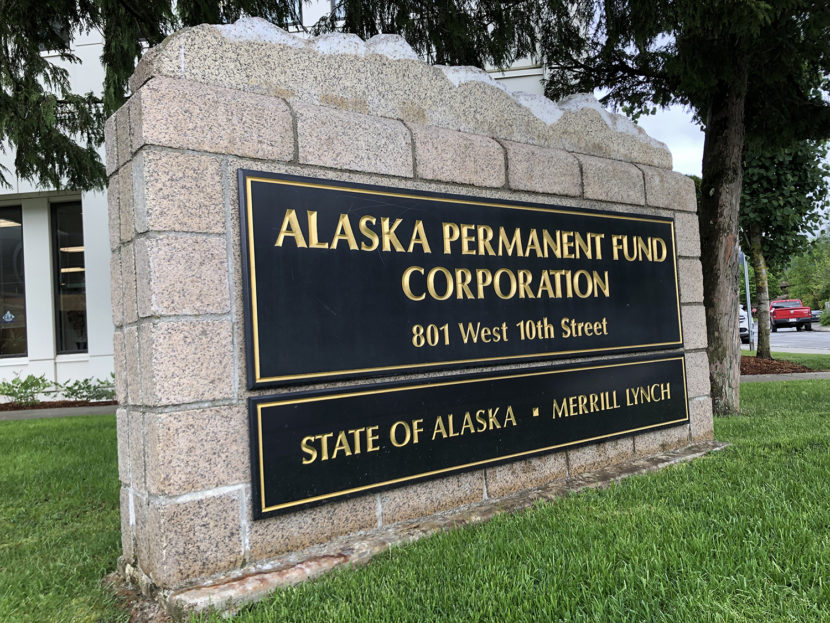
The offices of the Alaska Permanent Fund Corp. are seen Monday, June 6, 2022 in Juneau, Alaska. (Photo by James Brooks/Alaska Beacon)

For the first time in a decade, the Alaska Permanent Fund Corp., source of more than half of Alaska’s general-purpose state revenue, posted negative investment returns for an entire fiscal year.

As of June 30, the last day of the just-ended FY22, the fund reported having earned minus-1.32% over the preceding 12 months.

The decline will not have an immediate negative effect on state finances, but continued losses over multiple years would reduce the amount of money available each year for state services and the Permanent Fund dividend.

Between June 30, 2021, and June 30, 2022, the fund’s market value declined from $81.8 billion to $77.3 billion. That decline includes withdrawals and deposits, as well as the investment loss.

Those figures are from the fund’s monthly performance report for June, released this week, and contained unaudited, preliminary figures that also include withdrawals and deposits, not just investment gains and losses. Final figures are expected later this month.

Each year, the fund attempts to earn at least 5% plus the cost of inflation, the minimum necessary to keep the fund’s inflation-adjusted value constant. Over the past year, the fund would have had to earn 14.06% to keep pace with inflation and withdrawals. Instead, it lost money on its investments for the first time since fiscal year 2012.

Reasons for loss

Chief Investment Officer Marcus Frampton said the biggest reason for the loss is “the stock market.”

Between June 30, 2021, and June 30, 2022, the Dow Jones Industrial Average, a key indicator of public markets in the United States, fell by almost 11%. More than a third of the Permanent Fund is invested in public equities, mostly stocks in the United States.

That has caused many public investment funds to post significant losses. CalPERS, the California public pension fund, posted a loss of 6.1% during the just-ended fiscal year.

Frampton noted that despite losing money overall, the Permanent Fund Corp. did better than its contemporaries, beating benchmarks in a down market and generally losing less money than they did.

“I’m encouraged by that,” Frampton said, “because anyone can make money in an up market by taking more risk. But then to have beaten the benchmark in an up year like last year and then beat it in a down year, this year, I’m really encouraged by how our portfolio managers navigated the two very different markets.”

One notable failure was in the Permanent Fund’s special-opportunity investments, which include investments where the Permanent Fund offers a company money for an ownership share that can later be converted into cash when the company starts selling public stocks.

If the Permanent Fund had hit its benchmarks on those investments, it would have earned a 22% return on $4.6 billion. Instead, it earned only 1.85%.

Frampton said that’s attributable to the fact that the Permanent Fund has invested heavily in biotechnology and medical companies particularly hard-hit during the recent stock market declines.

The Permanent Fund invested about $130 million into a company called Denali Therapeutics in 2013, then saw the value of its investment grow by 700% or 800%, Frampton said.

At the start of the fiscal year, the fund still held about $400 million in Denali Therapeutics’ stock, only to see its value fall by about half.

“That one position was a couple hundred million of loss,” Frampton said.

“With hindsight, we wish we had sold more aggressively, like a year ago,” he said.

Frampton said that with hindsight, he would have invested more into real estate, which the Permanent Fund keeps as a hedge against inflation.

Short-term effects limited, but long-term effects possible

In the short term, the one-year downturn will have limited effect on the Permanent Fund and on state finances.

In 2018, state lawmakers created an annual transfer from the Permanent Fund to the state treasury in order to pay for both the Permanent Fund dividend and state services amid falling oil prices.

Last year, that withdrawal to the treasury was about $3.1 billion.

Another $222 million was withdrawn for operating costs, said Alexei Painter, director of the Legislative Finance Division, and about $718 million in oil royalties was deposited into the fund.

Investment returns, rather than oil deposits, are the biggest factor in whether the fund gains money or loses money.

Creating an automatic transfer was intended to discourage lawmakers from taking larger amounts of money from the fund, something allowed with a simple majority vote of the House and Senate, plus the assent of the governor.

The transfer is limited to 5% of the fund’s average value over five years. The average is calculated by skipping the most recent year, then taking the five years immediately before it.

If the current downturn lasts only one year, that smoothing effect means the average transfer won’t change significantly.

“We are invested in the long term,” said Paulyn Swanson, a spokesperson for the corporation.

Over the past three years, the fund has averaged 9.33% returns, below the target of 9.98%. Over the past five years, the fund has averaged 9.03%, slightly above the target.

Asked whether he believes the downturn will continue, Frampton said that with the Federal Reserve raising interest rates and an unstable geopolitical situation, “it’s a pretty ominous setup for the markets to have.”

Over the next 10 to 15 years, he said the Permanent Fund is set up to succeed, “but I think the setup for investors right now, on like a one-to-two-year outlook, is pretty tough. So it would not surprise me if there are more difficult periods in the next year or two.”

In Alaska US Senate primary, a race to finish fourth

""
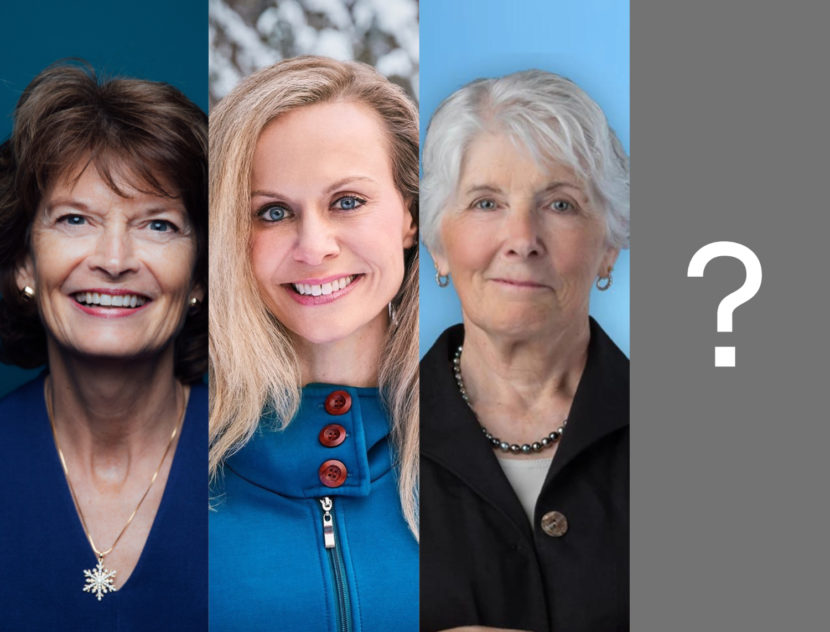
After Lisa Murkowski, Kelly Tshibaka and Patricia Chesbro, it’s not clear who will fill out Alaska’s general election ballot for the U.S. Senate seat. (Lisa Murkowski photo is from her Senate page. Kelly Tshibaka and Patricia Chesbro photos are campaign photos.)

The majority of voters going to the polls Aug. 16 will likely be choosing one of three candidates for Alaska’s U.S. Senate seat as their pick-one primary option: incumbent Republican Lisa Murkowski, Republican Party-endorsed Kelly Tshibaka or Democratic Party-endorsed Patricia Chesbro. It’s the top four candidates, though, who will advance to the November ranked choice voting general election.

Sixteen other names are on the ballot. When asked who the fourth candidate will be, most political insiders didn’t know or hadn’t given it much thought. But a few names float to the top.

“I think it is anybody’s guess,” said Amber Lee, communications and political consultant based in Anchorage. “There are some people who have run multiple times, like Edgar (Blatchford), who may have slightly more name recognition, but it could literally be anyone.”

Lobbyist and political consultant Jim Lottsfeldt similarly said he had “no clue.” He wasn’t familiar with the rest of the candidate pool and considers the competition for the fourth seat a “jump ball.”

“I mean, I guess I could imagine that some people go, ‘Oh, Professor Blatchford, I know him from UAA,’ or, ‘Edgar Blatchford, he was a commissioner under Frank Murkowski.’ You know, he’s run a couple times so Edgar will get some votes,” said Lottsfeldt, who works for a super-political action committee for Lisa Murkowski.

Blatchford, an Alaska Native candidate, ran for the U.S. Senate Democratic primary in 2016 and received 33% of the votes, or second most, behind Ray Metcalfe’s 50%. He ran again in 2020, getting 8.7% of the primary vote, second behind Al Gross’s 79.8%. In 2018, Blatchford ran as a Democratic candidate for lieutenant governor but dropped out. He’s taught at the University of Alaska Anchorage; served as commissioners of two Alaska state departments; and is a former Seward mayor. He ran for Anchorage school board in 2021, placing fifth among six candidates for the same seat.

John-Henry Heckendorn, a partner at campaign management firm Ship Creek Group, said Blatchford could break into the top four due to name recognition, though added that undeclared candidate Huhnkie Lee, has “a niche cult following.”

“He’s actually running some ads that are mostly built around hype, which struck me as like, if you’re talking about somebody who can scrape together 5% of the vote, maybe there’s something there,” Heckendorn said.

Fundraising

At $22,464, Lee has fundraised the most money as of June 30 after Murkowski, Tshibaka and Chesbro. Lee, a Wasilla resident and attorney, is listed as a presidential candidate by the Federal Election Commission, with a fundraising committee formed before the 2020 election; his Medium website says he’s running for President in 2024.

Other U.S. Senate candidates to raise money are independent Shoshana Gungerstein, with $15,365, and Libertarian Sean Thorne, with $4,497, as of June 30.

Lottsfeldt said he’s seen Gungerstein signs, “but I’m not optimistic that she’s going to capture anyone’s attention.”

Among political insiders, Gungerstein, who lists a Juneau address, was mostly a mystery. The Juneau Empire reported Gungurstein was “emphatically vague on the details of her work and life.”

“She declined to say which companies she had worked for, citing privacy issues, she also declined to say where she grew up and exactly how long she’s lived in Alaska,” the Empire reported.

Actual polling

Several people mentioned Dustin Darden as a possible fourth candidate, including Alaska Survey Research pollster Ivan Moore, who put Darden in a July poll.

“I have not run a primary question on it, but I have run a few generals and so have given some thought to who, out of the list of people who have filed, has the best chance of making that final four,” Moore said.

His conclusion is that it will be one of two candidates. One is Dustin Darden: “For better or worse, because the dude has name ID. It’s not always good name ID but it’s still name ID,” Moore said.

The poll conducted by Alaska Survey Research had Darden coming in with 5% of the vote in round one of the vote count.

Darden, who listed Alex Jones’ Infowars as his campaign website with the Alaska Division of Election, has filed to run for numerous Anchorage and state elections. He’s known for his political signs, running an anti-fluoride campaign, and disrupting Anchorage Assembly meetings, among other things.

“And then the other guy is Sean Thorne, who is the Libertarian, and Libertarians tend to be fairly loyal third-party voters,” Moore said.

Another way a candidate could emerge in the number four spot is if “some other political interest decided to prop them up” because it would be advantageous for one of the competitive candidates, Heckendorn said.

For instance, “maybe the Murkowski campaign decides that Dustin Darden might pull a few votes from Tshibaka, because Tshibaka would be the competitive candidate most closely aligned with Dustin Darden, but I have not seen any evidence that that’s happening.”

Does it matter?

Moore said whoever comes in fourth is “completely irrelevant because they’re going to get eliminated first and then it’ll be down to a three-person race.” Long-time political consultant Art Hackney echoed the sentiment, calling the fourth person “immaterial.”

Ephraim Froehlich, managing principal at policy consulting firm AKWA-DC, disagrees. He said the fourth slot winner is “vitally impactful” for the results of a ranked choice vote general election. Froehlich was on the advisory board for Alaskans for Better Elections in November 2020 when ranked choice voting was on the ballot.

“That fourth candidate will likely be eliminated first, and thus their votes redistributed. If it’s a candidate with polarizing views in any direction, Murkowski is unlikely to get their second-place votes. If it’s a more centrist candidate like Gungerstein, who is spending significant targeted online ad dollars, Alaska’s senior senator will benefit. In any case, the importance and result of that fourth-place slot cannot be ignored.”

After joint legislative effort, Alaska updates definition of consent for sexual assault cases

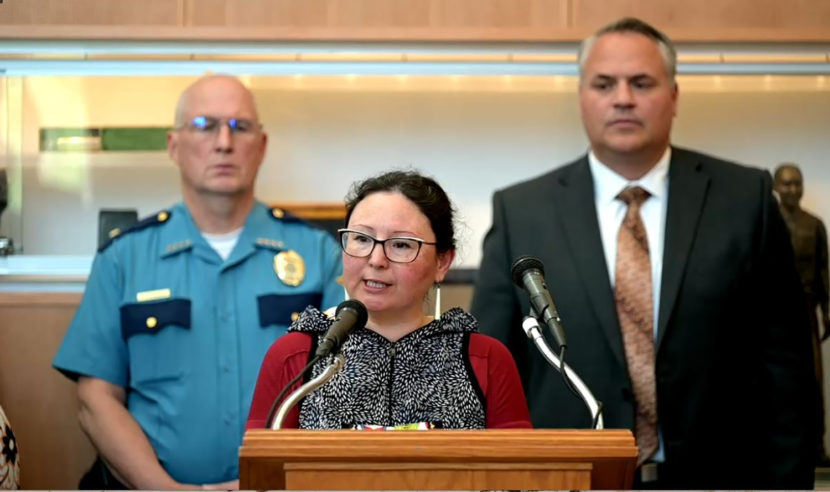
A woman at a lectern with two men standing behind her
Lisa Ellanna of Nome, an advocate for victims of sexual assault, speaks Thursday, July 28, 2022 at the state crime lab in Anchorage during the signing of House Bill 325. (Video screenshot)

Gov. Mike Dunleavy signed a package of public safety-related bills into law Thursday, including a measure that updates Alaska’s definition of sexual assault.

The change had been sought for years by victims’ advocates and allows the state to prosecute someone for sexual assault, even if the victim freezes and doesn’t verbally say “no.” Pre-existing law said only that an assault took place without consent if someone was threatened by force.

Victim advocate Lisa Ellanna of Nome said the change was long overdue and “one of the most important steps the state of Alaska has taken” to protect victims.

Originally authored by Rep. Geran Tarr, D-Anchorage, the change was inserted into House Bill 325, by Rep. Sara Rasmussen, R-Anchorage, on the last day of this year’s legislative session.

Other parts of HB 325, crafted by Rasmussen, expand the definition of domestic abuse to cover situations where an abuser involuntarily shares an explicit picture of a victim.

Rasmussen said the bill “really did become a team effort.”

“I think the stars aligned perfectly for this one, and I think we’ll have a better state moving forward because of it,” she said.

Thursday’s signing ceremony took place at the state crime lab in Anchorage, where Dunleavy also signed two other bills into law.

Senate Bill 7, from Sen. Elvi Gray-Jackson, D-Anchorage, requires the Alaska Department of Public Safety to publish policies and procedures related to police conduct.

The department already publishes these procedures, but Gray-Jackson said that putting the requirement into law ensures that the policies remain available, even with a change in administration.

House Bill 106, introduced by the governor’s office, fulfills a federal requirement that the state submit missing-person reports involving people under 21 to the National Crime Information Center no more than two hours after that person has been reported missing.

Pre-existing state law allowed 24 hours, and only required reporting for children under 18.

Report details Alaska demographics hurt most by 2021 spike in drug overdose deaths

Alaska Health Commissioner Adam Crum stands behind a lectern
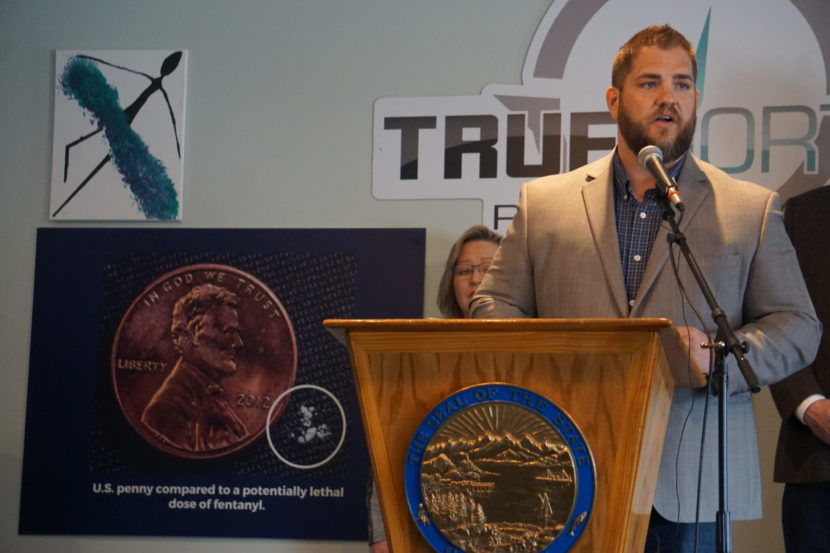
Alaska Health Commissioner Adam Crum, speaking about fentanyl at a May 3 news conference in Wasilla, uses a chart to show that even a tiny amount of the synthetic opioid can be fatal. Behind him is Sandy Snodgrass, the mother of a 22-year-old fentanyl overdose victim, Bruce Snodgrass. The rate of fentanyl-related overdose deaths increased by 150% from 2020 to 2021, according to a new report issued by the Alaska Department of Health. About three-quarters of the state’s opioid deaths last year involved fentanyl, often in combination with other drugs, according to the report. (Photo by Yereth Rosen/Alaska Beacon)

In Alaska, the state with the nation’s biggest increase in drug overdose deaths from 2020 to 2021, certain demographic groups have been at higher risk, according to a newly released report: men more than women, Alaska Native people more than other ethnic groups and Anchorage and Gulf Coast residents more than those in other parts of the state.

The report, issued Thursday by the Alaska Department of Health’s public health division, also highlighted the risks of certain types of drugs and drug combinations.

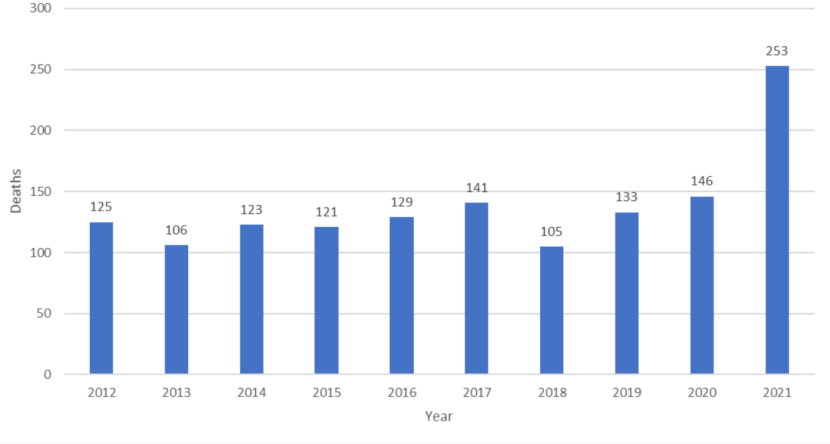
In all, Alaska’s overdose fatalities spiked by 74% in that one-year period, rising from 146 in 2020 to 253 in 2021, the report said. That increase was largely driven by ingestion of fentanyl, a synthetic opioid, and methamphetamine, a psychostimulant, it said. The rate of deaths for overdoses involving fentanyl increased by 150% in that single year, and the death rate for overdoses involving methamphetamine increased by 148%, the report said.

Drug mixtures were involved in most of the overdose deaths since 2017. In those years, 58% of the deaths were in cases where victims combined drugs from more than one narcotic, sedative or psychotropic category, the report said. About a third of the fatalities during that period were of people who had mixtures from at least three categories of drugs.

That record shows a need for more education about the risks of combining substances, the report said.

In particular, fentanyl was involved in nearly three-quarter of the opioid deaths, many of which also involved mixtures with methamphetamine or heroin, it said. “The high potency of fentanyl combined with the tendency for mixing or co-use with other substances complicates intervention and treatment efforts,” it said.

Among demographic groups, the overdose rate for males was 42.9 per 100,000, compared to 26.9 per 100,000 for females, the report said.

A bar graph showing overdose deaths in Alaska from 2012 t0 2021. The highest number before 2021 is 146. The number of overdose deaths in 2021 is 253.
Alaska drug overdose deaths, as tracked from 2012 to 2021 by the state Division of Public Health. The graph is from the division’s 2021 Drug Mortality Overdose Update. (Graph provided by Alaska Division of Public Health)

For Alaska Native and American Indian people, the 2021 overdose rate was 77.7 per 100,000 people, compared to a 2021 rate of 28.8 for white Alaskans. For both Indigenous and white Alaskans, overdose death rates increased substantially from 2020 to 2021. For Black Alaskans, the death rates rose slightly from 2020 to 2021. For Asian/Pacific Islanders and Hispanics, the total overdose death numbers were too small to discern a trend.

Within Anchorage, the 2021 overdose death rate was 49.3 per 100,000 people, compared to the statewide rate of 35.2. The Gulf Coast had Alaska’s second-highest regional rate for 2021 overdose deaths at 40.3 per 100,000 people. The Gulf Coast includes the Kenai Peninsula and Kodiak Island boroughs and the Chugach and Copper River census areas.

The age groups with the highest rates for overdose deaths are young adults 25 to 34 years old and middle-aged adults 45 to 54 years old, according to the report.

The statistics can be used to help guide prevention and response programs, the report said. “Engaging with people at high risk of overdose is key to preventing more deaths,” it said.

The statistics in the report are preliminary. The 2021 number may not be complete and could change, the report said.

Site notifications
Update notification options
Subscribe to notifications