Alaska Beacon

Alaska Beacon is part of States Newsroom, a network of news bureaus supported by grants and a coalition of donors as a 501c(3) public charity. Alaska Beacon maintains editorial independence. Contact Editor Claire Stremple for questions: info@alaskabeacon.com. Follow Alaska Beacon on Facebook, Bluesky and Twitter.

Weeks from restarting, schools across Alaska are struggling to find teachers

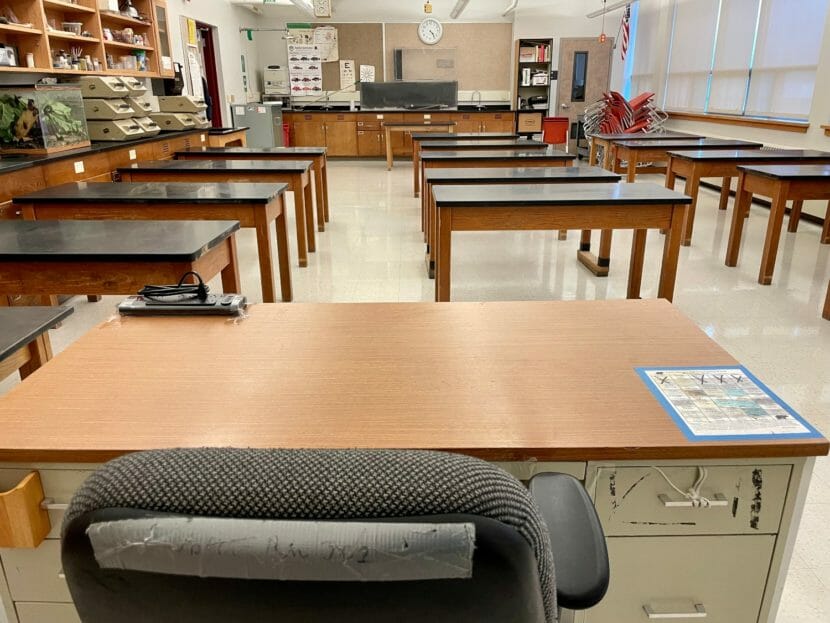
An empty classroom
An empty classroom at Juneau-Douglas High School: Yadaa.at Kalé in Juneau on Wednesday. With the new school year approaching, school districts throughout the state are struggling to properly staff schools and classrooms. (Photo by Lisa Phu/Alaska Beacon)

Bobby Bolen is trying to fill around 50 teaching positions at the North Slope Borough School District.

“This is our focus 24 hours a day right now — to get classrooms staffed for students,” Bolen said.

Bolen is the brand-new human resources director at the North Slope Borough School District, which has around 2,000 students in 12 schools, some of which start as soon as Aug. 8. He’s exploring options like long-term substitutes and the prospect of international teachers to round out the district’s usual teaching staff of around 170.

“Our worst-case scenario would be distance delivery. That’s obviously not our goal and that’s not our preference, but you know, we do have some experience with it as a result of COVID, so if we have to revert to it to get some initial schools started, then we’re prepared to do that,” Bolen said.

With the new school year approaching, school districts throughout the state are struggling to properly staff schools and classrooms. The national teacher shortage, which pre-dates the pandemic, is uniquely felt in Alaska, which has historically relied on recruiting teachers from the Lower 48.

“We’re in the worst place with this that Alaska has ever seen,” said Lisa Parady, executive director of the Alaska Council of School Administrators.

“What I’m hearing from administrators is that many districts are not staffed. People are working overtime to try to find high-quality educators for our students, and we are at an all-time high in Alaska for turnover at every level,” Parady said.

Other public employers, including the state government, are struggling to fill positions. But the scale of the problem for some school districts is particularly large. According to the Alaska Teacher Placement website, a statewide education job clearinghouse, around 1,100 jobs are open in school districts around Alaska. That includes all areas and levels of school and education staff, from principals, teachers and special education staff to paraeducators, support staff and sports coaches to language teachers, counselors and speech pathologists.

Toni McFadden, manager of Alaska Teacher Placement, said the severity of the issue has been years in the making, “creeping up on us and getting bigger and bigger and bigger.”

The trend can be seen in the declining attendance of the spring job fair Alaska Teacher Placement holds every March.

“Back in the 80s and even the early 90s, there were 1,000-plus candidates looking for jobs. This year, we had about 75 candidates at the spring fair that are looking for jobs,” McFadden said.

“Now, did it go from 1,100 to 75 in one year or two years? No. Every year, it’s just fewer and fewer and fewer. So, this is a problem that’s been going on probably for 15 years or more, but it’s just getting to the point where it’s so severe now that districts are really struggling and they’re desperate to find qualified teachers to put in front of their children.”

A solution from afar

One solution to the teacher shortage in Alaska: hiring teachers from the Philippines.

This past school year, 20 of Kuspuk School District’s 39 teachers were from the Philippines, KYUK reported. The district includes villages along the Kuskokwim River. Gov. Mike Dunleavy last October thanked more than 100 Filipino teachers who came to Alaska to fill positions throughout the state.

The Bering Strait School District started hiring teachers from the Philippines two years ago because there was no one else to fill the vacancies, Chief School Administrator Susan Nedza said. And it’s worked out. Thirty of the district’s returning staff are from the Philippines with J-1 visas, the type of visa given to teachers who are part of a work-based exchange program to the U.S.

“They have years and years of experience, wonderful training. They fit in amazingly. We’ve had no complaints,” Nedza said.

Other districts currently interested in hiring J-1 visa teachers to fill vacancies may have a harder time. The U.S. State Department sent an email in June to sponsor agencies, which facilitate the visa process for the international teachers, saying that teachers placed in rural Alaska “may require additional monitoring and support.”

It said, “exchange teachers may not be fully prepared for the location of their placement” and asked sponsors to ensure “exchange teachers placed in ‘less traditional’ locations are aware of the unique circumstances of those placements, situations they may encounter as a result (e.g., extreme weather, possible challenges in finding certain goods and services, travel considerations, etc.), and who and how to contact sponsor representatives for support and to report any situations affecting their health, safety, and welfare.”

After that email, a few of the sponsor agencies the district works with said they would no longer be placing teachers in Alaska, according to Nedza.

“I’ve asked these companies to, ‘Yeah, go ahead, take a look at the State Department comment. And, of course, you should be monitoring your teachers. Of course, you should make sure that they’re cared for. Of course, you should check on their situation in their job spots. But don’t blacklist Alaska because of some strange misconception,” Nedza said.

“So that’s added a twist this year” to the hiring problem, she said.

Still, Nedza has been able to hire six new J-1 visa teachers from the Philippines for this coming school year. That means 36 of her roughly 250 certified staff members will be from abroad.

Nedza started out with 40 openings going into this school year. She’s down to about three. So, for the moment at least, Nedza is feeling good about staffing. Without those 36 staff from the Philippines though, “I don’t know where we would be,” she said.

(A State Department spokesperson said the department doesn’t comment on leaked internal communication with sponsors, though it “constantly monitors and supports our exchange visitors’ experiences to ensure the health, safety, and welfare of all our participants.”)

Candidates ‘ghost’ or turn down offers

Securing someone to fill a position doesn’t guarantee an educator in the classroom. That’s something school administrators — like Kenai Peninsula Borough School District Superintendent Clayton Holland — have recently experienced for the first time.

“A couple people just didn’t show up. They committed to be with us and didn’t even arrive, didn’t say anything,” Holland said. “It’s a term I’ve heard about now; I guess it’s called ghosting.”

A number of factors are driving the national teacher shortage — burnout, fewer people going into the teaching field, low pay — all of which were exacerbated by the pandemic.

“It’s kind of magnified in Alaska,” said Alaska Teacher Placement’s McFadden. Some Alaska-specific factors include harsh climate, vast geography and isolation, and a lack of amenities.

Since Alaska has relied on recruiting from other states, “people coming from outside of Alaska, the change is just very different for them,” McFadden said.

Florida educator Wayne McKnight, who is 62 years old, was looking for something different when he almost accepted a teaching job in Teller. He has spent 35 years as a behavioral specialist and isn’t ready to retire.

“I was looking for an adventure. I was looking to continue to make an impact on students and I wanted a different kind of experience,” McKnight said. “Alaska definitely appealed to me.”

He was “very excited” when he got the offer letter. To make an informed decision, he talked to returning staff in Teller, who he said “had wonderful experiences.” Ultimately, McKnight didn’t think he “could withstand the weather” and didn’t want to risk the possibility of not being able to fly back home for the holidays due to weather-related travel issues.

He said it was a “difficult decision” to turn the offer down. Unlike some others, McKnight did not ghost anyone. He communicated that he would not be accepting the job.

What the state is doing about the problem

There was another reason McKnight didn’t accept the teaching job in Teller. A day after receiving the offer, he contacted Alaska’s teacher certification office and learned for the first time that he’d be required to take a test and specific courses. His credentials, training and experience from 35 years as an educator in Florida weren’t enough.

“Quite frankly and bluntly, I was not willing to take the extra steps to meet the Alaska requirements that they subjected their employees to, especially when someone’s coming from out of state,” McKnight said, though he added he understands the reasons for the requirements.

Senate Bill 20 changes requirements for testing. It awaits transmittal to the governor.

“In the instances of those individuals coming to us fully licensed with a regular certificate, one of the things that was required was to go through some additional testing,” said Sondra Meredith, administrator for teacher certification at Alaska Department of Education and Early Development.

“We’d have teachers with numbers of years of experience who would need to go back and do additional testing. Senate Bill 20, when it’s fully implemented, will provide a faster route and those testing requirements will be removed,” Meredith said.

Another legislative effort, House Bill 19, which also passed and is awaiting transmittal to the governor, “will open up additional opportunities for world language speakers and Native language speakers to be able to be given more responsibilities in our language immersion schools,” Meredith said.

The state also continues to issue emergency licenses to provide districts “maximum flexibility” when it comes to hiring individuals who may not have all the teacher preparation requirements but have an inclination to teach and the district feels confident having in front of a class, Meredith said.

“At the state level, in the certification realm, we’re trying to find ways to maintain rigor, but also to lessen the barriers,” she said.

The two required courses that McKnight mentioned — Alaska studies and Alaska multicultural coursework — are currently still a requirement.

Alaska used to be more competitive in attracting teachers

Administrators and education experts alike mentioned lack of a pension as a hindrance to recruiting teachers. Those experts include Juneau School District Superintendent Bridget Weiss.

“Alaska used to be super attractive to educators because we had a really good retirement system. That’s not the case anymore. Our retirement system is just not up to speed,” Weiss said.

The state no longer provides pensions to newly hired teachers. Instead, it offers a defined-contribution retirement plan. House Bill 220, which would’ve reopened the state’s closed pension programs for teachers, got some traction in the Legislature but didn’t pass.

In an effort to improve teacher retention and recruitment in Alaska, Gov. Mike Dunleavy formed a working group to identify the root causes of the issues and propose solutions. Based on survey results of Alaska teachers, the group recommended restructuring retirement options as one of its six action plan items.

The other items include strengthening working conditions, developing leadership, enhancing recruitment efforts and opportunities, creating pathways to develop paraprofessionals who work alongside teachers and school administrators, and streamlining certification and recertification.

Some of this work is already happening.

Several districts, including in the Kenai Peninsula and Bering Strait, already have ‘grow your own’ programs that allow districts to fill positions from within, in an effort to become less reliant on recruiting from outside Alaska.

Holland, superintendent in the Kenai Peninsula, said his district, which has 23 open teaching positions, is helping paraeducators pay for teacher preparation college courses.

“I think the state needs to start looking at some funding. That would be one of our legislative priorities – can there be an allocation to support programs like this?” said Holland.

Even with these kinds of efforts, Juneau superintendent Weiss doesn’t think it’s enough.

“I think that all those efforts are going to be for naught if we cannot compete with our retirement system,” Weiss said.

In Fairbanks, North Star Borough School District Chief School Administrator Karen Melin said she’s not worried about filling the 70 vacant teacher positions.

“I’m not worried because I’m pretty convinced we’re not going to be able to fill them at this point. This is our current reality. We’re going to start the school year short of positions,” Melin said. “So, how do we successfully deliver an excellent education to our students given our current reality?”

That brainstorming is happening now. Ideas include contacting retired teachers, looking at substitute lists, and only offering classes at one high school if it’s close to another.

Melin said the teacher shortage is a symptom of a larger problem.

“The greater problem is the way that we do public education. We’re not able to sustain ourselves as a public education system. So what does that mean for what we have to do different? That to me is the bigger question,” she said. “Yes, we will always need to have teachers. But I think fundamentally, the occupation has shifted, and so fundamentally, as a larger system, we need to think about how we shift with it.”

Almost 1 in 5 Alaska state jobs is vacant as agencies struggle to hire, retain employees

""
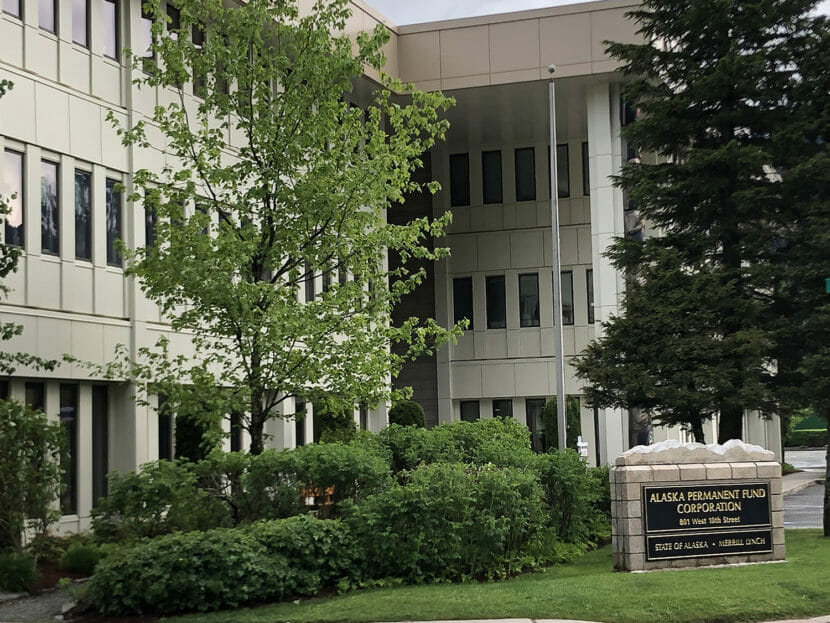
The offices of the Alaska Permanent Fund Corp. are seen Monday, June 6, 2022 in Juneau, Alaska. (Photo by James Brooks/Alaska Beacon)

The top employees of the Alaska Permanent Fund Corp. are some of the highest-paid public workers in Alaska, but with wages rising across the country and employers competing for skilled labor, even the Permanent Fund is struggling to keep employees from leaving.

Nine of the corporation’s 66 employees have quit this year, including the manager of the corporation’s highest-earning investments, and the entire three-person team in charge of finalizing trades. Seven other positions are new, and filling them is expected to be difficult.

The APFC’s struggles are being shared across state government, according to a May 31 vacancy report published in response to a public records request.

Among the listings:

  • 30% of the 196 positions in charge of child support are unfilled;
  • 16% of the 142 jobs at the Department of Motor Vehicles are vacant;
  • The state’s commercial fisheries division is missing 21% of its 666-person workforce; and
  • Almost 60% of the state ferry system’s 1,275 jobs are vacant.

Some vacancies are inevitable as employees come and go, but the Office of Management and Budget expects vacancy rates to stay between 0-7%, based on the size of a division or office.

Across all branches right now, 19.3% of the state’s 17,006 jobs, almost one in five, are vacant.

Those vacancies have canceled ferries, slowed state services and have created worries at the Permanent Fund Corp.

Since 2018, an annual transfer from the Permanent Fund to the state treasury has accounted for at least half of the state’s annual revenue.

Employees from the Permanent Fund Corp. are in charge of investing the fund in such a way that the transfers will continue without hurting the fund’s long-term value.

“When you have gaps and staffing issues in this team, it can have a financial impact on the fund,” Acting Executive Director Valerie Mertz said earlier this month, speaking about the departure of all three members of the corporation’s investment operations team.

She said the corporation will have to temporarily outsource the work.

“That will be more costly, but we’re really left with no choice at this point,” Mertz said.

At another state-owned corporation, the Alaska Industrial Development and Export Authority, talk of outsourcing led a board member to briefly offer his resignation.

AIDEA is the state’s investment bank, putting public money to work on development projects across Alaska, but in early June, 20 of its 83 positions were vacant.

“I don’t think we stand out as an anomaly,” said AIDEA’s executive director, Alan Weitzner.

AIDEA is developing the Ambler Road, a 211-mile gravel highway intended to reach mining projects in northwest Alaska. Because of problems hiring staff, AIDEA has outsourced some work it would normally handle in-house.

During a late-May discussion about staffing issues, AIDEA board chairman Dana Pruhs asked whether more positions might need to be outsourced. Later in the meeting, Pruhs apologized for inadvertently insulting current staff and offered to quit the board. He remains a member.

AIDEA and other state agencies have tried aggressively recruiting through social media, job fairs, headhunting firms and more.

A white pickup truck with a sign mounted in the bed that reads "Alaska Department of Corrections $10,000 hiring bonus"
The Alaska Department of Corrections advertises its $10,000 hiring bonus during a July Fourth parade in Juneau on July 4, 2022. (Photo by Lisa Phu/Alaska Beacon)

During the Fourth of July parade in Juneau, a truck carried a banner promising a $10,000 signing bonus for new employees of the Alaska Department of Corrections.

The Alaska Marine Highway System is offering a $5,000 bonus for new employees from the Inlandboatman’s union and has hired a professional recruitment agency to help.

But even when the state finds an employee, it’s not always enough. At AIDEA, human resources director Megan Schmidt said it can take two to four weeks to get approval from the Office of Management and Budget to hire a candidate, even when the position is budgeted and the interviews are over.

Sometimes, she said, that candidate has taken a job with someone else in the meantime.

“I think we’re getting hit as hard as everybody else,” said Craig Richards, chairman of the Permanent Fund Corp.’s Board of Trustees.

Richards said the corporation’s hiring problems predate the state’s recent trouble. Over the past five years, the corporation has had 43 employees quit for other jobs.

“It is an acute problem,” Chad Brown, the corporation’s HR director, told trustees this month.

Brown said it’s “pretty easy to identify the primary reason why a person is leaving. … Compensation is always No. 1 or No. 2.”

“Compensation was a consideration for me, and it is for everyone who leaves,” said Steve Moseley, formerly head of the Permanent Fund’s alternative investments division.

Before leaving the Permanent Fund, Moseley oversaw private-equity investments, which have been by far the most successful segment of the fund and were the main source of its record-breaking growth last year. He now works with a private firm in New York City.

Moseley contrasted the Permanent Fund with a private business like a brewery. That brewery can raise its salaries without consulting the governor or Legislature or could get creative with incentives.

“We could respond, we could pre-empt (people leaving). Presumably, we could offer to pay people more or we could create a growth opportunity for them, open another office or introduce a new brand and put them in charge,” he said.

“Compensation is a real issue,” Moseley said. “I didn’t leave just over money, but it’s the easiest thing to measure, and probably because it’s one of the hardest things to fix, it remains one of the biggest problems, and I think it explains the turnover (at the Permanent Fund).”

The Permanent Fund’s trustees are answering that issue by advancing the idea of a “salary reset” that will benchmark employee pay according to what similar organizations pay elsewhere.

There’s no American institution exactly like the Permanent Fund Corp., so the corporation is planning to hire a consultant as part of a long-term project.

In the meantime, Richards said, the corporation will likely take some kind of interim step for employees this year. One possibility — yet to be decided — involves diverting money intended for performance bonuses.

Other state agencies could see pay hikes as well. This year, the Alaska Legislature passed House Bill 226, which calls for a 5% across-the-board pay hike for nonunion state employees.

State attorneys would get a 20% hike, and employees of the judicial branch — excluding judges — would get a 10% hike.

That bill is now on the desk of Gov. Mike Dunleavy, who has until Aug. 1 to sign it, veto it, or allow it to become law without his signature.

“The state and the private sector are both experiencing challenges recruiting new workers. This is a problem that is occurring not only in Alaska, but across the country,” said Jeff Turner, the governor’s deputy communications director.

“Each state department has ongoing recruitment campaigns and all open positions are advertised on Workplace Alaska. Alaskans looking for work are strongly encouraged to apply for any position they are qualified for,” he said.

Earlier this year, Dunleavy vetoed several million dollars intended to pay hiring and retention bonuses.

The governor’s office did not say whether he would do the same for the bill to raise non-union state workers’ pay, but Rep. Andy Josephson, D-Anchorage and the sponsor of the bill, said he believes the governor will allow it to become law without his signature.

“The first paycheck that is supposed to be reflected with the higher pay should come on Halloween Day, I’m told,” he said.


Alaskans can now dial 988 to reach mental health crisis hotline

""
The three-digit number for suicide prevention and mental health crisis support is operational in Alaska and across the nation as of July 16, 2022. (Photo by Lisa Phu/Alaska Beacon)

Alaskans who find themselves in a mental health crisis can now call or text 988 to access a trained crisis counselor. Support is available 24 hours a day, seven days a week to individuals of all ages.

The three-digit number for suicide prevention and mental health crisis support became operational in Alaska and across the nation on July 16.

Leah Van Kirk, statewide suicide prevention coordinator with the Alaska Division of Behavioral Health, said 988 “provides an easy to remember three-digit number for someone to use when they’re in crisis or when they’re in emotional distress.”

“It’s for anyone that’s experiencing emotional distress, mental health crisis, substance use crisis, thoughts of suicide, and also for someone who maybe has a friend or a loved one who they’re worried about and they want to get help,” she said. “So it’s to support those in crisis and those who are maybe trying to help someone in crisis and aren’t sure how.”

Callers in Alaska using the three-digit number from a 907 area code will be connected to Careline Alaska based in Fairbanks. Counselors are trained to respond to a crisis, provide emotional support and connect callers with local resources. Confidential support is available to anyone in crisis, including non-English speakers and those who are deaf or hard of hearing.

“The Careline and 988 are answered by Alaskans for Alaskans because we know what it’s like here,” Van Kirk said. “Having a call center here run by Alaskans is really important.”

In 2020, the suicide rate in Alaska was 28.1 per 100,000 people, more than twice the national average, according to Van Kirk. That same year, suicide was the second leading cause of death overall for youth and young adults ages 15 to 34 in Alaska. It’s also preventable.

“Sometimes when people call they just need someone to talk to. One of the things that we know about our crisis call center is that it decreases suicidality. So being able to reach out and talk to somebody helps reduce risk,” Van Kirk said.

Between 2017 and 2020, Careline Alaska received over 20,000 calls each year. Van Kirk expects that to go up with the implementation of 988. The state has allocated $1.3 million to support increases in staffing, technology and a small media campaign targeting youth and young adults. The money comes from COVID-19 Supplemental and American Rescue Plan Act Mental Health Block grant funding.

Part of transitioning to 988 also involves coordination with 911 dispatchers who can transfer calls that don’t involve a medical, fire or police emergency.

“It just reduces need for a law enforcement response when somebody is struggling with a mental health crisis,” Van Kirk said.

Those in Alaska calling 988 from an area code other than 907 will be connected to that state’s crisis center network. Nationally, the 988 Suicide and Crisis Lifeline is a network of more than 200 crisis centers. There’s also an option to chat online with a crisis counselor at 988lifeline.org/chat.

The numbers for the National Suicide Prevention Lifeline – 800-273-8255 – and Careline Alaska – 877-266-HELP – still work.

Alaskapox a subject of scientific intrigue while world copes with more dangerous monkeypox

A lone vole
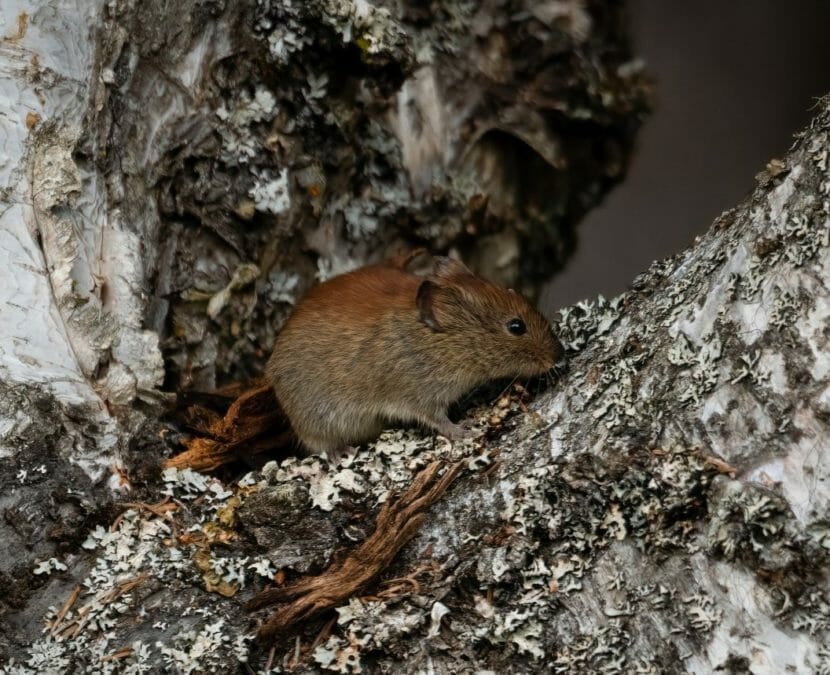
A northern red-backed vole scampers through a forested area of the Kenai Peninsula. Voles and other small mammals are the likely reservoirs of Alaskapox virus, a recently identified and much more rare relative of the monkeypox virus. (Photo by Colin Canturbury/U.S. Fish and Wildlife Service)

Monkeypox, a potentially deadly disease caused by a virulent strain of a virus in the Orthopoxvirus genus, is spreading at an alarming rate, with over 1,800 U.S. cases identified as of mid-July in all but seven states.

Farther north, there is a much rarer, much more recently discovered and apparently much more benign cousin of monkeypox: Alaskapox.

From all indications, the reservoir for the Alaskapox virus is small mammals — as is the case with monkeypox, which contrary to its name, appears to be maintained in rodent populations.

No cases of monkeypox have been detected in Alaska, even though the state Department of Health has urged residents to be on the lookout for it.

As of now, only four people are known to have ever been infected with Alaskapox, three women and one child, all in the Fairbanks area. Since then, investigators have tracked the virus to tiny voles and similar animals that scurry around the region’s boreal forest.

The first human case was in 2015 and discovered by Dr. Zachary Werle of Fairbanks, who treated a patient with what seemed like a spider or insect bite, along with some other illness symptoms that included fatigue and swollen lymph nodes. Werle took a sample, sent it off for analysis, and it was ultimately identified by the Centers for Disease Control and Prevention as a new-to-science strain in the Orthopoxvirus family. It got named for the state where it was discovered.

Two people collecting samples in a boreal forest
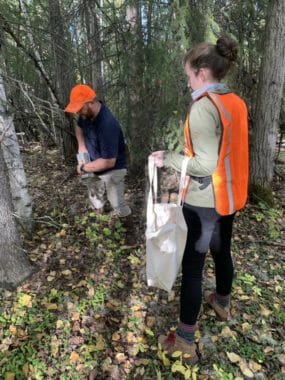
Katherine Newell, a CDC Epidemic Intelligence Service officer assigned to the Alaska Department of Health, works with colleague Clint Morgan in the Fairbanks area to collect small mammals that might be carrying the novel Alaskapox virus. The trapping campaign, conducted in September of 2021, found about three dozen small animals with signs of past viral infection or carrying the virus itself. Most of the affected animals were red-backed voles. (Photo by Dr. Florence Whitehill/CDC)

The second case was in 2020, and two more cases emerged last year. Among the four patients, three were in households with pet cats or dogs or both, which might have been the links between the wild populations and people. There is no evidence that Alaskpox can be spread between people.

While the symptoms have been uncomfortable, Alaskapox has been nothing like its more serious relatives: smallpox, which was present for thousands of years and is believed to have killed more than 300 million people in the 20th century alone but was eradicated globally by 1980, and monkeypox, which causes milder smallpox-like symptoms but nonetheless can cause fatalities, especially among young children, according to the World Health Organization.

Alaskapox does not seem to pose much of a threat to people — at least, not yet.

“It’s difficult to know how a new virus will behave in a population when we only have four cases. We can’t say that it affects all individuals in a population in the same way because we just don’t have the data,” said Katherine Newell, a CDC Epidemic Intelligence Service officer assigned to the Alaska Department of Health. “We don’t know how it might affect, for example, immunocompromised individuals or individuals with serious underlying health conditions because we haven’t seen those population groups affected.”

It is possible that more people have been unknowingly infected, as the symptoms are “pretty non-specific,” Newell said. “A lot of people might just think it’s just a spider bite and feel slightly under the weather and not think much more of it,” she said. Hence the public education campaign by state health officials, she said.

Discovery grabs attention and raises questions

As a newly identified zoonotic disease – meaning a disease that can pass between species – it has gotten a lot of attention from scientists at the CDC and elsewhere. “As with any emerging infectious disease, the CDC is always going to be very interested in finding as much as we can about the virus,” Newell said.

A key question is: How broadly is this spread in the environment?

After last year’s two cases were identified, Newell and colleagues from University of Alaska Fairbanks and the CDC fanned out into the boreal forest around Fairbanks last September to try to get some answers. They trapped 209 small mammals to get tissue and blood samples. The results: 32 of the animals, mostly red-backed voles but also flying and red squirrels, had antibodies showing exposure to some type of Orthopoxvirus, and seven red-backed voles were carrying Alaskapox virus, as shown by DNA analysis.

None of those animals appeared to be affected by Alaskapox or any related virus. “We didn’t find any lesions and they didn’t look sick,” she said.

Another question to be answered: How long has Alaskapox been in the environment?

Newell and her colleagues discovered that Alaskapox predates the discovery of human infections by at least a couple of decades. Tests of animal tissue samples stored at the University of Alaska Museum of the North revealed signs of the virus in red-backed voles dating back to the 1990s, she said.

That compares to monkeypox, which was discovered in 1958 in captive monkeys in Denmark, with the first human infection recorded in 1970 in a baby boy in the Democratic Republic of Congo. So far, the current outbreak has resulted in about 22,500 documented cases globally, according to the CDC.

Discoveries show importance of often-neglected small mammals

To Falk Huettmann of UAF’s Institute of Arctic Biology, the recent Alaskapox discoveries carry lessons about environmental health and zoonoses.

There are all sorts of viruses and diseases running through animal populations, such as the current highly pathogenic avian influenza, Huettmann said. The vast majority are unknown to people, he said.

“The issue is about detection. You need to detect to confirm,” he said. When zoonotic diseases are discovered, it’s either by random chance or when there’s a problem “so big that you can’t ignore it,” he said. “In the meantime, there is a lot of stuff out there that we don’t know.”

Another lesson is the importance of small mammals, which are critical parts of entire ecosystems. “They get overlooked,” he said. “Small mammals are not well understood. They’re not well-studied. We do not understand what are the dangers.”

A squirrel in a conifer, nibbling on a cone
A red squirrel nibbles a spruce cone in the BLM Campbell Tract in Anchorage in 2005. Tests of small mammals trapped in the Fairbanks area found some red squirrels with antibodies showing evidence of exposure to some type of Orthopoxvirus, though not necessarily Alaskapox. That newly discovered virus has been circulating among small mammals in Interior Alaska. (Photo by Donna Dewhurst/U.S. Fish and Wildlife Service)

To illustrate his point, Huettmann pointed to budgeting decisions at the state level. The Alaska Department of Fish and Game’s Division of Wildlife Conservation has over 200 staffers, including several biologists managing and studying animals like moose, caribou and bears, but only five positions for biologists devoted to study of non-game species.

A third lesson is about how people can disrupt nature and the natural wildlife population cycles, he said. Those disruptions include human-caused climate change and introduction of vectors through travel and transportation. “All these cycles are really off,” he said. “I think the human system has overruled the natural cycles.”

Alaskapox is not the only new Orthopoxvirus discovered in recent years.

In the nation of Georgia, a new virus was discovered in 2013 in lesions on the skin of a pair of cattle herders. Further investigation found the virus, named Akhmeta after the town where it was discovered, among small mammals like mice.

In Italy in 2015, a new Orthopoxvirus was found in captive monkeys at a sanctuary, 12 of which died. Follow-up testing found signs of that virus, named Abatino, in small rodents.

Correction: This story has been updated to reflect the number of division biologists assigned to the study of small animals. In addition, a caption for a photograph has been updated to correctly identify a CDC investigator as Clint Morgan.

Facing lawsuits, Alaska lawmakers consider new social media policy

""
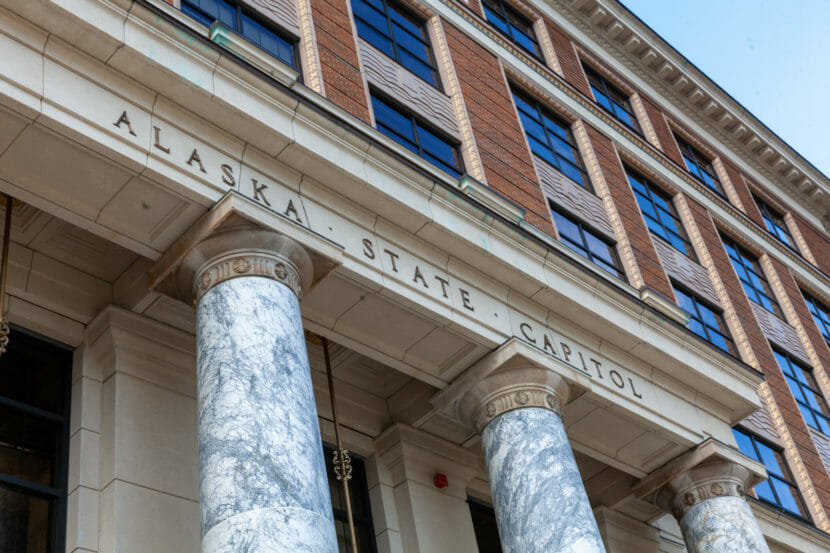
The Alaska State Capitol on April 22, 2022, in Juneau, Alaska. (Photo by Rashah McChesney)

With two of its members facing lawsuits for their social media practices, the Alaska Legislature is contemplating new advice and policies to cover its 60 members.

On Thursday, the joint House-Senate Legislative Council unveiled its first draft of a new policy, but individual lawmakers voiced objections to the proposal, and further revisions are expected before a final policy is settled.

As explained by legislative staff, the draft policy is an “everything or nothing” approach that advises lawmakers to not discuss legislative issues or business on their personal social media accounts.

If a lawmaker runs an official legislative account on social media, the policy recommends that the lawmaker either prohibit all public comments or allow all comments, regardless of their content.

“Regardless of whether what’s being written or commented is hateful, defamatory … the recommendation is you don’t delete, you don’t block, you don’t hide. Everything goes or nothing goes is the safest way to avoid risk of litigation,” said Jessica Geary, director of the Legislative Affairs Agency, which provides administration support to lawmakers.

“I can’t support this as written,” said Senate Majority Leader Shelley Hughes, R-Palmer.

Hughes was among the lawmakers who said the policy as currently written could create a platform for negative acts.

“I don’t want an X-rated Facebook page and I don’t want to enable criminal action,” she said.

Thursday’s discussion came in response to a series of legal disputes between legislators and people blocked from their social media pages:

  • In 2021, Sen. Lora Reinbold, R-Eagle River, was sued by a Chugiak resident who alleges that Reinbold violated her free-speech rights when she was blocked from Reinbold’s Facebook page. That case is now in the hands of an Anchorage Superior Court judge, who has yet to issue a ruling.
  • Rep. Kevin McCabe, R-Big Lake, was sued in June by Mark Kelsey, the former publisher of the Mat-Su Valley Frontiersman newspaper, on similar grounds.
  • Senate President Peter Micciche, R-Soldotna, was sued in 2021 by a constituent who was blocked from his account on Twitter. She dropped the case after he lifted the block.

In general, legislators have said that they need to be able to block abusive commenters who discourage others from participating online.

“We don’t want to create a loophole for hate, bullying or slander,” Reinbold said during Thursday’s meeting.

Courts in various jurisdictions have ruled in different ways, with some saying that blocking constituents amounts to government restrictions on free speech. Alaska has no case law on the issue. The suit involving Reinbold is the first of its kind.

The Legislature’s existing social media policy hasn’t been updated since 2011, and Geary said the draft came about after lawmakers consulted with national organizations including the Council of State Governments and the National Conference of State Legislatures.

She said the draft is modeled after a similar document in Colorado.

In response to criticism, Rep. Sara Hannan, D-Juneau and the chair of the Legislative Council, said that Thursday’s document is only a draft and may change significantly before final adoption.

As Kuskokwim fishing lawsuit grows, lawyers say subsistence could be affected across Alaska

People building a fish wheel on a river
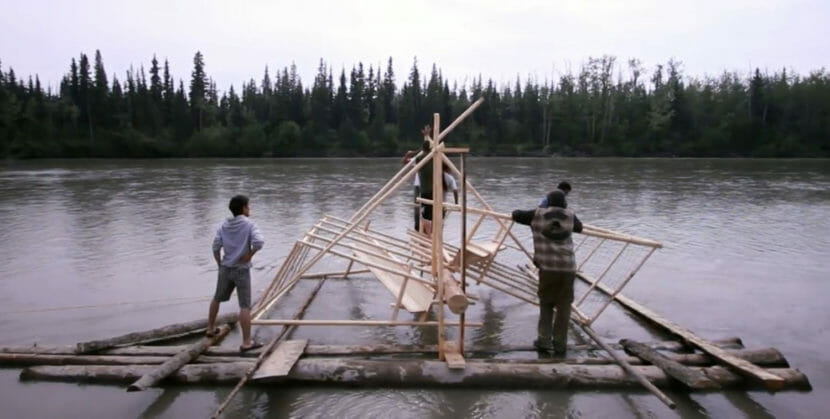
Residents of Nikolai, Alaska are seen building a fish wheel on the Kuskokwim River in June 2013 in this image from a National Park Service documentary. (Image by National Park Service/Charlotte Bodak)

A legal dispute between the U.S. government and the state of Alaska about subsistence fishing on the Kuskokwim River is growing, and a leading Native corporation says it could endanger subsistence hunting and fishing rights across Alaska.

In a filing this month, attorneys representing Ahtna Inc. said the state is arguing a position that — if upheld by a federal judge — could overturn the famed Katie John decisions that confirmed preferential subsistence hunting and fishing rights for rural Alaskans on federal lands and waters here.

“It’s a really big deal, and they’re kind of being sneaky about it,” said Anna Crary, an attorney representing Ahtna.

For years, state and federal officials have issued conflicting orders opening and closing salmon fishing on the Kuskokwim River in the Yukon Delta National Wildlife Refuge. These conflicts confused fishermen.

The state’s openings allowed all Alaskans to fish; the federal openings only allowed qualified subsistence users to fish.

In May, the federal government sued the state, seeking an injunction to block the state’s actions.

One month later, a federal judge ruled in favor of the federal government, issuing an order that temporarily prevents the Alaska Department of Fish and Game from opening gillnet fishing.

Meanwhile, the case is continuing toward a final, permanent result.

Consequences beyond the Kuskokwim

In a filing Thursday and in prior court documents, attorneys representing the state said Fish and Game should be in charge of deciding openings, among other reasons, because the Kuskokwim River “is not ‘public land’ under ANILCA.”

The Alaska National Interest Lands Conservation Act, a federal law, mandates preferential treatment for rural fishermen and hunters.

Because the Alaska Constitution mandates equal treatment for all fishermen and hunters, it’s illegal for the state to run a rural-preference program.

If the Kuskokwim is public land, the state — not the federal government — is in charge, and there’s no rural preference.

The definition of “public land” determines where preferential treatment applies, and a series of cases known as the Katie John decisions interpret how the federal programs run.

If the Kuskokwim is not public land, many other rivers may not be public either, overturning much of the legal ground beneath the Katie John decisions.

“If successful, the state’s attack upon the application of the rural priority to navigable waters will have far-reaching consequences extending well beyond the Kuskokwim River,” Ahtna’s attorneys said.

Arsenal of arguments

The state’s argument that the Kuskokwim River is not “public land” is one of seven affirmative defenses raised by the state in the lawsuit.

That makes the argument just one of multiple weapons in the state’s legal arsenal, and it may not be used, Crary said.

“I think that the state is using or raising a number of other arguments that it appears to be prioritizing,” she said. “But in the event that those arguments are not successful, what the state is doing is preserving for itself the opportunity to litigate that issue.”

Asked whether it is attempting to overturn Katie John, the Alaska Department of Law did not answer directly.

“We are in the very early stages of litigation,” said Patty Sullivan, communications director for the Alaska Department of Law, which is representing the state in the lawsuit. “The purpose of the (filing) is to preserve any potential defenses or claims, which will be fully evaluated and developed as the case proceeds. We are continually in the process of determining when and how to raise the appropriate claims and defenses in order to best represent Alaska on this matter of utmost importance.”

“Alaska’s right to manage its fish and game resources is critically important to our social, cultural and economic well-being,” Sullivan said. “The right to manage our resources was a primary driver for our statehood and was granted to our state under its statehood compact. The state primacy to manage its resources was not changed with the passage of ANILCA.”

“We believe that what the government is seeking would expand federal authority beyond any statutory justification and would undermine the careful balance between state and federal authority reached in ANILCA,” Sullivan said.

In 2018, when the U.S. Supreme Court considered the boundaries of state and federal control in a case known as Sturgeon, the state urged the court to leave Katie John precedent in place.

Since then, the state has pushed back against actions by the Federal Subsistence Board, which operates under that precedent.

In addition to the Kuskokwim lawsuit, the state has challenged the board’s ability to open special hunting seasons and regulate hunting in other ways. After losing in Alaska District Court, the state has appealed its loss to the 9th Circuit Court of Appeals.

The Department of Law appears to be readying itself for the possibility of a lengthy legal battle over the Kuskokwim River as well.

In a public notice published Friday, the Department of Law said it plans to hire a private firm to represent the state in the Kuskokwim case. It estimates that fighting the case in federal district court will cost $250,000.

That estimate was accompanied by a cautionary note: “It is not possible to accurately estimate the total amount of this contract, as it may be settled, or appealed and continued to be litigated, even as far as the Supreme Court.”

Site notifications
Update notification options
Subscribe to notifications