Alaska Public Media

Alaska Public Media is one of our partner stations in Anchorage. KTOO collaborates with partners across the state to cover important news and to share stories with our audiences.

Alaskans would see spike in health insurance rates if Congress lets subsidies expire

the outside of a hospital
People without health insurance may have no where to go for routine care and turn to hospital emergency rooms, straining hospitals. (Jeff Chen/Alaska Public Media)

WASHINGTON — Unless Congress steps in with a solution, thousands of Alaskans will lose health insurance subsidies at the end of December and see the cost of their premiums shoot up.

For a dramatic example of what will happen, consider an Alaska couple in their 60s who earn about $53,000 a year each.

They now pay less than 9% of their income to get two silver-level plans. If their subsidies go away, they’d spend almost 50% of their income to keep those insurance plans.

That’s an impossible increase, said Sen. Lisa Murkowski.

“Now, you tell me, who out there can find an additional half of their income to go towards insurance?” she asked.

This fictitious middle-aged, middle-income couple are a subset of the roughly 25,000 Alaskans who buy subsidized insurance plans. They are small-business owners and their employees, fishermen or people who work for non-profits — really, anybody who earns modest pay and does not have employer-sponsored insurance.

The imaginary couple, and a few thousand Alaskans like them, would be affected the most if what’s known as “enhanced premium tax credits” expire at the end of the year. But nearly every Alaskan who buys insurance on the marketplace would see their payments rise, too. Ultimately, it strains the health care system everyone relies on, especially so in Alaska, where health insurance rates are among the highest in the nation.

Murkowski isn’t the only person in Congress to notice. The expiring subsidies are at the heart of the budget standoff that has the government teetering on the edge of a shutdown.

Murkowski thinks the list of Democratic demands to avoid a shut down goes too far, but she agrees with them that the enhanced premium tax credits shouldn’t expire this year.

“As we look to how we keep the government open, let’s also figure out how we avoid this looming crisis with the cost of insurance,” she said.

The enhanced tax credits were adopted during the COVID pandemic. They increased the original Affordable Care Act subsidies, and for the first time, extended them to people who earned more than the initial group, such as the fictitious 60-year-olds in our example.

If the enhanced credits disappear, leaving only the classic ACA subsidies, the Alaska Division of Insurance calculates on average, subsidized consumers would have to pay more than double what they pay now.

“Doubling and tripling of premiums is substantial. I think it’s fair to say we can expect to lose quite a few Alaskans in terms of having insurance coverage,” said Alaska Hospital & Healthcare Association President Jared Kosin.

He predicts some people will stop buying insurance, then stop getting routine care at clinics and doctors’ offices.

“They have nowhere else to go, and so that starts to put more pressure on emergency rooms,” he said. “It puts more pressure on hospitals, because that care will be completely unpaid for.”

State Rep. Genevieve Mina, D-Anchorage, foresees cascading effects, just when a number of poorer Alaskans are losing coverage from Medicaid.

“And we all know that uninsured people increases uncompensated care, which increases costs for everybody else,” she said.

The Alaska Legislature passed a resolution this spring calling on Alaska’s congressional delegation to press for an extension of the tax credits.

U.S. Sen. Dan Sullivan did not grant an interview request. A spokeswoman said by email that he’s talking to colleagues and the Trump administration to try to prevent the expiration of the subsidies.

Congressman Nick Begich’s office did not grant an interview request nor provide a statement.
14 Alaska state lawmakers ask Congress to oppose cuts to science agencies

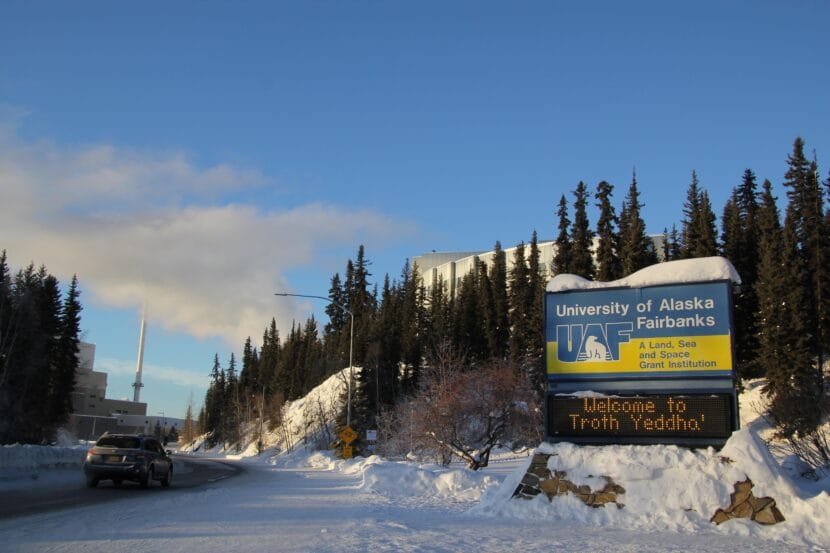
A winding road leading up to a large building with a large smokestack. A sign that says "University of alaska Fairbanks" is in the foreground with "Welcome to Troth Teddha'" on a light-up sign. The scene is snowy with spruce trees on a hillside
The entrance to UAF in Feb. 2022. (Lex Treinen/Alaska Public Media)

Democrats and independents in the Alaska State Legislature are urging Congress to preserve federal funding for science and research. In a letter sent Friday, 14 lawmakers urged the state’s all-Republican congressional delegation to oppose cuts that President Donald Trump proposed in his 2026 budget.

“The University of Alaska – and especially the University of Alaska Fairbanks – conducts world-class arctic research that helps to lead the world in solving practical challenges that face the Arctic and beyond,” the lawmakers wrote.

Fairbanks Democratic Rep. Ashley Carrick wrote the letter asking the delegation to resist cuts to NASA, the National Science Foundation and the National Oceanic and Atmospheric Administration. Her district includes the main campus of the University of Alaska Fairbanks, and she said in an interview that cuts to federal funding would undermine research on everything from Arctic health to drones.

“These research dollars don’t just impact the studies that are currently ongoing, but they also impact all of the real-life applications of research that’s happening in Alaska, across the Arctic and around the country,” Carrick said.

Trump’s budget would slash funding for basic scientific research by roughly a third, according to the American Association for the Advancement of Science, an advocacy group. Wide-ranging layoffs and grant cancellations have already caused chaos for researchers who rely on federal support.

But a president’s budget is just a proposal. Congress decides what to spend money on when it passes appropriations bills.

The House and Senate have yet to agree on a spending bill that would fund agencies like NASA and NOAA for the next year, but the appropriations committees have shown little appetite for the deep cuts to scientific agencies Trump has proposed.

A spokesperson for one appropriations committee member, Sen. Lisa Murkowski, said she has long supported the University of Alaska’s partnerships with federal agencies.

“Senator Murkowski has long championed the partnership between the University of Alaska and federal agencies that bring jobs, students, and breakthrough research to our state. As a senior appropriator, she voted to advance the FY26 CJS Appropriations Bill — which funds NASA, NOAA, and NSF — through full committee,” spokesperson Joe Plesha said via email. “She hopes the bill will be considered by the full Senate promptly so the University can be assured that the world-class work it does will continue in Alaska.”

A spokesperson said Sen. Dan Sullivan was not available. Rep. Nick Begich III’s office did not respond to a request for comment.

For now, Republicans and Democrats in Congress are at loggerheads over a short-term spending bill to avert an impending government shutdown.

The 2025 Alaska Permanent Fund dividend will be $1,000

Alaskans file their Permanent Fund dividend applications in downtown Anchorage in March 2016. The Anchorage, Juneau and Fairbanks PFD information offices are closed because of the pandemic, but Alaskans can still get a paper application in the buildings’ lobbies. (Rachel Waldholz/Alaska Public Media)

This year’s Permanent Fund Dividend will be exactly $1,000. Payments to more than 600,000 Alaskans are set to begin Oct. 2.

The $1,000 PFD is the lowest in five years. Adjusted for inflation, it’s the smallest in state history. Last year’s dividend was roughly $1,700.

The Department of Revenue announced the $1,000 figure in a news release Friday afternoon, but it’s not exactly a surprise. Lawmakers approved the amount when they passed the state budget in May.

Gov. Mike Dunleavy proposed dividends of roughly $3,900 in his budget. That would have drained more than half of the state’s main rainy-day fund. Plunging oil revenue and uncertainty about the future led legislators to cut back on both state services and the dividend this spring.

Alaskans have received annual dividends from the Permanent Fund since 1982. The state started drawing down 5% of the fund’s value each year in 2018 to help pay for dividends and other state spending. Today, the fund totals more than $86 billion.

Alaskans who applied electronically and requested direct deposits will be included in the first round of payments. People who filed paper applications or requested a physical check can expect their dividends starting Oct. 23.

Alaskans can check on the status of their PFD application at the Department of Revenue’s website.

Murkowski agog at RFK’s replacement of CDC scientists with political appointees

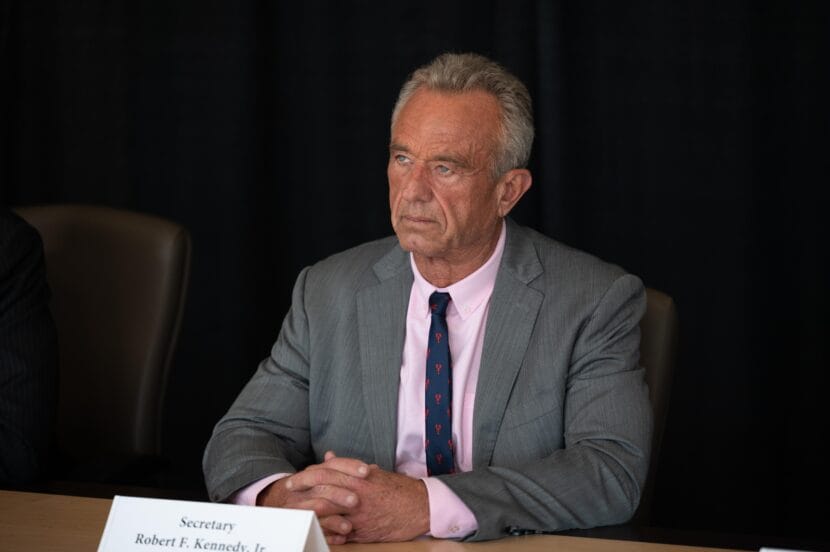
A man in a suit attends a press briefing
Secretary Robert F. Kennedy, Jr. spoke to reporters at Alaska Native Tribal Health Consortium on Aug. 5, 2025, the same day he canceled nearly $500 million for mRNA vaccine development. (Matt Faubion/Alaska Public Media)

WASHINGTON — Sen. Lisa Murkowski broke from other Republicans on the Senate health committee at a hearing Wednesday on the firing last month of the director of the Centers for Disease Control and Prevention.

Murkowski said the hearing was about more than Health Secretary Robert F. Kennedy’s decision to terminate Susan Monarez.

“It’s about trust in our public health institutions,” Murkowski said, “because that’s what I’m worried most about.”

The hearing focused on the nation’s vaccine policy. Kennedy dismissed a panel of vaccine experts in June and replaced them with his chosen members, who mostly share his belief that the CDC’s previously recommended vaccine schedule is bad for children.

Vaccine skepticism is gaining ground across the United States, though dozens of medical associations say the vaccine schedule is based on scientific evidence, saves lives and protects public health.

Monarez testified that Kennedy fired her because she would not agree to pre-approve whatever the new vaccine panel decides, and because she refused to fire career scientists at the CDC who don’t share Kennedy’s anti-vaccine beliefs.

Republicans on the Senate Health, Education, Labor and Pensions Committee were split. Some criticized the former CDC director for resisting Kennedy’s agenda. Others, like Murkowski, backed a science-based approach to vaccines.

CDC Chief Medical Officer Debra Houry resigned after Monarez was fired. Houry testified at the hearing that she was the last career employee in the CDC director’s office. Murkowski sounded astonished that political appointees are replacing public health experts.

“May I stop you there?” she said, interrupting Houry. “You’re the last career [employee]. So then are you saying that everyone that is remaining is a political?”

Houry affirmed that’s the case in the CDC director’s office.

“And so there is nobody then that is — there must be somebody that is providing that career science,” Murkowski said.

Houry mentioned the directors of the centers within the CDC, though she said most are acting directors because their predecessors were fired or left.

Monarez said Kennedy ordered her not to speak to the career CDC scientists.

Murkowski, like all but one Republican senator, voted to confirm Kennedy in February, despite her misgivings about his vaccine stance.

Kennedy had pledged to senators he’d change CDC recommendations only if based on peer-reviewed and widely accepted science.

The Kennedy-aligned vaccine panel meets Thursday. Monarez said Kennedy told her two days before she was fired that the childhood vaccine schedule would change in September.

The CDC vaccine schedule isn’t mandatory but it may determine which injections health insurance plans will cover.

Plaintiffs ask court to rule that SNAP delays violate Alaskans’ rights

The produce section at Foodland IGA in Juneau. (Photo by Tasha Elizarde/KTOO)

Lawyers are trading arguments in a case challenging the state’s failure to process applications for the Supplemental Nutrition Assistance Program on time.

The case dates back to 2023. The number of Alaskans caught in the SNAP backlog has dropped by roughly 75% since plaintiffs filed the class action lawsuit, but the backlog still hovers around 4,000 as the state’s struggle to process applications on time has continued.

Saima Akhtar with the National Center for Law and Economic Justice, an attorney for the plaintiffs, said her team is asking the court to rule that Alaska’s SNAP system violates low-income Alaskans’ rights.

“The first step is essentially the court assessing whether or not the facts as they are laid out in the record constitute a legal violation,” she said. “And then after that, the question would be, what’s the fix?”

Lawsuits like this have helped in other states, Akhtar said.

“There are a number of states where there has been litigation and there has been a resolution that led to processing improvements,” she said in a phone interview.

Akhtar and her team obtained a preliminary injunction in the case last year requiring the state to report on its progress as it works to catch up on the backlog. It’s possible that could be converted to a permanent injunction.

State attorneys have filed a variety of arguments asking the court to decide the case in their favor. In one filing, state attorneys say that a recent U.S. Supreme Court case means that private individuals shouldn’t have a right to sue over the state’s failure to meet deadlines in federal law. In others, state attorneys say many of the issues highlighted in the suit have been resolved.

A Department of Law spokesperson said attorneys are reviewing the recent filings.

A decision isn’t expected for months. In the meantime, Akhtar says people struggling to access SNAP or other benefits can contact Alaska Legal Services for help.

Fat Bear Week starts Tuesday. Who will be the chubby champ?

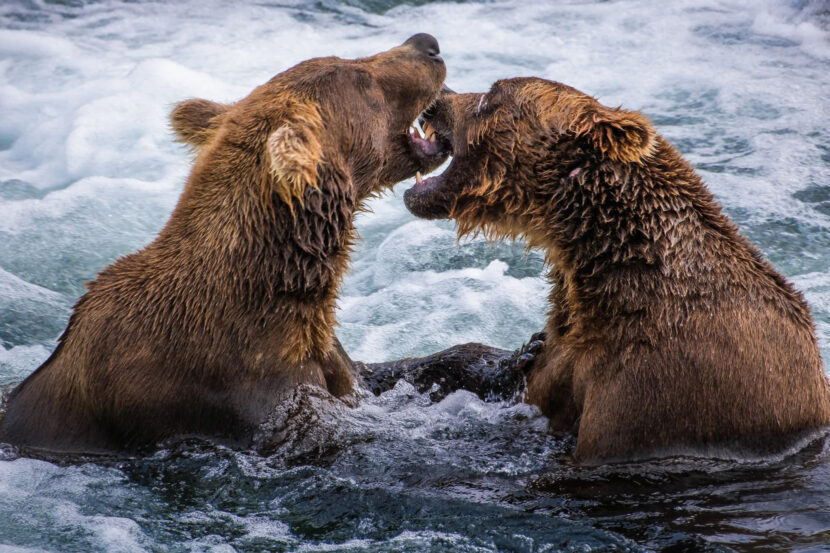
Two bears vying for a prime fishing spot near Brooks Falls. (Brian Venua/KMXT)

The brown bears in Katmai National Park and Preserve have been packing on the pounds this summer. Starting Tuesday, you can vote online for the chunkiest bear in the annual Fat Bear Week competition. The name of the event says it all, said Katmai park ranger Sarah Bruce.

“We celebrate how fat the bears get,” she said. “Fat equals survival. A fat bear is a healthy bear.”

Fat Bear Week started as a one-day celebration over a decade ago, but has grown into an international phenomenon. Over a million people from more than 100 countries voted in the bracket-style competition last year.

Bruce called the face-off the park’s hallmark event.

“Fat Bear Week brings the park into the living room of anybody who wants to enjoy this place,” she said. “Even just this past week, we had a bear cam fan who visited the park from New Zealand.”

Bruce is originally from Maryland and she’s hooked, too.

She said it’s stunning to watch the bears transform as they feast on fish in the Bristol Bay watershed – home to the world’s largest sockeye salmon run.

“It really is quite a sight to see these bears go from 5, 6, 700 pounds and they come out of the den over 1,000 pounds by the end of the season,” she said.

Most bears in the area start making their way to their dens in October and November. While hibernating, bears will drop a third of their body weight because they don’t eat or drink.

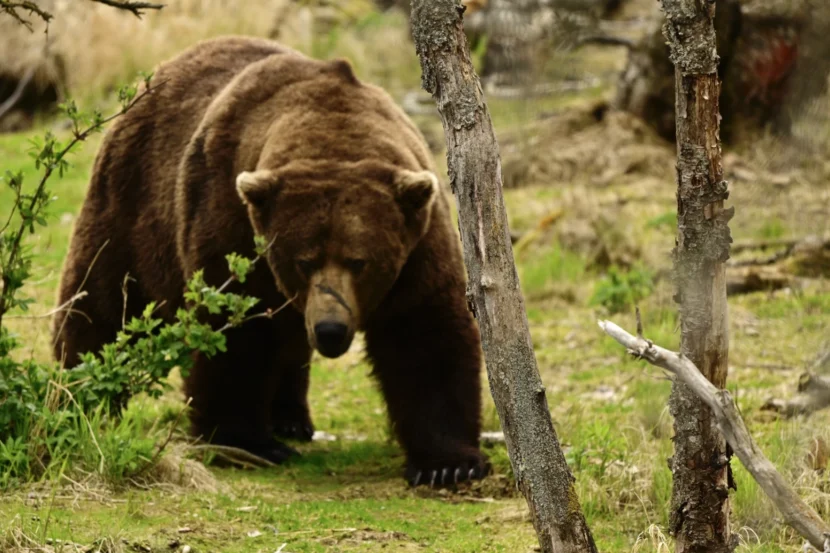
#32 Chunk is a big bear. Last year, Chunk lost to Grazer by a difference of over 40,000 votes. Last summer, Chunk killed Grazer’s cub after it slipped over the waterfall. The whole incident was caught on the live cameras on explore.org (Christine Loberg/NPS)

Park rangers are still finalizing this year’s 12 chunky competitors but Bruce said there may be some familiar faces – like potentially Grazer, the reigning champion, along with Chunk, last year’s runner up. Online voting in the bracket-style challenge opens at explore.org Tuesday and runs through Sep. 30.

But if you want to get in on the action early, Fat Bear Week also has a junior division where the plumpest cub advances to the main bracket. Voting for the juniors starts Thursday and closes Friday.

Site notifications
Update notification options
Subscribe to notifications