Anchorage Daily News is our partner in Anchorage. KTOO collaborates with partners across the state to cover important news and to share stories with our audiences.
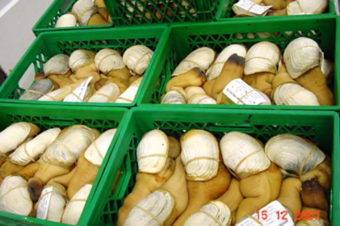
Geoducks for sale. (Photo courtesy Alaska Department of Fish and Game.)
Commercial dive fisheries and a fall Dungeness crab season get underway in Southeast Alaska in October.
The season for geoduck clam diving starts Oct. 1. The first opening could be Oct. 3 or 4, depending on testing for the toxins that cause paralytic shellfish poisoning. The region’s guideline harvest level is 702,100 pounds.
The large clams are plucked from the ocean floor and shipped whole and live to overseas markets, if the clams don’t test too high for PSP or inorganic arsenic.
There are a couple of changes for that fishery this year. Past openings have been only from 9 a.m. to 3 p.m., one day a week. The Board of Fisheries last winter approved a 1,000-pound weekly harvest limit.
Justin Breese is assistant area management biologist with the Alaska Department of Fish and Game in Ketchikan. He said that could be a big change for the fishery.
“So with that new harvest limit, we are going to have a two day fishery so that they can spread out their effort,” Breese said. “There was some concern about safety with people being crammed all together in a small area. With a two day fishery and a thousand pound limit or maybe less I guess depending on the GHL of the area, that’ll allow people to come in and harvest their geoducks and then get out of the way so that there isn’t people trying to dive on top of each other.”
Spreading the harvest over two days may also help boost the price for the clams. Geoducks can live to be over 100 years old and are caught in southern Southeast Alaska near Ketchikan and Prince of Wales Island as well as by Sitka.
The state board last winter also approved a limit of two divers making geoduck landings on each vessel.
Openings could be from 8 a.m. to 4 p.m. on Wednesdays and Thursdays. Whether areas are opened or not will depend on PSP testing.
Most areas are fished on a two-year rotation, with one year on and one year off. About 50 to 60 divers take part each year and that effort has remained pretty constant. In the past few years, the season has stretched into the spring time as divers have worked to slow down their harvest and increase the price for their product.
Meanwhile, sea cucumber diving starts up Oct. 1 with a combined region-wide guideline harvest level of over 1.7 million pounds. Breese said that’s up this year because of another change approved by the Board of Fish.
“There was a change in how the GHLs were calculated, so that there was a more liberalized harvest rate that’s still fairly conservative but it allows for a higher harvest rate on sea cucumbers because they’re shorter lived that geoducks,” Breese said.
The Southeast Alaska Regional Dive Fisheries Association pushed for that change at board meetings in January and March. SARDFA is concerned with increased predation on clams and cucumbers by the region’s sea otter population and has sought more diving opportunity.
Sea cucumbers are bottom dwelling creatures that resemble their vegetable namesake and are also a delicacy in Asian markets. Diving for “cukes” happens throughout the region and areas are opened on a rotating basis, once every three years.
Effort has also stayed fairly constant with around 180 divers taking part. For the most part, the cucumber diving season is over more quickly than the geoduck clam season.
Another commercial fishery, not a dive fishery, also starts up Oct. 1. The fall season for Dungeness crab in most of the region is open October and November.
The U.S. Coast Guard rescued a teenage boy who survived a helicopter crash Friday near a bay in Southeast Alaska, but continued searching for three others throughout the day Saturday, including the boy’s father and brother.

Aiden Pepperd, 14, was flown to Sitka on Friday by a Coast Guard MH-60 Jayhawk helicopter crew, and transported to a hospital where he is in an intensive care unit, officials said.
Missing are Anchorage business owner Josh Pepperd, 42, his son, Andrew, 11, and David King, 53, owner of Last Frontier Air Ventures in Palmer, providing helicopter flights.
The group was on a cross-country trip in a new helicopter that Pepperd, owner of Davis Constructors and Engineers, had recently acquired from Airbus Helicopters in Texas.
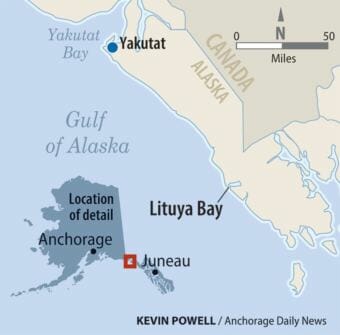
The crash occurred near Lituya Bay, about 120 miles northwest of Juneau, in Glacier Bay National Park and Preserve.
Lituya Bay helicopter crash. (Graphic by Kevin Powell/Anchorage Daily News)
Wreckage was found in water about 100 yards off the coast, but pieces of the aircraft Saturday had drifted toward shore, including sections of the fuselage, engine, rotorhead and front and rear seats, the Coast Guard said.
“All these washed up on beach, but not any sign of passengers,” said Nate Littlejohn, a Coast Guard public affairs specialist.
Jeff Brodsky, a family friend of the Pepperds, issued an “emergency prayer request” on Facebook.
“We are holding onto hope that a miracle will happen,” said Brodsky, who said he has been in touch with family and friends gathered at the hospital where Aiden was taken for treatment.
The search on Saturday involved multiple agencies, including a boat from the Coast Guard Cutter Bailey Barco scouting the shoreline, along with aircraft from the Alaska Air National Guard, National Park Service and Civil Air Patrol in Juneau. With help from Alaska State Troopers, teams with search dogs canvassed beaches for any sign of survivors, the park service said.
The cutter will continue searching overnight on Saturday, and a Coast Guard Jayhawk will resume the search at first light on Sunday, said Littlejohn.
On Friday about 6:30 p.m., the Coast Guard in Juneau received an overdue aircraft alert from the Juneau Flight Service Station. The private helicopter had been expected to reach Yakutat that day but had not arrived.
A Coast Guard Jayhawk helicopter crew launched from Air Station Sitka at 8:15 p.m. Friday, using a GPS locator signal provided the aircraft’s last known position, the agency said.
The crew spotted the wreckage in the water, an official said. After landing on the beach about 3 miles east of Lituya Bay, a Coast Guard rescuer found the boy.
Brodsky said that after the crash Aiden’s head was resting on a helicopter blade, which kept it out of the water, helping him survive. He said Aiden received internal injuries from the crash, including broken ribs.
“It was painful and he had to unbuckle himself, and after he did, he was able to reach shore,” Brodsky said.
Tim DeSpain, a Troopers spokesman, said on Saturday evening it was not known whether any of the victims were still inside the wreckage.
The wind near the crash site Friday evening was blowing about 12 mph, with about 9 miles of visibility and 12,000-foot ceilings, said Littlejohn.
Littlejohn said he did not know how cold the water was, but said nearby seas were between 5 feet to 8 feet, with the air temperature at 48 degrees.
The Coast Guard said the pilot was reported to have many decades of flying experience including Alaska flight time in both fixed-wing and rotary-wing aircraft, the agency said. The agency did not name the pilot.
The helicopter was on a trip that began in Grand Prairie, Texas, bound for Wasilla.
Airbus Helicopters on Wednesday posted on Facebook that Pepperd and his sons had taken delivery of an Airbus H125 helicopter from the company’s facility in Grand Prairie.
Clint Johnson, chief of the National Transportation Safety Board in Alaska, said the agency is sending investigators to the crash site.
The family had been tracking the helicopter on the journey, using a satellite-linked system, and first notified authorities the helicopter was missing.
NTSB is sending four people to the site, including a helicopter engineer from Washington, D.C., and investigators from Airbus and Safran, the engine manufacturer.
This tick was found on a dog in Anchorage this year. (Photo by Bill Roth/ADN)
A new research project will test ticks found in Alaska to see if the tiny, blood-sucking arachnids carry the pathogens that cause Lyme disease, tularemia or other illnesses.

Wildlife biologists and the state veterinarian have for years asked the public to send in ticks to help identify what species live in Alaska, but this is the first time researchers will go out looking for ticks in parks and examine whether those ticks carry diseases.
The team, which includes biologists, veterinarians and researchers from the University of Alaska, the Alaska Department of Fish and Game and the Office of the State Veterinarian, said it needs to know what tick-borne diseases exist in the state now so it can measure future changes.
“As the climate changes and ticks are moving north, we need a baseline,” said Kimberlee Beckmen, a wildlife veterinarian with the Alaska Department of Fish and Game in Fairbanks.
“It’s important to have the baseline so we can monitor things before they become a problem,” said Micah Hahn, an assistant professor of environmental health at the University of Alaska Anchorage and the lead on the new research project.
State veterinarian Bob Gerlach is studying ticks in collaboration with the Alaska Department of Fish and Game and the University of Alaska. (Photo by Bill Roth/ADN)
Here’s some of what’s known now about ticks in Alaska:
First of all, Alaska has ticks, said state veterinarian Bob Gerlach.
“There’s still the urban myth that we don’t have fleas up here, we don’t have ticks up here, but no, actually we do,” said Sean McPeck, a veterinarian in the Matanuska-Susitna Borough and president of The Alaska State Veterinary Medical Association.
Ticks that infest red squirrels, snowshoe hares and some birds have long been found in parts of Alaska, according to an article published in the Anchorage Daily News in 2016.
Then, during a study of ticks collected in Alaska between 2010 and 2016, a team of biologists and veterinarians, including Gerlach and Beckmen, identified five non-native species in Alaska, including the Lone Star tick and the American dog tick. Some of the ticks hitchhiked to Alaska on animals and humans who had recently traveled out of state. But others had not.
Since the study, at least two additional non-native tick species have been found in Alaska, Gerlach said. Now that researchers know non-native ticks are here, he said, the next step is determining the health risks they pose to people, pets and wildlife.
“Right now we don’t know if we’ve got a problem up here,” he said.
Non-native ticks arrive in Alaska regularly on animals and people who have traveled from the Lower 48, Beckmen said. One of those non-native species, the American dog tick, has become established in Alaska, she said.
“It’s already been introduced into the wild, and able to reproduce in the wild and is living here happily,” she said.
The American dog tick can transmit Rocky Mountain spotted fever, a bacterial disease that can be deadly if not treated early and with the right medicine, according to the Centers for Disease Control and Prevention.
There have been no reports of people contracting Rocky Mountain spotted fever in Alaska, said Louisa Castrodale, an epidemiologist with the Alaska Department of Health and Social Services. The same goes for Lyme disease, she said.
Last year, the state recorded three cases of tularemia, a bacterial infection that humans can pick up in several ways, including from a tick bite or through direct contact with an infected animal. Symptoms can vary depending on how the bacteria entered the body, but the infection always comes with a fever, according to the CDC. Most infections can be treated with antibiotics, though without treatment tularemia can lead to hospitalization and even death.
People most often get tularemia in Alaska by touching infected hares, including when they remove dead animals from their pet’s mouth, Castrodale said.
This summer, Beckmen said, she identified multiple hares and two dogs with tularemia in the Fairbanks area. Last year, two pet cats died from the infection in Fairbanks, according to an article this month in Alaska Fish and Wildlife News, Fish and Game’s online magazine.
In October 2016, a dog got Lyme disease from a tick bite on the Kenai, Beckmen said.
People have found ticks across Alaska, most often in Anchorage, Eagle River, Fairbanks, North Pole, Bethel and Valdez, according to the Alaska Fish and Wildlife News article.
It’s unknown how many ticks live in Alaska. There hasn’t been a proactive surveillance program before, Beckmen said.
However, both Beckmen and Gerlach said they have gotten more calls in recent years from Alaskans about ticks, as well as more ticks sent to their offices.
Gerlach received 50 ticks last year that were plucked from pets and humans in Alaska, compared to 17 in 2016 and 15 the year before. On Wednesday morning, he said, he sent 10 ticks in for testing. By the afternoon, he already had two more ticks delivered to his office.
“I can’t keep up with the processing of them,” he said.
State veterinarian Bob Gerlach looks at one of the ticks found in Alaska and sent into his office. (Photo by Bill Roth/ADN)
Just over the last week or so, Beckmen said, three people contacted her with tick reports.
“It’s not statistically proven, but in my experience, I shouldn’t be getting three tick reports in one week,” Beckmen said.
Beckmen and Gerlach said they don’t know for sure whether the increase in reports of ticks is because more people know about ticks and know the state wants their ticks or whether there are actually more ticks in Alaska.
Gerlach said his office is concerned about reports that dogs have gone into the woods in Alaska and come back with ticks.
“We’ve had dogs that have never left the state that have just gone hiking through the woods with their owners and come back with ticks on them,” Gerlach said. “So that’s our big concern.”
In May, UAA acquired a $125,000, one-year grant to study ticks in Alaska. The research will be done in collaboration with Fish and Game and the Office of the State Veterinarian, Hahn said.
Next summer, the team will search for ticks at parks in Anchorage and on the Kenai Peninsula, she said.
Hahn said a Fairbanks professor will examine the ticks collected by researchers, as well as those sent in by veterinarians, biologists and the public. She will look at the ticks’ DNA to determine what diseases they might carry. Meanwhile, an Anchorage professor will work on establishing a habitat model for ticks in Alaska to answer the question: If ticks come to the state, where could they establish?
“Because there’s so little information, it’s just like: Let’s just see what’s out there and see if we’re finding anything at all,” Hahn said.
She hopes to continue the research after the one-year grant expires.
The research team will also launch a website in the spring with information about what Alaskans should do if they find a tick. In the meantime, she said, people can submit ticks found in Alaska using a more general form on Fish and Game’s web page for Parasites and Diseases, noting where and on what the tick was found.
People can send ticks found on pets or humans to the Office of the State Veterinarian in Anchorage or, if found on wildlife, to Fish and Game.
Gerlach said he wants Alaska pet and livestock owners to be aware that there are ticks in the state and to check their animals. He recommends Alaskans work with their local veterinarian to determine whether they should use tick preventative treatments on their pets.
Alaska health care providers are being ordered to pay back millions of dollars in Medicaid payments that the state health department says they received in error.
The Alaska Department of Health and Social Services needs to recoup a total of about $15 million from about 1,100 health care providers, according to Jon Sherwood, deputy commissioner for Medicaid and health care policy at the department.
“It was a really big shock,” said Angela Beplat, an occupational therapist and owner of Nature’s Way Rehabilitation Services in Soldotna. Beplat, the sole, part-time provider at her business, expects to repay a few thousand dollars that she had received as payment through Medicaid, the state-federal program that provides health care coverage for low-income Americans.
“It just felt like a really bad joke,” Beplat said.
The state health department is still calculating how much each health care provider must pay back, Sherwood said. The payments will likely range from a couple dollars to $1 million depending on the number and type of services the providers billed to Medicaid between October 2017 and the end of June — the monthslong stretch when the state says it was paying too much.
“This was a mistake on our part,” Sherwood said. “It was an omission.”
The mistake: Last year, Alaska cut Medicaid payments by about 10 percent for services billed by medical professionals providing primary, specialty and acute care, including physicians, physical therapists, chiropractors and optometrists. The reduction was supposed to go into effect Oct. 1, 2017. But it didn’t.
The error was caught last month, and the state is now implementing the cut retroactively. Alaska health care providers aren’t happy.
“Providers in Alaska who are seeing people with Medicaid shouldn’t be the ones who have to pay the price for what the state of Alaska is calling, quote, an administrative oversight,” said LeeAnne Carrothers, president of the Alaska Physical Therapy Association.
In interviews, health care providers said they were surprised, confused and concerned to learn they had to send money back to the state. It was something they hadn’t budgeted for, they said. Some said they worried the recoupment paired with the reduction would be enough to persuade some health care providers to turn Medicaid patients away, or at least further limit how many they treat.
“I definitely have to reconsider how many kids I’ll be able to see on Medicaid and not only just because the cost of repayment but the reduction in rate,” said Nancy Lovering, a speech-language pathologist in Anchorage and a representative for the Alaska Speech-Language-Hearing Association. “My rent didn’t go down and my malpractice insurance didn’t go down, but my reimbursement continues to go down.”
Sherwood said the Medicaid reduction can be traced back to 2016 when the health department had to tighten its budget for the 2017-18 fiscal year in light of the state’s multibillion-dollar budget deficit. It cut costs in several ways, including reducing Medicaid payments for services from primary, specialty and acute care providers. Sherwood called the 10.3 percent reduction “very unusual.” The rate change went through the required regulatory process, including a 35-day public comment period, he said.
While the other cost reductions went into effect, Sherwood said, the 10.3 percent cut never got implemented. That’s because the state didn’t submit a work order to have its vendor change the rates in its Medicaid payment system. There was a lack of clarity about who was responsible for submitting the work request, the department said.
“In the case of this regulation, it involved multiple divisions and would have resulted in multiple work orders,” Sherwood said. “We did not catch that one of the work orders that should have been attached didn’t move forward.”
The department typically has over 250 work orders at any given time, according to a health department spokesman.
Changing the rates in the system would have also triggered additional notifications to health care providers — alerting them that a reduction was underway, Sherwood said.
The error wasn’t caught until last month when someone went to adjust the Medicaid rates, and realized they’d never been reduced, he said.
Now, the state must backtrack and enact the 10.3 percent cut retroactively, recouping about $15 million, Sherwood said. The state’s Medicaid services budget totals about $1.7 billion.
“We do have an obligation to recoup overpayments and return the federal portion because Medicaid is both federally and state funded,” Sherwood said. “We regret that providers have to deal with this.”
Sherwood said the department expected to tell medical providers how much they owe by the end of July. Providers can pay back the money all at once or in installments, he said. He also expected the state to allow providers to request a hardship waiver if they can’t pay.
Beplat, Lovering and other health care providers said they had a lot of questions for the state, including how much they would have to pay back and by what date.
“There’s a lot of unknown factors,” said Brice Alexander, medical practice administrator at Anchorage Pediatric Group, a nine-provider clinic.
Some providers said they had heard talk about the possibility of a Medicaid payment reduction last year, but when they never got notice that it was going into effect, they assumed it had not gotten approved or didn’t impact their practice.
“I was told we’d get a 30-day notice,” said Lovering, who is the sole provider at her business, and has one part-time employee. “There’s been literally no notification from the state.”
“We just assumed things were not affecting us as much as we thought they would be,” Alexander said.
Alexander estimated the Anchorage clinic will have to pay back roughly $100,000. Providence Health and Services Alaska could have to repay anywhere from $500,000 to $1 million, said a spokeswoman. Lovering estimated she’d have a bill for roughly $7,000 or $8,000.
“I know there are other practices that are going to be paying much more,” Lovering said. “I have co-workers who are retiring at the end of the month and it’s like, what are they going to do? No one expected to have to write a check for $8,000.”
Sherwood said he wasn’t aware of the state failing to implement a Medicaid payment adjustment in the past. He said the health department had recently reviewed and changed some of its policies in an effort to avoid having it happen again.
“We have clarified our policies to make sure everyone understands their roles and to make sure there’s a certain level of redundancy — that it’s not dependent on one person getting everything right,” he said.
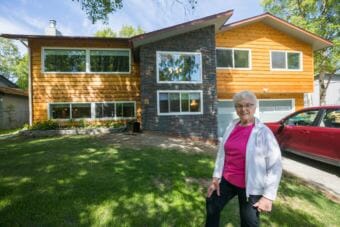
Former Alaska state legislator Alyce Hanley poses outside the apartment she had built into the bottom floor of her home in Sand Lake on Thursday, June 7, 2018. Hanley, who is 84, wanted to live with her children but have her own living space. (Loren Holmes/ADN)
On his 1.5-acre lot near Kincaid Park in Anchorage, Chris Herman wanted to build a detached garage with an apartment on top, as a future home for his aging parents.
In the past, Herman’s plans never made it past the city permitting department. But recently, Anchorage became the latest city to overhaul its regulations to make it easier for people to build small houses or apartments next to or inside existing homes.
Popularized by shows like HGTV’s “Tiny Homes,” living small is a national trend toward multigenerational living, a smaller urban footprint and downsizing. But in Alaska, particularly in communities hemmed in by mountains and water, officials are increasingly turning to “accessory dwelling units” to contend with limited land and high energy and housing costs, according to planners and community development officials.
In recent years, cities like Juneau and Kodiak have opened up regulations to allow stand-alone backyard cottages up to about 1,000 square feet in single-family neighborhoods. The same goes for “mother-in-law” apartments, or separate living units built into a main house. (Planners avoid the phrase “tiny home,” because it typically describes a house on wheels.)
The living units have to be connected to water, sewer, gas and electric service. It isn’t cheap to build one. Architects and developers say the costs usually exceed $100,000.
Since 2015, the city government in Juneau has handed out $6,000 grants to homeowners who want to build backyard cottages or apartment attachments. Nearby, in Sitka, policymakers are drafting laws to ease restrictions on apartment additions, as existing laws have led to little construction.
In Kodiak, a small island community populated by an expanding Coast Guard base, the cost and availability of housing is a major issue, said Jack Maker, the acting director of the Kodiak community development department.
As well as allowing larger accessory apartments, officials there last year created a special zoning district for smaller lots. The minimum lot size had been 7,200 square feet. The new district cuts that in half, in hopes of encouraging smaller-scale development, Maker said.
Then, this month, the Anchorage Assembly significantly opened up the city’s regulatory framework for building backyard cottages and accessory apartments. Among other changes, the Assembly allowed the units in single-family neighborhoods for the first time.
The administration of Mayor Ethan Berkowitz advocated for the changes, calling it a way to meet housing demand and generate income for residents. So did a group of architects and developers who make up a committee within the Anchorage Economic Development Corp. and helped craft the new laws.
“We’ve all tried to build these,” said Anchorage architect Melissa Morse, who has had clients start on accessory apartment projects but drop them because of the regulations. “It’s not as easy as it should be.”
Some residents pushed back against the changes. The most heated opposition came from Rogers Park, an old neighborhood near downtown with a lot of smaller lots. Neighbors said they were worried about parking problems, property values, overcrowding and intrusion on adjacent homes. Some questioned whether it was a quiet attempt to provide housing to people who were homeless, though city officials have said that is not the case.
Community councils in Rogers Park and Turnagain sent letters urging the Assembly to limit the size and height of the structures. The councils also wanted the city to maintain a ban on detached small homes in single-family neighborhoods. Midtown Assemblyman Dick Traini, who represents Rogers Park, tried unsuccessfully to limit the size of the structures; the other assemblyman for Rogers Park, Felix Rivera, voted in favor of the new regulations, sparking talk of a recall from some constituents on social media.
The worries mirrored controversies that have played in other cities in the Lower 48 that have adopted similar reforms, including Lawrence, Kansas; Santa Cruz, California; and Portland, Oregon.
But Alaska community development officials say there’s little choice: They say the state needs to have more types of housing, period.
“The (accessory dwelling unit) is the truly sustainable option to meet affordable housing,” said Michael Scarcelli, the director of planning and community development for the city of Sitka. “Plus, I think it is more realistic in a place like Sitka, where we probably don’t want a big high-rise blocking the view.”
Since 2015, the city of Juneau has offered $6,000 grants to homeowners who want to build apartment additions or backyard cottages. Officials hope it will help add to the city’s housing supply. In this case, an apartment with its own kitchen and living area was built on the bottom floor of an existing house. (Photo provided by City and Borough of Juneau)
In Juneau, the grant program has led to a number of smaller units that are either attached to or separate from bigger homes, said Brenwynne Grigg, who works for the city’s community development department. Grigg said most of the program participants are now renting the units out to strangers. But some are building in anticipation of an elderly parent, she said.
Similar demand for senior housing is expected in Anchorage, where there is a fast-growing senior population.
As she entered her mid-80s, Alyce Hanley didn’t want to live alone in her big house. She wanted to live with her adult children.
But the former Republican state representative from Anchorage also wanted her own space in the house, with a separate full kitchen and living area. She toured several dozen homes in Anchorage that offered “mother-in-law” apartments, but couldn’t find anything that fit what she wanted.
Former Alaska state legislator Alyce Hanley, right, talks with her friend Susan Fison, a former Anchorage planning director, in the apartment Hanley built into the bottom floor of her home in Sand Lake on Thursday, June 7, 2018. Hanley, who is 84, wanted to live with her children but have her own living space. (Loren Holmes/ADN)
In the end, Hanley and her son, former education commissioner Mark Hanley, gutted the longtime family home in the Sand Lake area to build Alyce her own apartment. Her unit is on the bottom floor of the split-level house. Hanley and his wife live upstairs.
Hanley moved in in December. She loves her full kitchen and walk-in closet.
“To me, this is just absolutely perfect,” Hanley said.
At the time, accessory apartments weren’t allowed in single-family neighborhoods. The Hanleys had to negotiate with the city and sign a written promise not to rent it out.
Susan Fison, a former Anchorage planning director who is friends with Hanley, toured accessory apartments in Portland by bike last fall. Most people living in the units were family members, Fison said. She also has aging parents, and right now, there are few options in Anchorage that are one level and in a residential neighborhood.
“You can get a condo, but you aren’t living with family,” Fison said.
Anchorage developer Andre Spinelli, a member of the city Planning and Zoning Commission, said he’s planning a development on a lot he owns in South Anchorage where the homes all come with accessory apartments. The new regulations allow double the number of kitchens, Spinelli said. He also said people buying into the neighborhood would know what they’re getting.
While often pitched as a way to boost a city’s housing supply, the smaller units are also popular as vacation rentals through sites like Airbnb. Cities are grappling with how, or if, to regulate or restrict the use of accessory apartments as vacation homes.
Sitka, for example, does not allow accessory apartments to be rented for less than 90 days. But that may change — Scarcelli, the community planning official, said that high housing prices make short-term rentals more attractive for people who need an extra income stream.
Herman, the Kincaid Park-area resident who has wanted to build a garage apartment, said he and his wife plan to meet with an architect soon, now that Anchorage has revised its regulations. He said he plans to immediately put the unit up for rent, possibly through a vacation rental site.
But the long-term plan, he said, is to move his parents in when they need it.
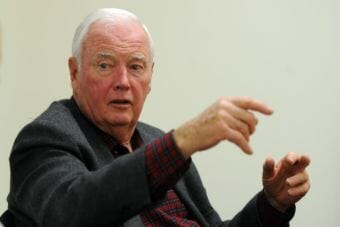
Former Gov. Frank Murkowski speaks at a 2015 meeting at the ADN’s offices. (Photo by Erik Hill/ADN)
Frank Murkowski was feeling frustrated.
The June 1 deadline was approaching for candidates to file to run for Alaska governor. And the front-runners, in his view, were paying too little attention to the most important issue for the state’s future: How to boost extraction of natural resources like timber, fish, minerals and oil and gas.
So Murkowski, the 85-year-old former governor and United States senator, picked up the phone and placed a call.
Murkowski won’t say who was on the other end. But he confirmed in an interview last week that he asked the person to be his running mate.
“I was considering it up to just a very short time before filing closed,” Murkowski said, referring to launching a gubernatorial campaign.
The call’s recipient ultimately declined Murkowski’s invitation. And by the filing deadline, Murkowski said he’d grown more satisfied with the field of Republican candidates, which saw a late addition of Mead Treadwell, the former lieutenant governor.
Murkowski still has lots of energy for politics, and some irritation, according to his wife, Nancy. Some of Alaska’s political figures, in his view, haven’t been talking enough about the issues on which Murkowski staked his political career — namely natural resource development.
“Nobody’s doing it and it just really drives him crazy,” Nancy said.
The Murkowskis spoke from their summer home in Wrangell, where Frank once worked as a bank manager. Frank took a phone call in the evening, before sitting down to a dinner of smoked black cod, while Nancy, who’s also 85, spoke the next day as the couple prepared to take their boat for some crabbing and shrimping.
Frank said he’s had a “little back problem” but has otherwise been in good health — at his last checkup, his doctor told him that he appears 10 years younger than his chronological age, Nancy said.
(There’s precedent for octogenarian politicians to win statewide elections in Alaska: U.S. Rep. Don Young, who turned 85 on Saturday, is running for another term.)
Frank Murkowski was a United States senator for 22 years before being elected governor in 2002, for a single four-year term. Sarah Palin defeated him in the 2006 Republican primary, when Murkowski got 19 percent of the vote in a three-way race.
Then-U.S. Sen. Frank Murkowski is flanked by two Alaska business executives as they walk to the Senate subway in 2002. (Photo by Jim Lavrakas/ADN)
Since then, his political profile has been eclipsed by that of his daughter Lisa, who has held Frank’s old seat in the U.S. Senate since he appointed her to fill it. But Frank still takes periodic speaking gigs, and last year Gov. Bill Walker appointed him as an unpaid “special envoy” to work on developing a railroad link between Alaska and Canada.
“Oh my gosh — last time he came to my office to present the work he’s been doing on the railway, we couldn’t get him to sit down. He did the whole presentation standing up,” Walker said in a phone interview. “His level of energy, I think, is very sharp.”
In May, Frank Murkowski traveled around the state on a sort of fact-finding tour. He said he met with people and groups in Ketchikan, Petersburg, Juneau, Fairbanks and Anchorage.
He had talks with several of the declared gubernatorial candidates, including Mike Dunleavy, the frontrunner in the Republican primary. He also chatted with Walker, the incumbent, during a barbecue at the Little Norway Festival in Petersburg.
From all those discussions, Murkowski said, it seemed clear that the biggest issues in the upcoming election would be crime, budget cuts and the future of Alaskans’ Permanent Fund dividend checks.
Murkowski wants natural resource extraction to be more of a focus — for Alaska’s leaders to be approaching development plans more offensively, while Republicans control the U.S. House and Senate, he said.
While Congress and President Donald Trump last year opened the Arctic National Wildlife Refuge for oil and gas leasing, for example, Murkowski described development there as still at risk from challenges by environmental groups.
“Every development project in the state of Alaska that I know of — and I know of most of them — is under siege by environmentalists,” Murkowski said in a meeting with ADN staff members in late May.
“Trump turned it around and now the question is: Can we get it done under his tenure?” he added. “If we don’t get a few of these things done while we have control of the House and the Senate, it could be a long time.”
Murkowski talked with family members about the idea of running for governor. Nancy said she got behind the idea — if a little begrudgingly — though their children were less excited, she added.
Lisa Murkowski, Frank added, was “very open” with her opinions, which he said boiled down to: “You’ve done it before — why do you want to do it again?”
Frank said he decided to set his aspirations aside once the Republican field solidified. He suggested that that was because of the late entry of Treadwell — though Murkowski was careful not to endorse or name him, saying he didn’t want to pick sides before the outcome of the primary election.
“There was another gentleman who decided to file relatively late that gave me a certain degree of satisfaction that he had the qualifications, the background and the experience to make it a legitimate race — and to bring the issues up that I wanted to bring up,” said Murkowski.
Murkowski now says he wants to create a foundation to help muster credible experts to fight groups that he describes as stymying resource development in Alaska. And Nancy said she expects the winner of the gubernatorial race to hear from her husband.
“Just because the election will be over in November does not mean he will not call up whoever is governor and say, ‘Have you thought about doing this?'” she said.
Close
Update notification options
Subscribe to notifications
Subscribe
Get notifications about news related to the topics you care about. You can unsubscribe anytime.