Anchorage Daily News

Anchorage Daily News is our partner in Anchorage. KTOO collaborates with partners across the state to cover important news and to share stories with our audiences.

Iditarod reinstates musher Eddie Burke Jr. after state drops assault charges

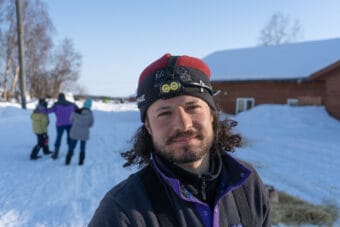
Eddie Burke Jr. on the 2023 Iditarod trail. (Lex Treinen/Alaska Public Media)

Just days after announcing musher Eddie Burke Jr.’s disqualification from the 2024 Iditarod Trail Sled Dog Race, the event’s governing body said Friday that it decided to reinstate him.

At the time of his disqualification Monday, Burke was facing two assault charges stemming from a 2022 incident. Then on Thursday, the Alaska Department of Law attorney prosecuting the case dismissed both charges, closing the case.

“Additional information was provided to the Iditarod Trail Committee Board today regarding Eddie Burke Jr.,” the Iditarod wrote in a brief statement. “Upon reviewing this information, the Board voted to reinstate Mr. Burke as a competitor in the 2024 Iditarod.”

Iditarod spokesperson Shannon Noonan said the organization would not be commenting further on Burke’s reinstatement.

Originally from Anchorage, Burke finished seventh in last year’s Iditarod, winning the coveted Rookie of the Year award.

Burke wrote Friday on Facebook that “I regret that I did not inform the Iditarod of the now dismissed allegations against me in a timely fashion, putting the race at risk.”

“While I have maintained my innocence throughout this process, I should have informed the race of the allegations against me sooner,” Burke wrote.

It remains unclear when Iditarod officials first learned of the allegations against Burke, and whether they were aware of the now-dismissed charges when he competed in the 2023 race.

Dunnington Babb, an attorney representing Burke in the assault case, wrote in an email Friday:“While Mr. Burke greatly appreciates the Iditarod’s decision to reinstate him in this year’s race, he has suffered likely irreparable setbacks by their initial decision to short circuit the legal process.”

“Mr. Burke stands with the Iditarod in its strong condemnation of violence and abuse against women, and joins in their commitment to taking action against violence,” Babb added. “However, he does not agree with the decision to ignore his right to the presumption of innocence, and to have circumvented the criminal justice system.”

The original felony and misdemeanor assault charges stemmed from a 2022 domestic violence call to police, who found Burke’s then-girlfriend bloodied outside a residence in Anchorage, according to charging documents. She told police Burke had strangled her nearly to the point of losing consciousness, the charging documents said.

In an email Friday morning, Department of Law spokesperson Patty Sullivan said the victim had declined to participate in the state’s prosecution, and the department determined it would not be able to win a jury trial. The timing of the case’s dismissal this week “was based on the timing of court proceedings,” Sullivan said.

The 52nd Iditarod begins Saturday, March 2, with the ceremonial start in Anchorage. The following day, 39 teams are set to depart Willow Lake on their way to Nome.

This story originally appeared in the Anchorage Daily News and is republished here with permission.

Major changes to Alaska’s alcohol industry are coming on Jan. 1

A server pours a beer at the new 49th State Brewing Company location at Ted Stevens Anchorage International Airport on Sept. 12. (Loren Holmes / ADN)

Major changes to Alaska’s alcohol industry will come into effect Monday, which business owners and public health groups say will improve public safety and better match how Alaskans now consume alcohol. State regulators are scrambling to ensure business owners are in compliance with the new law.
The Alaska Legislature passed Senate Bill 9 in 2022 after a decade of attempts to modernize the alcohol industry. Regulators were given 18 months to develop the new rules, which affect licensing, how alcohol can be delivered across Alaska and the enforcement of alcohol laws.

For patrons, there will be immediate changes starting Jan. 1. Taprooms at breweries and distilleries will be able to stay open until 9 p.m. Current law requires them to close at 8 p.m.

Taprooms are currently barred from holding live events, but the new regulations allow them to hold a limited number per year. Other restrictions remain in place: no TVs, no chairs or stools at the taproom bar, and limited serving sizes. And, among many other changes in the law, liquor stores will be able to hold events and serve alcohol samples.

The 127-page alcohol bill was intended to end the “bar wars” — a long-running conflict between traditional bars and breweries over the cost of licenses, manufacturing equipment and how both business types operate.

Lee Ellis, owner of Midnight Sun Brewing Co., said a “huge” change from the new law is that business owners can have multiple, overlapping licenses, melding roles between businesses that were previously kept separate in statute.

Breweries will be able to host restaurants with fewer operating restrictions and sell other brewers’ beer. Traditional bar owners were prohibited from manufacturing their own drinks — for example, brewing beer — but now that will also be possible.

Lee Ellis, board president for the Brewers Guild of Alaska and president of Midnight Sun Brewing, photographed at the brewery in 2020. (Loren Holmes / ADN)

Ellis, who is also president of the Brewers Guild of Alaska, surveyed members last year and found that 88% were interested in new licenses to operate with fewer restrictions as a bar or when hosting a restaurant. He said for brewers and distillers, the new law represents the biggest expansion of privileges since Prohibition.

Midnight Sun is in the process of applying for a restaurant endorsement that will allow it to hold more live events, to sell cider and to stay open after 9 p.m., Ellis said. Those changes are set to come into effect in April.

“We’ll still be able to do everything we’re doing now, and just more,” Ellis said.

Evan Wood, one of the founders of Devil’s Club Brewing, said the change he is most excited about is holding live events at the downtown Juneau tasting room. Those could be theater performances, movie premieres or concerts, he said, but they will be limited to four events per year.

“We’re still exploring what kind of fun and exciting events we could do to try to draw as many people as possible,” he said.

Wood said often when regulatory changes are made to the alcohol industry, the general public doesn’t notice. With broad changes for tasting rooms, bars and how alcohol is delivered across Alaska — that won’t be the case this time, he said.

“I think this is just going to be an exciting year for the alcohol industry at large,” he said. “Because I think that there’s some really exciting changes happening for a lot of different license types.”

People pack into Barnaby Brewing Company on First Friday, Dec. 1, 2023 in Juneau. (Loren Holmes / ADN)

Public safety

Public health and safety groups championed the new law as a way to address high rates of alcohol abuse and alcohol-related deaths in Alaska, which have been twice the national average.

New mandatory beer keg registrations are intended to limit underage drinking, and there will be updated population-based limits on the number of new taprooms that can operate in a town or a city, intended to prevent an overabundance of alcohol in communities.

The state will start to license companies that ship alcohol, taxing those businesses for the first time. Licensing will help police fight bootlegging to the state’s “dry” communities, proponents say.

The law will also bring changes to enforcement of alcohol offenses, starting Monday. Licensees can be held partially liable for some violations, like serving alcohol to minors.

Because the Alaska Department of Law rarely prosecutes misdemeanors, many low-level alcohol crimes will instead become citations. Underage drinking violations will remain a misdemeanor, but shipping alcohol without a state endorsement will become a $500 fine.

Joan Wilson, executive director of Alaska’s Alcohol & Marijuana Control Office, said the shift to citations should increase accountability.

There have been outreach efforts with law enforcement officers across the state to define the new role for police and alcohol regulators, she said, allowing law enforcement to focus on more serious public safety issues while regulators focus on licensing.

Licensing race

Staff at the state’s alcohol regulator are working overtime to ensure all businesses are in compliance with the new law by the start of the new year.

Breweries and distilleries need to file applications to keep their taprooms open. Wilson said just 40 of 90 licensees had done so as of Tuesday evening.

Bars and clubs that operate restaurants need to file so minors over the age of 16 can still be served and be employed. Around 105 have applied out of 440 that need to, Wilson said.

“We’re not going to shut folks down, but they will be out of compliance with the new law and we’ll continue to work with them,” Wilson said about the Dec. 31 deadline. “But they risk fines and other consequences, which I don’t want to happen to anybody.”

The new law authorized regulators to open license applications in September. Wilson said she wished that licenses would automatically convert if no changes were proposed, but that wasn’t how the law was written.

The Alaska Department of Commerce and Economic Development recently launched a new online portal for licensees. Paper applications will still be accepted.

Sarah Oates, president and CEO of CHARR, Alaska’s leading alcohol-industry trade group, said overall, the rollout of the new law had been going well, but there have been some kinks. The trade group has been helping inform its members about the new requirements.

Sarah Oates, president and CEO of the Alaska CHARR, at her office in Anchorage in 2019. (Bill Roth / ADN)

“For those businesses who do not do things on the internet, the transition for them is going to take more time,” Oates said.

After much legislative debate, the alcohol law came with limits on the number of new taprooms allowed, based on the size of a community’s population. Existing taprooms are grandfathered into the new regulatory system.

In communities already over population limits, Wilson said tardy licensees could face risks. New applicants could theoretically swoop in and take licenses from existing brewers and distillers who wait too long to file a new application.

“That’s why it’s really important to get their application in, because I don’t want people to lose their grandfather rights,” Wilson said. “So suppose they applied three months late and someone came in and took the one available for retail — they’re out of luck.”

Alaska turned to a private agency to care for some of its most vulnerable residents. The result: dysfunction and debt

Tom McDuffie, executive director of Cache Integrity Services, a nonprofit that provides private guardianship services. (Marc Lester/ADN)

Some of Alaska’s most vulnerable residents were left ailing, indebted, at risk of losing their housing and with their public benefits lapsed — including Social Security payments and Medicaid — after dozens of guardianship cases were transferred from a public agency to a fledgling nonprofit.

The state Office of Public Advocacy petitioned to transfer 45 guardianship cases to the care of Tom McDuffie in 2022, despite early warnings from people familiar with his work that McDuffie and his organization, Cache Integrity Services, were not adequately prepared to care for them, according to a review of court filings by the Anchorage Daily News.

OPA is charged with making decisions on behalf of guardianship clients. In seeking the transfers, OPA cited its growing caseload, a shortage of public guardians and the resignation of one of its experienced staff members.

OPA violated the law by failing to guard the interests of some of its clients, a state judge in Anchorage ruled last month.

In February, Kodiak Magistrate Judge Dawson Williams found that in another case, Cache Integrity “did not fulfill its duty.” The judge removed McDuffie’s organization as guardian and said the court “will review any future requests to appoint Cache Integrity Services with heightened scrutiny.”

But courts continued to appoint McDuffie, leading to a peak caseload of more than 110 Alaskans in his care this fall.

In the meantime, some of McDuffie’s clients accrued debts totaling tens of thousands of dollars amid unfilled benefits paperwork. Assisted living facilities went unpaid.

McDuffie acknowledged in an interview this week that he failed to meet some of his mandated duties, including allowing months to go by without communicating with some of his clients. But he says OPA is refusing to take back the cases that were transferred.

OPA director James Stinson said the agency’s actions were “a purely pragmatic last resort to prevent the system from imploding.”

On Tuesday, Anchorage Superior Court Judge Thomas Matthews ordered a hearing “on the common question of the fitness of Cache Integrity Services and Thomas McDuffie to serve as guardian or conservator.”

A new option

Alaska’s Office of Public Advocacy turned to McDuffie in 2021 at a time when public guardians were buckling under the weight of their caseloads.

By his own account, McDuffie’s resume is eclectic: Before becoming a guardian, he had been a youth minister and an accountant, worked night shifts at hotels and at an assisted living facility, and began working in 2020 as a representative payee — handling far simpler Social Security benefits. McDuffie lives in Wasilla, and Cache Integrity Services is based there.

Public guardians are appointed by courts as a last resort for people who are unable to manage life decisions independently. Guardians are responsible for making major decisions for their clients — about housing, medical care and finances.

When a family member or friend is available and willing, they are appointed to serve as guardians. If an individual can afford it, a private guardian can be appointed, sometimes at a cost of thousands of dollars per month. OPA serves as the safety-net option for those without other choices. Most people who need a public guardian rely on benefits such as Social Security payments and Medicaid to cover their needs. Some struggle with homelessness.

Beth Goldstein, who is in charge of OPA’s public guardians, has said the guardians are “overburdened.” Each is assigned around 80 cases — and sometimes more than 100 — resulting in a workload that exceeds national guidelines.

The number of public guardians employed by the agency was down from 24 in 2021 to 16 this month, after two recently resigned, according to Stinson. The staff that remains is carrying just under 1,600 cases. All but two of the guardians handle 80 or more clients.

The National Guardianship Association standards instruct guardians to limit caseloads “to a size that allows guardians to accurately and adequately support and protect the person, including a minimum of one visit per month with each person, and regular contact with all service providers.”

“Since the start of 2013, the caseload has steadily increased totaling an additional 285 clients annually,” OPA reported in a budget document this year. In April, OPA announced that it could no longer take new guardianship cases.

McDuffie discussed with Goldstein creating a new option that did not exist in Alaska before 2022: a nonprofit private guardianship agency to take on cases that would otherwise be assigned to OPA, partially privatizing a public function. Until then, private guardianship services had been offered in Alaska only by individuals, not an agency, and private guardians had never taken en masse the type of indigent clients that make up much of OPA’s caseload. The number of private guardians had always been limited; as of October, only 19 private guardians were licensed in the state.

McDuffie’s plan, shared with Goldstein in October 2021, was to take on clients who had the means to pay for a private guardian, while also offering a “pro bono” option to take on indigent clients who would have otherwise been assigned to OPA. McDuffie planned to charge every new client $1,000 upfront — an initiation fee that the state does not levy.

Goldstein’s response to McDuffie’s plan was, “Tom, this is exciting.”

McDuffie said it was evident from his conversations with OPA staff that there was a need to be filled given the unsustainable caseloads of public guardians.

“We were truly trying to figure out a way to unburden some of the responsibilities of the state,” he said.

In a later email, Goldstein said she would assign McDuffie’s organization 45 wards because a public guardian with a caseload of 80 was about to leave the agency. She filed a court motion in May 2022 to transfer 45 guardianship cases to Cache Integrity Services.

“OPA was concerned that it would breach its ethical obligations if it tried to absorb all of the cases” of the public guardian who had resigned, said Stinson, the agency’s director.

By OPA’s standards, it takes around two years to fully train a public guardian. McDuffie had received a temporary license in 2021. His permanent license was processed just the day before OPA’s motion was filed.

None of his employees at Cache Integrity Services had guardian licenses at the time they were hired. In the past two years, at least five guardians have left Cache for various reasons after only a few months on the job.

Anchorage Superior Court Judge William Morse signed off on the transfer May 4, 2022. There is no written agreement between OPA and Cache Integrity, and never has been. Once the courts transferred cases to Cache Integrity, OPA had no oversight or responsibility for the clients.

Court filings show this was not the only time OPA petitioned the court to have some of its cases transferred to Cache Integrity. McDuffie said he took over OPA clients as late as June of this year.

To launch his new services, McDuffie received $100,000 in grant funding from the Alaska Mental Health Trust Authority and more than $50,000 from the Mat-Su Health Foundation.

Goldstein wrote a letter of support for McDuffie, which was included in a grant application.

“Having an organization such as CIS to work jointly and in conjunction with the public guardian system will serve to only benefit the vulnerable adults of Alaska,” Goldstein wrote.

Early concerns

By the time the transfer of cases to McDuffie was completed in June 2022, several people had reached out to OPA to raise concerns about McDuffie’s new operation.

Sheila Shinn, a court visitor, wrote in May 2021 that Cache Integrity “is a sinking ship” and that three cases handled by the organization were behind on rent and facing possible evictions. Shinn said court visitors “are fielding a lot of complaints about Tom (McDuffie) and his business practices.”

Court visitors like Shinn are appointed to review guardians and conservators and make recommendations to the court when a petition is filed.

“I’ve already let him know I will not recommend him to anyone again. People are going without income for months,” Shinn wrote to Elizabeth Russo, a supervising attorney at OPA.

Stinson said the concerns reported to OPA at the time about McDuffie were in line with “the normal obstacles and challenges associated with new guardianship cases.”

Erin Espiritu, another court visitor, wrote in a May 2022 email to Goldstein that an assisted living administrator she worked with had “lost her mind when she found out” Cache Integrity would take guardianship of a resident. The administrator, Lucy Bauer, “had several very negative remarks about her experience with them. She said that she has one person with them and they haven’t paid her in a year and will not respond to her and fix the issue.”

Bauer said she would not keep another client if Cache Integrity became their guardian “because she absolutely refuses to work with them,” according to Espiritu.

Brian Hafferman, the OPA guardian whose resignation precipitated the case transfer, said in a May 2022 email that “judging by their webpage and the resumes of their board members I don’t have much faith in their success but hopefully they prove me wrong.” Hafferman also wrote that OPA management was “aware of these concerns.”

Responding to a court visitor, Goldstein wrote that she planned to move forward “because these are established cases and we will be available to answer questions and help if needed and the case can come back to us on a petition for review if there are issues.”

Stinson now says OPA does not have the capacity for the cases to “come back” to the agency.

No procedural safeguards

Last month, another Anchorage Superior Court judge found that the state had violated the law when it petitioned for the transfer of wards from its public guardians to Cache Integrity Services. Judge Una Gandbhir wrote that the state didn’t assign the wards an attorney nor adequately explain the change and its implications.

The decision came in a lawsuit filed in 2022 by the Northern Justice Project, an Anchorage civil rights firm, on behalf of Nick Harp — one of the people whose guardianship was transferred.

“The fact that Alaska’s Public Guardian is acting to effectively ‘privatize’ its functions and a nonprofit act as the guardian for Alaska’s most vulnerable citizens, and is doing so in violation of the law, raises important public policy concerns,” attorney James Davis wrote in the complaint.

In her decision, Gandbhir wrote that OPA “did nothing to ensure … procedural safeguards” for Harp, who was not represented by counsel when the guardianship was changed, was not notified of his right to counsel, and received no written notice about the possible consequences of the proposed changing of his guardian.

Northern Justice Project attorneys are seeking to certify their case as a class-action lawsuit. If that happens, the state could be forced to pay damages to dozens of affected clients.

A list of allegations

By summer 2023, McDuffie and his agency had amassed a caseload of more than 110 guardianships and conservatorships. As the caseload grew, relatives of his wards, court visitors and attorneys increasingly questioned his practices.

In June, Anchorage attorney Caitlin Shortell, representing another of McDuffie’s conservatorship clients, filed a lawsuit against Cache Integrity and McDuffie, alleging he failed to submit timely applications for Medicaid and other benefits, failed to file and pay taxes, overbilled and placed the client’s funds in a single account with the funds of more than 100 other wards.

The lawsuit lays out a long list of allegations against Cache Integrity, including that it falsely claimed the client was provided a monthly allowance of $100, though no allowance had been disbursed for at least seven months; that the client incurred a large debt when she was placed in an assisted living facility that cost $5,300 per month without using the client’s long-term care insurance; and the client was billed more than $9,000 in unauthorized fees beyond what was approved through their contract.

McDuffie denied the allegations in a court filing. The case remains open.

Other family members of people who were under McDuffie’s care made similar allegations, but attorneys familiar with McDuffie’s work said that many of his clients have no relatives or friends to sound the alarm.

In 1991, Susan Pacillo met an Anchorage resident with a developmental disability who had experienced chronic homelessness. Over the years, Pacillo became his volunteer advocate and personal friend.

In summer 2021, the man was appointed a conservator — McDuffie — to oversee the public benefits on which he relied to meet his basic needs, according to Pacillo.

But Pacillo says McDuffie delayed setting up a trust for Social Security payments and allowed fraudulent charges to accrue on a debit card in the man’s name. When his health deteriorated and doctors recommended he be moved into an assisted living facility, the $5,000-per-month cost had to be paid out of pocket because a Medicaid application had not been completed, she said.

“If a state agency is going to hand clients to another agency, there should be some oversight. There should be follow-up,” said Pacillo.

In March, Pacillo finally decided to become the man’s guardian as worries mounted over McDuffie’s handling of funds and benefits. But even then, Pacillo said McDuffie did not provide her with a clear accounting of how her friend’s public benefits were spent during the time McDuffie was in charge.

“I’m concerned about my friend ending up on the street. I still don’t know where his money went,” Pacillo said.

‘Public and legal pushback’

In July, McDuffie wrote a letter to the courts, the Alaska Mental Health Trust Authority and the Mat-Su Health Foundation defending himself in response to what he described as “public and legal pushback.”

“As with any systems change, the implementation of this model has been successful in some areas but not so much in others,” McDuffie wrote, adding that he “recognizes the wait times and lag in completing paperwork, filing for benefits, and obtaining Social Security for clients has taken longer than expected.”

In an interview this week, McDuffie said he believed 80% of his cases were appropriately handled, leaving more than 20 clients whose needs weren’t met.

“We thought outside the box. Should all of our heads be on a roll for that? I don’t think so,” he said. “This wasn’t done out of any malicious intent.”

“I feel that we have done what we can with the manpower we’ve had. We’ve got almost everyone caught up,” McDuffie said. “I want to make people feel like they’ve had a good experience with us. And that hasn’t always been the case.”

In his letter, he blamed delays in processing claims on the Social Security Administration, the Alaska Division of Public Assistance, Veterans Affairs and various pension administrators.

He also blamed his employees, several of whom have left Cache Integrity to launch their own businesses, or to leave guardianship altogether.

“Never was the plan for me to be working cases and running the company. However, that is precisely what happened in January of 2023 when all three of the guardians chose to leave,” McDuffie wrote.

One of those former employees, Trudy Storch, said that McDuffie took on more cases than staffers could handle, forcing them to leave the agency rather than take on an untenable number of guardianships.

Storch, who was hired in July 2022, didn’t receive her guardian license until November 2022. For months, McDuffie expected her and other employees to handle cases without ensuring they had met the legal requirements to do so.

Storch “kept telling him, ‘You’ve got to slow down. We need to catch up. We can’t serve all these people. Half the people on my caseload I haven’t even met or talked to on the phone,’” she recalled in a September interview.

McDuffie said the pilot program he had proposed dictated maintaining a certain caseload.

All the while, mandatory reports to the courts — due every year in guardianship cases to ensure wards’ needs are met — were regularly filed late. Storch said she had created a document to track when reports were due. Storch said McDuffie told her, “‘Oh, it can be late, you know, it’ll be OK.’”

When a court visitor warned Storch she could face legal trouble for failing to meet the needs of people she had been appointed to care for, she decided to resign, she said.

“There’s too many cases, and I think he spent too much time out of the office,” said Storch, adding that McDuffie “just didn’t really completely know what he was doing.”

When Storch quit, her colleague was expected to pick up her 40-client caseload — so she quit, too, less than a week later. McDuffie said Storch and her colleague left work unfinished when they departed, exacerbating the problem.

“What I am sick of hearing is that I’m the only one that dropped the ball. Because I hired people to do the job. They did not do it, and it got stuck on me to fix it,” said McDuffie.

‘Came up short in most areas’

In September, McDuffie asked the court to transfer more than 60 of his current clients to another guardian, including the vast majority of cases that had been reassigned to Cache Integrity Services from OPA.

McDuffie said he intends to keep around 40 cases — focusing on individuals with fewer complex problems and more assets that would allow him to charge higher fees.

Guardianship is “not doable in the private sector,” said McDuffie. “You do not have the state backing us like you have with OPA, so we have to be more diligent about who we keep.”

McDuffie still doesn’t have certified guardians on his payroll. His original goal had been for each of his employees to carry a caseload of 40 to 50 cases. Now, he is carrying all the cases, and they are not as simple as he had expected.

He thought most would be what he called “rinse-and-repeat” clients — where benefit eligibility is established and his agency would just have to pay bills and complete simple tasks.

But he said OPA had chosen some “very difficult” cases to be transferred to Cache Integrity. At least a quarter of clients transferred from OPA to Cache Integrity had experienced homelessness, by McDuffie’s estimation. Stinson said that OPA sought to transfer “stable cases” and to keep the more difficult ones.

Storch, now working independently, has 23 guardianship clients and fields calls from court visitors asking her to take on more.

“I’ve been told there isn’t anywhere for them to go unless a family member pretty much steps up,” said Storch.

“I get court visitors that call me all the time begging me, ‘This person is going to be homeless if you don’t take them,’” she added. “And it’s like, ‘I’m sorry. I cannot be responsible for another individual until I feel like I’m caught up on the ones I already have.’”

Meanwhile, Stinson said OPA is “working diligently to reduce the caseloads” and does not have the ability to take back the cases that McDuffie can’t handle. OPA has not proposed an alternate solution, but both OPA and McDuffie contend that in some of the cases, a family member can be found to take on guardianship duties, or a less restrictive solution can be sought. Ultimately, it will be up to Anchorage Superior Court Judge Eric Aarseth to decide the future of McDuffie’s current clients.

“Accepting an appointment when we know we can’t meet a person’s most basic needs is unethical, and would require us to make a misrepresentation to the court,” said Stinson. “It does nothing to provide the protection that a guardianship and conservatorship appointment is meant to provide.”

The agency has created waitlists and will begin accepting new cases only when individual public guardians have 65 cases or fewer, Stinson said in an October email. There are currently 14 clients waiting to be served by public guardians, divided into region-specific waitlists.

On Friday, OPA informed Alaska courts it had the capacity to take on new cases for the first time since declaring a moratorium in April — but only three, and only if they are located in Kenai, Homer or Seward.

In the interim, “less restrictive means can be employed” to meet the needs of other would-be clients, Stinson said, including relying on power of attorney to complete urgent tasks.

“That does not mean the person won’t need a guardian in the long run. But it does mean that issues like making sure benefits don’t lapse can be addressed,” he said.

McDuffie said he is willing to keep his full caseload while a solution is found, but not forever.

“A small nonprofit cannot fix a Grand Canyon-size problem,” he said.

This story originally appeared in the Anchorage Daily News and is republished here with permission.

Quannah’s connection: Model and activist makes a different sort of appearance at Elders and Youth Conference

Quannah Chasinghorse receives a hug during a meet-and-greet session after she gave the keynote address at the First Alaskans Institute Elders and Youth Conference at the Dena’ina Convention Center in Anchorage on October 17, 2023. (Marc Lester/ADN)

Quannah Chasinghorse spoke to a packed ballroom at the First Alaskans Institute Elders and Youth Conference in Anchorage on Tuesday. Chasinghorse, an internationally-recognized fashion model and an Indigenous rights and climate activist, spoke about the healing power of cultural traditions, family connections and community celebrations.

“Coming here and being with all of you is what gives me the strength to go and do what I do,” she said in her 40-minute keynote address.

Chasinghorse, who identifies her roots as from the Han Gwich’in of Eagle Village, Alaska, and Sicangu/Oglala Lakota Tribes of South Dakota, lives in Los Angeles. During her appearance in Anchorage, she also greeted a long line of fans and well-wishers, posing for photos, hugging and signing autographs until everyone who wanted the chance had filed through. After it was over, the Daily News sat down with Chasinghorse to talk about how this event differed from others in her career and what message she carries as she works outside Alaska.

This interview has been edited for length and clarity.

Quannah Chasinghorse walks to the stage. (Marc Lester/ADN)

Anchorage Daily News: Are you exhausted after a couple hours of (talking and greeting)?

Chasinghorse: A little bit. But honestly, I think as much as it’s a lot of interaction and I’m the type of person that gets easily overwhelmed, I also just try to remind myself that … all of these people are just coming here with love and good intention and (are) excited to see me. And so I think I just really embrace it … It’s worth it, because I get so much out of it. Probably way more than what they get out of it.

ADN: I’m just curious how an appearance at an event like this is so different from appearances you do elsewhere.

Chasinghorse: Really, I just have to navigate this world so differently, because here, everyone knows. Everyone gets it. Everyone just comes to celebrate each other. But when I go out and go to events and different events for work, it’s like I have to explain a lot of things. People have so many questions. It’s a lot of educating, honestly. A lot of what I do is educating people on our people and our culture and our ways of life. Honestly, those events are a lot more taxing and a lot more exhausting than these events.

Yet (here) I get a lot more interaction, social interaction. I get all these people wanting to meet me. And you’d think that I’d get tired from it, but I get more tired when I have to sit at a table with people that don’t understand or don’t know or don’t get it, and have to explain. I feel like a teacher half the time … It’s just sharing that knowledge and trying to make people understand who we are, and not just the stereotypes of Native American people or Alaska Native people. Kind of just reclaiming that image.

Quannah Chasinghorse gives the keynote address. (Marc Lester/ADN)

ADN: Part of what you talked about on stage is the assumption you encounter that Indigenous people are suffering and traumatized and how you want to counter that in some way. Can you talk a little more about how you’ve encountered that and what you try to do?

Chasinghorse: I think it’s as simple as truly addressing cultural appropriation and moving away from that. As a model, I work with brands all the time. Unfortunately, they may not be the most sustainable, but I’m able to get them to a better place. They may be culturally appropriating, and I get them to that place where I’m like, “Hey, you’re doing something wrong. Let’s fix it and let’s do better and you can collaborate with Native people.” I feel like it truly is just educating. I’m always thankful for that opportunity, because people outside of our communities really don’t understand. And I think it’s as simple as showing the world that these are our (works of) art and imagery. And that’s one part that we reclaimed.

Another part is — what film, film industry and some of the industries have portrayed Native people to be is those harmful stereotypes. That we’re traumatized. That we’re savages. That we’re crazy. We’re this or that. But really, we’re a strong people, with so much love and joy and laughter and passion and compassion for one another…

That show “Reservation Dogs” is a great example of reclaiming our images and stomping out those stereotypes and showing people, hey, yes, we do go through hardships. That is a reality of Indigenous people. But we’re happy. We’re funny. We’re joyful …There’s so much beauty in community, and that’s what we’ve been reclaiming.

(Chasinghorse acted in one episode of Reservation Dogs.)

Young attendees cheer as Quannah Chasinghorse is introduced. (Marc Lester/ADN)

ADN: When you look at some of these young folks (at Elders and Youth Conference), some a lot younger than you even, who come through and wait in line to take a picture with you, what do you think about when you see them?

Chasinghorse: Oh, man, I get so happy and excited, just because a lot of these young people, a lot of them feel alone. I had a lot of them come up to me and say that what I said or some of the things that I said really resonated with them. And that they’re reconnecting with their culture and I inspired them to reconnect, I inspire them to want to learn more (and) show up for their community. I’ve had people share with me some of their healing journey and how things that I’ve said, the way that I show up for our people, has shown them that they’re not alone, that we’re in this together …

It’s so nice to be back here with my community, seeing all these young girls painting their facial markings, or even already have them tattooed, and then sharing with me that I inspired that. Them reclaiming their culture and finding liberation in that, it’s powerful.

This story originally appeared in the Anchorage Daily News and is republished here with permission.

A tense afternoon of vehicle towing and a microcosm of frustration over homelessness in Anchorage

Tow truck operators on Thursday remove a box truck that Madison Greenewald had been living in. The truck was impounded and Greenwald said she was not allowed to retrieve her belongings before it was taken away. (Loren Holmes/ADN)

In a tense scene on Thursday, the city towed away many of the vehicles that have crowded an Anchorage lot at a sprawling homeless camp near downtown.

Several campers were handcuffed and detained by police. The Anchorage Police Department said the city towed two buses, two box vans, a boat, a fire engine and two cars.

What unfolded at the Third and Ingra camp was a microcosm of the exasperation felt over this moment in Anchorage’s homelessness crisis, with emergency winter shelter not yet open and hundreds of people still camping on public land.

Jarvis Wallace, left, and Madison Greenewald are handcuffed while vehicles are towed on Thursday at the homeless camp at Third Avenue and Ingra Street. Greenewald was arrested for criminal mischief, according to police. Wallace was charged with multiple violations, including interfering with vehicle impoundment, according to police. (Loren Holmes/ADN)

The towing — expected among camp residents for more than a week — started just as ice pellets were starting to fall on a raw October day. Cold puddles filled a pockmarked lot where a collection of vehicles had been growing since the spring, when the city shut down the large shelter at Sullivan Arena.

Frustration moved in every direction in the parking lot.

The people living in the vehicles said they were frustrated and angry that their dwellings were being carted off to languish in impound lots. One woman, Madison Greenewald, said the box truck she had been living in for three weeks was towed without a chance for her to gather any belongings from it. All she had was what was in her pockets, she said: “A screwdriver, a lighter and two bolts.”

Greenewald said she had been handcuffed after trying to push the non-operable box truck through a hole in the fence. Police said she was arrested and charged with criminal mischief.

As all this was unfolding, Mayor Dave Bronson arrived. The situation, he said, was due to the Anchorage Assembly’s unwillingness to agree to build a large homeless shelter. The Assembly has twice voted down the Bronson administration’s proposals to finish building a large shelter in East Anchorage, first after the administration pushed ahead with millions of dollars’ worth of construction work without required Assembly approval, and later after members questioned the costs associated with constructing and operating the shelter.

“All this is unnecessary,” he said, gesturing at the acres of soaked tents and vehicles. “It’s been unnecessary for more than a year. If we had a large shelter to put about 500 people in, we wouldn’t have to go through this over and over and over.”

Three tow trucks move cars and a boat on Thursday at the homeless camp at Third Avenue and Ingra Street. (Loren Holmes/ADN)

Police officers stood by as private tow truck operators hauled away vehicles people had been living in.

The scene drew observers: A private security guard, who said he’d been working at the site since last week, had a pizza delivered, handing out slices to anyone who asked for one. Eric Glatt, an emeritus attorney with the ACLU of Alaska, stood nearby observing, occasionally filming with his phone. Two citizen journalists filmed exchanges between campers and police.

Mike Poirier, a mechanic from Mat-Su who had been living at the camp, said he was sitting in his Toyota Camry when he was pulled from the vehicle by police and handcuffed for trespassing.

“They physically removed me out of the car and impounded the car.”

Poirier said he was in handcuffs for “five or 10 minutes” until he could call his brother, who paid a fine over the phone. He was then released.

“That’s what me and my wife were living in, is my (vehicle),” Poirier said. “Now we’re homeless with nothing.”

Apollo Naff, standing at left on top of a large airport fire truck, and Jarvis Wallace gesture toward a bus that Naff owns and Wallace had been repairing, while talking with tow truck operators who were preparing to tow the bus on Thursday. (Loren Holmes/ADN)

Apollo Naff, the owner of about 15 of the vehicles, hung back and engaged on his phone, trying to figure ways to keep his fleet out of the impound lot.

Jarvis Wallace, a diesel mechanic, revved the engine of a large surplus fire truck. Police told him to stop. At one point, he stood on top of it. Later, police said Wallace was arrested and charged with interfering with vehicle impounding, violating conditions of release, criminal mischief and misconduct involving a controlled substance.

Jarvis Wallace goes stiff as he is handcuffed on Thursday. Wallace had been working on a large airport fire truck that the city wanted to tow. Wallace was charged with multiple violations including interfering with vehicle impoundment, according to police. The city began towing vehicles from the camp on Thursday, in preparation for closing the camp before winter. (Loren Holmes/ADN)

Then, in the early afternoon, a line of tow trucks arrived, parking on Third Avenue.

Soon after, Bronson showed up with city homeless coordinator Alexis Johnson and parks director Mike Braniff.

He said the visit wasn’t planned. They had been at a separate homeless camp at Cuddy Family Midtown Park and had driven by Third and Ingra, noticed the tow trucks and decided to stop, he said.

Wallace, the diesel mechanic who had twice been handcuffed by police on Thursday, approached the mayor.

“Hey, I spent a lot of time getting that thing to run,” he said, gesturing to the mammoth Anchorage airport fire truck. The mayor nodded.

“If you shut this down, it’s just going to happen somewhere else,” Wallace said. “I’ll get another big ass truck just to prove it to you.”

The mayor told him the lot was public property, and not a place to store things.

“I’m sorry it’s not working out for you, but it’s not working out for a lot of people,” Bronson told Wallace.

Bronson said that until Anchorage has a large shelter, things will not change.

Homeless coordinator Alexis Johnson, left, and Mayor Dave Bronson speak with journalists on Thursday at the camp. (Loren Holmes/ADN)

Winter is coming, and the temporary shelter the city is planning to offer at the former Solid Waste Services headquarters is not ideal, Bronson said.

“It’s a garage, where we worked on garbage trucks,” he said. “That’s what I’m forced to do.”

A city bus that several people had been living in was towed away using specialized equipment for large vehicles.

As a steady rain falls, people scramble to cover belongings removed from a bus before it was towed away on Thursday from the homeless camp at Third Avenue and Ingra Street. (Loren Holmes/ADN)

Right before it was hauled off, residents had hastily pulled belongings out of the bus and piled them on the muddy ground. As the rain pelted down, they scrambled to cover the items with a tarp.

More tow trucks arrived to continue removing vehicles.

Daily News multimedia journalist Loren Holmes and reporter Tess Williams contributed to this report.

This story originally appeared in the Anchorage Daily News and is republished here with permission.

Hoonah set to try again to form new Alaska borough

A view from Front Street in Hoonah, Alaska’s largest Lingít village, on Aug. 7, 2021. Hoonah is again trying to form a borough encompassing a 10-million-acre region in Southeast Alaska. (Sean Maguire/ADN)

JUNEAU — The city of Hoonah is again attempting to form its own borough across 10 million acres of land and water in Southeast Alaska.

Alaska’s largest Lingít village, with a population of roughly 900, has sought to create a borough for the past 30 years, with Hoonah as the hub and seat of government. The last attempt in 2019 was put on pause, due largely to the COVID-19 pandemic.

Dennis Gray Jr., Hoonah’s city administrator, said with the pandemic in the rearview mirror that the city is set to redouble its efforts to form a borough. He said it would be “a great accomplishment” for the local community if the proposal is approved.

Hoonah Indian Association and Huna Totem Corp. — the local village corporation — have both submitted letters in support of the city’s efforts, citing one of the expected benefits of incorporation: additional state funding for the city’s public school.

Hoonah School District, which has just over 100 students, has an annual budget of $3.8 million. Incorporation as a borough is expected to net Hoonah’s school an additional $350,000 per year from the state, due partly to having a larger tax base, Gray said.

Nathan Moulton, Hoonah Indian Association’s tribal administrator, wrote in February that the additional funding would allow for more “scholastic opportunities, and provide other support for the K-12 student body that is so direly needed.” There could be more high school and middle school courses offered and vocational training could be reestablished after that had been pared back in recent years, Gray said.

Included in the city’s packet is the proposed charter for the new home-rule borough — a type of municipal government that has the maximum level of local control allowed under the Alaska Constitution. Gray said the charter was written to create “a truly libertarian borough.”

There would be no property taxes to fund local government; instead, Xunaa Borough would have a 6.5% sales tax inside the city of Hoonah and a 1% seasonal sales tax borough-wide. Much of that seasonal sales tax revenue is expected to be paid by visiting cruise ship passengers.

Icy Strait Point, a cruise destination owned and operated by Huna Totem Corp., boasts an adventure park and gondolas on Aug. 7, 2021. (Sean Maguire/ADN)

Just outside Hoonah sits Icy Strait Point on the site of a restored salmon cannery. The port, owned and operated by Huna Totem Corp., boasts two cruise ship docks, two gondolas, an enormous zipline over old-growth rainforest, and an adventure park.

Meilani Schijvens, owner of Juneau-based consulting firm Rain Coast Data, submitted documentation earlier in the year that described how the new borough would be economically viable. More than 500,000 cruise ship passengers are expected to visit Icy Strait Point this year and spend $52 million — four times as many visitors as came by cruise ship 10 years ago.

Cruise ship passengers pay the 6.5% sales tax and they would be subject to the extra 1% seasonal sales tax, which is expected to raise around $400,000 annually for the new borough.

“That’s kind of the ideal situation — where you can bring in money from the outside to supplement your local government,” Gray said. “That’s the best way to run a government, we think.”

Hoonah’s tiny outlying communities like Elfin Cove, population 24, and Game Creek, population 23, would be included in the new borough’s boundaries. Other nearby communities, like Tenakee Springs, Pelican and Gustavus, were invited to join the borough petition, but declined. Gray said the intention is that they could join the borough in the future.

The latest Xunaa Borough proposal would be over three times smaller than previous efforts. Xunaa Borough supporters have previously claimed tracts of land that are now part of Haines Borough and the City and Borough of Sitka — but not this time.

That change was made “so we could have a more easy approach with the (Local) Boundary Commission,” Gray said.

Hoonah (Wikimedia Commons)

Xunaa is pronounced like Hoonah, but has a more Lingít-stylized spelling so the new borough name would reflect the region’s Alaska Native heritage. The borough’s boundaries would include the picturesque Glacier Bay, which is an area considered to be the spiritual homeland of the Huna Lingít.

The National Park Service says that Lingít cultural practices were severely curtailed within what is now Glacier Bay National Park, which strained relations with the Huna Lingít. A memorandum of understanding was signed by the park service in 2016 to establish government-to-government relations with the Hoonah Indian Association to work cooperatively on managing cultural sites and educating visitors.

In establishing a borough, the hope is that residents would have more of a voice in what happens in Glacier Bay, Gray said.

There could be challenges in getting the application approved. The Local Boundary Commission, the state board charged with considering proposals for incorporation by municipalities, gave Hoonah’s proposal an informal review in February and flagged several concerns.

Alaska regulations state that boroughs need a minimum permanent population of 1,000 people, and the Xunaa Borough would currently just be shy of that. Supporters have said that the borough would be viable — shown partly by the major expansion of Icy Strait Point and the jobs it has created locally.

Hoonah officials are planning to submit the petition for incorporation by the end of the month, with the hope of setting up the new borough government in 2025. Voters who live within the area would need to approve the creation of the new Xunaa Borough and its new charter.

The last Alaska borough to be incorporated was Petersburg Borough in 2013.

This story originally appeared in the Anchorage Daily News and is republished here with permission.

Site notifications
Update notification options
Subscribe to notifications