Andrew Kitchenman

State Government Reporter, Alaska Public Media & KTOO

State government plays an outsized role in the life of Alaskans. As the state continues to go through the painful process of deciding what its priorities are, I bring Alaskans to the scene of a government in transition.
Wasilla Rep. Kurka launches bid to challenge Gov. Dunleavy on conservative grounds

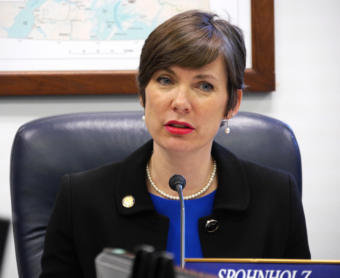
Rep. Christopher Kurka, R-Wasilla, talks about why he's running for governor in a video posted to his Facebook account on Nov. 29, 2021. (Screen capture of Facebook)
Rep. Christopher Kurka, R-Wasilla, talks about why he’s running for governor in a video posted to his Facebook account on Monday. Kurka is the sixth candidate to announce a campaign for governor. (Facebook screen capture)

Wasilla Republican Rep. Christopher Kurka joined the growing list of candidates for governor. 

In an announcement posted on social media on Monday, Kurka criticized Gov. Mike Dunleavy’s health mandates issued early in the pandemic. 

“To the governor in a state already staggering under the alcohol and drug abuse, pot shops and liquor stores meant more than the church of God,” he said. “Walmart was essential, but your locally owned small business was not — the man who promised to stand tall for Alaska and chose to stand down.” 

Kurka said he was targeted in the recent redistricting, which put him in the same district as fellow conservative House member David Eastman. 

“The conservative grassroots of Alaska will not be so easily silenced,” Kurka said. “The political elite and its current governor are about to learn they lost their conservative base the second they allowed liberty to take a back seat to tyranny.” 

Republican Rep. Chris Kurka made an anti-mask speech on the House floor and then removed his mask before he was told to leave on March 15 in the Capitol. (Gavel Alaska screen capture)

Kurka made news in March — less than two months into his first term — when he protested a facemask requirement by removing his mask during a floor speech. Kurka left the floor session after House Speaker Louise Stutes said she preferred that he leave if he wouldn’t wear a mask. 

Kurka is the former executive director of Alaska Right to Life. He introduced a bill in May to make abortion a crime. State courts have said abortion is protected under the right to privacy in the state constitution.

He proposed an amendment to the state constitution that would change how judges are chosen. The Alaska Supreme Court would be reduced to three justices elected by voters to four-year terms. Superior Court and appeals court judges would be elected to two-year terms.

And he proposed another constitutional amendment saying that the state doesn’t recognize federal ownership of any land in Alaska. The federal government owns most land in the state. 

Kurka is calling for an audit of last year’s election in all of the state’s 441 precincts. Under state law, one precinct in each of the 40 House districts is audited.

His campaign website also said he would work to protect a “full PFD payment” and said the Legislature has “stolen the PFD year after year.” And he said he would work to return to Alaskans the amounts that haven’t been paid under the formula in state law. 

The difference between what the state has paid and the amounts under the statutory formula add up to roughly $9,600 per Alaskan over the past six years, a total of roughly $6.2 billion. 

He also said he would work to cut what he called wasteful spending and to lower taxes on small businesses and individuals. He said that state license and permit fees are taxes.   

Former U.S. Senate candidate Joe Miller endorsed Kurka. Miller also criticized Dunleavy in a video posted on social media. 

Kurka is the sixth candidate to announce a run for governor. Along with Republicans Dunleavy and Kurka, the others are Democrat Les Gara; Libertarians Roman Shevchuk and Billy Toien; and independent Bill Walker. 

Bill would draw school funds from permanent fund earnings, along with PFD

Rep. Ivy Spohnholz, D-Anchorage, speaks during a House Resources Committee meeting in Juneau on March 4, 2019.
Rep. Ivy Spohnholz, D-Anchorage, speaks during a committee meeting in Juneau on March 4, 2019. Spohnholz currently chairs the House Special Committee on Ways and Means, which introduced a bill to designate that a share of the state’s annual draw from permanent fund earnings be used to support public education. (Photo by Skip Gray/360 North)

The state’s annual draw from the permanent fund is a lot of money — currently more than $3 billion. For some lawmakers, the primary way that money should be used is clear: to pay permanent fund dividends. But some lawmakers say the fund can help settle one of the state issues that it’s been debating even longer than the PFD: how to pay for public education.

While state public school funding has been flat the past five years, its value has been eroded by rising prices. And some teachers have received pink slips while waiting for the Legislature to pass the budget. Anchorage Democratic Rep. Ivy Spohnholz said the uncertainty is hurting schools.

“If you ask any business if unstable revenue will drive performance, they’ll tell you no,” she said. “The same thing is true for public education. Sustainable funding actually helps to drive reform and outcomes and performance.”

Spohnholz chairs the House Special Committee on Ways and Means. The committee has been considering proposals to balance the state budget in the long term. And the committee put forward House Bill 4003, which would resolve the size of both permanent fund dividends and school funding.

Under the bill, a quarter of the money the state draws from the permanent fund each year would be paid in dividends. That would lead to PFDs of roughly $1,250 next year, half the level proposed by Gov. Mike Dunleavy.

Half of the money that doesn’t go to dividends — 37.5% of the total draw — would pay for the main source of state education funding, known as foundation formula funding. The rest of the draw could be used to support all other state services.

The bill would increase state funding for schools by roughly $90 million next year. Spohnholz said at an Oct. 28 Ways and Means Committee meeting that the bill will help schools dealing with rising costs.

“We can start to chip away at the losses we’ve experienced in the buying power of our K-12 education dollars over the last few years,” she said.

Over the next decade, the permanent fund is projected to grow faster than inflation. That means that under the bill,  state education funding would be significantly higher by 2030 than it is today, from $1.16 billion to $1.93 billion.

The proposal drew praise from prominent advocates for public school funding.

Tom Klaameyer, president of the Alaska affiliate of the National Education Association — the state’s largest teachers union — said the additional money could address different needs across the state, from reducing class sizes to improving broadband access. He also said it could increase the state’s ability to attract and retain teachers and other school staff.

“If we get more highly qualified educators in those positions and reduce that student-to-teacher ratio, the more one-on-one time we’re going to get with students, and the better the outcomes are going to be,” he said.

The bill was introduced in the fourth special session this year. It’s not clear yet if the Legislature will be considering it or a similar proposal during the regular session that begins in January.

It’s a different approach than that advocated by most members of the Republican House minority caucus, who have emphasized resolving the permanent fund dividend first.

Nikiski Republican Rep. Ben Carpenter said he wouldn’t comment on the specifics of the bill until he’s had more time to analyze it. He credited Spohnholz with what he said was an “outside the box” approach to addressing the state’s long-term budget issues. But he said that in drawing from permanent fund earnings,  he would focus on the PFD before considering other areas like education.

“I believe that Alaskans — the majority of them — still feel that the people, through the dividend, should have first call on the permanent fund earnings,” he said.

The regular session is scheduled to begin on Jan. 18 in Juneau

Tensions over PFD fuel talks of a new constitutional convention. Alaskans will vote on whether that time has come.

Vic Fischer points to his signature on Alaska’s constitution at his Anchorage home on November 3, 2021. (Photo by Lori Townsend / Alaska Public Media)

Next year, Alaska voters will decide whether to hold a new constitutional convention. They’ve rejected similar questions over the past 50 years. But anger over the permanent fund dividend is fueling talk of overhauling the Alaska Constitution

Today’s circumstances are very different from those when the first constitutional convention and some — including the last surviving delegate from then — say now is not the time for another one.

In 1955, Alaska wasn’t yet a state. But people in the Territory of Alaska knew that writing a constitution would be a step toward statehood. And so, in November, 55 delegates met at the University of Alaska Fairbanks to write one.

It took three months. They found a lot of inspiration in the federal constitutional convention — there were  55 delegates in Philadelphia in 1787 too.

They also looked at other state constitutions, because by then the Lower 48 and Hawaii had already been through their conventions. They wanted something flexible and that would stand the test of time. 

After the delegates agreed on the constitution, convention President and future Gov. Bill Egan described their work: 

“I say to each and every Alaskan: If it had been your good fortune, as it has been mine, to have witnessed the abilities, the diligence, the devotion to duty, of these delegates who have drafted the proposed constitution for the State of Alaska in carrying out the task that had been cut out for them, you would say of their labors, ‘Well done’.”

Less than three years later, Alaska achieved statehood. 

Alaska Constitutional Convention Chief Clerk Katie Hurley writes notes during the convention, which lasted from November 1955 to February 1956. Frank Peratrovich, the only Alaska Native delegate, is in the background. A ballot question next year will ask whether to hold another convention. (Photo by Steve McCutcheon, courtesy of the Hurley family).

One of the ways the Alaska Constitution mirrored the U.S. Constitution is that it was brief — just over 14,000 words, about half the average of other states’. They both also included provisions allowing for another constitutional convention in the future. 

The federal constitution says there will be another convention if two-thirds of state legislatures ask for it. That’s never happened. 

The Alaska Constitution provides two paths to holding a state constitutional convention: the Legislature can call one at any time or voters can choose to hold one. It’s never happened here either.

Like the constitutions of 13 other states, Alaska’s constitution requires that voters are asked periodically whether to hold a convention.  If Alaska goes 10 years without holding a new convention, the constitution says the voters will be asked whether or not to hold one. 

When asked: “Shall there be a constitutional convention?” Alaskans have voted no every time, by large margins. The highest share to vote yes was 37.3%, in 1992.

At a constitutional convention, elected delegates can decide whether to propose amendments to the constitution. The U.S. Constitution only has two things that can’t be amended: no state can have fewer senators than any other without consenting to it, and there could be no amendment limiting the slave trade before 1808. 

But since the Alaska Constitution doesn’t limit what delegates can consider, they could even write an entirely new constitution. 

Up until now, all of Alaska’s constitutional amendments have been passed by the Legislature. This is what Gov. Mike Dunleavy has been advocating for — to enshrine the PFD in the constitution and to lower the state limit on spending. But in multiple legislative sessions, these proposals have not advanced. So, supporters of the amendments are starting to talk about supporting a constitutional convention instead. 

It came up during the last day of the third special session this year, in September.

In arguing for higher permanent fund dividends, state Sen. Shelley Hughes, a Palmer Republican, said senators who are resistant to holding a constitutional convention should support a legislative package that would include a PFD constitutional amendment. 

“If they don’t want to see that kind of thing, they need to realize that package needs to get through,” she said. “Because we’re actually jeopardizing something more than just a fiscal solution, we’re jeopardizing everything that’s in our state constitution. And so I would think that those that have been maybe dragging their feet a bit may want to think about that because that could open a can of worms.”

Wasilla Republican Sen. Mike Shower said he believes that if the Legislature doesn’t fund PFDs at the level set by a formula in state law, the people “will do it for them” through a constitutional convention.

“And that’s dangerous. We here can debate it in controlled circumstances. We can vet it and tweak it to make it work: all the math, the structure,” Shower said of a long-term plan to pay for both PFDs and the budget. “If this goes to a constitutional convention, we might very well lose control and [have] things that nobody on any side wants to see.”

But some other senators were not swayed. Kodiak Republican Sen. Gary Stevens rejected the argument. 

“Everybody on the floor that’s talked about it [the constitutional convention] has said it’s risky, have said it’s dangerous. We’ve got to trust the public to understand that,” Stevens said. “I think it’s foolish to keep threatening me by saying, ‘If you don’t vote for this, we’re going to have a constitutional convention.’ The convention would take years. It would take millions and millions of dollars. Trust the public to see through this argument.”

If the voters approve the measure, they would be asked to elect convention delegates two years later, unless the Legislature voted to hold a special election to elect delegates. 

The Legislature has never passed a law saying how a constitutional convention would be conducted. The constitution says that if that doesn’t happen, the convention should follow as nearly as possible the 1955 territorial law that set the rules for Alaska’s first constitutional convention. That includes the number of delegates and the districts used to elect them. The election provided for seven delegates elected on a statewide basis, 31 based on Alaska’s four judicial districts and 17 based on the recording districts for property records. The convention was held eight weeks after the delegates were elected.

Vic Fisher was there in 1955 and 1956 when the Alaska Constitution was written. At 97 years old, Fischer is the last surviving delegate of the original convention.  And he said Alaska politics currently lacks something the delegates had then: unity.

Vic Fischer at his Anchorage home on Nov. 3, 2021. (Photo by Wesley Early/Alaska Public Media)

“This is about as bad a time to have a new convention as there ever could be or could have been because we are so divided as a people,” he said in an interview with Alaska Public Media.

Fischer said political blocs are focused on issues that divide Alaskans. He said the 1955 delegates had a common goal, and they studied lessons from other states in drafting the constitution. He’s concerned that politically divided delegates at a future convention would be studying something very different.

“They would study how they can win,” he said. “At the constitutional convention in ’55, nobody was out to ‘win.'”

He sees the design of the nonpartisan system for choosing judges as an example where the 1955 delegates reached a consensus that has benefited the state. He said criticism of the system has come from narrow interests.

Fischer says there’s already a process for people who are focused on a single issue like the PFD to change the constitution: make the case for passing a constitutional amendment. That would require two-thirds of both legislative chambers and a majority of voters to agree. 

And he has a warning for supporters of a constitutional convention:

“You probably have strong intentions of changing one or more parts of the constitution,” he said. “The proper way would be to do it by amendment and not open up every phrase, every paragraph in the constitution because nobody knows what a horror may descend if it’s opened up all the way and people are elected who would rip apart a constitution that was written under the idealistic convention of 1955.”

The constitutional convention question is scheduled to be on the ballot on Nov. 8, 2022.

Alaska Public Media’s Lori Townsend contributed to this report.

Alaska Supreme Court explains ruling on governor’s appointees

This massive seal of the state of Alaska hangs on April 19, 2018, behind the dais where Alaska Supreme Court justices hear cases in the Boney Courthouse in Anchorage.
The seal of the state of Alaska hangs behind the dais where Alaska Supreme Court justices hear cases in the Boney Courthouse in Anchorage. On Friday, the court issued its opinion on why Gov. Mike Dunleavy’s appointees remained in office despite the Legislature failing to meet to vote on them during the pandemic. (Photo by Jeremy Hsieh/KTOO)

If the Alaska Legislature wants to reject a governor’s appointees, it will have to take a vote on them, the state Supreme Court said in an opinion issued on Friday. 

The court had ruled in April that Gov. Mike Dunleavy’s appointees had remained in office despite the Legislature’s failure to meet to confirm them last year during the pandemic. It reversed a Superior Court judge’s ruling against the governor. 

But the court hadn’t released its full reasoning until Friday. 

Justice Peter Maassen wrote that the record from Alaska’s constitutional convention in 1955 showed the importance the delegates placed on holding a joint session for votes on the governor’s appointments. 
The Legislative Council had maintained that the positions had been vacated. It pointed to a 1964 state law that said that failure to hold a vote is tantamount to declining an appointment. 

But the Supreme Court found that the language of that law was contrary to the plain language of the state constitution that the governor’s appointments are “subject to confirmation by a majority of the members of the legislature in joint session.”

The Legislative Council argued that the constitution only required joint sessions for the Legislature to confirm appointments, not for rejecting them. But the Supreme Court said that the word “confirmation” referred to the entire process of voting on appointments. 

Normally, the Legislature holds a joint session once each year to vote on all of the appointments over the previous year. In May, the Legislature confirmed 174 appointments and rejected three. The Legislature has confirmed all of the governor’s cabinet appointments since he took office. The joint session is usually held toward the end of the regular session. 

Alaska Redistricting Board finishes work to adopt maps; opponents say courts could toss out portions

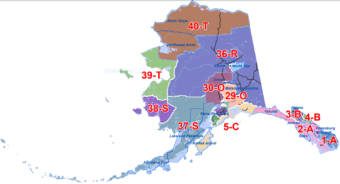
The Alaska Redistricting Board took the final legal steps to adopt this legislative district map on Nov. 10, 2021. (Screen capture from Redistricting Board website)
The Alaska Redistricting Board took the final legal steps to adopt this legislative district map on Wednesday. (Screen capture from Redistricting Board website)

Alaska Redistricting Board members took the final legal steps to adopt a legislative map on Wednesday but said they expect lawsuits to follow. 

The board split over the final map. All three members who were appointed by Republican elected officials supported the map; the two who were not appointed by Republicans opposed the map’s adoption. 

Board member Nicole Borromeo said the board could lose in court over the map. She was appointed by former House Speaker Bryce Edgmon, an independent nominated by Democrats. 

Borromeo was particularly concerned about the two Senate districts for Eagle River. She said having one Eagle River Senate district that combined the two House districts in the area would have been more reasonable. 

“These [House] districts share the same streets, neighborhoods, businesses, schools, watersheds and more, including electrical co-ops,” she said. She added that Eagle River is distinct from the rest of Anchorage because residents in the area have supported leaving the city for years. 

The Eagle River Senate map had been proposed by board member Bethany Marcum. She was one of Gov. Mike Dunleavy’s two appointees to the board, along with E. Budd Simpson.

Marcum said on Monday that the board had ignored the connections between Eagle River and Joint Base Elmendorf-Richardson when it wrote the House map. Borromeo had proposed the Anchorage House map that the board adopted on Friday. She said her Senate proposal took those connections into account.

Most of the dozens of Redistricting Board meetings had been quiet. But board members expressed frustration and disappointment with each other this week. 

Aside from the changes in the Eagle River, there are many other changes as a result of the new map. 

Twelve incumbent legislators have been put in the same district as another incumbent: 10 in the House of Representatives and two in the Senate. 

The senators are Anchorage Republicans Mia Costello and Natasha von Imhof. 

The House members who are now in the same district include:

  • Eagle River Republicans Ken McCarty and Kelly Merrick are in a district mostly represented by McCarty now. Merrick has been a member of the mostly Democratic majority caucus this year. She switched caucuses after the chamber spent weeks deadlocked 20-20 over who would control it; 
  • Anchorage Democrats Harriet Drummond and Zack Fields are in a district mostly represented by Fields now, while fellow Anchorage Democrats Andy Josephson and Chris Tuck are in the district mostly represented by Tuck now; 
  • Anchorage Democrat Matt Claman and Republican Sara Rasmussen are in the district mostly represented by Claman now; 
  • and Wasilla Republicans David Eastman and Christopher Kurka are in a district largely represented by Kurka now. 

The changes to the rural Interior House district are among the most striking this cycle. All of the western Interior villages — currently spread across three districts — will be united with the other Interior villages, as well as those in the Copper River Valley. 

The map also includes a new House district in the North Muldoon neighborhood. 

It is typical for there to be lawsuits over redistricting maps. 

Borromeo expressed confidence that the Eagle River Senate districts would have to be revised as a result of a lawsuit. She was supported by fellow board member Melanie Bahnke, who was appointed by former Alaska Supreme Court Chief Justice Joel Bolger. 

Board chair John Binkley, while defending the map, also said it would likely be the subject of litigation. Binkley was appointed by former Senate President Cathy Giessel, a Republican. 

Binkley said redistricting was a difficult process. 

“I think the board earnestly — all board members — tried to put together a fair plan, a reasonable plan,” he said. “But sometimes, those are in the eyes of the beholder. And some people — reasonable people — can look at one plan and say it’s fair. Other people can look at it and say it’s not fair.”

Binkley, Marcum and Simpson supported the final redistricting proclamation. Bahnke and Borromeo opposed it. 

Of the 20 Senate seats, 19 will have elections next year under the map. Golovin Democrat Donny Olson is the only one who won’t have to run again. 

Normally, only 10 of the 20 Senate districts hold elections every other general election. But several districts changed so much that their senators must run again. 

Two Republican senators whose districts didn’t see many changes — Bert Stedman of Sitka and Gary Stevens of Kodiak — also face elections, despite being re-elected last year.

That’s a result of how the Senate districts were named. Each one was assigned a letter of the alphabet as a name. And alphabetically, every other Senate district runs every other election cycle. The board assigned Stedman’s District A and Stevens’ District C to have elections next year. 

This story has been corrected to reflect the fact that Rep. Grier Hopkins and Rep. Mike Cronk are not in the same district in the new map.

Alaska Redistricting Board chooses final Senate map despite gerrymandering allegation

Alaska Redistricting Board member Bethany Marcum, chair John Binkley and member Nicole Borromeo speak during a board meeting on Nov. 9, 2021, in the board office in Anchorage. The board adopted the final Senate map during the meeting. (Zoom screen capture)
Alaska Redistricting Board member Bethany Marcum (left) and chair John Binkley listen as member Nicole Borromeo speaks during a board meeting on Tuesday in the board office in Anchorage. The board adopted the final Senate map during the meeting. (Zoom screen capture)

The Alaska Redistricting Board adopted a final Senate map on Tuesday. But before it did, board member Nicole Borromeo criticized the map and opposed adopting it. 

“I believe it opens the board up to an unfortunate and very easily winnable argument to partisan gerrymandering,” she said.

She criticized board member Bethany Marcum’s proposals included in the final map, singling out a district stretching from downtown Eagle River to the South Muldoon neighborhood of Anchorage more than seven miles away. 

South Muldoon is more racially diverse than Eagle River, and Borromeo and fellow board member Melanie Bahnke expressed concern that the voting strength of racial minorities would be weakened by combining the neighborhood with Eagle River. 

The map was approved by the three members appointed by Republican elected officials. 

On Friday, the board adopted a House map for Anchorage that Borromeo proposed. But as it paired House districts to form Senate districts on Tuesday, the argument became intense.

Borromeo pointed to a statement by Marcum on Monday that Eagle River would receive more representation in the map. Borromeo called for reconsidering the vote adopting the map. 

Marcum had emphasized public testimony about the ties between Eagle River and the Joint Base Elmendorf-Richardson area and between Eagle River and Muldoon in supporting the two Eagle River Senate districts. 

But Borromeo said public testimony favored a different map for the area.

Borromeo’s reconsideration request was defeated, 3 to 2. 

Marcum and board member E. Budd Simpson were appointed by Republican Gov. Mike Dunleavy. Binkley was appointed by former Senate President Cathy Giessel, also a Republican. Borromeo was appointed by former House Speaker Bryce Edgmon, an independent nominated by the Democrats. And Bahnke was appointed by former Alaska Supreme Court Chief Justice Joel Bolger. 

Binkley, Marcum and Simpson voted for the final Anchorage Senate map, while Borromeo and Bahnke voted against it. Bahnke said the final map was a “complete surprise,” adding that she thought they had reached a consensus on a different map.

The final map is different from what the majority of board members supported on Monday. Democratic Senators Tom Begich and Elvi Gray-Jackson will no longer be put in the same district. The final map also places Republican Sen. Josh Revak in a more Republican district than what the majority backed on Monday. 

The midtown Anchorage House district he lives in is now combined with part of the Anchorage Hillside rather than with the district that includes the University of Alaska Anchorage and nearby hospitals. 

But the plan for Eagle River to be represented by two senators remained in place. 

Site notifications
Update notification options
Subscribe to notifications