Andrew Kitchenman

State Government Reporter, Alaska Public Media & KTOO

State government plays an outsized role in the life of Alaskans. As the state continues to go through the painful process of deciding what its priorities are, I bring Alaskans to the scene of a government in transition.
Update: Lawmakers stop working on bill to aid Alaska hospitals facing COVID-19 surge

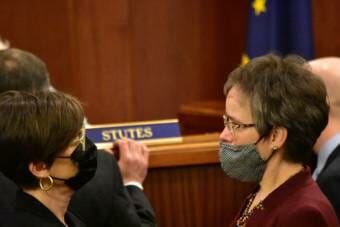
Rep. Ivy Sponholz, D-Anchorage, speaks to Rep. Sarah Vance, R-Homer, before a floor session on Friday, March 5, 2021. (Peter Segall / Juneau Empire via AP, Pool)

Work stopped on Monday on a bill requested by Gov. Mike Dunleavy to ease the burden on hospitals from the COVID-19 surge. The bill became caught up in a dispute over requiring all hospitals to allow any patients to bring a person who supports them during any treatment.

Hospitals have put some restrictions on visitors during periods of the pandemic when they were concerned about stopping the spread of COVID-19 among their patients and staff.

But supporters of the amendment said the restrictions have done more harm than good.

Homer Republican Rep. Sarah Vance proposed the amendment. She said legislators have heard from family members and constituents about having to go into a health care facility for a surgery and procedure.

“And they have been unable to have someone with them during their time of need,” she said. “And we have heard tragic stories of people who have died alone.”

But opponents said that with the amendment, a bill intended to help hospitals would instead make things worse for them.

Bethel Democratic Rep. Tiffany Zulkosky said the amendment undermined health care providers’ ability to provide for patient safety during a very uncertain time. She works as a health care executive.

“Providing a broad-brush policy that doesn’t protect a facility’s right or ability to set their own policies is just putting patients in a potentially dangerous situation,” she said.

The bill had a rocky path in the Senate as well. Senators added provisions supported by opponents of vaccine mandates.

This led hospital leaders and state medical experts to raise concerns at a House Health and Social Services Committee meeting on Saturday.

The committee amended the bill to remove the provisions related to vaccines that the Senate had added.

House members opposed to vaccine mandates planned to try to amend the bill again to add these provisions before the floor debate ended.

The Legislature also is considering a bill to fund permanent fund dividends this year.

This story was updated on Monday to reflect that work on the bill has ended.

Alaska Senate passes bill aimed at easing COVID-19 strain on hospital, but amends it to oppose vaccine mandates

Eagle River Republican Sen. Lor Reinbold, left, talks with Fairbanks Democratic Sen. Scott Kawasaki and Kodiak Republican Sen. Gary Stevens on Sept. 10, 2021, in the Alaska State Capitol in Juneau, shortly before the Senate passed a bill aimed at easing the strain on hospitals from the COVID-19 surge. Reinbold proposed two amendments that passed that oppose COVID-19 vaccine mandates. (Photo by Andrew Kitchenman/KTOO and Alaska Public Media)
Eagle River Republican Sen. Lor Reinbold, left, talks with Fairbanks Democratic Sen. Scott Kawasaki and Kodiak Republican Sen. Gary Stevens on Friday in the Capitol, shortly before the Senate passed a bill aimed at easing the strain on hospitals from the COVID-19 surge. Reinbold proposed two amendments that passed that oppose COVID-19 vaccine mandates. (Photo by Andrew Kitchenman/KTOO and Alaska Public Media)

The Alaska Senate passed a bill on Friday that is intended to ease the strain on hospitals from the COVID-19 surge. 

Senators voted on the measure, Senate Bill 3006, after passing amendments to it aimed at preventing mandates for people to be vaccinated for COVID-19, like the ones announced by U.S. President Joe Biden on Thursday. The amendments led some senators to oppose the bill. 

Senators who supported the amendments criticized the Biden administration’s new vaccine mandate in floor speeches. 

One amendment that passed would allow people to decline a COVID-19 vaccine for themselves or their children for any reason, rather than the medical or religious reasons required to be exempt from vaccines mandated for other diseases. 

Eagle River Republican Sen. Lora Reinbold proposed the amendment. She said people should have a right not to be vaccinated. And she criticized Biden’s action. 

“What the executive branch on the federal level did yesterday was an atrocity,” she said. “And I think it’s completely illegal. I think it violates states’ rights. He does not have that permission to do that in the supreme law of the land, which is the Constitution.”

Bethel Democratic Sen. Lyman Hoffman opposed the amendment. He said the amendments made what he had seen as a good bill worse. He said the bill should have remained focused on trying to prevent Alaskans from dying from COVID-19.

“How can we be taking steps to put our families more at risk, when we should be doing just the opposite?” he said. “This is real life. This is real death we’re talking about. These are our citizens. These are our constituents.”

The Senate passed another amendment from Reinbold that would bar any business, state or local government, or school district from requiring vaccines to access an area or service that is open to the public. And another that would  allow people to provide a positive COVID-19 test result instead of proof of vaccination. 

Gov. Mike Dunleavy proposed the bill after Alaska hospital leaders called for him to declare a public health disaster, which gives the state the authority to temporarily free hospitals from following some state and insurance  regulations. Dunleavy opposes operating under a state disaster declaration. He introduced the bill as an alternative to provide hospitals with more flexibility. 

The bill would allow for more use of telehealth care and ease state and insurance rules for hospitals. 

The bill failed on an earlier vote, shortly after the amendments passed. But several senators reversed their votes later in the day. The House of Representatives could vote to remove the amendments focused on vaccine mandates before the session ends on Tuesday. 
Sen. Lora Reinbold asks to be excused from floor sessions, citing her ban from Alaska Airlines

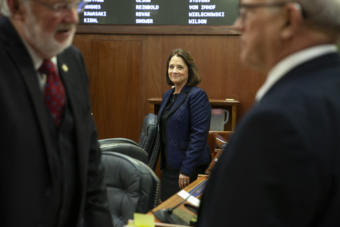
Sen. Lora Reinbold walks the halls of the legislature before an announcement from Senate leadership that she had been stripped of most of her committee positions on Tuesday, January 21, 2020 in Juneau, Alaska. (Photo by Rashah McChesney/KTOO)

Alaska Sen. Lora Reinbold, a Republican from Eagle River, has been excused from attending Senate floor sessions starting this weekend through next January.

She has been banned from flying on Alaska Airlines for refusing to wear a facemask and is arguing that she doesn’t have an alternative way of getting back and forth to Juneau. On Thursday she asked her fellow lawmakers to be excused.
“I move and ask unanimous consent to be excused from the call of the Senate from Sept. 11 through Jan. 15 because there is no airline other than Alaska Airline(s) that flies into Juneau during that period that I’m aware of. The political ban is still in place as long as Biden’s illegitimate mask mandate is in place,” she said.

In general, legislators ask to be excused when they have another commitment that prevents them from attending floor sessions.

Reinbold was barred from most of the Capitol briefly during the regular session for not wearing a mask and refusing to get tested for COVID-19. She eventually started to comply with the rules.

The special session must end by Tuesday. No other special sessions have been announced before the regular session begins in January.

With ongoing dispute over drawing funds, Alaska government could run out of money to pay bills over the next year

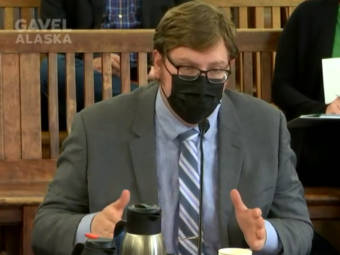
Legislative Finance Division Director testifies to the Alaska Senate Finance Committee on Sept. 8, 2021, in the Alaska State Capitol in Juneau. (Gavel Alaska screen capture)
Legislative Finance Division Director Alexei Painter speaks to the Senate Finance Committee on Wednesday in the Capitol. Painter described what could happen if the state ran out of money in the general fund this budget year. (Gavel Alaska screen capture)

Alaska’s state government may have trouble paying its bills over the next year, due to a dispute over taking funds from the piggy bank the state has used to balance the budget in the past. 

And that could lead to the state spending from funds that most lawmakers want to protect for the future. Or it could go without paying some of its bills — but the Legislature would have to agree to a change for it to be legal. 
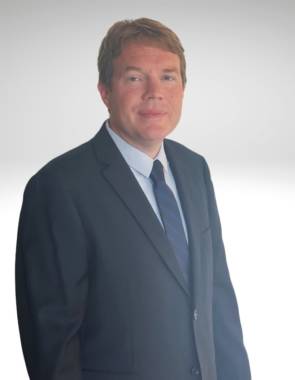
Legislative Finance Division Director Alexei Painter told the Senate Finance Committee on Wednesday that the state could run out of money if oil revenue comes in lower than forecast.

“There’s no backstop fund now, so if we have a deficit, there’s no funds there to fill it,” he said. 

In past years, the Constitutional Budget Reserve was that backstop. But spending from it requires the agreement of three-quarters of both the Senate and House of Representatives. And that hasn’t happened this year. 

The Senate Finance Committee is considering a bill the House recently passed to fund permanent fund dividends and other items. If the Senate passes the bill without changes, it’s projected to leave a relatively small amount at the end of the budget year — $60 million — compared to the size of the budget, which has $4.9 billion in state funds.

And Painter said if the projection is wrong, there could be no money left. 

“Having no margin of error and not having a backstop fund is concerning, just because of that difficulty in the budget world of being accurate in that projection,” Painter said.

Without drawing from the Constitutional Budget Reserve, there are only two other large accounts the state could draw from if it runs out of money. Most lawmakers have wanted to protect both of them.

One is the Power Cost Equalization Endowment Fund. It pays to lower energy bills in high-cost areas. The other account is the permanent fund’s earnings reserve. Most lawmakers have opposed drawing more from permanent fund earnings than is planned under state law. They’re concerned that would threaten the permanent fund’s long-term health. 

Bethel Democratic Sen. Lyman Hoffman said the Senate Finance Committee could keep $54 million more in the general fund to pay for the budget. That’s how much the House approved in oil and gas tax credits. Hoffman said the money could instead come from the Constitutional Budget Reserve, or CBR. 

“I would think that the committee would consider the option of funding the $54 million out of the CBR again,” he said.

The state has run out of money in the general fund before, in 1987. The administration at the time stopped some money the Legislature had budgeted from being spent. The Legislature later retroactively approved the action. 

Editor’s note: The headline of this story has been updated.

Gov. Dunleavy replaces Transportation Commissioner John MacKinnon

Ryan Anderson has been named by Gov. Mike Dunleavy as the new commissioner of the Alaska Department of Transportation and Public Facilities, replacing John MacKinnon, on Sept. 3, 2021. (Photo provided by the Department of Transportation and Public Facilities)

Gov. Mike Dunleavy appointed Ryan Anderson as the new commissioner of the Department of Transportation and Public Facilities. He replaces John MacKinnon.

Anderson has worked for the department for 20 years. His most recent position was director for the Northern Region. 

Anderson oversaw design, construction, maintenance and operations for a region that extends from the Gulf of Alaska to the Arctic Ocean. He lives in Fairbanks. 

The governor’s office did not provide the reason for MacKinnon’s departure and said that it doesn’t comment on personnel issues.
MacKinnon had been in the position since the start of the Dunleavy administration in 2018. 


Alaska PFD payout remains up in the air as special session grinds on

Alaskans file their Permanent Fund dividend applications in downtown Anchorage in 2016. The amount and timing of the 2021 PFD remains uncertain. (Rachel Waldholz/Alaska Public Media)

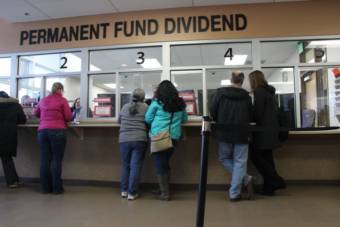
Alaskans eager to know how much their permanent fund dividend will be this year, as well as when they’ll get it, will have to wait some more. The dividend is caught up in a broader debate over state budget policies. And a legal disagreement could affect its size even if lawmakers settle on an amount. 

The House of Representatives passed a bill on Tuesday aimed at funding PFDs at $1,100. But the final amount isn’t clear.

Lawmakers who worked on this year’s budget already tried to pass an $1,100 PFD. Some of the money failed to pass with the support of three-quarters of both chambers, the required amount. 

Then Gov. Mike Dunleavy vetoed the rest. 

So the House tried again and landed on the same number. There’s a reason for that — it’s the amount lawmakers have said the state can afford without drawing more than planned from permanent fund earnings. 

Now the bill goes to the Senate. And Senate President Peter Micciche, a Soldotna Republican, said it’s confusing for Alaskans who’ve heard dividends would be different amounts. 

“Alaskans are expecting a PFD in October,” he said. “And while we’re sitting in here fiddling around, until almost October … It’s on us to work it out like adults and figure out a way to get that check out to Alaskans that happen to be — many of them happen to be in need right now.”

Dunleavy has proposed a dividend of $2,350 as part of his plan to put the dividend in the state constitution. That amount equals half of what the state draws from the fund and is also known as a 50/50 PFD. And it’s less than the full amount under the formula, which would be roughly $3,800 this year.

Micciche has voted in favor of a 50/50 PFD earlier this year. But he says it may be difficult to get a consensus at that level; House minority caucus proposals for higher dividends failed.

“There was not support for a 50/50 PFD in the House,” he said. “In fact, they lost ground. We saw there was not support for a full dividend in the House. Well, the Senate will have a different position.”

A major challenge for having a higher level is that many legislators don’t want to draw more than planned from permanent fund earnings. Some have said they would be willing to if it was part of a bigger solution to the state’s long-term budget problems. But the Legislature hasn’t been able to reach a solution on these problems for more than five years.

Even if both chambers of the Legislature pass a $1,100 PFD, the check may still end up being smaller. That’s because nearly half of the money would come from an account the Dunleavy administration says is empty. It has said the money in the account was swept out of it after three-quarters of both legislative chambers failed to agree to keep it there.  

Assistant Attorney General Cori Mills told the House Judiciary Committee that the money can’t be spent. 

“You basically have no money in that fund from which to do any new, additional appropriations,” she said.

Some legislators disagree, and point to a recent Superior Court decision. In it, the judge wrote that the account is one of several that is separate from those that are subject to the three-quarters vote. But the case wasn’t focused on the issue. 

Megan Wallace, the Legislature’s top legal adviser, said the ruling could provide the basis for paying for PFDs from the account the state says is empty. It’s known as the Statutory Budget Reserve, or SBR. And she says if the Legislature and the Dunleavy administration disagree over it, the Legislature could sue. 

“I could … see a potential for litigation, particularly if there’s a disagreement about how much money from the SBR is available to the Legislature for appropriation,” she said.

House Speaker Louise Stutes, a Kodiak Republican, said House majority leaders aren’t looking for a lawsuit. But they believe the account can be used to fund the dividends. She hopes the Legislature and Dunleavy reach an agreement, but if they don’t the Legislature may have to go to court.

“If we come to that point, I guess that’s the direction it’ll go,” she said. “Hopefully, it will not come to that point.”

The bill to fund PFDs is currently being considered by the Senate Finance Committee. And if the current special session isn’t able to resolve this year’s PFD amount, Dunleavy and lawmakers are already talking about a fourth special session this year. 

Site notifications
Update notification options
Subscribe to notifications