Andrew Kitchenman

State Government Reporter, Alaska Public Media & KTOO

State government plays an outsized role in the life of Alaskans. As the state continues to go through the painful process of deciding what its priorities are, I bring Alaskans to the scene of a government in transition.

Gov. Dunleavy adds bills aimed at easing COVID-19 surge to special session

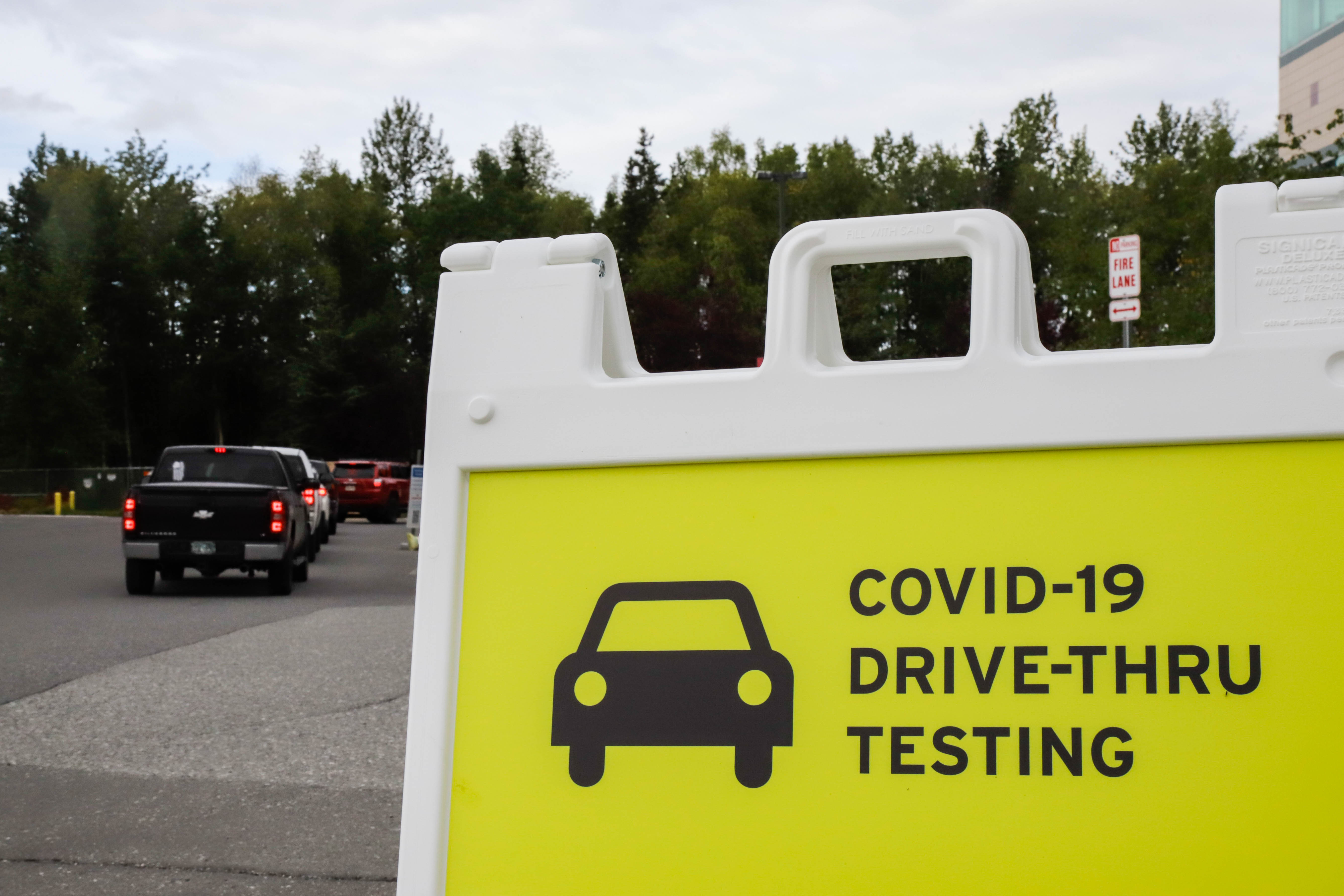
Cars line up for drive-thru COVID-19 testing on the Alaska Native Medical Campus in Anchorage on Aug. 24. (Jeff Chen/Alaska Public Media)

Gov. Mike Dunleavy added bills on Thursday in response to the recent COVID-19 surge to the agenda for the legislative special session.

One bill would expand the use of telehealth care and allow hospitals and nursing homes to do background checks on their own rather than going through the state system during a state or federal public health emergency or disaster. It would also empower the state’s health commissioner to temporarily order insurers not to require hospitals to follow rules they usually require.

Another bill would allow Alaska to join a multi-state compact that makes it easier for nurses in one state to be licensed in the others. A Senate committee considered a version of this bill during the regular session. 

The state’s hospitals had asked Dunleavy for a new disaster declaration on Wednesday. But on Thursday, hospital leaders told lawmakers at a House Health and Social Services Committee meeting that what’s most important is for the state act quickly, no matter the method. 

Yukon-Kuskokwim Health Corporation Chief Medical Officer Dr. Ellen Hodges described a patient from a village who was critically ill with a condition other than COVID.  Her hospital doesn’t have an intensive care unit and usually sends its sickest patients to the Alaska Native Medical Center. But the ICU there was full. So the patient’s doctor had to call hospitals around the state as the patient’s health got worse. Eventually the doctor was able to find a bed. 

“The choice of an unvaccinated person to go maskless in a crowded venue causes a person in a village hundreds of miles away to go without the resources needed to simply survive, regardless of whether that person made the choice to get vaccinated and wear a mask,” she said.

Matanuska-Susitna Regional Medical Center CEO David Wallace said the long surge has worn down hospital staff. He recounted an experienced nurse saying last week was the worst she had ever seen. 

“She is watching the desperation on the faces of patients that are far too young to be dying from a disease that has a preventable application called immunization,” Wallace said.

He said the hospital has begged nurses who are prepared to walk away from their jobs to come back for the next shift.

Jared Kosin, president of the Alaska State Hospital and Nursing Home Association, said the state must act swiftly. He called on Dunleavy’s administration and the Legislature to work together. 

“We are in crisis,” he said. “Our sole focus and interest is getting resources and support to our facilities and caregivers as fast as possible. … All we want is support. And we want it now.”

State health commissioner Adam Crum said the bills’ provisions address the concerns raised by the hospitals. He also noted that state law requires the Legislature to vote on extending disasters longer than 30 days. The state extended the disaster using new orders last winter when the Legislature was in session.

Hospital leaders say state action can’t come soon enough. 

Alaska Native Medical Center Administrator Dr. Bob Onders said his hospital is “not doing well at all.” He said the staff feels that the public and government are not recognizing the strain on hospitals. 

“The general perception is no action is being taken,” to help hospitals, he said. 

Providence Alaska Chief Executive Preston Simmons said hospitals have fewer nurses per patient due to being at capacity. He said the surge here could continue to grow until late September if it follows the pattern of other countries. 

He emphasized the importance of wearing masks and pointed out that, while children generally do get less sick from the disease, they often spread the virus.

He also noted that COVID-19’s growth was less in the spring when schools required masks, and Alaska’s surge grew after some districts re-opened without requiring masks.  

“We need to be smart and take care of each other by masking up,” he said. 

State health leaders who testified echoed the hospital leaders’ urgency. And some legislators also expressed concern. House Health and Social Services Committee Co-chairs Tiffany Zulkosky of Bethel and Liz Snyder of Anchorage released a statement calling on Dunleavy to issue a disaster declaration. 

But at least one lawmaker had a different concern about the testimony. 

Wasilla Republican Rep. Christopher Kurka pointed to data that Israel is experiencing COVID-19 increases despite having a high vaccine rate, and that a rising share of those hospitalized are vaccinated. 

“This whole hearing has felt politically manipulative,” Kurka said.

State Epidemiologist Dr. Joe McLaughlin said the vaccines remain effective but aren’t as effective against the delta variant as earlier strains. And he said that as the share of the public that’s vaccinated grows, the share of hospitalized patients who are vaccinated will also grow even as the vaccines remain effective at reducing the disease’s spread. 

Hospitals leaders have said a disaster declaration would allow more aggressive use of telehealth care. They’ve also called for the state to streamline state background checks and licensing for hospital staff. 

The other items on the special session agenda include the governor’s proposals to enshrine the permanent fund dividend in the state constitution and lower the constitutional limit on state spending. A bill to fund PFDs and other items is also on the agenda.

The special session must end by Sept. 14. 

Correction: An earlier version of this story stated the state hospital association called for the governor to issue a disaster declaration last week. It called for a declaration this week.

This story has been updated.
 

Alaska House of Representatives passes bill with goal of $1,100 PFD

(Rachel Waldholz / Alaska’s Energy Desk)

The Alaska House of Representatives passed a bill on Tuesday that is intended to pay permanent fund dividends of $1,100 this year.

But that’s not a done deal. It still has to pass the Senate, and the amount could be much lower, since Gov. Mike Dunleavy’s administration has said one of the accounts to be used to pay dividends in the bill is empty.

The PFD will be later than usual, since the Legislature missed the deadline on Tuesday that the Permanent Fund Dividend Division said it would need to meet to pay PFDs in early October. The division said dividends would be paid roughly 30 days after the amount is set.

House members who supported the bill, House Bill 3003, said it was needed to ensure there is a PFD this year at an amount that protects permanent fund earnings from being drawn down. They point to the state spending other savings accounts — including the Constitutional Budget Reserve — down from nearly $18 billion in early 2014 to roughly $1 billion by mid-2020.

“We had so much money in the Constitutional Budget Reserve — we had so much saved up,” Rep. Calvin Schrage, an Anchorage independent, said. He later added: “We will not allow the earnings reserve to be used as that next pool of money.”

But members of the Republican minority caucus opposed the bill, saying that the state should pay either the full dividend under the formula in a 1982 law, which would equal roughly $3,800, or the $2,350 level proposed by Dunleavy as part of his plan to put the PFD in the constitution. The state hasn’t followed the formula since 2015, after oil prices fell.

“There’s a lot wrong with this unbalanced budget and I can’t vote for it at this time,” Rep. George Rauscher, a Republican from Sutton, said.

The Legislature passed a law in 2018 intended to limit the annual draw from the total value of the fund and its earnings reserve. But it hasn’t been able to agree on changing the PFD formula, due to differences over whether the budget should be balanced using taxes, cuts to government services or smaller dividends.

On Tuesday, each side criticized the other for their positions during the third special session, which is more than halfway over. The majority said minority members have not supported policy changes that would balance the budget in the long term, while the minority focused on how the majority hasn’t held hearings on Dunleavy’s proposals.

The bill now goes to the Senate, which is next scheduled to meet on Wednesday. But even if the Senate approves the PFD amount in the bill, it’s not certain whether Alaskans will be paid in dividends.

The $1,100 is funded from two sources: $400 million from the general fund that pays for the rest of the budget and $330 million from an account known as the Statutory Budget Reserve, or SBR.

Dunleavy’s administration considers the SBR account to be empty. That’s because it says three-quarters of both legislative chambers had to vote to maintain the money in the account. And that vote failed in both chambers in June.

So the PFD would be roughly $600 if the SBR money isn’t available. And Dunleavy vetoed a somewhat smaller amount in an earlier bill, saying that the amount was an insult to Alaskans.

Supporters of the bill have noted that Superior Court Judge Josie Garton identified the SBR in a recent ruling as being one of the accounts that is separate from those subject to the three-quarter votes. It’s not clear if there could be a legal battle over paying the roughly $500 worth of dividends from the SBR.

The bill the House passed also was written to pay $114 million in oil and gas tax credits. But $60 million of that wasn’t funded, since it also required three-quarters of the House members to support it. And that vote failed, receiving only 21 in favor.

Committees are scheduled to hear other bills this week. The special session must end by Sept. 14.

With deadline looming, Alaska lawmakers still disagree over PFD amount

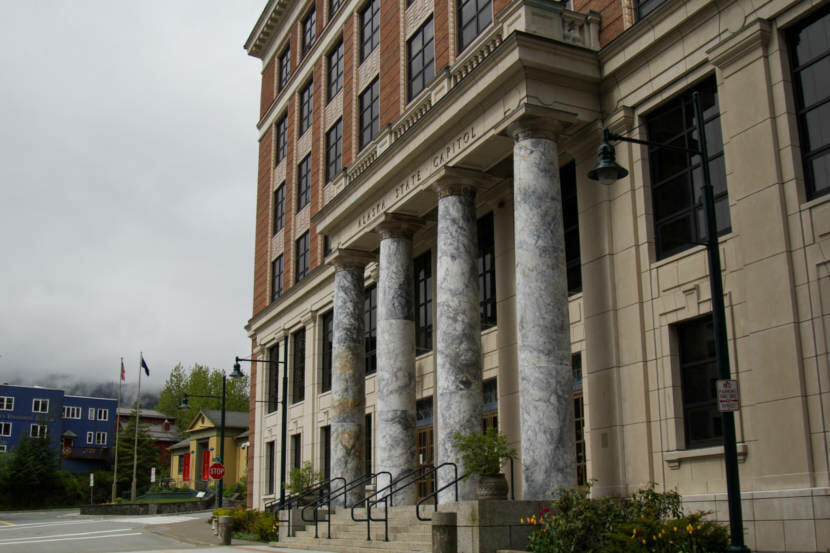
The Alaska Capitol on Tuesday, June 1, 2021. (Nat Herz/Alaska Public Media)

Updated at 11:10 p.m. 

Alaska Permanent Fund dividends will be delayed after the Legislature failed to agree on funding in time for the usual early October payments.

The House of Representatives plans to vote Tuesday on a bill that would pay dividends of up to $1,100. The House of Representatives defeated amendments on Monday that would have paid a PFD this year of roughly $2,350 or $3,800.

The state’s Permanent Fund Dividend Division said if dividends were to be paid as normal in the first week of October, lawmakers would have until Tuesday to decide on the amount.  It is not possible for both chambers to pass the funding in time.

If the funding amount is finalized later, dividends would be paid roughly 30 days after that

The two sides of the PFD debate are split over which state law to follow. Most members of the Republican House minority say the state should pay dividends based on the formula of a 1982 law. But the mostly Democratic majority opposes drawing more from the permanent fund than is outlined in a 2018 law.

The state hasn’t paid a dividend that follows the formula since 2015, after oil prices fell. Supporters of the higher PFD amount say recent growth in the permanent fund means the state can afford it. 

But opponents say drawing more than planned would threaten tens of billions of dollars of permanent fund earnings in the long term. They point to the state’s history of spending down savings. 

Lawmakers have been debating the amount of the 2021 PFD for months.

In July, Dunleavy vetoed a $525 PFD, saying it was an insult to Alaskans

Earlier this month, he added proposed $2,350 PFDs to the Legislature’s agenda for its third special session of the year.

House members also introduced bills on Monday that are intended to balance the state budget in the long term.

Rep. Geran Tarr, D-Anchorage, introduced bills to raise oil and gas taxes and introduce a 2% statewide sales tax. 

The House Special Committee on Ways and Means introduced a bill to raise revenue by lowering the tax credits oil and gas companies receive. The committee also introduced a bill that would change the formula in state law to pay permanent fund dividends. The PFD would equal 25% of the annual draw from the permanent fund. The current amount of the dividend under the new formula would be roughly $1,200.

The House is scheduled to resume its floor session Monday evening.

This story that will be updated. 

Dunleavy announces Alaska medical school, state scholarships will be funded

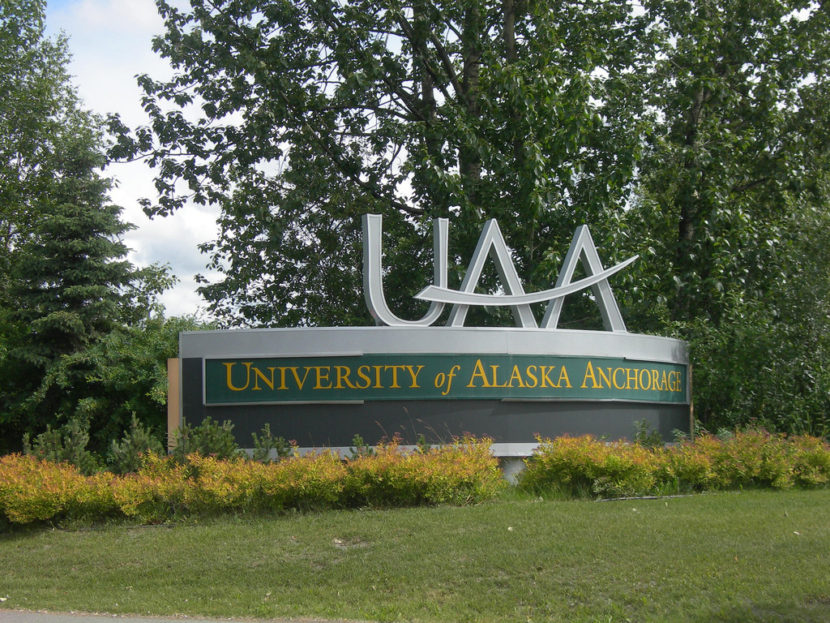
University of Alaska Anchorage sign
The University of Alaska Anchorage, where the state’s WWAMI medical education program is based. The governor announced WWAMI and 17 other programs would be funded this year. (Photo by Jimmy Emerson)

Alaska’s medical education program and scholarships to attend college will be funded this year, announced Gov. Mike Dunleavy on Wednesday.

Dunleavy said he ordered his Office of Management and Budget to release funding for the WWAMI medical education program plus 17 other programs.

Kathryne Mitchell is a second-year WWAMI student. She’s glad about the announcement.

“We’re very excited that the funding for our program is secure for this year,” Mitchell said.

Without WWAMI, Mitchell would have to take on an extra $120,000 for four years of medical school — plus student loan interest.  She wants Dunleavy and the Legislature to secure long-term funding for the program.

“When this battle for funding for WWAMI comes up every year, we lose students — students who will go on to become excellent physicians. We lose them and they go train in other programs, where there’s more certainty as to funding. And then we don’t get them back as physicians in Alaska,” she said.

She’s originally from North Pole and wants to practice family medicine in rural Alaska.  She says the program benefits the whole state.

“For Alaska, it’s really, really important that we train home-grown students to become physicians here, because they’re the physicians that are going to stay,” she said.

The announcement allows more than $42.8 million to be spent on WWAMI and other programs that include funding to attend college through both $11.8 million in Alaska Performance Scholarships and $6.4 million in Alaska Education Grants. Oil spill prevention also received $3 million in additional funding.

WWAMI received $3.3 million. And reimbursements to municipalities to pay off their debt to build schools received $4.2 million.

Dunleavy’s administration previously had said that these programs could not be funded without the agreement of three-quarters of both chambers of the Legislature.

But Dunleavy said Wednesday that his administration reviewed this funding after a recent decision by a Superior Court judge. And this review led him to OK the spending.

That judge’s decision said that money in the Power Cost Equalization Endowment Fund was not subject to the three-quarters vote.

The administration said these programs received funding for this year’s budget before the money in the accounts used to fund them was swept into the Constitutional Budget Reserve.

As state health officials lay out a plan to help overloaded hospitals, Dunleavy asks Alaskans to consider the vaccine

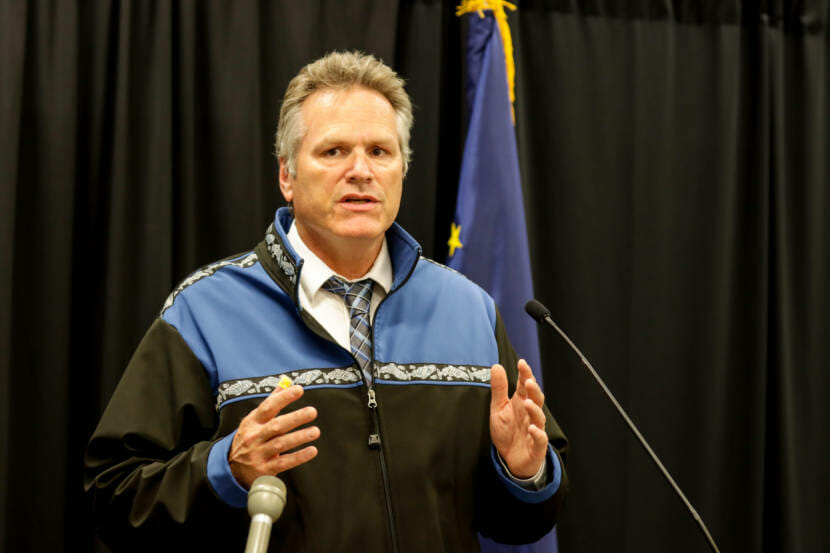
Gov. Mike Dunleavy discusses the state of the coronavirus pandemic during a news conference at the Atwood Building in Anchorage on Thursday, Aug. 26, 2021. (Matthew Faubion / Alaska Public Media)
Gov. Mike Dunleavy discusses the state of the coronavirus pandemic during a news conference at the Atwood Building on Thursday, in Anchorage. (Matthew Faubion / Alaska Public Media)

Update — Aug. 26, 10:10 p.m.

Gov. Mike Dunleavy announced on Thursday a series of steps intended to help hospitals deal with a surge of COVID-19 cases. 

They include speeding up the process for allowing licensed health care providers to work in hospitals. The state is also looking to use federally contracted workers to temporarily staff hospitals.  

The state also is considering amending hospital safety rules so that they can make more efficient use of temporary sites outside of their hospitals.  The state will also use its bulk-purchasing power to buy supplies for hospitals. 

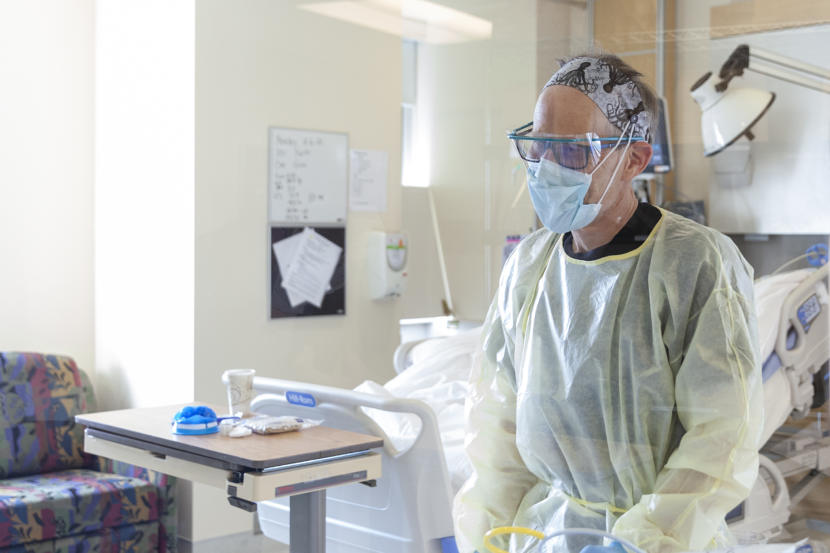
A healthcare provider, wearing several types of personal protective equipment that is being tracked by the State of Alaska, provides care on April 7, 2020, for a woman hospitalized in an isolation room in the critical care unit of Bartlett Hospital, in Juneau, Alaska. on (Photo by Rashah McChesney/KTOO)
A healthcare provider, wearing several types of personal protective equipment that is being tracked by the State of Alaska, provides care on April 7, 2020, for a woman hospitalized in an isolation room in the critical care unit of Bartlett Hospital, in Juneau.  State health officials say they are taking steps to reduce the strain on hospitals that are being overwhelmed caring for COVID-19 patients. (Photo by Rashah McChesney/KTOO)

Dunleavy said health care workers have been working long hours. And he said he’s hopeful that if Alaskans are careful and take other steps to reduce the strain on hospitals, the current surge in cases will peak and then drop over the next month. 

State Division of Public Health Director Heidi Hedberg urged Alaskans to consider wearing masks around others and keeping their social circles small. She also said monoclonal antibodies are available to treat those who contract COVID-19. Those are man-made antibodies that act like human antibodies in the immune system.

Dunleavy urged Alaskans to talk with healthcare providers about getting COVID-19 vaccines, as part of an effort to reduce the strain on hospitals.

“I strongly urge folks to get a vaccination. Talk to their doctor first. But seriously consider doing that, because it’s the tool that we have at this time that really makes an impact,” he said.

Heidi Hedberg, Alaska Department of Health and Social Services public health director, discusses the state of the coronavirus pandemic during a news conference at the Atwood Building in Anchorage on Thursday, Aug. 26, 2021. (Matthew Faubion / Alaska Public Media)
Heidi Hedberg, Alaska Department of Health and Social Services public health director, discusses the state of the coronavirus pandemic during a news conference at the Atwood Building on Thursday, in Anchorage. (Matthew Faubion / Alaska Public Media)

He also said people should be able to make up their own minds on the vaccines.

“I believe in conversations with the people of Alaska — that those that have been waiting and waiting for FDA approval, for Pfizer, waiting to have conversations with their health care providers, talking with their friends and family — I believe that that’s what’s going to make a difference, a bigger difference than having a governor mandate that somebody take a vaccination.”

Along with opposing mandates, Dunleavy also rejected using more forceful language to urge vaccinations. 

“This isn’t some place in Europe in 1939. You have conversations with folks. There’s mass media that’s telling everyone where they can get vaccinations and how the vaccinations work or don’t work for some folks. You have conversations with your doctors. You have conversations with your friends,” he said. 

Dunleavy defended his approach, saying that he’s publicly described why he chose to be vaccinated after becoming ill with COVID-19. 

“People aren’t stupid. They aren’t. They’re making a decision — this is true — but they’re making a decision I hope in consultation with their doctors,” he said.

State Chief Medical Officer Dr. Anne Zink noted the fast spread of the COVID-19 delta variant.

“Together, we determine where this pandemic goes,” she said, adding that there’s been a 24-percent increase in vaccinations so far this week compared with the same time period last week. 

Original story

Gov. Mike Dunleavy is holding a press conference at 5 p.m. on Thursday.

He’ll be joined by the state’s Department of Health and Social Services Commissioner Adam Crum and Public Health Director Heidi Hedberg, Chief Medical Officer Dr. Anne Zink, as well as Bryan Fisher from the Alaska Division of Homeland Security and Emergency Management and Division Director of Corporations, Business and Professional Licensing Sara Chambers, according to a media release.

The state has seen a surge in new cases in August, including at least 701 new Alaskans who tested positive for COVID-19 on Wednesday. That’s the highest daily new case count in eight months. That news comes as health officials continue to warn that Alaska’s hospital’s capacity is more stressed than it has been during the entire pandemic.

You can stream the post here, or on the governor’s Facebook page.

In feud over PFD bill, work grinds to a halt in the House when minority Republican lawmakers refuse to show up for a floor session

Speaker of the House of Representatives Rep. Louise Stutes, R-Kodiak, presides over a partially filled floor session on Feb. 12. A similar scene played out on August 25 when minority-caucus Republicans refused to attend a floor session. There were too few members present to conduct business. (Peter Segall/Juneau Empire via AP, Pool)

The Alaska House of Representatives couldn’t conduct any business Wednesday when minority-caucus Republicans refused to attend a floor session. The mostly Democratic House majority didn’t have enough members present to reach a quorum. 

The two sides traded accusations. House Speaker Louise Stutes said the absence of minority Republicans is holding up the Legislature’s ability to pay for permanent fund dividends, or PFDs. Stutes is a Kodiak Republican who caucuses with the majority. 

“It’s very sad for me, to see these people putting Alaskans secondary to the my-way-or-highway — and that seems to be the way their approach is: It’s their way or the highway, instead of ‘let’s sit down and work this out,’” she said. 

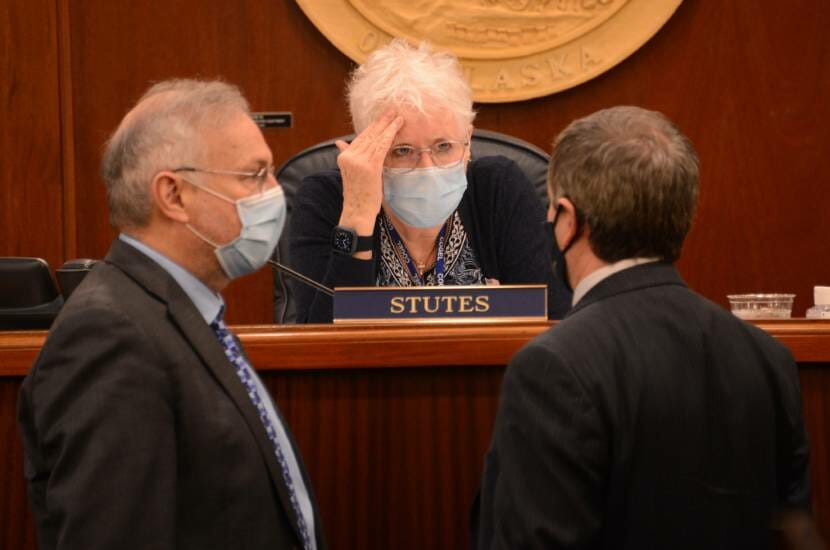
Alaska Speaker of the House Louise Stutes, R-Kodiak, presses a hand to her forehead as she talks to Rep. Bryce Edgmon, I-Dillingham (left) and House Majority Leader Chris Tuck, D-Anchorage on Wednesday, March 3, 2021 in the Alaska State Capitol at Juneau, Alaska. (James Brooks/Anchorage Daily News via AP, Pool)
Alaska Speaker of the House Louise Stutes, R-Kodiak, presses a hand to her forehead as she talks to Rep. Bryce Edgmon, I-Dillingham (left), and House Majority Leader Chris Tuck, D-Anchorage, on March 3 in Juneau. (James Brooks/Anchorage Daily News via AP, Pool)

Dillingham independent Rep. Bryce Edgmon said there’s limited time to pass the dividend bill, since both chambers are struggling to have enough members in Juneau. 

“And unfortunately, the alternative — if we miss that window of time, in August as we turn the corner into September — we may walk out of here with a zero PFD. And that’s not what our majority wants,” he said.

But Minority Leader Cathy Tilton, a Wasilla Republican, pushed back against the idea that her caucus caused the failed floor session. She said it was the majority that couldn’t get a quorum. The majority caucus holds a slim one-member advantage and Anchorage Democratic Rep. Chris Tuck was absent. Republican Rep. Sara Rasmussen, who doesn’t belong to either caucus, also was absent. 

Rep. Cathy Tilton, R-Wasilla, at a House Minority press availability on Feb. 23, 2017. (Photo by Skip Gray/360 North)
Rep. Cathy Tilton, R-Wasilla, at a House Minority press availability on Feb. 23, 2017. (Photo by Skip Gray/KTOO)

Tilton said she warned the majority that minority Republicans may not attend the session because they don’t want to see a PFD bill pushed through that they can’t weigh-in on; her caucus asked for the ability to draft and vote on amendments to the bill. 

Stutes told legislators in an email Wednesday that she planned to get through all amendments last night. Tilton said that wasn’t enough time, since the lawyers who draft legislation don’t have enough time to draft amendments requested after 6 p.m. for the same night.

Anchorage Democratic Rep. Matt Claman said he’s not aware of any previous time when legislators in the Capitol refused to attend a floor session. He compared it to a recent dispute in the Texas Legislature, in which Democratic lawmakers left the state to prevent a quorum to conduct some business. While the Texas House speaker signed arrest warrants for absent members, Stutes said she hoped Alaska legislators would work together. 

Minority Republicans also asked for hearings on the governor’s proposals to amend the state constitution to include the dividend and lower the state limit on spending, as well as to debate other legislation affecting the state budget in the long term. 

“We should be having hearings,” Tilton said. “There’s nothing holding us back from having those hearings, so it doesn’t seem like there should be a problem with making those  happen.” 

Alaska Republican Gov. Mike Dunleavy, speaking at a Capitol news conference Wednesday, introduces a new proposed constitutional amendment to restructuring the Permanent Fund. (Screenshot)
Alaska Republican Gov. Mike Dunleavy, speaking at a Capitol news conference introducing a new proposed constitutional amendment to restructuring the Permanent Fund. (Screenshot)

After hours of trying, and failing, to reach a quorum – majority members held a brief news conference. They said they planned to hold hearings on the governor’s constitutional amendment idea and the other budget bills next week. The House Special Committee on Ways and Means has scheduled five meetings in the next two weeks, including hearing a bill from Wasilla Republican Rep. David Eastman – who is in the minority – that would make changes related to the budget.

The majority caucus had planned to act quickly on the bill to fund dividends, which the House Finance Committee passed in the morning.  The current version would set dividends at $1,100, which is less than half of the $2,350 that Republican Gov. Mike Dunleavy and some minority Republicans support.

 Tilton said the caucuses differ on how to pass the dividend funding. 

“While it’s important that we get a dividend out to Alaskans — I would completely agree with that — I think we may disagree on the amount of that dividend, and what it looks like,” she said.  

In other news, Dunleavy announced that the state would fund university scholarships and the medical education program, known as WWAMI. Funding for the two programs — about $15 million — has been held up in a legal dispute over unspent funds that get swept into a state savings account each year. He said the programs were funded for the next year before the rest of the money in the accounts to pay the programs was swept.

Site notifications
Update notification options
Subscribe to notifications