Andrew Kitchenman

State Government Reporter, Alaska Public Media & KTOO

State government plays an outsized role in the life of Alaskans. As the state continues to go through the painful process of deciding what its priorities are, I bring Alaskans to the scene of a government in transition.

The Alaska Legislature meets for a third special session. What’s on the agenda?

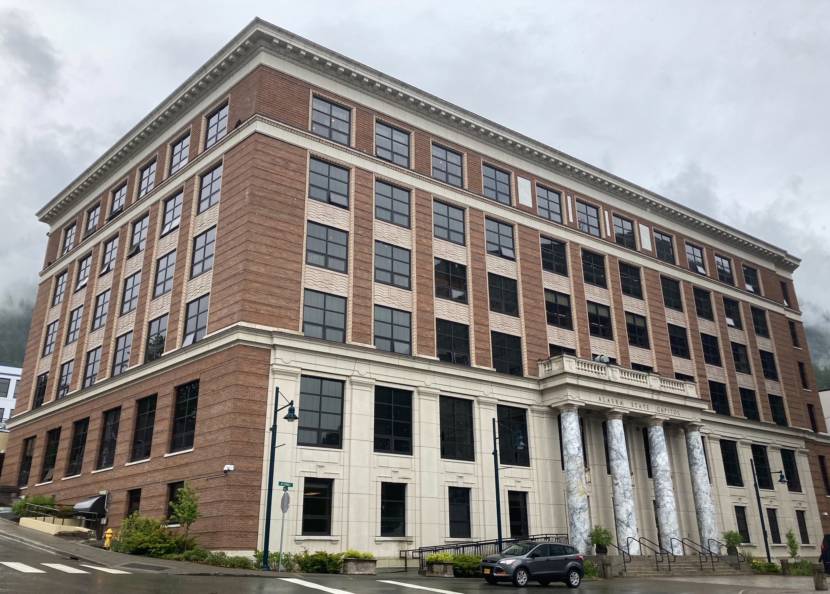
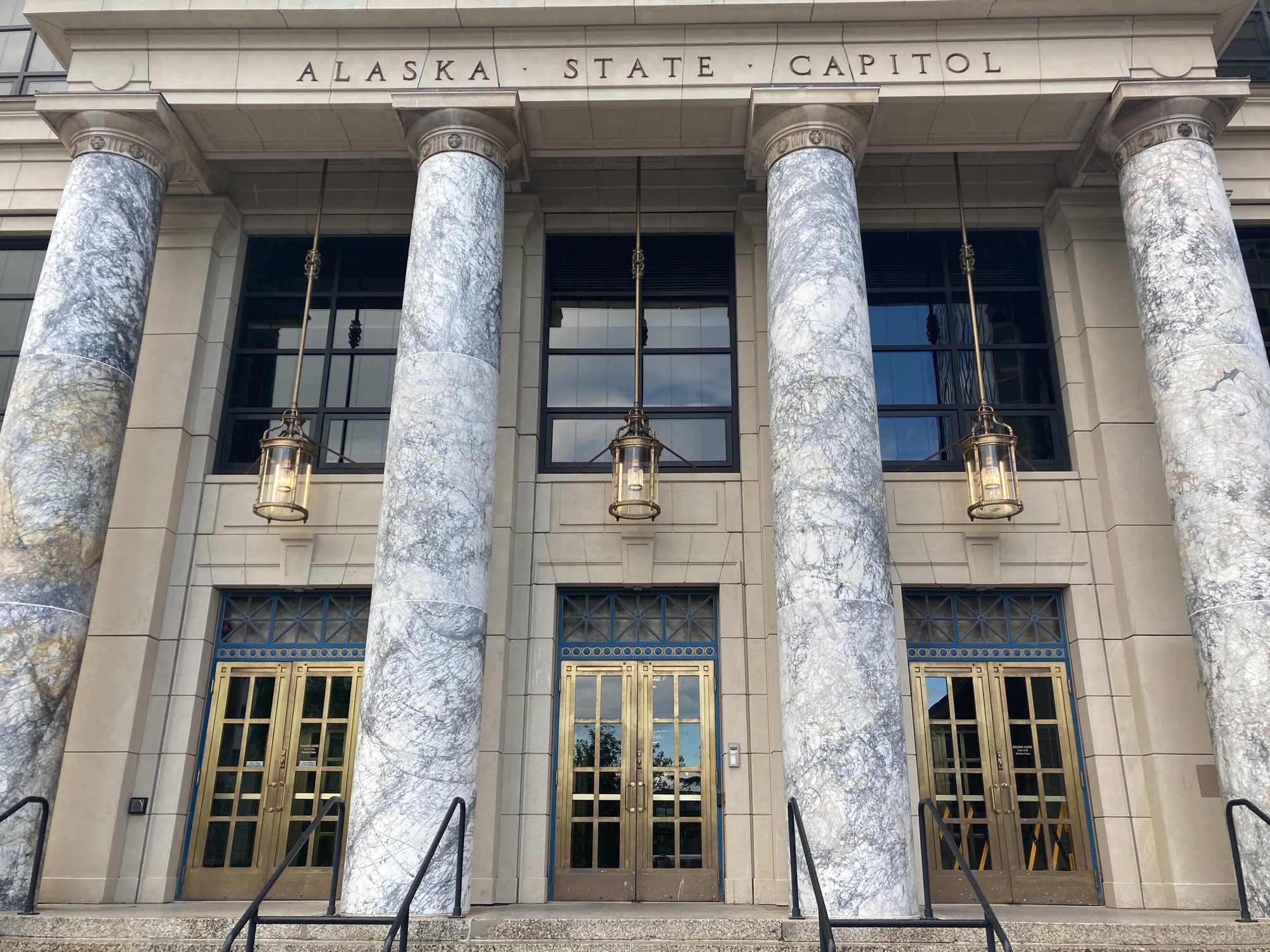
The Alaska State Capitol doors have required key cards to unlock throughout the 2021 legislative session, June 16, 2021. (Photo by Andrew Kitchenman/KTOO and Alaska Public Media)
The Alaska State Capitol on June 16, 2021. (Photo by Andrew Kitchenman/KTOO and Alaska Public Media)

The Alaska Legislature meets in Juneau on Monday for the third special session of the year.

Governor Mike Dunleavy’s proposals to amend the state constitution are on the agenda. One amendment would lower the limit on how much the state government can spend each year. The other would enshrine the permanent fund dividend in the constitution. It also would set an annual draw from the permanent fund to pay for PFDs and for government. And it would add the program that lowers the cost of electricity in high-cost areas to the constitution.

The agenda also includes the possibility of bills to raise revenue, like taxes.

But the agenda doesn’t include funding for this year’s PFD — or $18.1 million for university scholarships and grants; $3.3 million for medical education; and $15.8 million in oil spill prevention and response. Dunleavy would like to see his proposals addressed first.

The lawmakers could draw from the work of a group of lawmakers who have been discussing ways to close the long-term gap between how much the state spends and what it raises in revenue.

Fairbanks Democratic Sen. Scott Kawasaki, a member of this working group, said it’s been productive.

“We’ve come up with some great ideas, and I think that this will move forward,” he said. “It might not get us to where we need to be in a special session, but it’ll get us moving forward.”

The group’s Republican members could not immediately be reached on Friday.

The working group has eight members split equally among the four legislative caucuses. They’ve been charged with coming up with recommendations for the rest of the Legislature. The group held a series of public and private meetings, but as of late Friday afternoon, hadn’t published a report yet.

Group members have discussed the goals of settling on a new formula for the PFD; enacting new taxes and raising existing taxes; and lowering the limit on how much money the state can spend. But they have yet to reach agreement on how to achieve these goals.

State Revenue Commissioner Lucinda Mahoney presented several revenue ideas to the group. She said Dunleavy would support them if the Legislature passed them. But Dunleavy has said he wouldn’t sign tax bills if the Legislature doesn’t also pass his amendments.

There hasn’t been public agreement on what kinds of taxes should be passed. And there’s not an agreement on how large those taxes should be.

There’s not an agreement on how large the long-term spending gap is — the administration has projected the deficit as being smaller than has a nonpartisan analysis.

And conservative Republican lawmakers would like the Legislature to commit to more cuts in spending on state services. But they have not proposed bills that would make those cuts happen on a large scale. And that’s left other legislators wary that larger dividends could be used to force large cuts to state services later.

It’s not clear if the necessary two-thirds of each chamber is prepared to vote in favor of the governor’s proposed amendments.

The budget would have included an $1,100 PFD, but conservative lawmakers didn’t provide the votes necessary for $575 of it, and Dunleavy vetoed the rest, saying Alaskans would view it as a joke. He wants a PFD of at least the amount it would be under his amendment proposal, or roughly $2,350 this year.

Without agreement on the amendments or the governor adding this year’s PFD to the agenda or that of another special session, Alaskans would go without PFDs for the first time since the program started.

Dunleavy won’t appeal judge’s ruling that state must fund program for lower energy costs

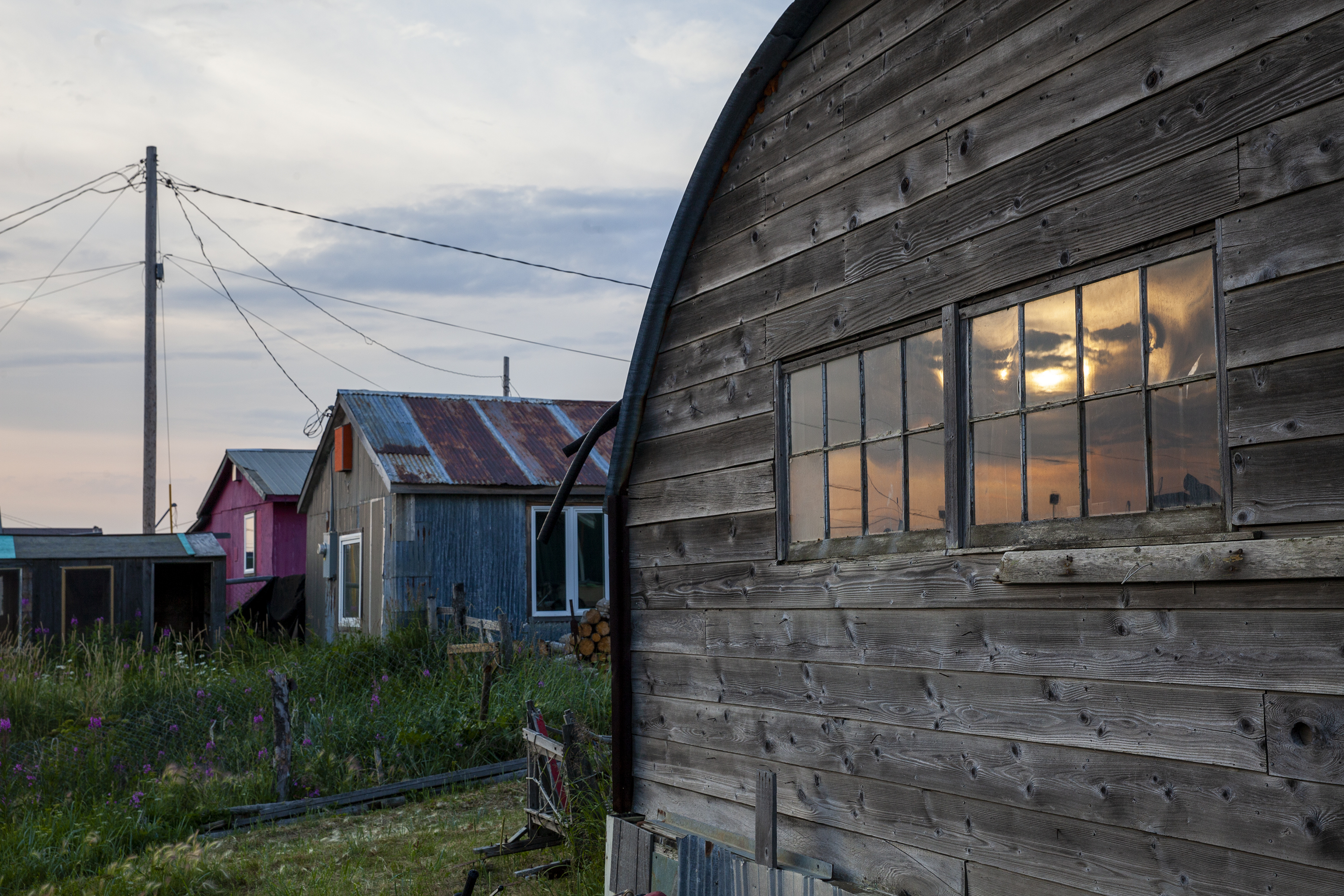
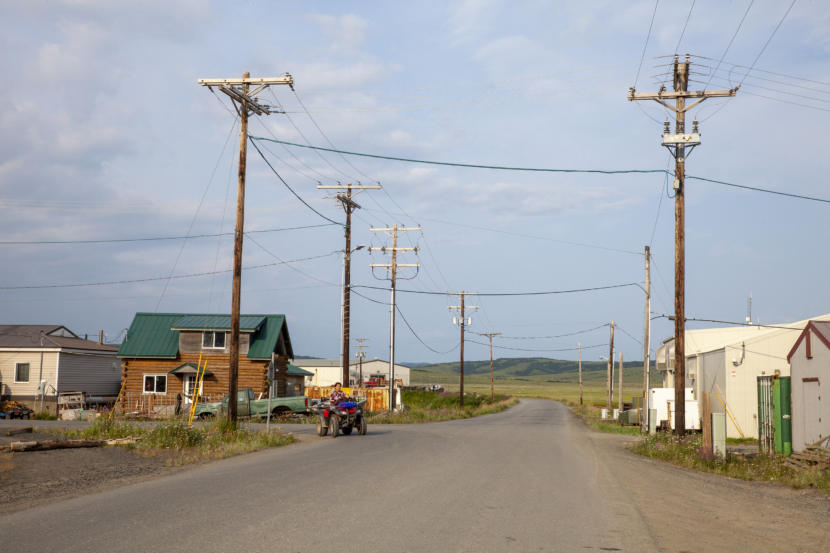
Unalakleet on July 13, 2019, when an earlier threat of lost funds to the state’s Power Cost Equalization program meant residents and the city were bracing for power costs to go up. (Rashah McChesney/Alaska’s Energy Desk)

Gov. Mike Dunleavy announced Thursday that his administration will not appeal a ruling earlier this week that the state must maintain a more than $1 billion endowment to lower electricity costs in high-cost areas.

Dunleavy said in a statement that the ruling provided clarity and that the Power Cost Equalization program provides an essential service.

His administration previously took the position that the money in the Power Cost Equalization Endowment Fund could only stay there if three-quarters of both legislative chambers voted in favor of it. Since that failed to happen this year, the administration planned to sweep money in the fund into the Constitutional Budget Reserve.

The Alaska Federation of Natives and others sued Dunleavy to stop that from happening. And Superior Court Judge Josie Garton ruled in favor of the plaintiffs on Wednesday.

Dunleavy said the court did not address an important political challenge that “at any point, the PCE fund can be raided by the Legislature with a simple majority vote.”

Dunleavy has proposed requiring funding for the program as part of an amendment to the state constitution that would also enshrine Permanent Fund dividends in the constitution. Dunleavy said the possibility that the PCE could be raided in the future is a reason why the Legislature should pass his proposed amendment this year.

2020 census data is out. Here’s how Alaska has changed in the last 10 years.

Server Katie Grato brings water to a large table on a Wednesday evening in July at 49th State Brewing. (Jeff Chen/Alaska Public Media)

Alaska’s racial and ethnic diversity increased over the last 10 years, according to U.S. census numbers released on Thursday. 

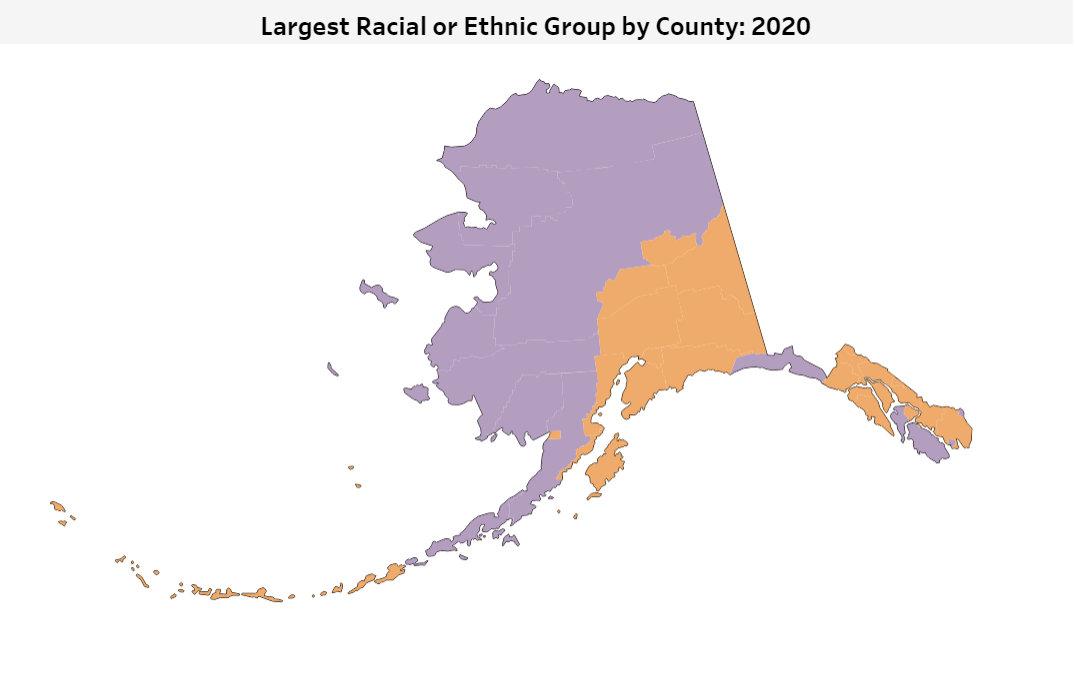
The share of Alaska’s population that identifies as a race or ethnicity other than solely white rose from less than a third of the population to more than than 40%. The share of Alaska’s population that identifies as two or more races also increased, to 9.8% in 2020 from 6.9% in 2010. 

The share of the population that identifies as Hispanic grew to 6.8% from 5.5%; Black alone, grew to 3.4% from 2.8%; Asian alone, increased to 5.9% from 5.5%; and Native Hawaiian and other Pacific Islander, rose to 1.7% from 1.1%. 

The share of the population that identifies as Alaska Native and American Indian alone fell slightly, to 14.8% from 15%. But the share that identifies as Alaska Native and American Indian in combination with one or more other races grew, to 21.9% from 19.7%. This was part of a national trend of more people identifying as being both Alaska Native or American Indian as well as another race.

Map of Alaska showing the largest racial or ethnic group by region. Purple indicates the largest group is American Indian or Alaska Native alone (not Hispanic or Latino). Orange is white alone (not Hispanic or Latino). (Screenshot from census.gov)

Census officials have said the increase in people identifying with more than one race was affected by several factors, including how the questions were worded. The census also recorded up to six racial categories for each person depending on how they answered the question; last time, the census would only record two answers. 

The share of the population that identifies as white alone fell to 57.5% from 68.1%.

Along with giving a snapshot of Alaska’s demographics, the population data will play an important role in state politics — it will be used to draw the district lines for Alaska’s Legislature. 

The Matanuska-Susitna Borough led the state in population growth, with 18,086 more residents than in 2010. This may mean that one more House district will be located entirely in the borough. It currently has four entire districts and most of two others.

Parts of rural Alaska also had significant growth, including the North Slope Borough, which grew by nearly 15%, and Kusilvak Census Area, which gained  12%.

But Anchorage lost 579 residents. It currently has 16 House districts and a third of another — it will have at least one fewer district located entirely in the municipality.

Southeast Alaska added several hundred residents, but its share of the state’s population shrank slightly. That may mean that Yakutat and potentially other nearby areas will be added to a Southeast House district. 

The Interior lost nearly 3,000 residents. That may mean at least one district that’s currently based in the region will be spread across a wider area. 

The census results were delayed by the COVID-19 pandemic. That means the Redistricting Board has a shorter-than-usual timeframe to draw district maps ahead of the next primary election, on Aug. 16, 2022.

Thursday’s release included the population, race and ethnicity numbers by geographic area, down to the smallest area tracked by the census. That’s known as a block — in an urban area, it’s typically a city block, but in rural areas can stretch hundreds of miles. Details about the age and sex composition of each area will be released later. 

Alaska ranked as the 11th-most-diverse state, as measured by the odds that any two people picked at random are of different races or ethnicities. By this measure, the Aleutians East Borough and Aleutians West Census Area are the two most diverse areas in the state.

Judge rules state must fund program lowering electricity costs in rural Alaska

The sun sits low in the sky on July 13, 2019 in Unalakleet. (Photo by Rashah McChesney/Alaska’s Energy Desk)

An Anchorage Superior Court judge ruled Wednesday in favor of the Alaska Federation of Natives and others, and against Gov. Mike Dunleavy, to keep funding for the program that lowers the cost of electricity in high-cost areas.

The ruling will keep more than $1 billion in the Power Cost Equalization Endowment Fund. The fund pays for a program that lowers power bills. Supporters of the fund have said it’s a way for the state to treat rural areas more fairly compared with urban areas that have benefited from state-subsidized energy projects like dams.

Dunleavy’s administration has argued that the fund’s existence depends on three-quarters of both chambers of the Legislature agreeing to maintain it each year. The vote came up three votes short in the Senate and five votes short in the House this year. That means the administration planned to move the money into the Constitutional Budget Reserve.

Some members of the Republican House minority caucus who voted no said they support the program, but believe it should be paid in the same way as other parts of the state budget.

AFN was among 18 organizations, city governments and power providers who sued to maintain the fund. Judge Josie Garton ruled quickly in the matter since the Legislature would have had to decide whether to fund the program in the upcoming special session.

A spokesperson for the state Department of Law said they’re reviewing the ruling. A call for an attorney for the plaintiffs wasn’t immediately returned.

Garton wrote in the order that the endowment fund is separate from the general fund, which is the account that pays for the state budget. She wrote that since the endowment fund is not in the general fund, it is not subject to a provision of the state constitution that requires unspent money to be swept into the Constitutional Budget Reserve each year.

‘The days of getting away with it are over’: State seeks to collect more than 20,000 missing DNA samples

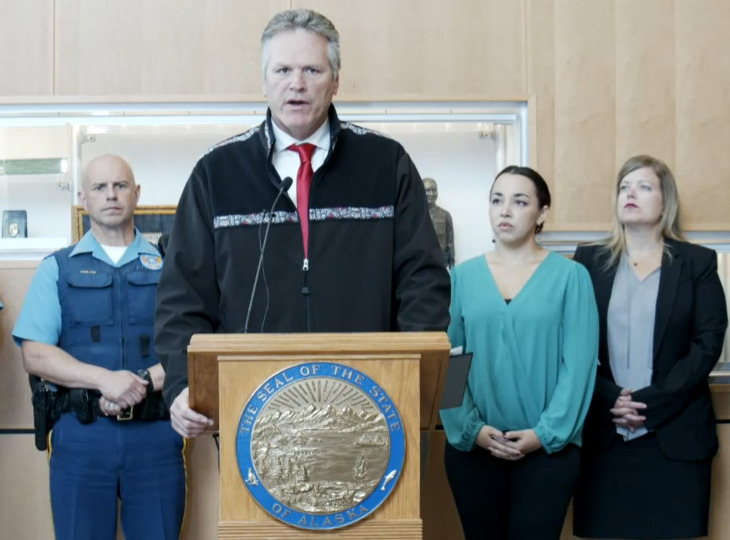
Gov. Mike Dunleavy announces an effort to gather DNA samples from those charged with crimes against others and felonies whose samples weren't collected in the past. He made the announced on Aug. 10, 2021, at the Department of Public Safety Crime Lab in Anchorage. A member of the Anchorage Police Department; Blaze Bell, an advocate for survivors of sexual assault like herself; and Rep. Geran Tarr, D-Anchorage, attended the announcement. (Livestream screen capture)
Gov. Mike Dunleavy announces an effort to gather DNA samples from those charged with felonies or crimes against others whose samples weren’t collected in the past. He made the announced on Tuesday at the Department of Public Safety Crime Lab in Anchorage. Alaska State Troopers director Bryan Barlow, advocate Blaze Bell and Rep. Geran Tarr, D-Anchorage, attended the announcement. (Livestream screen capture)

Alaska law requires state and local law enforcement agencies to collect DNA samples from anyone charged with a felony or a crime against another person. But in a lot of cases over the last 25 years, that hasn’t happened.

Gov. Mike Dunleavy announced on Tuesday that the state will be going back to collect missing samples as part of an effort to reduce sexual assaults and other violent crimes. He made the announcement at the state crime lab in Anchorage.

Deputy Attorney General John Skidmore said there are multiple goals in serving the victims of sexual assaults. 

“We want to get the kits processed timely, we want to get back to victims timely and we want to collect this DNA to help us solve those crimes,” he said.

For decades, this hasn’t always happened. The state announced for the first time on Tuesday the number of missing samples of DNA: more than 21,000. Roughly 1,500 of those people have died, so the state will be seeking the DNA of more than 20,000. 

And this is a problem because, as Skidmore says, DNA can provide important evidence. 

“It helps us solve crimes where we wouldn’t otherwise have leads for law enforcement to pursue,” he said.

The state will start with those who were convicted of a class of felonies that includes violent crimes, including sex crimes — a group that’s smaller than 600 people.

A 1995 law first required the state to collect DNA samples from those convicted of this class of felonies. The law has been amended eight times, expanding those covered. Skidmore said the frequent changes have contributed to the gaps. 

“So that’s made some challenges in terms of trying to figure out what’s supposed to be collected when,” he said.

It’s a crime to refuse to provide DNA that’s required under the law. Skidmore said the ability to prosecute that crime will help them collect samples. 

“That’s one of the enforcement mechanisms that’s going to allow us to go back and collect what is referred to as that ‘owed DNA,’” he said.

The departments of law, public safety and corrections are working on the issue, along with local police. 

Department of Public Safety Commissioner Jim Cockrell said that law enforcement now collects DNA from nearly everyone arrested for these crimes. And his department has started the work to find people whose samples weren’t collected in the past. 

“Government has an obligation to follow the law,” he said. “And regardless of the many reasons that these DNA collections were missed, we are focused on making our … state a safer place to live.”

The Department of Corrections will start by collecting DNA from those already in prison or jail. State probation and parole officers will collect samples from those on supervision. And anyone being booked for crimes covered by the law will have their samples collected. 

Dunleavy said he wants Alaska to no longer be known for ranking high in rates of sexual assault. He said he had to deal with children affected by sexual abuse when he worked as a teacher. 

“I would strongly, strongly say to those that would even contemplate committing crimes of this nature on fellow Alaskans, that the days of getting away with it are over,” he said.

State leaders also announced that the state is building a website where victims of sexual assault will be able to track the status of kits collected from their assaults.

Advocates for sexual assault survivors praised the announcement. They include Blaze Bell, a survivor who has worked with the organizations Victims for Justice and Stand Together Against Rape Alaska, or STAR. 

“This is really a full-circle moment for me as a survivor, and I’m incredibly grateful that you are all coming together to help other sexual assault survivors,” she said.

Anchorage Democratic Rep. Geran Tarr sponsored a law that speeds the testing of rape kits. She thanked Dunleavy for the changes. 

“I have a vision — I want to wake up one day in Alaska where we don’t lead the nation in the rates of domestic violence and sexual assault,” she said. “I think this is a step that’s going to get us there, so I’m very grateful.” 

Anchorage Mayor Dave Bronson and Police Chief Kenneth McCoy joined Dunleavy in making the announcement. McCoy said he knows from personal experience the importance of collecting DNA samples. 

“I served for many years as a sexual assault investigator, and I know first hand the damage caused by these horrific crimes,” he said. “DNA collection is a critical step in solving these cases and bringing closures to the survivors and their families.” 

The state estimates the initiatives announced on Tuesday will cost $2 million. Of that, $900,000 will come from the budget the Legislature already passed, while Dunleavy will ask the Legislature to approve spending $1.1 million from federal pandemic recovery funding.

Alaska medical students face large tuition increase due to funding dispute

The Alaska State Capitol in Juneau hosts budget negotiations on a rainy day, April 15, 2021. (Photo by Andrew Kitchenman/KTOO and Alaska Public Media)
The Alaska State Capitol in Juneau hosts budget negotiations on a rainy day in April. Supporters of the state’s medical education program, WWAMI, want the Legislature to agree to fund the program during the special session scheduled to start on Aug. 16. (Photo by Andrew Kitchenman/KTOO and Alaska Public Media)

Alaskans’ participation in a medical school program is threatened by an impasse over how to pay for it. While lawmakers’ disagree over the program, students are worried that they will see large tuition increases. 

Jesse Klejka is a second-year student in Alaska's medical education program, WWAMI. (Photo provided by Jesse Klejka)
Jesse Klejka is a second-year student in Alaska’s medical education program, WWAMI. (Photo provided by Jesse Klejka)

Jesse Klejka was born and raised in Bethel, where his father is a doctor. He’s one of 20 Alaskans who are accepted each year into a program that allows Alaska to support medical education without having to operate a medical school. The students graduate from the University of Washington School of Medicine.

Klejka is in his second year of the program. He’s been interested in it since he was 9 years old.

“I was excited to hear about a program that puts special emphasis on training and retaining docs for Alaska, with assistance for those students who are interested in going down the path of rural medicine,” Klejka said.

He said it serves as a pipeline for doctors to serve in Bethel. 

“Our hospital works to recruit talented individuals, but for many who aren’t from Alaska, it’s hard to call it home,” he said. “I’ve seen the same challenge exists across the state, with hospitals having to spend money on recruitment and travel docs to help fill shifts.”

Klejka is working in a clinical rotation in Ketchikan. Students in the program attend the University of Alaska Anchorage for a year and a half, then get clinical training at locations around Alaska and the other states.

On Friday, he was told that barring a resolution to the legislature’s budget dispute, his class will have to pay out-of-state tuition this year. While he doesn’t know what that difference will be; last year the average difference was $30,000. In addition, recruitment for Alaska students for the class that would start next year has stopped for now. First-year students, who start class on Aug. 17, will still pay in-state tuition this year.

The program is known as WWAMI. It’s named after the first letters of the names of the five states that participate — Washington, Wyoming, Alaska, Montana and Idaho. 

For many years, the Legislature has voted to fund the program from an account that’s separate from the rest of the state budget, the Alaska Higher Education Investment Fund. But this year, the vote failed and students could have to pay tens of thousands of dollars more for tuition.

So students and others involved in health care in Alaska are asking lawmakers to agree to fund the program in the upcoming special session. They spoke Monday at a meeting of the working group of legislators weighing changes to the state budget for the long term.

Dr. Kristin Mitchell is a WWAMI faculty member who lives in Kenai and works in Soldotna. She moved to the state in 1998 to attend the program. 

She told lawmakers that the state receives an impressive return on its investment, because WWAMI students tend to stay in the state. 

“Alaska has a primary care shortage, and I know you’re aware,” she said. “And we urgently need to train excellent Alaskan physicians to provide medical care to Alaskans.”

It’s not just in primary care that Alaska has a problem. Mitchell said that most psychiatrists in the state are older than 60, as are nearly half of orthopedic and heart doctors.

She said the budget dispute is causing anxiety for students over how to pay for their education. And she said a similar budget dispute two years ago caused Alaska to lose future doctors.

“I fielded untold calls from students and families who wondered if they should accept offers of admission from other schools than the University of Alaska and from WWAMI,” she said. “And we lost the opportunity to train some outstanding students over that funding uncertainty.”

Kathryn Mitchell grew up in North Pole and chose WWAMI so she could stay in Alaska. She’s not related to Kristin Mitchell. Kathryn Mitchell is concerned that the funding problem will mean the end of the program.

“I ask you to think about your own experiences in health care and ask yourself what it could mean if you could have a doctor who is from your community, knows your environment and the needs of your region,” she said. 

Not everyone who testified supported the program. Some who support higher permanent fund dividends, consider WWAMI a  special interest. 

Kerri Mullis of Delta Junction said the Legislature’s first priority should be putting the PFD in the state constitution and paying Alaskans the dividend amounts they would have received the last five years if the state followed the formula in a 1982 law. Including this year’s dividend, that adds up to more than $10,000. 

“The WWAMI people shouldn’t be calling in tonight,” she said. “This is about people and their PFD. The WWAMI people shouldn’t even be allowed to talk tonight. And I just want you guys to do the right thing, which is to do the constitutional PFD and give us back our money.”

Some Republican House members who voted against restocking the fund that would pay for the program have said they still support it. But they want the funding to be paid along with the rest of the budget, not from a separate fund. Opponents of this proposal say it would require drawing more than planned from the permanent fund’s earnings reserve, and that this would open the door to spending down the permanent fund in the future.  

Gov. Mike Dunleavy hasn’t put funding for WWAMI and similar programs on the agenda for the special session, which means lawmakers won’t be able to consider it. But he could add it to the agenda at any time before the session ends. The session is scheduled to start on Aug. 16 and can last up to 30 days.

Site notifications
Update notification options
Subscribe to notifications