Andrew Kitchenman

State Government Reporter, Alaska Public Media & KTOO

State government plays an outsized role in the life of Alaskans. As the state continues to go through the painful process of deciding what its priorities are, I bring Alaskans to the scene of a government in transition.
The campaign to recall Gov. Mike Dunleavy has ended

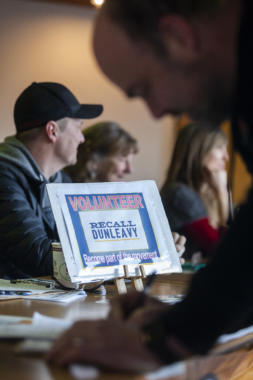
Residents gather on Saturday, February 29, 2020 at a kickoff event for organizers of an effort to Recall Gov. Mike Dunleavy in Juneau, Alaska. (Photo by Rashah McChesney/KTOO)

Recall Dunleavy Chair Meda DeWitt announced the decision to end the campaign in an opinion article in the Anchorage Daily News.

DeWitt wrote that the campaign protected Alaska and Alaskans from Dunleavy.

She’s hopeful that those who supported the recall will form a long-lasting movement that cuts across political affiliations.

“They have the power. And that’s the beauty of having a democracy,” she said. “They reached out and they talked to their friends and their neighbors and family members and met people they never knew who were aligned.”

She says it no longer made sense to spend money to hold a special election when another election for governor is next year.

She also linked the decision to Dunleavy filing for re-election. She wrote that as a result of Dunleavy’s filing, the recall campaign would have to treat donor data differently, as well as that of people who signed the recall petition.

“Dunleavy’s administration has a history of vengeful and illegal retaliation,” she wrote. “We believe that a new submission of signatures would put even more civil servants and dedicated Alaskans’ service at risk.”

She says other candidates for governor can build on the recall effort.

“They have all of this information that has been collected and put through the courts and written about in articles that they can use,” she said. “And we can still keep people safe from Dunleavy.”

She also said that ending the campaign would end the governor’s ability to raise funds for a group opposing the recall, which she said amounted to supporting his re-election campaign.

She said the campaign created pressure on the administration that protected state services from budget cuts.

DeWitt said the campaign gathered 62,373 signatures. It needed roughly 9,000 more to hold a recall election. She expressed confidence that Dunleavy would have been recalled if it wasn’t for the COVID-19 pandemic. The campaign gathered more than 30,000 signatures in its opening month, between late February and late March 2020. It took another 17 months to gather the next 30,000.

Dunleavy supporters said the recall was doomed to fail.

“I’m a little bit surprised it took so long for them to realize, as we have known for a long time, that a recall vote would have failed,” said Cynthia Henry, chair of Keep Dunleavy, a group backing the governor.

She laughed at DeWitt’s accusation that Dunleavy would retaliate against recall supporters. She says the recall effort is over because it failed.

“I just think they wasted a lot of time and resources on an effort that was really politically motivated,” she said. “And I think that that’s unfortunate.”

Henry emphasized that the groups opposing the recall are separate from the governor’s re-election campaign. She says the governor has broad support and won’t have a problem raising money for his campaign.

This story has been updated with comments from the groups Recall Dunleavy and Keep Dunleavy. 

Alaska House committee lowers proposed PFD amount to $1,100

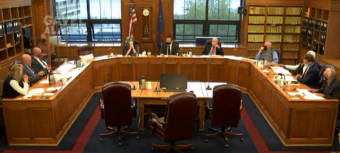
The Alaska House Finance Committee discusses an amendment to set the permanent fund dividend amount at $1,100 on Aug. 24, 2021, in the Alaska State Capitol in Juneau. (Gavel Alaska screen capture)
The House Finance Committee discusses an amendment to set the permanent fund dividend amount at $1,100 on Tuesday in the Capitol. (Gavel Alaska screen capture)

The Alaska Permanent Fund dividend would be $1,100 under an amendment a committee passed on Tuesday. 

The House Finance Committee voted 7-4 to reduce the amount of the PFD from what Gov. Mike Dunleavy proposed. He put forward a $2,350 dividend in the bill that the committee amended. 

Committee members said they don’t want to draw more than is outlined under a law that limits how much the state spends in permanent fund earnings each year. 
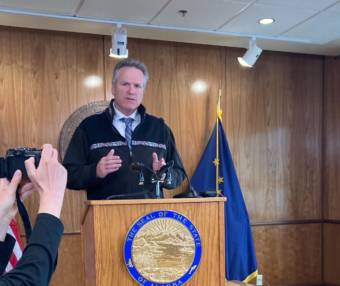
Fairbanks Democratic Representative Adam Wool sponsored the amendment.

“It’s an amount that won’t require an overdraw, which I think is really the main point,” Wool said.

Dunleavy has proposed drawing $3 billion more than planned from fund earnings — half to pay for this year’s dividend and the other to cover the gap between what the state spends and what it raises over the next few years.

The $1,100 amount could be changed again as it moves through the legislative process. 

Nearly half of the money would be paid from a reserve fund that’s separate from the rest of the budget. In an earlier budget bill, drawing this money required support from three-quarters of both chambers of the Legislature. A similar vote failed in June.

But Wool noted a recent ruling by a judge that said that money in separate funds aren’t subject to the vote. Gov. Mike Dunleavy’s administration hasn’t said how it will interpret how the ruling affects the fund — known as the statutory budget reserve — that would pay for nearly half of the money under the amendment.

Public testimony earlier in the day favored a larger dividend amount by a wide margin. Many of those testifying said the state should pay PFDs under the formula in state law. The last time the formula was followed was in 2015. The formula would lead to a roughly $3,800 dividend this year, which would equal 82% of the amount being drawn from the permanent fund.

Anchorage resident Noria Clark was among the supporters of the higher amount. And she told the committee that state government should spend less.

“The problem with taking the PFD away from people is you’re taking [the] ability and rights away from them to be able to pay for things that their family needs. Or people want to go blow the money: Who cares? That is not your problem. The problem is that you guys, and I use ‘you guys’ collectively, keep wasting money,” Clark said.

The committee passed the bill on Wednesday, sending it to the entire House for a vote.

The Senate could pass its own version of the bill, which would require the two chambers to work out their differences. Or it could pass the House version and send it to the governor’s desk.

Wednesday is the 10th day of the special session, which can last until Sept. 14. 

This story has been updated.

Dunleavy’s proposed $2,350 PFD scrutinized by lawmakers

The Alaska Capitol on Wednesday, June 2, 2021. (Nat Herz/Alaska Public Media)

This year’s permanent fund dividend would be $2,350 under a proposal by Gov. Mike Dunleavy. But legislators are raising questions about whether the state can afford that amount. 

Dunleavy added legislation on Thursday to the special session agenda that would pay for this year’s PFD. If that hadn’t happened, there was a chance Alaskans wouldn’t receive a dividend at all for the first time in 40 years. 

Dunleavy’s bill would also fund university scholarships and the state’s medical education program, known as WWAMI.  

State budget director Neil Steininger said the governor still wants the Legislature to pass the constitutional amendments he’s proposed. They would enshrine the PFD in the state constitution and lower the state’s spending limit. 
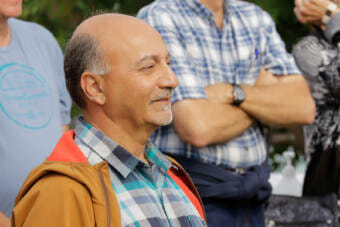
“This appropriation bill isn’t … the agenda in and of itself,” he said. “This appropriation bill is there to support the discussions and the decisions that need to be made on those bigger policy issues.”

Steininger testified on the measure, House Bill 3003, to the House Finance Committee on Friday. 

Dunleavy has proposed drawing $3 billion more than planned from the permanent fund to cover costs for the next few years, as part of a broader compromise. Half of that money would pay for this year’s dividend. 

Committee member Rep. Bryce Edgmon said he’s concerned the dividend amount the governor proposed would commit the state to pay more than it can sustain. Edgmon is a Dillingham independent who caucuses with the mostly Democratic majority. 

“I’m very concerned about overdrawing the permanent fund because — speaking of compromising — we’ll be compromising the future,” he said. “And if there’s a downturn anywhere near what we experienced in 2008, 2009 — certainly back in the late ‘80s — where the bottom essentially falls out, that overdraw this year could be magnified many times over.”

Kodiak Republican House Speaker Louise Stutes expressed optimism that the Legislature would be able to work toward a compromise on solving the long-term gap between what the state spends and what it raises. 

She praised Dunleavy’s decision to add funding for this year’s dividend to the special session agenda. 

“I’m grateful to the governor for putting on an appropriation bill, which allows us to do this,” she said. “I’m excited about a good, solid compromise, where we can all feel good and get things rolling.”

She said the PFD bill would go through the normal committee process, in which it could be amended. She said one potential path for this year’s dividend would be to choose an amount that would not draw more than planned from permanent fund earnings. 

If the Legislature later reaches a broader compromise on a long-term budget plan, Stutes said it could pass another bill that would add to this year’s dividend. 

The House Finance Committee plans to consider amendments to the bill on Sunday. 

Committee Co-Chair Neal Foster, a Nome Democrat, said the committee is working under a constrained timeline because some lawmakers won’t be available beginning in roughly a week. 

Neither legislative chamber voted on Dunleavy’s vetoes of line items in the budget by the deadline on Friday. But vetoed items would be funded under House Bill 3004, introduced by the House Special Committee on Ways and Means. That committee is meeting on Monday to discuss the conclusions of a working group of lawmakers who met since mid-July to discuss a long-term budget plan.

Former state Rep. Les Gara becomes fourth candidate for Alaska’s governor

Les Gara attends an Aug. 4, 2021 dedication for a new Dena’ina place names project. (Jeff Chen/Alaska Public Media)

Former state Rep. Les Gara announced that he’s running for governor.

The Anchorage Democrat said in his announcement that he would support good-paying jobs, including through state construction projects and good job training. He cited his experience as a fisherman and said he wants to protect salmon from the proposed Pebble Mine.

“Alaskans deserve a bright future and this governor has made it very dark,” Gara said of Republican Gov. Mike Dunleavy. He criticized the proposal Dunleavy made in 2019 to cut state funding for public education by roughly a quarter, and cuts the governor has made to the University of Alaska under a compact with the university board.

Gara, 58, is the fourth candidate to file for the primary, to be held on Aug. 16, 2022. The others are independent former Gov. Bill Walker, Libertarian Billy Toien and Dunleavy.
Gara said he supports “responsible development” of oil and has supported the state’s existing mines. He has worked as a lawyer, and served as an assistant attorney general working on litigation after the Exxon Valdez oil spill. He also is part-owner of the Snow City Cafe restaurant, but isn’t involved in managing it.

Gara served in the House from 2003 to 2019, representing downtown Anchorage.

He said that as a member of the House minority for all but two of those years, he had to work harder to get things done. That includes working on a law that requires that new schools and state buildings be built to energy efficiency standards.

“That saves money and helps us move forward on climate change at the same time,” he said. “Those are smart things to do — putting people to work to address climate change.”

Gara is a vocal advocate for services for children, and passed legislation making changes to the state’s foster care system. He was raised in the foster system after his father was murdered when he was 6 years old.

He cited the experience in explaining why Alaskans should vote for him.

“I think I’m like many Alaskans: I grew up without privilege, without great wealth, with some struggles, like a lot of Alaskans have,” Gara said.

Gara declined to say why Alaskans should prefer him to Walker as an alternative to Dunleavy, other than to say that they get along and that each would present their case to Alaskans.

The top four finishers in the primary will advance to the general election. That election will be the first held under Alaska’s new ranked-choice voting system. If the top finisher in the first round of voting receives less than half of the votes, then the votes of those whose first preference finished last will be redistributed to the other candidates. The process is repeated until a candidate is the top preference of 50 percent of the voters, or all ballots have been exhausted.

Dunleavy adds proposed $2,350 PFD to special session agenda

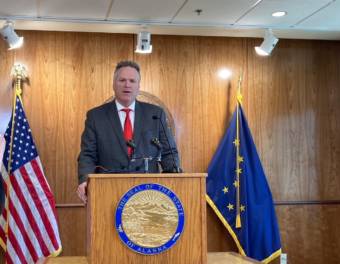
Gov. Mike Dunleavy at a press conference on June 17, 2021. (Andrew Kitchenman/KTOO)

Gov. Mike Dunleavy on Thursday added proposed permanent fund dividends of $2,350 to the agenda for the legislative special session.

Without the move, it was possible Alaskans wouldn’t receive PFDs this fall for the first time in 40 years.

The change to the agenda also would allow funding for $18 million in scholarships and need-based grants to pay for students to attend college, as well as $3.3 million for the state’s medical education program, known as WWAMI.

Dunleavy is proposing to pay for this year’s PFDs and the other programs by drawing $1.53 billion from the permanent fund’s earnings reserve account.

His proposed bill would also transfer $1.47 billion from the earnings reserve to a separate savings account, the Constitutional Budget Reserve, or CBR. This amount could be used for the budget in future years.

Dunleavy said in a statement that he may add funding for more programs to the special session agenda as his administration works with the Legislature. When both chambers failed to get enough votes to draw from the CBR, the programs that were left unfunded included oil and gas tax credits as well as some of the funding for 16 other programs.

“Alaskans are still in recovery mode from the economic impacts of the pandemic,” Dunleavy said in the statement. “With this in mind, and following recent encouraging conversations with legislators, my administration has put forth a vehicle for the legislature to fund the PFD and student scholarships — two critical programs that directly impact Alaskans.”

The additions to the agenda by the governor, a Republican, drew immediate praise from legislative leaders across caucus lines.

Dunleavy originally left the appropriation bill — which includes the funding for the PFDs — off of the agenda for the third special session that started on Monday. He wanted the Legislature to focus on his proposals to amend the state constitution to include PFDs and to reduce the state limit on spending for government services.

But legislators, including House Speaker Louise Stutes, a Kodiak Republican, said an appropriations bill for dividends and other programs was needed.

After months of back-and-forth earlier this year, the House and Senate passed a state budget that would have set PFDs at $1,100, but a failed vote to draw money from the CBR shrunk the amount to $525.

And Dunleavy vetoed that remaining amount in July, saying Alaskans would regard it as a “joke.”

But most members of the both chambers have been opposed to drawing more from permanent fund earnings than a 2018 law would allow. Dunleavy is now proposing drawing $3 billion more than that law says.

The House and Senate are scheduled to hold floor sessions on Friday, when Dunleavy’s newly proposed bill could be introduced.

Alaska Legislature meets for 3rd special session amid uncertainty over Permanent Fund dividends, budget gap

Gov. Mike Dunleavy speaks at a news conference in the Alaska State Capitol in Juneau on Aug. 16, 2021. Dunleavy talked about what he would like the Legislature to pass during the third special session this year. (Photo by Andrew Kitchenman/KTOO and Alaska Public Media)
Gov. Mike Dunleavy speaks at a news conference in the Capitol on Monday. Dunleavy talked about what he would like the Legislature to pass during the third special session this year. (Andrew Kitchenman/KTOO and Alaska Public Media)

The Alaska Legislature met on Monday for the third special session this year. 

Legislators are considering ways to reach a long-term plan to close the gap between what the state spends and what it raises. 

And Gov. Mike Dunleavy repeated his call that the Legislature pass constitutional amendments to put the Permanent Fund dividend in the state constitution and to lower the limit on how much the state government can spend each year. 

He also said he doesn’t think that new taxes are necessary. He’s proposed making an unplanned draw from the fund to cover deficits for the next few years. He noted that the Permanent Fund’s value has increased by $17 billion in the last 14 months. 

“You take a piece of the windfall, and you spread it across a few years and you’re able to smooth this out, and we can get through this without any large statewide taxes,” he said. “People are talking about income taxes, even sales taxes — you don’t need that.”

The Alaska House of Representatives meets for the first day of the Legislature's third special session this year in the Alaska State Capitol in Juneau on Aug. 16, 2021. (Photo by Andrew Kitchenman/KTOO and Alaska Public Media)
The Alaska House of Representatives meets for the first day of the Legislature’s third special session this year in the Capitol on Monday. (Andrew Kitchenman/KTOO and Alaska Public Media)

House Speaker Louise Stutes said she doesn’t see there being enough votes to pass the amendment enshrining the PFD in the state constitution, based on her conversations with other legislators. Stutes is a Kodiak Republican who caucuses with a mostly Democratic majority.

Stutes said the governor is asking the Legislature to put a higher PFD in the constitution without providing details on how he would pay for it. 

“To say we’re going to put out a PFD that creates almost a billion-dollar hole in the budget, and we’ll worry about that billion-dollar hole later: That is no fiscal plan,” she said. 

Opponents of making unplanned draws from Permanent Fund earnings are concerned that the state would spend down the earnings until there is nothing left.

Stutes wrote Dunleavy and Senate President Peter Micciche letters expressing grave concern that Dunleavy hasn’t put funding for this year’s dividend, scholarships and medical education on the special session agenda. 

A working group has been meeting since the last special session, focused on a long-term budget plan. 

The eight-member working group said in its final report that some form of added revenue is needed along with additional cuts, but the group couldn’t agree on details. 

They agreed that the state should “work towards” a plan that would set PFDs at a higher level than recent years. But they disagreed on whether that should happen immediately or over time.

Working group member Sen. Jesse Kiehl, a Juneau Democrat, said the group made a lot of progress. 

“As part of the collaboration — working together — I signed off on a range of cuts, right? That was hard for me. But I can get there,” he said. “Other members who hate the very notion of  taxes signed off on a report that recommended a dollar range of new taxes.”

The report doesn’t use the word “taxes.” It talks about new revenue but doesn’t say what that will be. The working group recommended working toward additional revenue of between $500 million and $775 million. And it recommended working toward spending reductions of between $25 million and $200 million. 

The House adjourned until Wednesday. The Senate adjourned until Thursday. 

Site notifications
Update notification options
Subscribe to notifications