Andrew Kitchenman

State Government Reporter, Alaska Public Media & KTOO

State government plays an outsized role in the life of Alaskans. As the state continues to go through the painful process of deciding what its priorities are, I bring Alaskans to the scene of a government in transition.

Edgmon to become first Democratic House speaker in 24 years

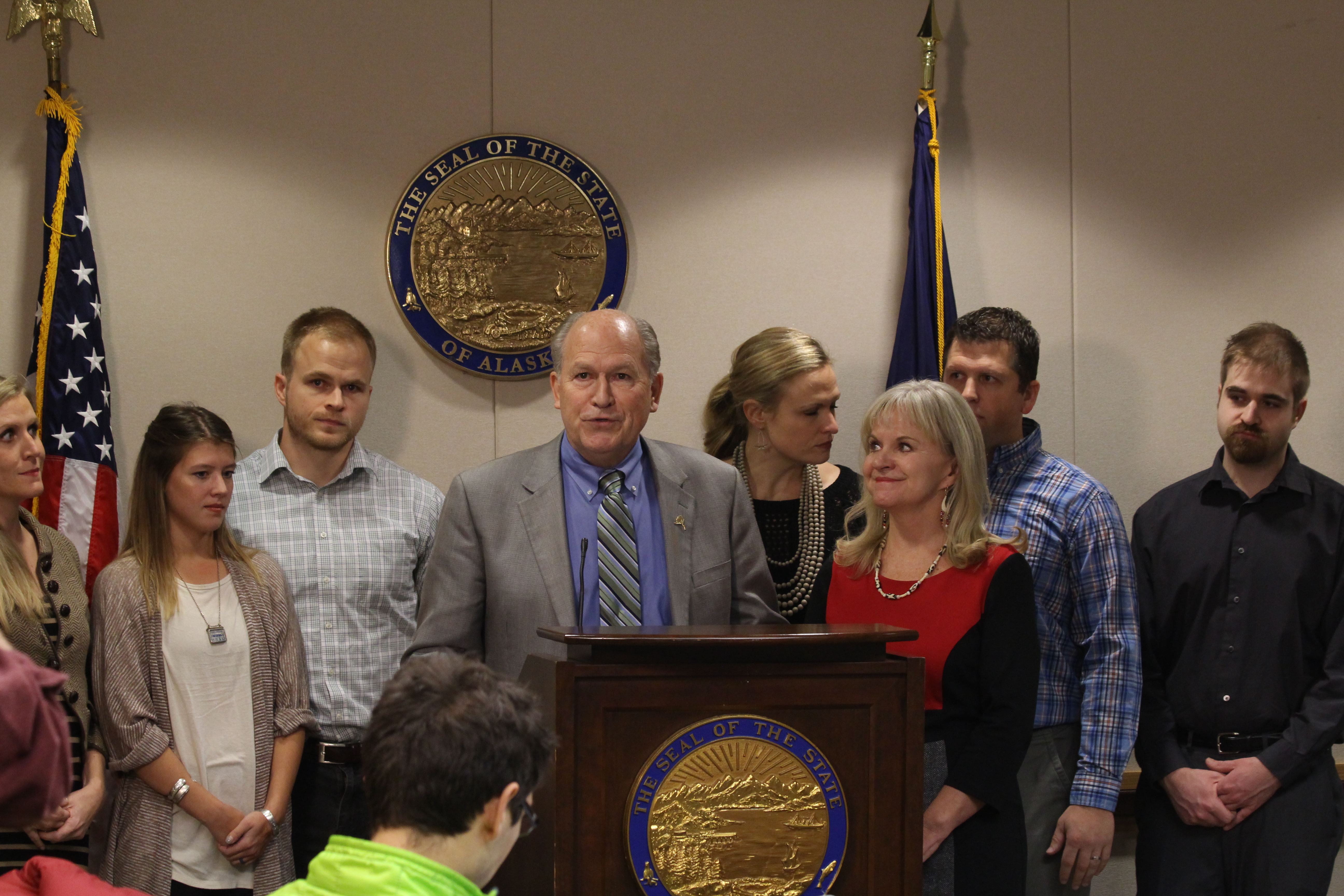
The new bipartisan House majority caucus. The leaders, seated left to right, include Majority Leader Chris Tuck, Rules Chairwoman Gabrielle LeDoux, Speaker Bryce Edgmon, and Finance Co-Chairman Paul Seaton. Nov. 9, 2016. (Photo by Andrew Kitchenman/KTOO/APRN)
The new bipartisan House majority caucus. The leaders, seated left to right, include Majority Leader Chris Tuck, Rules Chairwoman Gabrielle LeDoux, Speaker Bryce Edgmon, and Finance Co-Chairman Paul Seaton. (Photo by Andrew Kitchenman/KTOO & APRN)

For the first time in 24 years, the House will have a Democratic speaker: Dillingham Rep. Bryce Edgmon.

Edgmon is one of five people who’s moving from the Republican-led majority to a new, predominantly Democratic majority. Ben Grussendorf was the last Democratic speaker, in 1992.

The new majority caucus formed in the House after Tuesday’s election. Edgmon said the need to address the state’s fiscal crisis brought the caucus together.

“Everybody — I think I could speak for virtually every legislator — wants to preserve the basic services that we provide to our communities and our constituents,” Edgmon said. “How do we go forward and get that done, is something that we all need to work together and resolve.”

The other caucus switchers will be in leadership: Homer Republican Paul Seaton and Nome Democrat Neal Foster will be the House Finance Committee co-chairmen. Kodiak Republican Louise Stutes will be the majority whip, and Anchorage Republican Gabrielle LeDoux will be the House Rules Committee chairwoman.

Current Minority Leader Chris Tuck, D-Anchorage, will be the majority leader.

The new majority was made possible by the only two changes from Tuesday’s election: Juneau Democrat Justin Parish defeated incumbent Republican Cathy Muñoz, and Anchorage independent Jason Grenn defeated incumbent Republican Liz Vazquez. Parish and Grenn joined the new majority, which has 17 Democrats, three Republicans and two independents. The minority will have 18 Republicans.

It remains to be seen how the new House caucus will work with the continuing Republican-led Senate majority. One challenge is that the House has a slim majority caucus. With only 22 members, they won’t be able to afford to lose more than one member to pass bills.

Edgmon said they’re united in wanting a comprehensive fiscal plan. And he said they know they’ll have to cooperate closely with minority Republicans and the Senate majority.

Finance co-chair Seaton said they’ll look to include at least four pieces of a fiscal solution:

  • further budget cuts,
  • making an annual draw from Permanent Fund earnings to support the budget,
  • introducing a broad-based tax, such as an income or sales tax,
  • and limiting the Permanent Fund dividend.

“And it needs to go this year,” Seaton said of a fiscal plan. “We don’t want to wait until next year. We’d be out of money first of all. And the second thing is, then you’d be getting into another election season.”

Changes in the Senate changes also are significant. Senate Finance Committee Co-chairman Pete Kelly, R-Fairbanks, moves up to become the Senate president. Current President Kevin Meyer, R-Anchorage, becomes Senate Rules Committee chairman. Peter Micciche, a Soldotna Republican, becomes majority leader. And Anna MacKinnon of Eagle River will be joined by Bethel Democrat Lyman Hoffman as the finance co-chairs.

There’s one change in the Senate caucuses – Golovin Democrat Donny Olson, who joined the Republican-led majority in the middle of the session, is back with the minority Democrats.

None of the 10 Senate seats changed parties in the election.

It’s possible the new House majority will add one member. Democrat Pat Higgins, who’s trailing Rep. Charisse Millett by 45 votes in the current count, attended the press conference Wednesday announcing the new majority.
Voters split on ballot measures, choose to retain judges

It will be easier to register to vote, but not to take out college student loans, as Alaskans gave mixed verdicts on two ballot measures.

Voters passed Ballot Measure 1, that requires people who apply for Permanent Fund dividends to automatically be registered to vote. With all but a few precincts reporting, about 64 percent of voters supported the measure.

Ballot Measure 2 was defeated. It would have allowed the state to issue bonds to support college student loans. The goal of the measure was to lower the interest for student loans. But voters rejected the measure, with 56 percent voting against it.

In addition, all 33 judges on the ballot were retained by voters. An effort spearheaded by anti-abortion groups targeted Justices Joel Bolger and Peter Maassen, but they were retained.

Only two seats in the legislature change party hands this year

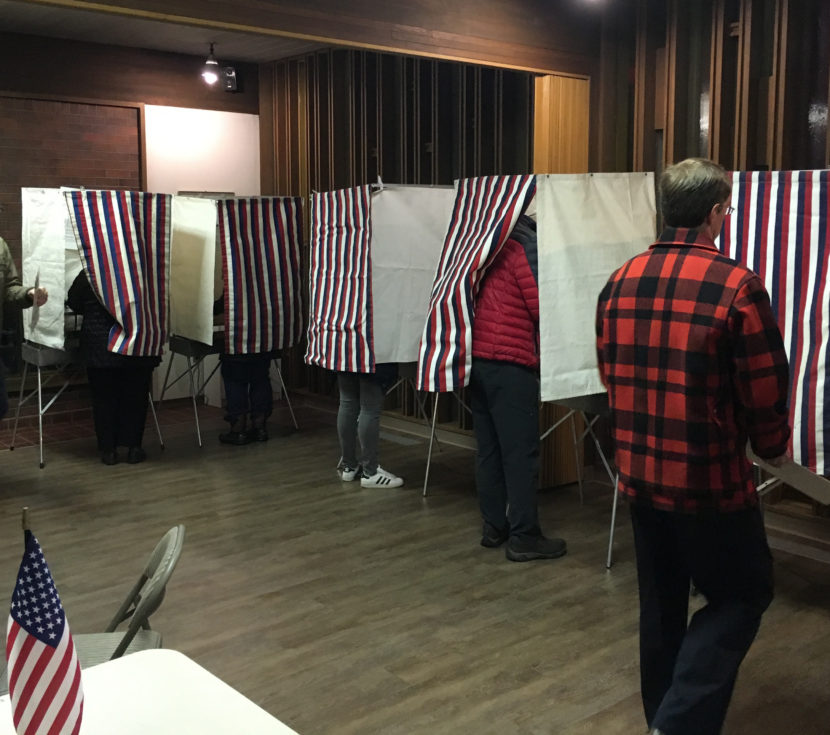
Voters fill out ballots Tuesday at First American Baptist Church in Anchorage. Only two House seats changed hands. Nov. 8, 2016. (Photo by Andrew Kitchenman/KTOO/APRN)

In the Alaska Legislature, only two of the 50 seats that were up for election have likely changed party hands this election. Anchorage Republican Liz Vasquez lost House Seat 22 to Independent Jason Grenn. Juneau Republican Cathy Muñoz lost House District 34 to Democrat Justin Parish.

Parish said agreeing to a state fiscal plan is a priority.

“It’s an awesome responsibility which the people of Juneau and the people of my district have given to me. And I hope to honor it,” Parrish said. “It felt pretty good, if I’m really candid, and I’m very hopeful that we’ll be able to come to a solution which will work better for the people of Alaska and the people of Juneau.”

There were no changes in the state Senate. In the most hotly contested races, Republican incumbent John Coghill of North Pole defeated Democrat Luke Hopkins and Anchorage Republican Cathy Giessel defeated independent challenger Vince Beltrami.

Alaskans also voted on two ballot measures Tuesday.

Voters passed Ballot Measure 1, which means people who apply for a PFD will automatically be registered to vote unless they opt out. With 97 percent of precincts reporting, the measure is passing 64 to 36 percent.

The other ballot measure was defeated. It would have amended Alaska’s constitution to allow the state to borrow money to pay for student loans. That in turn would have helped lower interest rates on student debt. But 56 percent of voters rejected the measure.

All 33 judges on the ballot were retained.

One House race remained in question. Anchorage Rep. Charisse Millett led challenger Pat Higgins by 45 votes, with at least 103 absentee and 46 early votes yet to be counted, according to the Alaska Dispatch News.

Jeremy Hsieh contributed to this report. 

More Alaskans registered to vote than ever before

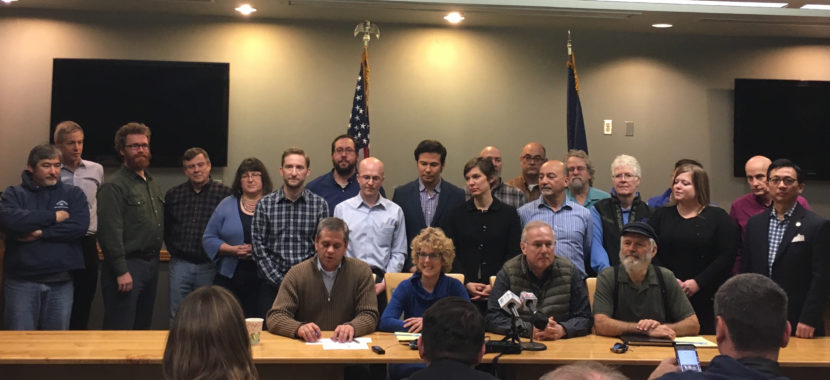
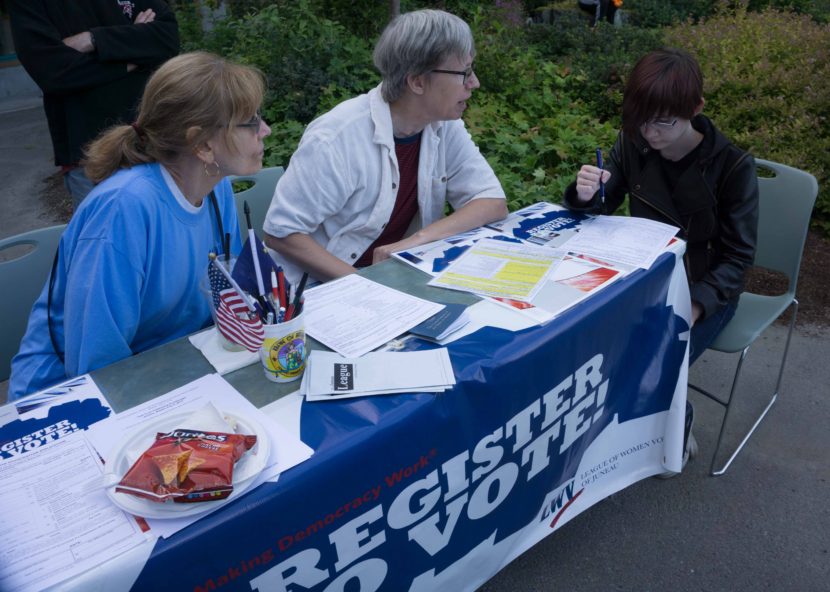
Volunteers help someone register to vote at the 2015 Governor's Picnic. (Photo by Jeremy Hsieh/KTOO)
Volunteers help someone register to vote at the 2015 Governor’s Picnic at the University of Alaksa Southeast. (Photo by Jeremy Hsieh/KTOO)

More Alaskans than ever are eligible to cast ballots this year, thanks to record-high voter registration.

The state added 22,000 registered voters compared with four years ago for a total of 528,560, up 4 percent, according to data from the Alaska Division of Elections.

And while most Alaskans are nonpartisan or undeclared, most of the new voters are Republicans or Democrats. The Republicans added a little more than 6,000 voters since 2012, while the Democrats gained just over 5,000.

Among third parties, the Alaska Independence Party gained registered voters over the past four years, while the Libertarians and Greens lost ground.

The deadline to register was Oct. 9.

Through midday Monday, 68,547 voted early. It’s not clear whether the state can match the 99,684 early votes in 2012.

Walker announces he has treatable prostate cancer, will have surgery

Gov. Bill Walker announced he has treatable prostate cancer and will have surgery, Nov. 4, 2016. (Photo by Wesley Early/Alaska Public Media)
Gov. Bill Walker announced he has treatable prostate cancer and will have surgery. (Photo by Wesley Early/Alaska Public Media)

Gov. Bill Walker announced Friday that he’s been diagnosed with prostate cancer. Following his doctor’s advice, he will have surgery in December to remove it.

Walker said the cancer is “certainly treatable. It was found not as a result of any particular symptoms, just regular testing, which I certainly encourage others to do.”

Walker said the diagnosis has not and will not impair his ability to perform his duties.

The cancer was detected on Oct. 21.

Walker made the announcement at his Anchorage office, surrounded by his wife Donna, other family members, and Lt. Gov. Byron Mallott.

While Walker said the cancer was a private matter, he said he made it public after discussing it with his family, as well as Pennsylvania Gov. Tom Wolf, who also has had prostate cancer, and Maryland Gov. Larry Hogan, who has had lymphoma.

“There’s really no reason not to be public about it,” Walker said. “In fact, the good part about being public about it is I want to Alaskans to be tested regularly.”

Walker will have the procedure done by a surgeon recommended by his doctor. The surgery is expected to last three hours and will be done outside of Alaska, but Walker didn’t say where.

Walker said his recovery is expected to take up to a week before he fully returns to his duties.

“My doctor here in Anchorage provided me the different options and the pros and cons of each of the options,” Walker said. “And I’ve chosen to go with surgery. It’s a one-time (event), and I want to be done with this as soon as possible.”

Donna Walker said her husband showed no signs of slowing down from the cancer.

“Honestly, the man has had one sick day that I can recall” in his life, she said. “And that’s when he broke an arm and a leg jumping on our son’s skateboard.”

The governor clarified what his wife said, saying he only broke his ankle and wrist and flew to a Valdez City Council meeting the next day.

Walker doesn’t expect to take medication over a long term after the surgery, but may use painkillers for a short period.

Amendment would allow state bonds to back college loans

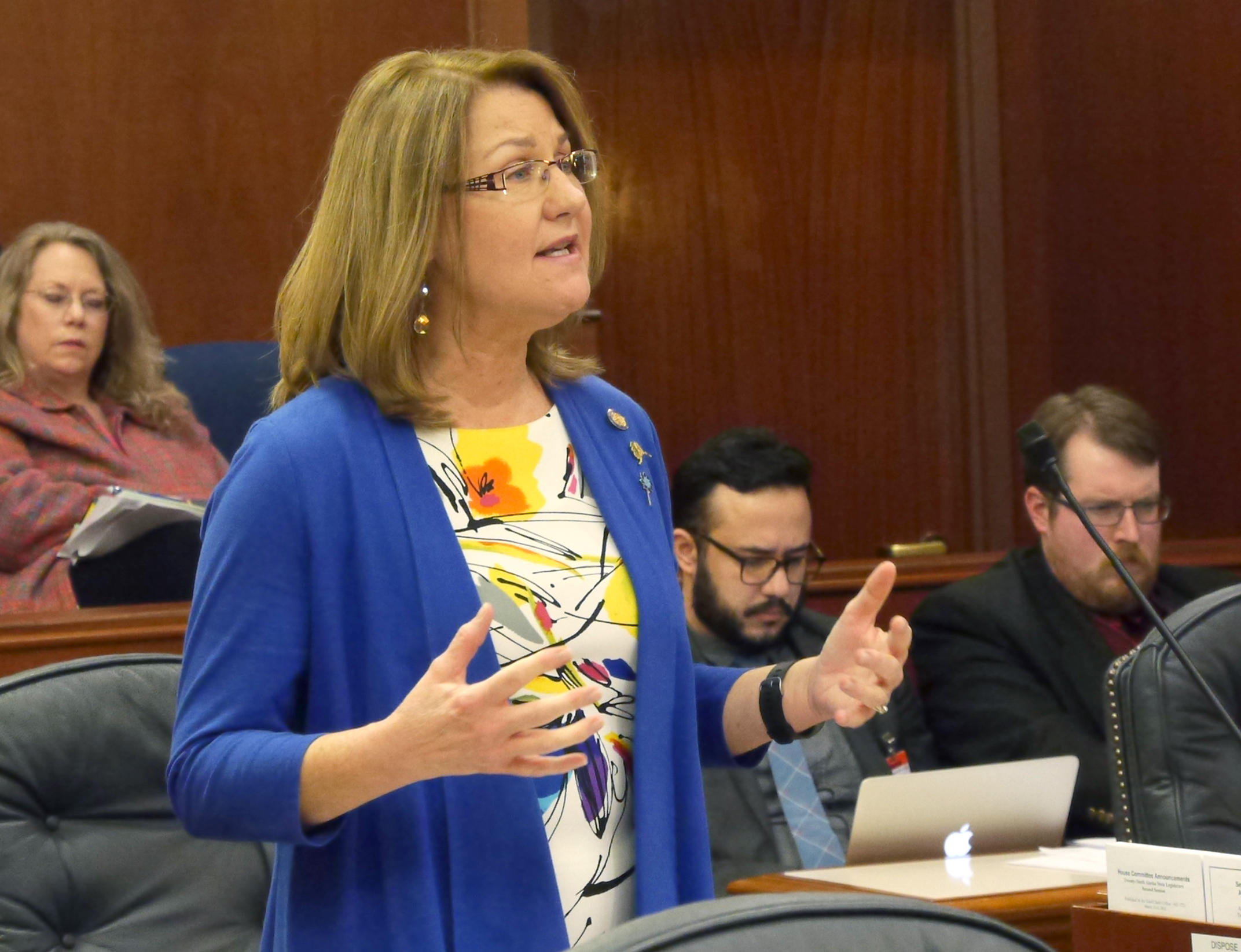
Sen. Anna MacKinnon, R-Eagle River, on the floor of the Senate during debate about the state operating budget, March 14, 2016. (Photo by Skip Gray/360 North)
Sen. Anna MacKinnon, R-Eagle River, on the floor of the Senate in March. She sponsored the ballot question to amend the state constitution to allow the state to issue bonds to lower college borrowing costs. (Photo by Skip Gray/360 North)

Alaskans are voting on whether to allow the state to issue debt to lower the interest students pay for college loans.

If voters amend the Alaska Constitution through Ballot Question No. 2, then more students also may be able to borrow to pay for college.

The Alaska Student Loan Corporation lends money to Alaskans to go to college. But the number of students who receive these loans has dropped steeply. That’s in part because fewer students can afford the interest on those loans, as well as the fact that fewer students qualified for loans after the state raised its credit standards.

While the corporation was started by the state, it has to pay more to bond holders than the state government does. That’s because the loan corporation’s bond rating isn’t as high as the state’s.

Sen. Anna MacKinnon, R-Eagle River, sponsored the ballot question that could eliminate the difference.

“My primary purpose is: How can we do something at no cost to the state of Alaska that would help students that are carrying an incredible amount of debt,” she said.

In April, corporation leaders projected the student loans could have an interest rate roughly 1 percent lower if the state issued bonds to back loans, instead of the corporation. That would save a student with the average amount of loans ($20,000) almost $1,200 over 10 years. The actual savings may be smaller, because the state’s credit rating has fallen since the estimates were made.

The state constitution limits state general obligation bonds to capital projects, veterans housing, and emergencies.

The amendment would allow the legislature to seek voter approval for bonds to back current and future student loans.

Former corporation executive Diane Barrans told legislators earlier this year the measure could also allow more students to borrow, because their credit scores wouldn’t have to be as high as they are now.

“We have about 40 percent of the applicants who do not qualify and are unable to get a co-signer,” Barrens said.

Not everyone supports the amendment.

Former state Revenue Commissioner Sterling Gallagher said college loans are too risky for the state to use its own bonds, since many students don’t pay off their loans.

“If we want to lower the credit ratings on student loans, let’s do it based on known cash flows, not on some grab of the state’s general credit,” Gallagher said.

MacKinnon countered that the state already faces the risk of paying off student loans in default, but students don’t benefit from the state’s higher bond rating.

“The risk that is there today is pretty much the same risk that would be there tomorrow if voters voted yes,” she said.

Only two lawmakers – Sitka Republican Sen. Bert Stedman and Wasilla Republican Rep. Lynn Gattis – voted against the legislation putting the question on the ballot.

Site notifications
Update notification options
Subscribe to notifications