Andrew Kitchenman

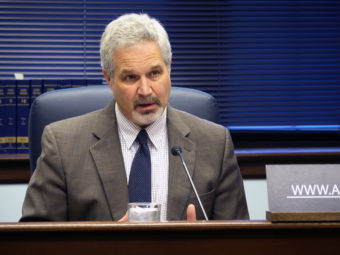
State Government Reporter, Alaska Public Media & KTOO

State government plays an outsized role in the life of Alaskans. As the state continues to go through the painful process of deciding what its priorities are, I bring Alaskans to the scene of a government in transition.

Rural lawmakers wield power without recent precedent

Wood River Bridge ribbon cutting
DOT Commissioner Marc Luiken, Aleknagik Mayor Jane Gottschalk, Sen. Lyman Hoffman and Rep. Bryce Edgmon cut the ribbon on the Aleknagik Wood River Bridge in October 2015. In 2017, Hoffman will be the Senate Finance Committee co-chairman and Edgmon will be House speaker. (Photo by Misty Nielson)

Dillingham Democrat Bryce Edgmon will be the first speaker of the Alaska House of Representatives from off the road system or outside of Southeast Alaska since Nome’s Howard Lyng in the Territorial Legislature of 1941.

And other rural lawmakers will hold more important leadership posts in the next legislature than they have had in decades.

Edgmon and two key committee chairmen are from northern or western Alaska.

Nome Democrat Neal Foster will be co-chairman of the House Finance Committee. Bethel Democrat Lyman Hoffman will be co-chairman of the Senate Finance Committee. It will be the first time both budget-writing committees will have chairs from Bush Alaska since 1990. Hoffman also was a finance chair then, when he served in the house.

Edgmon said the rural leaders are part of a broader regional balance that will be good for the entire state.

“I think it will be good for rural Alaska, and from my standpoint, it’s always good to have regional diversity on the finance committees,” as well as other committees, Edgmon said.

Rural lawmakers have a tradition dating back decades of joining majority caucuses. But this session they’re playing a particularly central role in control of the House. Edgmon and Foster joined with three Republicans to switch from the current Republican-led majority to the primarily Democratic incoming majority.

What this means for rural residents is uncertain. Rural lawmakers have traditionally argued for maintaining or increasing government services. Service increases will be difficult due to the state’s budget crisis. But the incoming House majority is interested in striking a balance that includes both spending cuts and new revenue, like a broad-based income or sales tax, to maintain services. Edgmon expects Foster and his finance committee co-chair Paul Seaton will keep this in mind.

“Both individuals – Rep. Seaton from Homer, Rep. Foster from Nome – are very committed to taking a balanced approach to figuring out the fiscal challenges that lie ahead,” Edgmon said.

Former University of Alaska Southeast political scientist Clive Thomas noted the state government funds a large share of jobs in rural Alaska. And Thomas expects the rural lawmakers to be at the forefront in defending school funding.

“It’s a major income generator in most villages – probably the major income generator – so I think that’s one of the things that they will be concerned about and want to protect,” Thomas said.

Edgmon said there’s another historic element of the new leadership.

“I’m very proud to be the first speaker of Alaska Native heritage,” Edgmon said. “And that’s something that I hope can serve as a role model for future speakers with Alaska Native blood.”

Edgmon said he’s a little less than a quarter Aleut, and he also grew up learning Yupik words and phrases in Dillingham, where the two cultures overlap.

“I grew up in a small town, so I bring small-town values to whatever I do,” Edgmon said. “And I think by nature I’m somebody who listens first and I’m not always the biggest talker in the room. And maybe that hearkens back to my Alaska Native upbringing.”

The budget’s effect on rural areas and the rest of the state will be clearer in mid-December, when Gov. Bill Walker is scheduled to unveil his budget proposal.
New legislative leaders prepare to start work ahead of challenging session

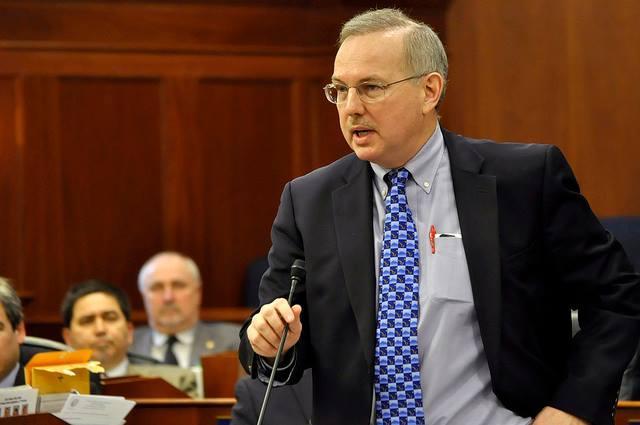
Bryce Edgmon (D-Dillingham) has been tapped as Speaker of the House following the formation of a new bipartisan majority caucus. (Photo by 360 NORTH)
Bryce Edgmon, D-Dillingham, has been tapped as Speaker of the House following the formation of a new bipartisan majority caucus. (Photo by 360 NORTH)

Both houses of the legislature will have new leaders in January.

Incoming Senate President Pete Kelly and House Speaker Bryce Edgmon both say they have positive feelings toward the other. But they lead very different caucuses that will likely have different priorities in the coming legislative session.

Edgmon is becoming the speaker of the House because of a new, mostly Democratic coalition that also includes Republicans and independents.

The Dillingham Democrat said he expects a difficult year ahead.

“We’re essentially down to one year’s worth of savings and a lot of the easy choices are not there anymore,” Edgmon said. “And I think it’s going to be incumbent upon the legislature to take decisive action on not only the current fiscal challenges but also the longer-term picture.”

Sen. Pete Kelly, R-Fairbanks, at a Senate Majority press availability, Feb. 22, 2016. (Photo by Skip Gray/360 North)

Pete Kelly is becoming president of a Senate, whose Republican-led majority is pretty similar to last session.

The Fairbanks Republican also wants to make progress in closing the state’s more than $3 billion budget gap. But he said there’s actually a danger in entirely closing the gap. He said that will feed the demand for government to grow.

“People look at a deficit like that and say we have to do everything we can to fill that deficit right now,” Kelly said. “The problem with that is if you fill it, particularly with taxes, the next year government will have a tendency to grow and then you’re going to want more taxes and you’re going to be back in the same position over a period of time.”

Bryce Edgmon and Pete Kelly first met in the 1990s, when Kelly served in the House and Edgmon was a legislative aide.

The relationship between the two could be important in smoothing over the differences between the chambers.

The House majority is united around building a comprehensive plan to solve the state’s fiscal crisis that will likely support a broad-based tax like an income or sales tax, along with spending cuts and use of Permanent Fund earnings for the budget.

The Senate declined to consider a broad-based tax last year, but it did advance a bill to spend from Permanent Fund earnings that was rejected by the House.

Edgmon is hopeful about working with Kelly.

“I’m confident that I’ll have a good relationship with the incoming president.,” Edgmon said. “And in terms of working together – the House and Senate – I think he’s going to strive to do his best job – and certainly will I.”

Kelly said he has a positive view of Edgmon.

“I like Bryce — and I don’t know what (are) going to be their main objectives,” Kelly said. “So, we’ll wait to see what the issues are that may divide us, but the starting point is pretty good. Bryce is a pretty good guy in my book, and I enjoy dealing with him.”

Both Edgmon and Kelly move to their leadership roles from position on their chambers’ finance committees. Both say they’ll miss the committee posts. They have another thing in common these days — they both are sounding a note of caution.

Neither wants to say something now that their caucus will later disagree with.

Edgmon declined to comment when he was asked about Kelly’s reluctance to entirely close the deficit.

“I don’t want to get ahead of the caucus in providing any commentary that hasn’t been the subject of caucus deliberations,” Edgmon said.

And Kelly said it’s too soon to say what major legislation will advance in the Senate.

“There’s this period of time between and when we actually get seated that we try to formulate a path forward and that hasn’t been done yet,” he said.

There is one area Kelly and Edgmon see differences. Kelly already says there may be “a bit of a battle” between Governor Bill Walker and the Senate over further increasing oil and gas taxes. Edgmon said it’s possible that the House will work with Walker and – he hopes – the Senate on oil and gas taxes.

Judge upholds Walker’s veto halving Permanent Fund dividends

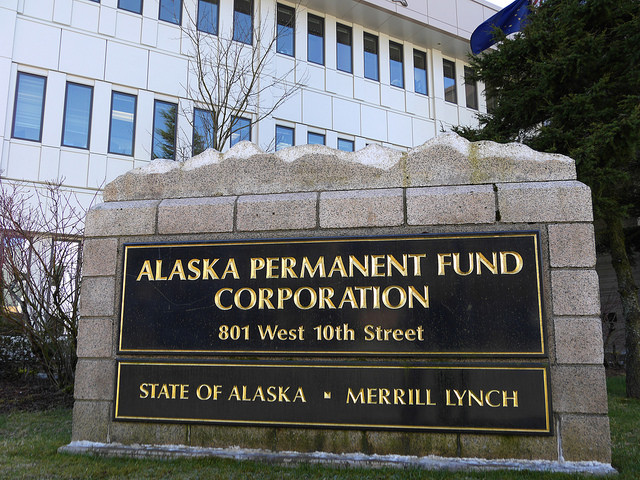
The Alaska Permanent Fund Corp.'s exterior sign, March 14, 2016. (Photo by Skip Gray/360 North)
The Alaska Permanent Fund Corp.’s exterior sign. A judge ruled in favor of the corporation and upheld Gov. Bill Walker’s veto of half of dividend funding. (Photo by Skip Gray/360 North)

Gov. Bill Walker’s veto of half of Permanent Fund dividend money will stand for now. A judge found Thursday he had the authority to cut the money.

In a lawsuit, Sen. Bill Wielechowski sought to reverse Walker’s veto of $666 million. He argued in court that the constitutional amendment establishing the Permanent Fund also allowed the legislature to dedicate money that governors can’t veto.

But Anchorage Superior Court Judge William Morse said there’s no record that lawmakers wanted to eliminate gubernatorial power to veto parts of the budget. In an exchange with Wielechowski, Morse said that if they wanted to make such a big change, they would have said something about it.

“You’re telling me that what they secretly were trying to do was eliminate the governor’s veto authority – but they never mentioned that,” Morse said. 

Wielechowski replied: “It wasn’t a secret, your honor. We think it’s very clear that if the legislature’s allowed to dedicate funds for a specific purpose, then it just naturally flows from that.”

Walker’s veto cut the dividend from $2,052 per Alaskan to $1,022.

Walker said the decision was painful, yet necessary to preserve dividends into the future, and to help close the state’s budget gap.

Opponents said the state should cut the gap other ways – such as raising oil and gas taxes or cutting more state spending – before considering a PFD cut.

Assistant Attorney General Margaret Paton-Walsh defended Walker’s position. She said that other than money set aside for the Permanent Fund itself, the legislature appropriates all state spending each year, including the Permanent Fund dividends. And the governor can veto any of that money.

“I mean, the reality is the legislature has been appropriating this money throughout the history of the dividend program,” she said. The legislature didn’t appropriate the money the first year of the PFD, but started appropriating it in the second year.

Morse said the Alaska Constitution gives the governor a lot of power to veto spending. He noted it takes a three-quarters vote of the legislature to override a budget veto.

“That’s an enormous dislocation of legislative power and it gives to the governor in this unique view an enormous amount of authority to eliminate spending,” Morse said. “I don’t think that the Permanent Fund amendment intended to eliminate the governor’s role in the spending of the income from the principal of the Permanent Fund.”

After about an hour and a half of oral arguments, Morse immediately gave his verdict from the bench: the state won, and the plaintiffs lost.

“I applaud both sides for very fine briefing, very fine and helpful oral argument, and I wish all of you the best of luck in front of the Supreme Court,” Morse said. 

Wielechowski and his fellow plaintiffs, former legislators Clem Tillion and Rick Halford, are expected to appeal soon. And with no facts in dispute, the court could make a final determination on the case  quickly.

Walker said in a statement that he’s pleased with the timeliness of the ruling, and it allows his administration to continue focusing on resolving the deficit.


Walker names Anchorage lawyer Kendall to replace Whitaker as chief of staff

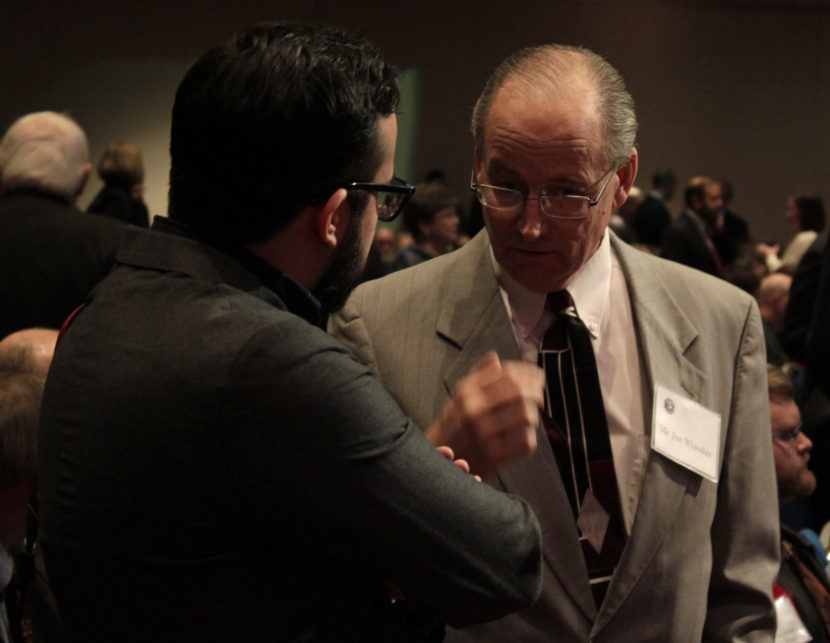
Fairbanks Daily News-Miner reporter Matt Buxton speaks to Jim Whitaker, chief of staff for Alaska Gov. Bill Walker, shortly before Walker's inauguration Monday, Dec. 1, 2014 in Juneau, Alaska's Centennial Hall.
Fairbanks Daily News-Miner reporter Matt Buxton speaks to Jim Whitaker, outgoing chief of staff for Alaska Gov. Bill Walker, shortly before Walker’s inauguration in 2014. Whitaker will move from being chief of staff to senior adviser on major projects on Dec. 2. Scott Kendall will replace him. (Creative Commons photo by James Brooks)

Gov. Bill Walker named a new chief of staff Wednesday, bringing in Anchorage lawyer Scott Kendall to replace Jim Whitaker, effective Dec. 2.

Kendall said he’ll be like a basketball point guard for Walker’s team, helping the administration achieve its goals.

“I don’t need to be the smartest person in the room, but I like to facilitate decision-making to the right person at the right time,” he said. “And I’ve always been able to kind of been able to bring people together to — I think — get to the right solutions.”

Kendall has worked as an attorney and consultant for all three current members of Alaska’s congressional delegation. He also worked for Sen. Ted Stevens. His most recent job included coordinating Sen. Lisa Murkowski’s re-election campaign.

Kendall has also worked with state-level politicians, including advising Walker’s election campaign, and working for Anchorage Republican Rep. Gabrielle LeDoux. He said he works well across party lines.

“I’m a Republican, my wife is a Democrat. We agree on 95 percent of the issues,” Kendall said. “It’s real simple: We’re Alaskans first.”

Whitaker will continue to work for Walker on a project to provide natural gas to the Interior and other other initiatives.

With the new hire, the governor’s office says “adjustments” will be made to keep the office on budget.

Other states look to Alaska as model for insurance relief

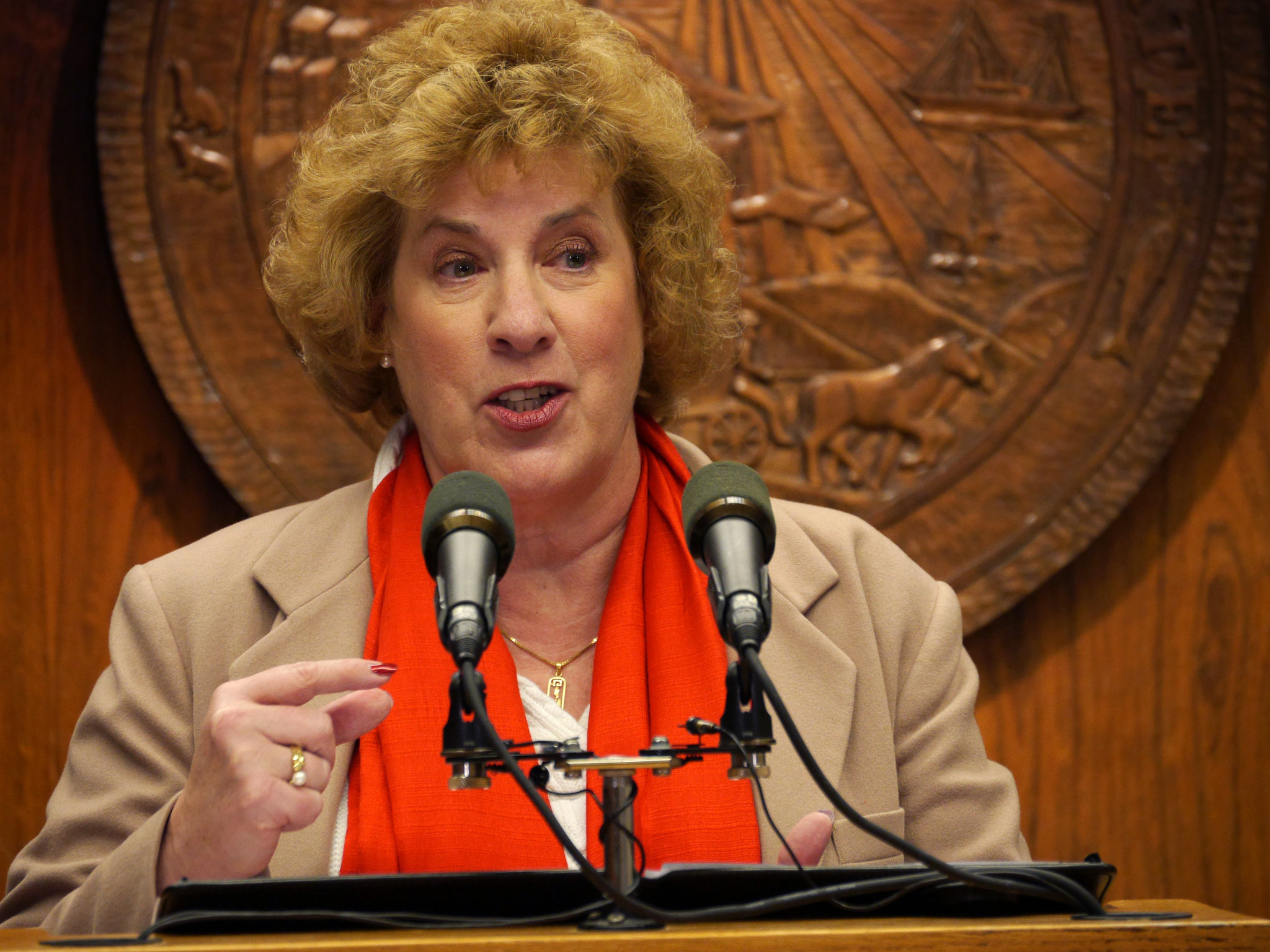
Lori Wing-Heier
Lori Wing-Heier, the director of the Alaska Division of Insurance, discussed the circumstances of Moda Health’s departure from Alaska’s individual health insurance market in January. She said it’s unusual for Alaska to be a national model for insurance policy reforms. (Photo by Skip Gray/360 North)

Donald Trump’s election as president is expected to lead to major changes in the individual health insurance market.

While states don’t know what those changes will be, some policy experts suggested before the election that other states follow Alaska’s lead in addressing rising prices.

With the highest in individual insurance prices in the country, Alaska is facing problems that other states may face soon.

Alaska enacted state-level reforms in response to premiums that nearly doubled in just two years.

Now policymakers in some states, such as Minnesota, are trying to craft plans to address their own skyrocketing prices for health plans.

Some are turning to Alaska as a model.

A federal financial safety net program for health insurers is ending, and that’s playing a major role in rising prices.

The federal reinsurance program will no longer protect carriers hit with unexpectedly high costs for medical care.

Many insurers have been surprised by high costs and big financial losses. So now they’re raising premiums to cover worst-case scenarios.

Washington and Lee University health law professor Timothy Jost wrote a blog post for the influential journal Health Affairs suggesting Alaska as a model.

“I think that what we need is a reinsurance program at the federal level,” Jost said. “But if that is not forthcoming, then states that are seeing particular problems with the insurers in their market should be looking at whether there’s something they can do.”

Alaska lawmakers enacted a state reinsurance program for next year when faced with a potential disaster.

Moda, one of the state’s two insurers, chose to leave the market.

The remaining carrier, Premera, was planning to raise the highest rates in the nation by another 42 percent.

Premera scaled that back to 7 percent after the reinsurance legislation passed.

Lori Wing-Heier, head of Alaska’s Division of Insurance, said it’s relatively rare that Alaska becomes a national model for policy reforms.

“I think that for those that were insured with Premera, that the reinsurance bill has been a welcome relief,” she said.

The plan called for devoting $55 million in taxpayer dollars to reinsurance.

But lawmakers didn’t embrace the idea entirely.

Republicans who control Alaska’s legislature raised concerns that the state was being stuck with costs caused by the Affordable Care Act.

State Sen. Peter Micciche says he’s concerned the federal government is taking advantage of the state.

“It’s really fun to play poker with someone else’s money,” said Micciche during a hearing on the reinsurance bill in the spring. “So when the feds are creating expectations and requirements under ACA and we volunteer to pick up the difference, we’re really not ever pushing back on the feds to cover their unfunded mandate.”

The administration of independent Gov. Bill Walker argued that if the Legislature didn’t pass the bill, the result could be far worse.

Alaska Deputy Commissioner Fred Parady made the case this way:

“Our market is in crisis and the consequence if Premera were to withdraw … 23,000 Alaskans who are currently paying for insurance and receiving coverage, would not have any access to insurance at all,” he said.

Parady argued the state would have to shell out hundreds of millions of dollars to establish a new insurance company if Premera left.

The legislature ultimately agreed to the reinsurance program, but only for two years. What happens next is anyone’s guess. But the state’s reinsurance program is hardly a magic bullet.

The program has headed off massive price hikes, but premiums here are already punishing for many and aren’t going down.

Moda customers being forced to switch to Premera have to pay 30 percent more for coverage next year if they don’t qualify for federal subsidies.

But Alaska’s innovation is making health insurance more affordable for at least one party — the federal government. Alaska officials estimate the reinsurance program will save the feds $20 million a year.

New House majority names slate of chairpersons

Rep. Geran Tarr addresses the Alaska House of Representatives in 2014.
Rep. Geran Tarr addresses the Alaska House of Representatives in 2014. Tarr and Andy Josephson will replace Benjamin Nageak (seated) and David Talerico as the co-chairs of the House Resources Committee. (Photo by Skip Gray/360 North)

The new House majority will be taking a different approach to legislation next year. That became clear on Thursday, as the majority named the committee chairpersons who will guide the agenda.

For example, House Resource Committee co-chairs Geran Tarr and Andy Josephson are more likely to make further changes to the state’s oil and gas tax structure than outgoing co-chairs Benjamin Nageak and David Talerico.

The chairpersons include 11 Democrats and three Republicans, a sharp reversal from the current Republican-led majority. The House majority is mostly Democrats for the first time since 1992.

Republicans kept control of the Senate, so the change in chairpersons there is less dramatic.

House Republicans plan to organize the House minority caucus on Friday.

Other House committee chairs are:

  • Zach Fansler and Justin Parish, Community and Regional Affairs;
  • Harriet Drummond, Education;
  • Neal Foster and Paul Seaton, Finance;
  • Ivy Spohnholz, Health and Social Services;
  • Matt Claman, Judiciary;
  • Sam Kito III, Labor and Commerce;
  • Gabrielle LeDoux, Rules;
  • Jonathan Kreiss-Tomkins, State Affairs, and
  • Louise Stutes and Adam Wool, Transportation.

The Senate chairpersons are:

  • Click Bishop, Community and Regional Affairs,
  • Shelley Hughes, Education,
  • Lyman Hoffman and Anna MacKinnon, Finance,
  • David Wilson, Health and Social Services,
  • John Coghill, Judiciary,
  • Mia Costello, Labor and Commerce,
  • Cathy Giessel, Resources,
  • Kevin Meyer, Rules,
  • Mike Dunleavy, State Affairs, and
  • Bert Stedman, Transportation.
Site notifications
Update notification options
Subscribe to notifications