Andrew Kitchenman

State Government Reporter, Alaska Public Media & KTOO

State government plays an outsized role in the life of Alaskans. As the state continues to go through the painful process of deciding what its priorities are, I bring Alaskans to the scene of a government in transition.

Beth Kerttula returns to Juneau with a message: It’s time to plan for ocean’s future

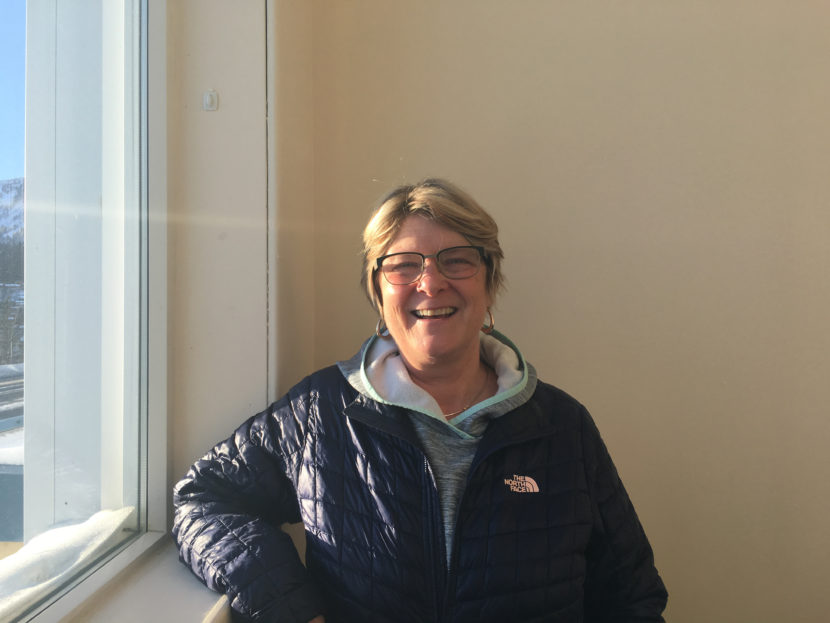
Former state Rep. Beth Kerttula served as the National Ocean Council director for two years. She said marine planning is important.Dec. 9, 2016. (Photo by Andrew Kitchenman/KTOO)
Former state Rep. Beth Kerttula served as the National Ocean Council director for two years. She said marine planning is important. (Photo by Andrew Kitchenman/KTOO)

Former Juneau state Rep. Beth Kerttula returned to Alaska this summer after two years serving the White House as director of the National Ocean Council.

In this position, she helped two regions write the country’s first marine plans, and worked on some issues particularly important to Alaskans.

Kerttula said it’s important to plan for the future of the oceans that surround Alaska and the rest of the United States. She said just as people can have personal trauma when they don’t plan for their future, the U.S. oceans could face disaster.

“If you aren’t planning where your ship lanes are, if you’re not planning around the sea mammals, if you’re not planning so that you can have development, then you’re going to have a mess at some point,” she said. “And you’re going to have conflict between subsistence users, between the developers.”

The attraction of making a difference for the future of the oceans is why Kerttula left the Alaska House of Representatives in 2014, after 15 years.

The Juneau Democrat served as the minority leader for her last seven years in the House.

She spent six months at Stanford University’s Center for Ocean Solutions before she joined the National Ocean Council. President Barack Obama formed the council under an executive order in 2010. Kerttula explained why he did it.

“It’s a huge challenge right now with the ocean,” she said. “We’re facing some very severe problems: ocean acidification, erosion, sea-level rise, the lack of coordination among users, the lack of coordination among the federal agencies. And all of those things are really coming to a head.”

The National Ocean Council includes 27 federal agencies.

Kerttula worked with officials in all of the agencies to plan with state and tribal governments. The council adopted the first two marine plans on Dec. 2, covering the waters off of the Northeast and Mid-Atlantic.

She said planning is especially important for Alaska.

“We have so many conflicts,” she said. “And we have worse problems on the horizon, particularly in our ocean space. And this is just a really wonderful method to put all of the users, the stakeholders, the federal agencies, the tribes, at the table.”

Along with resolving conflicts, Kerttula said, the focus on planning can provide more information about coastal waters, such as mapping the seabed.

“We know so little about the ocean floor. We don’t even have charts,” she said. “I mean, in many parts of Alaska, we don’t have accurate charting. So it comes down also to health and safety.”

Kerttula was also engaged in efforts to stop illegally caught fish from being brought into the country.

“One of the things that was very shocking to me when I went Outside, spent so much time Outside these last two years, was the problem with illegal fish, I mean, not knowing what fish you were even getting many times in restaurants,” she said.

Kerttula ended her work at the end of June. Since Obama launched the National Ocean Council with an executive order, President-Elect Donald Trump will be able to end it with a stroke of a pen.

That has Kerttula worried.

“My hope is that there won’t be knee-jerk reactions about overturning the executive order,” she said. “But there’s a lot of concern about it, and about what that would mean. If that happens, the effort’s not going to stop, because you need something like this.”

She’s taking some time off now that she’s returned to Juneau, helping her husband, University of Alaska Southeast Professor Jim Powell, and her elderly father, former state Sen. Jay Kerttula.
Former Fairbanks state Rep. Mike Kelly dies in plane crash

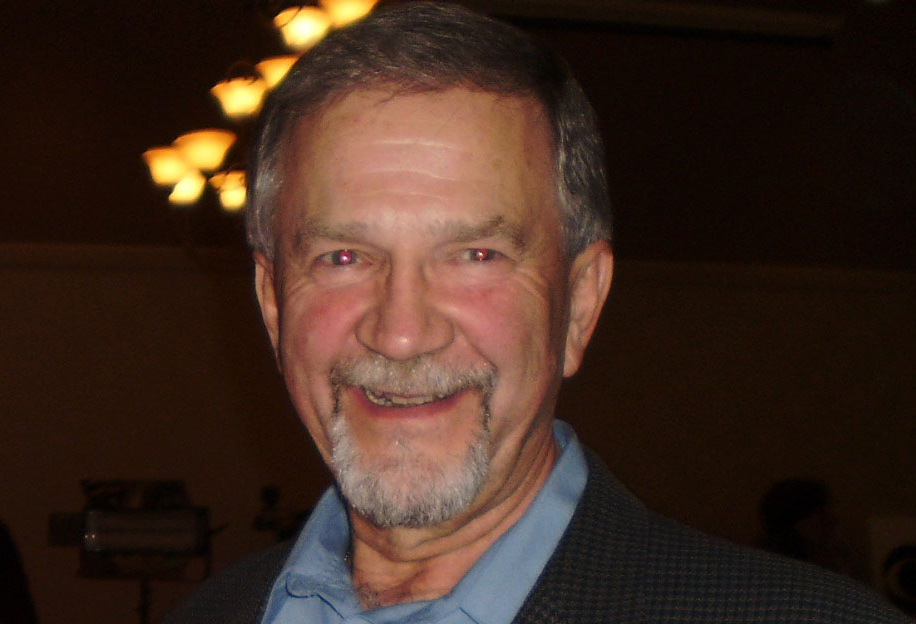
Former state Rep. Mike Kelly, R-Fairbanks, on Dec. 21, 2010. Kelly died Dec. 7, 2016, as a solo pilot in a plane crash 17 miles southeast of Fairbanks.
Former state Rep. Mike Kelly, R-Fairbanks, on Dec. 21, 2010. Kelly died Dec. 7, 2016, as a solo pilot in a plane crash 17 miles southeast of Fairbanks. (Creative Commons photo by James Brooks)

Former state Rep. Mike Kelly died Wednesday in a plane crash, according to the Fairbanks Daily News-Miner.

The crash occurred around 1:30 p.m., 17 miles southeast of Kelly’s hometown of Fairbanks on Fort Wainwright, according to the Alaska State Troopers. The troopers were waiting for the State Medical Examiner’s Office to confirm the identity of the person who died before releasing his identity. But Kelly’s wife Cherie Kelly told the News-Miner he had died.

The pilot was alone, flying a small aircraft, according to the troopers. Kelly was 74 years old.

Kelly was a Republican who served in the legislature from 2005 to 2011. Before then, he was the president and CEO of Golden Valley Electric Association and worked as a commuter airline pilot. His brother Pete Kelly is a state senator and new Senate president.

Former lawmakers who served with Kelly said he was dedicated to the Interior and to the entire state.

Former Sen. Gene Therriault, a Fairbanks Republican, said Kelly was thoughtful and hardworking.

“He was a fisherman, a hunter,” Therriault said. “He really embodied a good, tough Alaskan.”

Former Sen. Gary Wilken of Fairbanks said Kelly’s death was a great loss.

“He was really a mile wide and a mile deep,” Wilken said. “He just had huge arms, a huge heart, and was just continually working to make this a better place.”

A military helicopter happened to be flying in the area when the crash occurred, according to the troopers. The crew heard the downed aircraft’s emergency locator beacon and responded. Military personnel confirmed that the pilot had died.

National Transportation Safety Board officials and Alaska State Troopers planned to arrive on the site of the crash to investigate Thursday morning.

Census Bureau adds areas, languages served by translations for elections

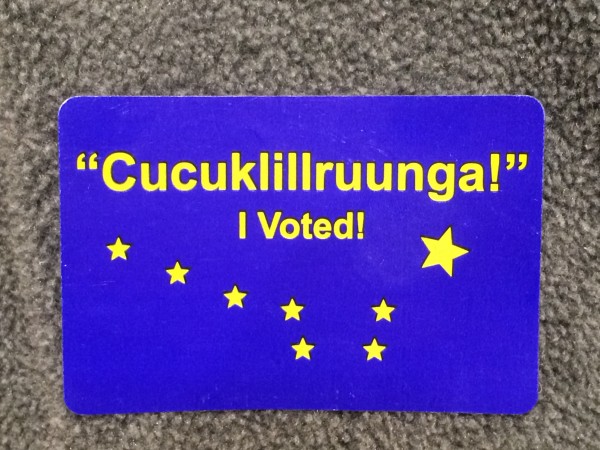
Yupik I Voted sticker
Yup’ik and English “I Voted” stickers from Bethel’s municipal election. The number of areas and languages with translations of election materials available will increase under changes the Census Bureau announced this week. (Photo by Anna Rose MacArthur/KYUK)

More people who speak Alaska Native languages but who have limited English proficiency will receive translated sample ballots and other election material. That’s due to changes the U.S. Census Bureau announced on Monday.

The Census Bureau expanded the number of areas and languages eligible for election material translation.

Indra Arriaga, who manages language assistance compliance for the state Division of Elections,  said it’s important to ensure that people receive translated sample ballots and election outreach public service announcements in minority languages.

“Anytime you have an increased number of people at the polls deciding things for themselves, it’s a benefit,” Arriaga said. “And that is the mandate of the division: to make sure that any Alaskan who is eligible to vote can vote.”

In 1975, Congress found that people who use some minority languages had been effectively excluded from participating in the electoral process. It amended the Voting Rights Act to ensure that election materials are provided in languages other than English.

The Census Bureau periodically changes the list of local areas and languages that are covered.

On Monday, it expanded the areas where Yupik translations will be available to include Aleutians East, Bristol Bay, Kenai, Kodiak Island, and Lake and Peninsula boroughs. In addition, Aleutians West census area must receive Unungam Tunuu language assistance. Southeast Fairbanks and Valdez-Cordova census areas must receive services in Athabascan languages. And Yukon-Koyukuk Census Area must have Inupiaq language translation available.

Arriaga said the division has to do additional work to arrange for translations. She notes that the census data isn’t always precise about several factors: “The number of speakers within the minority group, the educational attainment, and then whether or not folks check the box on the census that says, ‘Do you speak English very well?’ Which in and of itself is kind of funny, because the question is in English.”

The Census Bureau designates languages for translation based on its estimates for speakers who have limited English proficiency.

Many of the areas with the largest number of Alaska Native language speakers were already covered. The federal government mandates that the state provide translations of written materials. The state also provides bilingual election workers in some precincts.

John Active has translated for Yupik voters in Bethel. He’s encouraged by the expansion in the areas where Yupik translation is available. He says some voters need the help.

“Most of them are elders, and they’re only Yupik speakers,” Active said. “They don’t speak English. They don’t understand English.”

The Division of Elections has work to do to ensure that translations will be available in the newly added languages. One of its first steps will be to reach out to local governments and tribes to determine which languages are used in each area. For example, the Census Bureau said Athabascan translations are needed in Southeast Fairbanks and Valdez-Cordova, but doesn’t say which Athabascan languages must be translated.

Allan Hayton directs the Doyon Foundation’s Language Revitalization Program in Fairbanks. He noted that there are nine different Athabascan languages in the area his foundation serves.

Hayton was encouraged by the expanded designations.

“All of our languages currently are endangered,” Hayton said. “For those that are voting, to be informed of what they’re voting on, who they’re voting for, this type of language assistance is invaluable.”

Arriaga said the timing of the announcement is good for the division, since it gives officials more than a year to prepare for the next statewide election, the primaries in 2018.

She said the cost for the added translations must be determined. The federal government covers some of the costs, but the state also pays some.

Alaska seeks federal money to help prevent individual health care market collapse

Healthcare cost stethoscope bill
The Alaska Division of Insurance plans to seek federal funding to offset its reinsurance program. The federal government is projected to save more than $50 million annually from the program, all of which the state is seeking. (Creative Commons photo by tOrange.us)

Alaska’s state government has gained national attention for what it’s doing to keep its individual and family health insurance market from collapsing. Now the state is looking to the federal government to pay some of the cost of keeping down insurance price hikes.

The state Division of Insurance plans to ask the feds to offset its costs for the Alaska Reinsurance Program.  The program is defraying large increases in monthly premiums that insurers charge their customers in the individual market.

For example, the state is paying $55 million next year to Premera to cover the cost of roughly 500 high-cost patients. Premera is the only company in Alaska offering individual insurance through the federal marketplace.

Premera lowered its planned increase for next year from 42 percent to 7 percent after the state legislature created the program.

But the legislature put a two-year time limit on the program, and lawmakers said the state doesn’t have the money to fund it on an ongoing basis. So division Director Lori Wing-Heier said it’s important for the federal government to pay for reinsurance.

“We’d really like to see this reinsurance program into the future, just because of what we’re seeing that it did in 2017 to the rates,” Wing-Heier said.

So why would the federal government be interested in paying money for the program? There’s a simple reason. The feds are projected to save more than $50 million per year. That’s because the federal government will pay out less than projected in insurance subsidies to low- to middle-income individuals, due to reinsurance lowering the premiums.

Those subsidies are required under the Affordable Care Act, the federal law that President-elect Donald Trump has vowed to work with Congress to repeal.

Wing-Heier said Congress could fund Alaska’s reinsurance program in its replacement for the ACA.

One model for the replacement is to pool and subsidize the highest risk — and most expensive — customers. Before Obamacare, Alaska and other states had high-risk pools.

“There has been a lot of talk amongst members of Congress that there should be high-risk pools again, to get these high-cost individuals out of the individual market,” she said. “And we did that in this program.”

Wing-Heier also is hopeful that Tom Price, Trump’s pick to be secretary of health and human services, will also be receptive to the state’s application for federal funding. The division wants to receive all of the federal savings.

“What his plan is, also speaks to reinsurance and high-risk pools,” she said. “So we’re hopeful, even with the change in administration, that we’ll get a favorable response.”

Premera spokeswoman Melanie Coon said the company is monitoring what the federal government does. But she also said the reinsurance program could be attractive to the new administration as it plans for the future of the individual insurance market.

She said that’s particularly important in a state like Alaska, which has a small pool of sick people in the individual market.

“Having the stable source of funding definitely will work towards stabilizing the market,” Coon said. “And so what that means is, it would be more attractive for more people to join and seek coverage and enroll in the individual market, which would help with the pool size.”

Keeping insurance costs down is particularly important for the roughly one in seven Alaskans who don’t qualify for federal tax credits to buy individual insurance, according to Spencer Biegel, an insurance agent and owner of Alaskan Benefit Insurance Consultants in Anchorage.

“Those people, of course, are the ones that suffer the most, with paying the full cost of their health insurance premiums. And they’re exorbitant,” Biegel said.

Biegel noted one 55-year-old single female client of his will pay more than $1,200 a month next year.

The public can comment on the Division of Insurance’s application to the federal government until Dec. 23.

Murkowski to feds: Let marijuana users buy guns

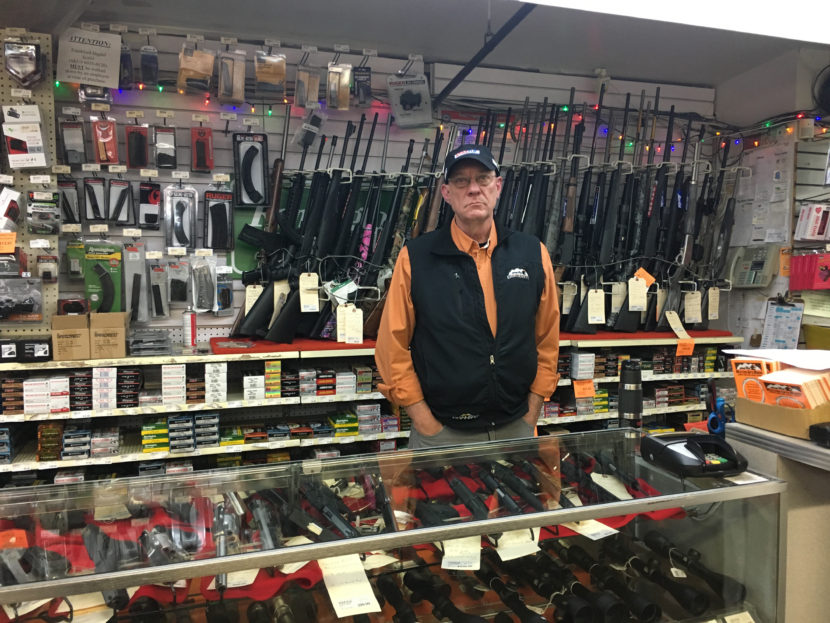
John Weedman, general manager of Western Auto Marine in Juneau, said the federal form asking potential gun buyers if they use marijuana is outdated. November 28, 2016. Photo by Andrew Kitchenman/KTOO.
John Weedman, general manager of Western Auto Marine in Juneau, said the federal form asking potential gun buyers if they use marijuana is outdated. (Photo by Andrew Kitchenman/KTOO)

When Americans buy guns, they’re asked whether they use marijuana. If they say yes, they can’t buy the gun. U.S. Sen. Lisa Murkowski wants to change that, and some Alaskan gun sellers, marijuana industry advocates and local officials applaud the move.

Juneau Assembly member Jesse Kiehl owns several rifles and pistols. And he also supported the ballot question legalizing marijuana in Alaska. Kiehl was pleased when the Wall Street Journal reported that Murkowski wants the federal government to stop asking whether gun buyers use marijuana.

“Where you have a conflict between a federal law that maybe doesn’t make a lot of a sense and privacy right that the Alaska Constitution respects and that now Alaska law respects, you have a weird situation with wiggle room,” Kiehl said. “And that’s not good public policy. It’s not good public safety.”

Murkowski asked U.S. Attorney General Loretta Lynch whether Lynch could change the policy requiring gun buyers to answer the question on the federal firearms transaction record, or if a new law is needed. The form asks prospective gun buyers if they’re “unlawful users of, or addicted to, marijuana” or other controlled substances. Murkowski noted an Alaska ballot question two years ago set rules for legally growing and selling marijuana. Legal marijuana sales started in Valdez in October and have been rolling out in other parts of Alaska. It remains illegal under federal law.

Sen. Lisa Murkowski (KRBD file photo)
Sen. Lisa Murkowski opposed the ballot question legalizing marijuana sales, but doesn’t want the federal government to keep people who’ve used marijuana from buying guns. (KRBD file photo)

The Department of Justice said in its response that the department was enforcing federal drug and gun control laws. In an email, Murkowski said she’s disappointed with the reply, because it reflects a bias against firearm owners.

Some gun sellers don’t like the question, including John Weedman. He’s the general manager of Western Auto Marine, a Juneau store that sells guns. He said that with the change in state law, the federal question is outdated.

Weedman said he hasn’t heard concerns from customers.

“If an applicant puts down on the form that they’re not a user of marijuana, we have no way to verify one way or another on that, OK? And we have no obligation to do that,” Weedman said. “We have a reasonable suspicion — they come in smelling like pot, then yeah — that’s a different story.”

Bruce Schulte is the former chairman of the state Marijuana Control Board and spokesman for the Coalition for Responsible Cannabis Legislation. He said in the short term, he’d like to see the federal government stop asking the question about pot use. In the long term, he said new federal laws are needed.

“The question alone – it hearkens back to an attitude that’s just not in sync with current social norms,” Schulte said.

Schulte noted that the federal government doesn’t ask about alcohol use on the firearm transaction form, though he said it’s more dangerous. He also said some injured military veterans may choose to use marijuana rather than prescription opioids, whose use, combined with guns, could also be more dangerous.

It’s a point reinforced by Kiehl, the Juneau Assembly member.

“I’ve filled out this form quite a few times myself,” Kiehl said. “And it does not ask if you ever take the gun out of where it’s stored when you’ve been drinking. It does not ask if you take a perfectly legal prescription medication that makes you dopey as a side effect. Those are serious safety issues.”

What happens with federal enforcement of marijuana laws – and how they interact with legalization in Alaska and other states – will depend on the next attorney general. President-elect Donald Trump’s choice is Alabama Sen. Jeff Sessions. Sessions opposes legal marijuana, but it’s not clear how he’ll handle state legalization.

Former Attorney General Richards joins Bering Straits Native Corp.

Former Attorney General Craig Richards addressed the Alaska Permanent Fund Corp. board on Sept. 2, 2016. Photo: Rachel Waldholz, Alaska's Energy Desk
Former Attorney General Craig Richards addressed the Alaska Permanent Fund Corp. board in September. He’s taken a position as vice president and general counsel to the Bering Straits Native Corporation. (Photo by Rachel Waldholz, Alaska’s Energy Desk)

Alaska’s former attorney general has a new job.

Craig Richards will be the vice president and general counsel for the Bering Straits Native Corporation.

Richards said he looks forward to serving the Nome region.

“Really, what convinced me that it was the right place for me was just meeting everyone and seeing what a good rapport and good team environment they have, and the ability to help out the Nome region,” Richards said.

Richards had two contracts with the state after he abruptly resigned as attorney general in June. The first was for $50,000 to consult the state on oil and gas issues. Richards’ second contract was for $10,000 to advise on “fiscal and other issues.”

Gov. Bill Walker’s spokeswoman Katie Marquette said Richards’ work has ended. Richards declined to say what his new position will pay.

Richards was a close adviser to Walker on the proposed natural gas pipeline, and on Walker’s plan to solve the state government’s budget crisis. He said he’ll miss working in the upcoming legislative session.

“As someone that’s had a history in finance and economics — and oil and gas in the state — you know, it’s probably been since the early ’70s that we’ve had the kind of issues that have to be tackled that we do now,” Richards said. “So, not being a part of that is going to be, you know, a disappointment but on the other hand, I’m also excited to move on to the next thing.”

Richards said his new job won’t conflict with a state law that bars former state officers from working for two years on matters that they participated in personally and substantially.

He said his new duties will be very different than his old job.

He’ll report to Corporation President and CEO Gail Schubert, provide counsel on legal matters, ensure legal compliance and oversee risk management.

Site notifications
Update notification options
Subscribe to notifications