State Government Reporter, Alaska Public Media & KTOO
State government plays an outsized role in the life of Alaskans. As the state continues to go through the painful process of deciding what its priorities are, I bring Alaskans to the scene of a government in transition.
State officials are planning to borrow money to pay for public workers’ pensions. But the plan is drawing concern from lawmakers, who say it may be risky.
Gov. Bill Walker’s administration plans to sell up to $3.2 billion in what are known as pension obligation bonds.
The bonds are essentially low-interest debt. The state would use that capital to invest. If investment returns are higher than the bonds’ rate, then the state would earn money.
But members of the Senate Finance Committee on Thursday said they want more time to feel comfortable the proposal makes financial sense.
A 2008 law allows the administration to issue the bonds without legislative approval. But the legislature would have to decide whether to appropriate money to pay off the bonds.
Advocates of a bill that would allow pharmacists to dispense an opioid-effects blocking drug with restrictions are frustrated that regulatory barriers the law was supposed to knock down are still up.
Gov. Bill Walker signed the law six months ago to ease access to the life-saving drug, but new rules are more than a month away.
Scores of people have died in Alaska from heroin and other opioid overdose deaths this year, according to some estimates.
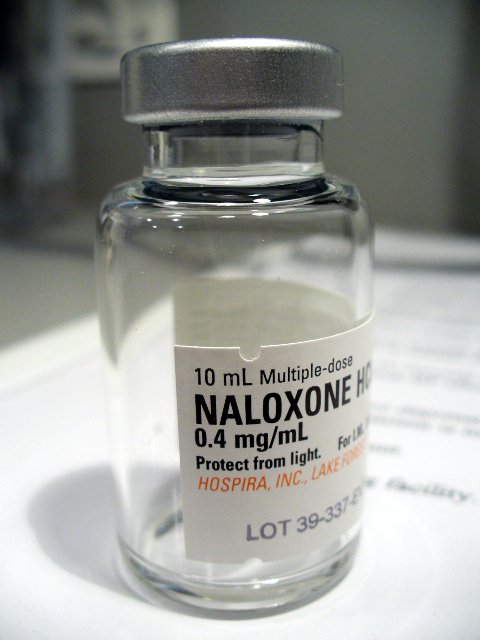
The drug naloxone, also known by the brand name Narcan, can block the effects of opioids and has been known to reduce the rates of opioid-related overdose deaths.
Senate Bill 23 sponsor Sen. Johnny Ellis, an Anchorage Democrat, said he’s frustrated with the time it’s taking to write the rules.
“The board of pharmacy in my opinion has been very bureaucratic in dragging their feet when lives are at stake,” Ellis said.
Ellis wrote in a letter to Walker dated Sept. 2 that the Alaska Board of Pharmacy should move faster.
The law gives pharmacists the ability to independently dispense naloxone if they complete a training program. The rules that are being written would implement these parts of the law.
Department of Commerce, Community and Economic Development officials working with the board of pharmacy said the board is following the law.
Department Division Operations Manager Sara Chambers said the board is gathering public comment on the rules.
“This isn’t a rubber stamp process that the law requires the board to follow,” Chambers said. “It requires them to give thoughtful consideration to both the dispensation standards and the training program standards.”
Michele Morgan of the Juneau-based organization Stop Heroin, Start Talking said she’d like to see the board of pharmacy adopt emergency regulations, which would allow the board to issue rules before the public process is over, and to later make changes based on public comments.
“It’s important for people who not only are using drugs like heroin off the street but even people who are using prescription opiates to have that (naloxone) and to empower that family or the mother or the friend to be able to save that person’s life,” she said.
Nalaxone reverses the effects of opioid overdoses.
But Chambers said the idea of emergency regulations wasn’t raised until rule-writing was well underway.
She said the Department of Law advised against it.
The board did issue guidance to pharmacies that said they could comply with Senate Bill 23 and dispense naloxone before the rules are finalized.
But Ketchikan pharmacist Barry Christensen said pharmacies aren’t likely to dispense naloxone without a prescription from a doctor or other prescriber until the rules are done and the training is available.
“The number of pharmacies that are going to have that available, I think are going to be very limited until everything gets completed,” on the regulations, Christensen said.
A separate track for advancing the use of naloxone is moving forward much faster.
The Department of Health and Social Services was awarded a five-year, $4.5 million federal grant to buy and distribute — and train people to use — naloxone.
Andy Jones oversees the naloxone program for the department. He’s chief of rural and community health systems.
The program would allow drug users and their family members, as well as law enforcement, healthcare providers, and others in contact with drug users to have access to naloxone with training.
Jones said the state received the grant two and half weeks ago, has already ordered its first batch of naloxone doses, and wants to have the drugs available by mid-November.
“You know, we have an aggressive schedule,” Jones said. “The reason we have an aggressive schedule is because once naloxone is in our hands, it doesn’t do us any good at the state to be holding onto it and waiting and waiting to build a program. It’s intended to go to the local jurisdictions, so that they can hand it and they can provide it, actually, to the general public.”
The state had 83 prescription opioid overdose deaths and 36 heroin overdose deaths last year. Jones says overdose deaths are likely higher this year, although an official count isn’t available.
Alaska Department of Health & Social Services spokeswoman Susan Morgan replied to questions about the tweets in an email. She wrote that department officials apologize.
“Some recent tweets were inadvertently posted to our Twitter account by a DHSS staff member who was accidentally logged into the DHSS account instead of their personal account while on their personal phone at home,” Morgan wrote. “The inadvertent tweets were deleted and we will be reviewing the matter in the days ahead to ensure it doesn’t happen again.”
Original Story | 6:39 p.m.
Some politically charged tweets related to the presidential debate were sent on the Alaska Department of Health & Social Services Twitter account at 5:32 p.m. and 5:37 p.m. during the debate Monday. The tweets were deleted shortly after going out. (Graphic by Jeremy Hsieh/KTOO)
Two politically charged tweets were posted from the Alaska Department of Health & Social Services Twitter account during the presidential debate on Monday.
One tweet referred to Donald Trump as a “red-faced mansplainer.”
The other tweet referred to “rape charges.”
The tweets were posted at 5:32 p.m. and 5:37 p.m., and were deleted shortly after they were sent.
Correction: The department’s name has been corrected. It’s the Department of Health & Social Services, not the Department of Health & Human Services.
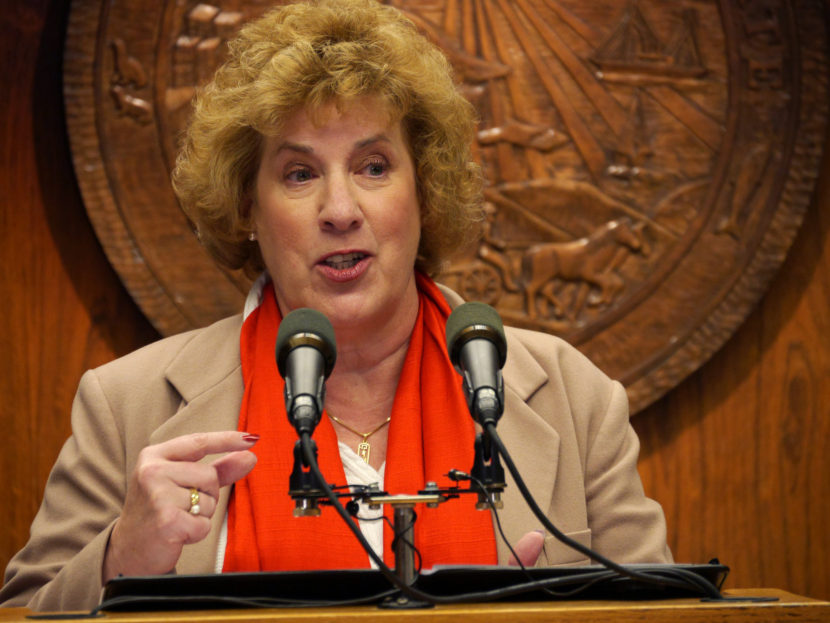
Lori Wing-Heier, the director of the Alaska Division of Insurance, discusses the circumstances of Moda Health’s departure from Alaska’s individual health insurance market in January. She said on Tuesday that she’s aiming to reduce future insurance premium increases. (Photo by Skip Gray/360 North)
Alaskans shopping for individual health insurance on the federal exchange will only be able to choose from one insurer when open enrollment starts Nov. 1.
Premera Blue Cross Blue Shield of Alaska is increasing premiums an average of 7.3 percent.
State officials are trying to head off bigger price increases in the future.
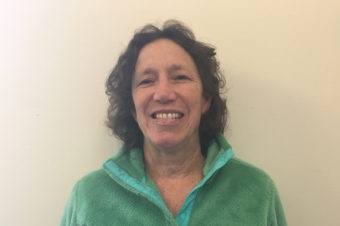
Laurie Clark is struggling with $1,500 monthly health insurance premiums. (Photo by Andrew Kitchenman/KTOO/APRN)
Juneau Montessori School teacher Laurie Clark loves working with toddlers. But the 61-year-old is not sure how much longer she can afford to do it.
Her job doesn’t provide insurance. And she’s paying $1,500 per month for individual health insurance, three times what she paid last year in New Mexico.
“What choice do I have?” Clark said. “I could be uninsured and take a risk of not being able to afford health care, or hospitalization, or visits to a doctor … You know, I’m not a risk taker. I didn’t want to do that.”
High insurance premiums are a problem in the state.
For example, Premera had increases of 37 percent and 38 percent the last two years. And four companies have dropped out of the insurance exchange, citing an inability to offer competitive premiums that would cover their health costs.
There are two reasons: Health care just costs more in Alaska than in other states, and the other reason is a lot of Alaskans with existing health problems buy plans on the exchange, which is a central feature of the federal Affordable Care Act.
The state government wants to attract more insurers, Alaska Division of Insurance Director Lori Wing-Heier said.
“It’s good for consumers to have a choice, so that they can compare plans, compare services, compare the providers, and elect who they want to basically contract their health care insurance with,” Wing-Heier said. “And at this point in time, consumers in Alaska in the individual market will not be able to do that.”
The first step the state took was a law introduced by Gov. Bill Walker and passed by the legislature.
It provided $55 million in reinsurance to offset Premera’s individual insurance costs in 2017 and 2018.
Premera estimated it helped lessen its premium increase from nearly 10 percent to 7.3 percent.
Some legislators say they don’t want to pay insurers beyond 2018.
So Wing-Heier is looking for a permanent source of funding for individual market reinsurance.
A federal “innovation waiver” could help.
The state plans to apply for the waiver to relax some federal rules regarding reinsurance.
Finding a long-term solution is important, Wing-Heier said.
“I think you will see insurance companies look to come to Alaska, because they know that those large losses are going to go to the reinsurance program, and that there is a way that they can price the insurance where they can at least break even – if not make a small profit,” she said.
Premera is committed to Alaska. But she said it will remain a challenge to control premiums, without a long-term fix, company spokeswoman Melanie Coon said.
“You’re still trying to spread very large costs across a very small population,” she said.
It can be a tough sell.
While most Alaskans qualify for federal tax credits that lower their individual insurance premiums to less than $75 per month, those who don’t qualify face high costs.
Juneau insurance agent Alan Plotnick of Shattuck and Grummett Insurance said his clients are sometimes shocked by the cost of individual insurance.
Some choose to pay a penalty fee of 2.5 percent of their income instead of buying insurance. Others qualify for a federal hardship exemption from the fee.
“I’ve had somebody go to tears before because they just simply can’t afford it, and ended up not being able to get a plan,” Plotnick said. “Sure, they can file for the hardship and get an exemption from the fee, but that doesn’t help them get a plan and have the peace of mind of having good health insurance coverage. And that breaks my heart.”
Laurie Clark is one of Plotnick’s clients.
She said she wants to stay in her teaching job. But she may have to reconsider – she’s paying more for insurance each month than for her home.
“It’s just amazing that all of my life, I had health insurance,” she said. “And I never thought I’d be in this position.”
The Division of Insurance is aiming to file for the innovation waiver by Oct. 31.
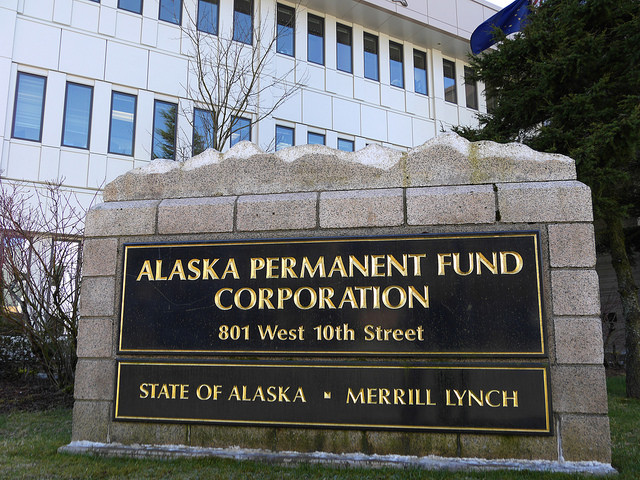
A lawsuit seeks to require the Permanent Fund Corp. to transfer the full amount for dividends. (Photo by Skip Gray/360 North)
A lawsuit seeking to maintain full Permanent Fund dividends this year was filed Friday – and Gov. Bill Walker blasted the arguments in the lawsuit.
Anchorage Democratic Sen. Bill Wielechowski and two retired lawmakers, Clem Tillion and Rick Halford, filed the lawsuit. They want to reverse Walker’s veto of roughly $670 million in dividend funds. The veto cut the dividends in half, from a projection of more than $2,000 to about $1,000.
Walker said Wielechowski failed to work toward a solution. He noted the lawsuit was filed with eight weeks ahead of an election Wielechowski’s hopes to win.
“I’m disappointed in the lawsuit, there’s no question about that,” Walker said. “At a time when we all need to sort of be working in the same direction to address the fiscal gap — $4 billion gap – I would hope we were all working in that same” direction, Walker said.
Walker said the state can’t rely on rising oil prices to close the gap.
“Alaska’s not been here before,” he said. “In prior times when we had downturns in the price of oil, the throughput in the oil pipeline was over 2 billion barrels a day. We’re under 500,000 barrels a day right now.”
Wielechowski said the state should eliminate oil and gas tax credits first. And he said the legislature should pass other changes to close the fiscal gap.
“You know, (I’m) disappointed to see him taking the low road on this,” Wielechowski said. “But, you know, I understand he’s frustrated. We’re all frustrated. I can’t tell you how many times I advised him to take different courses of action.”
Walker said the lawsuit will stretch into next year, and it’s unlikely to be resolved before dividends are sent on Oct. 6.
Sen. Bill Wielechowski, D-Anchorage, after a floor session in June. He’s seeking to stop a cut to Permanent Fund dividends. (Photo by Rashah McChesney/KTOO)
Sen. Bill Wielechowski plans to file a lawsuit on Friday seeking to force the Permanent Fund Corporation to transfer the full amount for Permanent Fund dividends this year.
If successful, then the lawsuit would double the dividend amount, from $1,000 to slightly more than $2,000.
Wielechowski’s suit would essentially override Gov. Bill Walker’s veto of half of dividend funding.
The Anchorage Democratic senator said his research into the constitutional amendment and laws that provide for dividends show the money isn’t subject to annual spending by the legislature. He says Walker can’t veto it.
“I have concluded that it was clearly the intent of the legislature and the people of Alaska to allow the legislature to put in statute provisions such are in current statute, that are not subject to appropriations,” Wielechowski said.
State Department of Law officials have said all annual state spending – including dividends — is subject to the governor’s veto.
Wielechowski pointed to a 1994 Alaska Supreme Court decision that ruled that Permanent Fund earnings go directly into the Permanent Fund earnings reserve account.
“Because it is not an appropriation, its placement in the budget is superfluous and there was no – the veto is meaningless.”
Walker and other state officials have said that if dividends aren’t reduced and other budget changes aren’t made, the amount available for PFDs will be exhausted in two years.
Wielechowski said he will seek an expedited hearing so that the lawsuit can be resolved before dividends are sent on Oct. 6. He said other people would join him as plaintiffs in the lawsuit, but wasn’t authorized to release their names on Thursday.
Close
Update notification options
Subscribe to notifications
Subscribe
Get notifications about news related to the topics you care about. You can unsubscribe anytime.