
Andrew Kitchenman

State Government Reporter, Alaska Public Media & KTOO

State government plays an outsized role in the life of Alaskans. As the state continues to go through the painful process of deciding what its priorities are, I bring Alaskans to the scene of a government in transition.
Alaska Legislature rejects plan to increase lawmaker salaries because of cuts to daily allowances

Drivers make their way through a rain-soaked downtown on Saturday, Jan. 22 in Juneau, Alaska. (Photo by Rashah McChesney/KTOO)

The Alaska Legislature has rejected a proposal that would have increased lawmakers’ salaries but reduced the amount they get for living expenses, known as per diems.

Several legislators cited the expense of living in Juneau for their votes. Rep. Cathy Tilton, a Wasilla Republican, said the costs involved with relocating to Juneau for the session could prevent some people from running for office. 

“We all are aware that the costs here of coming to Juneau are very high, especially for those of us who have other homes where we may be paying mortgages and then we come and we have another rent,” Tilton said.

Sen. Donny Olson, a Golovin Democrat, said he’s concerned how this would affect Alaskans who have a lower income and are thinking of running. 

“Because right now in my district, there are very few people that have the external resources to come on down here, to have two households, to have a family,” he said.

All members present in both chambers voted against the plan, which would have capped the amount legislators receive for living expenses at $100 per day in the regular session, in contrast with $307 this year.

The recommendations also would have raised the pay of commissioners of state departments and the lieutenant governor. They were made by the State Officers Compensation Commission. Under state law, the commission’s plan would have gone into effect unless the Legislature rejected it.

The plan would have reduced the total for per diems during a 121-day session by roughly $25,000. 

Commission member Lee Cruise and several members of the public questioned whether roughly $9,000 per month in per diems are needed to pay for rent, food, laundry and tips in Juneau during the regular session.

The plan also would have increased legislators’ salaries by $13,600, from $50,400 to $64,000.  But the increase after legislators pay taxes on their salaries would be less than half as much as the cut in tax-free per diems.

The commission’s recommendations would also have required legislators to document their expenses. The IRS doesn’t require people who receive per diems to keep their receipts. However, the IRS does require that employers – in this case, the Legislature – base per diems on a reasonably accurate estimate of expenses. 

The Legislature’s rate is based on the per diems for federal government employees. Those rates are based on daily rates for hotels that are of three- or four-star quality and for meals at local restaurants. 

For Juneau, the current federal calculations are $189 for a hotel, $95 per day for restaurants and $23 for laundry and tips. 

Some members of the public said it would be more fair to base the per diems on those paid to state employees. That would limit per diems to actual housing costs, demonstrated with receipts.

The Legislature had until March 19 to act on the recommendations. The Senate voted to block them on Wednesday, one day after the bill rejecting them was introduced. The House voted on the bill on Thursday.

Gov. Dunleavy delivers election year State of the State address

Updated Post — Jan. 25, 2021, 10:30 p.m.

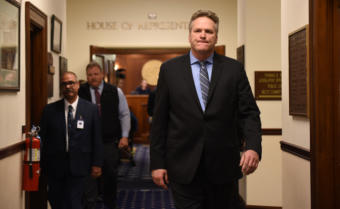
In his fourth State of the State address on Tuesday evening, Gov. Mike Dunleavy called on the Legislature to pass bills to resolve permanent fund dividends, increase Alaskans’ food security and sell state land.

And he urged lawmakers to prove people wrong who say nothing will get done in an election year.

“Most Alaskans outside this room don’t plan their lives around an election season,” he said. “They plan their lives around hunting or fishing, construction season or tourism season, but not an election season. Alaskans won’t accept that we can’t get anything done because it’s an election year.”

It was the first in-person address Dunleavy gave to a joint session since before the pandemic led to changes in safety rules in the Capitol. And at nearly an hour, it was his longest State of the State.
Dunleavy said he envisioned a state where educational outcomes improve and people feel safer.

He also described different state efforts to increase the number of health care workers in the state, including plans to train more certified nursing assistants and registered nurses, as well as his proposal to increase the number of state-supported medical students from 20 to 30.

“Together, with these partners, we’ll build a stronger, more durable health care system in Alaska that can respond to almost any situation,” he said.

Dunleavy said the state is at the mercy of others for its food, and he wants to increase the state’s food security. That includes plans to start a food security task force and to sell state land for agriculture.

He contrasted the state with Texas, where 95% of the land is privately owned.

“But here in Alaska, the biggest state in the country by far, we have barely 4% of our land in private hands,” he said. “This has got to change.”

Senate President Peter Micciche, a Soldotna Republican, praised the speech, including what the governor described as his vision for the state.

“The test is going to be how serious is that vision,” Micciche said. “And is the administration going to put the work in on being here in this building for the next 90 days, guiding us through and working with us?”

Some of the legislation that Dunleavy described has already been introduced. But he said he would issue an executive order and introduce a bill to start the food security task force.

Dunleavy recognized two young Alaskans who had big years: Olympic gold medalist Lydia Jacoby, who wasn’t in the Capitol, and Miss America Emma Broyles, who was.

But the biggest applause of the night was for another guest of the governor, Carley Rose Kelly. Dunleavy described how she survived domestic violence, drug addiction and homelessness to become a peer support specialist for at-risk youth.

Anchorage Democratic Rep. Ivy Spohnholz wrote on social media after the address that more Alaskans would experience recovery if Dunleavy hadn’t vetoed $10 million for treatment centers in 2019. A spokesperson for the governor said at the time that the money wasn’t attached to specific projects.

Original Post — Jan. 25, 2021, 5:00 p.m. 

By Jeremy Hsieh, KTOO

Gov. Mike Dunleavy is set to deliver his fourth State of the State address at 7 p.m. Tuesday from the Capitol in Juneau.

This address marks a partial return to normalcy for the annual speech, which he delivered remotely from his office in Anchorage last year due to the pandemic. Lawmakers have since relaxed some of its COVID-19 rules and the Capitol is open to the public.

Live coverage begins at 7 p.m. on KTOO 360TV. Streams will be available on this page, Facebook, Twitter and on KTOO 104.3 FM.

Andrew Kitchenman, who covers the statehouse for KTOO and Alaska Public Media, discussed the upcoming speech. He says the state is in a much different situation now than during Dunleavy’s first address to lawmakers in 2019. That first year, Dunleavy shocked many Alaskans with proposals for sweeping cuts to state budgets and services. Kitchenman says the governor’s budget proposal is notable this year for the opposite reason.

“This is the first budget that he’s proposed that neither draws down state savings, nor includes large cuts to state programs and state spending,” Kitchenman said. “And that’s basically possible for three reasons: Growth in the permanent fund, the high price of oil right now, and the large amount of federal aid that’s come in as a result of the pandemic.”

Kitchenman says the idea of making Alaska more self-sufficient has been a recurring theme in Dunleavy’s past speeches. For example, food security, energy independence and medical supplies all came up last year.

He says he’s also listening for what the governor has to say about Alaska’s elections.

“I’m interested in what he has to say about election legislation. That is a big topic right now, and the first non-budget bill that the administration is sponsoring this session is an election bill.”

Alaska legislative leaders see on-time budget as a priority this year

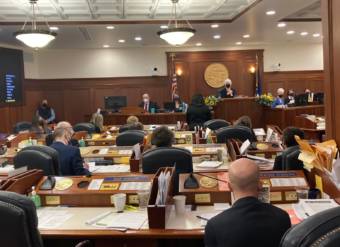
The Alaska House of Representatives meets for the first day of the legislative session on Jan. 18, 2022, in the Alaska State Capitol in Juneau, Alaska. (Photo by Andrew Kitchenman/KTOO and Alaska Public Media)
The Alaska House of Representatives meets for the first day of the legislative session on Tuesday in the Capitol. Legislative leaders said during the first week that their priorities include passing the budget on time. Some of the leaders also said they want to pass long-term budget plan. (Photo by Andrew Kitchenman/KTOO and Alaska Public Media)

The leaders of the Alaska Legislature would like to see the state budget pass on time this session. And some of them want to see the Legislature pass a long-term plan for the state’s finances and permanent fund dividends. But they acknowledge there are significant obstacles in both the short and long term. 
Higher oil prices, growth in the permanent fund and federal funding are some of the reasons the state has more money this year. 

Senate President Peter Micciche, a Soldotna Republican, said it’s a quandary – it could make the annual budget easier, but it also removes some of the pressure to pass a long-term plan. He said a long-term compromise will take lawmakers crossing the divides in both chambers to talk with each other.

“There’s tension in all four caucuses,” he said. “We have very different kinds of people that may have the same letter next to their name. And they just need to put their pride aside, get in the same room together and talk those issues out.”

He said the fact that this year is an election year isn’t an excuse to fail to take action.

“I hope Alaskans are judging legislators this year on whether or not something does happen” in passing a long-term plan, he said. “Really good economic situations, fiscal situations in Alaska are temporary. And a fiscal plan will make that permanent.”

Sen. Tom Begich, a Democrat from Anchorage, is the Senate minority caucus leader.

Along with work on a fiscal plan, he’s focused on a bill aimed at improving students’ reading skills, which would also expand access to pre-kindergarten education. And he says it’s important that the Legislature pass a plan on how to spend billions of dollars of federal infrastructure and other funding. He also acknowledged that the higher revenue could be a mixed blessing. 

“It makes it very difficult to get a fiscal plan, when people can get an easy ride in an election year,” he said. “And my job is to hold people accountable to needing to put together a fiscal plan, especially because it’s easier to do it now. It’s much easier to do it now while we can afford to do it than it will be down the road, when it’s just going to become a bitter argument that pits people against each other.”

He said bills put forward by him and the Senate Finance Committee that would rewrite the permanent fund dividend formula among other things are a starting point. He also said a decrease in the student population could allow for the state to expand pre-K without increasing overall school spending.

In the House of Representatives, Speaker Louise Stutes, a Kodiak Republican, said the majority caucus is more cohesive than it was a year ago, when it took weeks into the session to form a majority. The majority is mostly Democratic, but it includes two Republicans and four independents.

“I would say that our priority is getting out of here in a timely fashion,” she said. “And in order to get out of here, we have to have a budget that has passed.”

Like Begich, she said it’s important for the Legislature to appropriate the money that the state is receiving from the federal relief and infrastructure bills. She objected to provisions of Gov. Mike Dunleavy’s budget plan that use federal dollars in place of state spending. She said the federal money should add to the state services. 

For example, she’s concerned that Dunleavy’s administration relies on federal money to operate the Alaska Marine Highway System.

“So what happens at the end of five years, when the federal dollars run out?” she said. 

Stutes also said that the House committee chairs will determine the agenda for bills other than the budget. She added that legislators will be aware of the need to finish their work with an election year ahead of them.

House minority leader Rep. Cathy Tilton, a Republican from Wasilla, said a long-term plan is needed to bring business investment to the state. Her caucus’s other priorities include passing bills related to elections and opposed to vaccine mandates. They also support a bill that would require that patients be allowed to have someone with them to provide support in the hospital. 

Tilton said she hopes the Legislature can finish the budget without a state government shutdown, like what nearly happened last year

That would require more members of her caucus supporting allowing the budget to go into effect on July 1. The votes of at least six minority-caucus House Republicans are needed for bills to go into effect less than 90 days after they’re signed into law, according to Dunleavy’s administration. 

And she said that may not happen this time.

“Last year, we were able to come together on the fiscal policy working group,” Tilton said. “But the outcomes of that were not what we expected. So therefore, I’m not so sure that we would be able to come together.”

Last June, minority-caucus Republicans relented when the other caucuses agreed to form a group that would recommend a plan. 

While that happened, the plan didn’t advance during special sessions. Committees have been meeting to discuss both this year’s budget and Alaska’s long-term outlook.

Alaska Supreme Court upholds new open primary and ranked choice voting system

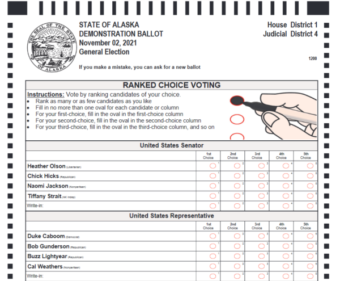
State election officials produced a prototype of a ranked choice ballot. On Wednesday, the Alaska Supreme Court upheld a ruling by Anchorage Superior Court Judge Gregory Miller that allows the new election system to be implemented this year. (Alaska Division of Elections)

The Alaska Supreme Court upheld the state’s new open primary and ranked choice general election system in a two-page ruling issued on Wednesday.

Scott Kendall is a lawyer who successfully argued the case in favor of the new law, which voters passed in 2020. 

He said he’s grateful and relieved.

“Now we have clarity that this law is the law of the land for our elections,” he said.

He said it’s important for all voters to know they can vote for any candidate in the August primary.

“I think it’s a message to candidates, and maybe unconventional candidates, that elections are for you now, too,” he said. “Even if you don’t think of yourself as a partisan or a party person, there is a system and a path for you now, and please take the opportunity and run and give Alaskans all of those choices that they deserve.”

Kendall served as chief of staff to former Gov. Bill Walker, an independent who is running again. 

The state Department of Law also defended the law, on behalf of the Division of Elections. A department spokesperson said the quick decision provides clarity so that candidates and voters know the method for conducting elections. 

Ken Jacobus is the lawyer who argued against the law. He sued on behalf of the Alaskan Independence Party, Scott Kohlhaas, Robert Bird and himself. 

“It’s disappointing, but Alaskans are going to have to live with it now,” he said, adding that he doesn’t think there’s any way to appeal it further. “So the 2022 election will have to be under the new system and we’ll have to see how it plays out.”

He had argued that ranked choice voting violated the provision in the state constitution on the election of governors. And he said the open primary violates political party member’s freedom to associate with who they want to. 

Jacobus hoped the court would order a new election on the law, with the changes to the election system separated from another piece of the law increasing the transparency of campaign donations.

“When ranked choice voting and four-winner primary were combined with, ‘well, we have to disclose financial campaign contributions,’ I think that biased the election in favor of campaign contributions, which dragged the other two along with it,” he said.

The justices upheld a ruling by Anchorage Superior Court Judge Gregory Miller. They said a longer opinion explaining the decision would be issued later.

Both Kendall and Jacobus said they believe the court issued the decision just one day after they argued the case to give the Division of Elections time to prepare for the primary.  

Alaska lawmakers would see higher salaries, lower expense payments under new compensation plan

The Alaska Capitol in June 2021. On Tuesday, the State Officers Compensation Commission adopted final recommendations that would increase legislators’ salaries but cut the overall amount they are paid by reducing per diem payments. (photo by Nat Herz/Alaska Public Media)

The commission charged with making changes to the salaries of Alaska’s legislators and senior state leaders advanced a plan on Tuesday that would increase salaries but cut payments for sessions. 

The plan would increase lawmakers’ salaries to $64,000, from $50,400. But it would reduce the maximum amount they can receive in per diem payments during the regular session, from $293 per day to $100. 

The combined changes mean legislators would take home less money. 
Commission Chair Johnny Ellis voted for the plan but said he wanted to set the salaries higher.

“I’m a very reluctant yes vote so that the commission has a final recommendation to the Legislature — I believe that there’s a good likelihood they will turn it down as inadequate and complicated,” he said. “But that’s up for them to decide.”

For special sessions, there was a change from a plan drafted earlier this month. When a governor calls a special session, legislators would be reimbursed their actual costs for a hotel or other lodging, as well as up to $60 per day for meals and other expenses. When the Legislature calls itself into a special session, they wouldn’t be reimbursed for anything.

Unlike in recent years, lawmakers would have to show receipts to receive per diem payments for what they actually spent. Per diem payments are not taxable.

The State Officers Compensation Commission voted 3-1 on its recommendations. The changes will go into effect next year unless the Legislature blocks them. 

Commission member Carrigan Grigsby proposed the final recommendation for special session per diems. The draft plan would have set it at $100, but he said that’s too low for a Juneau hotel room in the summer. 

Commission member Lee Cruise voted against the recommendations. He said the salary increase was too high

State department commissioners and the lieutenant governor would also receive pay increases. Commissioners’ pay would increase from roughly $141,000 to nearly $150,000. The lieutenant governor’s salary would increase from $125,000 to $141,000.

The increases equal 1% per year since their last increases, which were in 2015 for commissioners and 2011 for the lieutenant governor. The governor’s pay will remain the same $145,000 that it has been for 11 years, after Gov. Mike Dunleavy turned down an increase. 

On the session’s first day, Alaska lawmakers talk about working together

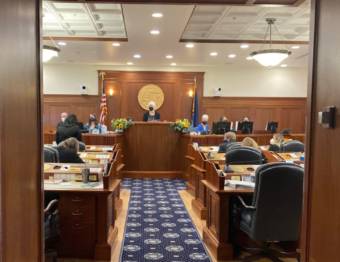
Alaska House Speaker Louise Stutes (R-Kodiak), center, listens as Rep. Cathy TIlton (R-Wasilla), right with back to camera, speaks in the House chamber in the Alaska State Capitol in Juneau on the first day of the session, Jan. 18, 2022. (Photo by Andrew Kitchenman/KTOO and Alaska Public Media)
Alaska House Speaker Louise Stutes (R-Kodiak), center, listens as Rep. Cathy Tilton (R-Wasilla), left with back to camera, speaks in the House chamber in the Capitol on the first day of the session on Tuesday. (Photo by Andrew Kitchenman/KTOO and Alaska Public Media)

Tuesday was the first day of Alaska’s legislative session, which began with lawmakers saying they wanted to work together. 

Last year’s session was marked by disagreements that nearly led to a partial state government shutdown, as well as differences over COVID-19 safety rules.

House Speaker Louise Stutes said she wants the members to be respectful. She is a Kodiak Republican leading a mostly Democratic caucus. 

“Decorum will be returned to this House,” she said. “We can disagree without being disagreeable, and I expect you all to treat one another with the respect and civility that we all deserve.”

House Majority Leader Rep. Chris Tuck, an Anchorage Democrat, said his caucus will focus on improving job and educational opportunities. He read from a letter he co-wrote with other House members: 

“It is time for lawmakers and the governor to put aside the campaign rhetoric and embrace the language of statesmen,” he said. “It’s time to do less finger-pointing and come together to make good public policy. It’s time to stop negotiating via press releases and instead sit down together in a room.”

House Republican Minority Leader Rep. Cathy Tilton of Wasilla said passing a stable, long-term plan for the state budget is the greatest issue facing the Legislature — a goal that eluded lawmakers last year even after several special sessions.

“That was the mission of the caucus last session and will continue to be on the top of everybody’s minds,” she said.

In the other chamber of the Legislature, Anchorage Democratic Senator Elvi Gray-Jackson drew inspiration from the life of Martin Luther King Jr. 

“Let us continue to walk in the footsteps of a King, never stop fighting for the right to live with honor and dignity,” she said. “Let us continue to dismantle hate, by seeking to understand the things that we don’t understand and to continue to let our differences strengthen the nation.”

Work will begin on the state budget in the finance committees later this week.

Site notifications
Update notification options
Subscribe to notifications