Associated Press

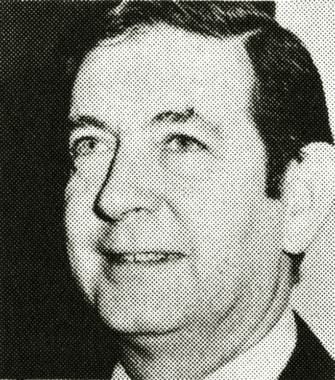
Keith Miller, Alaska’s third governor, dies at 94

Keith Miller, former governor of Alaska (Public domain photo)

Keith Miller, who served as Alaska’s third governor, has died. He was 94.

His stepdaughter, Carol Slater, confirmed Miller died of pancreatic cancer while in hospice care Saturday in Anchorage.

Miller was serving as Alaska’s secretary of state when Gov. Wally Hickel was selected by President Richard Nixon to be the secretary of the U.S. Interior. Alaska didn’t have a lieutenant governor position then.

Alaska came into sudden wealth under Miller’s governorship when an oil lease sale on the North Slope fetched $900 million.

Miller served as governor for two years, losing to Gov. William Egan in 1970. Miller ran again in 1974, only to lose in the Republican primary.

Born March 1, 1925, in Seattle, he moved to Alaska in 1946 and homesteaded in the Talkeetna area.

Alcohol office recommends state fair lose liquor license

Alcohol regulators will consider a recommendation to reject the renewal of the Alaska State Fair’s liquor license — a move that fair officials said would be “devastating” and could lead to higher ticket prices.

The state Alcohol and Marijuana Control Office made the recommendation, aiming to crack down on longtime recreational site licenses that might not be used as intended under state law, the Anchorage Daily News reported this week.

The fair would need to “greatly increase” admission prices if it loses its ability to sell beer and wine, said Stephen Brown, president of the fair board.

In the past, legislative auditors have faulted the state Alcoholic Beverage Control Board for issuing recreational site licenses to events like the fair. Under state law, recreational site licenses allow beer and wine to be served at locations that host “baseball games, car races, hockey games, dog sled racing events, or curling matches.”

The board has previously stretched the legal definition to grant licenses for ski areas. The fair has held a recreational site license since 1981.

The board approved a recreational site license renewal for Arctic Valley Ski Area in August, going against the recommendation of the Alcohol and Marijuana Control Office. Two months later, the board voted against a recreational site license for Eaglecrest Ski Area.

The board has delayed consideration of the fair’s liquor license until February.

While discussing the fair’s license this week, board chairman Bob Klein suggested the state Legislature might need an incentive because it has been reluctant to fix problematic alcohol legislation.

“There is some merit in holding this license hostage,” Klein said.

___

Information from: Anchorage Daily News, http://www.adn.com

Dunleavy among new leaders to meet with Trump Thursday

Officials in Gov. Mike Dunleavy’s office say he will be meeting with President Donald Trump on Thursday.

Officials said Monday that Dunleavy and 12 other newly-elected governors and territorial governors will participate in the Washington, D.C., meeting.

Dunleavy says in a statement that the meeting is the “first of many opportunities to work in concert with the President and federal officials on advancing my administration’s priorities, like bringing new jobs and investment to Alaska.”

Alaska gets $5 million for road repairs

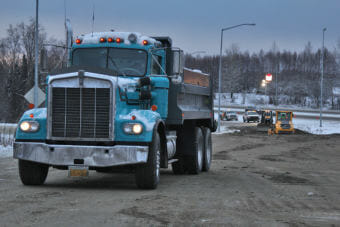
The federal transportation department is releasing $5 million in emergency relief funds to help road and bridge repairs in Alaska following Friday’s magnitude 7.0 earthquake.

Construction began immediately to repair the ramp at the intersection of International Airport Road and Minnesota Drive after it collapsed during a magnitude 7.0 earthquake on Friday, November 30, 3018 in Anchorage, Alaska. (Photo by Rashah McChesney/Alaska’s Energy Desk)

The Federal Highway Commission released the funds Saturday after it said it received a request from Alaska Gov. Bill Walker and the state transportation commissioner, Marc Luiken.
The Glenn Highway received damage in several areas north of Anchorage. The Seward Highway south of Anchorage has seen several rock slides from the quake and aftershocks. An on-ramp to a major Anchorage roadway also was damaged.

The $5 million is essentially seen as a down-payment to help fund short-term repairs while assessments for long-term repairs are made.

Alaska musher banned from 2019 Iditarod sled race

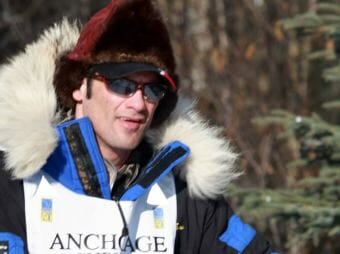
Iditarod musher Hugh Neff races on April 5, 2009.
Iditarod musher Hugh Neff races on April 5, 2009. (Creative Commons photo by Frank Kovalchek)

Officials have banned a longtime musher from competing in Alaska’s Iditarod sled dog race next year, citing concerns about his care of dogs.

Officials announced Wednesday that the race’s Qualifying Review Board has denied musher Hugh Neff’s application to compete in the 1,000-mile (1,610 kilometer) Iditarod Trail Sled Dog Race, the Anchorage Daily News reported.

“Musher Hugh Neff’s entry application to compete in the 2019 race has been denied by the QRB due to concerns over his lack of dog care during the 2018 Yukon Quest International Sled Dog Race,” the Iditarod Trail Committee said. “The Iditarod Trail Committee believes that the highest level of dog care must be achieved not only in its event but throughout the year.”

The newspaper couldn’t reach Neff for comment Wednesday.

Yukon Quest officials banned the two-time champion from competing in the 2019 race after his dog Boppy died this year near the race’s halfway point between Fairbanks and Whitehorse, Yukon.

A necropsy found the dog died from aspiration pneumonia caused by inhaling vomited stomach contents. Race veterinarians said the dog also had other health problems believed to be preventable, including stomach ulcers, a whipworm infestation and severe weight loss. The examination suggested that the dog was not given proper deworming medication or medicine to prevent stomach ulcers.

Neff appealed the Yukon Quest ban, but a third-party review board upheld it.

Neff has competed in 14 Iditarod races and 18 Yukon Quests.

Alaska man sentenced for faking death to avoid prison term

ANCHORAGE — A commercial fisherman who faked his death to avoid incarceration for a sexual assault has been sentenced to two and a half years in prison.

Federal prosecutors say the U.S. Coast Guard spent $384,261 searching for 35-year-old Ryan Meganack after his girlfriend, who was part of the scheme, reported him missing off Port Graham.

Meganack in 2016 faced state charges of sexually assaulting an incapacitated woman.

Investigators determined he swamped his skiff, returned to Port Graham on another boat and hid out near his mother’s home. He planned to flee Alaska when the search ended.

The plan went awry when Meganack’s girlfriend confessed to his grieving parents that Meganack was not dead.

U.S. District Judge Sharon Gleason ordered Meganack to serve 15 months in prison consecutive to his 15-year state sentence.

Site notifications
Update notification options
Subscribe to notifications