Casey Kelly

City to design fiscal model for future budget planning

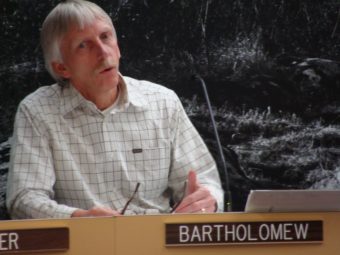
Bob Bartholomew
Juneau Finance Director Bob Bartholomew. (Photo by Casey Kelly/KTOO)

The Juneau Assembly and city administration are hoping better planning will lead to less uncertainty with future budgets.

Last year at this time, city officials were expecting the deficit for this coming fiscal year to be more than $9 million. Through spending cuts and new revenues, that’s now closer to a $3 million shortfall, which the city plans to make up largely with cash on hand.

Finance Director Bob Bartholomew says the City and Borough of Juneau has a long history of being proactive when it comes to the budget. He says a two-year budget cycle allows the city to get ahead of issues and streamline the budget-writing process every other year.

“We’re now in year two of that cycle, so the budget process this year generally won’t be as detailed as year one,” Bartholomew says. “We’re looking at what has changed. What needs are there?”

Bartholomew says Juneau’s budget is in better shape than it was last year, but is still not sustainable. In the coming year, he says the city probably will spend about $1 million more than it would like from fund balance. That’s money not spent in previous budgets that gets carried over to the next fiscal year. In total, Bartholomew proposes spending about a fourth of what’s projected to be in that account in the new fiscal year.

The Assembly asked Bartholomew to come up with a model to better project how different changes in the economy might affect the budget moving forward. He says the model – a very detailed Excel spreadsheet – will be ready for the start of the next two-year budget process, a year from now.

“First step is to load five years of history, just so we can have trend line information,” he says. “But then, the projections for going forward really fall back to the staff, to the Assembly, to input we can get from others in this community, whether it’s JEDC … or the chamber of commerce.”

The city does projections for how much sales and property tax revenue it expects each year. But Bartholomew says the model will be able to project how factors like inflation, loss of state revenue and more might affect the city.

“I think it will give people more comfort in identifying, you know, what could potential changes do to the budget,” Bartholomew says.

Karen Crane chairs the Assembly Finance Committee. She thinks Assembly members and Bartholomew will rely on the model a lot in coming years.

“It allows us to say, ‘Alright, if we lose revenue sharing money, exactly what does that mean?'” Crane says. “If property tax is going to stay stable and we lose this and we lose that, the program will run projections for you pretty easily.”

The Assembly received an update Wednesday on potential changes to the coming fiscal year budget. The city still doesn’t know how the loss of state revenue will affect its bottom line. The two big issues there are revenue sharing and education funding. Crane says the city is in wait-and-see mode with federal revenue sharing every year now as well.

“So we’re going to have to continue to really examine the budget closely, and look for every efficiency or change that we can find,” Crane says.

The Assembly Finance Committee will meet weekly for at least the next five weeks to go through proposed budget updates. Crane hopes to wrap up that process in early May, but says the committee could take extra time if needed. Any final changes to the city’s budget need to be made by mid-June.

And when the next budget cycle starts a year from now, the city will have a new tool in the form of the model to help it plan for the future.

Juneau residents speak out on operating budget proposal

Juneau residents who testified on the latest version of the state operating budget Monday urged lawmakers to reverse proposed cuts to early childhood education, the state ferry system and public broadcasting.
Steve SueWing, an early childhood education advocate, told the Senate Finance Committee he’d be willing to pay new taxes to support programs such as Best Beginnings and Parents as Teachers.

“I would support a statewide income tax, with specific monies dedicated towards predictable funding for education,” he said. “I would also support an endowment from the Permanent Fund, or a mechanism within the fund to use realized earnings to fund education, with the understanding that these changes may lead to diminished or non-existent dividends.”

Odin Brudie talked about the importance of the Alaska Marine Highway System to the culture and economy of Southeast, saying it’s used by high school sports teams as well as business owners, like contractors and builders.

“The marine highway is essential for us here in Southeast for moving people and goods to and around the region,” Brudie said.

KTOO board members Jorden Nigro and Will Muldoon testified against cuts to public broadcasting, which would lose all state funding under the current working version of the operating budget.

Other Juneau residents urged lawmakers to restore $1.5 million in funding for domestic violence and sexual assault prevention initiatives statewide.

The state is facing a multibillion dollar shortfall due to declining oil prices, forcing deep cuts to state-funded programs and services.

The Senate Finance Committee is scheduled to take more testimony on the budget today.

Watch more testimony from Monday:

Walker leads Choose Respect rally as senators cut funding

A Senate subcommittee today cut all of the proposed funding for statewide programs targeting domestic violence and sexual assault prevention in Alaska for the budget year beginning in July.

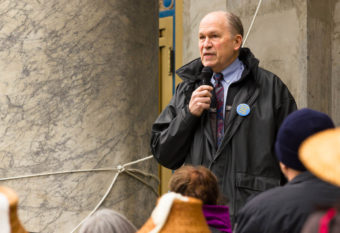
Meanwhile, Gov. Bill Walker led about 100 people in Juneau’s Choose Respect rally, which is supported by that funding.

The initiative to raise awareness about Alaska’s high rates of domestic violence and sexual assault started six years ago, and grew in prominence after then-Gov. Sean Parnell embraced it.

Advocates say proposed cuts in the governor’s budget would slow, but not stop their work.

Early in his speech at the rally, Gov. Walker asked for a round of applause for the previous administration’s efforts to raise the profile of Choose Respect. Between 2009 and last year, Gov. Parnell and his team helped organize marches and rallies in nearly 200 communities statewide. Walker called what they did “a great start.”

“Our administration also chooses respect, but we also choose action,” Walker said. “And we have taken action. We have taken action in a number of ways. We’re going to continue to take action to make sure that this doesn’t continue on.”

As an example, Walker cited his administration’s hiring of a special investigator to look into allegations of sexual misconduct and other issues within the Alaska National Guard, which played a role in his campaign for governor against Parnell. He also touted his support for expanding Medicaid.

Walker said Alaska takes great pride in being first in a lot of things – first in size, first in beauty – but he said being first in rates of domestic violence and sexual assault is not something to be proud of.

“This is one day out of 365 days, and it’s a great day from the standpoint that we’re very aware of this. But we need to make sure the other 364 days are also just as much empowering people like yourselves to take action,” Walker said.

The governor also said this is not the time to cut funding for prevention, though his own budget slashes nearly $1.3 million from such programs.

With a drop in oil prices leading to a state shortfall in the billions of dollars, Alaska Council on Domestic Violence and Sexual Assault Executive Director Lauree Morton says the administration’s cut was not a surprise. She says it would slow, but not stop the progress made so far.

“It’s too soon to stop trying to prevent these crimes,” Morton said.

The House left $1.5 million in the governor’s budget for prevention. A Senate subcommittee has zeroed that out, for now.

Morton says the money goes to programs like Girls on the Run, Coaching Boys into Men and Green Dot, designed to raise awareness about sexual assault and domestic violence. She says the governor and House’s reduction would mean each of these programs get enough funds to launch efforts into one new community instead of three statewide.

Morton says the council did a study on The Fourth R – a program that teaches students about healthy relationships – and found it’s having an impact on Alaska kids.

“There was less adherence to rape myths, you know that, ‘she deserved it’ or ‘she shouldn’t have dressed that way,’ those kind of things,” Morton said. “There was less tolerance for physical aggression in relationships. So we have shown that is effective here in Alaska.”

Morton says she doesn’t think the Walker administration is any less dedicated to ending domestic violence and sexual assault than the Parnell administration. She says if anything, there’s more focus on partnering with communities.

“They’re committed to eliminating these crimes. I think there’s just a different way of looking at how to do that,” she said.

Mandy O’Neal-Cole with Juneau’s AWARE shelter says organizations that receive money from the state for prevention efforts will just have to get creative in light of the state’s fiscal problems.

“It’s our main goal to continue with the programming that we have,” O’Neal-Cole said. “We are committed to this movement and to this cause, and I think we will figure it out.”

She adds that it gives Alaskans an opportunity to step up and show how much progress has been made, by supporting organizations trying to end domestic violence and sexual assault.

Willoughby Arts Complex group receives planning grant

A Willoughby Performing Arts Complex will be an expansion of the current JACC building. (Photo by Lisa Phu/KTOO)
The Willoughby Performing Arts Complex would expand on the current JACC building. (Photo by Lisa Phu/KTOO)

A nonprofit group leading the effort to build an arts complex in the Willoughby District has received a $51,000 grant from the Juneau Community Foundation for a feasibility study and business plan.
The pARTnership is a joint project of Perseverance Theatre and the Juneau Arts and Humanities Council. Both organizations would share space in the proposed Willoughby Arts Complex, which would add on to the existing JACC building.

The McDowell Group has been selected to write the feasibility study and business plan. The group hopes it will provide direction on the scope of the facility, management and how to generate revenue.

A release from the pARTnership says the next phase of the project will include facility design and fundraising.

In 2012, city voters approved $1 million from sales tax revenue to support the project.

Editor’s note: A land use planning illustration of the Willoughby District that included an out of date rendering of the Willoughby Performing Arts Complex has been removed from this story. 

City manager talks budget, whale sculpture, West Douglas road

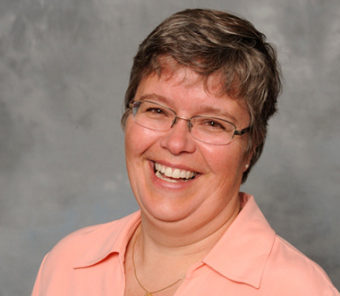
City Manager Kim Kiefer talked to KTOO’s Casey Kelly this week about a variety of issues facing the city and borough.

Topics included Saturday’s Gastineau Apartments fire, budget issues, and two ongoing city projects: The West Douglas road extension and the whale sculpture for the downtown waterfront.

Listen to an unedited version of the interview and read the highlights below.

Kim Kiefer
Kim Kiefer (Photo courtesy City and Borough of Juneau)

Does this weekend’s fire at the Gastineau Apartments lend a greater sense of urgency as the city explores its options for cleaning up the downtown eyesore?

I think that given that people are getting into the structure that’s supposed to be secure, and obviously isn’t, that the Assembly wants to try and move. We keep hearing the same stories that everybody else does that there’s a buyer out there that wants to buy it. But that hasn’t panned out, so we need to step in and do something.

A year ago, the projected deficit for this coming fiscal year was about $9 million. Where do we stand now?

We have made up a lot of that. And some people don’t understand why we could have a $9 million deficit a year ago, and we’re not there now. And the two big reasons for that are, one, we’ve done reductions in the actual operating budget, and we’ve also looked at the other side of the ledger, which is to bring in additional revenues. So, the Assembly went forward and looked at tax exemptions and determined (they would adjust) some tax exemptions, and they also looked at tobacco tax. So, the combination of those two alone are almost $3 million. When we look at the reductions that we have made from last year and additional reductions we made this year, that’s also close to $3 million… That’s two-thirds of what we were looking at last year.

How much cash on hand (fund balance) does the city expect to use to balance its budget for the coming fiscal year?

Anywhere between $2- and $3 million we’ll probably take out of fund balance. Our preference is to have that more in the $2 million range, that’s more sustainable.

Will there be layoffs?

Part of what we did in December did impact employees … That was the reorganization of engineering and public works, and some changes at parks and recreation. So there was a loss of a position in that reorganization … I don’t at this point see that there will be any addition to that.

The Juneau School District will request the city fund to the cap next year. That’s about $25 million, with another $700,000 outside the cap for activities. Does the city have the means to do that?

We will put that request forward as we do every year. The Assembly will look at all the requests as they look at the ’16 budget to determine where the funding will go. As I said earlier, we brought in some new revenues and some of those new revenues may be able to be redirected to the school district. But we don’t know, and we also don’t know at this point what the dollar amount is for the cap yet, until the state passes the budget.

Finally, a couple of big city projects are nearing some development milestones — the whale sculpture and the West Douglas road. Can you talk about where both of those projects stand? 

The West Douglas road … has been on our radar for a number of years, and we’re now in the process of working on getting the permits for it. We’ve talked about a number of different routes, and so basically it takes from the end of North Douglas and continues around the west side of Douglas. The route we are looking at and moving forward with is all on city property … Because we’re going to be impacting some wetlands, they (the U.S. Army Corps of Engineers) want us to set aside about 4.5 acres of wetlands that won’t be disturbed in the future, and we’ve got some locations that we can easily do that, that we wouldn’t want to disturb.

A life-size bronze whale sculpture for Juneau's waterfront should be in town later this year. This photo shows part of the sculpture earlier this month. (Photo courtesy City and Borough of Juneau)
A life-size bronze whale sculpture for Juneau’s waterfront should be in town later this year. This photo shows part of the sculpture earlier this month. (Photo courtesy City and Borough of Juneau)

The whale, there’s sort of two pieces … There was a big push for a number of years by former Mayor Bill Overstreet to create a whale for Alaska’s 50th. Lots of people donated to that, lots of organizations donated to that, and the whale is being built as we speak, and is due to be delivered to Juneau later this year … The location that was agreed upon was (next to the bridge). Then what we want to do is build up the seawalk on that end. We’ve been focusing on the seawalk pretty much on the south end, from Marine Park down … So now we’re going to focus on the bridge end of it, the north end of the seawalk.

Town hall offers veterans a chance to connect with VA officials

(Creative commons photo by Nic McPhee)

The U.S. Department of Veterans Affairs is holding another listening session in Juneau tonight.

The agency launched a series of town hall meetings across the country last year after a report found veterans faced long delays for appointments at VA health clinics and to get their benefits claims processed.

Alaska VA Healthcare System spokesman Samuel Hudson says the meetings are held quarterly as a way for officials to connect with veterans, their families and healthcare providers.

“We use the word transparency a lot,” Hudson says. “And I can’t speak for any other VA, but I can speak for ours. At these town halls we are transparent. Ask whatever questions you would like.”

In November, the VA launched the Veterans Choice Program, designed to cut down on the backlog. It allows veterans to see non-VA healthcare providers and have the visit covered by their veterans’ benefit, if they meet certain requirements. Those includes living more than 40 miles from the nearest VA facility, or being told it will take longer than 30 days to get an appointment.

Michelle Peterson, Alaska VA enrollment coordinator, says veterans should have received a Choice card allowing them to participate in the program.

“It gives you more of an opportunity to go out into the community if we cannot see you in a timely manner,” Peterson says. “We want to make sure veterans’ health care needs are taken care of, and this is one of the things we are doing.”

Juneau has a VA clinic in the Federal Building.

Alaska has more than 73,000 veterans, according to the national VA. That’s about 1 in 10 state residents, tied with Montana, Maine and Virginia for the highest per capita in the U.S.

VA insurance is available to most veterans who served in the active duty military.

Tonight’s veterans listening session will be held at Elizabeth Peratrovich Hall from 5-6:30.

Susan Yeager, director of the Alaska VA Healthcare System, will attend. Hudson says veterans from Craig are expected to call in.

The state VA system held listening sessions in Anchorage and Fairbanks earlier this month.

Site notifications
Update notification options
Subscribe to notifications