Casey Kelly

Juneau’s budget picture improves, still unsustainable

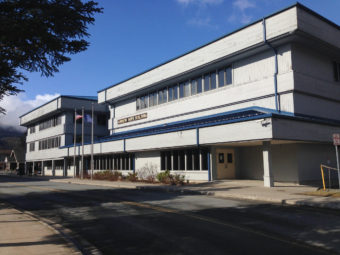
Juneau City Hall sunny winter day
Juneau City Hall. (Photo by Casey Kelly/KTOO)

A combination of new revenues and spending cuts have improved Juneau’s budget picture, but it’s not sustainable yet.

That was the message the city administration had for the Juneau Assembly last week.

The city operates on a two-year budget cycle, so a preliminary spending plan for the fiscal year starting July 1 was adopted last year. Finance Director Bob Bartholomew says that was the start of a multi-year process “to work from an unsustainable situation towards sustainable.”

A year ago, with sales and property tax revenue growing at a slower than expected pace, and the federal government cutting revenue sharing programs, the city faced an estimated $12 million deficit over two years.

The Assembly cut a dozen city positions, and members started looking at ways to raise new revenue. An increase to the city’s tobacco tax has already been approved, and changes to some sales tax exemptions are under consideration.

To balance the budget for the coming fiscal year, Bartholomew says the city will still need to use more money from savings than he considers sustainable. But he says local government is in a better position than it was at this time last year.

“Depending on what scenarios and how we handle certain things, we’re not sustainable. We’re still ($1.5 million), give or take, away from that,” Bartholomew says. “But we have to absorb what we’ve done, and get that done, get it done right. And then take that next bite.”

Bartholomew says the next bite does not need to happen until the new biennial budget process begins in about a year. He says the city has enough cash on hand so that it will not need to touch its emergency savings to balance the coming year’s budget.

The big unknown right now is how the state’s multibillion dollar deficit will affect the city.

“But I think we’re ready to wait and see how that is,” Bartholomew says.

The city administration will submit a revised budget for next fiscal year to the Assembly on April 1. The Assembly plans to adopt a spending plan by mid-June.

The Assembly also will consider adding to the Juneau School District’s current budget. That would fund the district to the maximum amount allowed under state law for this school year, the first in recent memory that the city did not fund schools to the cap.

Tlingit and Haida receives grant for efficiency upgrades

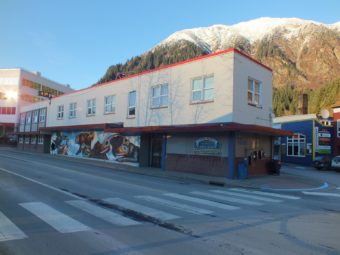
Andrew Hope Building
The Central Council of Tlingit and Haida Indian Tribes of Alaska will get a federal grant to help pay for energy efficiency upgrades to its Juneau headquarters. (Photo by Casey Kelly/KTOO)

Southeast Alaska’s largest tribal organization is getting $500,000 from the federal government to make energy efficiency upgrades to its Juneau headquarters.
The Central Council of Tlingit and Haida Indian Tribes of Alaska hopes to reduce energy use by 30 percent and save about $15,000 a year with the improvements to the Andrew Hope Building.

The tribe will match the federal government’s half-million dollar investment in the project, according to the U.S. Department of Energy. The agency this week announced $6 million will go to 11 organizations nationwide through its Tribal Energy Program.

The Andrew Hope Building is about 41,000 square feet and was built in 1983.

The Central Council is the tribal government for more than 29,000 Tlingit and Haida Indians worldwide.

Tribal officials could not be reached for comment.

Accessory apartment proposal fails at Juneau Assembly

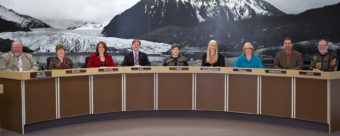
Juneau Assembly
(Photo courtesy City and Borough of Juneau)

A proposal from the Juneau Affordable Housing Commission intended to spur development of low-cost rental units failed at the Assembly this week.

The idea was to give $5,000 grants from the city’s Affordable Housing Fund to homeowners who build mother-in-law apartments on their property. But some Assembly members had concerns about whether it was a good use of the fund.

In 2011, the city received a $90,000 legislative grant for the Affordable Housing Fund. The money was supposed be for loans or grants to help private developers build new, low-cost housing. So far, only one loan has been issued for $13,000.

Russ McDougal with the city’s Affordable Housing Commission says members want to make sure the rest of the money gets spent before the state decides to take it back.

“We did labor hard on how to use this money and we came to this conclusion that this would be the best use of it, because we wanted to be able to use the money and not lose it,” McDougal told the Assembly this week. “It was a use-it-or-lose-it type of a grant.”

Assemblyman Jesse Kiehl, who’s a legislative staffer to Juneau Sen. Dennis Egan, says the state is unlikely to reclaim the funds until after the grant expires at the end of June 2016.

Kiehl says the city should wait until it receives a housing action plan from a consultant later this year before deciding how to use the rest of the money.

“And so I’m not ready to spend down $77,000 of this account,” Kiehl said. “when there isn’t a hurry, when the plan is on its way.”

Kiehl adds that the Affordable Housing Commission’s proposal would only help about 15 homeowners.

“I think we should keep our powder dry and more importantly our cash in hand until we have either some better ideas or a housing action plan that says, ‘Nope. That’s the best thing you got going. Hit it,'” he said.

The measure to allow the money to be distributed as grants failed on a 4-4 vote, with Kiehl and Assembly members Karen Crane, Maria Gladziszewski and Loren Jones voting no. Assemblywoman Kate Troll was absent.

Juneau cracks down on aggressive “hawking”

downtown Juneau
Downtown Juneau. (Creative Commons photo by Kyle Rush)

The Juneau Assembly has approved new enforcement measures designed to cut down on “hawking” — an aggressive form of commercial sidewalk solicitation also called “barking.”

Juneau police say the practice is on the rise, especially during the summer tourist season.

Lt. Kris Sell says downtown patrol officers will be working with local businesses this year to identify and stop hawking.

“Last year was when we saw what appeared to be our first professional barker, brought in from out of town — very good and very aggressive — and he was cited twice,” Sell told the Juneau Assembly last night. “And (he) did comment that it’s just a cost of doing business as long as he didn’t have to go to court.”

The previous penalty for hawking was a flat $150 fine no matter how many times a person was cited. The updated punishment includes a $150 fine for a first offense; a $300 fine for a second offense in a two-year period; and a mandatory court appearance for a third offense in two years.

Sell says JPD did one undercover sting targeting barkers last year, and she promised more this summer.

Kristy Chhabria is a South Franklin Street store owner, who says hawking is common in other tourist destinations. But she says the visitors who come to Alaska are looking for a different experience.

“Not to toot our own horn, but because we don’t do the barking and the hawking, it’s actually helped us,” Chhabria said. “Customers will come back after walking down and say, ‘We just love you. You guys aren’t out there harassing us.'”

The Assembly unanimously approved the new more strict hawking enforcement measures at its meeting last night. Some Assembly members commented that they wished the penalties could be even stronger.

Auke Bay plan approved, Assembly backs Medicaid expansion

The Juneau Assembly adopted the Auke Bay Area Plan last night, adding it to the city’s Comprehensive Plan. The plan was developed by the city’s Community Development Department and a committee made up of Auke Bay stakeholders. It’s aimed at promoting responsible growth in the area, which includes a small business district and the University of Alaska Southeast campus.

The Assembly also approved a resolution calling on the Alaska Legislature to expand Medicaid in the state. Gov. Bill Walker’s administration supports Medicaid expansion, but it’s being blocked by Republican state lawmakers. The resolution says approximately 2,400 Juneau residents would get health insurance through expansion. It also says expanding Medicaid will bring new federal dollars to Alaska and create jobs.

That ’70s Home: How AHFC is trying to update Alaska’s aging housing supply

Jan Miyagishima, AHFC
Jan Miyagishima at the AHFC booth at the Juneau Home and Outdoor Living Expo. (Photo by Casey Kelly/KTOO)

More than half of all homes in Alaska were built in the 1970s and ‘80s.

That’s according to an Alaska Housing Finance Corp. report released last year that highlighted the need for improvements to the state’s aging housing stock.

AHFC offers a variety of loan and rebate programs aimed at home renovations and energy efficiency upgrades. Corporation officials were in Juneau over the weekend to talk about some of those programs at the Southeast Alaska Building Industry Association’s Home and Outdoor Living Expo.

Amelia Harmon just moved to Juneau from Michigan and is considering buying her first home. She’s been looking online to get a sense of the market before she starts to shop for real.

“A lot of them look like they need some work, but that’s just from the outside,” she says of the homes she’s seen thus far. “I don’t know what they look like on the inside. I don’t like to judge a book by its cover.”

Harmon and her mom came to the Juneau Home and Outdoor Living Expo to get a better idea of what’s available. She says she wants something not too pricy, but also doesn’t want to put a lot of money into a fixer upper.

“Not a home that needs too much renovations and have to put more work into it than what you paid for,” she says.

Harmon stops at the Alaska Housing Finance Corp. booth, where there’s big sign with a floral print couch on it that says, “The 70s called. They want their house back.”

Jan Miyagishima, director of mortgage operations at AHFC, says most homes in Alaska are in the 35-year and older range.

“Doesn’t sound like it’s really old if you compare it to the East Coast. But the homes are getting dated,” Miyagishima says. “If you don’t keep up your home, it will decrease in value.”

Alaska Housing offers three renovation loan programs. Homeowners can get up to $312,750 in remodeling financed by having a full appraisal done on their property. Those looking to refinance their mortgages can qualify for a package that allows them to recoup money spent on improvements over the previous year and get an additional loan up to $50,000. Finally, there’s a purchase renovation loan that allows buyers to pay for up to $50,000 worth of upgrades through their mortgage loan.

Miyagishima says all three programs require a bid from a qualified contractor for the work to be done.

“This is allowing people to get the kitchen that they want, the bathroom upgrades,” she says.

AHFC does not actually loan money itself. Instead, it works with lenders like banks and credit unions to offer home financing to Alaskans. The state-backed corporation is like Fannie Mae or Freddie Mac, in that it buys loans from these lenders, and packages them into mortgage-backed securities that are sold to private investors.

Alaska Housing also operates the state’s home energy rebate programs, which can be used in conjunction with any of its renovation loans. These programs allow homeowners to get an energy rating to identify any issues. The rebate helps pay for the cost of improvements.

“The average rebate’s right around $7,000,” says Jimmy Ord, AHFC energy programs manager.

“Most Alaskans put in somewhere around $12,000,” he says. “So there’s a good investment from the homeowner and the state in the project.”

Alaska Housing also offers energy rebates for new home construction. But in recent years, Ord says the state has averaged fewer than 2,000 new homes per year. That’s why the heavy push to improve existing housing.

“Most of the infrastructure is already in place, so we have to look at how we’re going to move that infrastructure into the next generation,” he says.

Harmon, the potential home buyer looking to lay down roots in Juneau, says right now she’s more concerned about finding the right price than she is with renovations.

“It’s more expensive up here than where I’m from down in the lower 48,” she says. “But Michigan doesn’t have the views and the stuff that Alaska has to offer.”

And she says it’s good to know that options are available should she need upgrades for whatever home she decides to buy.

Juneau police seek stolen rifle

Juneau police say this distinctive semi-automatic rifle, made by Israel Weapon Industries, was taken from a residence on March 7. (Photo courtesy Juneau Police Department)

Juneau Police are asking for the public’s help in locating a semi-automatic rifle stolen from a Mendenhall Valley residence on March 7.

The distinctive firearm — made by Israel Weapon Industries — has a short stock and pistol grip. It’s valued at $2,000 and takes .223 ammunition, according to a police press release. The residence that it was stolen from is located in the 3600 block of Amalga Street.

A photo of the gun is posted on JPD’s Facebook page.

Anyone with information about the rifle is encouraged to report it at juneaucrimeline.com, or call police at 586-0600. Tipsters are eligible for a reward of up to $1,000.

Site notifications
Update notification options
Subscribe to notifications