Chen Chen

Community Reporting Fellow, KTOO
Alaska Native nonprofit puts culture at the forefront of addiction prevention

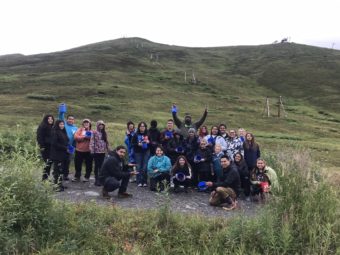
CITC runs youth berry picking outings as part of their addiction prevention services. (Photo courtesy of CITC)

This summer, Cook Inlet Tribal Council took young people out berry picking as part of their addiction prevention programming. 

CITC is a tribal nonprofit that calls itself a “culturally-responsive social service organization.” Dr. Angela Michaud is the organization’s senior director of recovery services.

“With our wild blueberries, we didn’t get enough to make [the jam] for the 50 people that were in the room,” she said. “So we went over to Costco and got some blueberries and mixed it in with the wild blueberries and made our jam that way.”

She said adapting village traditions to a city like Anchorage helps youth tap into their culture to improve their health outcomes and decrease rates of addiction. 

“Anchorage is a huge village,” Michaud said. “It is [about] getting out there and having that feeling of connection.”

A CITC cultural event involves taking youth to pick berries and then gives them a jar to take home to their families. (Photo courtesy of CITC)

Prevention through youth engagement 

CITC has found through surveys that participants are consistently not using substances when they’re doing cultural activities. 

“That’s a five-hour period of time that they can say ‘I didn’t drink, use alcohol or drugs,’ and that they were happy,” Michaud said. 

With these promising outcomes, CITC is using two new federal grants to put Alaska Native cultural education at the forefront of its addiction prevention programs. 

“What we do is we implement culture for healing [to] prevent tobacco, alcohol, substance use and suicide,” Michaud said. 

With some of the money, they’re able to run monthly cultural events targeting Alaska Native youth and their family members.

Chris Delgado is from an Inupiaq family and serves as the prevention supervisor, running these activities for CITC. He grew up in Anchorage.

“I missed some of the cultural activities being raised,” Delgado said. “It’s going to be slowly forgotten if we don’t stop and do something about it. As long as we can engage the youth, then I think we’re in good shape.”

CITC’s prevention activities include more conventional trainings, like how to use the opioid overdose-reversing drug naloxone. But it also offers dance lessons, carving walrus ivory, berry picking, traditional story-telling, ice fishing and fishing with hooligan nets. 

Youth participate in tusk carving cultural activities through CITC’s program. (Photo courtesy of CITC)

These programs aim to boost Native youths’ confidence and teach life skills that the participants can learn and share, Michaud said.

A case for connectedness

A recent paper published in a leading medical journal outlined that adolescents who feel more connected to their community, their peers and their families have up to 66% less risk of substance use. 

Robert Blum from Johns Hopkins University is an expert on adolescent health and the primary author on the paper. He emphasized that studies have long shown that conventional, information-based addiction prevention strategies for youth have no effect on young people – and sometimes even have negative effects. He advocates for treating “young people as resources, rather than problems.”  

CITC has a program that utilizes young people in long term recovery as a resource, hiring them to help teach their peers.

“They’re able to share with others what their experiences were to help them be successful in the program,” Michaud said.

Small details, like offering food options that are part of traditional Native diets, brings these peer communities together.

“People started getting used to eating the salmon, and then this year we were finally able to get them out there to be able to fish for it,” she said. “And they got their own fish and brought it back. It’s just the excitement and the stories that came out of it.”

As a result of this program, she cites a decrease in recidivism rates and an increase in participants completing the program and securing jobs and housing. 

“We don’t want to just survive,” Michaud said. “We thrive [when] we brought this stuff to the table. We were overcoming our adversities, and that has a different feeling to it.”

A flipped model

Michaud says that many prevention programs take a Western medicine curriculum and just add Native words to them. But the CITC team has built its entire curriculum on culture. She says the Western models are secondary.  

“You’re teaching them how to connect with nature and getting people outside—away from distractions, drugs, alcohol and abuses,” Michaud said.

And these events aren’t just one-off get-togethers. Many youth participants join one event and then continue to sign up for others, even getting involved in other programs CITC offers to bolster employment and high school graduation rates. 

One group gathered seeds and planted them in a community garden. Once ripe, the food went to the Alaska Native Health Center so patients could eat traditional foods. 

“And how that relates with our culture is we’ve had so many traumas in the past two, three generations that a lot of the culture has been taken away,” Michaud said. 

She says Indigenous and Alaska Native people led healthy lifestyles for thousands of years, and only in the last few hundred years have had these health issues related to addiction.

“We were okay and then we weren’t,” she said. “And now we just go back to what we know and we’re okay.”

Alaska could see effects of Indian Child Welfare Act challenge heard by Supreme Court

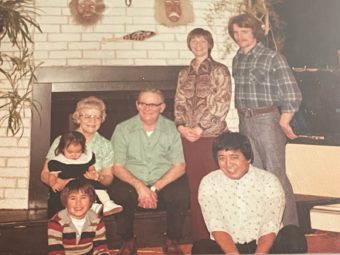
Jennifer Quinto with her family in the 1980s. (Photo courtesy of Jennifer Quinto)

The U.S. Supreme Court heard a case Wednesday that presents a major challenge to the Indian Child Welfare Act.

ICWA, as it is known, is a federal law that allows tribes to make adoption decisions for Native children, to keep them connected to their culture and to keep Native families intact.

The plaintiffs taking their case to the Supreme Court say that’s unconstitutional and racial discrimination.

Community reporting fellow Chen Chen with KTOO has been following the case — called Haaland v. Brackeen — and reporting on what ICWA means to Alaska.

And because Native children represent about 55% of all children in state custody, Chen says overturning ICWA would have huge implications for Alaska. At the same time, Native people only make up a little over 20% of the population, so there’s a disparity, she says, and a feeling that the state hasn’t done enough to implement ICWA to begin with.
Listen:

Editor’s noteThis interview was recorded prior to the Supreme Court hearing Haaland v. Brackeen.

The following transcript has been lightly edited for clarity.

Chen Chen: Yeah, so for my second story on ICWA, I interviewed a tribal court judge. And it seems that from what I’ve spoken to her about, perhaps compared to other states that have better implementation of ICWA, Alaska just hasn’t really been putting in a lot of resources to combat those figures. Not to say that there aren’t obviously many people in the system who are working to change things. But I think it’s especially tough in Alaska, because of shortages and staff and shortages and resources. So here’s how judge Debra O’Gara puts it:

Debra O’Gara: Some states are a little bit better than other states. But right now, Alaska, I would say is not doing so well. Alaska has not followed the spirit or the letter of the law. If it did, there would not be that disproportionality.

Judge Debra O’Gara pictured in 2020. She has spent over a decade working on Indian child welfare cases and directing trainings on ICWA for guardians, case workers and lawyers, in the state and Tribal court systems. (Photo courtesy of Debra O’Gara)

Chen Chen: So one of the things that Judge O’Gara really highlights is that ICWA mandates placement preferences so that resources are put in to keep families together. And then the second choice is to keep kids within their communities. And because a lot of that isn’t happening, Judge O’Gara has these criticisms for the state of ICWA right now.

Casey Grove: Yeah, let’s break that down just a little bit more, too, because there’s a preference to keep kids that are in a — you know, maybe a bad situation, or at least a perceived bad situation by Office of Children’s Services workers or whatever — there’s a preference that if they are going to be removed from a home for their own protection that they’d be then placed with another Native family or even somebody within the same family, right?

Chen Chen: Yes, there’s definitely a preference for placing the children as close to their family as possible, while their parents get time to kind of rehabilitate or figure out their problems. So one of the main things that ICWA tries to do is to help reunite families. So when kids are put into foster care, there’s resources also, that should be put in for the parents, and for the families like grandparents, to be able to take care of the child and improve their abilities as a parent and get help for the different mental and physical things that they need help for.

Casey Grove: Gotcha. Yeah. Obviously, for the children that are in the middle of ongoing cases, their identities are protected, and rightfully so. That’s confidential. But you did speak with somebody who’s a former adoptee, right? And what did she have to say about this?

Chen Chen: Yeah, I spoke to a former adoptee who was adopted in the year that ICWA was passed in 1978. So I think that was a very interesting perspective from someone, because I think a lot of those perspectives are lost when we talk about ICWA. And we talk about it as a theoretical thing, when, for many adoptees, it means a lot, and it’s a very real law for them. Jennifer Quinto was adopted from an Athabaskan family into a multicultural, Tlingit household in Juneau.

Jennifer Quinto: For me and my adoption, it was a big gamble. That law wasn’t in place, and I could have very easily been placed with another family. And how many children are there that didn’t have that protection? And like I said, there were so many adoptees that I met, that I could feel the intensity of the hurt and the anger. And all of that came from the fact that they were, you know, being raised with families that just didn’t understand the complexities.

Various indigenous groups march and dance during a parade Saturday, June 9, 2018, in downtown Juneau, Alaska. (Photo by Tripp J Crouse/KTOO)
Jennifer Quinto marches with various Indigenous groups during a parade at Celebration 2018 on Saturday, June 9, 2018, in downtown Juneau, Alaska. (Photo by Tripp J Crouse/KTOO)

Casey Grove: So she seems to be very much in favor of ICWA, at least the intentions of ICWA, right?

Chen Chen: Yeah, so ICWA has a lot of different actual ways it’s implemented in each state. But I think that from speaking to Jennifer, it seems like no matter what ICWA actually looks like in each state, just having that exist is already saying to her, like, you matter. Adoptees like you matter and your identity matters.

Jennifer Quinto: Who could ever believe that that would be taken away? You know, that’s one of the last things that is keeping our community together in the way that it has. So imagining a world where that doesn’t exist is just too, too painful.

Casey Grove: That’s definitely all interesting. And it’s good to kind of know where ICWA has come from and what the intentions of it are. But we’re here to talk about a very particular lawsuit that you’ve been following, a court case. Tell me about that. Who’s the plaintiff there? Who’s the defendant? What is the change that they’re seeking?

Chen Chen: The U.S. Supreme Court will hear a case called Haaland vs. Brackeen. And the case is trying to say the plaintiffs — including Brackeen and various other states and different parents who are trying to adopt Native children — they’re all kind of getting at how they think that it was not constitutional, because it gives preference to Native families and tribes for Native children over all other kinds of people. And in the lawsuit, they classify that as racial discrimination and violating the Equal Protection Clause. And what’s happening in the Brackeen case is that these parents from Texas who are white, adopted a child who was from a tribe while they were fostering him. And then they got into a lawsuit because they wanted to adopt that kid’s brother. And the problem was the tribe didn’t want to let that child be adopted out of the tribe. And that child’s aunt was very willing and wanted to adopt the kid. And in the end, the Brackeens did get both children but were still not happy with the terms of the lawsuit, which included that the kid had to, you know, visit their grandparents every summer. So basically, they’re the main family that’s involved, are the Brackeens.

Casey Grove: So the U.S. Supreme Court’s about to hear this case, and I guess a decision would be, you know, somewhere down the road from that, but are the people that you’re talking to, do they have guesses about how the Supreme Court might rule on this?

Chen Chen: So the two people that I mainly spoke to both don’t think it’s going to be overturned, because it’s almost too far out of, like, reality for a lot of Alaska Native (people) for ICWA to be overturned. And I think the other thing is that from other articles I’ve read about ICWA, from various perspectives outside of Alaska, it also seems that ICWA would have very far-reaching implications if it’s overturned, because that is saying that tribal sovereignty is just not a thing. Because if they rule that being Alaska Native or being Native American is a racial classification rather than a political classification, that’s a direct threat to tribal sovereignty.

An Alaska Tribal court judge breaks down ICWA’s past, present and future

Judge Debra O’Gara pictured in 2020. She has spent over a decade working on Indian child welfare cases and directing trainings on ICWA for guardians, case workers and lawyers, in the state and Tribal court systems.  (Photo courtesy of Debra O’Gara)

On November 9th, the U.S. Supreme Court will hear Haaland v. Brackeen, a case that challenges the constitutionality and the future of the Indian Child Welfare Act (ICWA).

ICWA was established in 1978 “to protect the best interest of Indian Children” by creating federal standards for removing Native children from their families and making sure Native children were placed in homes that would reflect their culture. 

Judge Debra O’Gara has spent over a decade working on Indian child welfare cases and directing trainings on ICWA for guardians, case workers and lawyers, in the state and Tribal court systems. 

O’Gara, who is Lingít, Yupik and Irish, lives in Petersburg. She and her siblings were raised by a single mom who worked nights as a cocktail waitress.

“In one of the suburban, predominantly white neighborhoods that we lived in, there was twice in my childhood where [Child Protective Services] was called in and an investigation was conducted,” she said. “There were assumptions that we weren’t taken care of because my mom wasn’t home at night. In fact, we actually were taken care of and had somebody staying there with us. We were doing just fine.”

This was before ICWA, and these childhood experiences led O’Gara to carve out a career protecting Native families from unnecessary separation. 

The state of ICWA in Alaska

O’Gara says that some states are better than others at adhering to ICWA. 

“But right now, Alaska, I would say, is not doing so well,” she said. “The state of Alaska has not followed the spirit or the letter of the law.”

More than 20% of Alaskans are Alaska Native or Native American, but about 55% of children in state custody are Alaska Native.

Presiding Judge Debra O'Gara stands in the Juneau courtroom of the Central Council of Tlingit and Haida Indian Tribes of Alaska. (Photo by Ed Schoenfeld/CoastAlaska News)
O’Gara in the Juneau courtroom of the Central Council of Tlingit and Haida Indian Tribes of Alaska in 2017. (Photo by Ed Schoenfeld/CoastAlaska)

O’Gara said that many of these children are eventually adopted by non-Native families and often even removed from Alaska, despite the passage of ICWA.

“So what happens there is the Tribe loses their children,” she said. “And the children lose their connection to their Tribal affiliation. For those of us here in Southeast that grow up in a clan, they lose their identity as a clan, what clan they belong to, what house they belong to, what their Lingít name is or how to name who their relatives are, and that whole belonging and knowing who they are.”

O’Gara pointed to multiple factors that lead to this high percentage of Alaska Native children being removed from their homes. Some of it, she attributes to a lack of training and consistent, skilled staff in the state’s system leading to a backlog of cases in the courts. 

“Training needs to be consistent with every new staff that comes in,” she said.

Without that, she says, staff bias figures into the equation. For instance, part of many Native cultures is having many relatives living under one roof. But for the state, a house with three or four times more people living in it than if it was a non-Native or white house is considered overcrowded. 

In Southeast Alaska, clan members are considered family. 

“And that’s as that’s actually as strong as a blood relation, sometimes stronger,” O’Gara said.

To her, these multi-generational families meant that there were lots more mentoring, opportunities for teaching and sharing childcare responsibilities. 

But, because these familial structures are less common in the U.S., she says, the system often gets concerned about who is taking care of the children in these households. 

“There’s prejudices and assumptions that are made that then lead to the children being removed when they shouldn’t have been removed in the first place,” O’Gara said. “And then once you get into that system, it’s really hard to prove that there’s nothing going on.”

Where ICWA began

Before ICWA, one way Native children were systematically removed from their families was by declaring they were neglected or abused by their parents. Another way is perceived “poverty and lack of parenting by Western standards” says O’Gara.

“There was a great outcry in the 60s and 70s about the continued removal of children,” O’Gara said. “At the same time that this was happening, there were also children being removed from their communities and forced to go into boarding schools, which we in the Native community all know about.”

She added that this was especially devastating to the Native community because much of the culture is based on the land they live on and the ceremonies that are performed with their families.

“The removal of the Native children was just one of the ways to completely annihilate and disappear Native people,” she said.

When ICWA was finally passed in 1978, O’Gara says it recognized that children have the right to know who they are.  

“It also recognized that the Tribe had a legal interest in protecting the Tribe’s children,” she said.

The future of ICWA

Today, ICWA is often considered the “gold standard” for all children by child welfare experts.  

“The other thing that ICWA did is to mandate placement preferences,” O’Gara said. “And the placement preferences, I have always argued, should be universally applied to not just Native children, but to all children who find themselves in the child welfare system.” 

These placement preferences she outlined mean that children removed from their parents would first be placed with family. The next option after biological family is clan family or psychological family, which includes community members and long term friends, she said. 

“Lastly, when all of those [options] have been exhausted, and there’s no placement found, then with an appropriate non-Native family,” she said. “Often in the current child welfare system in Alaska, those first three get skipped over. And there’s efforts to continue to have those systems be improved, so that the first that the preferences can be placed.”

O’Gara believes that parents who are being accused of neglect or abuse of a child need time to seek treatment or help, but in the meantime, children shouldn’t lose their connected to their community or their family. 

The plaintiffs in the Brackeen v. Haaland case say that giving additional support to Native parents and prioritizing Native homes for Native children violates the equal protection clause.

“So one argument I’ve heard is that Native [people] should not be given special treatment,” O’Gara said. “Well, my answer to that is the guidelines should be applied to everybody equally… Because all children also have the right to know who they are, who their family is, where they belong, and some of their family history.”

She thinks that providing active efforts and services for parents and children—like those outlined in ICWA—would “benefit every child in the child welfare system.”

“We’re not just a minority like any group,” she said. “We have a special relationship with the federal government, in that we are sovereign nations.”

There have been many attempts to change or weaken ICWA in various state courts, but she also sees this as an opportunity for states to go in and strengthen ICWA. Washington state, where O’Gara grew up, has extra provisions that protect Indian children more than the federal ICWA does.

“And certainly Alaska is able to do that,” she said. “Ever since ICWA has passed, there’s been political forces that have attempted to eliminate it, and they have not yet been successful. It doesn’t mean that it’s not as strong as it was when we first passed. And at some point, we will be able to turn that tide and get back to strengthening it.”

‘You know who you are’: One Alaska adoptee on why ICWA matters

Jennifer Quinto with her family in the 1980s. (Photo courtesy of Jennifer Quinto)

On Nov. 9, the U.S. Supreme Court is set to hear Haaland v. Brackeen — a case that has been recognized as the most prominent challenge to the Indian Child Welfare Act since its creation in 1978. 

ICWA was established to grant tribal authority for adoptions of Native children in order to preserve Native families and culture. In August, a bipartisan group of 87 members of Congress — led by four senators, including Alaska Sen. Lisa Murkowsi — filed a brief to the Supreme Court in support of ICWA. 

In the case headed to the Supreme Court, several states and individual plaintiffs, including the Brackeen family, alleged that ICWA is unconstitutional and racially discriminatory.

In 1978, right around the time ICWA was passed but before it was actually enacted, Jennifer Quinto was adopted from an Athabaskan family into a multicultural Lingít household in Juneau. 

“For my adoption, it was a big gamble,” she said. “And I could have very easily been placed with another [non-Native] family. And how many children are there that didn’t have that protection?”

Her mother worked for the Alaska Legislature for 30 years, so she was close to many politicians and lawmakers. Some of them worked on the Alaska Native Claims Settlement Act, and some were strong advocates for Native women and children. 

Jennifer Quinto with her mother and brother on a road trip in the Yukon. Photo provided by Quinto.

“I know that myself and my brother both benefited from certain layers of privilege that probably most likely didn’t exist for a lot of other people at the time,” Quinto said.

A sense of survivor’s guilt — for being an adoptee who had the chance to explore her Native roots — has stayed with her. 

“There were so many adoptees that I met, that I could feel the intensity of the hurt and the anger,” Quinto said. “And all of that came from the fact that they were being raised with [non-Native] families that just didn’t understand the complexities [of their identities].”

When she caught up with her childhood adoptee friends, Quinto found out that many of them were struggling with addiction and homelessness. 

“Physically they may have lived, but spiritually and emotionally, absolutely not,” she said. 

Love and family, no matter the distance

From ginger beef and adobo to Jell-O and coleslaw to smoked fish and herring eggs, childhood dinners in Quinto’s family were always a battle over what kind of food would be made. 

Her dad was part of an early Lingít-Filipino generation in Juneau and was raised in a big family. 

In his generation, the state of Alaska would deem certain Native parents to be unfit and would send their children to boarding schools. 

Only immediate family members could intervene, so his mother — Quinto’s grandmother — claimed all her nieces, nephews and distant family members as her biological children so they wouldn’t be sent away. 

Quinto felt that when her parents were looking to adopt, her dad wanted to honor her grandmother and their community. She said that they were “making sure that Native children had a safe family and were being brought back into another Native family.”

Congressional reports supporting ICWA’s establishment in 1978 found that as many as 35% of all Native children were being removed from their families. According to the National Indian Child Welfare Association, “85% of those children were placed outside of their families and communities — even when fit and willing relatives were available.”

Even today, Alaska Native youth are overrepresented in Alaska’s foster care system, at a rate of nearly three times what is proportional and expected

By the time Quinto came into the picture in 1978, the Quinto family’s Native identity had embodied all different representations. 

“We have Afro-indigenous in our family, we have LGBTQ, you know all of these different identities. And as an adoptee looking at my family, it just didn’t even occur to me that families look like each other,” she said.

These experiences gave her a different perspective on what defines family.

“Much in the same way that my grandmother erased those lines of being extended family, it’s created this ability to love people as if they are your immediate family, no matter how distant they are,” Quinto said. 

Staying close to home

By birth, Quinto is Athabaskan with a mix of Inupiaq, Japanese, Lingít and Scottish ancestry. Even with the benefits of being adopted in-state and within the Native community, exploring her identity has been a continual effort for Quinto.

“I’m sure that if there were a placement of a child across the country, they would have a harder time to be culturally connected and understood,” Quinto said. “There’s a lot of people who have the idea that there’s this pan identity for Native people, and yet, it always comes down to the individual. The greater the distance, the the harder it is.”

Quinto shared that many adoptees fear and hide their differences — something she thinks should actually be celebrated. For all families who adopt children, she believes that there has to be support to help adoptees confront their identities and learn about their cultures.  

Today, Quinto is the arts education director for the Juneau Arts and Humanities Council. Her own experiences in the Juneau School District led her to want to change how culture and representation are taught in schools. 

Various indigenous groups march and dance during a parade Saturday, June 9, 2018, in downtown Juneau, Alaska. (Photo by Tripp J Crouse/KTOO)
Jennifer Quinto marches with various indigenous groups during a parade at Celebration 2018 on Saturday, June 9, 2018, in downtown Juneau, Alaska. (Photo by Tripp J Crouse/KTOO)

Now that she has a daughter, she is passing on her stories and lessons of becoming confident in her multidimensional identity. 

“I’ve been insulted with all of the wrong slurs probably at this point,” Quinto said. 

She tells her daughter that “we honor all of the people who have loved us.” 

“You know who you are, you know what you’ve lived and you know your own identity,” Quinto said. “How dare anybody try to challenge that? That’s just somebody telling you that they don’t care about you enough to learn who you are.”

“Intergenerational knowledge, knowing and feeling”

The plaintiffs in the Haaland vs Brackeen case argued that ICWA is unconstitutional because non-Native people were not getting equal treatment to Native people in Native adoptions. 

For Quinto, ICWA was never about race or skin color. 

“When there’s people who say things like ’I don’t see color,’ well, they never outlawed our color,” she said. “They didn’t make us illegal for, you know, anything, but the way we dance, what we sing about, like, our foods. They outlawed our way of life.”

Quinto’s birth mother recently passed away, and she has been piecing together her birth family since then.

When her birth father heard that her birth mother’s funeral was happening, he drove 60 miles to the village and mailed Quinto a program from the services.

“One little excerpt meant everything to me,” she said. “One of the first things the program said was that my birth mom called everyone auntie and uncle, and people really appreciated it.”

Ever since Quinto was little, she always called people around her auntie and uncle. This was one of those moments that she felt like her feelings had to be coming from her ancestors because it wasn’t a value that her adopted family expressed.

“We often talk about intergenerational trauma, but not a lot of talk on intergenerational knowledge, knowing and feeling,” she said. “It’s taken me a lot to understand, but it is there and it is incredibly powerful.”

To Quinto, ICWA helps adoptees like her to stay connected to their identities and communities.

“Who could ever believe that [ICWA] would be taken away?” she said. “That’s one of the last things keeping our community together in the way that it has, so imagining a world where that doesn’t exist is just too, too painful.”

Juneau hospital event raises awareness of the challenges of childbirth and pregnancy

""
Bartlett Regional Hospital, on Aug. 7, 2022. (Photo By Paige Sparks/KTOO)

This Saturday, Bartlett Regional Hospital is hosting a walk/run event to raise awareness for mental health and trauma related to pregnancy and motherhood.

Bartlett’s obstetrics education team began offering monthly support groups for mothers in February of 2021. They call the program “Real Talk.”

Sara Gress, a nurse and educator at Bartlett, said the groups are “dedicated to having some real honest conversation about some of the parts of motherhood that are more challenging and not always discussed in some of the other spaces.”

The support groups are also offered through Zoom, so people outside of Juneau can participate. 

“Even if folks didn’t deliver with us, we’re happy to have them participate and access these resources from their communities,” Gress said. 

According to the Cleveland Clinic, 1 in 7 new parents experience postpartum depression. The National Library of Medicine estimates that up to 25% of known pregnancies end in miscarriage.

For Saturday’s race, Gress said that the race bibs will have a space to show who participants are running or walking in support of.

Juneau’s hospital to end COVID-19 testing and treatment services

Bartlett Regional Hospital 2018 12 01
Bartlett Regional Hospital, pictured here on Dec. 1, 2018, is located at 3260 Hospital Drive in Juneau. (Photo by Jeremy Hsieh/KTOO)

Bartlett Regional Hospital will close its COVID-19 monoclonal antibody therapy clinic on Oct. 24. 

The clinic offered treatments to help prevent serious illness in newly infected, high risk COVID-19 patients. In a press release, the hospital cited a decrease in demand.

“For the entire month of September, we only had 8 appointments filled, and we offer around 48 appointments per month,” Bartlett’s community relations director Erin Hardin said. “We used to have regularly filled appointments.”

Bartlett will continue providing a drug called Evusheld, which helps prevent COVID-19 infections for immunocompromised individuals who are fully vaccinated or haven’t received a COVID-19 vaccine for medical reasons if they aren’t already infected with or recently exposed to the virus. 

In mid-November, the hospital is also getting rid of its drive-through COVID testing site. 

COVID-19 PCR testing continues to be available through SEARHC — free for symptomatic patients and $145 for asymptomatic patients — and Juneau Urgent Care, which is also free for symptomatic patients and $275 for asymptomatic patients. 

Free at-home test kits are still available for free at City Hall, the Juneau Public Health Center, public libraries and the police station.

Correction: A previous version of this article misstated the purpose of Evusheld. 

Site notifications
Update notification options
Subscribe to notifications