Elizabeth Harball, Alaska's Energy Desk
Anchorage businesses grapple with sudden electricity bill increase

27FireIsland_Harball
Bakers at work at Fire Island Rustic Bakeshop in downtown Anchorage. A recent jump in electricity bills has the owner wondering if she’ll need to raise prices. (Photo by Elizabeth Harball/Alaska’s Energy Desk)

At Fire Island Rustic Bakeshop near downtown Anchorage, customers probably don’t make the connection between utility bills and the price of a chocolate chip cookie. But bakery owner Janis Fleischman explained electricity costs are a big factor when she looks at her balance sheets.

“A bakery uses an enormous amount of electricity,” said Fleischman. “We run all kinds of ovens and all kinds of equipment, most of which is electrical. We are manufacturing this stuff from scratch every day.”

When Fleischman heard about a recent electricity rate increase, she started to worry. She said for business owners like her, higher electricity bills can lead to tough choices.

“How do you communicate to a customer that this jump in electrical is going to really affect your bottom line — how do I do that?” Fleischman said. “It’s a hard time. I don’t really want to raise prices on people.”

Fleischman isn’t alone. Many businesses in Anchorage aren’t happy with the sudden increase in electric bills. Some are taking their case to state regulators, while others are trying more creative solutions to cut back on electricity costs.

This spring, Municipal Light & Power raised the energy charge portion of customer bills by over 37 percent, affecting close to 31,000 residents and businesses in the heart of the city. The utility needs to pay off a $300 million power plant that started operating in East Anchorage last year, called Plant 2A.

ML&P says the new plant is more reliable and efficient. By July, the more efficient power plant will mean a different line item on customers’ electric bills — fuel cost — will go down. ML&P claims the total customer bill will increase by an average of 19 percent.

But ML&P General Manager Mark Johnston acknowledged it’s not surprising many customers weren’t sure what happened when they opened their latest electric bill.

“I know that it can be extremely confusing because of the timing of the various components of it,” said Johnston.

To further complicate matters, the state regulator that approves electric rate increases hasn’t given ML&P a final thumbs-up on how much it can increase rates. Instead, the Regulatory Commission of Alaska in February approved what’s called an “interim and refundable” rate increase. That means that over the next year, the commission will hold hearings on ML&P’s plan to raise electric rates and won’t make a final decision until March 25, 2018.

As an example, Johnston says the state ultimately could decide then that ML&P’s rate went up by a dollar more than it should have.

“If [on] March 25, they send out an order and they say, ‘you know what, you shouldn’t have been able to collect the dollar,’ then for every dollar that we collected, we have to give it back to the customers,” said Johnston.

Meanwhile, some organizations grappling with higher electricity bills are taking their case to the state. As part of the rate case, the commission will hear from several big electricity buyers. including real estate firm JL Properties and the Alaska Native Tribal Health Consortium, which reported to the commission that the new rate will increase its electricity payments by more than $800,000 this year. Providence Health and Services, which operates the largest hospital in the state, is also intervening in the case. In an emailed statement, Providence said their electricity bill has already increased from $3.6 million in 2012 to almost $6.9 million in 2016.

Assemblyman Patrick Flynn, who represents downtown Anchorage, said the situation highlights several larger issues with Alaska’s electric utilities. Under current regulation, utilities can build a new power plant and then ask the state to raise rates to pay for it, instead of getting approval to build the power plant in the first place. Then, Flynn said, there’s no easy mechanism for utilities to slowly ramp up rates to prepare for big capital costs like a power plant.

“It’s a source of frustration for me because it creates these rate shocks that were really unnecessary if it had been better planned for,” said Flynn.

Finally, Flynn said coordination between all six power companies serving Alaska’s Railbelt — an unusually large number of utilities for a relatively small population — would make the whole system more efficient and lower customer bills. ML&P and two other Anchorage-area utilities are moving in that direction, but a final agreement between all six utilities isn’t likely to happen soon.

As all this plays out, Fire Island’s Fleischman isn’t waiting for outside forces to help lower her electric bill. Fleischman is planing a new expansion to one of her bakeries and recently decided to add solar panels.

NOTE: This post has been updated to clarify that the rate increase is not yet finalized and that the RCA hasn’t issued a final order on the specific amount of the rate increase.

Huge fine issued for dangerous incident at Anchorage power plant

ML&P_Harball
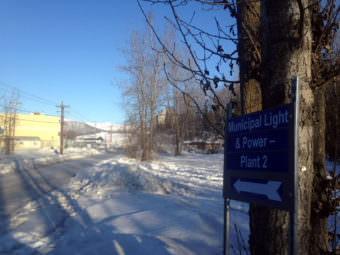
A sign points to ML&P’s newest power facility in East Anchorage. (Photo by Elizabeth Harball/Alaska’s Energy Desk.)

The state is fining three companies a combined $882,000 for violations that led to a dangerous incident last September at a power plant in East Anchorage.

The companies were involved with construction of Municipal Light & Power’s Plant 2A, which started operating last year.

Greg Cashen, deputy commissioner for the Alaska Department of Labor and Workforce Development said it’s one of the biggest fines he’s ever seen:

“$882,000, yeah, that’s not an everyday occurrence,” said Cashen.

The state reported that on Sept. 17, 2016, the plant’s steam piping system experienced violent shaking and high pressures after a contractor removed a pressure release valve.

Municipal Light & Power asked the contractors to shut the system down, according to the state. But the operators — working for the Houston-based company Universal Energy — delayed taking action. As a result, Municipal Light & Power evacuated their employees. The pressure relief valve wasn’t reinstalled for almost a week, Cashen said.

Universal Energy is being fined $182,000 for the incident. The state also fined companies Price Gregory International and Quanta Power Generation, both also based in Houston, a combined $700,000.

Because they evacuated the site safely, the state says Municipal Light & Power is not being fined.

Cashen said the investigation is ongoing, and that the companies can contest the fines.

Update | April 6, 5:30 p.m.
In an emailed response, Universal Energy called the state’s initial report of the event “dramatically overstated,” adding “safety is a priority in all our project work.” The company claimed it reached a settlement with the state, “with a significant reduction in citations.” The state was not yet able to confirm a settlement was reached.

Will a Texan-Australian partnership bring the ‘shale revolution’ to the North Slope?

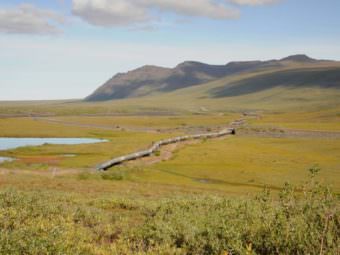
Conventional oil is what’s traditionally flowed through the Trans-Alaska Pipeline. But some companies hope to bring shale oil into the mix. (Photo courtesy the Center for Land Use Interpretation)

Amid a wave of new oil discoveries in Alaska, other companies are hoping to get lucky, too. And in pursuit of the next billion-barrel find, two companies from Texas and Australia are trying something a little different.

After the State of Alaska’s oil and gas lease sale in December, Burgundy Xploration CEO Paul Basinski offered this explanation for the name of his big North Slope project.

“Everything we do is about wine,” said Basinski. “That’s why it’s called Icewine. Because it’s cold up here, and I like German ice wine”

At the lease sale, held in Anchorage, Texas-based Burgundy and its Australian partner, 88 Energy, picked up hundreds of thousands more acres on the North Slope to pursue Project Icewine. Basinski was thrilled with the results.

“We’ve now tied up what we believe to be very much of a world class shale play,” said Basinski.

That’s what Project Icewine is all about — finding a world-class shale play in the Arctic.

Unlike conventional oil discoveries like Prudhoe Bay, shale oil is harder to recover, requiring technology like hydraulic fracturing to get it out of the ground. But improvements to horizontal drilling and fracking techniques led to the recent oil and gas boom in the lower 48. Now, Basinski hopes to bring the shale revolution to Alaska.

“We believe that this is the future of the Arctic,” said Basinski.

Paul Basinski, founder of Burgundy Xploration. (Rachel Waldholz/Alaska’s Energy Desk)

According to the Alaska Department of Natural Resources, only one other company holds leases to pursue shale oil on the North Slope, Great Bear Petroleum. That company has been working to develop their leases since 2010, but hasn’t drilled there for several years, the state reports.

But this week, 88 Energy announced they’ve started setting up a rig on the North Slope to drill a second well for Project Icewine. According to a recent 88 Energy presentation, the company thinks its leases may hold between 1.4 and 3.6 billion barrels of oil.
In an interview with financial news outlet Proactive Investors last month, 88 Energy Managing Director Dave Wall said the well will help them figure out if there’s enough accessible oil to make the project commercially viable.

“It is crunch time. Icewine 2 is a well that’s designed to do a production test of our main play in our Alaskan asset,” said Wall. “Really, this is the key event in terms of unlocking the value of this play.”

88 Energy hopes to begin flow testing the well by June or July. Shortly after, the companies may know if they’re sitting on the Arctic oil shale play of their dreams.

But proving the oil is there is just the first step. Former Alaska Department of Natural Resources Commissioner Mark Myers explained there’s a big reason the shale oil boom hasn’t hit the North Slope already: cost.

Myers said fracked wells “produce at high rates initially but then decline very rapidly, which means you have to go back in and drill more wells.”

“Shale development requires a much higher density of well bores than most conventional drilling. And that’s more money, more pads, more roads and infrastructure,” said Myers.

This becomes a big issue on the environmentally sensitive North Slope, Myers said, where companies must make costly investments on infrastructure like like ice roads to protect the tundra.

Another challenge is that fracking requires lots of water and a way to dispose of that water once its been used. Neither would be easy or cheap where Project Icewine is located.

Although its main target is shale oil, 88 Energy has hinted it’s possible they’ll find conventional oil in Project Icewine territory, too.

Myers said if the companies can get at the easier-to-recover oil, their unconventional pursuit is more likely to pencil out.

State fines Hilcorp an additional $160K for violations

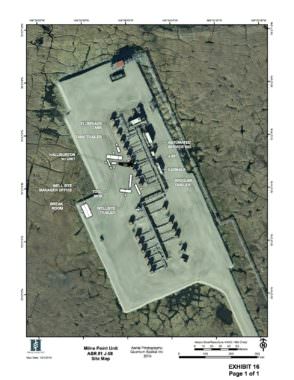
In September 2015 three men nearly died at Hilcorp's Milne Point Unit on the North Slope, after the trailer they were working in filled with nitrogen. (Image courtesy of AOGCC)
In September 2015 three men nearly died at Hilcorp’s Milne Point Unit on the North Slope, after the trailer they were working in filled with nitrogen. (Image courtesy of AOGCC)

The state is fining oil and gas company Hilcorp an additional $160,000 for using nitrogen without permission while working on two wells in 2015 — the same practice that nearly killed three North Slope workers.
Earlier this month, the Alaska Oil and Gas Conservation Commission (AOGCC) fined Hilcorp $200,000 for the worker safety incident, which also happened in 2015.

During that incident, the unauthorized use of nitrogen instead of water during a well clean-out caused three contractors to lose consciousness at a well site at Hilcorp’s Milne Point Unit.

In an emailed statement, Hilcorp spokeswoman Lori Nelson said the company has changed its safety practices in response to the incidents. She added Hilcorp doesn’t agree with all the Commission’s findings, but also the company doesn’t plan on appealing the latest fines.

Hilcorp is also responsible for an ongoing natural gas leak from a pipeline fueling oil platforms in Cook Inlet. The company says it can’t fix the leak until sea ice in the Inlet subsides.

Italian company submits plan to drill for oil in the Arctic

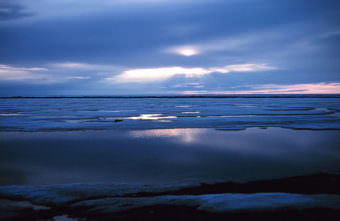
Melting ice of the Beaufort Sea near where Eni hopes to drill for oil. (Photo courtesy NOAA)

Italian energy company Eni this month submitted an exploration plan to drill for oil in federal waters in the Beaufort Sea.
Last November, the Obama administration removed the Arctic Ocean from new oil and gas leasing for five years, but Eni secured its leases before that decision was made.

The company currently holds 75 leases in federal waters in Beaufort and Chukchi Seas, according to its website.

Eni has already built a man-made gravel island four miles offshore in state waters. Drilling would extend from the island into federal waters.

The Bureau of Ocean Energy Management is reviewing the exploration plan. If the federal agency deems the plan complete, it will begin a 30-day comment period before approving it.

Texas company Hilcorp is also moving through the regulatory process to drill for oil in federal Arctic waters from a gravel island it aims to build six miles offshore in the Beaufort Sea. The company says it could ultimately produce about 60,000 barrels of oil per day.

State hopes environmental monitoring will clear up unknowns about Cook Inlet gas leak

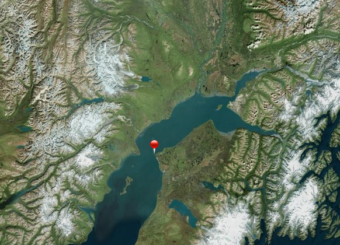
Location of a natural gas leak taking place from a pipeline owned by Hilcorp in Cook Inlet. (Image courtesy Alaska Department of Environmental Conservation/NASA)

State regulators have given preliminary approval to Hilcorp’s plan to monitor the environmental impacts of the gas leak in Cook Inlet.

Hilcorp, the biggest oil and gas producer in the Inlet, owns a gas line that’s now leaking as much as 215,000 cubic feet per day. The leak is coming from an underwater pipeline that fuels offshore oil platforms and has been ongoing since December.

Heavy ice in Cook Inlet means its currently too dangerous to send divers to fix the leak.

Geoff Merrell of the Alaska Department of Environmental Conservation said the monitoring will help the state learn how big of a risk the leak actually poses to the environment.

“On the one hand, there’s people with an environmental and wildlife interest saying, you know, ‘the risks to wildlife are too great, you have to shut the pipeline in,'” said Merrell. “And a different viewpoint is that of Hilcorp, which is saying, ‘no, actually, the risks are quite small, the impacts are quite small.'”

A federal agency, the Pipeline and Hazardous Materials Safety Administration, would make the final call on whether to shut down the line.

Hilcorp confirms shutting down the gas line could forever halt oil production from the affected platforms. The company also says shutting it down could result in an oil spill because the line used to carry oil. Environmental groups dispute that claim.

Meanwhile, Merrell says collecting water quality data near the gas leak is especially important.

“We know that methane displaces oxygen in the water column,” said Merrell. Monitoring will help explain “to what extent is that occurring and to what extent is that occurrence impacting or potentially impacting fish and other aquatic species in the water column,” Merrell said.

Hilcorp also will monitor for air quality, the presence of fish and wildlife and underwater noise caused by the leak.

According to Hilcorp, collecting this data will help explain if the leak is affecting Cook Inlet beluga whales, which are listed as endangered. The leak is happening within the whales’ critical habitat.

Neither Hilcorp nor the state could predict when ice conditions will allow divers to fix the leak.

Site notifications
Update notification options
Subscribe to notifications