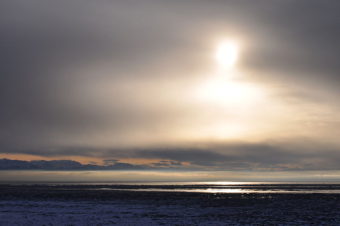
Chunks of ice float in Cook Inlet on Dec. 13, 2016 near Kenai, Alaska. (Photo by Rashah McChesney/Alaska’s Energy Desk)
A state agency on Tuesday announced it is fining an oil and gas company that operates in Cook Inlet for major safety violations.
The Alaska Oil and Gas Conservation Commission, or AOGCC, is imposing a $446,000 penalty on Cook Inlet Energy for operating a well with failed safety valve systems. The valves prevent fluid from escaping an oil or gas well and can help guard against a blowout.
The commission reports that in late 2013, a surface safety valve at one of the company’s wells failed to work when tested. The company operated the well for 42 days despite the faulty valve.
During a test a few months later a different safety valve also failed. Cook Inlet Energy continued to operate the well for several weeks after that failed test, as well. The commission originally proposed a penalty of more than $800,000, but the fine was reduced after a multi-year review.
The incidents did not harm the public or the environment, the commission reports.
Cook Inlet Energy was a subsidiary of Tennessee-based Miller Energy Resources, both of which filed for bankruptcy in 2015. Cook Inlet Energy has since reorganized and it and its parent company now operate under the name Glacier Oil & Gas.
Glacier Oil & Gas CEO Carl Giesler said the company acknowledges the violations took place. But Giesler, who joined the company after the incidents, said Glacier is now under new leadership that prioritizes safety.
“We are trying to play by not only the spirit, but frankly, the letter of the law,” Giesler said. “The AOGCC is trying to do their job and we’re trying to do ours in concert with them.”
“I think we’ve built a pretty decent track record — I have to say an enviable track record — for the two-plus years this management team has been in place,” Giesler added.
Late last year, Cook Inlet Energy filed an application with the U.S. Army Corps of Engineers to drill an exploration well in Cook Inlet. Giesler says the company is also completing four new production wells in Cook Inlet this spring.
Local environmental group Cook Inletkeeper is calling a gas leak in Cook Inlet a “serious risk.” (Creative Commons photo by Paxson Woebler)
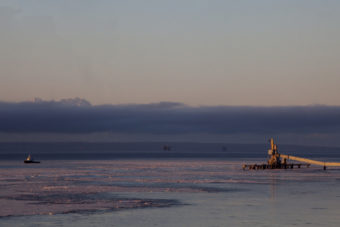
A local environmental group is calling on regulators to shut down a leaking gas line in Cook Inlet until it is repaired. The leak, first reported by the Alaska Dispatch News, is coming from an 8-inch gas pipeline owned by Hilcorp. In the report, Hilcorp characterized the leak as “low risk” and said the appropriate response agencies were notified. But in a letter sent to regulators Friday, Cook Inletkeeper accused both Hilcorp and Cook Inlet Spill Prevention and Response, Inc. of downplaying the incident.
Cook Inletkeeper’s Bob Shavelson called the leak a serious environmental threat.
“Dealing with the oil and gas industry in Cook Inlet, whenever there’s a leak, it’s always minimized at first,” said Shavelson. “That’s what I believe we saw here, and I think the reality is you’ve got a sizable risk and it needs to be addressed.”
Todd Paxton, general manager of Cook Inlet Spill Prevention and Response, Inc., said he maintains the leak is low risk, emphasizing it is not a liquid spill. Paxton added that Hilcorp is “aggressively” seeking a solution to the issue.
Hilcorp did not to return a request for comment in time for publication.
The Alaska Department of Environmental Conservation (DEC) said it could not provide an estimate for the size of the leak at this time.
“The platform itself is not in our jurisdiction, as we do not regulate natural gas, only liquid products,” DEC spokeswoman Candice Bressler said in an email. “That said, we continue to interact with Hilcorp to gather information on this situation in case of any environmental impact.”
According to DEC, the leaking pipeline runs from Nikiski to an offshore platform, which was built in 1964. Hilcorp first reported the leak to DEC on Feb. 7.
Based in Texas, Hilcorp is relatively new to Alaska. Over the last five years, it has become the largest natural gas producer in Cook Inlet. State regulators recently hit Hilcorp with a series of fines for safety and environmental violations.
Cook Inlet oil platforms are visible from shore near Kenai, Alaska. (Photo by Rashah McChesney/Alaska’s Energy Desk)
The agency that oversees oil and gas drilling in the state says it doesn’t collect nearly enough money to clean up wells in case companies walk away. Regulators say the recent influx of small, private companies means Alaska risks shouldering the cost of abandoned wells. State lawmakers are receptive to addressing the issue.
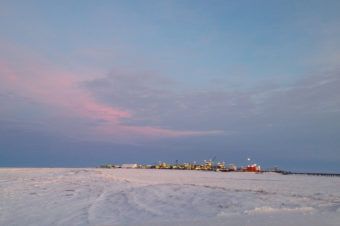
Cleaning up after an oil or gas well in Alaska isn’t cheap. Normally, the company that drilled the well is responsible for plugging it up. But if the company goes bankrupt and can’t pay, the state of Alaska foots the bill. So Alaska requires companies to hand over a $100,000 to $200,000 bond before they start drilling — kind of like a security deposit.
But according to Cathy Foerster, who chairs the Alaska Oil and Gas Conservation Commission, that’s not nearly enough money.
“The bonding that operators have for well liability in the state of Alaska is woefully inadequate,” said Foerster.
Foerster estimates it can cost up to $20 million to clean up a well in Alaska, due to the remote, challenging drilling environment. Foerster said for a long time, bonding wasn’t a big issue because Alaska was dominated by huge, public oil companies — the state wasn’t worried about Exxon not having the cash to clean up wells, for example.
But new tax incentives attracted a wave of small, private oil and gas companies. That’s when Foerster started to get nervous.
“It’s a whole different playing field,” said Foerster. “We have little companies that we don’t know what their capability for liability coverage is and when they might just disappear in the night.”
Last year, two companies operating in Alaska — Aurora Gas and Linc Energy — went bankrupt. According to state data, there are currently 33 wells owned by Linc and Aurora that state inspectors haven’t yet confirmed are properly plugged and abandoned. Some of the 33 wells are still producing, but they need to be cleaned up at some point.
Foerster said if bankrupt companies can’t pay for cleanup and the bond doesn’t cover the cost, Alaska ends up paying.
“So we’re leaving the citizens of Alaska with the liability to clean up all these messes if we don’t get a bigger bond,” said Foerster.
This week, Foerster is in Juneau to talk to lawmakers. Anchorage Democrat Andy Josephson, who co-chairs the House Resources Committee, was alarmed when he heard what Foerster had to say.
“It’s not enough — the bonds are not enough,” said Josephson. “And I’m sort of amazed that we would set up a system where companies could either walk away from a lease or declare bankruptcy and we’re left holding the bag.”
The Oil and Gas Conservation Commission doesn’t need a new law to raise the bond amount. But Josephson said lawmakers might consider adding language in the recently introduced oil and gas tax bill, House Bill 111, to address the issue. Republican Senator Cathy Giessel, who chairs the Senate Resources Committee, also heard from Foerster this week.
“Her concern is probably a justifiable one — $200,000 isn’t a lot,” said Giessel.
Giessel says she’s not sure the legislature needs to get involved. The senator said she will rely on the Oil and Gas Conservation Commission’s experts to take the lead on the issue.
Kara Moriarty, who advocates for industry as head of the Alaska Oil and Gas Association, said she wasn’t surprised the issue came up and that the industry is willing to discuss a fix. But Moriarty wants to make sure the bond amount doesn’t become a barrier.
“We need to make sure that…it does not prevent a smaller company from entering the market or being dissuaded from investing in Alaska,” said Moriarty.
Foerster said she’s not sure how much more companies should pay in bonds. She suggested it’s possible it could be flexible depending on the company and the project.
ConocoPhillips’ Alpine facility on the North Slope. (Photo by Elizabeth Harball/Alaska’s Energy Desk)
ConocoPhillips on Thursday announced it netted $115 million in Alaska last quarter — almost double what it earned in the third quarter. But the Houston-based company is still grappling with a multi-billion-dollar global loss.
The increase in Alaska was largely due to rising oil prices and increased production, according to company spokeswoman Natalie Lowman.
Last year, Conoco brought in $319 million in Alaska, compared to just $4 million in 2015. The company is still facing tough times globally; as a whole, it reported a $3.6 billion loss in 2016.
However, multiple financial news outlets reported the company’s overall results were better than expected. In 2015, the company reported a $4.4 billion global loss.
In an earnings call with investors Al Hirshberg, ConocoPhillips’ executive vice president for production, drilling and projects, said the company thinks things are looking up in Alaska, in particular.
“Only a few years ago this segment was in decline and we’ve now turned a corner,” Hirshberg said. “Alaska continues to be a very productive area for us.”
Hirshberg talked up the company’s recently-announced Willow discovery in the National Petroleum Reserve-Alaska. When developed, the company estimates the find could produce 100,000 barrels per day.
At state and federal lease sales held in December, Conoco picked up close to 740,000 more acres near the discovery.
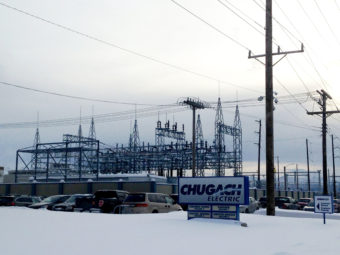
Chugach Electric in Anchorage is one of three utilities announcing a preliminary agreement to work together to reduce power costs. (Photo by Elizabeth Harball/Alaska’s Energy Desk)
Three electric utilities serving the Anchorage area — Chugach Electric Association, Municipal Light & Power and Matanuska Electric Association– on Monday announced a preliminary agreement to work together to provide lower-cost power.
Though not finalized, the agreement makes it easier for the electric utilities to buy power from each other when it’s cost effective.
Speaking at a press conference, Matanuska Electric Association CEO Tony Izzo likened it to being able to choose a vehicle based on road conditions:
“If I have to commute up a mountain, I’m going to take the four-wheeler. If I have to run down the clear highway, I’m going to take the most fuel-efficient vehicle,” Izzo said.
The utilities estimate the agreement could jointly save $12 million to $16 million a year in costs. However, they said it’s too early to know how big of an impact this will have on electric bills.
“As the utilities project millions of dollars in annual savings from reduced fuel, and operation and maintenance costs, we believe ratepayers will save money,” Chugach Electric Association spokeswoman Julie Hasquet said in an emailed statement. “We don’t know how much yet, as we have to see how the pool works going forward and what the other associated costs of doing business are at any given time.”
The announcement comes over a year after the Regulatory Commission of Alaska (RCA) wrote a letter to the legislature saying the current Railbelt electric system “does not deliver the maximum benefit possible to ratepayers.”
The agreement announced today begins to address some, but not all, of RCA’s recommendations. For example, the commission said all six electric utilities serving the region stretching from Homer to Fairbanks should coordinate, not just the three utilities in the Anchorage area.
However, at least one other electric power provider in the Railbelt, Golden Valley Electric Association, has been in discussions surrounding the agreement. It is possible for other utilities to join.
Golden Valley “is pleased that the southcentral Alaska utilities were able to reach this agreement and enjoy even more economic dispatching benefits,” GVEA President & CEO, Cory Borgeson, said in a statement. He added, “this is a distinct advantage for GVEA, and we look forward to working with all the Railbelt utilities in 2017.”
RCA Chairman Bob Pickett said more details need to be worked out, but he views today’s announcement as a good first step.
“The utilities have voluntarily come to this agreement amongst themselves and the Commission, I believe, will be very supportive of this effort,” said Pickett.
The RCA needs to approve any final agreement the utilities reach. The utilities don’t expect to submit one to RCA until 2018.
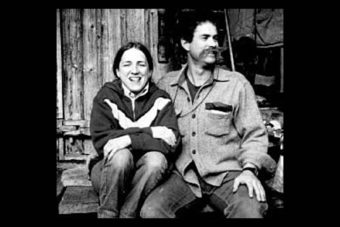
Lynette Robers and Steve Ulvi in front of their homestead in Yukon-Charley. (Photo courtesy Steve Ulvi/Project Jukebox)
When writer John McPhee arrived on the Yukon River in the mid-1970s, he encountered men and women living as far from civilization as they could manage. He profiled many of these people in the third section of his book, “Coming into the Country.”
One of the people McPhee met during this time was Steve Ulvi. For a decade beginning in 1974, Ulvi and his soon-to-be wife Lynette Roberts lived hundreds of miles from the nearest city in a cabin they built near the Yukon River. When asked how they did it, the couple answered without hesitation:
“Stubbornness,” said Roberts.
“I was going to say the same thing,” said Ulvi.
The two arrived in Alaska when Ulvi was just 23, and Roberts, 25. They were college dropouts and hippies — although they prefer the term “counterculturalists.” Inspired by the works of Henry David Thoreau, Edward Abbey and Dick Proenneke, Ulvi envisioned a simple life connected to nature.
Roberts had no such vision — but she was in love with Ulvi.
“I wasn’t going to let him go alone,” said Roberts. “If I was welcome, I was going to go.”
Things weren’t easy at first. They scraped by in a 15 by 15 cabin with Ulvi’s brother. There weren’t as many animals to hunt as Ulvi had guessed. And, Ulvi said, there was something else about the country they weren’t entirely prepared for:
“Winter is the dominant feature and it drives everything else,” said Ulvi. “That was something that no matter how much you might read about it or how much you might think about it, there’s nothing that prepares you for that, day in and day out.”
That first unglamorous winter — broke, cold and sick of being the only woman around — Roberts got fed up and left. She ended up in Tok, not having the money to go further, and picked up work at a cafe. But after getting a little space and time to herself, she went back.
“I think Steve was quite shocked to see me because he thought I was gone for good. But it just didn’t seem right that I would leave for good,” said Roberts.
Over the next ten years, the couple learned to trap, planted gardens, built up a dog team, and made their own clothes. Eventually, they had two children. Roberts said living in the bush made them a stronger family. Over the years, she came to love living there as much as Ulvi.
“It became my life, and I was there because I really wanted to be there, not just because that’s where I was,” said Roberts.
John McPhee encountered Ulvi and Roberts two years after the couple’s arrival, when they were just getting the the hang of things. In “Coming into the Country,” McPhee introduces Ulvi as a “cinematically handsome man” helping another river dweller, Dick Cook, load up a canoe with supplies. It was spring, and the Yukon was roiling with giant chunks of ice. McPhee was standing on the riverbank when the two shoved off — and watched as a massive ice floe hit their canoe:
“Blood ran out of Cook’s face. His skin became as pale as the floes in the river. If more ice were to strike the canoe now, it could crumple it up like an aluminum can. Ulvi wrenched the bow free and shoved the canoe backward. Once more it floated among the ice,” the book reads.
When he reflects on his near-death experience in the icy Yukon, Ulvi said McPhee played a bigger role in the scene than the book lets on.
“Dick Cook loved to talk and, of course, McPhee’s job was made easier the more somebody talked,” said Ulvi. “So I’m in the bow, [and] McPhee and Cook were talking and talking and talking. I think that what happened is that Dick just got a little frustrated and just kind of gave us a little shove with his paddle and we slid down the ice floe into the water at exactly the wrong time.”
Even though McPhee’s reporting nearly saw Ulvi meet a frigid end, he is full of praise for “Coming into the Country.”
“He captured it exquisitely. I just can’t say enough about how well he did at capturing those feelings, and that sense of change,” said Ulvi.
Ulvi only gets a few mentions in “Coming into the Country,” but he was swept up in the changes McPhee chronicled in his book. In the 1970s, oil started flowing down the Trans-Alaska Pipeline. Soon after, Congress inked the Alaska National Interest Lands Conservation Act.
“I call that the great partitioning of Alaska, occurred in the ’70s and into [19]80,” said Ulvi. “And in some ways, I also feel that that was the end of old Alaska.”
Many of the “river people” McPhee had profiled found themselves living in a National Preserve. After years of successfully avoiding government interference, they started to receive trespass notices and began clashing with federal officials. At first, Ulvi and Roberts stayed out of it because they had settled, with permission, on Native land.
But in 1981, Ulvi took a job as a park ranger for Yukon Charley National Preserve, and so began, he said, “many years of controversy, of not being able to attend local parties without the topic coming up.”
People who had built cabins on federal land now needed permits to live there; those permits were gradually phased out. Hunting and trapping were allowed to continue, but new rules and limits were enforced. Ulvi said he understands why some people were upset and he doesn’t agree with how all of the regulations were carried out. But in the end, he also doesn’t think the Park Service deserves all the animosity it got.
“I’ve often said, you know, you can get in more trouble stepping on a person’s dreams than you will stepping on their reality,” said Ulvi. “And Alaska is a dream landscape.”
Because the area is a National Preserve, Ulvi said, that dream landscape has been protected. Today, visitors can come to Yukon-Charley National Preserve, take a canoe down the river, and enjoy a wilderness that’s mostly unchanged from when Ulvi and Roberts arrived in 1974.
And, Ulvi said, that’s something to be proud of.
Close
Update notification options
Subscribe to notifications
Subscribe
Get notifications about news related to the topics you care about. You can unsubscribe anytime.