Elizabeth Harball, Alaska's Energy Desk
Freezing temps mean it’s time to clean up the legacy wells on the North Slope

BLM_abandonedwell
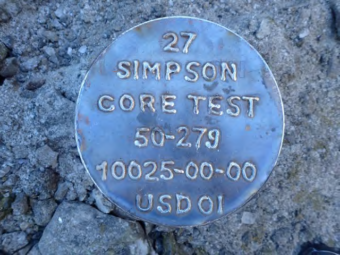
Abandonment well marker in the National Petroleum Refuge-Alaska completed by the Bureau of Land Management last winter. (Photo courtesy BLM)

As the cold winter months hit the North Slope, the Bureau of Land Management (BLM) is heading back out to plug four old wells in the National Petroleum Reserve-Alaska. The agency hopes the process goes more smoothly this time around.

Decades ago, the Navy and the U.S. Geological Survey drilled 136 holes, now known as legacy wells, in the National Petroleum Reserve-Alaska to explore the region’s oil and gas potential. The Bureau of Land Management now oversees the reserve and is responsible for cleaning up 50 of those wells because they could leak. That process has become a big headache.

“You have a short window of opportunity to do it and it’s very expensive,” said Stacie McIntosh, who manages BLM’s Arctic Office.

BLM has $50 million in hand to clean up the wells, but McIntosh explains the agency can only get to the holes during winter to protect the tundra’s permafrost. McIntosh says some of the wells are becoming more of a risk as time goes on.

“For most of them, they’re in a stable condition,” McIntosh said. “A lot of them, though, just have plugs that rely on ice and other things down in the well bore. And as we know, there’s the potential to be deep thaw, etc., associated with climate change.”

But climate change hasn’t been the only issue. This spring, the Alaska Oil and Gas Conservation Commission (AOGCC) sent BLM several violation notices. The state said the federal agency didn’t follow approved procedures when it attempted to clean up some of the wells. BLM said the incidents didn’t cause environmental damage but Sen. Lisa Murkowski wrote a letter to Interior Secretary Sally Jewell calling the incident “inexcusable.”

Commission Chair Cathy Foerster says the state has more confidence in BLM this time around.

“The AOGCC is optimistic that this season’s legacy well cleanup will go better than last year’s,” Foerster said. “We’re committed to working as cooperatively with the BLM as they will allow us to. We’re hopeful that they’ll be more successful this season in cleaning up the messes out there.”

This winter, BLM will return to one the wells they weren’t able to properly plug last winter: Iko Bay No. 1. But another one of the wells the Commission faulted BLM for, the Simpson Core Test 26 well, isn’t going to be worked on this winter.

“After beginning work on this well last winter and multiple attempts to set the surface plug, it did not work. So we’re going to have to go back and figure out a new approach,” said Nicole Hayes, BLM’s Legacy Wells project coordinator.

BLM has cleaned up 16 wells so far. Hayes said the agency hopes to complete up to five more “in the near future.”

Oil industry prepares to fight to keep tax credits alive in 2017

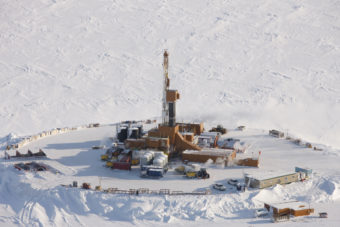
Caelus Energy's Smith Bay rig. Caelus CEO Jim Musselman says tax credits are needed to help develop the find. (Image courtesy Caelus Energy)
Caelus Energy’s Smith Bay rig. Caelus CEO Jim Musselman says tax credits are needed to help develop the find. (Image courtesy Caelus Energy)

When Gov. Bill Walker released his state budget last week, the phrase “oil and gas tax credits” was notably absent from the announcement. But that doesn’t mean it won’t be a hot topic this year. Lawmakers in the new House majority coalition say the current oil and gas tax credit structure is unsustainable, and they’re working on a bill to change it.
The oil industry is trying to keep the tax credits alive, but it’s not going to be an easy fight.

When it comes to oil tax credits, Jim Musselman said he feels like a character from the Sunday comics.

“Lucy’s holding the football for Linus to kick it and then he gets up there and she pulls it back and she does it time and again and poor Linus keeps trying to kick it and she keeps pulling it back,” Musselman said. “That’s kind of the way we feel, we kind of feel like we’re Linus.”

(For Peanuts sticklers out there, he means Charlie Brown.) Lucy, in this analogy, is the state of Alaska. Musselman, as Charlie Brown, leads the oil company Caelus Energy. Caelus estimates it will have earned close to $200 million in tax credits by spring. But last summer, citing the state’s budget crisis, Walker vetoed $430 million in oil tax credits.

Musselman said the promise of those credits was a big reason a small company like Caelus came to Alaska to explore for oil. That’s exactly what the current tax credit system was designed to do, given the dwindling flow of oil down the pipeline. This fall, Caelus announced it has found 2 billion barrels of recoverable oil in waters off the North Slope. Musselman said Caelus needs the credits to move forward.

“We lived up to our end of the bargain so first and foremost we need to be paid what we’re owed,” Musselman said.

But that may not happen any time soon. When Gov. Walker released next year’s budget, he appropriated the statutory minimum, $74 million, to pay back oil tax credits. All told, the state estimates it will owe oil companies about $650 million by June. The governor’s position is the state needs pay off the credits companies earned eventually, but Alaska needs to solve its budget problem first.

Brad Keithley, president of Alaskans for Sustainable Budgets, said the state should ask itself two questions when it thinks about whether to keep letting oil companies earn credits.

“One is: Do we really need to have that sort of reimbursable tax structure to make these projects go forward? Is that really necessary?” Keithley said. “And the second one, and frankly the one I focus on a lot, is whether it’s a good deal for Alaskans.”

Keithley said for something like Caelus’ Smith Bay development, the state could be on the hook for billions of dollars in tax credits before any oil is produced. He said Caelus’ big oil find is promising, but not 100 percent guaranteed. That means there’s a chance all the money due in tax credits won’t result in more oil in the pipeline. Some lawmakers agree with Keithley; they think the state can’t afford to promise credits to companies any longer.

“We know that we want to keep the industry active, but also we can’t be cutting essential services or taking PFDs to pay off unsustainable credits,” said Democratic Rep. Geran Tarr.

Tarr is the incoming co-chair of the House Resources Committee. She said the governor may introduce legislation to change the oil and gas tax credit system, but House Democrats like her are also working on their own bill to retool the credits.

Neither bill will just slip by Republican lawmakers. Cathy Giessel, who chairs the Senate Natural Resources Committee, said the fact that Alaska isn’t paying back credits that oil companies earned is bad for the state’s economy.

“Fundamentally, we are viewed as an unstable regime in the world because we keep changing our tax policy,” said Giessel. “So, it’s going to have to be a pretty solid case for me to even consider yet again another change.”

Giessel won’t say she’ll reject any proposal House Democrats come up with, but she won’t easily be convinced. She said the state already phased out some oil and gas credits in the last legislative session.

In other words, Republicans plan on asking tough questions before the oil and gas tax credit football is yanked away for good.

Correction: A previous version of this story referred to lawmakers as the “House Democratic majority”; the name has been corrected to the “House majority coalition.”

Fracking in Alaska: Who should weigh in?

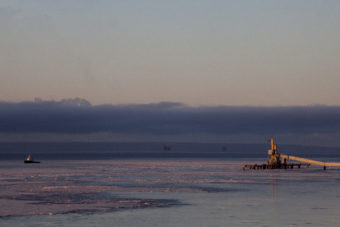
A state corporation agreed to modify the terms of a $30 million loan to BlueCrest Energy Inc.'s operation, shown here in southern Cook Inlet, on Dec. 1, 2016. The company blamed construction delays and a delay in tax credit payments from the state for its request to modify the loan. (Photo Courtesy/Alaska Industrial Development and Export Authority)
BlueCrest Energy Inc.’s operation in southern Cook Inlet. The Alaska Oil and Gas Conservation Commission is considering whether to solicit more public comment when companies want to use hydraulic fracturing. (Photo Courtesy/Alaska Industrial Development and Export Authority)

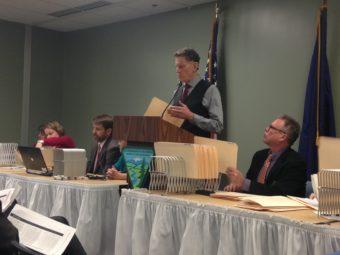
The state agency that oversees oil and gas drilling held a hearing Thursday on whether more public input is needed when a company wants to start hydraulic fracturing in Alaska. Environmental groups say this would allow more transparency, while the industry argues there are already enough rules to make sure hydraulic fracturing is safe. It’s up to the Alaska Oil and Gas Conservation Commission (AOGCC) to decide who is right.
Hydraulic fracturing — or fracking — is so controversial, there’s even disagreement over how it should be spelled:

“Thanks to the applicant and thanks to you for not spelling ‘frac’ with a ‘k,'” John Hendrix, oil and gas advisor to Governor Bill Walker, said while testifying at the hearing.

Hydraulic fracturing is when companies pump a high-pressure mix of water, sand and chemicals deep underground to more easily recover oil and gas.

This week the U.S. Environmental Protection Agency released a report concluding that operations using hydraulic fracturing “can impact drinking water resources under some circumstances.” National industry groups blasted EPA’s report saying the technique is largely safe and that the report “distorts the science.”

The hearing Thursday showed the debate is just as contentious in Alaska as it is in the rest of the U.S.

Bob Shavelson leads Cook Inletkeeper, the organization asking the commission to allow public comment when a company wants to frack a well. After the hearing, Shavelson said it’s all about transparency.

“I think it’s just basic good governance for Alaskans to have the ability to look at a permit, to read it, to try to understand it and to submit a comment,” Shavelson said. “I don’t see the big cost or burden or delay that comes with that.”

Josh Kindred, environmental council for the Alaska Oil and Gas Association, disagrees. He said the proposed change “is really just delaying for the sake of delaying. And it’s being used to frustrate oil and gas development in Alaska. And those protections to the public are already there in the regulations that are currently in place.”

The oil and gas industry says the commission already enacted stricter hydraulic fracturing regulations in 2014.

BlueCrest Energy is pursuing a fracking operation in Cook Inlet off the Southern Kenai Peninsula, and their operations could be affected by the change.

John Martinek of BlueCrest agreed with Kindred in his testimony to the commission.

“Hydraulic fracturing is highly regulated by stringent regulations developed by AOGCC,” said Martinek. “And I might add they’re some of the most stringent regulations in the United States.”

Kenai Peninsula residents testified at the hearing. Many were worried about how BlueCrest’s activity will affect the environment around their community. Ninilchik resident Mike Schuster called in to the hearing. He supports more public comment when a company like BlueCrest asks the commission to use hydraulic fracturing.

“It does provide the opportunity for the public to be reassured that our commission that [is] reviewing permit applications [is] hearing us and giving us the opportunity to interact and affect interpretation of the policy that supports our interests,” said Schuster.

AOGCC is expected to decide on the proposed change by late January.

Oil and gas companies snap up North Slope leases on state and federal lands

14harball_lease3
Ted Murphy, associate state director of the Bureau of Land Management in Alaska, reads off winning bids for the 2016 oil and gas lease sale for the National Petroleum Reserve-Alaska. (Photo by Elizabeth Harball/Alaska’s Energy Desk)

State and federal oil and gas lease sales held Wednesday in Anchorage saw an unexpected surge of interest in the North Slope.
“The bids started to come in and they kept running down to my office going, ‘you’re not believing this,'” said Ted Murphy, associate state director of the Bureau of Land Management in Alaska. “We were surprised.”

The high bids in today’s federal oil and gas lease sale totaled $18.8 million. That’s a huge increase from last year’s total of about $790,000.

The sale was for land in the National Petroleum Reserve-Alaska, where ConocoPhillips recently began developing the first two projects on the 24-million-acre chunk of federal land. Today, ConocoPhillips snapped up the lion’s share of federal leases. But unlike last year, the company had some competition. It had to outbid a few smaller players like Colorado-based Armstrong Oil and Gas. Armstrong Oil and Gas is also pursuing development of what could be a major oil field on the North Slope with its partner Repsol, a Spanish company. Armstrong and ConocoPhillips also placed successful bids for state land on the North Slope. The Houston-based company Burgundy Xploration, LLC also bought up a significant number of state tracts.

According to officials, this year’s state lease sale is one of the most significant Alaska has seen in nearly two decades. The division saw 402 bids for tracts on the North Slope, and winning bids totaled nearly $17 million. Including lease sales in the Beaufort Sea area, the state took in nearly $17.8 million. Last year, the state took in $9.5 million. The state said it was the second largest sale by acreage since 1998.

14leasesale2_harball
Protesters with the Center for Biological Diversity in front of BLM offices in downtown Anchorage. (Photo by Elizabeth Harball/Alaska’s Energy Desk)

State Natural Resources Commissioner Andy Mack said he is very pleased with the results.

“Very exciting stuff and it seems to be continuing the intense interest in that region,” said Mack.

Governor Bill Walker also praised this year’s lease sale, calling it “great news for the state and the industry.”

But several environmental groups objected to today’s lease sales. Nicole Whittington-Evans of the Wilderness Society says she’s worried about how oil development on BLM land could affect one North Slope community in particular.

“The leases that were sold today are further surrounding the community of Nuiqsut in important subsistence use areas,” said Whittington-Evans.

Another group, the Center for Biological Diversity, gathered outside BLM’s offices to protest the federal lease sale, saying it was inconsistent with the Obama administration’s goal to curb climate change.

Washington congresswoman will likely lead Trump’s Interior Department

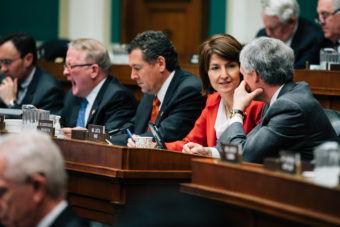
Congresswoman Cathy McMorris Rodgers during a markup in the Energy & Commerce Committee this year. (Photo courtesy office of Rep. McMorris Rodgers)
Congresswoman Cathy McMorris Rodgers during a markup in the Energy & Commerce Committee this year. (Photo courtesy office of Rep. Cathy McMorris Rodgers)

Multiple national news outlets are reporting President-elect Donald Trump is set to pick Cathy McMorris Rodgers, a Republican congresswoman from Washington state, to lead the Department of Interior.

She’s seen as friendly to industry, drawing criticism from some environmentalists. But others think she’s a relatively moderate pick.
McMorris Rodgers is one of the highest-ranking Republicans in the House of Representatives, where she’s served since 2004. She chairs the House Republican Conference and sits on the House Committee on Energy and Commerce.

Many Americans got to know McMorris Rodgers when she delivered the Republican rebuttal to President Barack Obama’s State of the Union in 2014.

“I grew up working at my family’s orchard and fruit stand in Kettle Falls, a small town in Eastern Washington, getting up before dawn with my brother to pick apples,” McMorris Rodgers said in her speech. “My dad drove a school bus and my mom worked as a part-time bookkeeper.”

State leaders hoped an Alaskan would land the Interior job; former Gov. Sarah Palin and former Lt. Gov. Mead Treadwell were both rumored possibilities. But some Washington insiders say the fact that Trump picked a leader from a Western state is a good sign for Alaska.

“You’ve got a Westerner that understands the need for the Department of Interior to be a good neighbor and to work with the states,” said Robert Dillon, a former longtime staffer for Senator Lisa Murkowski who now works for the American Council for Capital Formation, a Washington, D.C. think-tank.

About 60 percent of land in Alaska is federal, and much of it managed by the Interior Department. McMorris Rodgers will oversee pivotal decisions on oil exploration and drilling on federal lands and waters. Dillon says McMorris Rodgers is likely to take a different view on these issues than the current Interior secretary, Sally Jewell.

“What you’d hope to see is a rebalancing that takes into account the economic needs of the state and the people of Alaska,” said Dillon.

A number of environmental groups have already released statements objecting to McMorris Rodgers. She has often voted to expand oil and gas exploration on public lands, including a bill that would have allowed drilling in the Arctic National Wildlife Refuge. She has also voted in favor of limiting the president’s ability to designate national monuments. Kristen Brengel is with the National Parks Conservation Association.

“Sadly, many of the votes that she’s taken haven’t been Park-friendly or pro-public lands,” Brengel said. “A lot of them have sided with special interests.”

Addressing climate change has been a big priority for the current Interior secretary. Environmental advocates note McMorris Rodgers has been noncommittal on whether climate change is caused by humans. But some conservation groups say even though she wouldn’t be their first pick, McMorris Rodgers is someone they can work with. Whit Fosburgh, President of the Theodore Roosevelt Conservation Partnership, sees her record as a mixed bag.

“Her reputation is, and our dealings with her, is that she is somebody who will listen,” Fosburgh said. “We may not always agree with her, but I think we get a fair hearing with her.”

President-elect Trump hasn’t yet formally nominated McMorris Rodgers for the position. And experts say even if she’s confirmed, reversing Obama-administration policies on federal lands won’t happen overnight.

In looming fight over ANWR, a big unanswered question: how much oil is there?

porcupine_caribou_herd
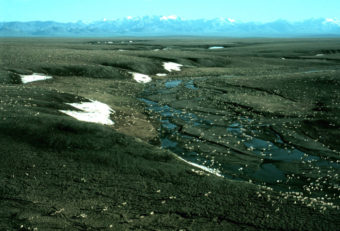
The Porcupine Caribou herd in the Arctic National Wildlife Refuge’s coastal plain. (Photo courtesy U.S. Fish and Wildlife Service)

The coastal plain of the Arctic National Wildlife Refuge ranks as one of the most controversial chunks of land in Alaska. Since Congress set it aside for more study in 1980, environmental groups, politicians and industry have battled over whether to explore for oil there or to protect the wilderness forever.

As the Trump administration gets ready to take the White House in January, the debate will likely flare up again. And even though the fight has dragged on for decades, there’s still a lot we don’t know about what lies beneath the refuge.

It might be the biggest secret in Alaska:

“It’s sort of like a murder mystery — you know — a paperback book,” said David Houseknecht with the U.S. Geological Survey  in Reston, Virginia. “You can speculate about why the information is not leaked out, what was found.”

Houseknecht is talking about a single exploratory oil well from 1985 — the only well ever drilled in the Arctic National Wildlife Refuge. The companies behind it, Chevron and BP, keep the results under lock and key. Even the USGS couldn’t see the data in 1998, which is when it made the most recent estimate of the amount of oil in the refuge.

Alaska’s politicians have pushed to explore for oil in the coastal plain — or 1002 area — for decades. In 1980, Congress put off permanently protecting the area like the rest of the refuge because of its potentially massive oil and gas reserves. But how much oil is actually there is a big question.

“There is a lot of uncertainty about whether or not the resources are present and whether or not the resources are of sufficient size to be deemed technically recoverable,” Houseknecht said.

USGS estimates there’s somewhere between 4.3 billion and 11.8 billion barrels of oil in the coastal plain. Those are huge numbers. For comparison, Alaska’s second biggest oil field, Kuparuk, holds about 2.5 billion barrels. So there could be an oil bonanza in the coastal plain — or not.

Whether it makes economic sense to drill there depends a lot on how big the oil deposits are and how hard it is to get to those deposits.

Some Alaskans say that uncertainty is an argument for exploration.

“We believe there is tremendous opportunity in the 1002 area,” said Andy Mack, who leads Alaska’s Department of Natural Resources.

“At a minimum, and this has always been the state’s request, is that we be able to go in and look and find out what’s there,” Mack said.

In 2014, Alaska sued the Obama administration when it refused to let the state study the coastal plain’s oil potential. Alaska’s politicians are hoping a Trump administration will finally let them find out if a huge oil discovery lies beneath the refuge.

But they’ll still face stiff opposition.

“This is a place where the Wilderness Society and others will continue to draw a line in the sand,” said Nicole Whittington-Evans of the Wilderness Society in Anchorage.

Her group believes the coastal plain isn’t just an important part of the Arctic National Wildlife Refuge — it’s the most important part of the refuge.

The state and the oil industry argue that oil development there can be done responsibly.

“No one is better equipped to drill safely in Alaska’s Arctic better than Alaskans,” Kara Moriarty, president and CEO of the Alaska Oil and Gas Association, said in a statement when the Obama administration moved to designate the coastal plain as a wilderness last year. “We’ve proved over the course of decades that Arctic oil can be produced safely and responsibly for the benefit of all Alaskans.”

But Whittington-Evans said she isn’t convinced.

“There is no way that oil and gas development could proceed in the coastal plain of the refuge without large, far-reaching infrastructure impacts across either entire sections or the entire coastal plain itself,” Whittington-Evans said.

The region is home to polar bears, migratory birds and the famous Porcupine caribou herd. The Gwich’in people have joined environmental groups in calling for the coastal plain to be protected permanently because they hunt the caribou.

“Many times people were hungry, but caribou migrate through our country,”  said Sarah James, who is from Arctic Village and sits on the Gwich’in steering committee.

“If it wasn’t for the caribou, we probably wouldn’t be here today.”

But the Arctic Slope Regional Corporation is in favor of opening the coastal plain to oil exploration; the Native corporation owns subsurface rights to the spot where the mysterious test well was drilled in 1985.

And about that well: Houseknecht said the USGS wasn’t allowed to look at the results, but they could access other data collected around the test well. That means the federal government has a rough idea of what the oil companies found. But it turns out USGS has never published that finding, so the results of that test well will remain a mystery.

It will take an act of Congress to allow more oil exploration in the refuge — and Alaska’s representatives in Washington have been trying to clear that hurdle for 30 years.

Next week, reporter Liz Ruskin examines the debate ahead in Washington, D.C. 

Site notifications
Update notification options
Subscribe to notifications