Elizabeth Harball, Alaska's Energy Desk
Federal government announces annual NPR-A lease sale

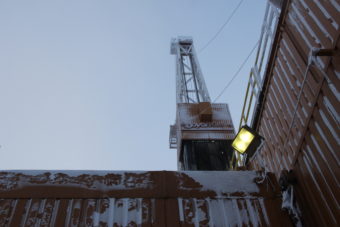
A Doyon drill rig putting in new wells at the ConocoPhillips CD5 drill site on the North Slope. (Rachel Waldholz/APRN}
A Doyon drill rig putting in new wells at the ConocoPhillips CD5 drill site on the North Slope. (Rachel Waldholz/Alaska’s Energy Desk)

The federal government announced it will hold its annual oil and gas lease sale for land in the National Petroleum Reserve Alaska, or NPR-A, on Dec. 14.

The Bureau of Land Management will take bids on leases for over 1 million acres in the reserve.

ConocoPhillips produced the first barrels of oil in the reserve last year. The company is expanding its footprint there. According to Conoco spokeswoman Natalie Lowman, construction on the company’s Greater Moose’s Tooth 1 project begins this winter, and permitting is underway for Greater Moose’s Tooth 2 project.

The state of Alaska also will hold an oil and gas lease sale for state land on the North Slope and the Beaufort Sea area in December.

The lease sales come at a time of renewed interest for oil development on the North Slope. In recent months, small companies Caelus Energy and Armstrong Oil and Gas have announced potentially huge finds in the region.

Trump presidency has big implications for Alaska oil development

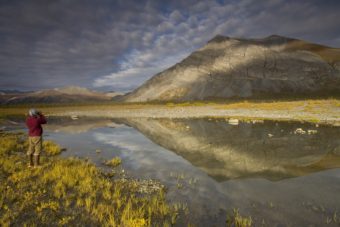
A view of the Arctic National Wildlife Refuge. (Photo by USFWS)

Now that Donald Trump is set to take over the White House, big changes could be coming for Alaska’s oil and gas industry. But even though Trump will see Alaska through a very different lens than Obama, a 180-degree policy shift isn’t likely to happen soon.

Donald Trump’s unexpected victory could change the landscape for Alaska’s oil and gas industry. Robert Dillon, communications director for Senator Lisa Murkowski’s campaign, said with Republican majorities in Congress, a Trump presidency opens up new possibilities for resource development in Alaska.
“Certainly you are in a much better starting point than you would have been under Hillary Clinton,” Dillon said.

Dillon said a big issue to watch is drilling in federal Arctic waters. Hillary Clinton opposed Arctic drilling, and in its upcoming five-year leasing plan the Obama administration may still announce it won’t include the Arctic. But one conservative group that endorsed Trump isn’t worried about the permanence of that decision anymore. American Energy Alliance President Tom Pyle, who is based in Washington, D.C., said President-elect Trump could reverse an Obama administration decision to halt drilling in Arctic federal waters.

“There’s still a lot of untapped energy potential in Alaska and I suspect that President-elect Trump will look at that very closely and put together plans that put the state back in the game,” Pyle said.

Another thing Pyle hopes Trump will accomplish is drilling in the Arctic National Wildlife Refuge. Republican leaders like Senator Murkowski have been pushing for oil and gas development in the refuge for years.

But some experts caution Republican control of both the White House and Congress doesn’t mean change will come quickly. Jason Hutt chairs the environmental strategies group at Bracewell law firm in Washington, D.C.

“The election obviously — we wake up to a new world,” Hutt said. “But it doesn’t mean that there’s not a regulatory process that will be required to change or shift some of the policies — that will take time.”

And Hutt said given low oil prices, reversing an Obama administration decision on Arctic drilling may not be the first push oil companies make under President Trump. Michael Levine, Pacific Senior Counsel for Oceana in Juneau, agrees low oil prices could put a wrench in dreams of Arctic drilling. And Levine said if Trump’s campaign promises to reverse course on the Obama administration’s climate policies hold true, he can expect environmental groups to fight him every step of the way.

“If, in fact, a President Trump sides with the very small minority of those who don’t believe in anthropogenic climate change, we will be stuck fighting backward-looking policies for at least the next four years. And fight them we will,” Levine said.

Levine said it’s too early to say what those policies might look like. Oil industry supporters are hopeful, but they also say it’s too early to predict which issues will rise to the top of President-elect Trump’s priority list.

Alaska’s top oil companies adjusting to low prices

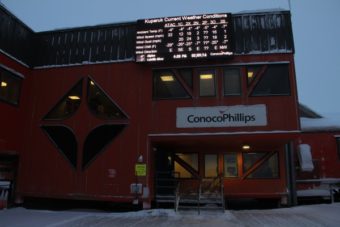
Kuparuk Field ConocoPhillips weather board
At ConocoPhillips Kuparuk River Unit, the temperature hovers around -7 degrees on Feb. 9, 2016. The company had an $826 million loss last quarter. (Photo by Rachel Waldholz/Alaska’s Energy Desk)

The big three oil majors that operate in Alaska — BP, ConocoPhillips and Exxon Mobil Corp. — all released third quarter earnings results in the past week.

The financial reports are a window into how the companies are weathering the dramatic decline in oil prices. And you don’t need a business degree to know it’s a rough time to be an oil company.
“While we operated well this quarter, low commodity prices continued to impact financial results,” ConocoPhillips Chief Financial Officer Don Wallette Jr. said during the company’s third-quarter earnings call last week. His company suffered an $826 million loss last quarter.

Earnings calls are designed to inform investors about how a company is doing. Taken together, they help indicate how confident an industry is feeling about the future. And oil companies are still cautious.

“The environment remained volatile over the quarter and continued to impact quarterly earnings across the sector,” BP Chief Financial Officer Brian Gilvary said on Tuesday.

Unlike Conoco, BP made money, but its earnings last quarter were roughly half what they were in the same quarter last year.

The third major oil company in Alaska, Exxon, told a similar story. Its earnings were down 38 percent compared to the third quarter of last year.

Two years ago, oil prices took a plunge and the industry is still grappling with the result.

But this quarter’s news wasn’t all bad for the companies. Conoco is the only major that lays out specific Alaska numbers in their results, and they reported a $65 million profit in the state this quarter. But because oil prices were so low earlier this year, the company is still down $10 million in Alaska so far in 2016.

The company is spending a lot of money in Alaska — it’s beginning construction on a $900 million project in the North Slope’s National Petroleum Reserve this winter, for example.

Conoco spokeswoman Natalie Lowman said slightly higher oil prices and federal tax credits helped with third-quarter profits.

“Oil prices this quarter averaged about $43 a barrel, so that helps a little bit,” said Lowman. “We’ve also cut some costs because we’re trying work more efficiently.”

Analysts say that effort to cut costs is a trend worth noticing. Belt-tightening across the industry has helped improve the outlook for oil majors. BP, for example, performed better than financial experts expected.

“I have noticed a little bit more optimism within the third quarter calls — not just these companies but other companies, as well — looking forward and seeing a little more stability and a little bit better view of what the future might hold,” said Matti Teittinen, an energy company analyst at IHS Markit in Norwalk, Connecticut.

Teittinen said cutting costs has helped companies offset low oil prices to some extent.

But forecasters like the U.S. Energy Information Administration don’t expect oil prices to bounce back to 2014 levels anytime soon.

Anchorage Senate race pits labor leader against staunch industry supporter

Sen. Cathy Giessel addresses the Alaska Senate, April 15, 2014. She was speaking in favor of House Bill 383, which would allow Alaska nonresidents to be board members of the Alaska Gasline Development Corporation. (Photo by Skip Gray/360 North)
Sen. Cathy Giessel, R-Anchorage, addresses the Alaska Senate, April 15, 2014. Giessel  has served in the legislature since 2011. (Photo by Skip Gray/360 North)

She’s a nurse. He likes to fly fish. They both brag about their grandchildren.

And they’re running against each other in what’s been called the nastiest election in Alaska this cycle.

The Anchorage race between Republican Cathy Giessel and independent Vince Beltrami could help determine the balance of power in the state Senate and how Alaska takes on its fiscal crisis.
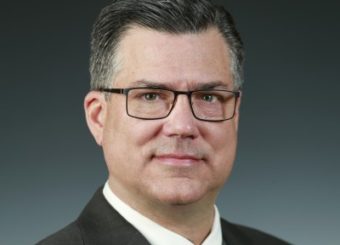
Giessel, who is 64, has been in the legislature since 2011. She’s a staunch oil industry supporter and chairs the Senate Resources Committee. If re-elected, she and her colleagues will face hard choices to square away Alaska’s finances, on issues like spending cuts, oil taxes and whether to institute an income or sales tax.

But as Giessel talked with voters while knocking doors this week in East Anchorage, there’s one thing she wanted to get straight.

“What the Senate Majority, which has been controlled by Republicans for the last 4 years has done is … brought state spending down,” Giessel said.

This election, Giessel is battling attacks claiming the legislature didn’t do enough to solve the state’s budget shortfall. An ad paid for by Together for Alaska, a political group backing her opponent, states, “Giessel and her do-nothing legislature have sat on their hands, despite being called back into session more times than any legislature in our history.”

Giessel argues the legislature has acted, but she acknowledges to voters that the problem isn’t solved.

“I understand their frustration,” said Giessel. “I also understand when they say to me, there’s more to be done — I agree.”

While knocking doors, Giessel is asking voters if they’d prefer a sales tax or an income tax, proposals that once might have been political suicide in Alaska. She said she’d consider backing either with enough evidence. But she added getting to a long-term solution will involve some complicated math.

“Eleven, 21 and one: to pass anything…it takes 11 senators, 21 representatives and one governor,” said Giessel.

Her challenger, independent Vince Beltrami thinks if voters subtract Giessel and add him instead, the legislature can fix the budget.

Beltrami is 54, and has been president of the AFL-CIO, the state’s top labor organization, since 2006. It’s his first run for office, but he’s been involved in state politics for years.

Beltrami_Early1021
Independent candidate Vince Beltrami at a debate on Oct. 18. (Photo by Wesley Early/KSKA)

Like Giessel, Beltrami is out knocking doors. I asked how far he’s walked.

“I can tell you exactly because I have a Fitbit thing!” Beltrami said.

So far, he’s logged over 500 miles. Another 150 or so, and Beltrami estimates he will have walked to Juneau.

But he still has a steep climb. He was a registered Democrat until he switched to an independent in 2014. A big part of his district is conservative and home to many oil executives. Scroll down Giessel’s campaign contributor list, you’ll see names like Hilcorp, Caelus Energy, ConocoPhillips. Beltrami said he’s pro-development too. He’s for drilling in the Arctic National Wildlife Refuge, for example.

But when oil taxes come up again, Beltrami said, “I’m going to be a little more discerning, I’m going to ask harder questions, because we have a constitutional obligation to make sure we get the best value for our resources that we can.”

Giessel may have more oil industry supporters, but Beltrami has his own loyal following. Look at his list of contributors: UA Local 375, Laborer’s Local 942, IBEW Local 1547. Union support helped Beltrami raise more money than his opponent between August and October, almost catching up to Giessel’s war chest.

And that has Republicans worried.

“Strike one!” a baseball-themed ad paid for by conservative political group The Truth Alaska begins. “Beltrami has batted well this year, and if he can fill the bases, public unions will control the state legislature.”

Republicans argue Beltrami will put union interests ahead of his constituents. Beltrami disagrees of course, saying he’d take time off as AFL-CIO president while the legislature is in session, although he won’t step down.

Beltrami said, “people will always say you’re a union guy, so you’re going to look out for the unions. Well, we have oil guys who are looking out for oil.”

Conservative commentator Casey Reynolds, editor of the political blog the Midnight Sun, called the race between Giessel and Beltrami, “ground zero in the battles that we are having in Alaska.”

“I would say it’s probably the premiere race that’s going on,” said Reynolds.

That’s because Democrats need just a few wins, and they could cobble together a coalition with moderate Republicans to take control of the state Senate. That means this race in East Anchorage could determine how Alaska addresses its budget woes.

For Caelus CEO, North Slope ‘big find’ wouldn’t be the first

17Musselman_Harball
Caelus Energy CEO Jim Musselman at the company’s Anchorage headquarters, Oct. 7, 2016. (Photo by Elizabeth Harball/Alaska’s Energy Desk).

In a shallow bay off Alaska’s North Slope, Caelus Energy may have made the biggest oil discovery the world has seen since 2010. If developed, the field could have a major impact on Alaska’s economy and the global oil market. But that’s a big “if” — there are plenty of obstacles to overcome.

For Caelus’ top boss, this isn’t beginner’s luck — it’s his third major oil find.

Jim Musselman is an elephant hunter. Elephant fields, that is.
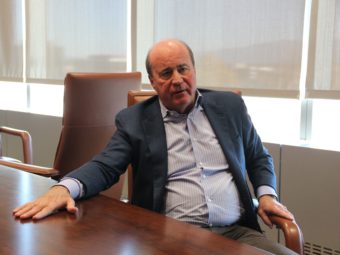
“I’ve always said, if I’m going to make any money, I’ve got to find something big in order to make it work,” Musselman said in an interview shortly after the company announced the discovery. “So we’ve always been looking for elephant-type stuff. I’ve got elephants all over my office in Dallas. We look for elephants, that’s kind of what we do.”

There are no elephants in Caelus’ pristine offices in midtown Anchorage. But reclining at the head of a conference room table, Musselman himself is big, a true Texan who comes off less like an oil magnate and more like your friendly uncle.

Musselman’s also a gambler. He built a racetrack in Texas once, but said he prefers not to bet on horses — those stakes aren’t high enough. He’d rather put his money on oil.

And his gamble in Alaska may have paid off big time — Musselman thinks he’s found 2 billion barrels of oil in state waters at Smith Bay, east of Barrow. If it’s confirmed, it’ll be the state’s biggest find since the late 1960s.

Map of areas Caelus is exploring or producing from on the North Slope. (Image courtesy Caelus Energy).
A map of areas Caelus is exploring or producing from on the North Slope. (Image courtesy Caelus Energy)

“It’s going to be huge, huge, huge,” Musselman said.

Musselman embodies a new kind of character on Alaska’s oil scene. For decades, big companies dominated the North Slope. Now, smaller operations like Caelus are stealing the headlines with potentially game-changing discoveries.

Asked what makes him different from the big majors, Musselman replied, “That’s a good question. How do I answer this tactfully — we are probably better risk takers than the bigger companies are.”

Musselman’s strong stomach for risk has paid dividends in the past. Smith Bay could be his third world-class find.

The first two were in Africa. As CEO of Kosmos Energy, Musselman discovered the Jubilee oil field off Ghana’s coast — a story with so many cliffhangers,  Musselman ended up the star of a documentary produced by Brad Pitt, called “Big Men.”

Musselman was eventually forced to step down at Kosmos after tensions flared between the company and Ghana’s government. But the Jubilee oil field started producing in 2010. So the question now is — can Musselman deliver on the North Slope?

For the moment, Alaska officials and energy experts are cautiously optimistic — emphasis on cautiously.

Cody Rice is an analyst at Wood Mackenzie in New York. He said he needs to see more well tests from Caelus to know if the find is real.

Plus, he said, “This project, while it’s massive in terms of resource base, is not going to single-handedly make Alaska great again.”

The find could add billions of barrels of oil to the trans-Alaska pipeline system — but that won’t happen soon enough to help solve the state’s current fiscal crisis. Because even if the oil is there, Rice said, getting it to market is going to be tough.

“It’s a global-scale discovery, and any time you have something of that scale, it’s inherently complex,” said Rice.

In a report, Wood Mackenzie notes the field’s geology could make its oil reservoirs hard to access. And Caelus might have to build a long offshore pipeline, which would draw a lot of scrutiny from regulators and environmental groups.

“We’re very concerned about the potential for a massive development by Caelus,” said Lois Epstein, of The Wilderness Society in Anchorage.

Epstein’s biggest concern is location: Caelus’ find is just north of Teshekpuk Lake, a key habitat for migratory birds.

Musselman said Caelus will keep operations far away from Teshekpuk Lake. But, he admitted, other things need to fall into place for the $8-10 billion project to pencil out. That includes changes to Alaska’s tax policy and much higher oil prices.

Still, like any good gambler, Musselman radiates confidence. This is his message to Alaskans:

“I am going to make it real for you, and I think, just keep the faith – we’ve done this before,” he said. “We know how to do this.”

Results from the final tests on the Smith Bay find are due in the spring of 2018. That will be the first proof of whether Musselman’s big Alaska bet will truly pay off.

AGDC board asks president tough questions about gasline’s future

AGDC president Keith Meyer (photo courtesy AGDC).

The Alaska Gasline Development Corporation met today in Kenai for an update on the state’s progress taking over the gas line project. AGDC president Keith Meyer said the transition should wrap up by the end of the year.

But at the meeting, Meyer fielded some tough questions from the board of directors, including this one from Vice Chairman Hugh Short.

“What do you say to someone who says AGDC, State of Alaska should just hang it up?…That you’re out there spending state resources on a project that’s never going to happen?” Short asked.

Meyer argued the state owes it to its people to take a look at whether it can compete with other LNG projects around the world.

“I’m pretty convinced that if you do nothing on this time frame, this go-around, this next window, you’ve missed it for a number of decades, maybe for longer than that,” said Meyer.

This week, Meyer and Gov. Bill Walker returned from their second trip to Asia in a month. Walker’s travel expenses for that trip were covered by conference organizers while Meyer’s travel expenses were covered by the state. Meyer is traveling to Japan over Thanksgiving to continue marketing the project to government officials and businesses there.

Also at today’s meeting, Meyer reported AGDC is preparing to open an office in Houston, Texas to connect with potential project backers there.

Site notifications
Update notification options
Subscribe to notifications