Elizabeth Harball, Alaska's Energy Desk

Anchorage Petroleum Wives Club welcomes new era with new name

PetroleumWives_Harball
Members of the Anchorage Petroleum Wives Club — soon to be the Anchorage Petroleum Women’s Association — pose by the Easter goodie bags they assembled for a youth homeless shelter. (photo courtesy Holly Lee)

At a luncheon at the Lakefront hotel in Anchorage this April, Petroleum Wives Club president Linnea Ward greeted members from behind a small, cardboard ballot box.

The Anchorage Petroleum Wives Club has been around longer than Alaska has been a state. It was founded shortly after the first big oil discovery. Its purpose was to welcome the wives of the oil workers flooding in to the state. But a lot has changed since then, so the Anchorage Petroleum Wives Club decided they needed a change, too. On April 26, the club held a historic vote, and the members decided unanimously to change their name to the Anchorage Petroleum Women’s Association — effective June 1.

Club President Linnea Ward said there are several reasons for the rebranding. One is that “Petroleum Wives” might paint a misleading picture in some people’s minds.

“I don’t know if this was true, but supposedly the gossip throughout the organization was that we were approached by some reality show wanting to talk about — you know they do the ‘desperate housewives of Orange County’ or whatever,” said Ward. “And so there was an interest in doing some ‘wives’ thing of Anchorage. And that’s just not us.”

The Petroleum Wives want the world to know they’re not a group of cocktail-sipping, pearl-wearing socialites — although some do get together for a “ladies night out” now and then. Take Ward, for example: her husband may work for ConocoPhillips, but she’s a Ph.D. This spring, Ward earned her doctorate in public communication and technology. She actually wrote her dissertation about the Petroleum Wives.

But mainly, Ward said the group changed its name because the petroleum industry has changed. Ward said she’s one of a growing number of club members who work, too.

“We’re not all these super-wealthy [people], just trying to throw money out there, or [people] trying to destroy the Earth one step at a time,” said Ward.

Like everyone else, she said, “we’re just trying to make our way in this world, we’re trying to give back. We’re trying to find meaning.”

In addition to getting together for activities like hiking, playing cards and making crafts, the Petroleum Wives also spend time volunteering and raising funds for local charities.

But increasingly, the meetups have to be scheduled around the 9-to-5 workday. Ward said another reason the club changed its name is to welcome a new kind of member — members like Anna Belanger, a petroleum geologist for Glacier Oil & Gas.

There are lots more women working in Alaska’s oil industry than when the club started in the 1950s. The Petroleum Wives recently changed its rules to allow oil industry workers to become president or vice president of the club. Belanger said replacing ‘wives’ with ‘women’ in the name means a lot to her.

When she found out about the club, she said, “I thought, ‘well, my husband is actually a fisherman — sport fishing on the Kenai River — he’s not in the oil industry. Am I able to join the organization?'”

Belanger works for a small company. She said the group connects her with people across the oil industry. Belanger said she also appreciates meeting other women who understand the industry’s ups and downs.

After oil prices crashed in 2015, many companies in Alaska announced mass layoffs. Member Zoe Smith’s husband was retired from BP by then, but she said during the downturn, the Petroleum Wives came together to help each other cope.

“Especially the older ladies like myself, we’ve been through these cycles before,” said Smith. “And then you can share it with someone else. And it just gives support, that you maybe don’t find with your neighbor because they don’t really understand.”

The Petroleum Wives kept meeting throughout the tough times — even after losing about 80 members, close to third of its membership.

Today, they’re still going strong. In early April, about a dozen members got together to make Easter goodie bags for Covenant House, a homeless youth shelter in Anchorage. Holly Lee organized the get-together. Lee’s husband, an oil industry engineer, was transferred from Canada to Alaska in 2012.

It’s pretty common for oil companies to move employees around the country –and even the world — every few years. Lee said finding friends in Anchorage wasn’t easy at first. But then she joined the Petroleum Wives Club.

“We are often, many of us, out of our own country. We’re away from our family — like so many people who live in Alaska. And so this group provides a connectivity that I desperately needed.”

Lee said some might argue the Petroleum Wives should have changed their name years ago. But she explained that for some members, the name represented a long tradition of women forging close friendships over shared connections to the oil industry.

And in that way, the Anchorage Petroleum Women’s Association hasn’t forgotten its roots.
Only 3 gallons spilled from Hilcorp platform in April…and it wasn’t crude

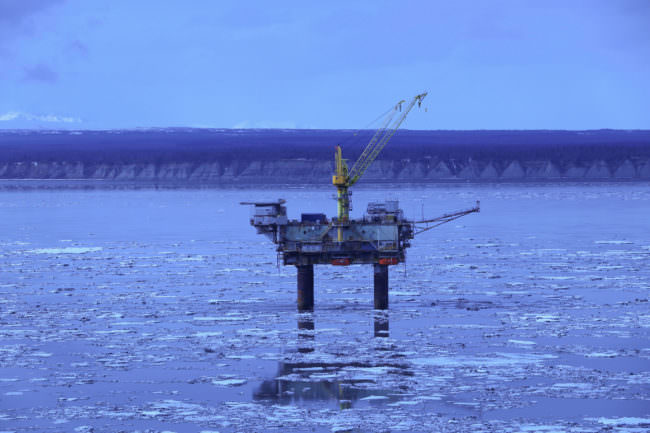
Hilcorp’s Anna Platform in Upper Cook Inlet, where workers felt an impact before observing oil sheens on April 1. (Photo courtesy Cook Inletkeeper)

The state has concluded that just three gallons of liquid escaped from one of Hilcorp’s platforms into Cook Inlet in early April.

The spill was reported on April 1, when workers on one of Hilcorp’s oil platforms felt an impact and then spotted a sheen on the water. At first, the state thought it was a crude oil leak from one of the pipelines connected to the platform.

But according to a situation report released today by the Alaska Department of Environmental Conservation, the leak’s source was a feed line for the platform’s gas flare system, not the underwater oil pipeline.

According to Hilcorp, a liquid called natural gas condensate had formed in the line. The company arrived at its 3-gallon estimate based on how much condensate the line can hold and how much was recovered.

The state also reports that Hilcorp restarted the crude oil pipeline on May 2. Four overflights were conducted afterward, and the state reports that no sheen or release was observed.

After determining the oil pipeline wasn’t the source of the spill, the federal Pipeline and Hazardous Materials Safety Administration has withdrawn a corrective order they issued to Hilcorp after the incident that would have required more stringent daily monitoring of the pipeline.

Hilcorp was forced to shut down several other pipelines and platforms in Cook Inlet this spring, including platforms connected to a fuel line that leaked natural gas for several months before ice conditions allowed divers to make repairs.

Last week, the company announced a new pipeline project to eliminate the need to store oil at the Drift River Terminal, which is located at the base of an active volcano.

Hilcorp announces project to bypass oil terminal by Redoubt volcano

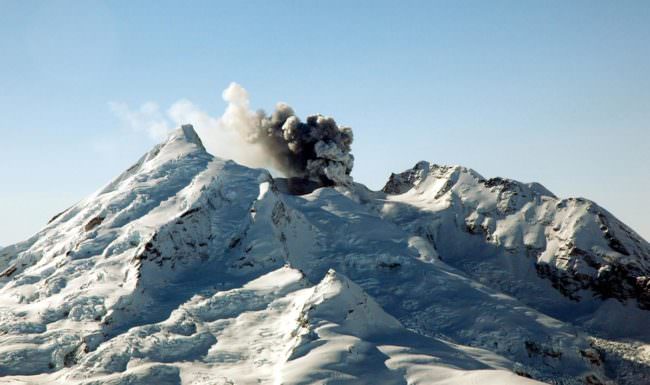
A plume rises from Mt. Redoubt in 2009. Hilcorp aims to stop using the Drift River Oil Terminal, which is threatened by the volcano. (Photo courtesy USGS/Alaska Volcano Observatory)

An environmental group is praising oil and gas company Hilcorp after it announced a new pipeline project in Cook Inlet. Hilcorp says the project would eliminate the need to store oil at the Drift River Terminal.

That terminal has worried environmental groups for years because it sits at the bottom of Mount Redoubt, an active volcano.

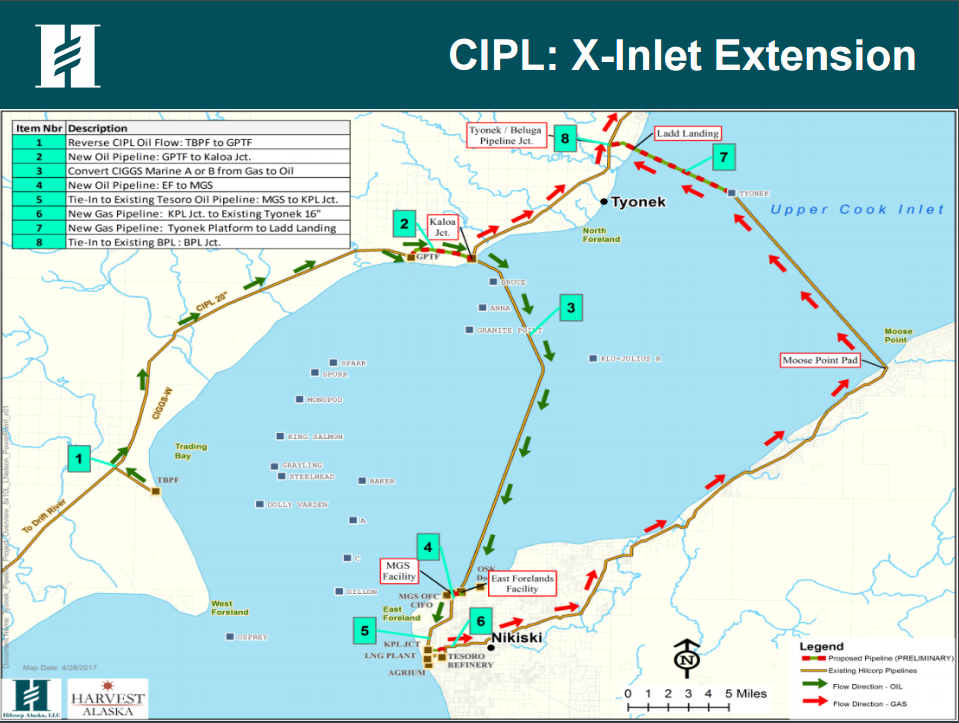
Today, tankers are used to carry the oil from Drift River to the Tesoro refinery in Nikiski. Hilcorp plans to both build new pipelines and repurpose existing pipelines to carry the oil to the refinery.

Bob Shavelson of Cook Inletkeeper is one of Hilcorp’s frequent critics, but he said the project is a good idea.

“Storing oil at the base of an active volcano is crazy,” Shavelson said. “And the added risk of tankering this oil across Cook Inlet is a heightened risk. So we support bringing the oil across in a pipeline.”

Hilcorp’s plans to avoid using the Drift River Oil Terminal involves the construction of several new pipelines. (Click to enlarge — image courtesy Hilcorp)

The company aims to permit and build the $75 million project by the end of next year. Hilcorp Alaska executive David Wilkins announced the project during a speech to business leaders in Anchorage.

Wilkins also addressed the company’s recent difficulties in Cook Inlet. One of its fuel lines in the Inlet leaked gas for months, leading to fierce criticism from local environmental groups. Due to that leak and two other incidents, Hilcorp was forced to shut down multiple pipelines and platforms.

After the speech, Wilkins said Hilcorp plans to spend more money on inspections to prevent additional leaks in Cook Inlet.

“We are going to do a full lessons learned on this, and we will apply it not only to Middle Ground Shoal, but to all the pipelines and platforms and infrastructure,” Wilkins said. “Our goal is not to be having these kind of incidents.”

During the speech, Wilkins said Hilcorp is increasing its spending across the state this year, and plans to continue operating in Alaska “for decades.”

“We’re in this for the long haul,” said Wilkins.

Shavelson of Cook Inletkeeper said he’s hopeful that Hilcorp is dealing with the problems that led to the gas leak.

“The fact that they’ve had multiple incidents recently has got their attention, and I see them trying to be more diligent in terms of their operations and their maintenance,” Shavelson said. “Hopefully, that will carry on to the future.”

Cook Inletkeeper threatened to sue Hilcorp in February after it learned about the gas leak. But Shavelson said because Hilcorp shut down the gas line, the group is no longer pursuing the lawsuit.

Conoco gives up stake in North Slope project seen as precursor to gas line

Construction on Exxon Mobil’s Point Thomson field in December 2015. (Photo courtesy of Exxon Mobil/MSI Communications)

ConocoPhillips has confirmed it’s giving up its small stake in the Point Thomson field on the North Slope.

The move has some observers wondering if it’s a bad sign for the state’s effort to build a massive natural gas line.

Point Thomson is one of the state’s newest oil and gas projects. It’s about 60 miles east of Prudhoe Bay and started producing last year. Exxon operates the project and BP is the other major owner. Conoco only had about a 5 percent interest in the field.

Conoco spokeswoman Natalie Lowman said the company wants to focus more on its core projects, like the Kuparuk and Alpine oil developments west of Prudhoe Bay.

“I think everyone’s aware that the oil price is in a slump right now, and so in this current oil price environment, we are scrutinizing all our investments,” said Lowman. “And Point Thompson unit does not compete in our portfolio with other projects.”

Today, Point Thomson is producing a liquid called natural gas condensate. But the field’s real potential is its massive natural gas reserves. That can’t be sold until a gas pipeline is built to carry it approximately 800 miles from the North Slope to market.

The state of Alaska recently took over leadership of the gas line project from Conoco, BP and Exxon. It aims to start construction in 2019. But amidst low natural gas prices, the project faces big financial challenges.

Lowman said giving up a stake in Point Thomson doesn’t mean Conoco doesn’t support the gas line.

“This decision has no reflection on our support for a state-led project to monetize North Slope gas. We have been and are still willing to make our gas available for sale at the wellhead,” said Lowman.

But Kenai Peninsula Borough oil and gas advisor Larry Persily said Conoco’s decision to walk away from Point Thomson doesn’t bode well for the project.

“It confirms to me the gas line is not coming anytime soon or you would have held on to it, because then Point Thomson could be a moneymaker,” said Persily.

However, Alaska Gasline Development Corporation spokeswoman Rosetta Alcantra said as long as the companies are willing to sell gas, the state isn’t worried about Conoco’s decision on Point Thomson.

“We aren’t that concerned,” Alcantra said.

In a call with investors Tuesday, Conoco reported it earned $99 million in Alaska in the first quarter of 2017. Lowman said during that period, the company paid about $250 million in taxes to the state.

Globally, Conoco reported a first-quarter loss of $19 million — an improvement from the first quarter of last year, when the company lost $1.2 billion amidst crashing oil prices.

Cook Inlet gas leak sparks debate over Hilcorp’s Arctic drilling plans

HilcorpLibertyrendering
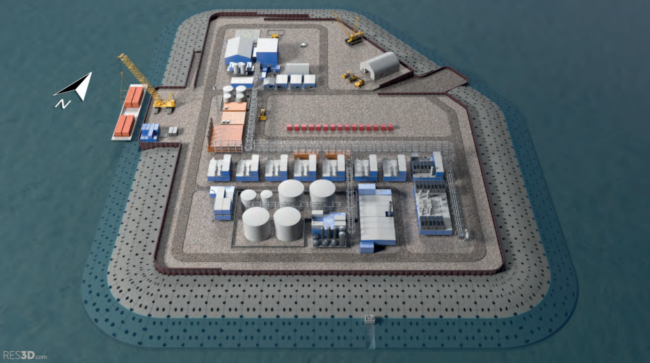
Hilcorp’s design plans for the gravel island it aims to build in federal waters in the Beaufort Sea, as submitted to federal regulators in 2015. (Image courtesy BOEM)

Last week, Hilcorp was finally able to fix a fuel line in Cook Inlet that regulators say started leaking gas in December. But the oil and gas company and its allies are still struggling to contain another issue: environmental groups, which argue that Hilcorp’s problems in Cook Inlet disqualify the company from drilling for oil in the Arctic Ocean.

Earlier this month, Lois Epstein of the Wilderness Society in Anchorage wrote an op-ed in the Alaska Dispatch News. Epstein’s headline read: “Hilcorp’s Cook Inlet leaks underscore Arctic risks.”

“I certainly have, and I know others have, enormous concerns about Hilcorp being the operator of this new operation in the Arctic,” Epstein said in an interview. “Because it’s a company that doesn’t appear to have a strong handle on its operations.”

Epstein noted that Hilcorp’s gas leak in Cook Inlet took months to fix, as dangerous ice conditions prevented divers from getting to the pipeline. The company also had to shut down two other pipelines in the Inlet this spring due to suspected leaks. Epstein said the incidents raise questions about a project the company is pursuing hundreds of miles to the north.

Hilcorp is moving ahead with the only offshore drilling project currently planned in federal Arctic waters. It’s called Liberty. Hilcorp wants to build a gravel island in shallow waters about six miles from the Beaufort Sea coast. According to plans submitted to the Bureau of Ocean Energy Management, the oil would flow to shore via a buried subsea pipeline.

Epstein said that Hilcorp’s gas leak in Cook Inlet was hard to fix — and repairing a pipe or cleaning up an oil spill in Arctic waters would be a lot harder.

“You do have lots of other challenges in the Arctic,” said Epstein. “You have storms, you have certainly cold, you have remoteness, you have the inability to respond very quickly because you don’t have the people power and the infrastructure.”

A growing number of national environmental groups agree with Epstein — including the Center for Biological Diversity and Greenpeace. They’re calling for the federal government to scrutinize Hilcorp’s safety record before approving the Liberty Project. And as President Donald Trump weighs an executive order to step back the Obama administration’s five-year moratorium on Arctic drilling, some groups argue the gas leak shows oil development in the Arctic shouldn’t happen at all.

But the pushback from the oil industry has come hard and fast.

“It’s nonsensical; it makes no sense to say, ‘because we had a leak over here means they will never be able to respond to a leak in the Arctic.’ It’s just a fabrication,” said Kara Moriarty, who leads the Alaska Oil and Gas Association.

Moriarty wrote her own op-ed in the Alaska Dispatch News. It was just one of a wave of opinion pieces condemning environmental groups’ arguments, which appeared in both local and national media.

Moriarty argued recent incidents involving Hilcorp don’t mean the company can’t operate safely in the Arctic.

“When something happens, the company responds, they change their behavior, they pay their fine, and they change their process — that’s why you have regulatory oversight,” said Moriarty. “It’s not to say, ‘oh, a company did something and we fined them, and and now they shouldn’t do anything else in Alaska again.'”

Hilcorp didn’t agree to an interview for this story, but in an emailed statement, Hilcorp’s Alaska Senior Vice President David Wilkins said the Liberty project is “vastly different” from its operations in Cook Inlet. However, Wilkins noted Liberty is similar to two other projects Hilcorp is already operating in state waters in the Arctic, called the Endicott project and the Northstar project.

“We are dedicated to safe and responsible operations with every project, every day,” Wilkins wrote in the email.

The federal Bureau of Ocean Energy Management is currently working through the environmental review process for the Liberty project. The agency expects to begin a 60-day public comment period this summer.

And despite the oil industry’s objections, environmental groups are sure to bring up the Cook Inlet gas leak when arguing Hilcorp shouldn’t be allowed to drill in the Arctic.

BP well that spewed oil and gas successfully plugged

BPfix
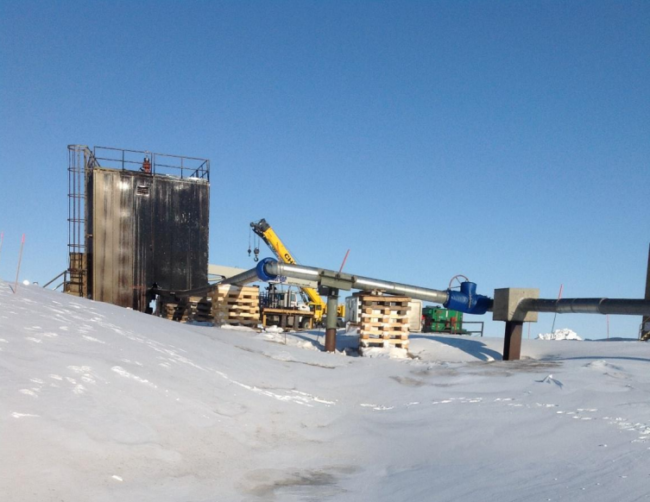
Image taken on April 18, 2017, showing Drill Site 2 well house and the adjacent reserve pit with an area of light crude spray. (Photo by Jade Gamble/Alaska Department of Environmental Conservation)

The Alaska Department of Environmental Conservation today announced that a leaking oil and gas well on the North Slope was successfully plugged.

The well, owned by BP, began spewing oil and gas last Friday.

The spray of crude oil was halted on Saturday. But it took responders until early Monday morning to curb the flow of gas by pumping saltwater down the hole. A mechanical plug was installed yesterday.

The state still doesn’t know what caused the leak, or how much oil was spilled.

But the state reports that observations from two overflights indicate the crude oil spray did not reach the nearby tundra, and the impacted area appears to be less than 1.5 acres.

Site notifications
Update notification options
Subscribe to notifications