Jacob Resneck, CoastAlaska

Jacob Resneck is CoastAlaska's regional news director based in Juneau. CoastAlaska is our partner in Southeast Alaska. KTOO collaborates with partners across the state to cover important news and to share stories with our audiences.
ACLU: Juneau’s proposed ‘anti-camping’ law could be unconstitutional

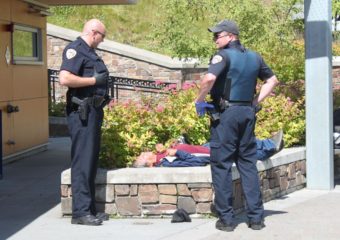
Two Juneau Police Department officers check on a man on Telephone Hill in downtown Juneau in July 2014. A proposed ordinance would empower the police to arrest and charge anyone in the downtown core that refused to move.  (Photo by Lisa Phu/KTOO)

The American Civil Liberties Union of Alaska has warned that Juneau’s proposed anti-camping ordinance, drafted to deal with homeless people sleeping downtown, could violate a person’s constitutional rights.

The ordinance would empower police to cite homeless people sleeping in the downtown core in the early morning hours. Failure to obey orders to move would allow police to press criminal charges.

But the ACLU of Alaska says the ordinance may not survive a legal challenge.

“Los Angeles tried to do something similar and when the U.S. Court of Appeals for the Ninth Circuit struck it down, the court said that if a city doesn’t have enough shelter space for everyone and there’s nowhere for our homeless neighbors to go, it violates the Eighth Amendment to punish them for sleeping outside,” Tara Rich said in a statement. She’s the ACLU of Alaska’s legal director.

The Juneau Assembly is expected to vote on the measure following a public hearing at its 7 p.m. Monday meeting. Business groups including Juneau’s Downtown Business Association support the ordinance.

The ACLU of Alaska also penned a letter to Juneau Mayor Ken Koelsch that urged the Assembly to reconsider its position.

“What today’s proposed ordinance would do would be essentially criminalize the fact of sleeping, which is a fundamental, biological need for people that literally have nowhere else to go,” ACLU of Alaska Executive Director Joshua Decker said in an interview Monday. “It’s our hope that the Juneau Assembly will heed our constitutional concerns and rather than passing an unconstitutional law that does nothing to solve the problem of homelessness, it will instead refocus its efforts in making sure that everyone who needs shelter has it.

The mayor introduced the ordinance after hearing complaints from merchants that the numbers sleeping in front of doorways was hurting commerce in Juneau’s historic downtown.

Opposition to the proposed ordinance comes from four regional Alaska Native groups as well as social work agencies that provide emergency shelter and services to the homeless.

Juneau Assembly to weigh in on ‘the road’

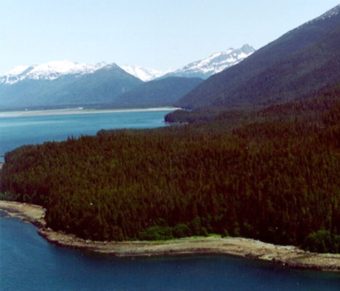
The view of Berners Bay from Cascade Point. The Juneau Access Lynn Canal Highway would be built through this area. (Photo courtesy Alaska Department of Transportation & Public Facilities)

The Juneau Assembly will vote Monday on a resolution supporting the Juneau Access Project. The initiative comes from Mayor Ken Koelsch, a strong proponent of better linking Juneau to the road system.

Citing the state’s fiscal crisis, Gov. Bill Walker decided late last year to withdraw state support for the $574 million project that called for about 50 miles more road up the northern Lynn Canal to a new ferry terminal closer to Haines and Skagway.

The fate of the $40 million already earmarked for the project by the state remains unclear. A road extension to the capital city has been a perennially divisive issue for Juneau, Haines and Skagway. State transportation officials had for years backed the extension and new ferry terminal on the Katzehin River.

Conservationists applauded the governor’s decision but boosters of the road say they remain committed to pushing for better Juneau access. The proposed resolution will be a test of the Assembly’s support for the road project.

The city manager’s office has stayed neutral and issued no recommendation to Assembly members set to vote on Monday.

Gastineau Apartments lawsuit headed to trial

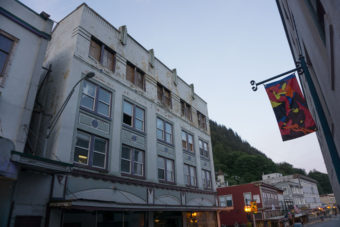
The derelict Gastineau Apartments, July 21, 2015. (Photo by Jeremy Hsieh/KTOO)
The former Gastineau Apartments on July 21, 2015. The City and Borough of Juneau spent about $1.4 million to have it torn down in February 2016. (Photo by Jeremy Hsieh/KTOO)

It’s been nearly a year since the City and Borough of Juneau demolished the Gastineau Apartments. Now the city is taking the owners to court to recoup some of the $1.4 million spent tearing it down. The apartment building caught fire in 2012, was neglected for years then caught fire again in 2015. The city condemned and demolished it.
The land is vacant while a lawsuit is pending against owners Camilla and James Barrett, who missed several deadlines to repair the property or demolish it themselves.

City Attorney Amy Mead said Wednesday that the Barretts should be held personally liable for repaying the city.

“The cost of the demolition far exceeds the current value of the property,” she said in an interview. “So in order for the CBJ to recover the funds that were spent in abating the public nuisance it would have to look outside the property.”

At issue before Juneau Superior Court Judge Philip Pallenberg is the legal concept of “piercing the corporate veil.” It would allow legal action against the Barretts, who controlled Gastineau Apartments LLC.

Defense Attorney Robert Spitzfaden had argued that the Barretts should remain shielded from liability. But the judge noted that the defendants had allowed their limited liability corporation to be dissolved after missing filing deadlines with the state.

“It’s clear that the Barretts were not always clear to observe the formal legal requirements of their LLC,” Judge Pallenberg said from the bench.

The judge rejected the defense’s motion for summary judgment. The lawsuit is headed for trial scheduled for June.

Could ticketing the homeless help downtown Juneau?

Two people and a dog curl up near a boiler room on Shattuck Way on Jan. 20, 2017, in downtown Juneau, Alaska. (Photo by Rashah McChesney/Alaska's Energy Desk)
Two people and a dog curl up near a boiler room on Shattuck Way on Friday morning, Jan. 20, 2017, in downtown Juneau, Alaska. (Photo by Rashah McChesney/Alaska’s Energy Desk)

Local policymakers are considering giving police the power to ticket homeless people that sleep outside in downtown Juneau.  A statewide count conducted a year ago found 50 people living without shelter in the community, and another 160 in shelters and transitional housing.

I rode along with a Juneau police officer recently to see how the police deal with the community’s most visible residents right now.

It’s an hour before dawn and Juneau Police Officer Alexander Smith is making his usual rounds. In front of the downtown cruise ship terminals, a man is tucked deep into a sleeping bag against a building to keep out of the rain. It’s a similar scene on South Franklin Street. A couple is covered in blankets in front of a shuttered storefront. Officer Smith knows most of these people’s names. And they know his. He radios in to check for arrest warrants. But first, he confiscates an open can of malt liquor, pours it out and moves on.

Homelessness in downtown Juneau has became an increasingly visible issue. Merchants have complained to the police department, but downtown beat officers like Smith say their hands are tied.

“Doorways like these easements here are private property. So it’s the responsibility of the business owner to contact us if there’s trespassing issues, vandalism and that kind of thing,” Smith said. “So if we see someone sleeping in the doorway we can contact them and make sure they’re alive and breathing, but we don’t have any legal authority to remove somebody from the doorway simply for them standing there.”

But a proposed anti-camping ordinance sets out to change that. If adopted, the ordinance would let officers ticket people camping on private property within the downtown core.

Juneau’s police chief has come out in support of the initiative, though Officer Smith admits enforcement with tickets could be challenging.

“It kind of goes along with the open container tickets and that kind of thing, where a lot times the people who have been here long enough they don’t care,” Smith said. “They’ll take 20 tickets and be like, ‘Whatever.’ Now whether or not a new citation will actually change your behavior is debatable. But it’s one of those things that hopefully will be an incentive.”

The Juneau Police Department later clarified that under the ordinance anyone caught camping downtown who refuses to move could be arrested for disorderly conduct – a jailable offense.

Joshua Donald Smith (no relation) found himself sleeping outdoors. The 45-year-old says he’s dealing with substance abuse issues, and that he’s aware why some downtown merchants are upset.

“I understand the businesses. A lot of the homeless people kind of wreck it for other folks by defecating on the street, throwing their trash everywhere, just basic disrespect for the community,” he said. “But there’s some of them on the other side that go sweep up — voluntarily.”

Juneau has homeless shelters including the 40-bed Glory Hole downtown. But the shelter won’t take drunk people — for understandable reasons. And that, Joshua Smith says, doesn’t work for some people struggling with addiction and in crisis.

“This guy lost his mother the other day,” he recalled. “He had a bad night and he was drinking and wasn’t dealing with his emotions and he got kicked out for six months the next day. The guy lost his mom and now he’s in the rain. It’s a sad situation. I don’t want to say let’s make it easy for these people get drunk and wasted all the time, but there’s got to be a happy medium where they can have a roof.”

In the summer the city-run Thane campground provides low-cost camping that acts as transitional housing. But it’s in an avalanche zone and unsafe in the winter. That leaves homeless people without a legal place to camp on public or private property.

At the Glory Hole, Juneau’s 40-bed downtown shelter, it’s just after sun up and about two dozen people are drinking hot coffee and tea. Some spent the night here others have just come in from the cold. Steven Lythgoe, 43, says he’s been homeless on and off for about seven years. He says he’s working to his driving license reinstated and getting back to work but he’s running up against the shelter’s 90-day limit and isn’t where he’ll go.

“There are some services and they take quite a while to actually get done. There is quite an extensive waiting list, you’ll be waiting up to six months in some cases and you can’t stay here for that long,” Lythgoe said. “And that’s what it makes it really hard. And so you’re having to try and find somewhere to go. And they do, I think, they need to make a place where people can put tents and be safe in their tent.”

downtown Juneau
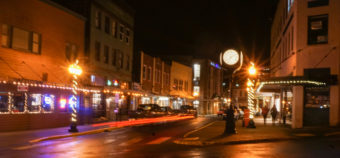
A car and pedestrians make their way past Front Street storefronts in downtown Juneau on Thursday, Jan. 19, 2017. Moving objects appear blurred because of an extended exposure. (Photo by Jeremy Hsieh/KTOO)

Juneau’s proposed ordinance isn’t without controversy. In a letter Thursday, four Juneau-based Alaska Native institutions urged the Assembly to abandon the proposal. The city attorney’s office has cautioned that federal courts have struck down city laws that effectively criminalize homelessness. That’s why the ordinance targets illegal camping rather than just sleeping or vaguely defined loitering or vagrancy.

Officer Smith says that the anti-camping ordinance would allow him to focus on the type of sleepers who are attracting the most complaints but not everyone sleeping downtown.

“It probably won’t have too much of an actual impact on people who are just kinda slumped over in the doors,” the officer said. “Because, you know, if they don’t have any money or any means to provide for themselves, giving them a ticket or kicking them to the next doorway is not going to change a whole lot. But for people that are building legitimate tents and camps it might create an incentive for them not to do that.”

That may or may not satisfy downtown merchants but it will allow police to take a more aggressive approach in dealing with some of Juneau’s most vulnerable residents.

The public hearing — and a possible vote — will be held Jan. 23 in the Juneau Assembly’s chambers.

Clarification: This story has been updated to reflect that under the proposed ordinance, failure to comply with a police order to move on could also lead to a criminal charge.

Bartlett hospital reaches agreement with union

Bartlett Regional Hospital. (Photo by Jennifer Canfield/KTOO)Bartlett Regional Hospital. (Photo by Jennifer Canfield/KTOO)
Bartlett Regional Hospital is a major employer in the Juneau community. (Photo by Jennifer Canfield/KTOO)

The Juneau Assembly will be asked next week to approve $3.06 million in pay increases for employees at Bartlett Regional Hospital.

That’s after the city-owned hospital’s board of directors approved a tentative agreement with its unionized workforce after more than a year of negotiations that ended with the help of federal mediators.

Hospital employees have been without a labor contract since the end of 2015.

The International Longshore and Warehouse Union represents about 385 hospital workers that includes nurses, therapists and technicians. The new contract will also expand the union’s bargaining unit to include many workers employed on an “as needed basis.”

The wage increase would also cover all non-management employees at the hospital not in the union.

The tentative contract ratified by the union would include a retroactive pay increase that runs through the end of the year when the new contract would expire. It envisions a cumulative pay increase equivalent to 2.3 percent overall. A second increase of 1 percent would go in effect in July.

The contract will go before the Juneau Assembly for ratification at its Jan. 23 meeting.

Clarification: This story has been updated to note that the wage increase — not the entire contract — covers all non-management, non-union employees at the hospital. Additional details have also been added.

Juneau’s legislators talk fiscal crisis with Assembly

Juneau’s state legislative delegation told a half-dozen members of the Juneau Assembly on Thursday morning that the state’s budget outlook isn’t rosy.

Democratic Sen. Dennis Egan said there are real risks to middle-class public sector jobs under threat by budget cuts.

“If we do what we did last year we’re in deep trouble,” Egan said. “Especially this community because of all the public sector jobs that are here. And they’re not — and I don’t want to bad mouth anybody — but they’re not McDonald’s cashier jobs; they’re high paying jobs.”

Rep. Sam Kito III, also a Democrat, said that the House’s mostly Democrat majority coalition will be pushing back against the Republican-led Senate’s proposed $750 million in spending cuts over three years.

“Seven-hundred-fifty million dollars out of $3.2 billion of the deficit would have a devastating impact on Alaska’s economy because that money goes into jobs, into education, into health care,” Kito said. “If we cut the budget, try to balance our budget, we are are going to be taking money away from vital industries in the state.”

Newly elected Democratic Rep. Justin Parish said that coastal Alaska is well-represented in the House coalition. And he said the coalition will revisit the principle of the state paying out more to oil companies in tax credits than it receives in royalties. The state revenue department estimates that at least $650 million in tax credits will be owed to oil firms by mid-year.

We are of course also going to be looking at the huge subsidies which we’re currently giving to the oil industry,” Parish said. “It’s hundreds of millions of dollars that’s leaving Alaska and that deserves some attention.”

The Juneau Assembly inquired about the Juneau Access Project, which Gov. Bill Walker effectively killed in December. Assembly member Debbie White said that the unspent $40 million earmarked for Juneau’s stalled road extension project should remain committed to greater access.

“When the governor went with the no-build decision on Juneau Access there was some money that was set aside for that project,” White said, “I would just implore you guys that if you can’t protect that money completely to please do all you can to at least make sure it’s used in the northern Lynn Canal corridor.”

Kito told the Assembly that one possibility is improvements made at Skagway’s port that would accommodate the new Alaska-class ferries and also add crew cabins to allow multi-day voyages in the Gulf of Alaska.

Juneau Mayor Ken Koelsch and Assembly members Mary Becker and Beth Weldon were absent from the morning meeting.

Site notifications
Update notification options
Subscribe to notifications