Jacob Resneck is CoastAlaska's regional news director based in Juneau. CoastAlaska is our partner in Southeast Alaska. KTOO collaborates with partners across the state to cover important news and to share stories with our audiences.
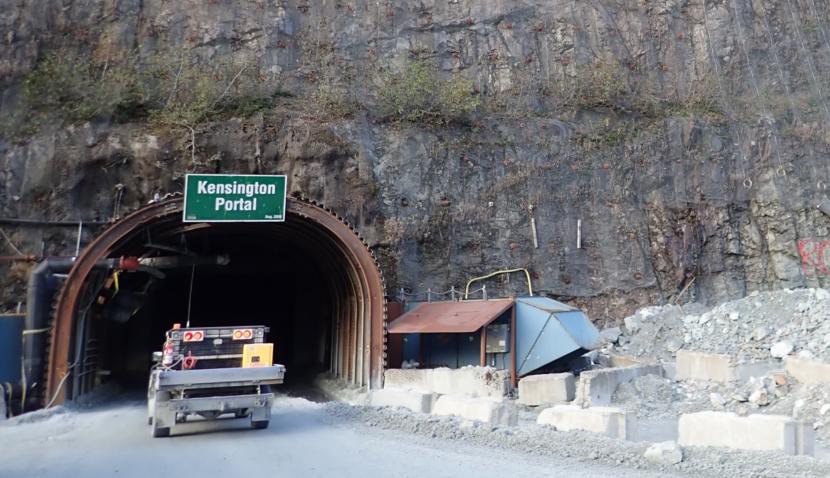
A mine vehicle enters the Kensington Portal on Oct. 15, 2019. It’s one of two accesses for a network of about 28 miles of underground tunnels. (Photo by Jacob Resneck/CoastAlaska)
Kensington Mine reported Wednesday that a total of 19 of its employees have now tested positive for COVID-19. The number of confirmed cases could still rise. City officials say tests for 94 of the 210 workers at the mine are still pending.
A batch of three miners had developed symptoms over the weekend and tested positive on Monday. They along with a dozen close contacts were removed from the gold mine and are now isolated and quarantined at a company facility in town, Juneau officials said.
Juneau’s Deputy City Manager, Mila Cosgrove, says the mining company moved quickly and is working to contain the outbreak at its remote mine site 45 miles north of town.
Employees will remain at the mine site until the remaining test results have been received, the city said. Those isolated in town are being provided with food and other needs. Security is in place to ensure the quarantine rules are respected, the city said.
The mine instituted COVID-19 protocols in March. Most recently all employees have quarantined for a week and passed a COVID-19 test before being allowed on the mine site that’s only accessible by air and water.
Kensington Mine is one of the region’s largest private sector employers. The company says it has 386 people on its payroll and around 250 workers on site at any given time.
State public health officials are working to trace the origin of the outbreak.
This is a developing story and new information will be added when it becomes available.
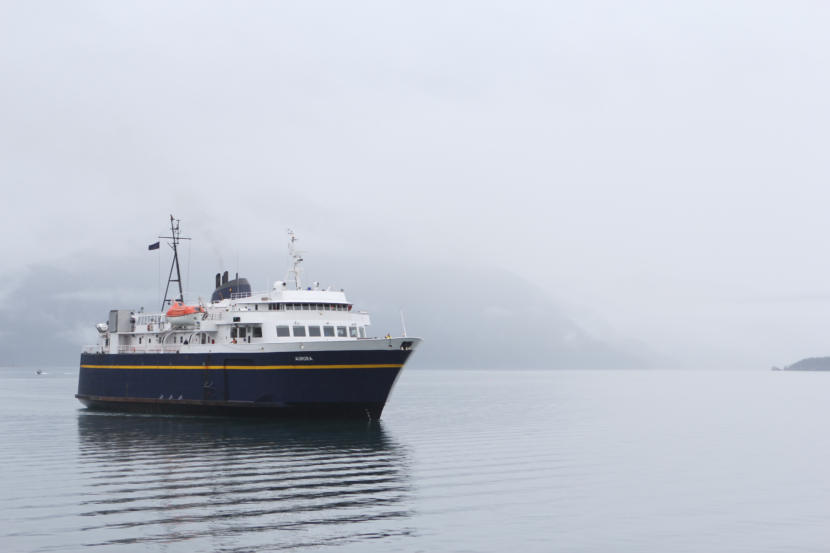
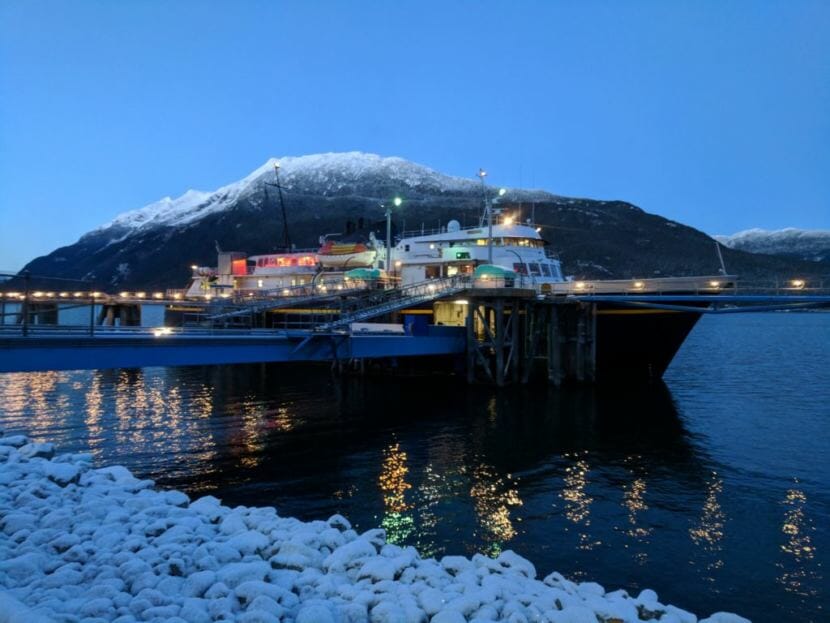
The Aurora, a 235-foot Alaska state ferry, approaches the dock in Whittier. (Photo by Nat Herz/Alaska’s Energy Desk)
The Alaska Marine Highway System will operate at minimal levels this winter. That’s according to an announcement from the Department of Transportation saying the pandemic has cut deeply into the fleet’s farebox revenue.
State transportation spokesman Sam Dapcevich couldn’t immediately say Monday how much the system had lost.
“But we are down quite dramatically,” he told CoastAlaska. “So, taking that into account, this was the best that we could do for providing service.”
Seven vessels will operate between October and next June. There will be some wide gaps in service. In most cases, only one ferry will be assigned to each route, with no slack in the system.
“To me, it feels like a mobster breaking somebody’s knees and then blaming them for falling down,” Malena Marvin of Petersburg said of the reduced service. “I think a lot of communities feel about what’s happening to the ferries right now.”
Marvin started Ferries Move Alaska! — an active Facebook group that’s garnered more than 4,500 followers in recent months.
How many sailings each community will get isn’t clear. That’s because the state hasn’t released a draft schedule and doesn’t plan to this year. But residents do have this week to comment on a rough operational plan before the Marine Highway finalizes its winter schedule.
Usually, Marvin notes, the Marine Highway releases a draft schedule and holds a public teleconference hearing on its plans for the season.
“We have several weeks to kind of find time to look at the schedule and try to understand how it’s going to be serving the communities,” she said.
DOT officials concede it’s a break from tradition, with less public outreach.
“It’s not the same as our usual process,” Dapcevich said in a follow up statement, “but we needed to improvise due to the pandemic, low traffic levels and the associated decline in revenue.”
Here’s what is known: the ferry Aurora’s return to service is being delayed from October until mid-April. That’s because the state says it needs more steelwork than previously thought.
Southeast villages of Hoonah, Gustavus, Angoon, Pelican and Tenakee Springs will see a nearly two-month winter gap without service while the ferry LeConte is being overhauled in mid-February.
And some other villages, such as Ouzinkie and Port Lions on Kodiak Island, have been eliminated from the winter schedule altogether. So has service to Prince Rupert, B.C., as well as Chenega Bay, Tatitlek, Valdez and Seldovia.
Also of note: neither of the state’s newest vessels, the $120 million Alaska-class ferries, are in the plan. The Tazlina is slated to get new side doors. It’s not clear when the Hubbard, its sister ship, will finally enter revenue service.
Some 30 close contacts of Kake’s first COVID-19 patient have been cleared of the virus, and the Southeast Alaska Regional Health Consortium is working to screen the entire community, a consortium spokesperson said Tuesday.
“SEARHC has encouraged community-wide testing and will continue to make it available for any resident that requests testing,” Maegan Bosak said in a statement.
Nearly half of Kake’s residents — about 250 — lined up for COVID-19 testing Monday after the community reported that a woman in her 60s had been medevaced out with symptoms of the coronavirus. Additional screening was held Tuesday morning.
Swabs are being sent to SEARHC’s Mt. Edgecumbe Hospital in Sitka, with results expected back within 48 hours, Bosak added.
Kake is a close-knit community where everyone shops at the same store and fuels up at the same gas station, said Joel Jackson, president of the Organized Village of Kake, the community’s federally recognized tribe.
“It can spread rather quickly, and we’re hoping that it hasn’t,” Jackson told CoastAlaska. “You know, it was good news to hear that her immediate family tested negative. So we’re hoping that we don’t come back with a bunch of positives.”
Kake remained on lockdown Tuesday. City, tribal and other public offices have closed.
Kake’s city government has instituted some of the strictest COVID-19 precautions in the region. On Tuesday, it announced that travel to and from the village would be prohibited with limited exceptions: police and emergency first responders, state child welfare case workers and critical infrastructure technicians. The city says it’s also making allowances for people to travel for medical reasons.
Alaska Seaplanes President Kent Craford indicated in an email to CoastAlaska he’d work with the community to comply with the local rules restricting air travel.
“If you read the guidelines, a lot of people fall under these categories, especially patient medical travel which is a significant portion of our traffic in and out of Kake,” he wrote.
But it’s unclear if authorities in Kake can enforce a travel ban. In May, Gov. Mike Dunleavy revised a health mandate that said communities connected by the Alaska Marine Highway System cannot impose their own travel restrictions.
The Alaska ferry LeConte is scheduled to sail to Kake on Thursday. City officials in Kake did not respond to questions seeking clarification over the local travel order, and state Department of Transportation officials did not immediately comment on upcoming ferry travel to Kake.
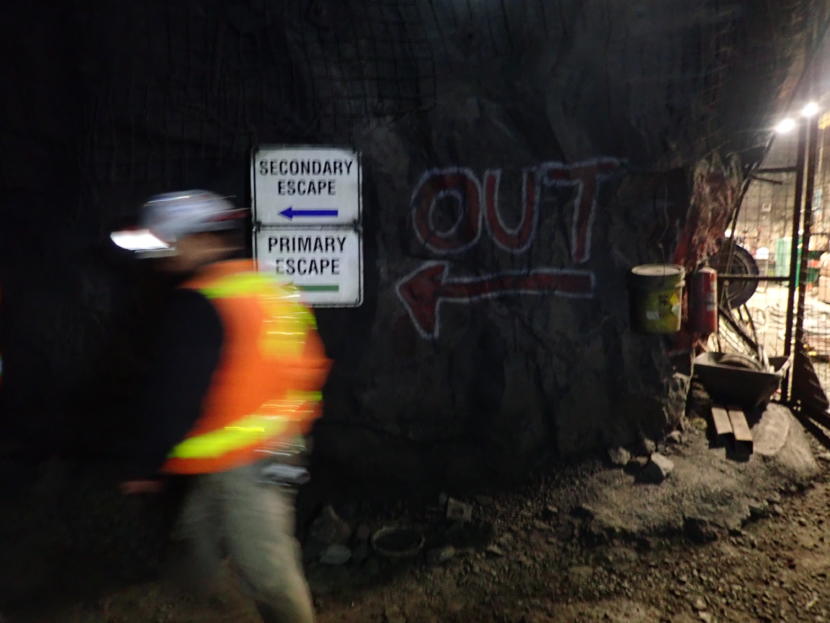
A manager walks past Kensington Gold Mine’s Elmira deposit on Oct. 15, 2019. It’s one of the areas Coeur Alaska is currently exploring. (Photo by Jacob Resneck/CoastAlaska)
Three workers at the Kensington Mine north of Juneau tested positive for COVID-19 on Monday, leading Coeur Alaska’s management to order its entire workforce at the remote mine be tested.
“Coeur Alaska has rigorous COVID response protocols, including employee testing, that the company has implemented,” Coeur Alaska General Manager Mark Kiessling said in a statement. “The safety and well-being of our workers and the community is Coeur Alaska’s top priority.”
The trio of employees with mild symptoms — as well as a “small number” of identified as close contacts at the underground gold mine had returned to Juneau but did not need to be hospitalized, the company said.
One of the miners was reported by Juneau’s emergency office coordinator on Monday as a non-resident case. Two others have yet to be announced by local or state authorities, at least one of whom is a Juneau resident.
In March, Kensington’s workers began four-week shifts after spending quarantining at a Juneau hotel and testing negative for COVID-19. Those precautions are aimed at keeping the coronavirus out of the remote mine site that’s about 45 miles north of downtown Juneau and only accessible by air and water.
Coeur Alaska is one of Southeast Alaska’s largest private sector employees, with around 400 on its payroll. The company says operations have not been disrupted by the outbreak.
This is a developing story and will be updated when new information becomes available.
Ferry LeConte docks in Haines in winter 2018. (Photo by Berett Wilber/KHNS)
The Alaska Marine Highway System ferry LeConte’s run up Lynn Canal was canceled Sunday after a crew member tested positive for COVID-19. State transportation officials say the unnamed individual had finished a two-week shift on Aug. 1st and began feeling ill after returning home to Juneau.
It’s not clear when the crew member went in for a test. But ferries spokesman Sam Dapcevich says state transportation officials were notified on Saturday that a ferry worker had the coronavirus.
“We tested the entire crew aboard the LeConte, 23 crew members, and all the test results came back negative,” he said. “We also are testing the next crew that is supposed to start their rotation Aug. 14th. They will all be required to have a negative test result before reporting to duty.”
The LeConte’s crew wasn’t cleared until the early morning hours of Sunday. That led to the decision to postpone the sailing to Haines and Skagway until Wednesday.
“With the amount of time it took to test everybody and, and keeping people up late into the night we didn’t want to run the boat the next morning with a tired crew,” Dapcevich said.
The LeConte is expected to resume sailings this week. It includes runs between Juneau, Pelican, Angoon, Kane and Lynn Canal communities later this week.
State public health officials say no close contacts were identified in Juneau or on the vessel. There are no specific testing or quarantine recommendations for passengers or crew at this time.
This story has been corrected to reflect that the LeConte’s sailings up Lynn Canal have been postponed until Wednesday.
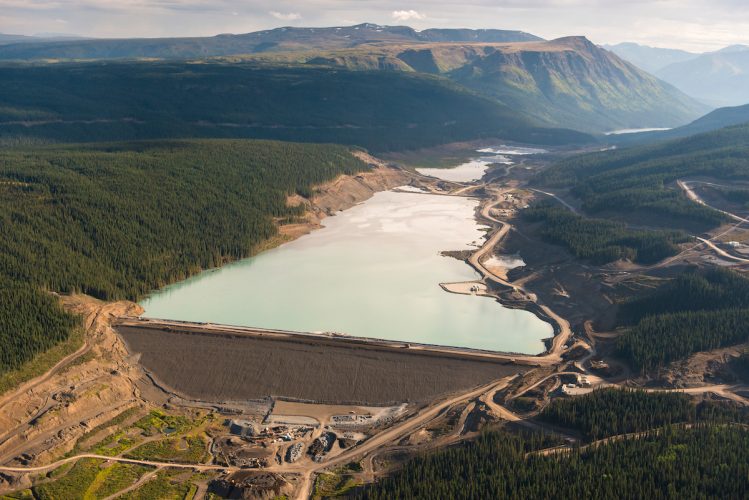
At the Red Chris Mine, a dam contains a tailings pond. that collects mine waste. Northwest B.C., 2017. (Courtesy of Garth Lenz)
The massive tailings dam at the Mount Polley Mine in British Columbia failed six years ago this week. An effort to create global industry standards for mine waste has emerged since then, but there are concerns that the new standards don’t go far enough to protect communities downstream.
The Global Tailings Review effort launched more than a year ago. Its catalyst was the deadly dam collapse last year at a Brazilian mine near Brumadinho, which killed hundreds of people.
Closer to home, British Columbia’s Mount Polley mine disaster in 2014 wasn’t deadly. But its aftermath revealed what critics saw as weaknesses in Canada’s regulations that allowed a mine company to pollute a river and escape fines or prosecution.
A broad panel of industry, international civic organizations and United Nations experts studied both disasters. Speaking a year ago, Elisa Tonda of the U.N.’s environment program said expectations for the new standards would be high.
“The review will have to create a very strong and powerful industry standard that will raise the bar from current practices and current approaches,” she said in a statement.
On August 5, the standards were released. The 21-page document says its goal is “zero harm to people and the environment with zero tolerance” for fatalities. The U.N. says it will work on translating these ideals into national standards.
But in the meantime, Charlie Cobb, Alaska’s dam safety engineer, says he doesn’t see many practical takeaways.
“I don’t mind referencing federal documents as a state regulator, but I have a hard time with referencing international guidance,” Cobb told CoastAlaska.
Not that he doesn’t see a need. He serves as the chairman of a committee developing uniform guidelines for tailings dams in the U.S. to supplement existing standards in the National Dam Safety Program.
“And after Mount Polley failed, you know, I raised my hand in the board meeting and said, ‘You know, we probably ought to step up to the plate and start looking at tailings dams a little more closely.’”
That process is still underway. But the just-released global standards include principles like respect for human rights for affected communities downstream — though none of that language is binding by any court of law or government regulator. And that’s a problem, says David Chambers, a mining consultant with the Center for Science in Public Participation in Bozeman, Montana.
“There isn’t any teeth,” he said in an interview. “It’s all voluntary compliance. And I think, more importantly, there’s sort of a lack of performance standards.”
“We’d hoped that there would be things like recommended factors of safety, which aren’t in there,” Chambers said.
So how are these global standards supposed to work? An industry group called the International Council on Mining and Metals was one of the key players in crafting the language. It represents about a third of the world’s mining industry.
Asked how ICMM would police its membership, the trade group’s CEO Tom Butler conceded that they’re a voluntary organization, not a regulator.
“But ultimately if a member is consistently not complying or bringing ICMM into disrepute, there are mechanisms that exist within the ICMM articles of association for expulsion,” he said.
Alaska’s largest mining industry group says it’s taking its cues from national trade associations.
“All of Alaska’s large operating mines have memberships in one or both of these organizations, and have provided comment throughout the process,” wrote Alaska Miners Association‘s Deantha Skibinski in a statement to CoastAlaska.
“But more importantly,” she said, “Alaska’s large operating mines have had their Tailings Storage Facilities (TSFs) approved and monitored throughout the entire process – from site selection, design and construction, management and monitoring, and post closure. The various approval processes include significant environmental review and public participation opportunities.”
The catalyst for raising the standards for mine tailing storage globally comes from tribes and green groups but also big international investors. Managers of pension funds have invested heavily in global mining operations, and catastrophic dam failures like Brazil’s have been a financial liability that have played havoc with stock values.
“Because when these tailings dam fails, these guys’ stock value goes through the floor — it gets hammered. And the investors are the ones losing that money,” said Cobb, Alaska’s dam safety engineer. “And so the investors finally said, ‘Well, what what are we investing in here? That there’s all this risk, but we don’t know about.’ And so they forced their member organizations to disclose their tailings dam inventories.”
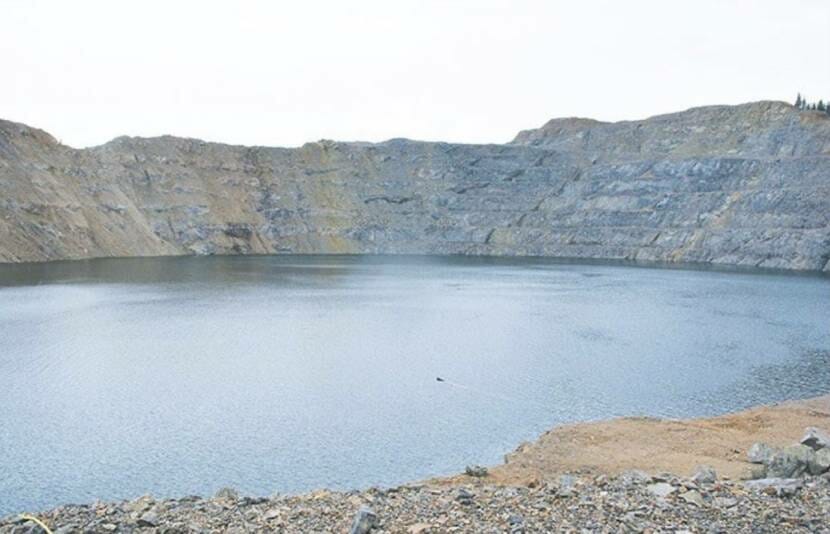
A mined-out pit used to store wastewater and milling leftovers at British Columbia’s Mount Polley Mine is expected to fill up in April. The B.C. government just issued a permit allowing treated pit water to be discharged into a nearby lake. (Photo by Monica Lamb-Yorsk/Williams Lake Tribune)
That’s created a searchable online database. It includes entries like the Red Chris Mine, an open pit gold and copper mine in British Columbia that’s upstream from the Stikine River watershed. The mine was developed by Imperial Metals, the same firm responsible for Mount Polley.
It’s the presence of B.C.’s booming mining sector on Alaska’s doorstep that has a coalition of tribes, conservationists and fishermen nervous.
“We’re gonna have to be watching the Red Chris lake of poison, you know, they call it a tailings storage facility. But that’s gonna be there forever,” said Frederick Olsen Jr. the Sitka-based executive director of the Southeast Alaska Indigenous Transboundary Commission. It’s a regional effort by tribes to watchdog mining on both sides of the border.
“Our people have been here for thousands of years and we want to be here for thousands of years into the future. And so we have to look out for this stuff,” Olsen said.
Olsen — and other Alaskans who are looking out across the border — are encouraged by the standards set in the Global Tailings Review, but they plan to remain vigilant. The best way to deal with tailings dam failures, most agree, is to prevent them.
Close
Update notification options
Subscribe to notifications
Subscribe
Get notifications about news related to the topics you care about. You can unsubscribe anytime.