Jennifer Pemberton

Managing Editor, KTOO

I bring stories from the community into the KTOO newsroom so that all of our reporting matters. I want to hear my community’s struggles and its wins reflected in our coverage. Does our reporting reflect your experience in Juneau?
Below normal, record-breaking cold for Southeast Alaska for the holidays

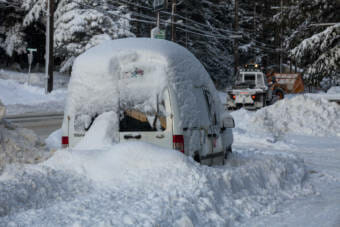
A van buried in snow along the Douglas Highway on Dec. 22, 2021, in Juneau, Alaska. (Photo by Rashah McChesney/KTOO)

Southeast Alaska saw below average temperatures over Christmas weekend and even colder temperatures are expected in the first week of 2022.

It was zero degrees in Ketchikan on Saturday and Sunday of Christmas weekend. Both days were record-breaking cold.

“The old records were 6 degrees in 1964 on Saturday and 5 degrees all the way back in 1917 on Sunday,” National Weather Service meteorologist Ben Linstid told KRBD.

In addition to the cold, Ketchikan got a few inches of snow Sunday night during a storm that brought freezing rain and snow throughout Alaska’s panhandle. That was a fast-moving storm and there’s more where that came from. A winter storm on Wednesday will bring up to 6 inches of snow to Juneau.

“This is your heads-up … New Year’s Eve, it looks like there’s a bigger storm on the horizon,” Linstid said.

That one could bring up to a foot of new snow to Juneau by New Year’s Day. Cold air will follow that system with the potential to break more record low temperatures across the region in the first days of 2022.

Linstid said current conditions are influenced by La Niña, a weather pattern characterized by unusually cold ocean temperatures in the Equatorial Pacific that affects weather globally.

The Year in KTOO News: Justice in Juneau

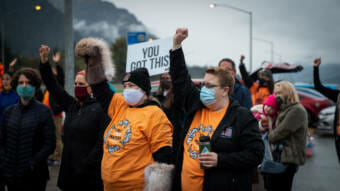
A rally for Orange Shirt Day near a former Bureau of Indian Affairs school for Indigenous children on Thursday, Sept. 30, 2021, in Juneau, Alaska. (Photo by Paige Sparks/KTOO)

KTOO’s intention is to cover criminal and social justice outside of the courtroom, focusing on the victims and other people impacted by crime and inequity.
Back in January, Juneau started working on making “Zoom bombing” a criminal offense after a Juneau Assembly member was targeted during a virtual Assembly meeting. People who were listening describe a man calling in and making lewd comments about Assembly member Carole Triem’s body. Triem described it as a startling and disgusting thing to have to listen to while she was at work. She wanted the city to address it because it was disappointing that – other than her fellow assembly members who spoke up at the meeting – it wasn’t addressed at all. 

In July, at least a dozen women had come forward accusing a SEARHC chiropractor of sexually abusing them while receiving care from him. Jeffrey Fultz has been out of state and out on bail for the better part of a year. Several of his accusers asked a judge to post a higher bail and have Fultz returned to Juneau, but those requests have been repeatedly denied. As of December 2021, a trial has been scheduled in early 2022 but it’s not clear that it will go forward at that time. 

After the remains of more than 200 Indigenous children were found buried at a Canadian boarding school, the annual occasion of Orange Shirt Day in September saw one of its largest shows of support and solidarity in Juneau. 

An anonymously created, crowdsourced spreadsheet known as “The Alaska Abuser List” was published in November with more than 500 names of Alaskans accused of sexual assault. We looked into what happens when a whisper network raises its voice this way.

As part of KTOO’s local election coverage, we told the story behind a school board candidate who harassed and stalked two women, including an elementary school principal. Ibn Bailey said he knew it must have been jarring for voters to see those restraining orders in his background, but he asserted that they were not domestic violence-related and that there was no sexual coercion. But Brenda Edwards, the principal who took out a restraining order against Bailey insisted that his interactions with her were inappropriate and unwanted, and a judge agreed with her. Bailey did not win a seat on the school board.

KTOO is looking back at 2021 through the stories that had the widest and strongest impact on the community. Read about the pandemic’s second year in Juneau or the search for Juneau’s missing.

The Year in KTOO News: Looking for Juneau’s missing

Spirit Lodge Singers use a healing drum to offer songs and prayer for the safety of Geraldine Nelson as the search for her continues around Lemon Creek on Wednesday, May 19, 2021, in Juneau, Alaska. (Photo by Matt Miller/KTOO).

Looking back on the local issues we covered this year, a disturbing trend emerged. We reported on several members of our community who went missing. While it’s not clear that more people went missing in Juneau in 2021 than in other years, at KTOO we definitely gave the topic our attention. Instead of waiting for police reports about missing persons, we started turning to social media where family members were organizing searches for loved ones who stayed away from home too long.
In May, an elder named Geraldine Nelson went missing in Lemon Creek. After an extensive search, largely coordinated by volunteers, Nelson’s body was found. Her story forced KTOO and the community at large to scrutinize the Silver Alert system designed to help find vulnerable adults who go missing. 

In August, Joe Clayton was visiting family in Juneau from Oregon and didn’t return from a hike. Some of his belongings were later found in a wooded area near the University of Alaska Southeast and his family offered a $5,000 reward for information about him. In October, human remains were found near the ferry terminal that Juneau police confirmed were Clayton’s

Overlapping with Joe Clayton’s disappearance was the search for Doug Farnsworth, who was last seen driving a truck that was found abandoned near the Perseverance Trailhead. An extensive search involving dogs and a Coast Guard helicopter were unsuccessful. Farnsworth’s sister told KTOO in October that law enforcement officials told her that “they don’t look for people that don’t want to be found.” A hiker with a dog found Farnsworth’s remains in November, not far off the popular Flume Trail.

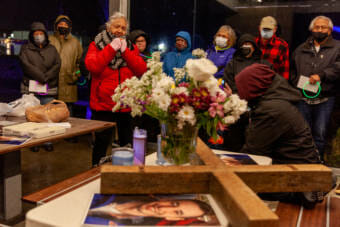
Barbara Charles shares some of her memories at a vigil for her grandson, Doug Farnsworth, on Oct. 27, 2021, in Juneau, Alaska. Farnsworth disappeared in late September. (Photo by Rashah McChesney/KTOO)

Clifford White has been missing since October. His family said he wasn’t the same after his mom died of COVID-19 late last year. He’s a local MMA fighter. People describe him as being in good shape. He’s 29 years old and Alaska Native. He has short black hair and his father says he has a goatee and mustache right now. He’s about 5 feet 11 inches tall and has tattoos.

And just this month, authorities identified human remains found two years ago as James Christopher Cole, who had been missing since 2017 when a skiff he was riding in capsized near Aurora Harbor. Three people and a dog made it safely to shore but Cole and another man, Sheridan Scott Stringer were lost.

KTOO is looking back at 2021 through the stories that had the widest and strongest impact on the community. Read about the pandemic’s second year in Juneau.

The Year in KTOO News: COVID’s second year in Juneau

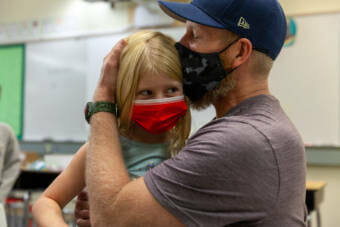
Sophie Griffith, 5, gets a kiss from her dad, Scott Griffith, after getting her COVID-19 vaccine during a pediatric clinic at Riverbend Elementary School in Juneau, Alaska. (Photo by Rashah McChesney/KTOO)

KTOO is looking back at 2021 through the stories that had the widest and strongest impact on the community. 

Right around the winter solstice last year, Dr. Anne Zink used the metaphor of the return of the light to describe the arrival of the COVID-19 vaccine in Alaska. Health care workers started getting vaccinated in Juneau before the ball dropped on 2021, and by mid-January, residents were getting vaccinated by the thousands at city-sponsored mass vaccination clinics. There was live music while people waited, and people dressed up in costumes and formal wear to get their shots. It was the closest thing to a party most people had been to in almost a year.

The vaccine did bring some hope to early 2021, but while the virus was being knocked back a bit, the damage the pandemic brought to society was already done. Kids were out of school. Many parents were working from home alongside them. In March, we hit the one-year anniversary of COVID-19 coming to Alaska and a surge of mental health problems made itself evident. Social restrictions and disruption caused spikes in anxiety, depression, substance use and self-harm — for students, parents and just about everyone.

By May, a lot of Juneau adults were fully vaccinated, and flashing your vaccine card made things possible that hadn’t been for almost a year. Juneau Drag performers hosted their first live in-person stage show in 15 months. Vaccinated attendees could take off their masks at the event at the Red Dog Saloon. Once people got inside, it was like stepping back in time — or into an alternate reality where the COVID-19 pandemic didn’t exist.

Audience members packed in together to cheer on Juneau Drag queens and kings on Saturday, May 22, 2021, in Juneau, Alaska. It was the troupe's first in-person, performance and they required audience members and Red Dog Saloon staff members to provide proof of full vaccination to attend. (Photo by Rashah McChesney/KTOO)
Audience members packed in together to cheer on Juneau Drag queens and kings on Saturday, May 22, 2021, in Juneau, Alaska. It was the troupe’s first in-person, performance and they required audience members and Red Dog Saloon staff members to provide proof of full vaccination to attend. (Photo by Rashah McChesney/KTOO)

By summer, kids 12 years old and older were eligible for the COVID-19 shot and Juneau made quick work of offering youth vaccine clinics. Families made plans for summer vacations and to see grandparents again. And then came the delta variant, and it became clear that many Alaskans’ dreams of a “hot vaxxed summer” were not going to come true. The highly contagious variant of the virus tore through the country, bringing back mask mandates, restrictions on groups gathering and messing up the global supply chain so that it was hard to keep a semblance of normal life.

Right before Alaska’s second wave of the virus peaked, Juneau students went back to school. They were required to wear masks indoors and they spread out as much as possible in the classroom and the lunchroom. Sports and other after-school activities resumed. Juneau had one of the highest vaccine rates for youth in the state in September. Individual classes would quarantine when there were positive cases in the schools.

Students head upstairs during a break between classes at Thunder Mountain High School on Monday, August 16, 2021, in Juneau, Alaska. The school district reported about 300 more students on the first day of classes this year than it had last year. (Photo by Rashah McChesney/KTOO)

August and September were deadly months in Alaska. Hospitals around the state moved to crisis standards of care, hundreds of out-of-state health care workers were recruited, and rural communities struggled to care for their own when they couldn’t medevac patients to the state’s bigger city hospitals. Half of all of Juneau’s deaths from COVID-19 occurred in those two months. 

In the midst of all of this, the leader of Bartlett Regional Hospital abruptly resigned after just six months on the job. The head of the behavioral health unit also left on the same day. 

The increase in COVID-19 cases and deaths in the latter half of the year exacerbated some of the pandemic’s major impacts. One of the mental health impacts is that eating disorders have been on the rise and treatment options are scarce in Alaska. Juneau’s childcare facilities have struggled to keep their doors open and administrative backlogs mean that millions of dollars in federal relief remain unspent

The end of the year has brought a decrease in cases and capacity back to hospitals. The stricter mitigation measures have been lifted locally, but the emergence of a new variant – omicron – leaves a number of large questions marks for 2022. Ahead of the holidays, the City and Borough of Juneau is distributing at-home COVID-19 tests and encouraging people to use them before getting together with family and friends, making another year feel anything but normal.

Support is here for Alaskans who have experienced the loss of an infant or pregnancy

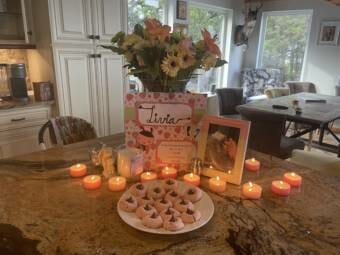
A plate of cookies, lit candles, a card, brightly colored flowers and a photo of a baby are arranged on a table as a shrine in memory of pregnancy loss.
Misty Fitzpatrick created a display in memory of the baby she lost in 2021, Livia Jo Burgess. (Photo courtesy of Misty Fitzpatrick).

It’s impossible to know how many pregnancies end in miscarriage because it can happen before someone even knows they’re pregnant. The March of Dimes has been tracking this issue for generations and estimates it could be as high as 50%. That means that someone you know has probably experienced pregnancy loss.

But until this year, there was no official support group in Juneau for people who had experienced the loss of a pregnancy or an infant. Doctors who had treated patients for miscarriages or stillbirth would reach out to Sara Gress at Bartlett Regional Hospital, looking for help.

“They would often come to us to see if we had any ideas about where to go,” Gress said. “And for many, many years, we came up empty-handed with that.”

Gress teaches birth preparation classes at the hospital and facilitates groups for new parents. And even though she’s really experienced in creating space for people to talk about all aspects of having a baby, she knew the topic of loss and grief was out of her expertise.

So, she teamed up with Teri Forst, a licensed professional counselor and a grief recovery specialist, to help facilitate the group, which supports people who have had recent losses or even losses in years past.

“There’s no timeline on grief,” Forst said. “Grief is a process that does not have a definition of time, and we will accept and support anybody.”

And the group doesn’t distinguish between early term pregnancy loss known as miscarriage or later term loss known as stillbirth. There are also people in the group who have lost infants after birth or even people who have been unable to get pregnant who really wanted to have a baby.

“If that feels to you like it’s a loss —because it is — that’s somebody who’s welcome to attend [the] group as well,” said Gress.

Forst says that we are lacking in rituals for this kind of death.

“When we lose somebody, you know, a parent or a sibling, there’s memorials, there’s funerals, there’s feast and potlucks and obituaries,” she said. “And with pregnancy loss, there’s rarely those things.”

She says she wants to change the taboo around pregnancy loss. And that starts with being willing to talk about it.

“I am trying to think back in 12 years of doing this job [if] I have ever heard anyone say, ‘I don’t want anyone to bring up my loss’,” Forst said. “It’s more of a ‘I just want them to be talked about and remembered and I want my experience to be validated’.”

That brings us to the holidays. It’s a time of joy and getting together with family that can be awkward — or triggering — for people who have experienced loss.

“Everybody typically wants to help and wants to have good intentions, but doesn’t know what to do and is afraid of saying the wrong thing,” Forst said. “So, it can be really helpful to just tell them what you need and want from them.”

She has advice for people who are grieving.

“I always recommend to not have the holiday dinner be at your house so that you can leave early or you can choose not to go at all, if you [don’t] want to. Give yourself some options — some plan B — to be able to remove as much unnecessary stress as possible,” she said.

And for friends and family who are there to support people who are grieving, Forst says be open to listening. And it’s better to say nothing than to let your discomfort lead you to say something insensitive. She says there are some things you should avoid saying.

“We hear some of the most common ones are: ‘Well, at least you have other kids’ or ‘Now you know you can get pregnant, so I’m sure you will, again’ or ‘Luckily, it was just early in the pregnancy.’ Those types of statements that are really not helpful. They’re not validating that this person, that this family, experienced such an enormous loss,” Forst said.

Instead, she says, offer to bring over dinner or babysit the kids so the grieving parents can have some time together.

Heading into the holidays the group has been sharing ideas with each other for ways to honor their loss — things like lighting a candle or setting a place for the baby at Christmas dinner, taking a photo with a pair of baby shoes or writing a poem, which are all ways of acknowledging the loss in a real and tangible way.

The group meets on the last Wednesday of every month at 6 p.m. on Zoom. You don’t have to be in Juneau to participate, but one-time registration is required.

Note: An earlier version of this story had the incorrect meeting time for the group. It meets at 6 p.m. the last Wednesday of the month.

Site notifications
Update notification options
Subscribe to notifications