Jeremy Hsieh

Local News Reporter, KTOO

I dig into questions about the forces and institutions that shape Juneau, big and small, delightful and outrageous. What stirs you up about how Juneau is built and how the city works?

With Capitol renovations on schedule, contractors get more work

This was the view from Rep. Alan Austerman's fifth floor Capitol office in June. The capital renovations will continue through the winter.(Photo courtesy Legislative Affairs Agency)
This was the view from Rep. Alan Austerman’s fifth floor Capitol office in June. (Photo courtesy Legislative Affairs Agency)

The Alaska Legislative Council approved an additional $650,000 to its $5.8 million Capitol building renovation contract on Thursday.

Demolition of the north wall of the west wing of the Capitol will proceed this fall, instead of in 2015. The updated contract won’t change the overall scope of the renovations in Juneau.

The scaffolding has been up on the west side of the Capitol all summer during the capitol renovations. (Photo courtesy Legislative Affairs Agency)
The scaffolding has been up on the west side of the Capitol all summer. (Photo courtesy Legislative Affairs Agency)

This summer’s work was focused on the west wall of the Capitol along Main Street. That’s where scaffolding’s been up all summer. The work has been as much about discovering the integrity of the 84-year-old building’s structure, as it is about making it earthquake resistant.

Wayne Jensen is the project architect. He told the Legislative Council, which manages the legislature’s budget and support staff, that the contractors are on schedule and the work has gone well this summer.

“The concrete frame that was exposed is in good shape,” Jensen said. “We found there’s some discrepancy in the plumbness of the building, that the concrete was out of plumb a little bit.”

In other words, the walls weren’t quite vertical.

“And we’re able to deal with that. So all in all, things have gone well.”

Jensen told legislators that doing extra work this season will save time and could save the state money.

It also resolves the contractors’ concern about a possible conflict next year. Demolishing the north wall of the west wing while masonry work is underway on the new and improved west wall would be bad.

Capitol-west wing
The contract change will let demolition proceed this year on this rear wall of the Capitol. (Photo courtesy Legislative Affairs Agency)

Jon Pulver is Dawson Construction’s project engineer.

“And the problem is, if you’re doing that, and you have masons that make it up, essentially, if they catch us as we’re going around and demoing, then we’ll have to hold them off because you can’t have that vibration going through and having the brick and the fresh mortar with vibration,” Pulver said.

The mortar could set improperly, according to Dawson.

The overall Capitol renovation is expected to be complete in 2016. The contractors are working their way around the Capitol clockwise, rebuilding exterior walls. Work will continue to be scheduled around the winter legislative sessions.

In addition to the earthquake improvements, the project will also expand the building into the courtyard and replace the heating system.

Contractors completed the first phase in 2013. It focused on the main entrance of the Capitol, making the marble steps, marble columns and the portico the columns supported structurally sound. They had all become very vulnerable to collapse in an earthquake.
Why the FAA is paying for new Juneau hiking trails

The Southeast Alaska Land Trust plans to donate about 128 acres of land to the City and Borough of Juneau this fall for preservation and natural recreation. The deal is technically an airport project—most of the money the land trust used to get the land in the first place traces back to the Federal Aviation Administration.

The land is in the Mendenhall Valley, bounded by residential subdivisions to the north, city-owned land that hugs the Mendenhall River to the east, public land to the south and Montana Creek to the west.

“It’s mostly really rich wetlands, and they would just be left alone,” says Greg Chaney, Juneau’s lands and resources manager.

The trust’s donation will be contingent on the preservation of the land as open space and for natural recreation. The plan is for new hiking trails, and possibly an overnight campsite and community garden.

“Basically, the west bank of the Mendenhall River will be an entire network of city trails….For a community of our size, it’s an incredible trail network. And this is the capstone, I mean, this has been years in the making,” Chaney says.

The reason this is connected to the FAA has to do with years of runway safety improvements at Juneau’s airport, which wrapped up in December. Basically, the FAA required more flat land around the runway, which meant filling in the surrounding wetlands.

Frank Rue, executive director of the Southeast Alaska Land Trust, explains what happened next.

“The Army Corps of Engineers required that they mitigate those wetlands’ impacts. And they chose to do it through the in-lieu fee program,” he says.

The FAA paid for more than 90 percent of the roughly $85 million runway safety work. Then, the airport paid the land trust $5 million to deal with its wetlands debt. Rue says approximately 86 acres of wetlands were lost, which translated into an obligation to preserve 227 acres of wetlands.

Federal law discourages destroying wetlands because they’re ecologically prized for their ability to naturally filter man-made pollution, provide flood relief and support unique ecosystems.

The land deal in the Mendenhall Valley will knock out about half of the mitigation debt. The details aren’t set, but it’s consistent with the city’s long-term land use plans for the area, which includes improving a rough trail that follows Montana Creek. The Juneau Assembly must finalize the transfer.

The Juneau Assessor’s database lists the property’s value at $20,000.

“That because for the city’s purposes, it’s a conservation lot,” Rue says. “They don’t value it as a lot that’s available for development.”

Rue won’t disclose how much the trust paid for the parcel–just that it was a much higher market rate before development was off-limits.


*Editor’s Note: The story originally stated that 56 acres were lost when it was about 86 acres that were lost. The story has been updated to correct the number.

New Eagle and Raven totem poles to rise this month

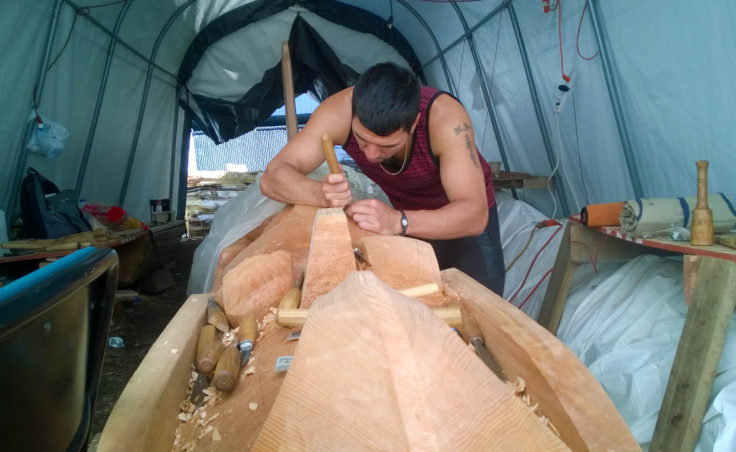
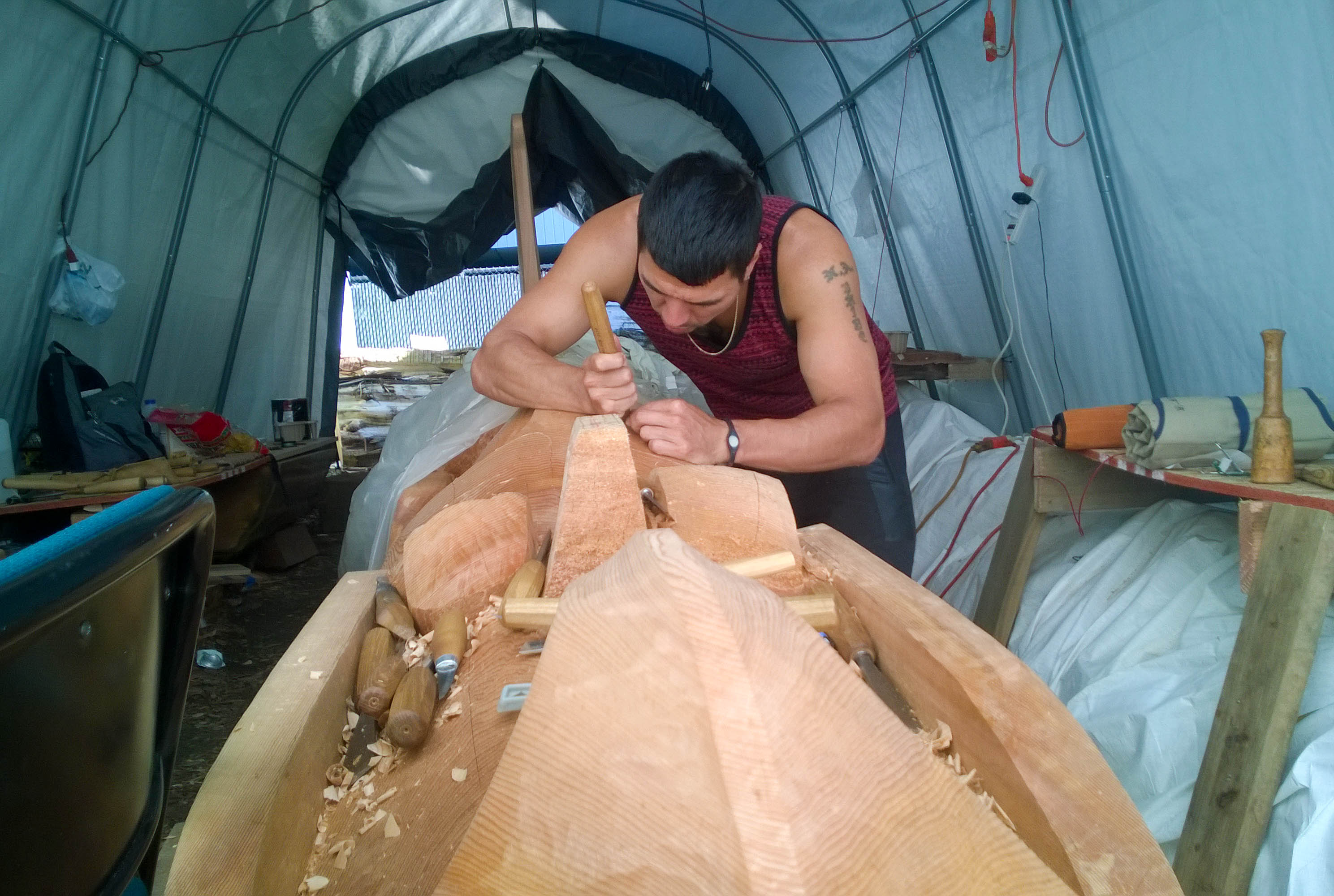
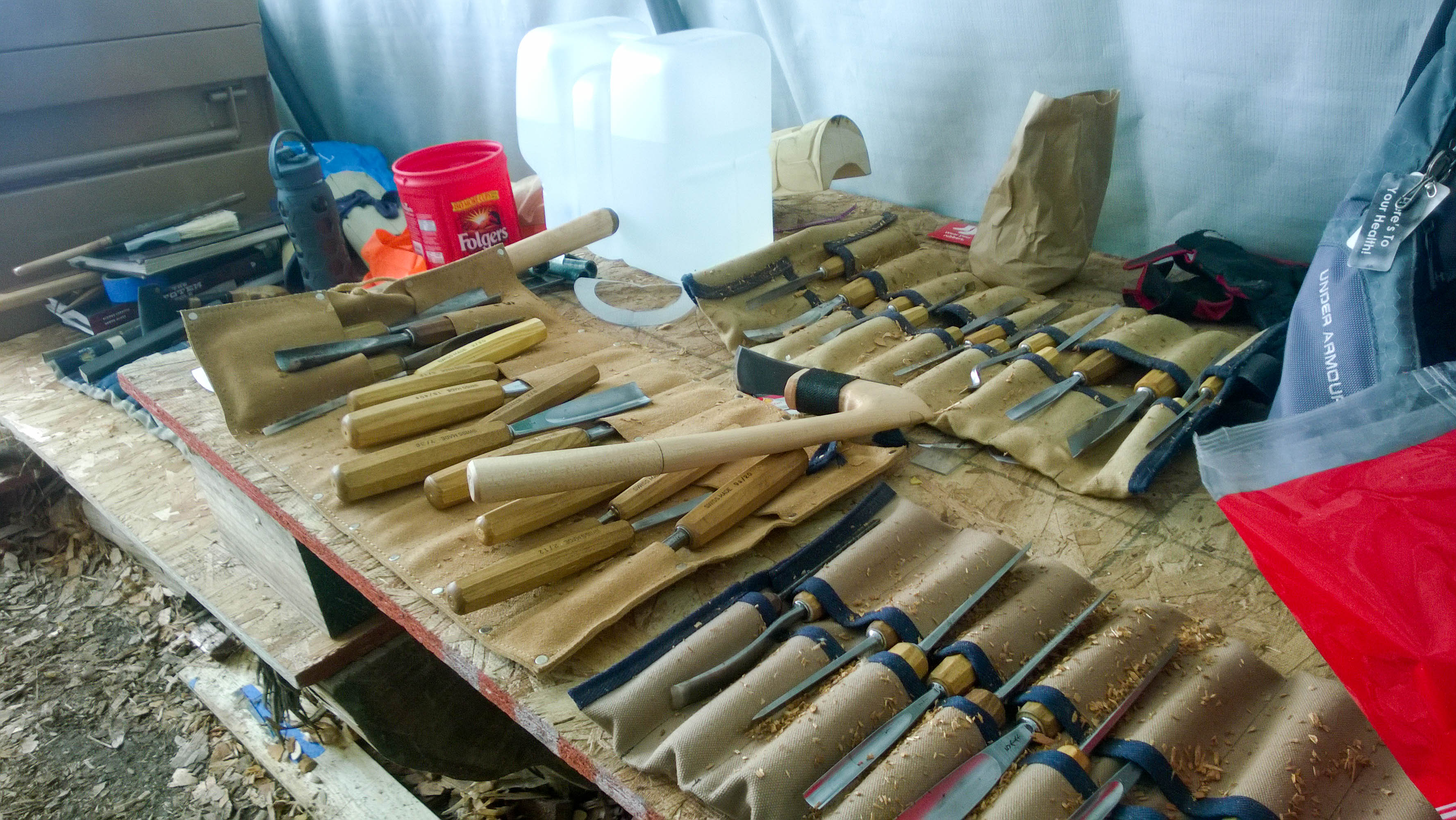
Haida carving brothers Joe and T.J. Young are back in Juneau to finish a pair of Eagle and Raven totem poles.

About this time last year, the Hydaburg men and their apprentices were using axes and chainsaws to shape the red cedar logs. Friday, they were working with small hand tools.

“As you work your way, as you start roughing it out, you’ll start getting — the tools’ll get smaller and smaller and smaller,” says T.J. Young. “And you’ll do a lot more sharpening throughout the process.”

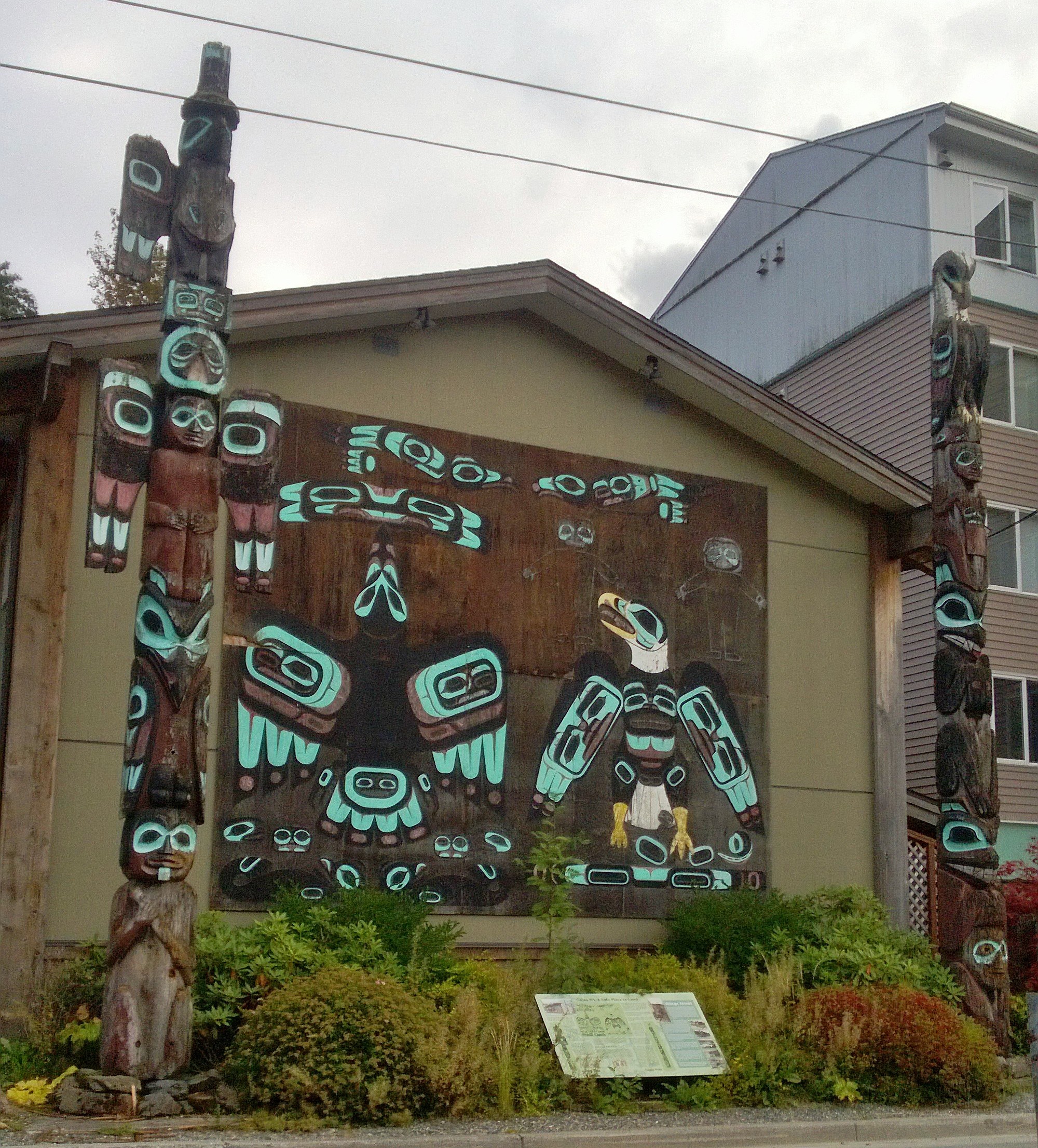
Sealaska Heritage Institute commissioned the new poles to replace the deteriorating, 36-year-old ones in front of the Gajaa Hít building off Willoughby Avenue.

Young says they’re working 12-hour days, but are on schedule. The new totem poles are supposed to be raised at the end of the month.

Open container check in Marine Park turns into brawl with police

The Juneau Police Department says four people are in custody after an open container check in Marine Park turned into a brawl with police officers.

At 1:45 a.m. Saturday, two officers approached a group of six people in the downtown park, according to a police statement. The police asked the four men and two women to leave. The three men and one woman who stayed physically fought with the officers–one man reportedly headbutted an officer and the woman grabbed an officer’s back mid-arrest.

Alcohol was a factor.

Police identified the four people in custody as

  • Jack Joseph Paine Jr., 32
  • Francois P. Whitman, 32
  • Charity J. Berkley, 23
  • Corey L. Nashoanak, 30

Their charges include disorderly conduct, resisting/interfering with an officer and assaulting a police officer.

The officers and the four people arrested had minor injuries.

Juneau police seize pot, $42,000 cash from 21-year-old’s home

Juneau Community Watch
Juneau Community Watch signs bookend Fritz Cove Road. (Photo by Jeremy Hsieh/KTOO)

Dustin Ian Fisher, 21, is facing 10 felony drug charges after authorities seized tens of thousands of dollars in drugs and cash from his home.

With a warrant, Juneau police searched Fisher’s Fritz Cove Road home and arrested him on Tuesday—the same day a judge signed paperwork setting aside his 2013 misdemeanor drug conviction. He had recently completed a one-year probation sentence, according to court records.

Police seized more than $42,000 in cash from a safe, nearly 3 kilograms of suspected marijuana, five pieces of blotter paper with suspected LSD, five grams of suspected psilocybin mushrooms and two doses of suspected Adderall, according to a police statement.

The marijuana alone may have a street value of more than $85,000, based on past police estimates.

According to the prosecutor’s statement, an M&P15 rifle, suspected hash oil and a variety of paraphernalia used in the manufacture of hashish oil were also found.

The search warrant came after a confidential informant working with the Juneau Police Department bought ecstasy and LSD from Fisher on three separate occasions in June and July, according to the prosecutor’s statement.

Juneau police say they had assistance from the FBI and a Southeast Alaska drugs task force in the case.

Fisher is due for a preliminary court hearing Aug. 8. He’s being held at Lemon Creek Correctional Center on a $50,000 bond. The public defender’s office has been appointed to represent him.

Fisher graduated from Thunder Mountain High School in 2011.

As budget deficit looms, Juneau Assembly eyes tax breaks

Gladi Kulp senior sales tax exemption
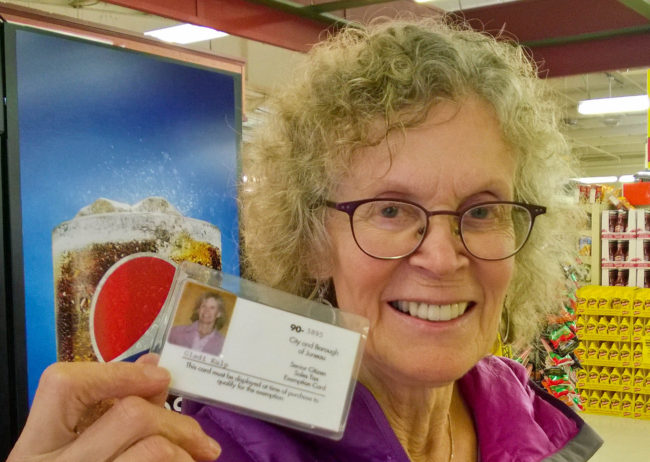
Gladi Kulp shows her senior tax exemption card at IGA. She says she normally doesn’t use it for small purchases, but her cashier knows her and prompted her for the card number. She saved about 85 cents this trip. (Photo by Jeremy Hsieh/KTOO)

With another year of multimillion dollar budget deficits on the horizon for the City and Borough of Juneau, an Assembly committee is reviewing the city’s 37 sales and property tax exemptions.

The committee will recommend which ones to keep, adjust or throw out.

Through sales tax exemptions in 2013, the city gave up nearly $78 million in revenue that could have paid for city services like education, libraries, police and fire protection, road maintenance and parks.

Assembly members on the committee are well aware that this is the hard part of being in elected office.

“If we make any changes that are going to cost anybody any more money, they’re not going to be popular,” Assemblyman Jerry Nankervis said at the committee’s first meeting last week.

After a long pause, Assemblywoman Kate Troll pointed out, “This is not a popularity committee,” which lead to hearty laughter from the committee.

With no changes, the city predicts it will be about $7 million short in the next budget year. The committee and city finance staff agreed that tightening exemptions on big-ticket goods and services is a good idea. Right now, the sales tax paid on a single good or service is typically capped at $375.

“Well, I definitely agree the cap is a good one,” said Sales Tax Administrator Clinton Singletary. “It hasn’t been adjusted since ’91, so it’s been awhile.”

Those caps saved taxpayers more than $5 million last year.

The senior citizens’ sales tax exemption is also under review and bound to be more controversial.

Assemblywoman Kate Troll says she’s interested in scaling it back so wealthier seniors no longer qualify. She also wants to create a new exemption on unprepared foods.

“That would benefit a larger cross section of Juneau. And, actually, people that probably are more deserving or needing of that exemption on food than some of our well paid seniors,” Troll said.

Senior citizens saved almost $2.9 million through the tax break last year.

Both the number of senior sales tax exemption cards issued and the dollar value of untaxed sales have grown steadily since at least 2006, according to finance department figures.

That lines up with a graying trend in Juneau demographics. The Alaska Department of Labor & Workforce Development projects Juneau’s 65 and older population will grow much faster than the overall population in the coming decades.

The tax exemption review committee meets again Aug. 7. Its report is due to the full Assembly by the new year. Similar tax exemption reviews were last completed in 2005 and 2006.

Site notifications
Update notification options
Subscribe to notifications