KBBI - Homer

KBBI is our partner station in Homer. KTOO collaborates with partners across the state to cover important news and to share stories with our audiences.

Alaska brewers sue state alcohol board on entertainment rules

A sign for Grace Ridge Brewing on the side of its taproom on Feb. 27, 2024. (Jamie Diep/KBBI)

It’s a slow afternoon at Grace Ridge Brewing, but it’s hardly quiet. The sound of machinery whirred throughout the Homer taproom as co-owner Sherry Stead talked about starting the brewery eight years ago with her husband, Don.

“Don wanted to open a brewery to make good beer, but mostly to be part of the community and to be able to offer a few year-round jobs in Homer,” Stead said.

Grace Ridge is one of three breweries and wineries suing the Alaska Alcoholic Beverage Control Board and Joan Wilson, the director of the Alaska Alcohol & Marijuana Control Office, over rules on offering live entertainment. Up until the beginning of this year, state laws banned breweries and wineries from having live entertainment on site.

A Senate bill that took former state senator Peter Micciche — who is now the Kenai Peninsula Borough’s mayor — nearly 10 years to create allows breweries to hold four events a year with live entertainment. Businesses must spend $100 to apply for a permit every time and they must pay double that to apply for a permit within three days of an event.

Stead said Grace Ridge serves as a hub for community events and fundraisers but the restrictions limit what people can do there.

“We love being a community spot. And we’ve had singers want to come and practice. We’ve had play people want to come and practice and we’re just like, ‘no,’” she said.

Anchorage brewery Zip Kombucha is another plaintiff in the case. Owner Jessie Janes said he started the business in a Jewish synagogue by making kombucha, a fermented tea drink.

Over time, Zip got its own facility and staff added various alcoholic drinks including cider and hard kombucha. He said initially they had a restaurant license and held open mic events, dance classes and more. But, when they changed to a brewery license, the rules prevented them from holding those events.

“I think that the state government doesn’t really have the constitutional right to pick and choose which businesses they think should succeed and fail or have priorities over others,” he said. “And I think that’s all these laws are really meant to do is give one business type preference over another business type.”

Janes said some breweries apply for full-service licenses as well, but they are expensive. He said they can cost up to $300,000.

Pacific Legal Foundation is representing the breweries in the lawsuit. Attorney Donna Matias said that by not allowing live entertainment, the law is a clear violation of freedom of speech under the state and federal constitutions.

“It’s not just, ‘I’m speaking words,’ or ‘I’m writing words,’ it’s performances, it’s theater, it’s poetry, it’s all, all of that is considered protected by the First Amendment,” she said.

By only restricting entertainment for certain businesses that serve alcohol, Matias said the rules also violate the equal protection clause of the state constitution.

Alaska Assistant Attorney General Kevin Higgins said in an email statement the state is considering filing a motion to dismiss the case.

“We have seen a copy of the complaint and are considering whether to file a motion to dismiss before we file an answer,” Higgins wrote. The state will have 40 days to respond once it has officially been served.

The lawsuit doesn’t have the support of the Brewers Guild of Alaska. The guild works to develop craft brewing in the state through holding conferences and working to change laws. Board president Lee Ellis said that attempting to change things through a lawsuit takes a long time. It also only targets one issue breweries face.

“From our standpoint, the sooner we start looking at further legislative changes, to enhance privileges of manufacturers across the state, the sooner we’ll probably reach those goals,” he said.

But Jason Davis, owner of Sweetgale Meadworks & Cider House in Homer signed onto the lawsuit. He started his business three years ago and is known for sourcing most of his ingredients locally on the Kenai Peninsula. He said while they stay busy in the summer, the restrictions on live entertainment keep them from having events with performers to bring in more business.

“I’m often asked by musicians if they could perform out on my patio, or if they could announce to their fans that they’re going to be having a pop up live performance here,” he said. “And it’s something that would be fun for me, fun for my customers, and it would be a great way of bringing in more business, especially during the slower winter months.”

At the end of the day, Davis says winning the lawsuit would be a small step towards leveling the playing field between breweries and bars.

Alaska Rep. Sarah Vance apologizes for comments about victims of sexual violence

Rep. Sarah Vance, R-Homer, sits in the House chamber at the Alaska State Capitol in Juneau on Feb. 14, 2024. (Eric Stone/Alaska Public Media)

Rep. Sarah Vance of Homer apologized on the House floor Monday for comments she made in a House Tribal Affairs Committee meeting last week.

Committee members heard testimony from people working in organizations serving Alaska Native peoples on the disparities in assault rates and violence against Indigenous women, which is several times higher than the general population.

At the end of the meeting, Vance said she felt the presentation excluded the experiences of white women who are victims of sexual violence.

“It’s the same thing. But what I continue to hear in this committee over and over again, is if you are the only one. And I know that’s not your heart,” she said. “But I asked that, when you come and present, that you remember that you have white sisters who are going through the same thing.”

In response, Rep. Ashley Carrick from Fairbanks — who is also a committee member — highlighted the reason for focusing on challenges for Indigenous women.

“While the suffering is the same for victims, the causes of that violence are not the same. And the response to that violence is not the same. And the justice for the victims is not the same. And until it’s the same, we have got a lot of work to do,” Carrick said.

The Alaska House Coalition called for Vance to apologize on Monday.

“As the only Alaska Native women in the legislature, knowing my native sisters are disproportionately affected by these high rates of violence within Alaska and other states cuts me to my core,” Rep. Maxine Dibert — who is Koyukon Athabascan from Fairbanks — said in a press release from the coalition.

Vance apologized on the House floor that same day, nearly one week after her initial comments. She addressed the committee chair Rep. CJ McCormick and guests directly before expanding her focus.

“But to every victim in every Alaskan Native voice you have been heard and you will continue to be heard in this body. And I asked you to forgive me for, for not listening with understanding first,” she said.

Vance sponsored four bills related to human and sex trafficking this legislative session.

Judge reinstates Kachemak Bay’s jet ski ban

Mountains in Kachemak Bay State Park, seen from the Homer Spit on Oct. 14, 2023. (Jamie Diep/KBBI)

After a two-year-long lawsuit, personal watercraft like Jet Skis are once again banned on Kachemak Bay. An Alaska Superior Court judge ruled against the Alaska Department of Fish and Game in a case earlier this month.
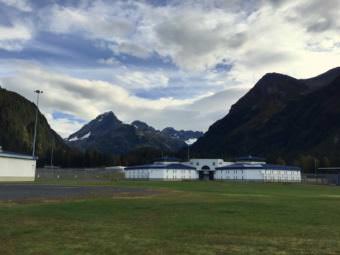
Back in 2020, the Fish and Game repealed a jet ski ban that had been in place for nearly two decades. The ban extended through the Kachemak Bay and Fox River Flats Critical Habitat Areas, This spans nearly 230,000 acres, which covers most waters of the bay, as well as mud flats and marshlands on its northeast section.

Fish and Game Commissioner Doug Vincent-Lang argued that the department had the authority to repeal the ban because since 2001, jet skis changed to where they wouldn’t be more damaging than watercrafts allowed in the bay.

We didn’t see any potential impact from allowing jet skis,” he said.

The Alaska State Legislature established these areas in the early 70s as especially important for fish and wildlife.

In response, Cook Inletkeeper, Kachemak Bay Conservation Society, Friends of Kachemak Bay State Park and the Alaska Quiet Rights Coalition filed a lawsuit against the department in 2021 to reinstate the ban.

Cook Inletkeeper co-executive director Sue Mauger said they filed the lawsuit over concerns about the jet ski’s impact on the bay compared to other watercraft.

“Just the way that it moves in shallow waters, typical behavior that’s used on those is very different,” she said. “They don’t tend to be a transport from A to B, and they tend to be in groups, and they tend to, again, be in shallower habitats that are really critical for, juvenile fish or nesting birds.”

Judge Adolf Zeman ruled in favor of the plaintiffs, basing the decision on two reasons.

First, the statute establishing critical habitat areas to repeal the jet ski ban did not give the commissioner the authority to repeal the ban.

Second, the order stated repealing the ban was inconsistent with the statute’s intent. In this case, the department has the authority to create and repeal regulations with protecting fish and wildlife in the area as its primary goal. The court decided repealing the ban did not align with that intent.

However, Vincent-Lang still disagrees with the decision.

“We’re very perplexed with the judge’s ruling,” he said. “We seem to have the ability to adopt a regulation that prohibits jet skis, but we don’t have the ability to revisit that regulation based on current science.”

Moving forward, he says the department plans on filing a motion for reconsideration, or to appeal the decision in a higher court.

Smuggling cases point to need for better drug treatment in Alaska prisons, advocates say

Spring Creek Correctional Center in Seward. (Photo by Anne Hillman/Alaska Public Media)

After a motorcycle accident in his teenage years, Adam Mahoney started using pills. When those pills became harder to find, he started doing heroin.

Last year, Mahoney was arrested and sent to Wildwood Pretrial Facility in Kenai.

“I knew that when I went to jail that I was going to be sick,” Mahoney said.

At the time, Mahoney was in a drug treatment program. Anticipating he wouldn’t be able to continue treatment, he tried to smuggle in Suboxone — a drug used to treat withdrawal symptoms — but the package burst in his stomach. Mahoney said he almost died.

It’s not just Mahoney who has tried to smuggle substance use treatment drugs into state facilities, where rates of substance abuse are disproportionately high.

In recent months, at least two Alaska Department of Corrections staff members have faced charges for bringing medication into correctional facilities on the Kenai Peninsula. In April, a correctional officer was charged for bringing buprenorphine into Spring Creek Correctional Facility in Seward. Earlier this month, a former staff member was charged for distributing Suboxone at Wildwood Pretrial Facility in Kenai.

Ninilchik-based addiction medicine specialist Sarah Spencer said with gaps in available treatment options, incarcerated people will go to great lengths to avoid withdrawal.

“It’s just incredibly painful in every way you can imagine,” Spencer said. “And so of course there’s going to be an enormous black market.”

‘The extremes that we’ll go to’

Spencer said today, the drug buprenorphine is the gold standard for opioid use treatment.

“There are very few medications that we have in modern medicine that are as effective as this medication is to treat this disorder,” Spencer said. “It is just incredibly effective.’

Buprenorphine is a prescription opioid that treats withdrawal symptoms and reduces cravings. (Suboxone is a brand-name version of buprenorphine and naloxone, a medicine that reverses opioid overdose.) Spencer’s Ninilchik clinic offers injections of the drug for patients in recovery.

But Spencer said people in Alaska correctional facilities often cannot access buprenorphine or other drugs through in-house treatment programs.

Drug treatment policies vary from facility to facility in Alaska. As it stands, the Department of Corrections said it will bridge patients’ medications for up to 30 days. That means inmates with methadone and Suboxone prescriptions, for example, should be able to keep on their treatment plans for up to a month after entering the system.

But that policy doesn’t account for the remainder of a person’s sentence. And Spencer said bridging doesn’t always happen, either, even though the Americans with Disabilities Act requires jails to continue incoming inmates on their medication when they enter the system, according to new guidelines from 2022.

Some state facilities do offer injections of Vivitrol — an opioid antagonist that keeps cravings away. But unlike its counterparts, Vivitrol is not an opioid and does not block withdrawal symptoms. Spencer said symptoms of withdrawal can be brutal, including severe nausea and restlessness, and that going cold turkey can be really painful. She said it’s the worst flu you’ve ever had, times 10.

Mahoney said that’s why he tried to bring Suboxone into Wildwood last year, and could be why some staff members have been caught doing the same.

“It just kind of goes to show the extremes that we’ll go to just to maintain adherence,” he said.

Megan Edge with the ACLU Alaska Prison Project said DOC often blames families and visitors when drugs are brought into facilities. After the June 2022 case at Wildwood, she said the facility was placed on lockdown — a year before the staff member was charged in the case.

‘We know what works’

Since Mahoney was released from prison, he’s gotten back on a treatment plan with Spencer’s clinic, in Ninilchik. He said he feels fortunate to have the clinic’s support.

But Spencer said the inconsistent treatments system-wide could be a lawsuit waiting to happen. She’s working with the Department of Corrections to work on getting a more consistent system in place.

DOC Spokesperson Betsy Holley said the department is in the process of expanding the treatment services it offers. She said the department could expand treatment beyond 30 days for inmates with existing prescriptions, for example, and the department could start patients on treatment while they’re incarcerated — which they don’t already do.

When asked for a timeline, she said the changes were still in their “initial stages,” and that DOC had no more information to share.

Around the U.S., stigma and bureaucracy have kept states from implementing treatment programs in jails and prison. But some states have. Rhode Island has been offering medication for addiction treatment programs in prisons and jails since 2016. Those programs start while people are incarcerated and can continue after release, when people are at a high risk of relapse and overdose.

Spencer said the data shows it’s working.

“We know what works. We know exactly what works,” Spencer said. “We just need to do it.”

She said in a crisis, there’s no time to waste.

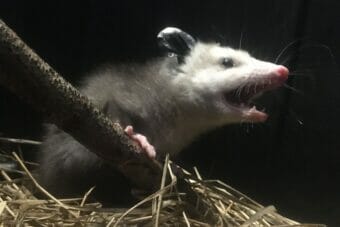
Homer biologists grab 3 more of Grubby’s offspring as search for opossum posse continues

A young male opossum among the offspring of Grubby the opossum, captured in Homer on Tuesday, June 6, 2023. (Jason Herreman/ADFG)

State biologists are continuing their efforts in Homer to catch offspring of Grubby the opossum, with three more members of her litter captured as of Tuesday.

The now-infamous Grubby, an opossum from Washington that made its way to Homer in a shipping container, was caught late last month and sent to the Alaska Zoo in Anchorage.

But to the chagrin of area biologists and the Department of Fish and Game, Grubby made landfall carrying offspring.

Jason Herreman, with the Department of Fish and Game, said a male opossum three to four months old was captured near Homer City Hall on Thursday. As of Tuesday morning, a fourth young opossum — another male — had been captured. At least one more of Grubby’s spawn remained at large.

Herreman said the small marsupials, referred to as joeys, will be out foraging for food and shelter.

“They’re going to try to find food sources, and places with shelter,” Herreman said. “Shelter areas will be under houses, sheds, any kind of little hole where they can make a burrow. And then food sources, where people have trash outside, if they leave pet food out. Basically, anything that an omnivore could eat. These guys are really generous in their diet.”

In addition to the risk of spreading diseases as an invasive species, opossums’ indiscriminate hunting and foraging methods pose a risk to local wildlife. Herreman said nesting birds, rodents, and even frogs are a possible food source.

“So you think of the small mammals we have, like our redback voles, our shrews, some of our ermine that are smaller in size, they can compete for space and food and prey on some of these things,” Herreman said.

The search in Homer is currently focused an area between Ulmer’s Drug & Hardware and City Hall, extending down to the local Safeway store. Pet owners should keep animals indoors during the live trapping efforts to capture the young opossums.

Fish and Game is asking the community for help in locating any remaining joeys. Herreman says they may transfer diseases to people who get too close and recommends people keep an eye on it and call their office at 907-235-8191 and Homer police at 907-235-3150 after business hours.

Bird-calling competition brings beautiful, mysterious and wacky calls to Homer

A contestant identified as Mr Oystercatcher imitates the local bird. (Corinne Smith/KBBI)

Five-year-old Cassidy Allmendinger confidently walks to the mic on a makeshift-outdoor stage. She’s the first contestant of Homer’s annual bird-calling competition.

“First I will be doing the sandhill crane,” she says. “Coooh coooh coooh.”

Allmendinger says she learned that one from her grandmother. It’s a special spring call many Homerites recognize, as the striking gold and gray cranes return to mate on the shores of Kachemak Bay.

The bird-calling competition is a fan favorite of the annual Kachemak Bay Shorebird Festival, which includes four days of guided tours, presentations and family activities for birding enthusiasts. The competition featured locals and visitors of all ages showcasing their favorite bird calls — beautiful, mysterious and whacky alike.

A large crowd gathered outside the Homer Brewing Company for the competition, loudly cheering each contestant. Some have just come from birding workshops or kayak trips as part of the four-day Shorebird Festival.

Marina Steffy, 17, mimics a seagull call. (Corinne Smith/KBBI)

Seventeen-year-old Marina Steffy steps up with another distinct and familiar call — a seagull.

The bird-calling competition draws contestants of all ages. Some have bird-themed T-shirts and binoculars still hanging around their necks. Four judges, seated at a table to the front, are all decked out in bright feather boas.

Some bird calls are serious, some are funny. Some are easily identified, while others leave the crowd guessing.

That was a golden-crowned sparrow, known for its distinct three-note trill. There’s also a dramatic impression of a European starling, complete with a costume jacket glued with plastic stars. One contestant, who introduced himself as Mr. Oystercatcher, wears red leggings and black feather boa, with a bright orange beak glued to a hat.

“I didn’t plan to participate, but when you show up to a bird calling contest dressed up as a bird, people are going to have expectations,” he said. “So here’s my best oyster catcher impression…Chee chee chee chee.!”

“Hopefully there’s points for flair,” he said, and the crowd cheered.

After a long and careful deliberation, the judges announce the winners. Penny Gage of Anchorage took home one of the top prizes for her eagle call.

“I practiced that call in Sitka working on a tour boat in the summer, and I’m really glad to see it come into use today,” she said laughing. “And I love the shorebird festival, and I love migratory birds, and I’m really happy to be here!”

One of the judges is Cindy Mom, a bird guide and owner of Seldovia Nature Tours. She’s holding pages of notes on the contestants.

“Like, everybody has a star! Look at how many we circled!” Mom said. “Yeah it was all so good, we were like how are we going to do this?”

Cassidy Allmendinger, 5, competes in the bird-calling competition with sandhill crane, chickadee and owl calls. (Corinne Smith/KBBI)

Steffy — who did that memorable seagull impression — was also a prize winner.

“I did the gray jay, I did a raven, and then I did the seagull, which is a pretty easy one. And then I did a magpie,” she said.

She says she grew up birding on her grandparents property in Kenai. This is her first bird-calling competition, and she says she hopes to learn more bird calls and compete again.

“I’m into a lot of birds,” Steffy said. “Because I had chickens growing up, and I have a turkey right now. But I love birds, like the robbins and the chickadees, I even rescue birds now and then.”

There were many ties and runners up. Judges handed out prizes including specialty chocolate, bird T-shirts and gift certificates to venues around town.

As a light rain starts to fall, the crowd disperses, some heading to more festival events. Others turn in for the night, preparing for more early morning birding the next day – excited to experience the birds of Kachemak Bay.

Site notifications
Update notification options
Subscribe to notifications