KDLG is our partner station in Dillingham. KTOO collaborates with partners across the state to cover important news and to share stories with our audiences.
The test result was positive, but it was not from a real patient. Instead, it was a practice result that was sent over to the state’s raw data site and labeled as “positive” to ensure that the electronic reporting stream was working, according to Louisa Castrodale with the Division of Public Health.
Castrodale said in an email that positive results from real patients are called into staff so they can “begin an investigation and connect directly with the health care providers and patients.”
The Bristol Bay region has limited health care capacity. Its sole hospital has 12 in-patient beds and two emergency ventilators for use on coronavirus patients. As fishermen and workers travel to the region for the fishing season, communities are working to implement additional safety measures, like 14-day quarantine and travel guidelines, to protect residents from a potential outbreak of the virus.
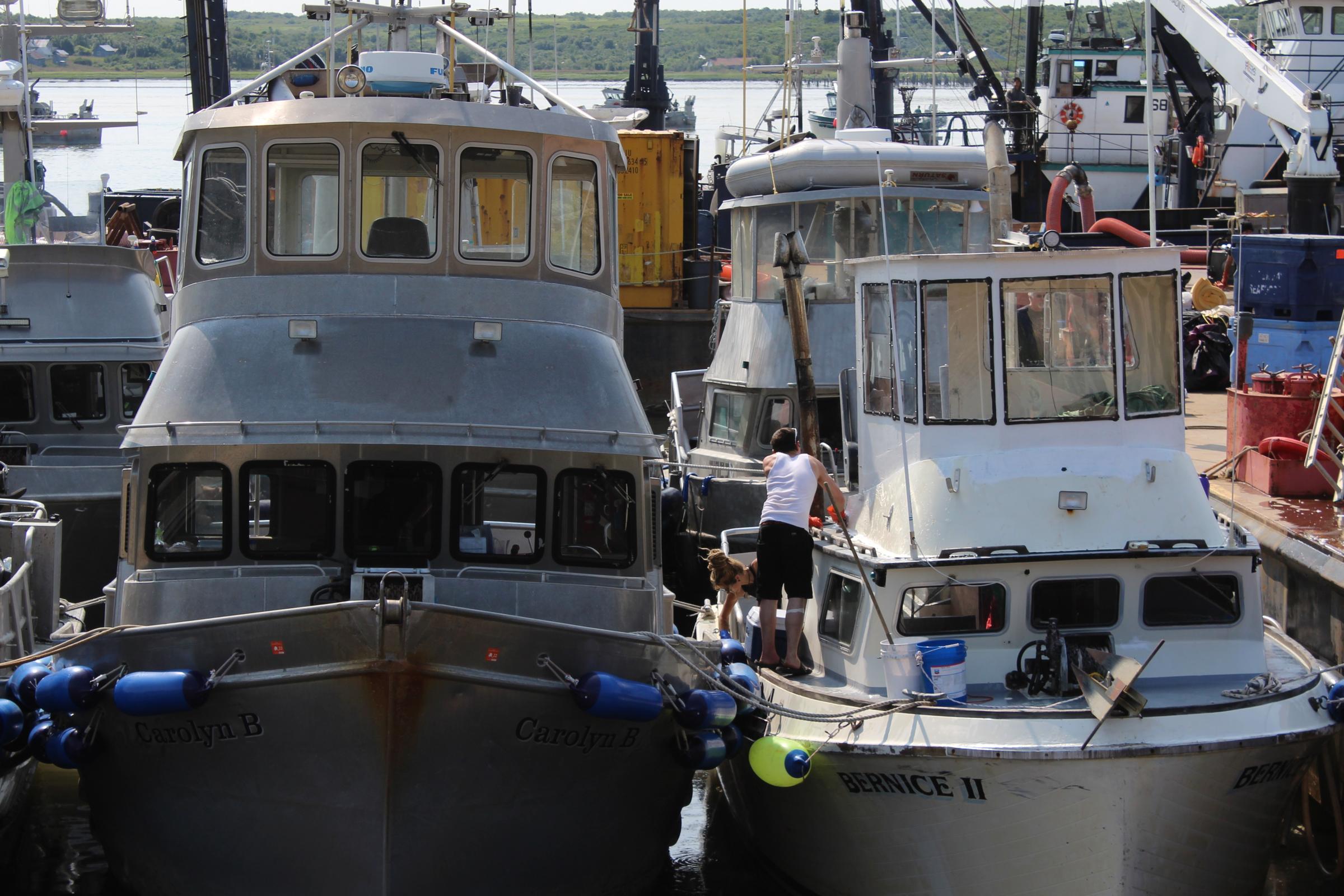
Boats in the Naknek harbor. July 10, 2019. (Photo by Sage Smiley/KDLG)
Thousands of commercial fishers coming to Bristol Bay will be operating under a strict set of guidelines this season, laid out in the new mandate released last week by Gov. Mike Dunleavy’s administration.
But some local leaders say it’s not enough.
The mandate comes at a time when the Bristol Bay region is usually gearing up for the largest sockeye salmon fishery in the world. It targets independent fishing boats, many of which are operated by captains and crew who travel to Bristol Bay from outside Alaska.
Crew members and captains who want to fish this summer will have to wear masks while traveling there, and go immediately to the place where they’ll quarantine for two weeks. Once they arrive, they’ll have their temperatures checked twice a day. The mandate requires crew members to undergo verbal and physical screenings upon arrival — and they can’t have respiratory problems or fever.
Crew members are allowed to quarantine on board their boats, and they’re still allowed to fish as long as they restrict contact with other boats and people on shore as much as possible. To protect communities, the mandate also stipulates that crew can only leave the vessel for essential purposes.
Robert Clark, the president and CEO of the Bristol Bay Area Health Corp., said the latest mandate is a step in the right direction, but it’s still not enough to protect residents.
“I don’t see from the governor or (the Bureau of Indian Affairs) or the cities or the boroughs enough enforcement to ensure that people are following the rules,” he said. “It really comes down to — plans are only as good as follow-through and enforcement. And there’s got to be some big consequences, because lives are at stake.”
The corporation’s executive committee voted to endorse closing the 2020 commercial fishery last week. Clark said that he doesn’t think that position will change when the committee meets in the second half of May.
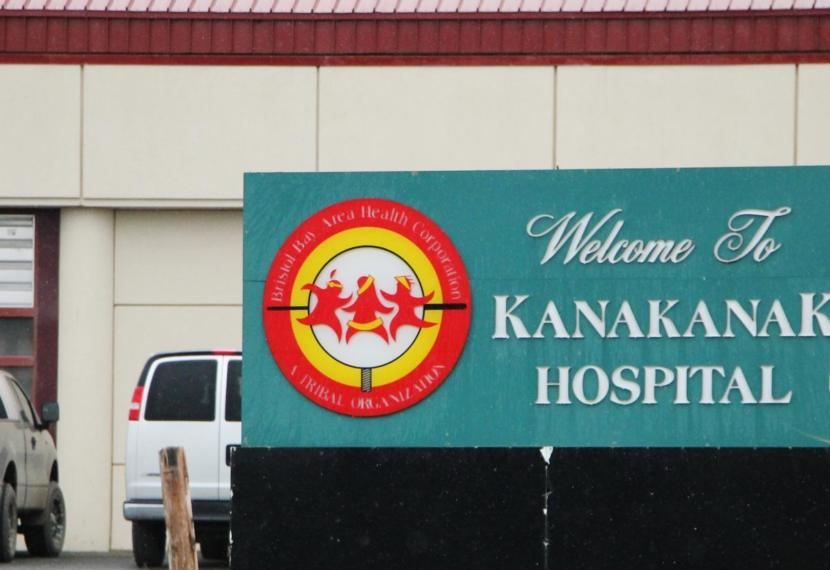
The corporation manages Kanakanak Hospital in Dillingham, which is the region’s only hospital. It is licensed for 16 beds, 12 of which are suitable for people who need additional oxygen. It has no intensive care unit and just one ventilator for emergency use on coronavirus patients.
In its announcement last week, BBAHC said that without a plan in place to protect the community and provide additional resources to the hospital, the season would put residents at risk of being infected with COVID-19.
The state said that it is working to hire a contracting company to assess security needs in the region, after which it will release an enforcement plan.
“This is something the state would find the money to pay for — to actually have security forces in-region, just to make sure that the whole industry is doing what they’re supposed to do, protecting the community, not having undue mixing, so we can have a safe fishery, which is critical to Alaska and the world’s food supply, as well as making sure the communities are protected and they have the support they need,” said state Health and Social Services Commissioner Adam Crum, speaking at a regional town hall meeting Thursday.
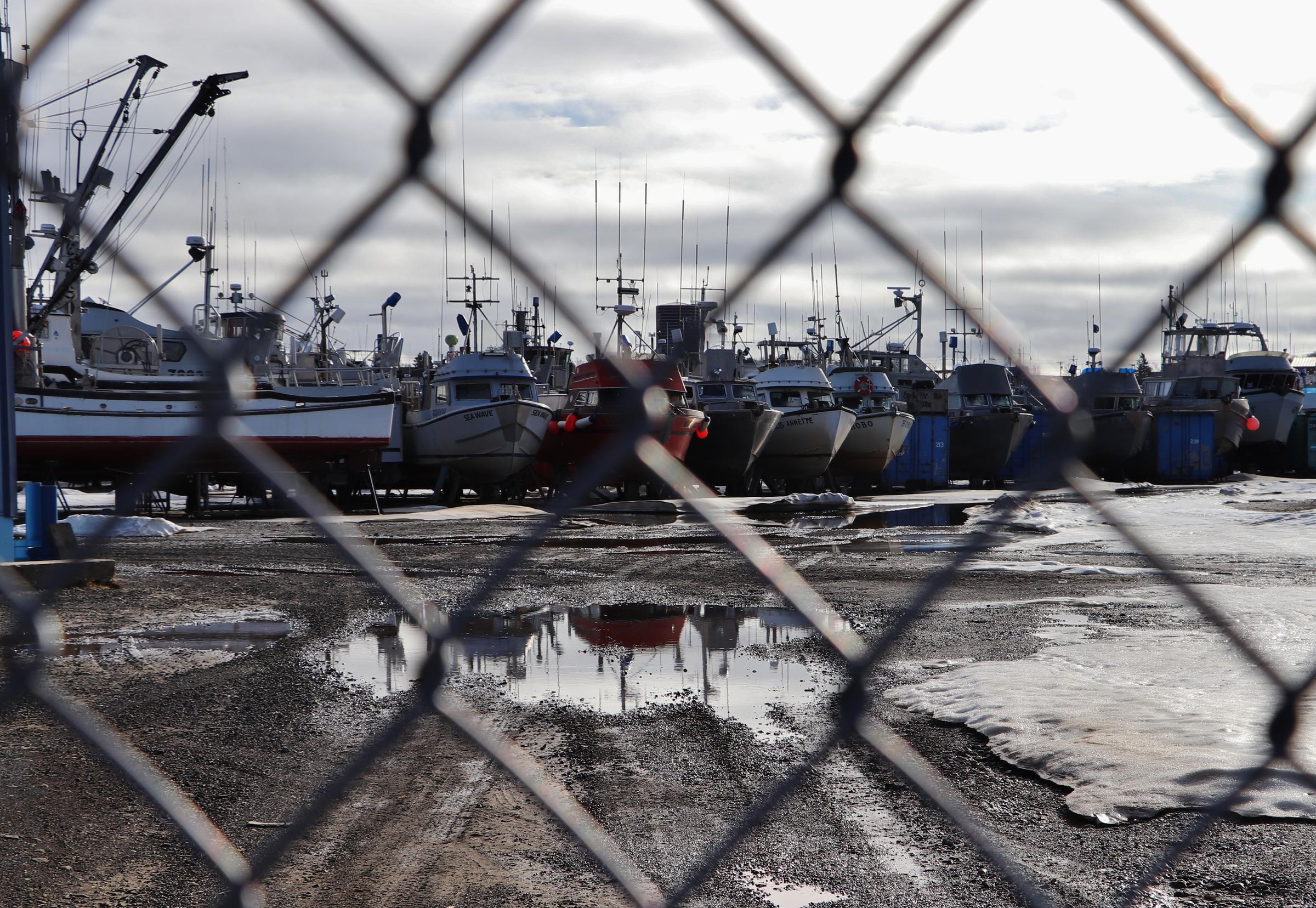
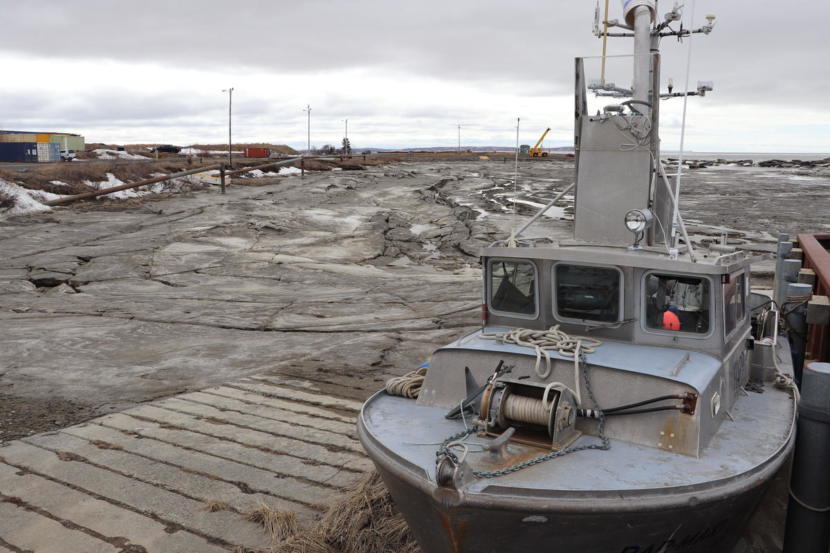
Boats sitting in the Dillingham boat yard on April 21. (Photo by Isabelle Ross/KDLG)
The question of enforcement also weighs on Thomas Tilden, the first chief of the Curyung Tribal Council in Dillingham. He sees the governor’s mandate as relatively comprehensive, but there are still loopholes.
“I see it working pretty well on tenders. However, with fishing boats, you’re absolutely right, the quarters are limited, number of bathrooms are limited, sleeping bunk areas are limited,” he said. “So this would be really hard to enforce. For example, if you did have a crew member that came down sick, if you quarantined them in the cabin that means nobody else could go into the cabin. So people need to take a hard look at this and figure out what’s doable and what’s not doable.”
Boats are required to continuously monitor crew members who show signs of illness. If a worker is suspected of having COVID-19, they must wear a mask or cloth covering and stay in a private room with a door and separate bathroom facilities.
The largest commercial vessels permitted to fish in Bristol Bay are 32 feet, and they don’t have enough space to isolate sick crew members. The mandate says that in such cases, the entire vessel will be put under 14-day isolation.
Gayla Hoseth, the Curyung Tribal Council’s second chief, said that plan is not realistic, and that the mandate doesn’t clearly state what will happen if someone gets sick.
“Why should we sacrifice anybody’s life, whether you live here or whether you’re coming here? You shouldn’t have to sacrifice the life of anybody so that people could go and make some money. It’s not worth that price tag of anybody’s life right now, because we don’t have the resources to help people. We have very limited resources here,” she said.
The mandate directs fishery workers with suspected or confirmed cases of COVID-19 to contact the local public health provider for guidance. If they do not require shoreside medical attention, it continues, the boat may continue fishing during a 14-day quarantine.
It specifically applies to boats that have not “agreed to operate under a fleet-wide plan submitted by a company, association or entity” representing them.
The Bristol Bay Regional Seafood Development Association, a regional seafood group, has a set of safety ideas on its website. But Executive Director Andy Wink said the association has no authority to mandate fleet-wide requirements.
“We think the state mandate is workable. We provided input on it and, again, had put out our set of safety ideas and those were incorporated into the state mandate. So yes, we feel it is — that they are workable options,” he said.
The association is trying to help fishing crews meet these safety requirements by offering discounted medevac insurance packages. They have also acquired 8,000 face masks and flags signaling if a boat is under quarantine, which they plan to distribute to the entire fleet by June.
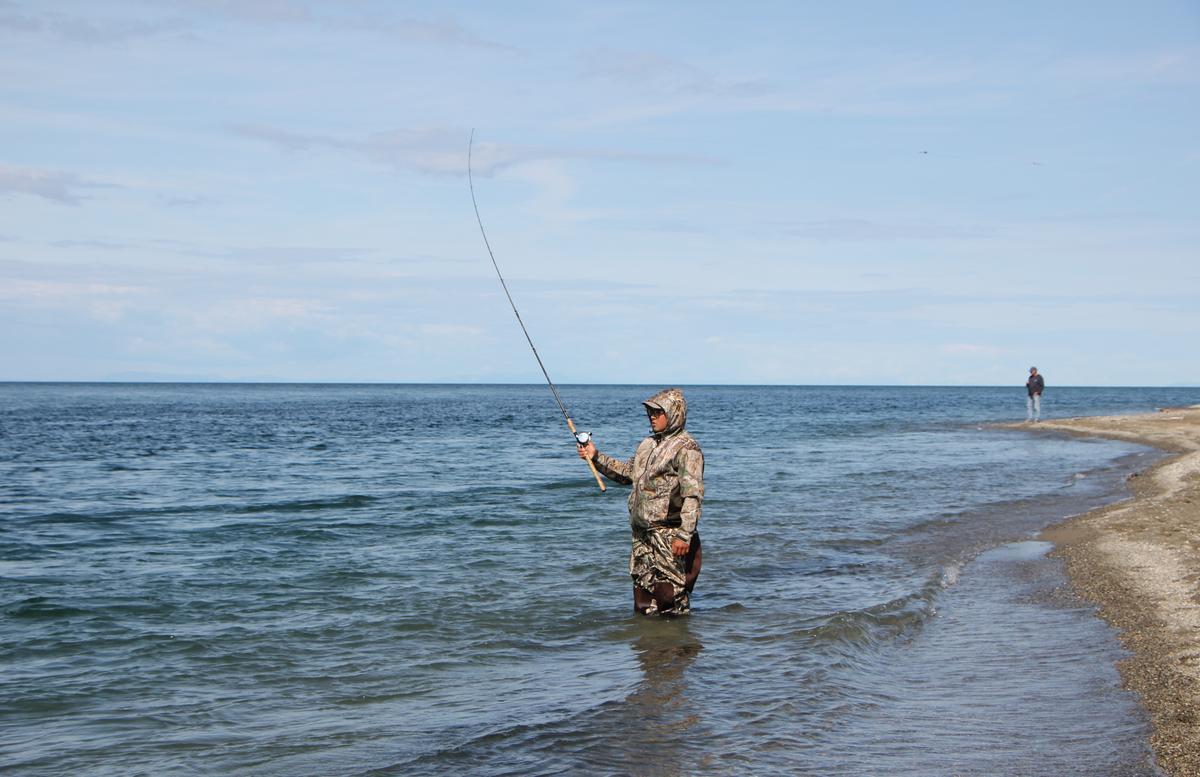
Aiden Salmon fishing at the mouth of the Kvichak River on July 17, 2019. Igiugig normally does business with nearby sport fishing lodges. Now the community is hunkering down to protect against coronavirus. (Photo by Isabelle Ross/KDLG)
Gov. Mike Dunleavy and the Alaska Department of Fish and Game released specific guidelines last week for people who want to sport fish in Alaska.
Sport and personal-use fisheries remain open, and the public may still travel to fishing locations. But guidelines issued by the state aim to eliminate exposure to communities near those destinations. Fishers are required to take precautions like social distancing and wearing masks.
They will also have to bring their own provisions from home to prevent them from going into communities for food or fuel, and must abide by the local mandates of their destination.
Alaska Health and Social Services Commissioner Adam Crum said in a news conference that the state is meeting twice a week with a group consisting of sport and personal-use fishers.
“They’re trying to put together recommendations,” Crum said. “We’ve got members of both our health department team and our industry sustainability group talking with them about what are some of the protocols we can implement — other practices. Some of these things we can look towards to make sure we have some sort of action down there.”
Rick Green, special assistant to the Fish and Game commissioner, said the guidelines were put into place to fulfill subsistence needs for Alaskans.
“This thought was really for Alaskans to have the ability to get out and fill their freezers. With the 14-day quarantine mandate for any out-of-stater coming into Alaska, I don’t think we’re going to see the out-of-staters come in,” he said.
Summer tourism generates important revenue for Bristol Bay communities, like Igiugig. People start traveling to the village in June when lodges open for sport fishing.
The village council met last week to discuss the upcoming season.
“We’ve had lodges calling in and asking, ‘Do we even come out? Should we land and walk directly to the river and drive straight to our lodge with no interactions in the community at all? Or do you just not want us out totally?'” said council member Christina Salmon-Bringhurst. “But we told them as of yesterday, we’re taking this day-by-day because every week it’s something new.”
She said several families who own businesses in the village of around 70 residents also depend on that revenue.
“It would be sad to not have it open here, but at the same time our village council is not going to do anything to compromise the health of anyone here,” she said. “We’re so small that losing one person would be devastating for us. The health of our people is above and beyond anything else at this moment.”
Brian Kraft owns the Alaska Sportsman’s Lodge just south of the village — one of the businesses working with the community. The lodge averages around 500 guests in the summer. Tourists spend between $6,000 and $9,000 for three- or five-day trips, including airfare.
Kraft said the quarantine would have to be lifted for lodges to operate realistically.
“Not many guests come up here for 14 days,” he said. “Quite honestly, if quarantining is still in effect, masks and gloves are required and COVID-19 is still rampant throughout the country and spreading still, that’s not the experience we want to have. We don’t want to subject our clientele, the staff. Or if we have an influx in the community, we don’t want to be a part of that.”
Kraft also owns the Bristol Bay Lodge in Aleknagik. They average around 300 tourists per season.
Another regional lodge owner who asked not to be named is considering closing due to travel restrictions and quarantine requirements.
A boat in the Dillingham harbor on April 21. (Photo by Isabelle Ross/KDLG)
The Bristol Bay fishery will be operating under a strict set of guidelines this season, laid out in the new mandate (#17) released Thursday by Gov. Mike Dunleavy.
Crew members and captains who want to fish in Bristol Bay will have to wear masks while traveling there, and go immediately to the place where they’ll quarantine for two weeks. Once they arrive, they’ll have to have their temperatures checked twice a day. (Read whole the plan)
The mandate targets independent fishing boats, many of which are operated by captains and crew who travel to Bristol Bay from outside Alaska. Specifically, it applies to those who have not “agreed to operate under a fleet-wide plan submitted by a company, association or entity” representing them.
The new mandate also requires crew members to undergo verbal and physical screenings upon arrival — and they can’t have respiratory problems or fever. Crew members are allowed to quarantine onboard, though they’re still allowed to fish as long as they restrict contact with other boats and people on shore as much as possible.
To protect communities, the mandate stipulates that crew can only leave the vessel for essential purposes.
If a fisherman becomes sick, they will be required to isolate themselves. If they are not able to isolate from others on the boat, the entire vessel will be under isolation.
Boats are also required to continuously monitor crew members who show signs of illness. If a fisherman is suspected of having COVID-19, they must wear a mask or cloth covering and stay in a private room with a door and separate bathroom facilities, though that may not be available on every boat.
The mandate goes into effect at 8 a.m. Friday, and the state will reevaluate it by May 30.
Dunleavy’s administration has been under increasing pressure to outline safeguards for Bristol Bay as the salmon season approaches. Mayors from the region sent a letter to the governor Saturday, asking for a meeting and saying that they want the highest level of protection possible for residents. Current efforts to keep the fishery open, the mayors wrote, seem intent on marginalizing local communities and removing them from the decision-making process.
The letter was signed by the municipalities of New Stuyahok, Manokotak, Togiak, and the Lake and Peninsula and Bristol Bay boroughs.
In an announcement Thursday, Robert Clark, the chief executive of Bristol Bay’s tribal health organization said it’s priority is serving its 28 member communities. The arrival of several thousand fishermen and seasonal workers will put residents at risk, Clark said.
“We really can’t help people without a lot of extra help. And maybe even then it’s going to be difficult,” he said. We’re just under-gunned, under-staffed, under-resourced to meet such a big thing. We’ve been planning daily. We’ve got a team that’s practicing up. I’m real happy with all of that stuff there. But we’re not getting what we’d like to get, and we’re not getting it quickly enough.”
Bristol Bay Area Health Corporation “has not received a commitment from the State of Alaska or the City of Dillingham regarding what additional resources would be provided in the case of an onset of COVID-19,” the announcement reads. “Without a plan of action, BBAHC resources will most likely be strained and overwhelmed.”
BBAHC’s executive committee voted to oppose opening the fishery.
The corporation manages Kanakanak Hospital in Dillingham, which is the region’s only hospital. It is licensed for 16 beds, 12 of which are suitable for people who need additional oxygen. It has no intensive care unit and just one ventilator for emergency use on coronavirus patients.
“We’ve had ventilator filters on order for weeks. We’ve had ventilators on order for weeks. There’s not much supply,” said Dr. Cathy Hyndman, the clinical director of BBAHC.
Hyndman said BBAHC has a rapid COVID-19 test machine at the hospital, and the corporation is sending five more to villages around the region.
As of April 23, there are no reported cases of COVID-19 in Bristol Bay.
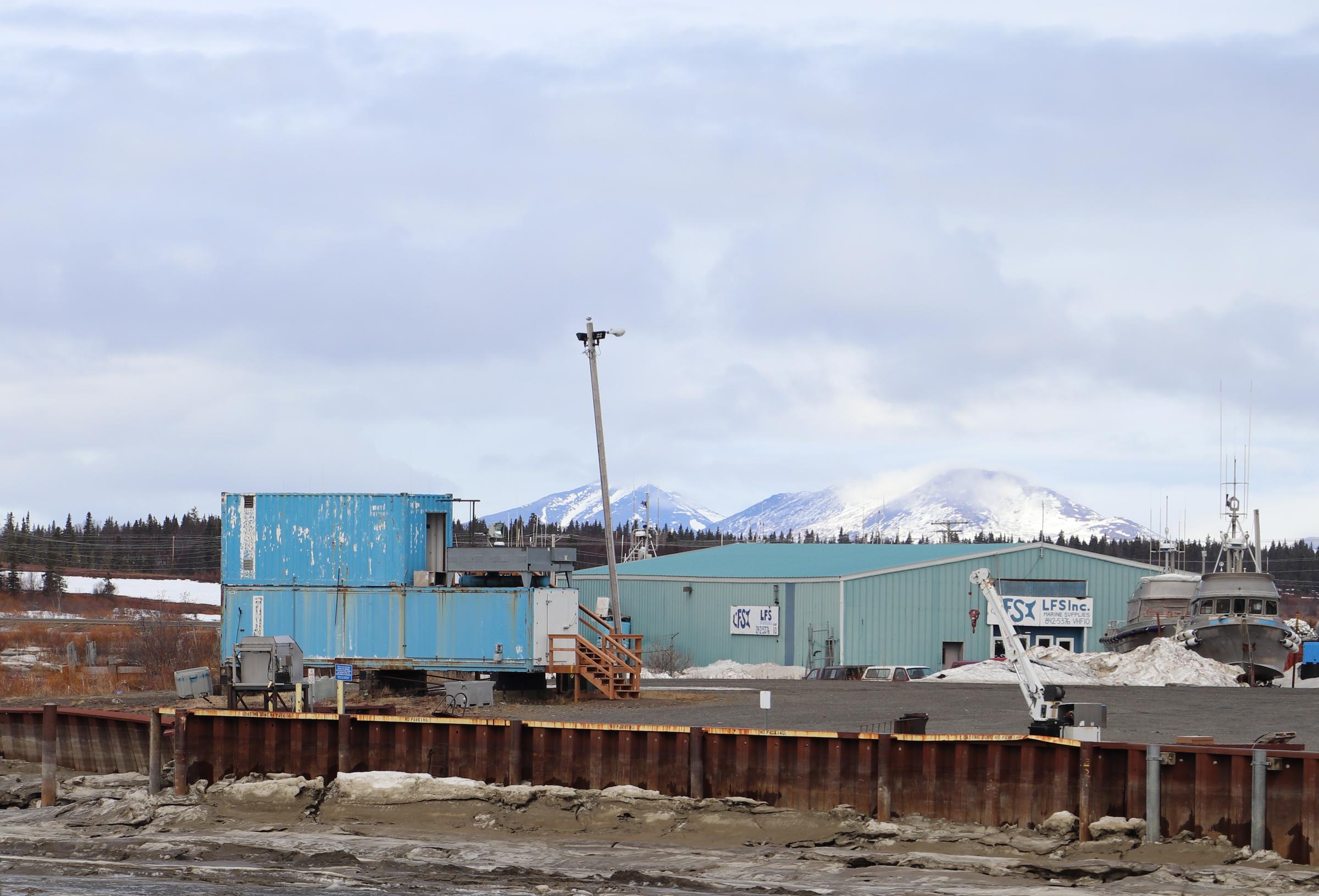
The Dillingham harbor. Monday, April 20, 2020. (Photo by Isabelle Ross/KDLG)
Health organizations in Bristol Bay are continuing preparations for a potential outbreak of coronavirus in the region.
Dr. Cathy Hyndman, the clinical director of the Bristol Bay Area Health Corp., said they are in regular conversations with a multitude of agencies and stakeholders about precautions for the upcoming fishing season — from daily critical incident meetings to weekly talks with villages about what clinics can do to prepare.
“We are being very plain about what we have access to — which is, we do have oxygen, which is the major thing that is needed to treat the majority of the cases. But we are also being very plain that we do not have ICU coverage,” she said.
The corporation is currently reviewing the various testing options that are available. Kanakanak Hospital has acquired a testing machine that can conduct a quick test for the virus. The machine, an Abbott ID Now, is designated for people who show signs of COVID-19, not for widespread testing.
But while its positive results are accurate, a negative test result does not guarantee that the patient does not have the virus.
“I wish — I surely wish — we had a 100% surefire way of saying, ‘You don’t have this disease, and it’s safe for you to fish.’ And I cannot say that at this time,” she said.
The hospital in Dillingham currently has roughly 300 test kits available and, as of Sunday, the capacity to handle about 12 patients that need additional oxygen.
BBAHC is making arrangements to rent Dillingham’s former senior living center, Grandma’s House, as an alternative care facility with 20 additional beds, to use for recovering patients who do not need oxygen.
Hyndman said they are talking with canneries and processors about how best to coordinate for coronavirus.
“We are hoping that our discussions with the local fishery, and with the fishery in general, will decrease the risk to our communities, but we will never get that risk down to zero,” she said.
The majority of processors are in the Bristol Bay Borough, on the east side of the bay. The community’s year-round population of less than 1,000 residents increases exponentially during the summer, as processor and cannery workers and fishermen circulate in and out.
The Camai Community Health Center is working to prepare for the upcoming fishing season as well.
In an update on Facebook, Executive Director and CEO Mary Swain said that the clinic is not in the position to use ventilators, pointing out that the equipment is used in hospitals with intensive care units, nursing staff and the ability to run labs immediately.
“Our hope is that anyone that will need advanced care will be identified early and have been transported out of Bristol Bay Borough quickly,” she wrote.
Swain also said that the clinic is planning to increase testing. They are hiring more providers than in previous years. Providers will go to workers who are sick, so that those individuals won’t have to leave the area unless the provider deems it necessary. They will also offer telehealth appointments for fishers who are on their boats or in camps.
They are going to conduct a drill with the state public health department at the beginning of May, which will help them refine procedures and weak points.
As of Sunday evening, there were no reported cases of COVID-19 in Bristol Bay.
Kanakanak Hospital is currently providing telephone consultation and emergency care. The corporation is encouraging residents to postpone standard elective appointments. BBAHC asks all patients to call before coming to the hospital, and to wear masks when they do so. You can call the hospital at 907-842-5201.
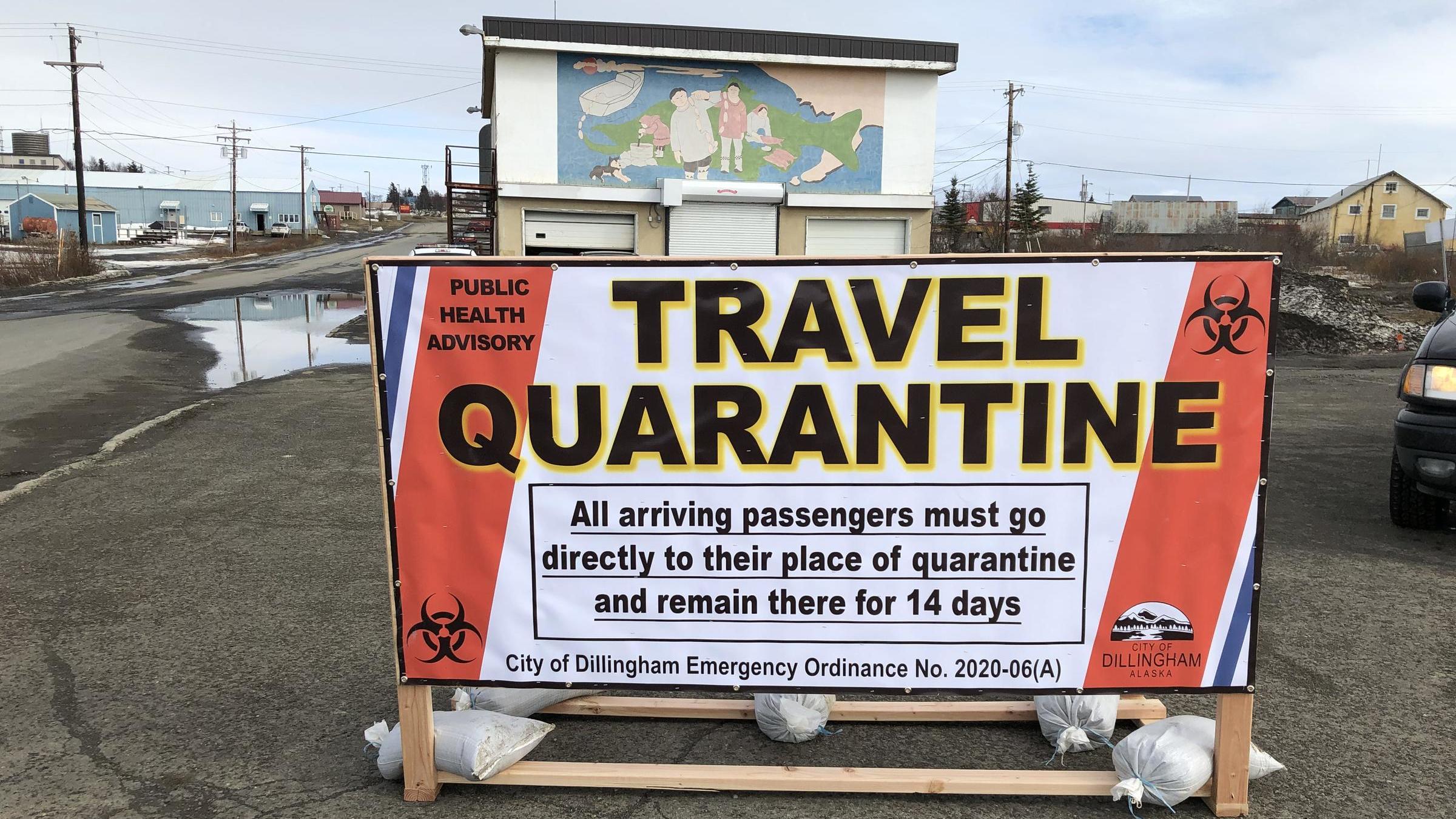
A sign reminding people arriving in the region that the City of Dillingham has a 14-day self quarantine mandate in place. Thursday, April 16, 2020. (Photo by Sam Gardner/KDLG)
Bristol Bay’s regional organizations are demanding a comprehensive set of health and safety measures for people coming to fish and work this summer. In a letter to Governor Mike Dunleavy Wednesday, the Bristol Bay Working Group called on the state to set a “program of rigorous enforcement” in place to ensure that people coming into the region were complying with health mandates.
The group also called for pre-testing fisheries workers arriving into the region for COVID-19, and requires a follow-up test to come back negative after the workers arrive.
But the region’s testing capacity is still limited; Kanakanak Hospital in Dillingham has roughly 300 test kits available, while the Camai Clinic in Naknek is working to increase its ability to test.
Norm Van Vactor is the CEO of the Bristol Bay Economic Development Corporation and part of the working group. He said local organizations don’t have the resources to protect communities on their own.
“Absolutely it’s the state’s role to step in and make sure that it happens,” he said. “We feel very strongly that these implementations need to take place before people even get here. We are advocating for real quarantining outside of the region before people get here. We’re advocating for testing before people travel to get here.”
The letter also voices concerns about the health and safety of residents during the upcoming commercial fishing season. It points out that the region has only one hospital with 16 beds and no intensive care units. The organizations say that an outbreak among the fishing fleet would overwhelm the system; if the state can’t implement their requirements, the fishery should be closed.
“If the fishery is allowed to go forward without these measures, ignoring the warnings of public health experts and officials and the pleas of Bristol Bay communities, the consequences will be devastating and generational,” the group wrote.
Van Vactor said the group wrote the letter after more than two weeks of discussions with health care professionals, among others.
“I mean, it’s not a balancing act of health and the economy. We’re talking about health. Because we believe that to have an economy in the future, we have to have a healthy population,” he said.
According to Van Vactor, they have yet to receive a direct response from the state.
At a news conference Friday, Health Commissioner Adam Crum said that the state was considering the group’s recommended protocols as it developed safety plans for the fishery this summer.
“One of the things that we’re really looking at is trying to find ways that the fishing fleets can actually do pre-screening in advance, to make sure that when they do come into communities that there is no interaction with the local populace, that they have actually secured housing, living and items like this,” he said.
Crum also said that every community will be involved in the process as part of the state’s emergency response plan, and that the state will also consider each area’s health system capacity.
As the pandemic unfolds, the Alaska Department of Fish and Game is learning from the fisheries that are currently underway in other parts of the state, like black cod and crab. That’s according to Rick Green, the special assistant to Fish and Game’s commissioner.
“We’re going to be learning off of Cook Inlet, as we are already starting to put our resources out and our infrastructure out to manage those fisheries,” Green said. “And we intend at this point to continue using everything we’ve learned to see if we can’t operate a safe fishery in Bristol Bay as well.”
Green said that right now, the department is looking to Cordova, which is the earliest salmon fishery in the state and usually kicks off at the beginning of May.
Close
Update notification options
Subscribe to notifications
Subscribe
Get notifications about news related to the topics you care about. You can unsubscribe anytime.