KDLL - Kenai

KDLL is our partner station in Kenai. KTOO collaborates with partners across the state to cover important news and to share stories with our audiences.
Smithsonian sends 18th Century navigation beacons home to Kasilof

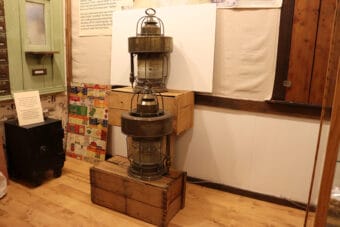
These two-foot kerosine lanterns, which could be seen from up to five miles away, marked the entry point to the Kasilof River in the 19th Century. (Hunter Morrison/KDLL)

Before the days of a reliable road system, much of the Kenai Peninsula could only be accessed via boat. A popular but challenging entry point from Cook Inlet is the Kasilof River, which has been used by mariners since the construction of the peninsula’s first salmon cannery in the late 1800s. With an increase in vessel traffic, the Coast Guard added two navigation beacons in the form of kerosene lanterns near the mouth of the river in 1929.
Light from the two-foot-tall lanterns could be seen up to five miles away. They operated seasonally, and were maintained by local citizen lamp lighters until they were replaced by electric beacons in 1962. They are believed to be the last oil-burning lanterns used for navigation purposes on the American coast.

“The river channel is pretty squirrelly, because Cook Inlet has so much sediment, and it has such huge tides that there’s no direct line from offshore into the mouth of the river,” said Catherine Cassidy, secretary of the Kasilof Regional Historical Association. “Even today, on charts, they said that local knowledge is very important for navigating into the river.”

After the lanterns were retired, the Coast Guard offered them to the Smithsonian Institution in Washington D.C. Kasilof Regional Historical Association President Brent Johnson orchestrated bringing the artifacts back home. He suspects they were never put on display at the institute.

“I thought ‘I’ll bet you they’re sitting in a backroom that nobody ever looks at at the Smithsonian, when they could be here in our museum where they belong,’” Johnson said.

Johnson, who now sits on the Kenai Peninsula Borough Assembly and serves as its president, says he remembers seeing the lanterns in use while duck hunting as a child. Cassidy says she was unaware of the existence of the lanterns, and was doubtful they could be located at the Smithsonian.

“They not only could locate them in their storage right away, they said they would be happy to have these lanterns back in Kasilof where they are meaningful to people,” Cassidy said. “They were really delighted to give them to us, it’s so cool.”

The Kasilof Historical Museum acquired the kerosene lanterns this fall and is working to create a display for the artifacts. Historical association members believe these lanterns are a symbol of the peninsula’s maritime history that is still relevant today.

“This is old history encapsulated in these lanterns,” Cassidy said. “It’s an ongoing part of our community to have access to this river.”

“History changes,” Johnson said. “One thing that is super important at one point in history becomes less important at another point. I think those navigational lights are still important because people are still using the Kasilof River.”

The Kasilof Historical Museum is located on Kalifornsky Beach Road in Kasilof, a half mile north of the Sterling Highway. The museum is open 1 to 4 p.m. every day Memorial Day through Labor Day. You can view the lanterns beginning this summer.

Ripping open the world of pull-tabs, Alaska’s most popular form of charitable gaming

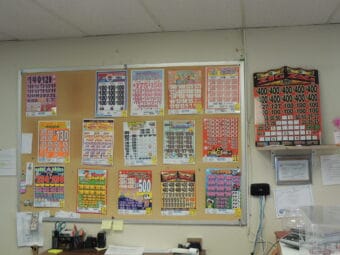
Pull-tab game options are presented at River City Pull Tabs in Soldotna. (Riley Board/KDLL)

In 1960, the Alaska Legislature enacted regulations allowing certain games of chance and contests of skill, for purposes of charitable fundraising. The state doesn’t participate in national lotteries like Powerball or Mega Millions, but does allow games like pull-tabs and bingo, which directly fund charitable organizations.

Inside the more than 1,000 pull-tabs shops and bars in Alaska, players try their hand at winning money, while proceeds ultimately go back to specific charitable organizations. Those pull-tabs locations can become a site of community, and it’s also the most popular form of charitable gaming in the state.
“You’ve got slow days, busy days. Slow times, busy times,” said Kayla Hanson, the manager at River City Pull Tabs in Soldotna. “Most of the time, the first of the month is a busy time. Any time there’s an influx of money coming into the community: PFDs, tax returns.”

River City Pull Tabs helps support the Soldotna Chamber of Commerce. The chamber uses the funds for scholarships, and to support its weekly free Music in the Park events during the summer.

Hanson said the experience of playing pull-tabs can be as much about people as it is about money.

“My mom managed this place for 25 years before she passed away two years ago,” she said. “And then I’ve worked here for…coming up on 10 years. And the other gentleman who works here has been involved in pull-tabs and bingo for well over 15 years.”

Hanson said she sees a mix of regulars and one-time customers. And she said the amount of time they spend in the shop varies from two minutes to several hours.

The shop is centered around a tall counter surrounded by barstools, with Hanson in the center, doling out tickets. Pull-tabs themselves, also called “rippies,” are individual pieces of paper with perforated tabs that one rips to reveal symbols, and see if they match winning combinations. There are a predetermined number of winning tickets in a given game.

Around noon, customers trickled in. A regular said the amount of time he spends here depends on whether there’s coffee. Hanson just finished brewing a new pot. Her basset hound Cleo hung around the store, and is also immortalized in a portrait on the wall, alongside a memorial to Hanson’s late mother.

Department of Revenue Program Manager Marty Abel said there are just over 1,000 pull tabs permits in the state. Twenty-four are on the Kenai Peninsula. Those locations support a variety of causes: Power Play Pull Tabs in Soldotna is connected to the local hockey booster club, while Easy Street Pull Tabs near the Kenai Safeway is linked with the Ninilchik Senior Center.

Pull-tabs aren’t just available at dedicated locations; for-profit businesses can host gaming on behalf of a charitable permit-holder, or a licensed alcohol vendor can sell pull-tabs for a qualified permittee. There are eight of those on the peninsula.

Ken Alper directed the Alaska Tax Division from 2014 to 2018, where he oversaw charitable gaming. He said after the price of oil fell in the 80s, nonprofits were looking for new ways to bring in funds as state money declined.

“Part of the way they went to work around it was to set up this system of charitable gaming where the state would regulate bingo, pull-tabs, that sort of thing,” he said. “And the beneficiaries would all be these nonprofits.”

He said pull-tabs rose to be the most popular, probably because of its simplicity to operate versus higher-tech games like slot machines. Alper said pull-tabs make up 60 to 70% of the charitable gaming in the state.

The average net proceeds from pull-tabs in the state, the amount going to charities, is about $25 million per year. But Alper said the total amount the industry brings in annually is more than 10 times that, about 300 or 400 million a year— he said much of the funds are used for operating costs and labor, and about 1% goes to the state as a tax.

Alper worries about the regulation of all that money. He said it has gotten more difficult since the 2019 state budget process when Gov. Mike Dunleavy vetoed huge swaths of the budget, including to the Department of Revenue. Alper said that reduced the charitable gaming division to just a few individuals, and it hasn’t grown since. Staff of the division did not respond to a request for comment.

“I have to assume that they are de facto not looking at the smaller operators at all and letting them function self-regulated because they no longer have the staff to ensure that the smaller ones are even filing their paperwork,” Alper said.

He said the purpose of the tax division staff is to make sure the nonprofits are getting their rightful share of gaming profits, and he said a state regulatory focus should be having enough staff to monitor that money.

Peltola hosts town hall on Albertsons-Kroger merger

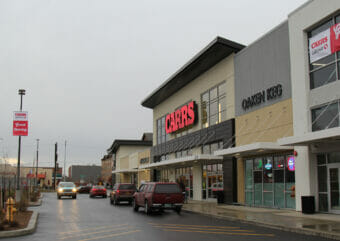
The Midtown Mall in Anchorage. Kroger, owner of the Fred Meyer chain, has proposed to buy Albertsons, which owns the Carrs stores. (Zachariah Hughes/Alaska Public Media)

An impending merger between two of the nation’s largest grocery chains has Alaska lawmakers worried about grocery options in the state. Alaska Congresswoman Mary Peltola hosted a virtual town hall on the subject Tuesday, taking the opportunity to get out in front of a hot-button issue.
Safeway and Carrs owner Albertsons and Fred Meyer owner Kroger announced this fall that they would sell hundreds of locations – including 14 in Alaska – to meet merger requirements. The buyer is New Hampshire-based C&S Wholesale Grocers.

Peltola wrote a letter to the Federal Trade Commission in August, asking the commission to block the merger. Alaska’s senators co-authored a letter in September, expressing “deep concerns” about how the plan would affect prices and competition.

In the tele-town hall Tuesday night, Peltola said she was nervous about what the merger could mean for grocery options in Alaska communities.

“Even with the best intentions, it’s just so hard for grocers who are not familiar with the challenges in Alaska…it’s just so easy for things to go sideways,” Peltola said.

The town hall saw unanimous opposition to the merger from attendees, many of whom expressed appreciation for Peltola’s advocacy. Some shared stories about the impact of grocery consolidation in their communities.

A Soldotna resident named Art said he saw negative effects like job loss and increased prices when Safeway and Carrs merged in 1999.

“We had this before. History repeats itself. If we don’t learn from history, we have a problem,” he said. “And Safeway and Fred Meyers down here in Soldotna are like eight or nine blocks apart. And both parking lots are full at any given time. What’s gonna happen?”

Experts have said the stores most likely to be sold off will be Carrs or Safeway stores that operate near a Fred Meyer. Peltola said that caused deep concerns for her.

“There’s no scenario where that’s a good outcome, if a community that size is losing a whole grocer,” she said.

Peltola asked many participants if she could use their comments and stories to present to the FTC. She said she’s hoping to see action from the commission, and that she invited its chair, Lina Khan, to come to Alaska and listen to constituents about how they may be uniquely affected.

The FTC is expected to continue reviewing the merger into early next year.

Northern pike have been eradicated from Kenai Peninsula, according to scientists

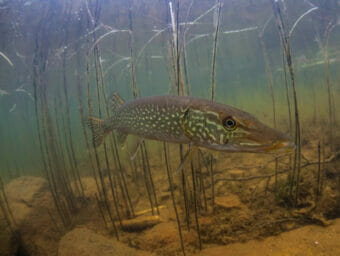
Northern pike are not native to Southcentral Alaska. But in the decades since the fish were illegally introduced into some Kenai Peninsula lakes, biologists have been hard at work eradicating local pike populations. (Kristine Dunker/Alaska Department Of Fish And Game)

Northern pike, an invasive species of fish, have been eradicated from the Kenai Peninsula, according to the Alaska Department of Fish and Game. The species, which are native to Interior and Western Alaska, were illegally introduced to the Kenai Peninsula by fishermen in the 1970s.

Northern pike pose threats to native species in the region, including salmon. They thrive in slow-moving waters and can grow their populations quickly, dominating other species and causing permanent changes to ecosystems. Invasive Species Biologist Kristine Dunker is involved in eradication efforts on the peninsula, which began in 2008.
“In terms of eradication, getting rid of all the pike in a population, the priority really has been eradicating them for the Kenai Peninsula, which as far as we know, is now the case,” Dunker said. “All known populations have been removed.”

In 2019, pike were discovered in Vogel Lake at the northern tip of the Kenai Peninsula. Before then, they had only been identified in lakes accessible by car. Research following the discovery indicates that pike can use Cook Inlet to travel between freshwater ecosystems.

After the discovery was made, Fish and Game added a weir near Vogel Lake to prevent northern pike in Cook Inlet from entering the body. Scientists say pike are most likely entering the Inlet by way of the Susitna River.

Invasive Species Biologist Parker Bradley says northern pike were eradicated from Vogel Lake, and the Kenai Peninsula, in 2021.

“We’ve eradicated pike from a total of 28 water bodies in Southcentral, and of those, 21 have been on the Kenai Peninsula,” he said.

Now that northern pike are utilizing the Inlet, the focus has shifted to prevention, which includes education and enforcement efforts. Eradication efforts of northern pike are still underway in the Matanuska-Susitna Borough, which scientists say is more difficult.

Fish and Game asks anyone who catches an invasive pike to report it and retain the fish, when possible. You can report your findings on Fish and Game’s website or by dialing 1-877-INVASIV.

Alaska gets $200M for Railbelt energy project, Cook Inlet undersea cable

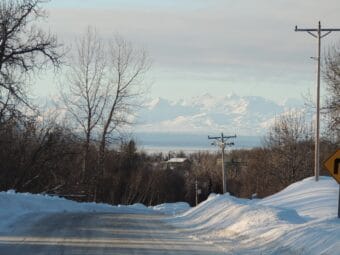
The view across Cook Inlet from Nikiski. (Riley Board/KDLL)

A $206 million federal grant will fund a project to run a 50-mile undersea cable through Cook Inlet, to better connect Railbelt utilities and improve access to renewable sources. KDLL’s Riley Board talked with reporter James Brooks from the Alaska Beacon about the project, and the flexibility it could create for energy security on the Kenai Peninsula and beyond.

Listen:

James Brooks: This was one of several grants issued as part of the big congressional infrastructure bill that passed a couple of years ago. It was a competitive grant, and so it was kind of a surprise, a pleasant one, for the Alaska Energy Authority to get this. The request was the fifth-highest among the hundreds of grant applications that were submitted. And Curtis Thayer, the head of the Alaska Energy Authority (AEA), told me he was kind of in the position of the dog that caught the car. They weren’t expecting to get this, but pleasantly surprised that they did.

Riley Board: And can you tell me a little bit about the cable and the project that they proposed?

James Brooks: Yeah, what AEA and utilities have been working on, is a way to improve the flow of electricity up and down the Railbelt. Right now, from Homer to Fairbanks, instead of an electrical grid, we’ve got really what — as the head of the Golden Valley Electric Association, John Burns called it — is basically a string of extension cords. There’s no alternate routes, if you want to …if you need to get electricity from one place to another and can’t, from the main route.

So what this will do, this will pay for a 50-mile undersea power cable from the Kenai Peninsula over to Beluga on the west side of Cook Inlet. And so in the case of another Swan Lake fire, for example, you’d have another way to transmit power north and south, and get around that.

And in addition, it’ll also help pay for two battery banks, which will help deal with the ebb and flow of renewable power. So if the wind dies down, or the sun goes behind clouds, and your solar plants don’t work as well, these battery banks will kick in, take up the slack, and utilities will be able to either wait out the clouds or wind, or spin up fossil fuel-fired generators, diesel generators, or natural gas generators to cover what they’ve lost.

Riley Board: So I know here on the peninsula, in terms of our utilities, we’re getting a pretty small fraction of our power from renewables at this point. Is this project sort of being built in anticipation of a future with more renewables and more of those less less reliable sources? The more fickle sources of power?

James Brooks: Yeah, exactly. And the idea is flexibility. That if you need, or if you’re able to get cheaper power from a wind plant, or a solar plant, you can switch to that quickly. Or if there’s a wildfire, and you need to switch to a new power line, you can do that, too. So flexibility is the bottom line here.

Riley Board: And on that subject, as, as we all know, there’s a projected Cook Inlet natural gas shortage that has utilities and lawmakers sort of scrambling, and Gov. Mike Dunleavy announced a plan last month to reduce the royalty rate to encourage development in the inlet. How does a project like this fit into the broader Railbelt energy future that gets a lot of discussion these days?

James Brooks: So if there’s a shortage of natural gas, then you need to come up with alternate ways to generate electricity, generate heat. If you’re putting up new solar and wind plants, or expanding Bradley Lake, for example, then you can reserve your natural gas for heating instead of electrical generation. So that reduces the demand for natural gas. That’s a couple steps down the line. But this power line, the battery banks that this grant funds, allows that to happen.

Riley Board: Is there anything about this that we didn’t touch on that you would want to mention?

James Brooks: Maybe it’s that we shouldn’t expect this to happen immediately. There’s an eight-year timeframe for this to happen, and a lot of steps along the way. There’s no place in the United States that we know of that manufactures this type of electric cable, this is not something you can just buy off the shelf. And you have to hire special ships to lay this cable and ensure that it’s protected from the tides, and the erosion that can happen from tides. So it’s gonna be a slow process, but it’s one that the utilities and everybody involved say is a good idea, and something that’s needed for Alaska.

Kenai man amasses vast collection of Coke memorabilia


Kenai’s Kelly Bookey owns over 4,500 pieces of Coca-Cola memorabilia. (Hunter Morrison/KDLL)

Some people collect coins. Others collect jewelry or trading cards. But Kenai’s Kelly Bookey collects Coca-Cola memorabilia, and in large amounts.

What began as a small inheritance of Coca-Cola merchandise after a friend’s death 30 years ago has since grown to museum-level proportions. Bookey estimates that he has 4,500 pieces in his collection, spanning two bedrooms and a bathroom. Bottles, glasses, wall hangings, sports memorabilia, even underwear make up just a fraction of his collection.

“I’ve got a little bit of this, a little bit of that, but I’m always looking for more,” Bookey said.

Bookey frequently scouts yard sales, antique stores and the internet to add more to his collection. For friends and family, he says that the collection makes gift-giving easy.

“I’m starting to outgrow the rooms, and I don’t know what I’m going to do with it all,” Bookey said. “I’ve got the two rooms and the one bathroom completely done, but we’ll just find more space somewhere.”

One of his favorite Coca-Cola pieces is also one of the first he ever acquired. After the death of a close friend, Bookey received his Coca-Cola money clip that he carried with him everywhere he went. The clip has since broken, leaving Bookey on the hunt for a new one.

A Coca-Cola fountain from Bookey’s father’s former restaurant. (Hunter Morrison/KDLL)

The most sentimental piece in the collection is a Coca-Cola fountain from his father’s former Kenai restaurant, Bookey’s. He is also fond of a Coca-Cola poster he snagged from the 2006 Arctic Winter Games.

“There were only two of them, and I told them in the office that I was getting them,” Bookey said. “I got one, and they caught me stealing the second one, so I let them have it.”

Bookey acquires new merchandise for his collection pretty regularly. On this particular day, he points to a set of Coca-Cola pocket knives that a friend just dropped off. He also spoke of his son who recently picked up about 50 Coca-Cola items from an estate sale in Reno. Many of those items are still in the original box, which he says is sometimes worth more than the item itself.

Since the dawn of the internet, his collection has expanded greatly. Throughout the years, he’s noticed that the best time to bid on any item of value is during a major event, such as the Super Bowl. While Bookey is the winner of many bargains, he has also been the victim of overpaying.

“Don’t drink beer and get on eBay,” Bookey said. “I wasn’t going to let them outbid me, I paid $65 for them dominos, and the next day you could’ve bought them all day long for seven to ten bucks. But I got the good ones!”

Also in his collection is a sympathy card from the Coca-Cola bottling facility in Anchorage, a letter from Coke’s headquarters in Atlanta and, to top it all off, a Coca-Cola toilet seat. While he has no idea what the value of his collection is, to him, it’s priceless.

“I’ve had a lot of people look at it and they go ‘wow,’” Bookey said. “I know there’s a lot of other people out there who collect Coca-Cola stuff, some of them probably have a better collection than I do. I like it, and to me that’s the bottom line. I like it, and I’m going to continue collecting it.” 

As you might imagine, Bookey’s favorite beverage is Coca-Cola. He says he drinks it by the gallon.

Site notifications
Update notification options
Subscribe to notifications