KDLL - Kenai

KDLL is our partner station in Kenai. KTOO collaborates with partners across the state to cover important news and to share stories with our audiences.
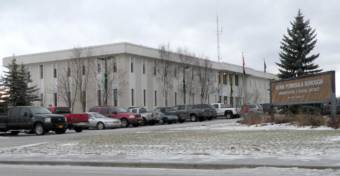
Kenai assembly votes to oppose nonexistent vaccine mandate

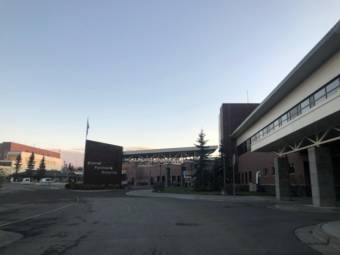
The Kenai Peninsula Borough Administration Building (courtesy Kenai Peninsula Borough)

The Kenai Peninsula Borough Assembly voted to oppose any government mandate that would require members of the public to take a COVID-19 vaccine.

But there is no vaccine mandate in the works for Alaska. Gov. Mike Dunleavy said at a press conference last week that he does not plan to require the vaccine when it is ready for distribution, which likely won’t be for a while.

Some assembly members and public commenters brought that up. But the resolution passed anyway because of an amendment introduced at the meeting that changed the rhetoric from outright opposition to support for residents to receive a COVID-19 vaccine “on prioritized and optional basis.”

That language won over Tyson Cox, who had originally moved to table the resolution.

“I do not feel this is necessary. I don’t feel that it’s something that we need to highlight at this point because we do not have a mandate coming forward,” he said. “There is no mandate planned in sight. It’s a little bit of paranoia to start going down that road. But I will be voting ‘yes’ on this because I would rather vote ‘yes’ on this, leaving the whereases and having a positive statement, than having something else come forward in the future.”

Still, the resolution includes language that contradicts those affirmative statements. One clause says there are “many people” who fear the potentially harmful effects of a COVID-19 vaccine. Another clause says that requiring the public to be vaccinated would face resistance during “an already volatile time in history.”

The resolution was presented by Borough Mayor Charlie Pierce and assembly members Jesse Bjorkman and Bill Elam. Elam said he hoped the resolution put to rest concerns he heard from constituents about the potential for a vaccine mandate.

Several commenters said they worried that the resolution would spread misinformation. Justin Ruffridge, from Soldotna Professional Pharmacy and the Soldotna City Council, said resolutions like these make his job harder.

“There’s no end to fear and misinformation when it comes to COVID-19. As a highly accessible healthcare practitioner, I have not had a day off since Labor Day. And it’s been every day, seven days a week. Educate, test, test, educate,” he said. “Most people have some version of misinformation which we have to work through at every interaction, and we’re doing somewhere between 20 and 25 of those a day. My concern is that any resolution that has the words ‘oppose’ and ‘vaccine’ in the same sentence will ultimately be misunderstood by the members of the public.”

Ruffridge said he supported the affirmative language of the amendment.

Several assembly members who originally spoke in opposition to the mandate were swayed by Bjorkman’s amendment. The resolution passed with eight “yes” votes and one “no” vote. That vote came from Lane Chesley.

The resolution will be sent to Gov. Dunleavy and Chief Medical Officer Anne Zink. It is unclear what it will actually do, since there is no vaccine available and no vaccine mandate in the works. As a second-class borough, the Kenai Peninsula Borough does not have policing or health powers.

Alaska’s oldest WWII veteran prepares for her 104th Birthday

Hallie Dixon was the grand marshal of the 2019 Fourth of July parade in Anchorage. (courtesy of Naida McGee)

Alaska’s oldest World War II veteran, 103-year-old Hallie Dixon, decoded and encrypted messages for the Navy as a telegrapher during the war. And that wasn’t even her greatest adventure.

“My father heard the call to come to the Last Frontier to make his way as a young man out of the service, back in the days when Alaska was offering homestead land, especially for veterans,” said Niada McGee, Hallie’s daughter.

“And so he came as an aircraft mechanic and worked on Merrill Field, and she came and joined him in January of 1951, in a ground blizzard at 30 below zero with three little children and pregnant with number four. And she went on to raise 11 children in the far away isolation of Alaska.”

Eight years before Alaska became a state, Hallie and Paul Dixon settled in Anchorage. They also spent 14 years in St. Mary’s in the Yukon Delta, where Paul was the village corporation manager.

Hallie’s now living in an eldercare facility in Kenai, where she can see her daughter, Rita Lindow of Kenai, every day. Hallie’s health is deteriorating and she wasn’t up for speaking on the phone Wednesday.

McGee, who lives in Anchorage, said her mom enlisted when she was 25.

“She was working in downtown Detroit and in those days, on loudspeakers, throughout the city, they were making calls for young men and women to join the service and serve their country,” she said. “And she listened to the loudspeakers and decided to do it one day.”

Hallie was stationed in Sanford, Florida as a telegrapher. She was one of thousands of women who did so as part of the Navy WAVES, the woman’s branch of the U.S. Naval Reserve. Lindow said she was isolated in the barracks because she dealt with top-secret naval commands.

“And she did keep that top secret all the way through. We couldn’t get any of it out of her, even 10 years ago, what those messages were,” Lindow said.

Paul, who was Hallie’s boyfriend at the time, was deployed with the U.S. Army Air Corp in England. Lindow says he was a romantic.

“When he got to Gander, Newfoundland, he sent her a message on her teletype machine and he wrote, ‘I’ll see you at the light of the new moon.’ And her teletype machine was on the other side of her office,” she said. “And so one of the girls got the message and swooned of course and read the note to mom. Their relationship was quite captivating to everybody in the office.”Hallie Dixon was part of the Navy Women Accepted for Volunteer Emergency Service, or WAVES, during World War II.

Hallie and Paul married right before the war ended.

Shortly after statehood, Paul became the manager of all public airports in Alaska and frequently traveled to remote villages to negotiate contracts. So Hallie was often taking care of all 11 children by herself at their home off Delaney Park Strip.

“You had to be adventurous to make it through raising all those children in such an isolated place,” McGee said. “She got to speak to her own parents once a year when a telephone call would cost 40 or 50 dollars and last 10 minutes long. And writing letters. That was her communication with her family far, far away.”

Lindow said she still has her sense of adventure.

“Matter of fact, I just talked to my mom yesterday,” ehs said. “I could tell she was dreaming, I got up near and I said, ‘Mom? Want to go fishing?’ ‘Oh? Can we?’ At almost 104, you know?”

Most of the Dixon’s children still live in Alaska, along with a gaggle of grandchildren and great-children. Paul died in 2012.

Lindow said her mom doesn’t talk about the war much. But she has been publicly recognized for her service. She and other Alaska veterans took an honor flight in 2013 to Washington, D.C., where she saw the WWII monument and visited the National Cryptologic Museum in Maryland. In 2019, she was the grand marshall of the Fourth of July parade in Anchorage.

On her birthday in two weeks, Hallie will be 104.

Alaska Moose Federation hits brakes on roadkill salvage program

moose
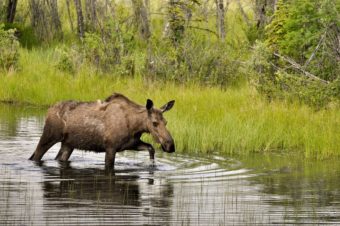
Moose (Photo by Heather Bryant/KTOO)

The Alaska Moose Federation, a nonprofit that salvages roadkill moose and brings them to member charities and individuals, is suspending its operations due to a lack of funds.

It’s not the first time the organization, with trucks in Anchorage, Fairbanks, Wasilla and Kenai, has put things on pause. It shut down partly in 2014 due to loss of funding but stabilized with new leadership in 2015, under current executive director Don Dyer.

That year, it signed a contract with the Alaska Department of Transportation that provided a steady source of funding. When that contract ended in 2017, the federation suspended the salvage program again.

In its most recent iteration, AMF was sustained by memberships. Charities on the peninsula paid $500 for a membership, which helped foot AMF costs, like gas. Elsewhere in the state, salvage teams of Alaskans paid $100 for memberships. Truck drivers, all volunteers, picked up moose and coordinated with Alaska State Troopers to drop them off to members. Being a member of AMF was not required to be on the salvage list, but nonmember charities or salvage teams had to pick up and transport moose on their own.

Recently, funds have been drying up, said Dyer. Part of that is due to a lawsuit Dyer inherited. He wouldn’t go into details about the suit, but said that the federation just finished paying the settlement off. He said he used money from equipment he sold, not membership dues, to do so.

“When I stepped into running the Moose Federation, I did not at the time understand what the implications were, ’cause I was told that the federation had the resources to pay it off,” Dyer said. “And after a month, I found out they didn’t. So I decided to do the work to honorably meet those obligations, and I have. But it’s taken over five years to get that settlement paid off.”

As the Anchorage Daily News reported, Alaska Moose Federation previously came under fire for a controversial calf-rearing program and unpaid debts.

Adding to the financial woes is a decline in memberships. Dyer said charities usually buy their memberships in October when people are getting their Permanent Fund dividends. This October, there were crickets.

“You know, with so many people out of work, I guess with the COVID-19 thing, we had probably 15 or 20 charities there in the Kenai area that were participating as members, and that was able to make it so that the Moose Federation could be funded in that area,” he said. “And now, there’s too few to be able to carry on.”

On the Kenai Peninsula, especially, he said, fewer members have renewed memberships.

Laurie Speakman was the truck driver on the Kenai. She’s affectionately known as “Laurie the Moose Lady.”

Speakman, who lives in Soldotna, started picking up moose in 2012. She estimated she picked up 30 to 40 this year but said work started getting slow recently.

“This was my main thing for years. And I poured my heart and soul into it, and I kind of chose not to work,” she said. “And I recently actually just did go get a job.”

Even though AMF has previously resumed its activities after hiatus, this time it might be more permanent, Dyer said.

“It had been stopped when I took the Moose Federation over. And at the time, I had assets that could be sold and other resources to make it work,” he said. “However, at this time, all we have now is the trucks. And if you sell the trucks, you can’t pick up moose.”

He added, “My last paycheck was in March of 2017. It has been more than a trial of faith to get this thing done.”

AMF has four trucks left in its fleet.

Lance Roberts is a volunteer with Kenai’s Grace Communion International, one of the charities that work with AMF. He said AMF made moose pick up much safer. Without it, things will get dangerous again.

“Because people, like me, I got a truck, I go out there, I don’t have a winch for the back of my truck,” Roberts said. “So I gotta skin, gut, quarter that thing alongside the road. A lot of times, I’ll hook a noose around its neck and pull it up the road to where it’s safe. Lot of times you can’t do that, it’s down in a ditch. So, it can be snowing, blowing, visibility is terrible, and you have somebody alongside the road taking care of a moose. That takes a while.”

Speakman said, eventually, she might want to try and do something on her own.

“I have offered Don Dyer cash for the truck. If I did do something it would be more geared toward Fish and Game,” she said. “’Cause I was picking up a lot of private property moose with them, and to remove a hazard off somebody’s property that can’t, I really enjoyed it.”

It’s hard to imagine someone who’s nicknamed “The Moose Lady” doing anything else.

‘How the heck he got to Alaska, we have no clue’: Furry stowaway sails from Washington to Kenai

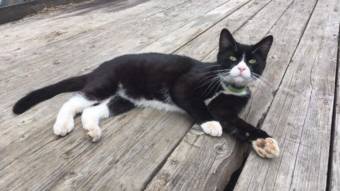
Panda went without food or water for over a week during his journey from Washington to Alaska. (Courtesy of Christina Clevenger)

A Washington cat walks into a shipping container. Over a week and 2,500 miles later, he’s in Kenai.

It’s a story that could have ended in tragedy. But it didn’t, thanks in part to the help of some local businesses and the magic of social media.

Panda, a tuxedo cat, went missing from his home in Thurston County, Wash., Oct. 13. His owners, Christina and Josh Clevenger, had been searching their neighborhood and posting in Facebook groups for over a week when they were on the verge of giving up the search.

On Oct. 24, Panda showed up bewildered and hungry in a shipping crate at the Kenai Home Depot. An employee posted his picture in a group for Seattle lost pets, which is where D.D. Ponder, also from Thurston County, saw him.

“I had been communicating with the owners of Panda for a few days and giving them advice and tips and whatnot on how to find their lost cat,” Ponder said. “And then, coincidentally, Christina’s aunt had noticed a post in another lost and found pets group up in King County. And then we were able to determine that, in fact, this is definitely Panda. And how the heck he got to Alaska, we have no clue, but more importantly, how are we going to get him back.”

Clevenger was shocked when her aunt showed her the post.

“And was like, ‘Wasn’t Panda’s collar green?’ and I go ‘Yeah…,’ she said. “And she turns her phone around for me to look at it, and she goes, ‘Isn’t this Panda?’ I dropped my phone, I dropped my poor little chihuahua Annie, who was in my lap, I just … I started bawling.”

Aside from operating the lost pets group, Ponder is also the leader of United Angels, a Washington-based nonprofit that raises money for medical pet emergencies. United Angels got to work raising money to get Panda home, including costs for his flight from Anchorage and veterinary expenses.

Ponder said a Home Depot employee, who wanted to remain anonymous, took Panda to the Kenai Veterinary Hospital to get a health certificate so he could be cleared to fly. The clinic also updated his vaccinations and gave him a microchip.

That same employee offered to drive Panda to Anchorage from Kenai. But Grant Aviation offered to fly him for free.

“The morning of the flight, we heard from Grant Aviation that the trip was going to be complimentary,” Ponder said. “And that basically all the employees pulled together to make it all happen.”

They also got help from the Kenai Animal Shelter, which leant a kennel for transport.

Ponder said it’s the craziest lost-and-found pet story she’s ever seen.

Owner Christina Clevenger and family were waiting for Panda at the Seattle airport when he flew in from Anchorage. She said the reunion was very emotional. (Courtesy of Christina Clevenger)

“First of all, we don’t know how he got onto that container, from a 48 property in Rochester, Wash.,” she said. “I mean, it’s farm country where he lives. And there are no semi trucks, I mean, not that they don’t drive by. But it’s not like they live close to a truck center.”

She thinks he could have gotten on a mail truck that was headed to a transit center, and from there may have jumped into a container.

“But, what we do know, is he was in that container for nine or 10 days,” she said. “It traveled to Kenai via a barge, and so he was stuck in that container for a week and a half — no food, no water. And dark and cold. And then to top it all off, we happen to find out about it. And for him to then, after all that traveling, for him to get home is just as crazy.”

One of the most surprising parts was that Panda fared just fine in that shipping container. He was hungry and scared but OK, Ponder said.

Panda is back with his owners and their eight other pets in Washington. Since he got back, Clevenger said he’s been a little grumpy.

“He’s definitely had to get readjusted. He’s not getting along with his brother cat, my cat Batman. And they grew up together, like they’re the only two that we didn’t have any problems with. But apparently he’s copped a little attitude on his little vacation. But other than that, he’s been amazing.”

Clevenger says she’s so grateful for everyone in Kenai who helped them get reunited. As for Panda, he won’t be leaving the house for a while.

Hospitals bring the ballot bedside

Central Peninsula Hospital in Soldotna. Through a special-needs ballot system, Central Peninsula and South Peninsula hospitals helped patients and staff vote without leaving the premises. (Sabine Poux/KDLL)

Like every good voter, David Martin had a plan. The Soldotna resident was going to vote in person this year, like he does every election.

Then, on Monday, he was admitted to Central Peninsula Hospital in Soldotna for an unexpected development to an existing medical problem.

“As soon as I came in here and they said they were going to be keeping me for a few days, I was really worried,” Martin said. “I was actually pretty upset. I didn’t know if I was going to be able to vote.”

But he did.

Each election, a Central Peninsula Hospital staff member picks up and delivers ballots for those who can’t vote in person. CPH Director of Organizational Experience Bonnie Nichols said she carried a dozen ballots from the absentee voting center at the Peninsula Center Mall to the hospital and back this week, both for patients and hospital employees who couldn’t leave the premises to vote.

“There’s certain specific information you need,” she said. “You need a voter identifier, you need the physical address so that the polling workers can pull the right ballot for them, the right precinct. So it’s labor-intensive.”

The state of Alaska allows for a personal representative to transport special-needs ballots on or before election day. Nichols was also the witness, so she signed the ballots she delivered.

Southern Peninsula Hospital in Homer has a similar program, which one patient used this week, according to a representative. Both hospitals offer special-needs voting for patients in their long-term care facilities, as well.

Martin said the process was seamless.

“Well, it was kind of nice. I went to the bathroom and came out and the proctor was there,” he said. “And she gave me the ballot, and I had a few questions about the ballot measures, which she was pretty good about answering those. And it was nice and smooth.”

Nichols said the patients she helped all expressed relief about getting to vote. Martin said he voted for Joe Biden and Kamala Harris, and that he voted against the incumbent candidates for the other races.

“I felt like with the stakes of this particular election, I needed to make my voice heard, even if nobody wanted to hear it.”

Martin said he’d be watching election results from the hospital.

How Ruth Bader Ginsburg’s approach to law left a lasting impact on Kenai attorneys

Ruth Bader Ginsburg stands at center for a photo with five other attorneys
From left: Judy Peavey-Derr, Lance Joanis, Jennifer Joanis, Ruth Bader Ginsburg, Allen Derr and Zannia Rowland. Alaska Bar Association vice president Jennifer Joanis said her stepfather Allen Derr and Ginsburg were lifelong friends. (Photo courtesy of Jennifer Joanis)

When news of Ruth Bader Ginsburg’s death came Friday, many across the country reflected on her legacy and tenure at the Supreme Court. For some attorneys in Kenai, her influence hits closer to home.

Ginsburg, a staunch advocate for women’s rights, delivered an address at the Alaska Bar Association Convention in Anchorage back in 2008. Jennifer Wells, a Kenai Superior Court judge, was at the event.

“She gave this amazing lecture which I have remembered to this day about the power of dissent and the role of dissenting opinions,” Wells said. “And it’s something I’d never really given any thought to.”

Wells met Ginsburg at the convention. She remembered the Supreme Court justice being elegant, soft-spoken, tiny at 5 foot 1 inch and very impressive.

“I think before that I hadn’t really valued her fully, because it’s the dissent that she most often spoke for,” Wells said. “But when you think about it, being able to stand up for the dissent is a rare quality because most of the pressure on all of us all the time, everywhere, is to make nice and figure out a way to go on with the majority.”

Local attorney Kristine Schmidt attended Ginsburg’s talk, too. Ginsburg’s husband, Martin, was also at the convention teaching a class on tax law.

“So it was real inspiring because Alaska, we think of ourselves as pretty out of the way, and being able to have these giant figures come here and just see them as regular people is really inspiring,” Schmidt said.

Ginsburg tackled sex-based discrimination in the cases she took on and in her approach to the profession. She was the second female justice on the Supreme Court.

Ginsburg’s impact on female attorneys in Kenai was not diluted with distance. A decade after her visit, the local branch of the bar association held a screening of “On the Basis of Sex,” the biopic about Ginsburg, for Women’s History Month.

Association vice president and local attorney Jennifer Joanis said several local women attorneys spoke on a panel at the event.

“We had a mother-daughter attorney team on the panel, and they talked about their different experiences in law school and just how vastly different those were,” Joanis said. “And we had young attorneys on the panel and older attorneys on the panel just talking about their experiences in law school, in law, their legal profession, and how much it has changed and how much easier it has become for women in law over the years.”

Wells was there, too, and said the movie made her grateful for Ginsburg and the progress made in Alaska.

“Every woman who was at the showing of the movie, every local attorney, was so grateful for her pioneering work,” she said. “I couldn’t have the career I have without women like her, but her specifically.”

Joanis was particularly excited to see the movie because of a personal connection to the late justice.

A letter address to Allen Derr from Ruth Bader Ginsburg
Ruth Bader Ginsburg asks Allen Derr to read a letter for the memorial of Sally Reed (in photograph), who fought to manage her late stepson’s estate. Ginsburg wrote the brief for the pro bono case. (Photo courtesy of Jennifer Joanis)

“My stepfather was living in Idaho, and there was a case that he had taken to the lower courts — it was a probate case — where a woman, divorced woman, her son, her adopted son had committed suicide,” she said. “And she was fighting to manage that estate. And the law gave preference to a male, just arbitrary preference. And so he took on the case pro bono in order to fight this case for her so that she could manage this meager estate. And that case ended up being taken all the way to the Supreme Court where he partnered with Ruth Bader Ginsburg, a college professor at the time, who wrote the brief for that case. And so they became lifelong friends.”

The court ruled that Idaho’s unequal gender preference in that instance was unconstitutional. It was the first time the Supreme Court argued that the 14th Amendment protected women’s rights. Ginsburg referred to it as a “turning point case.”

Joanis also met Ginsburg and was struck by the juxtaposition of her small stature with the enormity of her impact. Schmidt was impressed by Ginsburg’s civility toward those with whom she did not agree, like the conservative Supreme Court Justice Antonin Scalia, a good friend.

“Civility in our profession is an issue right now, so her modeling of civility and collegiality is really important,” Schmidt said.

Schmidt became aware of Ginsburg’s impact in the 1970s in law school. Later, once Ginsburg was on the court, Schmidt read her famous dissents like the Lilly Ledbetter v. Goodyear Tire case of 2007. Ginsburg’s dissent in that case later inspired the passing of the Lilly Ledbetter Fair Pay Act.

Ginsburg believed in taking a long-term approach to the law, said Schmidt, acknowledging that a dissenting argument might impact legislation down the road.

“When I think of her, I think of ‘what am I doing that can help the future? What in my practice is going to help people in the future? What can I do to make a difference?’” Schmidt said.

Mourners held a silent vigil for Ginsburg in Juneau this weekend, and there were additional gatherings in Fairbanks and Anchorage.

Ginsburg’s death also hit home for Alaskans when Sen. Lisa Murkowski announced she would not be voting for a Supreme Court justice to replace Ginsburg until after the election this November. She later backtracked, saying that she could not rule out the possibility that she would vote to confirm a nominee.

Site notifications
Update notification options
Subscribe to notifications