KFSK - Petersburg

KFSK is our partner station in Petersburg. KTOO collaborates with partners across the state to cover important news and to share stories with our audiences.
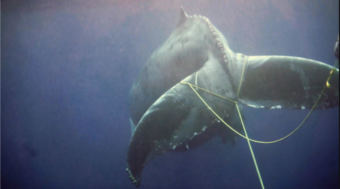
Petersburg family business Hammer & Wikan marks 100th anniversary

Anniversary banners are up at Hammer and Wikan’s hardware and grocery stores (Joe Viechnicki/KFSK)

The year 2021 is a big one for a Petersburg family business that operates grocery, hardware and convenience stores.

Hammer & Wikan is celebrating its 100th anniversary this year with some events planned this month and next.

Wendy Westre is the secretary of the company’s board of directors and is on the committee planning the anniversary celebration. She’s also the granddaughter of one of the two founders of the company, John Hammer, and is excited to reach such a milestone.

“I was pretty young when my grandpa passed away but I’m just thrilled,” Westre said in a recent interview. “I can’t believe it’s been 100 years. My dad worked in the store for over 40 years. My uncle worked in the store for a long time. Carlene [Wikan] worked there forever. You know you think of all these people that have come and gone through your life over the years and you know the faces that have come and gone and it’s just amazing.”

The company got its start when two Norwegian immigrants, John Hammer and Andrew Wikan partnered on a business called the Petersburg Dairy in 1921. It began with sales of milk and cream from a dairy farm at Point Agassiz nearby on the mainland. But it expanded into other food and goods. It has grown into a company with separate grocery, hardware and convenience stores.

According to family histories in the book “Pioneer Profiles,” both immigrated separately to the U.S. from Norway in 1909. It’s not known if the two knew each other before leaving Norway.

The company’s board plans multiple events in the community to mark the 100th anniversary. The first will be a celebration of its founders’ day on April 17. There will be giveaways and a raffle at the grocery store that morning followed by an afternoon event with a raffle and games at the hardware store downtown.

Westre said that was initially planned for March but was delayed by the COVID-19 outbreak.

“Working with the community and talking with the borough we’ve come up with the date of April 17 which is just a month away from our annual shareholders’ meeting,” Westre said. “And we’re hoping this year with this being our 100 year anniversary that most of the shareholders will be able to join us in town and celebrate not only our 100 years but just being together as the two families started back with John and Andrew.”

She said there are 77 shareholders of the family-owned corporation.

There are several events planned around the Little Norway Festival. The company will unveil a new mural on the side of the hardware store building Thursday, May 13. There will be a street dance and hot dog barbecue that day as well with a live band downtown. The company also plans an entry in the parade the following day.

The board also is planning a private excursion for shareholders to visit Point Agassiz and the site that was so important to the beginning of the company. And there could be other events later in the year.

New ermine species found on Southeast Alaska island

This Southeast Alaska ermine was captured on a video this winter by Farragut Farms near Petersburg. It is a different species than the Haida Gwaii ermine recently identified by scientists. (Courtesy of Farragut Farms)

New genetic research is expanding the family tree of a small weasel. A new species has been identified on an island of Southeast Alaska and some in British Columbia. It’s called the Haida Ermine, and it’s one of three main ermine species in the world. And scientists who studied the mammal believe there could be other animals that are also unique to this area.

When Jocelyn Colella was studying to become an evolutionary biologist, she thought she would research something big — maybe large cats or bears.

“I originally wanted to work on big, charismatic carnivores but there’s a lot of people doing that already,” she said.

So instead, she chose a tiny carnivore known as the ermine. It’s a small weasel with a mouse-like head, big eyes and a fuzzy brown summer coat that turns white in the winter. But besides being cute, they are extreme hunters. They mainly feast on mice and voles but can also take down rabbits and chickens.

Colella has studied the small mammal through different universities. She’s now curator of mammals at the University of Kansas Biodiversity Institute.

In the field, she’s studied dozens of ermines.

“I was studying ermine all over. Honestly, it was a Holarctic investigation,” Colella said

With modern science techniques, Colella has also been able to study the ermine’s genome or its genetic makeup. In the lab, she could examine tissue samples that had been collected by scientists all over the world. They had been frozen in vats at -196 degrees Celsius.

“Liquid nitrogen cryo vats that are just full of hundreds of thousands of tissues,” said Colella. “And you can say, ‘Well, let’s see what ermine look like from here,’ and you can pull out a piece of tissue and subsample it and sequence its genome.”

Jocelyn Colella examines weasel skulls. (Photo courtesy of Jocelyn Colella)

Colella compared samples from North America, Asia, and Europe. It took years – she had a lot to work with. The Museum of Southwestern Biology in New Mexico had collected tissues for decades. Using a computer program, she compared the ermine’s skulls. She found that there were three main species: one in Eurasia, one in North America and one found only on Prince of Wales in Southeast Alaska and Haida Gwaii off the coast of British Columbia.

“Yep, full species, like new species, never-before-recognized mammal,” Colella said.

She studied samples from most of the islands in the region, but none were the same as those found on Prince of Wales and Haida Gwaii. Colella says it’s probably because the islands are located in a place that wasn’t always covered in ice during the glacial periods. She says this ermine may have originated 375,000 years ago.

“These groups were interbreeding, and then this population got stuck on these islands and then a lot of time passed, more ice, and they just slowly became their own species,” Colella said.

Colella believes the Haida ermine probably isn’t the only species specific to the area. She says the marten — a larger weasel — is also showing the same indicators. She says these islands are creating new species because they are isolated with specific environmental conditions.

“We just have no idea what’s out there and we really need to be using these new techniques to better understand the diversity of these islands,” Colella said.

Colella sees the new ermine species as more of a beginning than an end. She says it’s just another example of why people need to look harder at other animals in the area.

“A lot of people think that we know all the mammals that are out there but I think that’s far from the truth,” she said.

Natalie Dawson agrees. As a wildlife biologist she spent 20 years researching mammals on several islands in Southeast Alaska, including weasels.

“I was the first one to take a deep dive on the genetic distribution across many of these different islands comparing between species,” Dawson said.

Colella’s work builds off of Dawson’s research.

Dawson says Prince of Wales Island is a stable environment for a species like the ermine to adapt and agrees there are likely other unique species that just haven’t been identified yet.

“I think what’s significant about it is that in Southeast Alaska, if we’re finding that kind of diversity in mammals, you can imagine how much distinctiveness there probably is in the insects and the plants on each of these islands or even in certain populations on certain islands,” she said.

The study appears in the scientific journal, Diversity and Distributions. Funding for the research came from the National Science Foundation.

‘He was healthy before it got him’: Petersburg residents share their experiences with COVID-19

Ruby Shumway watches her son, Owen, in the hospital. He was born during the pandemic and later needed open heart surgery. (Photo by Tim Shumway)

We’ve heard from doctors, epidemiologists and other experts over the past year about the pandemic. But what about everyone else? How has it been for people who have had COVID-19 themselves, or who had to care for family members who did?

KFSK reached out to Petersburg residents to find out. Many declined interviews, some saying they felt pressure not to disagree with their neighbors or ruffle any feathers. But some have come forward to share their experiences.

This is an ongoing radio series. If you would like to share your experience with COVID-19, please contact Angela Denning at (907) 772-3808 or email angela@kfsk.org.

‘An incredibly scary time’

Ruby Shumway grew up in Petersburg and is now a nurse who has been answering the COVID-19 hotline for Petersburg Medical Center this past year. She also had a baby boy named Owen who needed open heart surgery.

Ruby says that she and her husband, Tim Shumway, struggled with the stress of keeping their son safe during the pandemic.

“I was incredibly scared,” she said. “Things were very new at the time.”

Ruby and her family are fully vaccinated now, and she feels better about protecting her baby from the coronavirus. Owen ended up having open heart surgery in Portland.

‘Full-body inflammation that lasted weeks’

Megan Litster (left) with her husband, Cody Litster, and their four children. (Photo courtesy of Megan Litster)

Megan Litster was the first person in Petersburg to get COVID-19. Last March, she had traveled with her mom down south and came back with the virus.

She lost her sense of smell for five months and had weeks of other symptoms, like a “scary” irregular heartbeat that would come and go and a feeling of not getting enough oxygen when she breathed.

She says she was recovered from COVID-19 by the time her positive test result came back. And she says that socially, being the first known case locally was “a hundred times harder” than the illness itself.

‘Everybody just reacts so differently’

Pete and Kris Erickson have lost a few family members to COVID-19. Pete himself caught it last March and still can’t smell or taste most food. (Photo courtesy of Kris Erickson)

Pete and Kris Erickson live in Washington temporarily, but they’ve spent their lives in Petersburg and plan to retire here.

Pete Erickson caught COVID-19 last March and lost his sense of smell and taste. A year later, it’s still not back.

They lost Pete’s dad, Pete Erickson Sr., who has been the only Petersburg resident to die from the disease. The couple says they’ve had several other family members with COVID-19, some with serious complications, including Kris’s uncle.

“He’s definitely got COVID long, and he’s still on oxygen,” she said. “And he was healthy before it got him.”

‘It was really weird’

Callie Bell is a Petersburg resident who contracted COVID-19 at the end of February during a community outbreak. (Photo courtesy of Callie Bell)

Callie Bell says she was part of the recent outbreak of COVID-19 cases in town. She learned that she might have it when friends who had tested positive contacted her.

Her 5-year-old daughter, Bristol, caught COVID-19 as well.

Bell says she got infected when the outbreak hit towards the end of February. She had a slight cough and fatigue, and she lost her sense of smell and taste.

‘I still feel tired’

Debby Eddy with her husband, Jaime Eddy. (Photo courtesy of Debby Eddy)

Debby Eddy works at the Petersburg School District and is also an athlete. She tested positive for COVID-19 on Feb. 24 as part of the town’s outbreak. She found out that she was a close contact to a positive person and started having symptoms soon after.

She can’t run like she used to, yet, but she says the worst of it is not recovering her sense of smell and taste.

“I didn’t realize how important it is. It triggers memories — happy memories in my life,” she said. “Eating isn’t really that important to me anymore. It’s kind of stressful.”

‘Don’t let it fester’: Health officials encourage vaccination, vigilance as Petersburg outbreak wanes

A Petersburg emergency operations center sign in middle harbor this winter (Joe Viechnicki/KFSK)

State health officials say Petersburg’s recent outbreak of COVID-19 looked similar to the rapid spread seen in other parts of rural Alaska that hadn’t already seen widespread infection.

Those state officials held an online presentation this week to review the outbreak in this Southeast Alaska community and urge continued testing and vaccination.

State epidemiologist Dr. Joe McLaughlin compared the spread to a wildfire in a dry forest.

“When you have a community that has not seen much activity like Petersburg, once the virus starts to take a foothold in the community it can spread like wildfire and it can spread very quickly, and you can have multiple introductions,” McLaughlin said. “And so if you have multiple introductions, you know one region of the community, and another region and another region, then you’ve got multiple outbreaks that are sort of festering on their own and that can really result in widespread transmission within that community fairly quickly.”

Petersburg’s case counts have been dropping, and by this week the number of active cases was down to 10. But at the height of the outbreak, the community of about 3,000 had 68 active cases.

(Graph from the Alaska Department of Health and Social Services)

Petersburg started seeing an increase in cases in mid-February and hit a peak of new cases reported Feb. 24. The number of active cases was its highest, at 68, on March 3. Health officials say the virus was brought into Petersburg by travelers and spread through close contact at bars, restaurants, day cares and schools. Local schools went to online learning, and some businesses closed temporarily or paused in-person service.

The state’s chief medical officer Dr. Anne Zink encouraged people to continue testing to reduce any further spread.

“Now that your numbers are down, this is the time to clean the cases out. This is the time to do a lot of testing, surveillance testing, identify there’s a lot of people who are asymptomatic or mildly symptomatic that may not think that they are,” Zink said. “Now that you have it seeded in, don’t let it fester because it just kind of then percolates for a long time and it just continues to impact people’s health and wellbeing.”

Zink also praised Petersburg’s vaccination numbers, especially among people 65 and older. Nearly 90% of that population in Petersburg is fully vaccinated, and Zink thought that was likely among the highest rates in Alaska and possibly the nation. She also encouraged others who have not yet gotten their shot.

“Ultimately that’s our goal, right?” she said. “We just don’t want people to get sick. You get a little runny nose, okay, so be it, but we just don’t want people to get sick and die, and that’s what we see all the time. I had two clinical patients recently, one was vaccinated, one wasn’t. She was being admitted to the hospital to get oxygen and he also tested positive and was totally fine sitting at the bedside. These vaccines work.”

She and others also encouraged continued use of masks and social distancing, calling these measures “speed bumps” for a spreading virus. State doctors and nurses also answered questions on masking, testing and treatment.

Since the start of the pandemic Petersburg has reported 159 COVID-19 cases altogether. 145 of those have been in Petersburg residents, about 4.5 percent of the local population.

House finance committee considers extension of COVID-19 disaster declaration

Alaska House Finance Committee members meet with Alaska Permanent Fund Corp. CEO Angela Rodell in the Capitol in Juneau, Feb. 23, 2021. (Photo by Andrew Kitchenman/KTOO and Alaska Public Media)

Lawmakers have held multiple hearings on a bill to extend the state’s disaster declaration for Alaska’s response to COVID-19. But the Dunleavy administration has changed course on the bill it proposed at the beginning of the session after a disaster declaration expired in February.

The bill would extend a COVID-19 disaster declaration until Sept. 30. Supporters say the bill would allow health care providers to continue to offer alternate sites for screening and testing and continue to use telemedicine during the pandemic.

Lawmakers on the House Finance committee this month questioned state health officials about the need for the extension. The bill was proposed by the Dunleavy administration, which has since backed away from extending a disaster declaration in favor of other measures to take some of the same steps.

Health and Social Services commissioner Adam Crum attempted to explain that approach.

“Yes we did submit this bill and then we pushed hard and tried to do this but just unsure of the level of support in the legislature for a full disaster declaration, we changed course to try to continue our responsible ongoing response for Alaskans,” Crum told the committee March 15. “Yes the tools to do this are HB 76,” he said. “Yes some of the minimal tools can be identified in some other authorities as well. And this is the position, we’re trying to just continue this to help Alaskans out so they know we’re continuing for some solution.”

Governor Dunleavy said on March 9 that he did not think the state needs a “full-blown” disaster declaration, and he prefers a limited bill that ensures some response, like the distribution of vaccines. That was the same day the state announced the vaccine would be available to everyone 16 and older who live and work in Alaska.

A declaration by the state is an official acknowledgement that an emergency exists. The bill as drafted also includes a plan to pay for the response, and it allows flexibility for health care providers for telemedicine and screening and testing.

Adam Crum, Commissioner of Alaska’s Department of Health and Social Services, answers a question during a press conference centered on Gov. Mike Dunleavy’s latest budget proposal on Wednesday, December 11, 2019, at the Capitol in Juneau, Alaska. (Photo by Rashah McChesney/KTOO)

Committee member Nikiski Republican Ben Carpenter questioned Crum on how long a pandemic emergency could last.

“What are those things that need to happen, between now and whenever, as soon as we can get those things to happen, that need to occur before we are no longer under a disaster?” Carpenter asked. “Because we’re discussing in this committee right now of extending the disaster and I don’t know based on your answer whether that’s necessary or not.”

Crum responded that making the vaccine available to all who want it will be the deciding factor.

“Once it’s available, that’s one of the main metrics we’re looking at, for letting the governor say look, we have done our job, we’re trying to protect Alaskans and try to educate,” Crum said. “When it comes to, as you said, is a disaster necessary in order to do this? No, the specific authority that we’ve identified for the distribution of vaccines can be done separate from a disaster declaration.”

By the middle of the month, the state reported around 140,000 Alaskans, nearly one-fifth of the total population, had been fully vaccinated.

The expiration of the declaration in February coincided with Petersburg’s COVID-19 outbreak. Local health officials point to a drop in compliance with travel testing and quarantine that contributed to spread of the disease in the community. The state’s requirement for testing or quarantine changed to a recommendation with the end of that declaration. Home rule municipalities can enact their own local health orders. But in some cases, those rely on voluntary compliance and are not strictly enforced.

Hospitals support the extension and say without it they’re not certain if they’re in compliance with federal laws on telemedicine.

Nils Andreassen, executive director of the Alaska Municipal League, testified that local governments have been scrambling to fill holes in the absence of the state’s declaration.

“Many have seen declarations expire since they were tied to the state’s and they’ve either been renewed or now fully expired,” Andreassen said. “Many have had to reconsider their own travel quarantine and testing restrictions. Many are in the midst of operating testing or vaccination clinics with questions about available resources, training and authorities. Some are now racing to address spikes in cases. Many are looking at an uncertain future. Ultimately it’s this uncertainty that ends up most challenging.”

A number of Alaskans also spoke against the extension. Kelly Fishler of Juneau wanted more focus on the economic needs of Alaskans.

“Extending this declaration is further starving our economy by keeping businesses at reduced capacity or empty because no one will frequent them,” Fishler said.

Others testified they did not think the state is in an emergency.

Legislators have approved some amendments. One would spell out in state law that people can object to getting the COVID-19 vaccine based on religious, medical or other grounds. Another would require consent from a parent or guardian of a minor to get the vaccine.

Point Baker woman co-produces film on Prince of Wales logging

The documentary film, “Understory,” looks at the impacts of logging on Prince of Wales Island in Southeast Alaska. (Image courtesy of Last Stands)

A documentary film about the impacts of logging on Southeast Alaska’s Prince of Wales Island called “Understory” is starting to make its way through film festivals. The film features a resident of the small Prince of Wales community of Point Baker.

Elsa Sebastian is the narrator and co-producer of “Understory.” In the film, she sails her boat with a few friends around Prince of Wales and backpacks into the forest. Sebastian says she isn’t anti-logging, but she doesn’t like industrial clear cutting. This winter, she’s been apprenticing in Sitka learning how to repurpose salvaged, old growth timber into furniture.

“As a local person, the way I see it, is that we’re not just stripping the land of biological abundance when we clear cut it, we’re also removing our reserve of really valuable timber, really valuable trees that could be used carefully and locally forever,” she said.

Sebastian grew up on Prince of Wales in a home without running water or electricity. She commercial fished with her parents. The forest was part of her identity. As an adult she started to investigate logging happening in her backyard. Industrial-scale logging began on the island in the 1950s and expanded in the second half of the last century. Now the island supports the region’s only remaining mid-sized sawmill where some of the trees cut are still processed.

Sebastian shifted from power trolling in Southeast to gillnetting in Bristol Bay to spend more time on what she calls “ground truthing” or studying the land by personal observation.

“It’s basically going to the land to see for yourself if what you’ve been told is true,” she said.

Point Baker resident, Elsa Sebastian, is co-producer and narrator of the documentary film, “Understory,” which looks at the impacts of logging on Prince of Wales Island in Southeast Alaska. (Photo courtesy of Last Stands)

The film was also prompted by the exemption of the Tongass National Forest from a nationwide rule prohibiting new logging in undeveloped areas. Sebastian recruited a few other women to sail around the island with her, visiting those places.

Natalie Dawson is a wildlife biologist who has studied mammals in the Tongass for 20 years. She spent “months backpacking on Prince of Wales, and Kuiu, and Admiralty,” trapping them, she said.

Dawson was interested in seeing Prince of Wales from the water — from the outside looking in.

“I’m used to being literally nose down in the lichen and moss and the downed trees and that kind of allowed me the perspective of pulling back and seeing the island as a whole place,” Dawson said.

Also joining them was Mara Menahan, a wildlife artist who specializes in painting plants.

The trio had traveled together a few years earlier, spending a month bushwhacking through areas of Prince of Wales. Sebastian says, at times, if felt like they were just animals navigating through very difficult terrain.

“When you’re carrying a heavy backpack and you come up to an edge of an old clear cut and you realize you’re going to have to crawl through it, it’s really challenging and it shifts your opinion about what that clear cut means,” said Sebastian.

This trip by sail boat included two people filming. It was Sebastian’s first time venturing into advocating for the Tongass in a professional way, but she thought the message was important. She says a lot of people think you can cut the big trees down and little ones will replace them.

“That logic makes sense in a way, but it’s not true,” she said. “I mean, we’ve tried to move through a 70-year-old clear cut and felt like we were going to break our legs the entire time. It’s pretty scary to walk through old clear cuts, whether you’re a human or a black bear or a deer.”

From her observations, Dawson believes logging impacts mammals on the Tongass. But she says funding for scientific research is so limited, it’s hard to quantify it.

Dr. Natalie Dawson, featured in the film, “Understory,” has her PhD in endemic mammals of the Tongass National Forest. (Photo courtesy of Last Stands)

For Sebastian, she says she didn’t really get what industrial logging was until she spent a few months walking in the woods.

“I’ve been fishing off of Prince of Wales my entire life. I grew up on a fishing boat and we used to fish down by Craig,” Sebastian said. “And when you look at the land, I mean, there’s different shades of green but it all looks green. You know, an old clear cut that’s grown back for 50 years, it looks green from the water. But when you get into that forest, it doesn’t feel alive.”

The film “Understory” also touches on other themes: the federal subsidies to keep logging going and the carbon sink the forest provides to combat climate change. It also features Marina Anderson, with the Organized Village of Kasaan talking about her tribe’s history of logging on the island.

Funders for the film included Patagonia, The Wilderness Society, Audubon Alaska, Peak Design, and Sitka Salmon Shares.

The coronavirus pandemic has complicated local screenings of the film. Sebastian says they will come up with a plan even if it’s an outdoor showing. In the meantime it’s getting shown at film festivals throughout the country.

Site notifications
Update notification options
Subscribe to notifications