KFSK - Petersburg

KFSK is our partner station in Petersburg. KTOO collaborates with partners across the state to cover important news and to share stories with our audiences.
A petition to put king salmon on the endangered species list is raising alarm across Alaska

Petersburg troller Mark Roberts working on his fishing vessel, the Cape Cross, on May 24, 2024. (Photo by Shelby Herbert/KFSK)

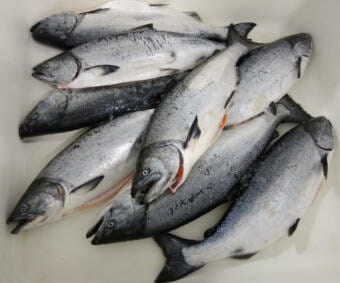
The federal government is considering a request that would grant Gulf of Alaska king salmon Endangered Species Act protections. The National Marine Fisheries Service recently found that the petition by the Washington-based conservation group Wild Fish Conservancy, which said that the species are under threat, warrants further scientific review. It’s just the first major step in a longer regulatory process, but many say it could have far-reaching implications.

Mark Roberts is docked in Petersburg, getting his fishing boat ready for the July 1 king salmon opener. He’s painting the exterior of the Cape Cross, his 46 foot long wooden troll boat that was built in 1948.

Roberts took a break from fishing for several months, because he just had one of his heart valves replaced. But he said he’s pushing through the pain this summer, because it would be financially impossible for him to sit out a whole season.

“Because of my heart situation… Well, I paid for it. I got to do twice the work this year. But, you know, I’m putting it back together. I just need sunshine!” Roberts said, gesturing towards the rainy sky over Petersburg.

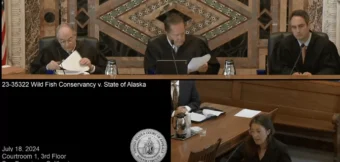
Roberts has fished in the Gulf of Alaska for about 30 years. But he came very close to skipping the whole summer season last year, when the Wild Fish Conservancy sued the U.S. National Oceanic and Atmospheric Administration to halt commercial trolling for kings in Southeast Alaska. The conservation group, which is based in Washington State, argued that a closure would protect a declining population of killer whales near Seattle. The Ninth Circuit Federal Appeals Court issued a stay on the lawsuit, keeping the fishery open.

“I was basically ready to tie my boat up to the dock and not fish until August,” said Roberts. “But once they announced it… Boy. I started my engine and took off and went fishing and I was very grateful about it.”

That lawsuit is ongoing. But now, Roberts is staring down the barrel of another move against king salmon fishing by the same group, which filed a petition to list the fish with Endangered Species Act protections in January. NOAA announced it would move forward with its regulatory process for considering the request in late May.

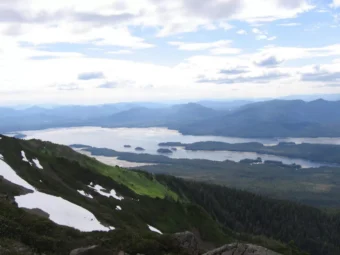
The request could have a huge impact on how Alaskans fish across the entire Gulf. The petition asks for protections for an area more than a thousand miles wide — or, just a little longer than the distance from New York City to Orlando, Florida.

Roberts said it feels like another attack on his fishery, which he considers to be low-impact, and sustainably-managed.

“I want the salmon to come back too, and so it really surprises me that these people are coming after us, when we already are doing things to bring back the salmon,” said Roberts. “This will hurt everybody. It really surprises me that they’re coming after us like they are.”

But Emma Helverson, the director of the Wild Fish Conservancy, said it’s not personal. She said the petition folds in feedback from a lot of people across the state who are afraid the resource won’t be around for future generations.

“[There are] people throughout the state who, maybe aren’t even sure how they feel about Endangered Species Act protections,” said Helverson. “But they’re seeing these problems and they know something has to change.”

Helverson has heard from Alaskans like Willard Lind. He’s a citizen of the Chignik Lake Tribe, and he’s lived next to the Chignik River, on the Alaska Peninsula, for all of his 63 years.

Salmon runs collapsed on the Chignik in 2018. Sockeye salmon have slowly been returning to the river, but kings are still scarce.

Lind said he wants fishing for kings to stop — even in Southeast Alaska, hundreds of miles away.

“When I was a kid, the river used to be loaded with kings, man,” said Lind. “Holy cow — they’d be swarming all over the place. But nowadays you don’t see one king in a shallow waterhole anymore. I’m all for what they’re trying to do there, with the petition to stop these king fishers. I hope it goes through.”

""
King salmon landed in the commercial troll fishery in the summer of 2019. (Photo courtesy of Matt Lichtenstein)

Not all conservation groups are on board with the Wild Fish Conservancy’s request, though. For instance, the Alaska based environmental group Salmon State has come out against it.

Tim Bristol, executive director of Salmon State, has his eye on the decline. But he said the Endangered Species Act petition isn’t the right tool for the situation, and that this move will push away fishermen who are also sympathetic to the plight of king salmon.

“Frankly, it really upsets us, as longtime conservationists, to see the Endangered Species Act used in a way that I don’t think is appropriate,” said Bristol. “And it’s clearly going to cause all kinds of blowback from thoughtful people that maybe support the ESA. But it definitely will move them into the opposition category when you start using it.”

The Alaska Department of Fish & Game, which manages all king salmon stocks in the state, has also been one of the petition’s loudest critics. Doug Vincent-Lang is the department’s commissioner.

“It really was, of all the petitions I’ve ever seen come in for a listing of a species — by far the most poorly written petition I’ve ever seen,” said Vincent-Lang.

And the National Marine Fisheries Service did note in its findings that while the petition included numerous factual errors and unsupported conclusions the numbers were concerning.

Vincent-Lang said that if the petition is pushed through, it would effectively federalize management of king salmon as a resource in Alaska.

And, he said, if king salmon are endangered, the federal government will have to establish what’s called “critical habitat.” Which means any river or lake in Alaska where king salmon spawn could be subject to more federal oversight too.

“This [has] fairly far-reaching implications in terms of how salmon, or king salmon, could potentially be managed into the future,” said Vincent-Lang.

But the commissioner isn’t the only one thinking of the future. The Metlakatla Indian Tribe in Southeast Alaska recently reopened the doors of their century-old cannery, the Annette Island Packing Company, to buy king salmon. Albert Smith, Metlakatla’s mayor, said the tribe has always subsisted on king salmon. It’s been part of their way of life since the beginning of time. “Especially now, with how much it costs to go to the grocery store,” he said.

The Wild Fish Conservancy acknowledges the criticism lobbed against the petition. But Helverson, the Wild Fish Conservancy director, said that, regardless, the process will generate data that could lead to important localized recovery for king salmon. But it’s likely that if Alaska’s kings do make the list, the protections would be applied in a piecemeal fashion in specific places across the Gulf.

The National Marine Fisheries Service’s findings will set off a more rigorous scientific review, and the public has until July 23 to share their thoughts on the potential endangered species listing.

Alaska’s Little Norway keeps old culinary traditions alive

Sharon Wikan and her daughter, Katrina Miller, make waffler for Petersburg’s Little Norway Festival on May 13, 2024.
(Shelby Herbert/KFSK)

Alaska’s Little Norway celebrated Norwegian Constitution Day in mid-May with a week-long festival. For some families in the community, that meant many hours spent cooking heaps of treats from the Old Country, often using recipes that have been passed down for generations.

The air inside Petersburg’s Sons of Norway Hall was thick with the smell of cardamom, vanilla, and melted butter. Volunteers labored over portable stoves and bowls of batter. Sally Dwyer is the director of Petersburg’s Sons of Norway chapter, and she’s the mastermind behind the cooking operation.

After directing the volunteers to their stations, Dwyer fired up her griddle and, a few moments later, handed this reporter a delicate, cone-shaped waffle cookie — something called a krumkake. It melts in your mouth just as fast as it disintegrates in your hands.

As the crumbs fell away, Dwyer demonstrated her krumkake system.

“I am pouring approximately a tablespoon of krumkake batter into the krumkake iron, which has beautiful imprints of flowers and scroll-ey thingies,” she said. “I want it to spread out and be crispy, then I’ll put them on my roller and roll them into the cone shape, and then set them here to rest while making the next one.”

She would repeat that process hundreds of times that day. All the volunteers were making heaps of traditional treats to raise money for Petersburg’s Sons of Norway chapter at an annual buffet-style bake sale, called “Kaffehus.”

Vava Wikan fries up rosettes in Petersburg’s Sons of Norway Hall on May 13, 2024. (Shelby Herbert/KFSK)

In another corner of the room, Margaret Newlun was making rosettes. That’s a little more involved — and dangerous. Newlun wielded a long, thin metal rod with a flower-shaped cookie cutter at the end. She dipped the cookie cutter into a bowl of batter, and then turned around to face a ripping hot pan of oil.

“It just takes a while to make ‘em,” Newlun said. “You gotta fry ‘em in oil and you can’t set [the rod] down in the oil, because it’ll ruin the cookie!”

At another table, Katrina Miller was making waffler with her mom — that’s basically a tiny waffle sandwich. Miller’s grandmother taught her how to make it. Miller said waffler is an all-occasion thing that the next generation of her family has bonded over.

“It’s just kind of always been our thing and it brings us all together,” Miller said. “And it’s fun! We do it for Christmas, we do weddings, funerals… And then, sometimes, just because we want waffler.”

Miller’s mom, Sharon Wikan, offered a piece of waffler smeared with a type of caramelized goat cheese, called gjetost. She thinks that’s the best way to eat waffler, but not everybody in her family agrees.

“These are my grandkids’ favorite,” Wikan said. “But they don’t like the goat cheese. My kids don’t like the goat cheese. Just grandma — nobody else does.”

A line of customers outside Petersburg’s Sons of Norway Hall on May 18, 2024.
(Shelby Herbert/KFSK)

After hours of work, the volunteers’ tables were piled high with dozens upon dozens of pastries, which they started squirreling away for Kaffehus.

Days later, the dainty desserts reappeared in the Sons of Norway Hall, arranged on long buffet tables. A line of hungry festival-goers stretched around the outside the building, in the rain. But Bob Martin, who had been standing there for around 45 minutes, said it was all worth it.

“Lefse! It’s hard to find these days,” Martin said. “The ladies wearing bunads — they know the secrets!”

Lefse was one of the big draws — it’s a soft flatbread often filled with butter, sugar, and spices. It’s classic Scandinavian fare, but there’s been some drift over the years. Here, it’s taken on some American flavor.

A line of customers outside Petersburg’s Sons of Norway Hall on May 18, 2024.
(Shelby Herbert/KFSK)

Dwyer said her family’s lefse is a great example of how the town’s Norwegian forebears came up with new ideas after they started their lives in Petersburg.

“According to [our] family legend, Grandma Tora put sugar in her lefse after she buttered it, she used powdered sugar for the first time in Petersburg,” Dwyer said. “The granulated sugar — most of us think it’s like sand! So, most of us here use powdered sugar. Women were innovators back then!”

But the day’s visitors weren’t there to quibble over authenticity. They were there for the sugar rush. Plates of lefse — filled with both granulated and powdered sugar — got wolfed down, along with all the other fruits of the volunteers’ labor — another successful Kaffehus in the books.

This story has been updated to correct Vav Wikan’s identity in a photo caption.

UPDATE: Alaska State Troopers identify boater killed in collision near Petersburg

Search boats dot the waters of the Wrangell Narrows near Petersburg on Wednesday, June 5, 2024 after a vessel struck a skiff, leaving one boater missing and a second injured. (Courtesy Bill Flor)

Alaska State Troopers have identified the person who died in a boating accident near Petersburg last week as Susan Paul, age 73 of California. She was in a 20-foot Hewescraft skiff that sank after a collision with a larger seine boat.

A spokesperson with the U.S. Coast Guard, which is leading the investigation, says it’s unclear what led to the accident.

A second person on board the skiff – 71-year-old Gordon Paul also of California – survived. He was taken to a local hospital after the two boats collided about 11 miles south of Petersburg in the Wrangell Narrows on June 5.

The U.S. Coast Guard based in Juneau received a mayday call just before 9 a.m. The larger vessel has been identified as the 58-foot seiner Vis, which fishes out of Petersburg.

Crew from the Vis and a nearby boater pulled Gordon Paul from the water. He was transported to a nearby boat launch at Papke’s Landing and driven to Petersburg Medical Center. He was reported to have minor injuries and symptoms of hypothermia.

Search and Rescue volunteers flew in from Wrangell and used a thermal drone to spot a fuel plume rising from underneath the water, according to a press release from the group. They narrowed their search area and used a trained rescue dog to pinpoint the likely location of the second person. Rescue divers found Susan Paul still with the skiff and were able to recover her body by mid-afternoon.

Alaska State Troopers, U.S. Coast Guard, and the Petersburg Police Department also responded, along with good Samaritans in the area.

This story has been updated.

New report questions business model of British Columbia gold mines

A view of the Stikine River near Wrangell and Petersburg. The river is downstream of many Canadian mines in the Alaska transboundary watershed. (Photo courtesy of Cindi Lagoudakis)

Gold mines near the British Columbia border are controversial in Alaska because of the potential for negative impacts to the environment and fisheries downstream. A nonprofit group called the Environmental Investigation Agency (EIA) released a report in January that found that these gold mines operate somewhat like a Ponzi scheme.

The report says mines are allowing day traders and Canadian taxpayers to assume most of the financial risk that comes with gold prospecting, while a much smaller group of shareholders reaps the rewards.

KFSK’s Shelby Herbert has been following this story in Petersburg.

Ava White: Shelby, what does this report say about how these mining companies operate?

Shelby Herbert: The EIA is reporting that there’s basically a network of about 500 companies that have direct or indirect stakes in gold mining claims in the transboundary region. They use something called the prospect generator model, which is when junior mining companies acquire land packages with good prospects for gold, or other precious metals and minerals. Then they carry out the initial exploration work, to suss out the viability of the mine before the drilling gets started.

In order to pool resources and spread out the risk, they’ll then seek out joint-venture partnerships for the claims. These partnerships give a major or mid-tier miner the ability to earn interest in exchange for funding drilling.

This model is used by mining companies all over the world. But the authors of the report have noted that mining operations in the transboundary region operate like the prospect generator model on steroids.

Most of those companies in the region are publicly traded, and actually generate very little revenue. The EIA report found that a lot of the top 20 claim-holding companies in the transboundary watershed region operate at a deficit and generally have a negative trend in their stock price.

Ava White: So, how do they make any money?

Shelby Herbert: Well, these companies certainly make money. But their small-time investors? That’s a different story.

According to the report, the companies in this network are largely funded by stock sales from small investors — day traders, non-professionals, folks like that. And then they’re also buoyed by tax incentives. There are several Canadian tax incentives that greatly benefit mining companies, like Flow-through Shares and the Mineral Exploration Tax Credit.

So, the model does turn a profit — even when they’re not turning out much gold. Owners and principal investors are making millions of dollars a year, and using it to drill hundreds of miles of new holes.

Ava White: How many of those mines actually yield gold?

Shelby Herbert: A fraction of a fraction. According to the Association for Mining Exploration, only about one in 10,000 exploration projects actually becomes a mine. And most of that risk falls to — like I said — small-time investors and Canadian taxpayers. That’s why the authors of this report are drawing a comparison to Ponzi schemes. I reached out to many of the heavy-hitters in the British Columbia mining network to get their reaction to this comparison, but they never got back to me.

Ava White: Are there any environmental concerns about simply drilling for gold? Even if the prospectors never find it?

Shelby Herbert: The report says that even the boreholes that don’t become mines could hurt the surrounding watershed. There isn’t a lot of published information on the direct environmental impacts of mining exploration. But a 2019 study by the environmental group,  Center for Science in Public Participation, looked at the effects of exploration at the controversial Pebble Mine in northwestern Alaska, and it gives us a little insight. Researchers found elevated levels of aluminum, iron, and copper in surface water near drilling sites. And some of those exceeded water quality standards. Dissolved copper also happens to be neurotoxic to salmon, and potentially prevents them from navigating back to their home streams.

Ava White: And what do the mines mean for people downstream?

Shelby Herbert: It’s important to note that a lot of these mines are really close to watersheds that feed fish habitat. Take a look at where I’m at, here in Petersburg — Enduro Metals’ mining claims cover an area about the size of New York City. And about three quarters of that area is within three miles of rivers or streams, including the Iskut River — the Stikine River’s largest tributary, which feeds into the waters near where I am.

Several groups in Southeast Alaska are concerned about what pollution from the mines means for fish. That’s tricky to quantify, with other factors like climate change and bycatch at play here. But by many accounts, mines and fish don’t mix.

study published in 2022 in the journal Science Advances found a consistent pattern of harm to salmon habitat and watersheds from British Columbia mines. Groups like Salmonstate are concerned about declining populations of salmon, as well as hooligan and trout. And Indigenous people in Wrangell, Metlakatla and Ketchikan have long talked about the changes they’ve seen in fish populations where these rivers meet the ocean.

Also, about 20 percent of the current claims that have been staked in the transboundary region are covered by glaciers. As those glaciers recede due to climate change, they’ll leave behind thousands of miles of new salmon streams. But the fish are in direct competition with the mining companies, who are waiting to dig into the ground.

Ava White: How are people in the fishing industry reacting to this?

Shelby Herbert: Commercial fishermen are some of the key players in campaigns to protect transboundary watersheds from mine pollution, like Salmon Beyond Borders. There are international treaties that govern this region, including the Boundary Waters Treaty and the Pacific Salmon Treaty.

Heather Hardcastle is the campaign advisor for Salmon Beyond Borders, which is one of the organizations that commissioned this report. She told me that commercial and sport fishermen, as well as subsistence users have been deeply involved with this issue and looking for change, looking for diplomacy, and looking for answers from the U.S. government.

Ava White: And what are Alaska politicians doing about this?

Shelby Herbert: U.S. Sen. Lisa Murkowski called on President Biden last fall to withhold his support for Canadian mines until both countries can establish watershed protections for this region.

But this has been a long, drawn out fight. For close to a decade, people in Southeast Alaska have been asking for a pause on transboundary mining activity until Indigenous peoples and communities in the region can establish enforceable international protections for the watersheds that lie below the mines.

U.S. Forest Service cuts back Southeast Alaska timber sale after public comments

This map depicts the plan the U.S. Forest Service approved for the Thomas Bay timber sale. The yellow represents the available young growth stands. The brown areas are sections that will be harvested at different times. (Map courtesy of USFS)

Timber sales in Southeast Alaska’s Tongass National Forest often spark conflict between environmental groups, the timber industry, and the U.S. Forest Service. Timber companies want more opportunities to harvest, and environmental groups want to protect the forests. But a new sale near Petersburg focusing on second-growth trees has all those groups on board.

The sale design is the result of the Forest Service changing its public process over the years.

Brett Martin has owned a small sawmill for 35 years. He lives part-time in Petersburg and part-time in Sitka and loves making lumber out of Southeast trees.

“Two by fours, two by sixes, fenceposts, fencing…,” Martin said. “Anybody who’s ever sawn logs into lumber, you know, it gets into your blood, and it’s something you really enjoy.”

Martin considers himself one of several small cottage industry mills in the region. He’s also been a logging engineer for three decades, contracting with the Forest Service and private companies to inventory forests for possible harvests.

He has seen timber sales dramatically decline in the last few decades, devastating the region’s industry. Employment went from the thousands – when logging old growth was common practice – to less than 300 workers a few years ago.

There is only one remaining larger-sized timber company in the region – Viking Lumber Co. on Prince of Whales Island. They have the necessary infrastructure to harvest trees in very remote places. And Viking has sustained its company by shipping logs out of Alaska in the round to be processed somewhere else. Martin says that means Alaskans must import their lumber.

“Most of the lumber that’s used for oh, construction purposes in Alaska, a lot of it shipped up from the Lower 48, if not most of it,” he said.

But Martin sees an opportunity to keep more lumber in Alaska with the Forest Service’s shift from old-growth to young-growth timber sales. The Tongass has 17 million acres of forest and Martin says up to 450,000 acres is young growth or second growth, meaning it’s been previously logged. It’s those young trees that the Forest Service wants companies to harvest while preserving the old-growth stands.

Ray Born, Forest Service district ranger based in Petersburg, is helping to manage the new timber sale in Thomas Bay.

“There’s certain old growth areas, we’ll just leave alone,” Born said. “We’re gonna leave them, you know, for wildlife or for old-growth characteristics or things like that we want to maintain over time.”

The initial Thomas Bay timber sale proposal was for about 22 million board feet, mostly clear-cut. After a few years of public process, they shrunk the harvest to 12.6 million board feet to be harvested through a patchwork of areas over several years.

A stand of young growth timber that is for sale near Thomas Bay. The stand has regrown from logging in the 1950s and 60s. (Courtesy of the U.S. Forest Service)

Thomas Bay has been logged to varying degrees from the 1930s through the 80s. The Forest Service still considers it a productive area, with the ability to regenerate harvestable trees in 60 to 80 years. Born says there could be continuous harvests if it’s done piecemeal.

“So the intent is we’ll do some now, and 20 years down the road, we’ll do some more, 20 years down the road, we’ll do some more and in about 80 years, come back to where we started at,” Born said.

Harvesting smaller areas over time could be better for wildlife and it could allow small sawmills more opportunities. Those are comments the Forest Service has heard during the public process leading up to the sale. Born has been working with the Forest Service for three decades and says a lot has changed in how they approach timber sales.

“It’s more listening. We’ve listened more carefully to all the people who have an interest in it now and it’s more holistic,” Born said. “And that’s kind of one of the unique things about the Forest Service, you know, we focus on serving the people and caring for the land – it’s that balance there that makes it really interesting, and we spend more time listening to the people now.”

And they did listen to people, according to Katie Rooks with the Southeast Alaska Conservation Council.

“I actually have lots of good things to say about the Forest Service in relationship to this particular timber sale,” she said.

The Southeast Alaska Conservation Council often opposes timber sales but they see the Thomas Bay one differently.

“This feels like a different timber sale,” said Rooks. “Instead of going for the obviously most profitable alternative, they do create a pretty decent balance between providing some timber and wildlife habitat.”

Rook’s group isn’t anti-timber but they are against clear-cutting old growth – they believe it’s bad for the trees and the wildlife. The Thomas Bay sale’s environmental assessment considered the impacts to deer, moose, wolves, marine mammals, salmon, and birds. Rooks also supports the federal effort to break up the acreage over time, catering to smaller sawmills.

“To be able to somewhat create a market for this timber and to process it here locally as much as possible into a higher value-added product,” Rooks said.

That’s exactly what small sawmill owners like Brett Martin are interested in. He has a vision to expand his company and provide building materials for Southeast residents and businesses. He also wants to sell cabin kits from the local wood.

“I can hire 14 to 16 guys full-time, and that’s just in my sawmilling side of it,” Martin said. “I truly want to start a construction side of it, which would then allow us to, you know, start building cabins because people will come, they’ll want to buy a kit, and then the very next question out of their mouth is going to be, ‘Do you know of anybody who builds them?’ I could potentially hire, 20 to 25 people full-time.”

To accomplish his business goals, Martin would like to buy two million board feet of timber a year for the foreseeable future. But first he has to win the bid for the Thomas Bay sale, which the Forest Service plans to open in early fall.

The Forest Service plans to start marking the area in April.

While big equipment is at the Thomas Bay site for logging, the Forest Service plans to restore habitat that’s been damaged from past timber sales. Back in the 50s and 60s logging in Southeast was often short-sighted. Projects left behind infrastructure that affected fish migration, such as culverts that later became blocked. Or they logged up to the water’s edge, damaging fish rearing habitat. The Forest Service also plans to treat invasive plant species while they’re at the site.

Petersburg actor L’xeis Diane Benson is in HBO’s True Detective: Night Country

Friends gathered in Petersburg to watch L’xeis Diane Benson in her first appearance onscreen as Bee in True Detective: Night Country. (Photo: Hannah Flor/KFSK)

A Petersburg-based Lingít actor and former Democratic candidate for statewide office is featured in the HBO crime drama, “True Detective.”

Each season, the series has a new setting, new characters, and a new mystery. This season, subtitled “Night Country,” is set in Northwestern Alaska and includes some local talent.

Petersburg’s L’xeis Diane Benson— known on Alaska’s political stage for challenging the late Rep. Don Young in 2006, and for being Ethan Berkowitz’s running mate in his failed 2010 gubernatorial run against Sean Parnell —had never seen an episode of “True Detective” when she auditioned for the show.  She says she had no idea what to expect, and hadn’t even read the full script when filming started.

Benson’s character has appeared in each of the first three episodes, but it’s still not clear how she fits into the plot of “True Detective: Night Country.” But Benson can’t give us any clues. Her contract with HBO keeps her quiet until after the finale airs on Feb. 18. An HBO representative told KFSK by phone, “No one has guessed the ending and we’re trying really hard to protect that.”

Benson plays Bee, who works at a crab processing plant. In the first episode, she’s one of the first characters on screen after the opening credits, dressed in a hairnet and raingear in the processing plant. She’s nursing another woman as a man lies on the concrete floor, his nose bloodied and broken.

Alaska State Trooper Evangeline Navarro, played by Kali Reis, is tending to the man. She turns to Bee.

“Did you hit this man, ma’am?”

Bee’s response is expletive-laced. She says that after the man hit the woman — her friend Blair — Bee hit him back.

There’s a bloody metal bucket close by.

“With a metal bucket?” asks Navarro.

Bee squints at Navarro. “What’s your name hon?” She pauses.  “Who’s your Aaka?”

Aaka means “mother“ in Iñupiaq, the language of the Indigenous people of Northwestern Alaska, where the show is set.

The story begins just days into what will be three months of night. It centers around eight scientists, missing from a research center, and the seemingly connected cold case of a murdered Indigenous activist. The show explores the tension between local residents of the fictional town of Ennis, and the nearby mine that is both sustaining the town economically and poisoning its water supply. There are supernatural elements that have yet to be explained.

Benson says that despite not knowing what to expect story-wise when she signed on, she took the role because she likes a challenge. And she wrote in an email “Any time I get to play an Indigenous character that is not a stereotype, I am interested.” She said she’s especially driven by the fact that there haven’t been many roles for Indigenous people, and that Indigenous characters that appear on screen are usually played by non-Indigenous actors.

Benson started acting in her 20’s, mostly in theater. She was in 1991’s “White Fang,” playing Grey Beaver’s wife. And last year she had a bit part in “Alaska Daily,” ABC’s now-canceled drama series set at a fictional Anchorage newspaper. It was after that role that her agent asked her to read for True Detective.

While there are a handful of Alaskan actors in “True Detective: Night Country,” the show was mostly filmed in Iceland, for financial and logistical reasons. In order to make sure the setting and the characters felt true to Alaska, producers worked with an advisory council made up of five Iñupiaq people from north western Alaska. According to an article in the New York Times, they told the show that there needed to be more laughter, and more sharing of food when Indigenous people were on screen.

“True Detective: Night Country” airs on HBO. New episodes are available through its streaming service Max, Sundays at 9 p.m. Eastern time. The season is six episodes long, and the finale will air February 18, 2024.

Site notifications
Update notification options
Subscribe to notifications