KHNS - Haines

KHNS is our partner station in Haines. KTOO collaborates with partners across the state to cover important news and to share stories with our audiences.
Klukwan’s school will stay open at least through next school year

A group photo in front of a school
Left to right: Daniel Klanott with the Jilkaat Kwaan Heritage Center, Chatham school board member Albert Kookesh III, Chatham interim superintendent John Holst, Klukwan advisory school board president Shanah Kinison, Chatham board president Elizabeth Hooge, and Klukwan advisory school board member and Chilkat Indian Village council member Dan Hotch (Photo courtesy of Justina Hotch)

The future of the Klukwan school has been uncertain since last fall, when enrollment dropped below the threshold for state funding. But now, administrators with the regional Chatham School District say the school will stay open next year.

On April 5-6, Chatham school district administrators visited school staff and the community of the Chilkat Indian Village of Klukwan. It was the school’s first visit from district administrators in more than two years, due to the pandemic.

Klukwan advisory school board president Shanah Kinison called the in-person visit productive.

“Just to have these three bodies all working together, in collaboration,” Kinison said. “I had really high hopes for it. And it just exceeded my expectations. It was just wonderful.”

Klukwan residents and the school community had a challenging year.

In the fall of 2021, enrollment dropped below 10 students, the threshold for state funding, risking school closure. A head teacher backed out at the start of the year, so a series of substitutes filled in until the school hired a full time teacher this spring. The school bus was totaled after hitting a moose, so volunteers picked up students in the village van. Then the Chatham superintendent, Bruce Houck, died unexpectedly in December.

Klukwan officials say navigating these issues — and the pandemic — remotely with district administrators was especially difficult.

The Chatham School District administers schools in Klukwan, Angoon, Gustavus and an independent learning center at Tenakee Springs. No school board members are based in Klukwan. Before the pandemic, board members visited about once a year.

Klukwan currently serves nine students, grades kindergarten through seventh. On their visit, Chatham administrators assured Klukwan staff and community that the school will continue to stay open next year.

Kinison says the two-day, in-person visit was an important opportunity for in-depth discussions around the school’s future.

“All the staff members were involved. The village, the community, parents, it just felt healing,” she said. “I think we’re all on the same page. And I haven’t felt that yet. So it was really, really wonderful. I have a lot of hope moving forward for next year.”

Board president Elizabeth Hooge, Angoon-based board member Albert Kookesh III and Chatham interim Superintendent John Holst made the visit to Klukwan.

“They spent the day-and-a-half or so that we spent with them showing us and telling us how important the school is to the students and the people that live in Klukwan,” Holst said. “And they were very energetic about doing whatever they could to help to get the school back on sound footing.”

Board president Elizabeth Hooge did not respond to requests for comment.

Holst says they discussed the enrollment drop, which may have been made worse by the pandemic.

“I think they just got caught in the COVID mess, and parents decided to homeschool their kids for a while, until COVID is over. And they very well might be ready to do that, to re-enroll at this point,” he said.

Holst says the district will continue to work on hiring a teacher for next year. He says the small school environment also may appeal to Chilkat Valley families.

“The teacher of course then can give a lot of personal attention,” Holst said. “Which is very different, for instance, than the elementary classroom in Haines, which is the other option, (but) that classroom might have 20 students.”

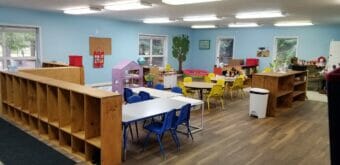
Discussions also focused on cost-saving measures to facilities at the school site, staffing and re-launching a preschool in Klukwan.

Justina Hotch is a Klukwan educator and administrator of the STEPs program. Hotch says it was an opportunity to discuss more about Klukwan’s unique educational programs, including Lingít language and culture.

“We have a Lingít language teacher full time with a five-year grant, and the opportunities to really make this a place-based Lingít language, kind of magnet school,” Hotch said. “There isn’t anywhere else in the community where kids can learn Lingít language like here, and that’s a real gift that we have.”

She says that extends to traditional subsistence activities, science and outdoor education, and community members are integral to the school as guest speakers and teachers.

Hotch says families can also connect to Chatham’s distance learning programs and utilize resources at Klukwan school.

“Students who homeschool in the Chilkat Valley can come here to Klukwan for any kind of support, for like distance education classes through the district,” Hotch said. “They can also participate in different activities here. They can do Lingít language here. If they’re homeschooling, there are a lot of different educational opportunities that may not look like the traditional education at another school.”

Klukwan advisory school board president Kinison says she feels hopeful after the district administrators’ visit.

“We feel supported, absolutely supported,” she said. “They want us to keep going and they’re going to help us make it happen.”

Through April, the district will work to finalize next year’s budget, including administering over $700,000 in federal COVID relief funding to schools in Klukwan, Angoon, Gustavus and Tenakee Springs.

Alaska should expect about as many visitors as in 2018 and 2019, cruise line rep says

A cruise ship moored at Skagway’s ore dock. (Photo by Emily Files/KHNS)

The cruise industry says Alaska can expect about 1.5 million ship passengers to visit this season. But with the first cruise ship of the season expected to arrive in Skagway on April 26, questions remain about the vaccination rates of visitors and the extra hurdles required to enter Canada.

Brian Salerno is Cruise Lines International Association’s senior vice president for maritime policy. On Wednesday, Mike Swasey talked with Salerno to get an industry perspective on what Alaskan’s should expect from the coming season.

Listen here:

This transcript has been lightly edited for clarity.

Mike Swasey: Brian, thanks so much for being here. I’m just going to ask you this straight out — how many people are coming to Skagway this summer?

Brian Salerno: You know, I don’t have it broken down. But overall, for Alaska, we’re estimating about 1.5 million passengers, that’s on 600 voyages by 40 individual ships. So the season will probably start out a little bit slower and will gradually build, but that’s the guess-timate right now.

Mike Swasey: And how does that compare to, let’s say, 2018 to 2019?

Brian Salerno: Well, I think it’s roughly comparable, to you know, pre-pandemic levels.

Mike Swasey: I’ve had a lot of questions, Brian, about the ArriveCan app. You know, specifically in Skagway, a lot of tours will emanate from Skagway and go up into Canada. And so one of the questions I’m getting from tour companies is, will everyone that gets on a cruise ship be required to fill out an ArriveCan app before they depart on their cruise ship?

Brian Salerno: That’s my understanding, yes. If the ship is going to call in Canada, and virtually all of them will — other than potentially the rare U.S.-flagged vessel that has no need to stop in Canada — there would be a need to complete the ArriveCan app as a condition of entry into Canada. And the cruise lines are prepared to check that upon embarkation so that it doesn’t become an issue during the course of the trip.

Mike Swasey: Okay, and then I’m told by Canadian officials that once they have filled out that ArriveCan app, it’s good for the duration of their cruise. So they don’t have to update it throughout the cruise. And then they can utilize that to, let’s say, leave from Skagway and go up to the Yukon. Is that similar with the information that you’ve gotten?

Brian Salerno: That’s my understanding as well.

Mike Swasey: Okay. Another question a lot of people have asked is, will everybody on board the cruise ships be vaccinated?

Brian Salerno: Sure, well, most people will be. You know, there may be a few exceptions, obviously, children under five aren’t required to be. There’s some question about whether, you know, children under 12 would be. But overall, the cruises that are operating to Alaska and certainly into Canada are going to have extremely high vaccination rates.

Most will operate at 95% crew and passengers. Even those where it’s just below the 95% threshold, which would characterize them as highly vaccinated, still above 90% in virtually every case. Plus, everybody getting on board the cruise ship needs to be tested. And there’s very limited time windows for obtaining that test. So everybody that you’re on a ship with is vaccinated and recently tested. And then, of course, there’s other layers of protection that are in place — new sanitation procedures and air filtration, plus the ability to respond if somebody does in fact come down with symptoms. So it’s a highly protected environment.

Mike Swasey: Brian, throughout the years, we’ve had a lot of international travelers come to Skagway. Will the cruise season this year look similar? Will there be an international flair, or will it be mostly folks from the Western Hemisphere?

Brian Salerno: Good question. You know, we’re seeing more interest in international travel now that many of the travel restrictions have been lowered. I think we’re still going to see a lot of international visitors to Alaska because it’s on a lot of people’s bucket lists. But predominantly, I think, you know, probably Western Hemisphere, at least to start.

Investigation underway after Haines Highway work crew finds human remains

A "pavement break" sign by a rural highway
Work on the Haines Highway project, which will bring the highway up to standard for 55 mph. (Photo by Corinne Smith/KHNS)

Authorities have paused construction in an area where human remains were found by crews working on the Haines Highway project Monday.

Department of Transportation spokesperson Sam Dapcevich says that any time human remains are discovered on a worksite, it triggers an investigation.

“When we do locate human remains, we have a policy and a plan for each project. And specifically, any remains that we locate are treated with dignity and respect,” Dapcevich said.

Dapcevich said Wednesday that they are not disclosing the location to protect the site, but the area had been marked off and work stopped to prevent further disturbance.

“We immediately notify the (Alaska) State Troopers, the Missing Persons Bureau, the Alaska State Medical Examiner, the Haines Police Department, the Alaska Office of History and Archaeology and the local tribes.”

The first step is determining whether the remains are recent or historic, according to John Kajdan, a DOT project manager. If relatively recent, it could be evidence of a crime. Law enforcement and the medical examiners offices will work to identify the individual and see if there’s a link to a missing persons or even a murder case.

If the remains are from antiquity, a cultural and archeological investigation will take place in coordination with local tribal governments. In the case this case, that would be the Chilkoot Indian Association and the Chilkat Indian Village of Klukwan.

Chilkoot Indian Association president James Hart says his phone rang Tuesday morning.

“I drove out there to speak with the archaeologists and kind of figure out, are these human remains, and where they came from,” he said.

Hart says the tribe has a formal agreement with state agencies and federal highway officials that guide what happens next.

“The Chilkoot Indian Association and Chilkat Indian Village and the state will come together and convene and figure out wishes of the tribe and how to handle the remains,” he said.

To date, officials have released little information about the nature of the remains. The DOT has not said when work will resume in the area.

The project will upgrade the highway to a 55 mph design standard by realigning, widening and straightening parts of the roadway. It’s expected to be finished in September.

Correction: This story has been revised to clarify that work on the project was paused only in the place where the remains were found.

Canada relaxes border rules, but not enough for the White Pass and Yukon Route Railroad

A White Pass and Yukon Route Railroad train in Skagway in 2017. (File photo by Emily Files/KHNS)
A White Pass and Yukon Route Railroad train in Skagway in 2017. (Photo by Emily Files/KHNS)

An easing of restrictions at the border between Skagway and Yukon Territory will make it possible for tour companies to run cross-border excursions this summer. That’s good news for many Skagway tour operators that take cruise ship passengers into Canada.

But Skagway’s largest tour outfit, the White Pass and Yukon Route Railroad, says its trains won’t cross the border despite relaxed testing rules and faster processing times. On April 5, the railway notified its partners that it wouldn’t be operating in Canada this season.

White Pass executive Tyler Rose says there were a number of reasons why.

“We just couldn’t find a workable solution to it,” he said. “It was logistics, some restrictions. The uncertainty around wait times — it just wasn’t possible for us to provide the consistent, high-quality service without delays. And we thought it would create a significant disruption to the passenger experience.”

Yukon’s Minister of Economic Development Ranj Pillai says his team is disappointed in White Pass’s decision.

“We essentially went through a series of problem-solving on border issues and ensuring that we would have the ability for White Pass to come back and not have delays. And you know, we solved those issues. So yeah, this week was it was very tough to get that news,” Pillai said.

The Yukon government and Yukon businesses aren’t the only ones affected. White Pass partners with several Skagway-based companies to do combination tours that involve a train ride and other excursions like kayaking, bus rides or bike tours.

Sockeye Cycle owner Dustin Craney says he’s been booking tours based on the idea that the train would run to Fraser B.C., where his company would meet passengers for a bike tour on the Klondike Highway. Now he has to issue about $10,000 in refunds.

“I didn’t think we had kind of any kind of guarantee from them. But we definitely had been booking tours. And I think all the indications from both the kind of the cruise line partners from White Pass and from folks locally was that it seemed like things were coming together, depending on the Canada border situation,” Craney said.

But the work done by the Yukon government to relax border restrictions has paved the way for other Skagway-based tour companies to resume their trips up the Klondike Highway to Yukon communities like Carcross. Fears over long delays at the border kept some companies in limbo wondering if they’d be able to operate at all after two years of pandemic-related shutdowns.

Now some tour companies, including Chilkoot Charters and Holland America Princess, plan to resume bus tours into Canada.

Skagway Mayor Andrew Cremata says he was very concerned that thousands of cruise ship passengers arriving in Skagway would end up creating bottlenecks at local establishments and an overcrowded downtown due to border restrictions.

“As the season progresses, if more and more of the Yukon tour operators, the independents, can come online and offer their products to tourists, I think that’s going to alleviate that bottleneck pressure and offer a really awesome opportunity for the independent tour operators to get back on their feet financially,” Cremata said.

Pillai says a completed ArriveCan app will still be required to cross the border. However, passengers that completed the app before boarding their cruise ship won’t have to update it. He also says a printout of the final QR code from the app will be accepted at the Fraser border, as will a screenshot of that page saved on a smartphone.

Skagway’s cruise season starts on April 26. But things are expected to get busy when four large cruise ships arrive in town on May 17.

Alaska renters face uncertainty as federal pandemic rental assistance nears end

Photo portrait of a young woman standing by an empty street
Haines resident Emma Brouillette, 18, benefitted from COVID rental assistance. With the program ending, she’s struggling to find more affordable housing. (Photo by Corinne Smith/KHNS)

Tens of thousands of Alaska tenants got help with rent during the pandemic. But the federal rental assistance program is set to expire by the early summer, and many still face challenges finding and affording housing.

Eighteen-year-old Haines resident Emma Brouillette has moved three times since graduating from Haines High school last year.

“It’s definitely really scary,” she said. “So my rent is $1,000 a month. I get around $450 every week for my paycheck. So I don’t actually get to save any of that.”

Brouillette works in the kitchen for a heliski tour company. She says paying for a studio apartment in town, plus utilities and food, is a stretch. She’s been supporting herself since she was sixteen. She says that with her qualifications, finding an entry level job that pays a living wage has been difficult.

“Between COVID and us not having tourism, so many businesses are closed, there’s not too many jobs out and about that can offer sort of a lot of progression,” Brouillette said. “So I’ve been doing my best to look around for jobs that can provide. And with COVID, so many people are having that same struggle. So people are sticking to their apartments, sticking to where it’s safe.”

Last fall, Brouillette was working at a local pizza restaurant and struggling to get by when she saw a posting and applied for COVID rental assistance.

“I found it to be incredibly helpful,” she said. “Because it helped with my mental state with my stress, it wrote that off as one less thing that needed to be done, and allowed me to work on myself.”

Now, with federal funding ending, she’s looking for a better paying job and a more affordable place, ideally splitting costs with a roommate.

But she says it’s also hard to save for a deposit for a new place while covering her bills.

“I have a job, and I’m able to pay for things, but I’m not able to look at a better job,” Brouillette said. “With my lease ending, if I want to try to find a new place, I need to find another source of income so I’m able to pay that first month of rent and that down (payment) deposit so I can actually move.”

31-year-old Joe Aultman-Moore is facing similar housing challenges. He was displaced from his home during the deadly Beach Road landslide in 2020. His cabin was deemed too risky to return to.

“When that was rendered unlivable after the slide, I essentially had to move into town somewhere,” he said. “I had to scramble to find a place in the middle of winter.”

He found emergency housing following the disaster, then rented a studio apartment in Fort Seward for $850 a month. As a former tour guide, but with no summer tours during the pandemic, he qualified for the COVID rental assistance.

“That’s made living in town possible throughout the continuing pandemic,” Aultman-Moore said. “But once that ends, I’m essentially going to have to move out of there. So, you know, continuing on, it’s pretty much still up in the air.”

Aultman-Moore says he was able to put away savings during that time and is working toward building his own tiny home.

“My long term plan going forward is to build a tiny house and stop paying for rent. Because that’s the only way that it makes sense to continue to live here,” he said. “Because, yeah, like rent going up and seasonal workers coming in and the renting situation constantly shifting around here. It’s just, it’s impossible to manage.”

The Alaska Housing Finance Corporation says it has distributed more than $220 million from the federal COVID relief program. In all, 100 Haines households benefited.

Housing Corporation spokesperson Stacey Barnes said one-third of all renters in the state applied, and over 66,000 Alaskans benefited.

“The idea that an individual or a family was questioning where they may sleep the next night or the next month because they lost hours associated with their job, maybe they lost their job altogether,” Barnes said. “Or maybe they had to care for a family member who became closely in contact with someone else who had COVID. Or perhaps they had COVID themselves. And so knowing that financial relief was on the way, was something that has made a tremendous impact.”

The program paid any past rent due, then made direct rental payments  landlords in three-month installments. In the Haines Borough alone, that totaled over $660,000 in assistance. There were two rounds of funding over the last year, but assistance is now set to end by early summer.

“While our country is now coming out of the COVID pandemic, those individuals are able to return to full employment, and make the decisions that are in the best interest of their family without having completely drawn down their savings without having built up huge credit card debt. And by maintaining the security of their housing,” Barnes said.

But renters are still facing major challenges affording housing.

Heather Parker is an attorney with Alaska Legal Services based in Juneau. She says they’re seeing an increase in evictions across Southeast Alaska in recent months as tenants face the end of federal rental assistance.

“Even though this particular COVID housing benefit is kind of coming to an end, I just want people to know that state and federal law still applies. And there are still obligations that landlords and tenants have under state law,” Parker said.

In particular, Parker says tenants have process rights during evictions.

Janine Allen is an advocate with Southeast Alaska Independent Living based in Haines. She says with federal rental assistance ending, they’re working to connect seniors and people with disabilities with additional assistance like for food and fuel. But housing availability continues to be a major challenge, especially for those on a fixed income.

“The housing situation in Haines seems hard for pretty much everybody right now, regardless of your income. And then if you have a disability or if you’re a senior it’s just nearly impossible.”

Looking ahead, renters like Joe Aultman-Moore, whose Beach Road cabin was condemned, say more needs to be done to address housing options and affordability.

“You’re on a treadmill,” he said. “And if anything goes wrong, like if you stumble in the slightest, you’re gonna go flying off that treadmill real quick.”

Alaska Legal Services staffs a statewide housing hotline for both tenants and landlords at 855-743-1001. There are also housing resources at alaskalawhelp.org. Alaska’s 2-1-1 hotline connects residents to a variety of public benefits, including housing assistance. 

Alaska Supreme Court upholds district pairing Skagway and Haines with Juneau’s Mendenhall Valley

A map showing proposed legislative districts in Southeast Alaska
The Alaska Supreme Court has upheld the redistricting board’s map that would change Skagway and Haines’ House district. (Courtesy akredistrict.org)

The Alaska Supreme Court struck down a lower court’s ruling that found the upper Lynn Canal and Juneau maps unconstitutional and required the redistricting board to revisit it. That means Skagway, Haines and upper Lynn Canal communities will be part of a new district with Juneau’s Mendenhall Valley rather than in a district with downtown Juneau.

The five-member court delivered its ruling on Friday afternoon, a week earlier than expected.

Skagway filed suit last year, challenging the redistricting board’s legislative map pairing it with the Mendenhall Valley by arguing that it was more socio-economically aligned with downtown Juneau.

Following the trial is political writer Matt Buxton, who runs the left-leaning political blog Midnight Sun.

“They found that the maps produced by the Alaska board did in fact, meet the constitutional requirements for compact, contiguous, and socioeconomically integrated. They specifically found that the lower court’s finding that public testimony needed to be taken into account more clearly really didn’t apply here,” he said.

Buxton says the court did not explain the ruling or why they found the public testimony requirement was fulfilled, but that may be addressed on April 1, when the court is expected to issue a full explanation for the ruling.

Upper Lynn Canal communities will no longer be represented by Juneau Democrat Sara Hannon but will be a part of the district represented by Democrat Andi Story of Juneau’s Mendenhall Valley. Her term ends in January 2023, and she has not yet declared intent to file for re-election.

The deadline for legislative candidates running for the new district is June 1.

Site notifications
Update notification options
Subscribe to notifications