KSTK - Wrangell

KSTK is our partner station in Wrangell. KTOO collaborates with partners across the state to cover important news and to share stories with our audiences.
Board of Fish will not move Southeast meeting back to Ketchikan

""
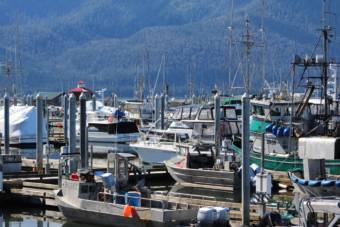
Fishing in Zimovia Strait (Photo by Sage Smiley/KSTK)

The Alaska Board of Fisheries will hold its Southeast meeting in Anchorage after all.

The board voted 4-2 against moving the meeting back to Ketchikan despite dozens of comments from Southeast’s fishermen, tribal entities, elected officials and others urging it to hold the meeting inside the region that would be affected by more than 150 proposals.

The Board of Fish had been set to hold its Southeast Finfish & Shellfish meeting in Ketchikan earlier this month, but a coronavirus outbreak caused it to be postponed.

When the meeting was rescheduled for Anchorage two months later, fishermen, subsistence harvesters and others complained, pointing out that a March meeting could cut into fishing seasons or cut off constituents from the process.

So the Board of Fish — which sets regulations for commercial, subsistence and sport fisheries around the state — met Thursday to decide whether to move the two-week Southeast meeting back to Ketchikan.

Dozens wrote comments to the board, including Ketchikan’s PeaceHealth Medical Center. The health provider commented in support of the Southeast meeting taking place in Ketchikan in March, despite the risk of COVID-19, saying the medical system in the area is well-equipped to handle tens of thousands of visitors.

But despite comments urging the move back to Southeast, a four-member majority of the board voted to keep the meeting in Anchorage. John Jensen, the board’s only member residing in Southeast Alaska, said he appreciated the public comment but was concerned about logistics.

“A lot of people have made their plans based on our plan to go to Anchorage — like myself,” Jensen told the board Thursday afternoon. “[…] much to the disappointment of a lot of my people that live around here in Petersburg, I’m going to get chewed out for this — but my vote is going to be to keep the meeting in Anchorage and keep the plans we’ve already made along with that.”

Jensen also suggested the possible solution of skipping the Southeast Alaska meeting this cycle and resuming in 2024. The last regional finfish & shellfish meeting was in Sitka in 2018.

After the move to Anchorage was announced, Ketchikan Rep. Dan Ortiz worked with local officials and board staff to arrange availability in March at Ketchikan’s Ted Ferry Civic Center. Other state senators and representatives from Southeast Alaska wrote to the board in favor of holding the meeting in the region.

Board member Israel Payton criticized what he termed “political interference” by Alaska lawmakers.

“I’ve heard from, quite honestly, the politicians that have been involved with us to keep politics out of the Board of Fish, and I feel a tremendous amount of political pressure from those same politicians to get in the board business and try to augment what’s what we view as best for the board and the process,” Payton explained. “I don’t take kindly to that. That being said, I appreciate what they’re doing for their stakeholders.”

Petersburg’s Jensen, who also serves on the North Pacific Fishery Management Council, agreed.

“The reason this state came into being was to take government out of [the] management of fish,” Jensen stated, “And being respectful for our legislators, and I’m not trying to make it sound bad, but governmental agencies running fisheries has never worked very well in the history of the United States — or any other country for that matter — as far back as [1215] when the Magna Carta was written.”

Board of Fish chair Märit Carlson-Van Dort reiterated the challenges of trying to hold large public meetings with many postponed and rescheduled.

“It is literally almost balanced on a pinhead, considering all of the fisheries and all of the other timing and scheduling conflicts that present and have been presented,” Carlson-Van Dort explained.

But McKenzie Mitchell of Fairbanks said her priority was holding the meeting where the fisheries are.

“I understand that the schedules are challenging and it will be challenging to have both the statewide and the Southeast meetings back to back,” Mitchell stated, “But I am okay with doing that. It’s important for me to make sure that we have a Southeast meeting in Southeast Alaska.”

Mitchell and Willow-based board member John Wood — who called for the special meeting — voted in favor of moving the meeting back to Ketchikan, but the motion failed, keeping the Southeast meeting location in Anchorage.

The comment period for the 153 proposals before the Board of Fish for the Southeast Alaska meeting has been extended until February 23.

The Alaska Board of Fisheries’ Southeast finfish & shellfish meeting will take place in Anchorage at the Egan Center from March 10-22. Given the location of the meeting, the board stated it will accept remote public testimony from select Alaska Department of Fish & Game offices. The board has not specified whether that is the only form of remote testimony that will be accepted.

Fishing groups hold hope and skepticism before first bycatch task force meeting

""
Heritage Harbor in Wrangell. (Photo by Sage Smiley/KSTK)

Earlier this month, Gov. Mike Dunleavy named 11 appointees to the Alaska Bycatch Task Force, which will work to recommend solutions to the thorny issue of bycatch in Alaska’s state and federal fisheries. Some see the force as a possible turning point, but others say they’re skeptical of what it can accomplish.

Bycatch — or species accidentally caught while targeting a different fish — has been a hot-button issue in Alaska for decades. But it rose to the forefront last year when Alaska Native organizations and fishing groups called for dramatic reductions to halibut, crab and salmon bycatch at federal fisheries meetings.

The state legislature took notice, holding a special meeting on bycatch in mid-November. Also in mid-November, Gov. Mike Dunleavy announced the formation of the Alaska Bycatch Task Force.

On the Yukon and Kuskokwim rivers, subsistence and small commercial salmon fisheries were severely curtailed or completely shuttered last year. That same year, federal data show that trawlers in the Bering Sea scooped up more than half a million chum, pink and silver salmon and almost 14,000 king salmon. In the Gulf of Alaska, groundfish harvesters caught more than 17,000 king salmon as bycatch. That fish can’t be sold, although some of the bycatch is donated.

For more than a decade, commercial and subsistence fishermen in Western Alaska have felt the impacts of declining salmon runs and didn’t have a task force to address the problem.

During a recent tribal listening session with the National Marine Fisheries Service, John Lamont from Lamont Slough on the lower Yukon River told federal fisheries managers that he supports the idea of a bycatch task force.

“This should have happened a long time ago,” he said.

Lamont also called on the federal government to follow suit.

“I’m not really sure if the federal government is establishing a bycatch committee yet to discuss the same issues that are being brought up today by all users all stakeholders in Alaska,” he said. “The impact of no fishing, no nets in the water this past summer has really opened the eyes, I think, of politicians, of managers, and of tribal leaders.”

The state’s task force will study the impacts of bycatch on what it calls “high-value” state fisheries. The administrative order establishing the force doesn’t specify what it means by high-value. Monetarily, that would include the state’s salmon and crab fisheries. The order does not mention subsistence interests but does designate a spot for a sport or personal-use representative. That seat was assigned to a former head of ADF&G’s sport fish division.
The task force will also make recommendations and advise state and federal agencies on how to address bycatch, though there isn’t much data on bycatch in state-managed fisheries. It’s also tasked with working to inform policy-makers and the public about how bycatch affects Alaska’s fisheries.

The force will be chaired by Petersburg crab and halibut fisherman John Jensen. He also sits on the Alaska Board of Fisheries, which sets most of the rules for fishing in state waters. Jensen also holds a voting seat on the North Pacific Fishery Management Council, which manages fisheries past the 3-mile line and in federal waters.

Dunleavy’s 11 appointees cover a range of interests, though only one currently resides in one of the Native communities where bycatch has arguably affected subsistence the most.

The seat on the task force reserved for Alaska Native interests was assigned to a non-Native consultant who represents two Alaska Native corporations. And that’s led to some criticism.

“Looking at the composition of the task force, I don’t feel that the tribal representation is really there,” said Brooke Woods, the executive chair of the Yukon River Inter-Tribal Fish Commission, a nonprofit representing 30 tribes along the Yukon River that advocates for tribal fishing rights and the protection and restoration of Yukon River salmon.

Woods says she’s skeptical that listening sessions or task forces will make the change that organizations like hers are asking for.

“I honestly didn’t even encourage any tribal members to take on yet another voluntary position to make change for themselves, their families and their communities, because it’s just not fair,” Woods said. “You have non-Natives in career positions that are supposed to be doing the work of subsistence, but there’s no accountability. So it’s hard — these career-minded folks making an income with no accountability to subsistence management or policy and then asking an Alaska Native to volunteer.”

The seat reserved for an Alaska Native organization will be filled by Duncan Fields, a Kodiak resident and former state House candidate, who has also served on the North Pacific Fishery Management Council.

Fields says he’s not Alaska Native but works closely with Native and tribal organizations.

“I didn’t make the determination whether I was an adequate representative or not, the governor’s office did that. And I’m appreciative that they thought that I was qualified,” Fields said in an interview with KSTK.

He’s been recognized for his work by the Alaska Federation of Natives, which gave him the Denali Award in 2004 — an award recognizing a non-Native person who has made significant contributions to the Alaska Native community.

“I understand the weight of responsibility, being a representative of Native organizations, ANCSA corporations and tribes,” Fields said. “I can’t be all things to all people. And as you well know, there’s great divergence in this both geographically and tribally relative to issues like bycatch. But I can be a listening ear.”

Another Kodiak resident, salmon seiner Raymond May has been appointed to fill the seat reserved for a salmon fisherman. May also holds permits for herring roe and crab, finfish and sablefish pot fishing around the state. May is a council member for the Native Village of Port Lions and an enrolled member of the Native Village of Afognak.

Cordova’s Tommy Sheridan, a fisheries consultant and former Silver Bay Seafoods executive, has been appointed to fill the seat designated for a member of the general public. He’ll serve as vice-chair of the task force. Sheridan also serves on the North Pacific Anadromous Fish Commission, an international organization dedicated to stock conservation of salmon and other anadromous fish.

The seat for a crab harvester will go to Erik Velsko, a Homer-based crab fisherman who also fishes for halibut and owns a Bristol Bay salmon permit. Velsko is also a member of the North Pacific Fishery Management Council Advisory Panel.

Kodiak-based Linda Kozak will hold the seat designated for a halibut fisher. Kozak is the United Fishermen of Alaska representative for the Fishing Vessel Owners’ Association, a longline industry group, and is a fisheries consultant and sport fisher.

Mike Flores will hold the seat designated for a charter operator. Flores owns and operates Ninilchik Charters, a fishing and hunting charter operation on the Kenai Peninsula. He also serves on the state’s Big Game Commercial Services board.

Kevin Delaney, the former director for the ADF&G Division of Sport Fish, will fill the personal use or sport fish seat on the task force. Delaney is a resident of Windsor, Colorado, and is a retired consultant specializing in fisheries consulting and wealth management.

And the seat for a mayor from a coastal Alaska community will be filled by Kenai Mayor Brian Gabriel. KDLL reported earlier this month that Gabriel is a longtime set-netter and has experience guiding and sportfishing on the Kenai River.

The task force also has seats designated for a trawl industry representative and a representative from a community group that receives a share of Bering Sea trawl catch for economic development in western Alaska.

Alukanuk’s Ragnar Alstrom, the executive director of the Yukon Delta Fisheries Development Association, will hold that community group seat on the task force. YDFDA represents six Native villages at the mouth of the Yukon River, and owns shares of multiple pollock trawl vessels and other catcher-processor boats targeting crab and cod in the Bering Sea. The organization has also funded and helped to organize salmon research on the lower Yukon River.

The executive director of trawler group the At-Sea Processors Association, Stephanie Madsen, will hold the seat designated for her industry. Juneau-based Madsen previously served as the chair of the North Pacific Fishery Management Council.

Two cabinet officials of the Dunleavy administration — the commissioners of Fish & Game and Commerce — will also be voting members on the task force.

And legislative leaders will nominate two lawmakers to sit in non-voting seats. House Speaker Louise Stutes announced earlier this month (on January 7) she would nominate former House Speaker Bryce Edgmon, a state lawmaker from Dillingham to one of the non-voting legislative seats.

Fish & Game commissioner Doug Vincent-Lang told KSTK in November that the task force will meet on a monthly basis until late this year when it will submit a report with recommendations to state and federal policymakers. The task force’s first meeting is scheduled for January 28 and will be open to the public via videoconference.

Board of Fish will consider moving Southeast meeting back to Ketchikan

A fishing boat passes Wrangell’s City Park. (Photo by Sage Smiley/KSTK)

Alaska’s Board of Fisheries is considering moving its Southeast meeting back to Ketchikan, and it’s asking the public to weigh in.

The board — which sets the state’s subsistence, commercial and sport fishing rules — plans to discuss more than 150 proposed changes to Southeast Alaska finfish and shellfish regulations at the meeting, which was originally slated to be held in Ketchikan this month but was postponed due to a rise in COVID-19 cases in the region.

The meeting was moved to Anchorage and pushed back two months, to early March. That ignited a firestorm of criticism from fishermen and subsistence harvesters, who said they were concerned their input would not be adequately heard. Some also pointed out that the postponed meeting could cut into commercial and subsistence harvesting seasons in Southeast.

But now, the Board of Fish says it’s mulling a do-over for the meeting’s location. In a statement released Monday, Board of Fish Executive Director Glenn Haight wrote that Ketchikan Rep. Dan Ortiz, who represents southern Southeast Alaska, worked with the city of Ketchikan to make the Ted Ferry Civic Center available in March.

Southeast Alaska’s Board of Fish meeting usually runs for 13 days, but the Ted Ferry Civic Center is only available for 11 days. If the meeting is moved back to Ketchikan, some of the 153 proposals set to be considered might need to be tabled until a statewide meeting of the board later in the spring.

The Board of Fish is asking for public comment on whether to hold the meeting in Ketchikan. The deadline to submit letters is Wednesday, Jan. 26, a day before the board is scheduled to meet to consider the location.

Comments can be emailed to board staff at dfg.bof.comments@alaska.gov or faxed to (907) 465-6094. Oral testimony will not be taken. The meeting will be streamed on the Board of Fisheries’ website at 1:45 p.m. on Thursday, Jan. 27.

SEARHC closes wilderness program for at-risk youth in Wrangell

An Alaska Island Community Services sign above the Alaska Crossings office entrance. AICS used to run the Crossings program, before it was absorbed by SEARHC.
(Photo by Sage Smiley/KSTK)

Wrangell is losing one of its largest private sector employers. Alaska Crossings, a wilderness program for at-risk youth, has been anchored on the island for more than two decades.

Southeast Alaska Regional Health Consortium announced in a statement Wednesday that, effective immediately, the wilderness expedition program would be permanently closed and resources consolidated with Raven’s Way — its other adolescent residential treatment program in Sitka.

That effectively dissolves the Wrangell-based behavioral health program that led wilderness expedition trips each summer for teens in Tongass National Forest.

The announcement was not completely unexpected. SEARHC had said it was exploring options for the Crossings program over the last year. At one point in 2020 it was considering moving some or all of the program to Sitka. But that didn’t happen.

At the time, Wrangell’s tribal government passed a resolution opposing Crossings’ move out of town, citing the program’s economic and social importance to the community of Wrangell.

Crossings employed more than 20 staffers in its Wrangell office, plus around 50 seasonal guides, and led expeditions for an average of 120 young people each year.

In a statement, SEARHC wrote that the COVID-19 pandemic had a big impact on its adolescent residential treatment programs. The tribal health provider stated that rising costs, lower patient enrollment and staffing issues forced SEARHC to reconsider its residential treatment structure.

SEARHC spokesperson Maegan Bosak wrote in an email that when Crossings was dissolved on January 12, it employed 16 people in Wrangell. Four of those employees were offered positions in Sitka, she said, and 12 were offered “commensurate positions” in Wrangell.

She added that at the height of the summer 2021 season, there were 25 seasonal guide positions in town, who oversaw 16 Crossings expeditions.

It’s unclear whether that applies to seasonal guides, some of whom had already been given shift schedules for the upcoming summer season. SEARHC did not immediately respond to requests for comment.

Wrangell Mayor Steve Prysunka, who helped found the program in 2001, declined to comment.

Editor’s note: This story has been updated with more details from SEARHC and to correct the spelling of Wrangell Mayor Steve Pyrsunka’s last name.

Ketchikan and Wrangell are running out of at-home COVID tests

""
An at-home COVID test kit. (Photo by Sage Smiley/KSTK)

At-home tests are in short supply across the country and state, including in Ketchikan and Wrangell.

Wrangell’s Emergency Operations Center says it anticipates the kits will have been exhausted by Wednesday. This comes amid Wrangell’s largest COVID case spike of the pandemic.

The EOC’s Jamie Roberts says the community only has about 75 test kits left after distributing more than 500 in recent weeks. She says the borough placed an order for another 2,000 kits.

“We submitted an order to the state resource request for additional tests,” Roberts explains, “And we were denied that order because they had no stock available.”

Roberts added that state officials haven’t said when more at-home test kits might be available.

With the number of at-home tests in Wrangell dwindling, Roberts recommended community members take advantage of walk-up testing at Wrangell’s hospital. Test turn-arounds are longer, she says, but there’s a solid supply of PCR testing materials in town.

But the walk-up testing program will end at the end of the month when the state plans to end its travel testing contracts. Tests will continue to be available by appointment at Wrangell’s hospital.

Wrangell’s EOC encourages anyone with COVID symptoms (fever, sore throat, cough, runny nose, or shortness of breath) to stay home, consider getting tested at the hospital, and contact a medical professional if symptoms change or get worse.

Meanwhile, Ketchikan Fire Chief Scott Brainard says they’ve distributed just about their entire lot of 2,790 kits.

“We’ve put in a request for more home test kits for the public, and we are basically just having to wait for them to arrive,” Brainard said Tuesday by phone.

He says he’s put in an order for 864 additional kits, and state officials told him they hoped to get more shipped to Ketchikan next week.

Officials at the North Tongass Volunteer Fire Department said Tuesday they are also out of kits. The South Tongass Fire Department had just a handful as of Tuesday morning. The Ketchikan Public Library had about a dozen on hand Tuesday afternoon.

Ketchikan Public Health Center had just shy of two dozen test kits as of midday Tuesday. The lead nurse, Jen Bergen, told KRBD the clinic had ordered more but wasn’t sure when they’d be delivered.

At-home tests are available through some online retailers, and President Joe Biden recently announced that health insurance providers will reimburse four at-home COVID tests per person every month, beginning Jan. 15.

November wind storm left much of Wrangell’s critical infrastructure in the dark

A large electric generator is backed into an open garage door on the back of a flatbed truck.
Workers move a generator into Wrangell’s power facility, 2019. (Photo by June Leffler/KSTK)

A vicious windstorm that hit Wrangell in late November left some people without power for nearly two days and also left some of the community’s critical infrastructure in the dark.

There’s not backup generation for Wrangell’s water treatment plant. The water plant stopped filtering and treating source water from the reservoirs for a few hours during the November outage.

“We were basically down to what we had in storage until the power came back on,” said Wrangell’s Public Works director Tom Wetor.

There’s a battery bank at the plant that operators use to keep some things moving, but most of the equipment is down for the count without power. That includes monitoring the chlorine levels in the drinking water as required by law.

The water plant does have about 850,000 gallons of treated water in reserve. But after 12 – 24 hours, that can run dry.

“And that’s just on a normal day,” said Wetor. “If we were doing high flows during the middle of the summer, or if we had a water main break in the middle of that, that time frame could be reduced to a matter of a couple hours.”

Parts of Wrangell’s sewer pump system also don’t have electrical backups. When the power goes off, stations pumping wastewater out the road can’t work.

“You know, if the outage would have gone for much longer, good chance we would have seen sewage overflowing in a lot more places,” Wetor said.

Wrangell’s municipality does have five electrical generators with capability to power the whole community, but if transmission lines are down, diesel generators can’t get electricity past broken lines.

The storm also took out the runway lights at Wrangell’s state-owned airport, prompting the borough assembly to allocate the remaining $80,000 of its federal pandemic relief to buy a generator for the airport’s runway lights. That’s so that planes – including medevac flights – can get in if there’s an extended community blackout. But that decision wasn’t without frustration.

Wrangell’s mayor Steve Prysunka argued the Alaska Department of Transportation should be responsible for its own airport.

“Why we have to go and spend our money on state generators to keep our airport lit up is beyond me,” Prysunka said at the assembly meeting. “I think I know the answer to that. But we had the perfect storm. Exactly what we said could happen, happened, and we’re out.”

But Pat Carroll, deputy director for the state’s regional transportation office in Juneau, said the regional office is no longer installing generators at its airports. And in jet-served communities that do have them, such as Ketchikan, Petersburg, Sitka, Gustavus and Yakutat– they won’t be replaced after they wear out.

“This is not a formal established policy,” he said in an email. “DOT has found over time that backup power generators are rarely used and are expensive to install and maintain.”

Wrangell’s key emergency coordinators have told the assembly there’s a lot of work to do.

“There’s a lot of things that we do need to work on,” Fire Captain Dorianne Sprehe said at a recent borough meeting. “One of the largest items was our emergency operations plan for the city…It was written in 2001, and has really never been looked at since. So somewhere it’s holding up all the other binders that are really important. But we really need to address that.”

But for electrical emergencies in the water and wastewater systems, solutions are complex, spendy or both. For example, a backup generator for the water treatment plant would cost around $250,000.

“We’re a remote place that has a lot of challenges when it comes to our infrastructure, and generators are expensive,” said Tom Wetor, the public works director. “It’s one of those things: you don’t need it until you need it… It sounds like a lot of money, and it is. And we want to be prudent and fiscally responsible and things like that, and we also want to make sure that we are doing everything that we can to protect the life, health and safety of everybody living here.”

That’s not to say it’s all darkness. In Wrangell, both the new hospital and the vacant old one have generators. The fire department has a mobile generator on a trailer it can deploy as needed. And as November’s storm showed, many Wrangellites have smaller generators they can use for their own houses or to help others.

Site notifications
Update notification options
Subscribe to notifications