
KSTK - Wrangell

KSTK is our partner station in Wrangell. KTOO collaborates with partners across the state to cover important news and to share stories with our audiences.
The Forest Service is working to increase access to an underused Southeast bear-viewing site

A small black bear walks along a large fallen log in a green forest
A black bear at Anan Wildlife Observatory. (Photo by Sage Smiley/KSTK)

The U.S. Forest Service says one of Southeast’s best bear-viewing sites has been under-utilized for decades, but the agency is updating infrastructure and re-tooling visitor permits to increase access.

Located about 30 miles south of Wrangell on the U.S. mainland, Anan Wildlife Observatory sits on Anan Creek, which hosts a large pink salmon run and a lot of fauna that rely on those fish. Black bears, brown bears, bald eagles and harbor seals all congregate around historic Lingít fish camp sites to feed.

But despite the beautiful scenery and wildlife viewing, Wrangell District Ranger Clint Kolarich says that the annual visitor capacity — which is based on sustainability studies — has never been met.

“That’s due to things outside of our control: a cruise ship gets canceled, or the weather’s bad, or a boat breaks down. Those things will always happen,” Kolarich said.

After almost two decades of data collection, the Forest Service is opening up more Anan permits to commercial outfitters or guiding services, which he says hopefully will allow more people to see Anan.

“We’re just trying to compensate a little bit for those unknowns by getting the permits into the hands of the folks that have a higher probability of getting customers down there,” he said.

In the past, 60 people had been allowed at the wildlife observatory each day during the viewing season, which runs from July 5 to Aug. 25. That total number isn’t going to change.

But recreation staff officer Tory Houser says that just under two-thirds of the permits went to commercial guiding companies.

“From our research, we found that over 80% of people came to Anan with an outfitter guide, because it’s hard to get there,” she said. “You need a boat, and not everybody has a boat and can get there. So we said ‘Well, let’s get these permits to the people who can help get folks to Anan.’”

""
Anan Lagoon, looking towards Anan Bay. (Photo by Sage Smiley/KSTK)

Houser says that the new prospectus, which is open through April 14, allows new tour groups to get in on Anan guiding and current outfitter guides to expand their trips to the observatory.

“Currently, we have a group of companies that were awarded use days — or permits — for Anan, and just those companies are allowed to bring clients there at this point. So we have some more capacity; we didn’t raise our numbers that can go to Anan, but we are going to allow more of those numbers to be commercial than previously,” Houser said.

The new permit structure will open up an additional 1,354 permits to commercial guiding companies each year.

“It doesn’t take any of the days away from folks that have them currently — they keep what they have,” Houser said. “And they have an opportunity to get more.”

It’s an overbooking strategy based on visitor data going back to 2003. With the number of permits that go unused because of unforeseen circumstances, Forest Service officials say they won’t be pushing the site’s capacity limits. Twelve permits a day will still be available for members of the public who want to visit Anan on their own, without a commercial guiding service.

Restructuring the permit system isn’t the only movement on Anan Creek. The Forest Service also expects to see the fruits of an almost million-dollar contract to redo the upper observatory viewing deck.

A wooden walkway and platform in a forest
The Anan Observatory deck, which will be replaced in the coming months. The structure in the center will be moved back to allow visitors to access the guardrails over the creek. (Photo by Sage Smiley/KSTK)

This first phase of the Anan deck replacement project will make the upper observatory deck all one level and move a historic shelter away from the edge of the platform to give visitors a clearer view of the creek.

Houser says the contractors will be working on a tight timeline.

“We really want to have the entire top deck completed for our operating season that starts on July 5, and we have kind of a timeline: we’re hoping by June 15, we’ll have it done,” Houser said.

Petersburg-based Rainforest Contracting will build the new deck, hopefully starting by March 14, Houser says. That’s the same company that built the new Raven’s Roost cabin on the Petersburg Ranger District.

The Forest Service is also working to secure around $700,000 in funding for the second phase of the project, which will involve building a spiral staircase down to a new photo blind deck just above the waters of Anan Creek. It’s part of the Anan master plan, which included recent improvements to the Anan Creek Trail and the site’s outhouses, as well as a proposal for a larger, more permanent floating dock in Anan Bay.

This isn’t the first time the Anan Wildlife Observatory has been renovated. The observatory deck was first built in 1967, rebuilt and renovated in 1983, and the deck was further enlarged a decade later.

Businesses interested in applying for guiding permits at Anan Wildlife Observatory can submit proposals between March 1 and April 14 through the Wrangell Ranger District office.

Alaska lawmakers and telehealth providers work to improve access to contraceptives

Two blister packs of birth control pills, in a tree
Telehealth providers can prescribe various forms of birth control. (Photo by Sage Smiley/KSTK)

Many Alaskans have to travel for health care needs, including contraceptives. They aren’t always easy to get and sometimes they aren’t available as long-term prescriptions which can lead to inconsistent birth control use. Telehealth companies and state lawmakers are trying to change that.

Recent polling suggests that a majority of Alaskans support easy access to contraceptives. But that doesn’t necessarily mean it’s easy for patients to get them — especially in rural areas.
Wrangell Island’s state public health office is only open for a few days every month or two. It closed in 2016 after cuts to the state budget forced the department to shutter offices in Wrangell and Haines.

“At this point, since there’s not a full-time health nurse that’s located in Wrangell,” says public health nurse Erin Michael. She serves Wrangell, Petersburg, Point Protection and Point Baker. “That means that they haven’t been able to bring over the nurse practitioner like they had previously, when we had a full-time staffed health center there.”

Public Health provides a variety of services including immunizations, STD testing, and birth control. But without a nurse practitioner in town, the office can’t prescribe birth control. For Wrangell residents, that can mean a plane or ferry ride to get a prescription.

Wrangell has a tribal clinic run by the Southeast Alaska Regional Health Consortium that provides birth control. But even with sliding scales for lower-income patients, out-of-pocket costs for some birth control methods can range into the hundreds or even thousands of dollars.

Women all over the state are having this problem. According to the nonprofit Power to Decide, more than 30,000 Alaska women live in areas where they don’t have full access to birth control.

In some places, telehealth providers like the Pill Club have begun moving in to try and cover the gaps. That’s a digital healthcare provider focused on contraceptives that expanded to Alaska earlier this year.

Stephanie Swartz is its senior director of policy and public affairs.

“Telehealth really has the potential and the promise to reach people who have historically struggled to receive the care that they deserve,” Swartz says, “Whether that’s because providers and centers are far away or because they felt like providers just have not paid attention to their needs and their personal conditions.”

Insurers have to cover the cost of contraceptives, although bureaucratic technicalities can still make it difficult for women to find birth control that works for them.

“Even if people aren’t covered by insurance, we also work to keep our prices as low as $7 a month,” Swartz said.

Companies like the Pill Club also aim to improve access. The average wait time for an OBGYN is more than 20 days in the U.S., and many small communities, like Wrangell, don’t have one.

“If you have an urgent need or if you have lost a pill pack, that is a real barrier to getting timely care that you need,” Swartz said.

She says there are also benefits to communities when more have easy access to contraceptives.

“History has shown that access to birth control leads to many follow-on benefits for people who need birth control, whether that’s the opportunity to complete schooling to fulfill a career of their choice, and to have better control over the when, how and whether they want to have a family,” Swartz said.

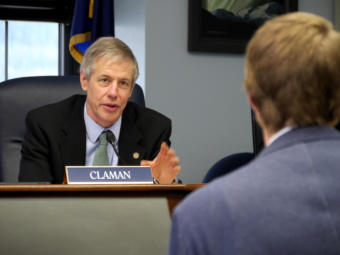
In the state legislature, West Anchorage Democratic Rep. Matt Claman has also been working to expand access to contraceptives. For the last few legislative sessions, he’s sponsored a bill that would, among other things, require insurance companies and state entities to cover up to a year’s worth of birth control at a time.

“It’s not just people in rural jobs and working out on the water, but it’s also people in rural communities that might not even have a drugstore in their community. And they’re relying on mail-order pharmacies to get their prescriptions filled,” Claman said. “All those all those folks that, if you have a slight change in your schedule and you run out of your prescription birth control, you actually then lose the benefits of having the medication.”

The Alaska Public Health Association has supported previous versions of the bill. The Alaska Network On Domestic Violence and Sexual Assault has weighed in, too. Supporters there see a legal mandate to provide longer-term prescriptions to birth control as a way to prevent domestic violence like contraceptive coercion or pregnancy pressure.

Rep. Matt Claman, D-Anchorage, questions Chad Hutchison, counsel for the Senate Majority, at a free conference committee in the Capitol in Juneau on April 22, 2019. They were discussing Senate Bill 89, which would change the law regarding conflicts of interest involving legislators, family members, employers and potential employers.
Rep. Matt Claman, D-Anchorage, in the Capitol in Juneau on April 22, 2019. (Photo by Skip Gray/360 North)

There’s been some opposition to the bill from groups who see the bill’s coverage of emergency contraceptives as coverage of abortions.

Claman disagrees.

“We actually had an analysis from the Department of Health and Human Services that showed that it actually would save millions of dollars a year to the state in unwanted pregnancies,” Claman said. “These aren’t abortions, these are people that want to be on contraception, and the contraceptive works. There’s no pregnancy.”

The bill – HB58 – hasn’t moved since last April, but Claman says he’s optimistic.

“So many Alaskans care very deeply about this issue and believe it’s a really positive step to really improve access to health care for all Alaskans,” Claman said. “We’re optimistic that we will one day pass the legislation and are not giving up.”

While the legislative expansion of contraceptive access is stalled for now, telehealth providers like the Pill Club, local clinics, and Public Health still provide access to a variety of birth control methods. And even when public health centers aren’t open, many, including Wrangell’s Public Health office, keep free condoms outside the door.

Meyers Chuck man confirmed dead after going missing in skiff

An older man in a flat cap speaks to a woman from across a counter
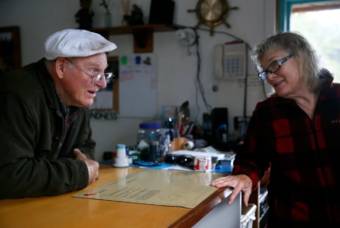
Steve Peavey with his wife, Cassy, in the Meyers Chuck Post Office in 2017. (Photo by Elissa Nadworny/NPR)

Authorities have recovered the body of a man who went missing in his skiff outside of a remote Southeast Alaska community last week.

83-year-old Steven Peavey lived in the hamlet of Meyers Chuck, about 50 miles south of Wrangell. Alaska State Troopers say he died after failing to return home before nightfall on Feb. 14.

Peavey was reported overdue the next morning. The U.S. Coast Guard launched a vessel and helicopter to help in the search, and a U.S. Forest Service Service boat from Prince of Wales also assisted the troopers.

Peavey’s skiff was found later that day, heavily damaged on rocks outside Meyers Chuck. Searchers found Peavey’s body soon after. His next of kin have been notified of his death, troopers say.

Peavey had lived in the community of Meyers Chuck nearly his whole life, having moved there in 1949 at the age of seven. That’s according to a 2015 profile in Alaska Magazine.
Peavey and his wife, Cassy, who works as Meyers Chuck’s postmistress, were also featured in a National Public Radio profile of the small community in 2017.

Bycatch task force works to refine mission ahead of November deadline

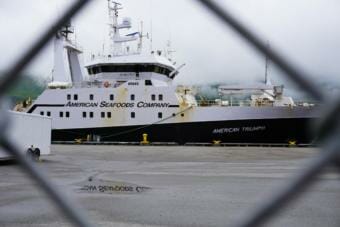
The American Triumph — a 285-foot factory trawler, with an onboard processing plant — sits in the Port of Dutch Harbor on Friday, waiting for clinic staff to test the remaining members of its 119-person crew. (Photo by Hope McKenney/KUCB)
The American Triumph — a 285-foot factory trawler with an onboard processing plant — sits in the Port of Dutch Harbor on Friday. (Photo by Hope McKenney/KUCB)

The governor’s task force to review the effects of bycatch in Alaska fisheries is working to organize against its tight timeline for submitting recommendations to state and federal policymakers. It also has to balance commercial and subsistence interests.

Bycatch is when fishing vessels catch something they’re not targeting. It could be tanner crab caught in a black cod pot or halibut scooped up in a pollock trawl net. It’s been a contentious issue in Alaska’s fisheries for decades. Now, as stocks of crab, salmon and halibut decline, trawl fisheries have come under fire for their role, which represents the vast majority of incidental catch in and around Alaska.

The governor’s office took notice. Gov. Mike Dunleavy established a task force to review bycatch late last year, with a deadline of November to submit its recommendations.

But during that time, the Alaska Bycatch Review Task Force also has to establish its own priorities, break into subcommittees, and decide what it’s going to focus on before its mandate expires in just nine months. And there’s a lot of information to sort through already as it plays catch-up.

At an almost six-hour meeting on Feb. 11, the task force heard presentations from the state Department of Fish & Game, North Pacific Fishery Management Council staff, and the National Oceanic and Atmospheric Administration with data and information about bycatch of many species, including salmon, crab and halibut. Task force members questioned the experts about existing bycatch data.

Kevin Delaney holds the seat on the task force designated for sport and personal use fishermen. He told his fellow task force members they need a clear focus to be effective.

“If we just start throwing data at the wall hoping something sticks, we’re just going to spend the next nine meetings doing the same darn thing that the North [Pacific Fishery Management] Council has already done and the Board of Fish has already done,” Delaney said. “We’re here because a problem has risen to the top loud enough that the governor called us together.”

Over the last year, some of the loudest voices advocating for action to reduce bycatch have come from tribal organizations in Western Alaska, in communities that have seen subsistence salmon harvests dramatically reduced, or stopped entirely.

Early in the task force’s process, frustrations are already simmering about who’s in the loop. Kuskokwim Inter-Tribal Fish Commission executive director Mary Peltola said she wasn’t notified of the meeting in advance. Public outreach fell short, she added, saying online portals and state public notices don’t reach the people most affected by declining fish populations.
“If there were real interest in hearing from the public, there would be a real effort put to letting the public know when and where the meeting is happening and how to provide their opinions or their feedback,” Peltola said. “The composition of the task force, the timing of the task force, one hundred percent, the task force is a campaign charade.”

The Kuskokwim Inter-Tribal Fish Commission is one of several Western Alaska tribal consortiums requesting state and federal support during salmon disasters. And that’s not new: salmon runs in Western Alaska have been declining for more than a decade, and affected communities have been requesting action for just as long.

Peltola also questioned the need for a task force at all. She says the Dunleavy administration already has tools to manage fisheries to give relief to struggling subsistence stocks through the Alaska Department of Fish & Game.

“After decades of prioritizing ex-vessel value and commodifying our resources over Alaskan citizens’ own freezers, and own larders, now he’s doing a Food Security Task Force, and not including any subsistence users. That’s a total punch to the gut. It’s adding insult to injury. The bycatch issue is a food security issue,” she said, referring to the Alaska Food Security Task Force, which is separate from the Bycatch Review Task Force. Gov. Dunleavy announced the task force on food security at his State of the State speech earlier this year.

But others expressed optimism about the bycatch task force. At its Friday meeting, the task force heard from a variety of fisheries stakeholders, including a few trawl fishery representatives, who say they’re ready for conversations.

United Catcher Boats, which represents pollock and cod trawlers, says its members are collecting data and are willing to share findings with the task force about what it’s found keeps salmon, halibut and crab out of nets.

But UCB Executive Director Brent Paine also told the task force he doesn’t see much room for improvement. UCB boats are already using best practices to avoid bycatch, he told the task force.

“I’ve got to be honest with you, I don’t know if we can do a better job than what we’re doing right now,” Paine said.

He said the bycatch limits and system in the Bering Sea pollock fishery are very motivating to boat captains already.

“We’re averaging about 13-15,000 chinook [bycatch] to catch 1.4 million tons of pollock a year. You know, if we get one or two chinook per 100 metric tons of salmon, that triggers an alarm that tells the rest of the fleet that it’s a high bycatch area. Every single toe that goes in the water in the pollock fishery right now in the Bering Sea, those captains — the first thing they’re thinking about is what the bycatch rate is.”

While it’s required to be reported, there isn’t a federal cap for chum salmon bycatch.

Last year, federal data show trawlers in the Bering Sea scooped up more than half a million chum, pink and silver salmon, and almost 14,000 king salmon. In the Gulf of Alaska, groundfish harvesters took even more king salmon as bycatch, which does fall within federal limits for bycatch.

Even so, critics say it represents tens of thousands of fish that aren’t in smokehouses feeding predominantly Native communities in western Alaska or filling directed state or federal commercial fishery quotas.

Karen Pletnikoff called in to request concrete action from the task force to reduce incidental catch. She’s an Anchorage-based program manager for the Aleutian Pribilof Islands Association, which represents 13 of Alaska’s most remote coastal Native communities. She asked the task force to keep the focus on the effects of bycatch on directed fisheries and subsistence harvesters.

“Data and information are how we get to the truth, but we’re not going to be able to inform the people who are being impacted by this bycatch, that, you know, these other factors are at play, and that’s why this is happening. It’s really about the only thing that we do control, and that is the bycatch,” Pletnikoff said.

When discussing how to divide subcommittees, the task force discussed dividing by fishing sector or species. Pletnikoff questioned why the force would give outsized influence to the trawl industry.

“If the subcommittees are going to be offering opportunity for direct input from the those who have well-funded and industry spokesgroups, they have businesses that are built around supporting them, then at least that much consideration should be given to the directed fisheries, the subsistence fisheries, the personal use and the sport fisheries all separately,” she said. “The industry has had the chance to mull it over themselves amongst themselves before and will continue to, but this opportunity to hear from the public is unique.”

Across gear groups, both Alaskans and representatives of the Seattle-based trawl fleet called for a clear problem statement for the bycatch task force to address before it goes any further.

The task force assigned half of its members to get started on that. That subcommittee will include task force chair John Jensen, and the members representing the Department of Fish & Game, the general public, the trawl industry, Alaska Native organizations and the state Senate president.

The ADF&G commissioner’s office said Monday that the department is also looking into setting up a website for the Bycatch Review Task Force to improve access to documents and other task force publications.

The next meeting of the task force is scheduled to take place over teleconference on March 9. By then, there may be a clearer idea of what the governor’s bycatch task force will attempt to accomplish before its deadline to report back in November.

New memorial scholarship honors Wrangell commercial-fishing siblings Sig and Helen Decker

A young man and women standing on a beach, smiling
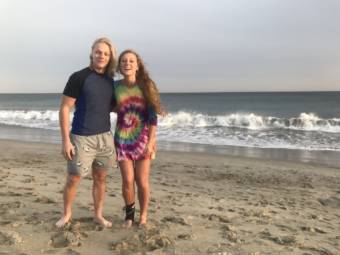
Sig and Helen Decker (Photo courtesy of Julie Decker)

A new memorial scholarship aims to connect Southeast high school students to the seafood industry — and to the legacies of two commercial-fishing siblings who were killed in a crash in 2020.

21-year-old Sig Decker and 19-year-old Helen Decker grew up commercial fishing with their parents on the family boat.
“That was a really fun time as a family. It’s sort of the most genuine family time you can get is all being in a little tiny boat in the middle of nowhere and working together,” says Julie Decker, Sig and Helen’s mom. “At a certain point, I think they wanted more. You know, to expand off Mom and Dad’s boat, and so Sig when he was 16 went to work on a seiner out of Petersburg. And Helen, when she was 18 did the same. So then they started crewing on seine boats and were on a couple different boats, and then eventually were in the same boat, the summer of 2020.”

A man on a fishing boat holding a very large king salmon
Sig with a large king salmon. (Photo courtesy Julie Decker)

On July 27, 2020, Sig and Helen and two other crewmates — 29-year-old Ian Martin of Petersburg and 37-year-old Dennis Lord of Elmira Heights, New York — were killed in a car crash on Mitkof Island south of Petersburg while on a break from commercial fishing.

Decker says that within hours of finding out about the accident, friends in the commercial fishing community stepped forward to provide support and started a GoFundMe. Within 48 hours, more than a thousand people had donated.

Some of the money went to cover funeral expenses for Sig and Helen. Another $50,000 was donated to help complete Wrangell’s Mariners Memorial. Now, Decker says the rest of the funds will go towards the Sig and Helen Decker Memorial Scholarship Fund. She says she and her husband, Gig, want to honor their kids’ legacy.

“We were really struck by all the stories that came forward after the accident,” Decker says. “People we didn’t even know, that we had never met before but they were friends with Sig and Helen. Stories of them helping them in the middle of the night, just going the extra mile to help somebody out, in this wide variety of ways, anything from academics to their family lives to social issues or their love life. They were just always ready to help support a friend. And so I guess this follows that thread, continuing to help people out.”

Each year, the $3,000 memorial scholarship will be awarded to one Wrangell senior and one Petersburg senior, and is administered through the Alaska Community Foundation.

A woman on a fishing boat holding a very large king salmon
Helen with a large king salmon. (Photo courtesy Julie Decker)

Qualifications are pretty simple: Recipients have to be graduating high school seniors from either Wrangell or Petersburg. They have to enroll at least half-time in a post-secondary program like a trade school, college or university. And applicants have to have experience working in commercial fishing or seafood processing.

“I think the fact that the majority of the funds raised from this came from people that are active in the seafood industry made us want to connect it to the seafood industry,” Decker explains, “And the fact that the kids were fishing that summer. Fishing had become a big part of their lives, even as they were becoming adults and moving into their own version of their adult lives, they still felt that connection to commercial fishing. So we thought that that seemed like a good, natural connection.”

It’s a one-year scholarship, with the possibility of a second-year extension. For the first year, the application is open to graduates from 2021 and 2022.

Decker says she hopes the scholarship can connect Southeast students to commercial fishing, and to Sig and Helen, carrying on the immense positive impact they had far into the future.

There’s more information about the scholarship and the siblings it honors at the Alaska Community Foundation’s website. Applications are due by March 17.

Correction: We’ve updated a photo caption in this story that mislabeled Helen Decker as her brother Sig. 

Barge rate hikes add to rising grocery costs in Wrangell

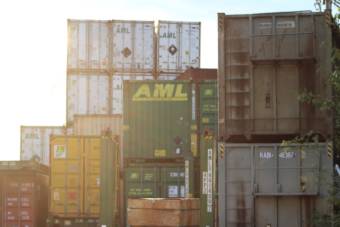
A stack of shipping containers
Shipping containers in Wrangell. (Photo by Sage Smiley/KSTK)

Barge rates have gone up in the new year across Southeast Alaska. But the rising cost of hauling goods into coastal communities isn’t the only reason a trip to the grocery store might be more expensive.

Alaska Marine Lines, one of the largest barge companies supplying Southeast, increased its general rate by 4.8% on Jan. 30. And freight costs will go up again next week when a fuel surcharge increase takes effect on Feb. 6.

Sitka’s Samson Tug & Barge, the other half of Southeast Alaska’s freight barge duopoly, mirrored Lynden’s rate increase. Samson, AML and a smaller tug company, Boyer Towing work together to serve Southeast communities in the Wrangell area.

As an island community, Wrangell relies heavily on bringing in supplies on these private sector barges.

“The only thing that comes by airplane is the packaged salad,” said Jake Hale, the manager of City Market, one of two supermarkets in town. “Everything else is on the barge.”

When the price of freight goes up, Hale says, so does the price of pretty much everything at his Wrangell grocery store.

“A gallon of milk weighs eight pounds,” Hale said. “So if we ended up paying six cents more pound for freight to get it up here, that’s 48 cents, that has to get added on to that gallon of milk.”

And price hikes are coming.

“We’re looking at record increases,” Hale said. “Not only are we looking at increased prices from the manufacturers and the wholesalers, shippers, but the fuel prices are huge. And when they go up, everything goes up.”

Hale says that depending on the products, he’s expecting 5-8% price increases on grocery store items this year.

“That’s probably the highest I’ve seen it in my career,” he said. He’s worked for more than three decades in grocery retail, and just shy of three years in Wrangell.

As a member of the industry group the National Grocery Association, Hale says he sees rising prices as an answer to a multifaceted problem.

“This is like the perfect storm,” he said, referring to supply chain issues nationwide, including for basic packaging materials like aluminum or cardboard. And packaging and processing plants have experienced shutdowns due to COVID-19.

“Basically every stop from the creation of the product to when it gets sold in the store costs more,” Hale said. “And there’s not much we can do about it.”

Companies have raised wages to attract workers and truckers in a tight labor market.

“Last year, I went four months without getting a single application,” Hale said.

City Market bumped up pay as well, which is a cost that gets passed on to the consumer. All that is on top of increases to barge freight and fuel surcharges setting in after the new year.

Wrangell’s local government has been monitoring barge rates because it’s a major driver in the cost-of-living. A rate study commissioned by the borough found Wrangell’s rates have risen an average of 4.5% every year, so the recent general rate increase of 4.8% from Lynden and Samson isn’t without precedent.

As for fuel costs, a spokesperson for Lynden, AML’s parent company in Seattle, says the fuel surcharges are tied to rising fuel prices. In fact, according to AML’s fuel surcharge rate sheet published with the Wrangell freight rate study, the company’s fuel surcharges have been artificially low for almost two years — as low as 6%.

Barge rates in Alaska are monitored by the Surface Transportation Board, which oversees the cost of shipping freight between communities. But the federal agency doesn’t intervene in freight pricing unless there’s a complaint. The state of Alaska’s Attorney General has, in years past, investigated the barge companies’ arrangement.

There’s always a cost of shipping added to a product, Hale adds. Whether it’s by truck, plane or boat.

“Barging product is not perfect,” Hale said. “But it is so much better than the alternatives I’ve used in the past.”

It’s one part of the price of living in a relatively remote part of Alaska.

Site notifications
Update notification options
Subscribe to notifications