KUAC - Fairbanks

KUAC is our partner station in Fairbanks. KTOO collaborates with partners across the state to cover important news and to share stories with our audiences.

City of Fairbanks asks judge to consider Fairbanks Four civil rights case in two stages

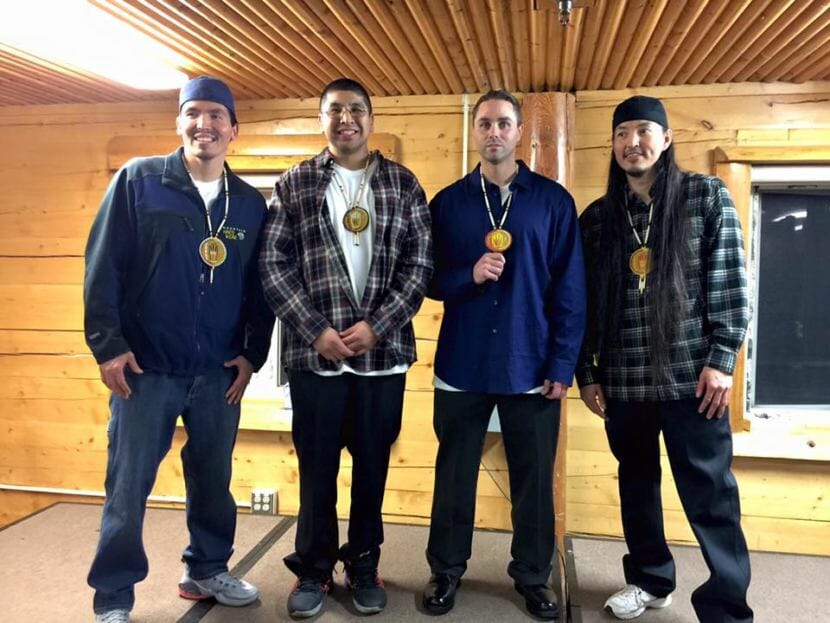
The Fairbanks Four shortly after their release from prison in December 2015. From left to right: Marvin Roberts, Eugene Vent, Kevin Pease and George Frese.
The Fairbanks Four shortly after their release from prison in December 2015. From left to right: Marvin Roberts, Eugene Vent, Kevin Pease and George Frese. (Photo by Rachel Saylor/Tanana Chiefs Conference)

At a hearing this week in the Fairbanks Four federal civil rights case against the City of Fairbanks, the city asked that the case be considered in two stages, starting with a ruling on the validity of the 2015 prison release agreement that barred the men from suing the city or state.

The Native men who came to be known as the Fairbanks Four — George Freese, Marvin Roberts, Kevin Pease and Eugene Vent — were convicted and imprisoned for the 1997 beating death of 15-year-old John Hartman on a city street. But evidence presented during a 2015 hearing pointed to another group of local young men actually being responsible for the crime.

The new evidence led to a settlement agreement, which is now at issue as the Fairbanks Four sue the city for civil rights violations.

“I believe we need targeted discovery about the circumstances of the 2015 settlement agreement,” city attorney Matt Singer told U.S. District Court Judge Sharon Gleason.

Singer argued that the Fairbanks Four had an expert legal team who helped craft the settlement agreement they signed.

“There’s a separate page the attorneys each signed attesting that they fully explained the agreement and its consequences to their clients, and that they believed their clients understood the terms,” he said.

Singer said the validity of the settlement agreement hinges on facts that should be considered separately and prior to alleged civil rights offenses, including coercion of false confessions and fabrication of evidence by city police.

But Fairbanks Four attorney Anna Benvenutti Hoffmann maintains that the two issues are intertwined.

“All the misconduct that led to our clients being in prison is all relevant,” she said. “It would be more efficient to just take all the discovery and then proceed with the case.”

Benvenutti Hoffmann said the fact that three of the Fairbanks Four were still in prison — and would have remained there until another trial proved their innocence — weighed heavily on their decision to sign the settlement agreement.

“You can’t separate out that they’re actually innocent and that they’re facing continued incarceration,” she said.

Judge Gleason said she expects to rule on the request to separate the two questions soon, noting the longevity of the case.
Denali Park glacier surging for the first time since 1957

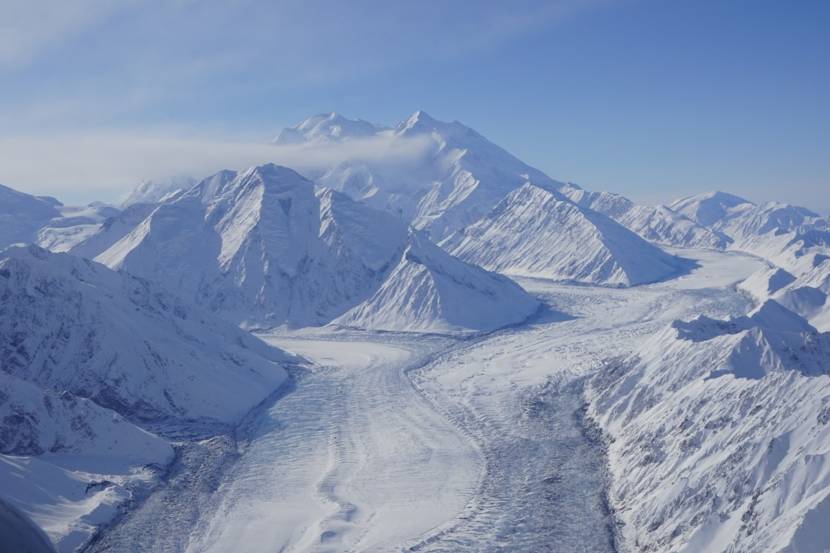
The Muldrow Glacier on March 17, 2021. (NPS Photo)

The 34-mile-long Muldrow glacier is the largest on the north side of the Alaska Range. It’s visible from part of the road into Denali National Park, but that view is changing as it surges downslope toward the McKinley River — a sudden acceleration that’s happening for the first time in over 60 years.

Denali National Park scientist Dave Schirokauer recently flew onto the glacier, and he said the surge has churned up its surface.

“The edges of the glacier — the interface between the valley, the bedrock and then the ice — is completely broken up. There’s giant chunks of ice thrown off to the side,” he said

The glacier is moving about 20 meters per day right now, over 100 times faster than its non-surge speed of 16 centimeters a day. The last time the Muldrow glacier surged was in 1956-57, when it advanced over 4 miles in a few months, leaving behind a now dirt-and-vegetation-covered area of ice.

“Right now the toe of the glacier is pushing into that old, stagnant ice, so it might break that up and be a pretty dramatic change in the scenery,” Schirokauer said.

The glacier’s non-surge speed was originally measured by famed mountaineer Bradford Washburn back in 1976.

“He deserves some credit here because he is the only person that measured the rate of movement on the glacier during its quiet phase, so that reference condition that he captured in 1976 is awesome right now,” Schirokauer said. “We have a story to tell about how fast it normally goes and how fast the ice is moving during the surge.”

Before Washburn established the West Buttress as the preferred route to climb Denali, the Muldrow was the most popular path for mountaineers, and it’s still attempted by a few each year. But Schirokauer said the surge has made it impassable.

“There were a couple of parties that were planning on using the Muldrow as their climbing route in attempting the summit this year, and those folks are being encouraged to change their plan. My hunch is that the historic route on the Muldrow won’t be climbable for many years to come,” he said.

According to an NPS release, surging glaciers are rare in the world, but Denali’s extreme topography makes them more common around the peak. Schirokauer says the Muldrow appears to operate on a roughly 50-year surge cycle dictated by a few factors, like “he geometry of the glacier, the underlying bedrock, and its internal hydrology.”

The surge is expected to end with a large release of water in June.

“[There’s] potential for a very intense outburst flood because there’s just masses of water trapped under that glacier to lubricate that surface to the extent where it can surge at this rate,” Schirokauer said. “The reason the surge ends is because that trapped water finds a path out.”

Schirokauer said the water will flood the McKinley River but is not expected to impact any populated areas, which are far downstream.

The Muldrow surge is being closely monitored by scientists and an array of instruments deployed on and along the glacier.

“You have a soundscape station out there on the edge, and we have time-lapse cameras and the whole story is on our brand new Muldrow surging glacier website,” Schirokauer said.

He said the Park Service hopes to begin uploading real-time images of the Muldrow glacier’s surge.

UAF lands $9.3M grant to expand research at HAARP

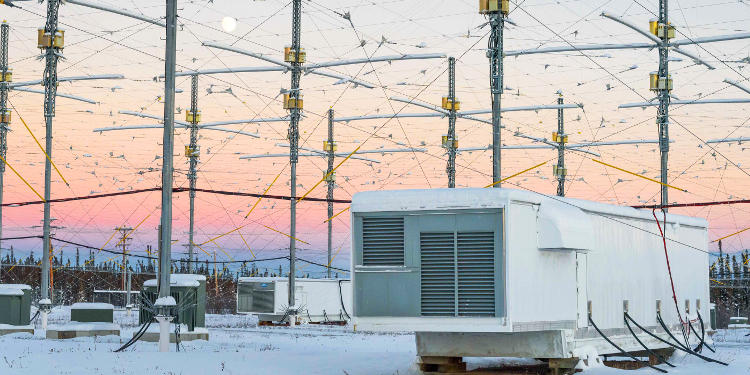
The HAARP antenna array. (courtesy University of Alaska Fairbanks)

A National Science Foundation grant will allow the University of Alaska Fairbanks to expand its activities at the High Frequency Active Auroral Research Program in Gakona.

The U.S. military built HAARP in the 1990s for $290 million to conduct ionospheric research related to communications, navigation, surveillance and other applications. But in 2015 the Air Force ended the program and turned the HAARP facility over to the University of Alaska Fairbanks.

UAF has since operated it sporadically for government and independent clients.

“We’ve been charging a little over $5,000 an hour to use the facility,” UAF Geophysical Institute Director Bob McCoy said. “But we haven’t had very many hours, so it’s been costing us quite a bit.”

McCoy says five-year, $9.3 million grant from the National Science Foundation will enable the university to maintain the HAARP facility and expand operations.

“Now we can open it up fully and invite in people to use it, so it’s a really big deal for us,’ McCoy said.

McCoy says the HAARP station is the most powerful of three ionospheric research facilities on the planet. It uses hundreds of high frequency radio transmitters and antennas, to probe the ionosphere.

McCoy says it’s a tool that will be increasingly valuable for scientific experiments involving the aurora as the solar cycle peaks.

“The next four or five years, the ionosphere should get a lot more exciting,” McCoy said. “You should see, in the winter, a lot more dynamic aurora.”

HAARP is also useful as a remote sensing tool, an application McCoy says is in demand as the Arctic warms and countries vie for control of it.

“We can actually look north several hundred miles from Alaska, and we can study the ocean,” McCoy said. “We can measure sea ice, and we can look for aircraft or ships out in the Arctic Ocean. HAARP can transmit, say, to the north, reflect off the ionosphere down to the sea ice, and you pick up that signal again either with an antenna or a satellite.”

McCoy says a separate grant will provide a million dollars to build and locate a LIDAR instrument at the HAARP site, for study of other parts of the upper atmosphere. That, together with other instrumentation UAF plans to relocate to the HAARP site, will make up what’s being called the Subauroral Geophysical Observatory for Space Physics and Radio Science.

Correction: The original version of this story put the dollar amount of the NSF grant at $3 million. The correct amount is $9.3 million.

Fairbanksans organize spring search after string of missing persons cases

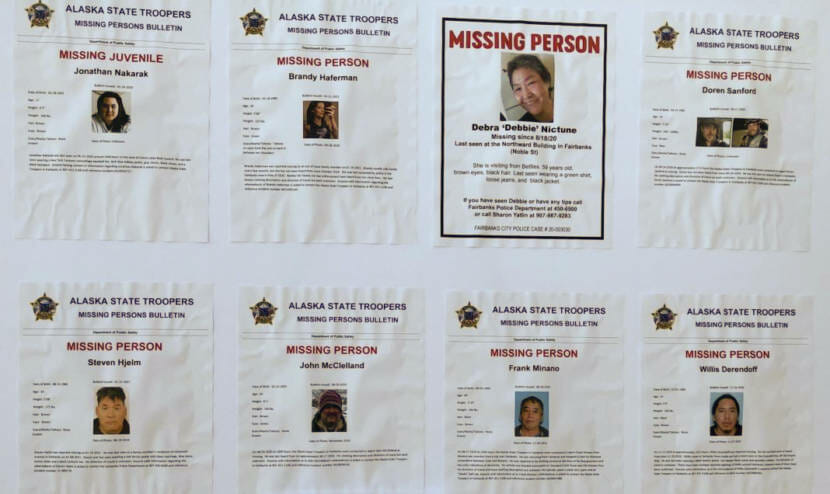
Missing persons flyers (Dan Bross/KUAC)

A community-wide search for missing people in the Fairbanks area is being planned for later this spring. Among the missing are four Alaska Native people: Frank Minano, Debbie Nictune, Doren Sanford and Willis Derendoff.

All four went missing last year, and there have been ongoing efforts to find them.

Volunteer coordinator Peter Captain Jr. is helping plan a ground and river search after the snow melts and rivers break up.

“We really want thousands of people because we want a big search,” Captain said. “We’ve been in contact with the United States Army, National Guard — they’re willing to participate and help us.”

On another front, Captain Jr. says local Native organizations are working to establish a reward fund for information about the whereabouts of missing tribal members.

“We want to reach at least $25,000, but then we want to ask our organizations to match that,” he said.

Captain Jr. says they’re hoping to have the reward fund administered by the Tanana Chiefs Conference or Fairbanks Native Association. He said that money will be added to rewards already being offered by families of the missing.

‘We’re all in this together’: Tanana Chiefs donates vaccine doses to Eielson Air Force Base

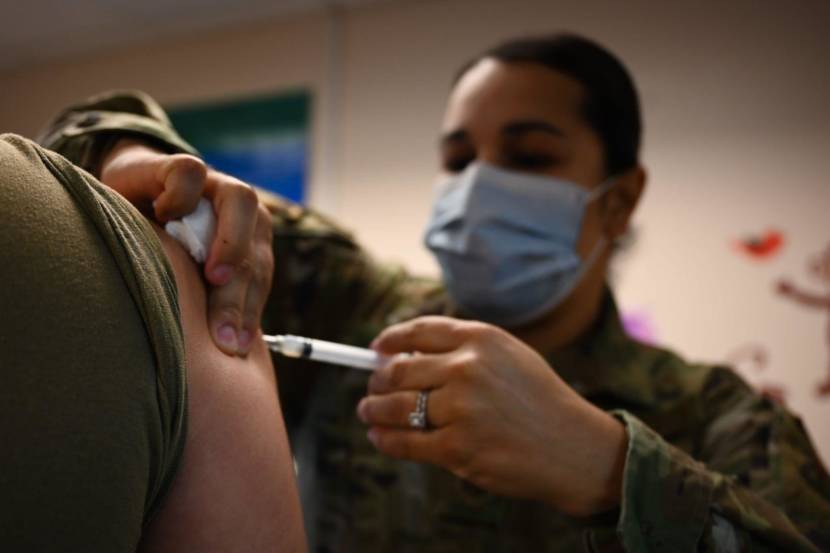
An Eielson spokesperson says the additional doses donated by Tanana Chiefs will help the effort to inoculate as many base personnel as possible. (Photo via Eielson Air Force Base)

The Tanana Chiefs Conference has administered more than 14,000 doses of COVID-19 vaccine since the pandemic began to protect Native and non-Native Alaskans around the Interior from the disease. And on Monday, the Fairbanks-based organization donated 800 surplus doses to Eielson Air Force Base to help protect servicemembers and their families and the civilian employees who work there.

Tanana Chiefs has been inoculating people in Fairbanks and more than two dozen outlying communities since late December. When the organization got an extra allotment of the Moderna vaccine this month from the federal Indian Health Service, TCC Chief and Chairman P.J. Simon said he and other leaders wondered how they could best use the surplus.

“And we thought, ‘Well, let’s offer it to the U.S. military,’ ” he said. “They provide us protection and gives us our freedom. And, y’know, freedom isn’t free.”

Eielson spokesperson Staff Sgt. Kaylee DuBois says base officials were thankful for the offer.

“We appreciate the doses we got from the Tanana Chiefs Conference,” she said, “and we’re looking forward to providing these vaccines to volunteers in our base community as soon as possible.”

DuBois says while Eielson continues vaccinating as many of its personnel as possible, its servicemembers and their families and civilian workers have all been maintaining precautions like wearing facemasks and keeping social distance to reduce spread of the disease on and off- base.

“In the fight against covid, we’re all in this together,” she said.

Simon says the Tanana Chiefs also believes that a unified effort is essential to halt the spread of covid in and around Fairbanks.

“We’re just happy to be part of the community and to help contribute,” he said. “Y’know, the tribes want to contribute to everybody pulling out of this pandemic.”

That’s why Tanana Chiefs began offering vaccinations to Fairbanks North Star Borough School District workers in late February. And earlier this month, the organization began offering the vaccine to anyone age  16 or older who lives in the Fairbanks North Star Borough.

“We opened it up to everybody,” he said. “We’ve been giving it out for a while, the free vaccinations.”

Simon says Tanana Chiefs also has been vaccinating as many people as possible in the 26 communities within its service area. In Tok, 200 miles south of Fairbanks, many got their shots at TCC’s Upper Tanana Health Center, a $20 million facility that opened in November. The clinic provides care for both Natives and non-Natives, as does the TCC facility in Nenana.

Simon says the Nenana clinic has been so busy that Tanana Chiefs are considering expanding it. And he says the organization also is building clinics in the villages of Northway and Rampart.

Editor’s note: Any resident of the Fairbanks North Star Borough interested in getting a free covid vaccination from Tanana Chiefs must contact the organization by close of business Friday. To find out more and to schedule an appointment, go to the covid vaccine page of the TCC website or call the organization at (907) 452-8251.

Denali National Park to allow private vehicles on Park Road again in 2021

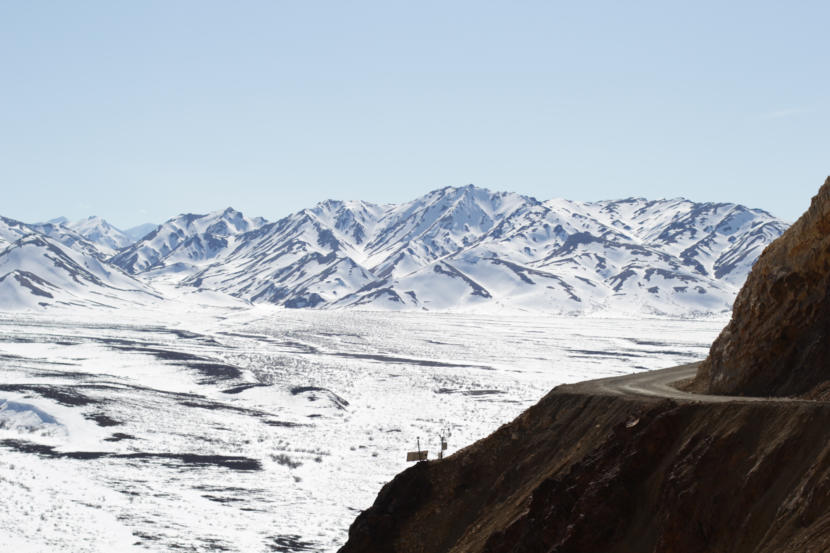
The Denali Park Road curls around a mountainside near the Polychrome Overlook on Sunday, May 3, 2020. (Nat Herz/Alaska Public Media)

Denali National Park is preparing for another pandemic affected summer season. Once again, the park will offer visitors the chance to drive a part of the Park Road normally closed to private vehicles

Last year, Denali National Park offered a limited number of permits on five separate weekends for private vehicles to travel as far as the Eielson Visitor’s Center at mile 66 of the 92-mile Park Road.

“This summer, we’re shortening that distance but expanding the number of day this is going to be available,” said park spokesperson Paul Ollig.

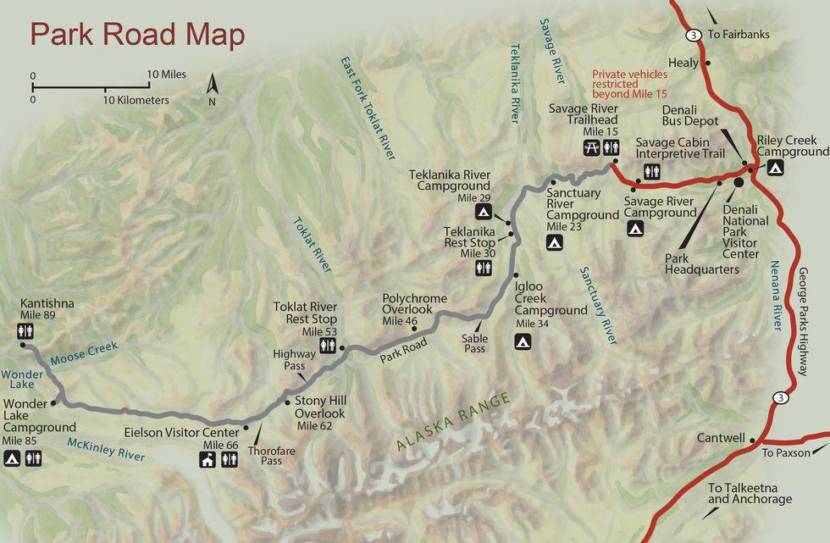
Map of the Park Road. (National Park Service)

Ollig says this year’s private vehicle access permits will be offered on most dates between May 20 and Sept. 12 and will allow travel to the Teklanika Rest Stop at mile 30.

Permits will cost $25, and online registration begins April 20 at recreation.gov.

Ollig says the decision to go only as far as Teklanika reflects several factors, including seven major construction projects happening this summer along the Park Road west of Teklanika.

“This construction will cause significant delays along these sections, so in order to expedite the construction projects and reduce the impacts of these projects on park visitors, it was decided to limit the road permits just to Teklanika,” he said.

Ollig says that another consideration is limiting traffic on narrow sections of the Park Road west of Teklanika, given an increase over last summer in the number of park buses running.

“We will have more tour buses and transit buses available for visitors to be able to enjoy getting in as far as the Eielson Visitor’s Center and even campers getting as far as Wonder Lake this year,” he said.

Ollig says Denali had only 60,000 visitors last summer, a tenth of what the park saw pre-pandemic. He says visitation is expected to tick up this summer, but it will be limited by the absence of large cruise ships coming to Alaska — which account for 60-65% of all park visitors.

Ollig says Denali’s visitor’s center buildings will again be closed this summer. Decisions about other facilities that were closed last summer, like the popular sled dog kennel, will be made in coming weeks.

Site notifications
Update notification options
Subscribe to notifications