KUCB - Unalaska

KUCB is our partner station in Unalaska. KTOO collaborates with partners across the state to cover important news and to share stories with our audiences.
Aleutian school in danger of shutting down

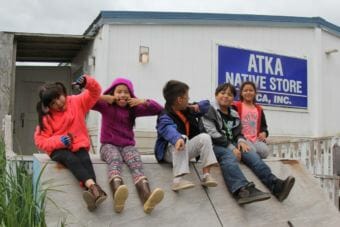
Kids play outside Atka's general store.
Kids play outside Atka’s general store. (Photo by Zoë Sobel/KUCB)

Friday marks the end of Alaska’s student count period, which determines how much funding public schools receive.

To get full funding, schools need at least 10 students. But at the Yakov E. Netsvetov school in Atka, there are only six. Unless four more students enroll, this will be the last year there’s a school in Atka.

“Something would have to happen pretty quickly to create a climate that would allow for the financing and maintenance of the school operations here,” said Joe Beckford, superintendent of the Aleutian Region School District, which also includes Adak. “Functionally, after this year, if we don’t have 10 students, it’s not possible to keep the school open financially.”

For every year a school is under the 10-student minimum, it loses 25 percent of its state funding.

In Atka, Beckford say the community can’t make up for that $150,000 loss, because there is no local taxing authority. They are completely depending on state money.

Sonja Mills is the sole teacher in Atka. This is her third year at the school, which she chose for its far-flung location.

“This is a beautiful place. This is a good, good community. The school is nice. The people are friendly,” Mills said. “The fishing is good. There could be jobs. There’s nice housing. The water is clean. There’s so much to offer here.”

When she took the position, Mills knew the school might close in the near future. But she’s still hopeful that won’t happen.

“We’ve got four, five, or more little ones coming up, and we’ve got little ones in the school now. So in a couple years, there would be 10,” Mills said. “But if you can’t wait, these people are going to move away and then there’s nothing.”

She says that’s a troubling prospect for a place like Atka, which has been at the forefront of Unangax cultural revitalization efforts.

“The revitalization is happening and they’re getting this education and then you send them off because there is no school anymore?” Mills said. “[The culture] would be further decimated. You’d see an entire culture just wiped away and that should be criminal.”

The school is central to the community’s cultural activities. The Atka Dancers, who created many of the Unangax dances performed around the region, started in the school. The Native Village of Atka also partners with the school to hold Unangam Tunuu language classes.

Crystal Dushkin, director of cultural affairs in Atka, has two daughters in the school.

“They’ve seen what it’s like to live outside of Atka, and they’d still choose to live here over anywhere else,” Dushkin said. “We want out kids to grow up out here in the same setting that both my husband and I grew up in. We want for our kids the same type of childhood and connection with our land, culture, and foods that we enjoyed.”

Dushkin spent all her grade school years in Atka; her husband grew up in Nikolski. As a student, she says the school typically had around 20 students and there were no immediate concerns about numbers.

But in the past decade, people have left for a variety of reasons.

“We’ve seen so many of our people move away for economic reasons largely. For work and housing. And then for education purposes, too,” Dushkin said. “We’ve had elders who have been moving out for health reasons.”

Now, that means there’s a lot up in the air for Dushkin, her family, and her community.

“We don’t know how many families would choose to stay our here if there were no longer a school for their kids,” Dushkin said. “We don’t know how many kids would be left here in Atka if there were no longer a school. That’s why I say the future is really uncertain right now.”

Atkans are looking into the feasibility of making the school a tribal school, as well as considering homeschooling.

But as a teacher, Mills says having to explore those options is like a “slap in the face,” because the money the state will save by closing the school is a drop in the bucket. She says it sends a strong message about the state’s priorities.

“It would make zero difference if you were to take that money and put it into a larger school district,” Mills said. “It’s a miniscule amount in comparison, but what is lost is astronomical, should it close down.”

Superintendent Beckford says there will be a community meeting in November to discuss Atka’s options. He says residents are hopeful something will happen to bring families to the region soon – like, if the local fish plant were to operate for more of the year.

While Atka is the region’s only school in immediate danger of closing, others aren’t too far from the cut-off. To the west, Adak has 13 students. To the east, Akutan has 18.

The Aleutian and Pribilof Islands have seen multiple school closures over the past decade. In 2017, St. George Island lost its school; in 2015, Cold Bay’s school closed; in 2012, it was Nelson Lagoon’s; and in 2010, it was Nikolski’s.

Citing pilot shortage, PenAir reduces flights from Anchorage to St. Paul and Dillingham

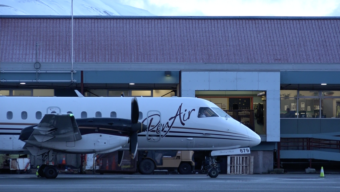
Starting Oct. 1, PenAir will fly between St. Paul and Anchorage three times per week instead of four — and between Dillingham and Anchorage two times per day instead of three. (Photo by Pipa Escalante/KUCB)

Citing a nationwide pilot shortage, PenAir is reducing its flights to St. Paul Island and Dillingham.

Starting Oct. 1, the airline will fly between St. Paul and Anchorage three times per week instead of four — and between Dillingham and Anchorage two times per day instead of three.

“PenAir initiated a strong recruitment campaign several months ago and continue to hire and train as quickly and safely as possible,” said company officials in a written statement. “We are confident we will be able to resume our schedule once our crew numbers permit.”

While it’s unclear when that might be, officials said the schedule change is unrelated to the company’s bankruptcy proceedings. After filing for Chapter 11 last year, a federal judge has ordered PenAir be sold next month.

Jerry McHale, PenAir’s court-appointed trustee, has said the sale will not affect service to the airline’s eight routes across Bristol Bay, the Alaska Peninsula, and the Aleutian and Pribilof Islands.

He said competitive bidders will have to submit a plan for continued air service in southwest Alaska.

New St. Paul schedule

  • Sunday, Wednesday, and Friday: Depart Anchorage at 12:15 p.m. and arrive in St. Paul at 3:45 p.m.
  • Sunday, Wednesday, and Friday: Depart St. Paul at 4:15 p.m. and arrive in Anchorage at 8:15 p.m.

New Dillingham schedule

  • Monday through Sunday: Depart Anchorage at 7:35 a.m. and arrive in Dillingham at 8:45 a.m.
  • Monday through Sunday: Depart Dillingham at 9:25 a.m. and arrive in Anchorage at 10:35 a.m.
  • Monday, Tuesday, Thursday, Saturday, and Sunday: Depart Anchorage at 4:20 p.m. and arrive in Dillingham at 5:30 p.m.
  • Monday, Tuesday, Thursday, Saturday, and Sunday: Depart Dillingham at 6:10 p.m. and arrive in Anchorage at 7:20 p.m.
  • Wednesday and Friday: Depart Anchorage at 4 p.m. and arrive in Dillingham at 5:10 p.m.
  • Wednesday and Friday: Depart Dillingham at 5:50 p.m. and arrive in Anchorage at 7:55 p.m.

Drone survey underway to gauge Unalaska’s salmon populations

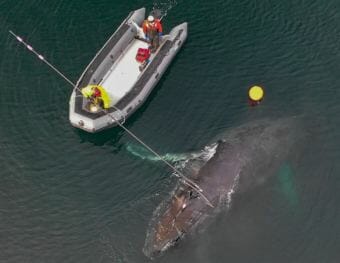
Biologists will use the drone survey to estimate the population of sockeye — and potentially coho — at Unalaska Lake, Summer Bay, and Morris Cove. (KUCB file photo)

Unalaska’s first drone-operated salmon survey is now underway.

The Unalaska Native Fishermen’s Association (UNFA) has hired Andy Dietrick — of Aleutian Aerial LLC — to capture video of salmon habitat at Unalaska Lake, Summer Bay Lake, and Morris Cove.

The goal is to estimate the size of the island’s largely unmonitored fish populations. To collect that data, Dietrick is filming in a 35-millimeter format that approaches “cinema quality.”
“We’re throwing the highest end of technology at this,” said Dietrick at a recent UNFA meeting. “The video is 6K resolution, and it’s a 24-megapixel camera. We’re still just looking down at water with a polarizer, but it will give us all the advantages that we can possibly have.”

The Alaska Department of Fish and Game (ADFG) hopes to gauge the number of sockeye and potentially coho, but biologists won’t use the data for any kind of in-season management.

“We’re doing habitat surveys around the edge of the lake. It’s not like we’re going to make some decision about whether people can go out and get their fish,” said Dietrick. “But I think ADFG is looking at that in the future.”

ADFG may also expand drone surveys to McLees Lake. Biologists weren’t able to monitor that run this summer after losing funding for the Wislow fish weir.

Officials will weigh potential expansion this fall after reviewing drone data and funding options.

Meanwhile, UNFA is considering whether to apply for nonprofit status under section 501(c)(3) of the federal Internal Revenue Code.

UNFA already receives about $20,000 each year through the Aleutian Pribilof Islands Community Development Association. But members said becoming an official nonprofit could open the door to grant funding, including grants from the City of Unalaska.

PenAir trustee promises no flight interruptions during sale of airline

After the sale, PenAir’s new owner will be free to add or delete routes as they see fit. But Trustee Jerry McHale said bidders who want to be competitive will have to submit plans for continued air service in the region. (Photo courtesy Chrissy Roes)

One of Southwest Alaska’s largest airlines will soon be up for sale.

A federal judge has ordered PenAir be auctioned off this October — more than a year after the company filed for bankruptcy protection.

The carrier is promising residents of the Aleutian and Pribilof Islands that their only connection to Anchorage won’t just vanish.

The Seybert family founded Alaska-grown PenAir in 1955, and they still own it today.

The company includes 430 employees, 10 airplanes and eight routes across Bristol Bay, the Alaska Peninsula, and the Aleutian chain.

Last August, the airline filed for Chapter 11 bankruptcy with debts worth $15 million. It’s incurred another $5 million since then to stay operating.

But CEO Danny Seybert doesn’t seem too concerned. He’s issued this message to customers.

“They should know that I’m still going to be here,” Seybert said. “I’m not leaving! I’ve been flying in Southwest Alaska for 45 years. I’ve got another 45 years left in me.”

That promise comes after a bankruptcy court judge scheduled an auction this fall, when the company will be sold to the most competitive bidder.

Seybert said flights will continue normally during the “363” sale, governed by section 363 of the federal bankruptcy code.

“It’s the sale of the company’s assets as an entire operating entity,” Seybert said.

That means the top bidder will take control of everything PenAir owns, leases, or won by contract — minus its debts.

“All the employees. All the aircraft. All the routes,” Seybert said. “The entire business that we’re doing today will still be the same business that operates the day after the sale.”

At least, it’ll still be that same business until a new owner decides to change things.

That’s according to Jerry McHale, an accountant from Florida who’s been court-appointed to oversee the sale as an independent Chapter 11 trustee.

“My role is to attempt to stabilize the situation,” McHale said. “I don’t want somebody to buy the company on Friday and shut down the routes on Monday.”

After the sale is complete, McHale said PenAir’s new owner will be free to add or delete routes as they see fit, but any bidder who wants to be truly competitive will to have submit a plan for continued air service in the region.

McHale said he already has plenty of bidders lined up, all of whom fit that description.

“Even today, I’ve had two come out the woodwork,” McHale said. “I am unaware of anyone wanting to stop routes currently.”

That said, PenAir — under its current management — flies a few routes that are guaranteed by Essential Air Service (EAS), a federal program that subsidizes companies that serve small communities.

McHale said he can’t be sure a new owner will do the same.

“I believe it’s McGrath and St. Paul that are currently being operated under the EAS program. Those [routes] are out for bid. I don’t know that a new buyer would want to bid on those. I just don’t know.”

While the fates of those routes play out in a separate bidding process managed by the U.S. Department of Transportation, McHale said he’s doing everything he can to get a responsible buyer at the head of PenAir.

Bidders have to submit audited financial statements and letters of credit to prove their upfront ability to buy the airline. They also have to demonstrate how’ll they cover ongoing costs for aircraft maintenance, insurance and storage — on top of convincing the Federal Aviation Administration that they have a credible safety program.

With that criteria, McHale said there will only be so many competitive bidders. As for rumors that the Seybert family hopes to buy out and relaunch their own company, he said there’s no reason they can’t try.

“If Danny and his group want to put in a bid, they’re welcome to it,” McHale said. “But they’re no different than — I’ll pick some names out — Alaska Airlines or Wexford or Ravn. Anybody.”

Already this year, Ravn Alaska has expanded to Dillingham and King Salmon, two communities previously connected to Anchorage by PenAir alone. In January, the carrier also said it’s considering a new route to Unalaska.

Meanwhile, Wexford Capital is a company that has issued loans to PenAir during the bankruptcy, and Alaska Airlines used to compete with PenAir in the Unalaska market before they agreed to partner on the current route.

Seybert declined to comment on the potential competition for his family’s business. He also declined to say whether he’ll make an offer himself.

“I’m not going to tell you yet,” Seybert said. “But watch the bids carefully.”

The auction is slated for the first or second week of October. Both PenAir officials and McHale said it won’t affect holiday travel or the busy winter fishing season.

Unalaska approves plastic bag ban to take effect Jan. 1

The Unalaska City Council voted Tuesday to prohibit distribution of single-use plastic shopping bags by island retailers, including Safeway. (Photo by Berett WIlber/KUCB)
The Unalaska City Council voted Tuesday to prohibit distribution of single-use plastic shopping bags by island retailers, including Safeway. (Photo by Berett Wilber/KUCB)

Starting next year, Unalaska retailers won’t be allowed to distribute single-use plastic bags to their customers. If they do, they’ll be hit with $100 fines each time.

The City Council unanimously passed the bag ban Tuesday night after about six months of discussion and overwhelming public support.

Councilor James Fitch said it’ll help reduce the amount of plastic littering local beaches and polluting the ocean.

“Currently, there’s a flotilla of plastic the size of Texas in the Pacific Ocean,” Fitch said. “It’s getting in our food source. It’s killing animals. So I think this is a good start, and I think we need to make it go farther.”

With an economy dependent on healthy fisheries, several Unalaskans have called on the council to ban other pervasive plastics, such disposable straws and industrial pallet wrap.

Vice Mayor Dennis Robinson said that may be possible in the future.

“Next, we can look at plastic straws and other containers that we see in the bushes,” Robinson said. “You know, the plastic cups and forks and spoons — picnic stuff.”

But before they consider widening the ban, councilors will decide how retailers should handle their existing bag inventories.

Robinson suggested the city buy out leftover stock — both to help business managers and to ensure bags are secured in the landfill instead of blowing around.

The city manager will research how much that would cost.

Councilor Shari Coleman’s proposal to delay the ban and let inventory run out failed to garner enough support.

Unalaska’s bag ban goes into effect Jan. 1.

The island will join more than a dozen Alaska communities that have prohibited their distribution.

Destination likely sank after accumulating ice in heavy freezing spray, report says

Six F/V Destination crew members died when their boat disappeared in February near St. George Island, marking the deadliest accident in more than a decade for the Bering Sea crab fleet. The Coast Guard is holding public hearings as part of its investigation into the Destination's sinking. (Photo courtesy F/V Destination Memorial Fund)
Six F/V Destination crew members died when their boat disappeared in February near St. George Island, marking the deadliest accident in more than a decade for the Bering Sea crab fleet. The Coast Guard is holding public hearings as part of its investigation into the Destination’s sinking. (Photo courtesy F/V Destination Memorial Fund)

Federal investigators concluded that a crab boat, which sank in the Bering Sea last winter, likely capsized after the vessel became coated in hundreds of thousands of pounds of ice.

The findings shed new light on the loss of the F/V Destination and its six crew members.

Destination pushed through rough, frigid waters Feb. 11, 2017, a few miles from St. George Island.

The boat went from carrying 200 crab pots and preparing for opilio season to vanished in about four minutes without a mayday call.

“Whatever happened happened very, very quickly,” said spokesman Chris O’Neil of the National Transportation Safety Board. “And there’s no one left to tell their story.”

NOAA Ship Fairweather captured this sonar image of the F/V Destination, where it rests on the sea floor near St. George Island. (Image courtesy National Oceanic and Atmospheric Administration)

O’Neil said NTSB investigators reviewed the vessel’s mechanical history, pored over weather reports, and interviewed almost 50 people to piece together the probable cause of the accident.

“The captain’s decision to proceed into heavy freezing spray conditions without ensuring the Destination had a margin of stability to withstand that accumulation of ice led to the loss of the vessel,” he said.

In better conditions, the boat could have carried the 200 crab pots without a problem.

But with gale force winds kicking up freezing spray, the Destination became weighed down by up to 339,416 pounds of ice.

“If you look at that probable cause, yes, this is a preventable accident,” O’Neil said.

With no survivors to interview, NTSB couldn’t determine why the crew didn’t beat more ice to mitigate that weight — especially a well-respected crew with more than 70 years of collective fishing experience.

“It’s very hard to know the mindset, the decision-making process, and what factors were or were not considered,” O’Neil said. “But certainly, through the evidence that was collected, we recognized the pressures that are associated with the industry.”

Investigators found several signs that the crew was feeling the pressure of time.

The vessel had gotten a late start on crab after fishing for cod.

Its delivery deadline was looming.

A few weeks earlier, a crew member had texted his father, “Oh my god, I haven’t slept in days.”

F/V Polar Sea captain Daher Jorge is familiar with the strains of commercial fishing. The boat was fishing for crab in the same area as the Destination the day it went down.

“The whole crew was exhausted,” Jorge said. “I was beating ice with my crew.”

The Polar Sea pulled into port safely after hours spent heaving sledgehammers to break ice.

But in an interview weeks later, Jorge said the Destination’s sinking was a wake-up call for the entire fleet.

“It’s devastating,” he said. “They say most accidents happen close to home. He was so close to St. Paul. He was at St. George. He could’ve anchored up there and gotten some ice off the boat. We have no need to rush so much. We’re going to catch the crab, so why are we going to push that hard?”

In a fishery that’s made huge safety strides in the last two decades, U.S. Coast Guard officials say crabbers have taken the sinking to heart.

Almost 50 boats participated in a voluntary safety check last year to review their stability criteria, and there were no fatalities in this winter crab season.

The loss of the Destination marks the fleet’s deadliest accident since 2005, in which F/V Big Valley sank. Five  crewmen died, and one survived.

Site notifications
Update notification options
Subscribe to notifications