
KYUK - Bethel

KYUK is our partner station in Bethel. KTOO collaborates with partners across the state to cover important news and to share stories with our audiences.
Operation Santa Claus rescheduled for Slavic delivery

Santa is going to be a little late to a few villages this year.

Freezing fog in Bethel this week, and the week before, prevented the Army National Guard from flying their UH-60 Black Hawk to Akiak, Tuluksak, and Grayling to deliver toys and food for Alaska’s 60th Operation Santa Claus.
Since 1956, the tradition has brought together the Alaska National Guard, local businesses, and community groups to collect and deliver gifts to a few villages each year.

“We asked the schools when we got weathered out this time, we said, ‘Would you like to distribute everything before Christmas, or would you like us to reschedule, knowing that we could not make it until the 4th, 5th, or 6th?'” said April Gettys, who organizes the event for the Guard. “So the villages all agreed they’d rather have us come out with Santa Claus and some of the military members and give the kids the attention that we’re able to give to all the other villages.”

Santa Claus and Mrs. Claus deliver gifts to Togiak in 2016 as part of Alaska’s 60th Operation Santa Claus. (Photo by Alaska Army National Guard)
Santa Claus and Mrs. Claus deliver gifts to Togiak in 2016 as part of Alaska’s 60th Operation Santa Claus. (Photo by
Alaska Army National Guard)

The trip is rescheduled for the first week of January, after school gets back in session.

“It’s post Christmas, but it’s pre-Russian Orthodox (Slavic),” Gettys said.

Slavic is Jan. 7. The holiday is celebrated in Akiak and Tuluksak, but not Grayling. Logistics mean that gifts to all three villages have to be delivered the same day.

And what do the kids get?

“Well it depends on what Santa’s elves make,” Gettys said. “It could be anything from models to Legos, basketballs, soccer balls, paint supplies, art supplies.”

Every child up to age 18 receives a gift.

School-age kids receive a backpack of school supplies and a personal hygiene bag.

“Which consists of toothbrush, toothpaste, soap, shampoo, conditioner.”

And it doesn’t stop there.

The operation also brings out fresh fruit — bananas, apples, and oranges — and 1 ton of non-perishable food for the village.

“It’s flour, sugar, rice, powdered milk, cereal, canned veggies, pasta, soup,” Gettys said. “We reached out to the villages and asked them what they could utilize most, and that was the list that they gave us.”

If weather doesn’t cooperate in January, then the village schools will distribute the food and presents, which are already sitting there, waiting for Santa to hand them out.

Operation Santa Claus already made deliveries to Akiachak and Togiak earlier this season.

Family members of Aniak couple grieve over tragic plane crash

A couple in their 60s died in a plane crash last week at Marvel Dome, an area northeast of Bethel.

Law enforcement officials identified the bodies of Mark Matter, 62, and his wife Cecilia Matter, 63, of Aniak. The two were longtime residents of the small Alaskan village, and leave behind an impossible-to-fill void for friends and family.

Mark and Cecilia Matter, married 41 years, were never apart for long. They couldn’t be.

“They were inseparable from the beginning,” said Donna Slaugh, one of the Matters’ daughters.

Donna flew back to Alaska from her home in Denver when she heard about the accident.

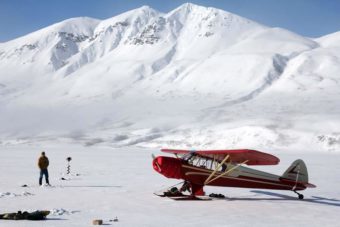
When they crashed, her parents were flying to their small gold mine near Marvel Creek in Mark’s red-and-white Piper PA-11. It was a familiar route; they had flown it most of their lives and most of their children’s lives.

“We moved up (to the mine) as kids the day school got out, and we came down the day before school started,” said Ivan, the Matters’ son, who currently runs the mine.

The Matter children are close, sometimes finishing each other’s thoughts.

“We stayed out there all summer long, worked every single day,” his sister breaks in, “rain or shine.”

Donna said Mark didn’t come to Alaska looking for gold, but came looking for something he didn’t have back East.

“He moved up here at age 19 from Pennsylvania. He wanted to take on the world,” Donna said.

Whatever he was looking for, he started to find it in Alaska.

“He worked odds-and-ends jobs so he could save up enough money to buy a plane, and when he got his plane he wanted to get into mining,” Donna said.

While getting his start in the mining industry he worked as firefighter, and that’s when Donna said he found something else: the person who would be his partner for life.

“He was a firefighter, he was a heli-tech, and they met at one of the camps,” Donna said.

Cecilia was living in Aniak at the time, and they had seen each other around. Within a year, Mark and Cecilia were married. They had children soon after, and Mark’s prospecting started to pay off.

Cecilia took on the job of making the business run, and was very successful. So successful that Mark became almost dependent on her, not just for the business, but for everything.

“Dad couldn’t function without Mom. He couldn’t fix himself meals or anything,” Donna said.

“She kept everybody going,” Ivan said. His sister breaks in again: “She was the lifeline of the family.”

Mark and Cecilia took their children to the mine and showed them what finding gold felt like; what finding love looked like.

The family and business both grew.

When they got older, Donna and their other daughter moved away; Ivan stayed around.

Then one day Cecilia got sick. Very sick.

Ivan said it broke his father’s heart. At the time of crash, Cecilia didn’t have long to live.

They left Aniak on Thursday, headed to the Marvel Creek mine in Mark’s Piper two-seater. It was a warm day, but they might have hit some rain on the other side of the Kilbuck mountains.

The cause of the crash is unknown, and will probably remain so.

A National Transportation Safety Board investigation determined that whatever happened, it happened fast and both people were killed on impact.

Both Mark and Cecilia’s children and the community of Aniak are grieving.

Losing both their parents in single moment is devastating, but Ivan said that in a way this saved their mother from her sickness, and their father from having to live without her.

Lower Kuskokwim schools reduces turnover, improves education with local teaching scholarships

Madelene Reichard teaches seventh graders how to add and subtract unlike fractions at Bethel Regional High School. Reichard graduated from BRHS and a LKSD Board scholarship funded a portion of her college education.
Madelene Reichard teaches seventh graders how to add and subtract unlike fractions at Bethel Regional High School. Reichard graduated from BRHS and a LKSD Board scholarship funded a portion of her college education. (Photo by Anna Rose MacArthur/KYUK)

“Are you a teacher?” gets asked to new faces in the Yukon-Kuskokwim Delta, particularly of people in their 20s.

Residents are used to seeing teachers, often newly graduated, coming and going every year. And every time a new Lower 48 teacher arrives, a steep learning curve begins. The Lower Kuskokwim School District is trying to avoid that curve and cut turnover by hiring locally.

In Madelene Reichard’s seventh grade math class, students are learning how to add and subtract fractions with different denominators. Remember that from junior high? They have to first find the least common denominator.

The problem is three-fifths plus four-sevenths.

Reichard: “What’s my answer?”

Students: “One and six-thirty-fifths.”

This is Reichard’s first semester teaching at Bethel Regional High School. She graduated from BRHS five years ago and has returned as a certified teacher with a master’s degree in education and curriculum from the University of Oregon. Part of her schooling was paid for by a scholarship from the Lower Kuskokwim School District.

“I knew that I wanted to come back to Bethel. This is my home. This is my community,” she said. “And I knew as a student in the district it was really hard when you had teachers rotating in and out every year. So I knew I was coming back already to teach, to provide some stability and someone who knew what the kids were going through, so I thought, ‘Might as well take advantage of the scholarship.’”

The scholarship is offered to high school graduates or residents of the district who want to get their degree in education and come back to the Lower Kuskokwim to teach. For every year the student receives the $2,000 to $4,000 scholarship from the LKSD Board, the student owes a year of teaching at an LKSD school. If the student attends the University of Alaska Fairbanks, LKSD will pay for everything.

“We would pay for your entire academic courses,” said Joshua Gill, the LKSD director of personnel and student services. “We’d pay for your books, so you could go to school full time.”

He’s responsible for getting teachers in the classrooms, and he wants more of those hired locally.

“I’d love to populate all our schools with teachers from the area,” he said. “You’d see our scores go up. You’d see a lot of things go up, because of the learning piece they don’t have to do. We’ll probably never have that, but I hope to really reduce the number of people we’re going out of the district to look for, for teachers.”

Gill said that locals hired by LKSD usually don’t leave the district. They retire here, and this consistency provides stability for the students and community.

Right now LKSD has about a 15 percent turnover rate. That means that every year Gill is looking to fill 60 to 70 teaching positions. To do that last year, LKSD attended 93 job fairs across the United States.

“You know, that takes a lot of resources, and one of the things the district recognizes is if we’re doing that every year, let’s invest that money into our students here,” he said.

One of those investments is the local scholarship program. One or two are handed out each year and if more people applied, more would be available. Another investment is hiring Yup’ik speakers who read and write the language as teachers while they earn their college degree online.

“We do have the highest Native population of certified teachers in the state, somewhere around 20 percent,” he said.

The district’s newest recruitment tool isn’t for locals, but it offers a more thorough way of screening an applicant: the district brings student teachers to LKSD for a portion of their student teaching. Gill calls it a six-week interview.

This effort to get more local teachers and spend less time looking for and then educating outside teachers about the culture is to provide a better education for the students showing up for class every day.

“The clock starts ticking in kindergarten,” Gill said. “We basically have 13 years to work with those kids. That’s why having someone from out here being able to go into the classroom, understand our kids, understand our culture, and be able to apply the academics to that immediately, we’ll be able to reach those kids quicker and sooner.”

Justice reform might mean increased power for tribal courts

Law enforcement, and other segments of Alaska’s justice system, are quite concerned about deep changes the Legislature began making to the state Criminal Code this year.

The aim of Senate Bill 91 is to reduce sentences and jail time for many low level offenders, opening the way to more rehabilitation and treatment options as well as reducing recidivism.

In Western Alaska, proponents say that this could give local tribes power to take a seat at the table, but are they ready for that increased responsibility?

As Alaska tribes continue to explore tribal sovereignty by looking into taking allotments and corporation land into federal trust, an opportunity may be opening with the new Criminal Code revision. Captain Berry Wilson with the Alaska State Troopers thinks so, anyway.

“I think it’s a great opportunity for coordinated and cooperative interaction between the state system and the tribal system in a manner that helps prevent incarceration and institutionalization of individuals that we can fix,” Wilson said.

Senate Bill 91 eases punishments for low level crimes like alcohol consumption, which make up a huge portion of the crimes in Western Alaska. Convictions for these offenses can set offenders on a path of lifelong incarceration. Wilson says that Senate Bill 91 leaves room for tribal courts to step in before that happens, and he is pushing for that.

“It gives us a tool, it really does. If a tribal court writes out a (domestic violence) order and says, ‘This is what you can’t do’, we use that just as we would use a state order,” Wilson said.

Tribal courts have a reputation for being unorthodox in the way they prosecute crimes and dole out punishment, however.

“I’ve got a friend in Kwthluk who’s an alcoholic, terrible alcoholic,” said Jim Valcarce, a Bethel attorney who played a role in designing SB 91.
“And when he gets caught, he would love to go to the state rather than go through the tribal court up there because they make him do stuff. They make him work. One day he had to empty honey buckets.”

“To him, he says a month in jail is way easier than spending one day working for the tribal court in Kwethluk,” he said. “That’s smart justice because the community’s getting something back, it actually causes him to re-think what he’s gonna do, and the community has a vested interest now.”

Valcarce likes that many tribal courts employ traditional knowledge during the process, but in one area that can be a problem.

“By simply banishing somebody, or sending them out of town, you just create a problem for somebody else. And I just think tribal courts who are doing that have not thought that through, because I don’t think they’ve been trained to understand that,” Valcarce said.

Banishment made headlines this summer in the case of Derek Adams, who was banished from his village of Nunam Iqua after being involved in a fire that killed three people.

Though the state of Alaska found Adams to be guilty only of criminal negligence, three different villages sentenced him to banishment even before the trial had taken place.

Tribal courts do not have clear standards for due process, and this can be problematic when sentences conflict with state or federal rulings.

“One of the things that’s really important when we look at the banishment issue as it comes forth from a community is, ‘Was there due process for the individual that is being banished?'” said  Capt. Barry Wilson of the Alaska State Troopers. “You don’t have any options, you don’t have any appeal, you don’t have any say, you don’t have any ability to controvert. That’s lack of due process.”

Both Orutsararmiut Native Council and the village of Emmonak are building a tribal justice program, but these new courts could be in for a rough ride as they take on hard cases that they don’t yet have the capacity to deal with.

Senate Bill 91 will take three years to fully go into effect, and next year the Legislature is likely to make revisions.

Firefighters respond to construction warehouse fire in Bethel

The Bethel Fire Department responded to a structure fire over the weekend with no injuries reported.

The cause is not yet known.

The Bethel Police Department’s Facebook page said firefighters responded Sunday to a report of smoke and flames coming out of a warehouse belonging to Faulkner Walsh Constructors in Bethel.

Part-owner Steven Walsh said that he is not sure about the cause, but he has an idea of where the fire started.

“I believe it started near the waste oil heater, and (there was) a lot of smoke damage and some flame damage in the ceiling,” Walsh said.

The official determination for the cause of the Sunday morning fire will come later, but Walsh said there was no other damage other than to the heater and the ceiling.

An insurance adjuster came to Bethel Wednesday to investigate the fire.

Police said the fire was quickly extinguished after the fire crews responded, and the building was released to the owners.

Two people found dead in Bethel’s trailer court fire

Two people died in a house fire Saturday in Bethel.

Charity Alexie, 41, and Hans Alexie, 37, were found inside a structure that had caught fire in the Trailer Court area. Both were from Bethel.

Bethel Fire Department extinguished the flames during Saturday’s early morning hours and found the bodies in the structure’s remains.

Foul play is not suspected, and police have notified the deceased’s next of kin.

The bodies are being sent to the State Medical Examiners’ Office for autopsy to determine the official cause of death.

An investigation of the fire is ongoing.

Site notifications
Update notification options
Subscribe to notifications