
KYUK - Bethel

KYUK is our partner station in Bethel. KTOO collaborates with partners across the state to cover important news and to share stories with our audiences.
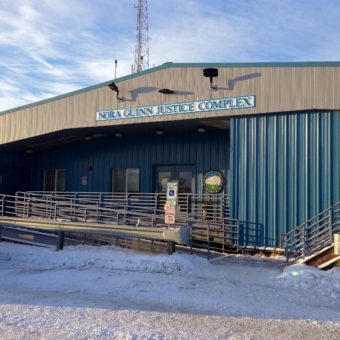
Tuluksak man pleads guilty to attempting to sexually assault family member

A southwest Alaska man who pleaded guilty to sexually assaulting a female family member will serve three months and be required to register as a sex offender.
Kenneth Napoka, 36, of Tuluksak pleaded guilty Wednesday to reduced charges of two class A misdemeanors.

He will serve three months, and be on probation for three years with a 14-month suspended sentence. Napoka is required to register as a sex offender for 15 years.

Napoka was arrested in September in an incident in which he allegedly strangled the family member with his hands and attempted to sexually assault her while she was intoxicated. He  was originally charged with class C felony charges.

Robert Schiesser, the attorney representing the victim, called Napoka’s sentence fair, saying that it was a “C felony-type resolution in misdemeanor clothing.” By that Schiesser meant that the suspended sentence that Napoka received with a class A misdemeanor will turn out to be just four months shy of the sentence the defendant would have received had he been charged with a class C felony.

Schiesser said the resolution was appropriate to what the state could prove, since the victim could not provide much information from being inebriated at the time of the event.

There were several eyewitnesses, but they were “essentially trying to divert their eyes from what was happening,” Sheisser said.

Study says climate change hinders some subsistence efforts in Alaska

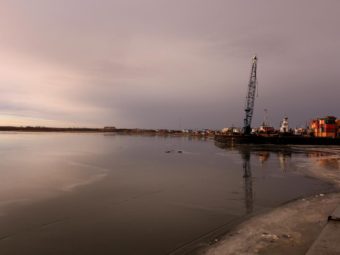
The Kuskokwim river from the seawall in Bethel. There was no snow and ice was barely visible in the warm November of 2014. (Photo by Dean Swope/KYUK)

Climate change has been the subject of many discussions, and scientists say that the Arctic is feeling the effects more significantly than the rest of the globe.

The results of a study gathered from University of Alaska Fairbanks-led interviews says climate change is having a significant effect on subsistence and travel activities in Alaska.

Assistant professor Todd Brinkman was the lead researcher on the article published in October in the science journal Climatic Change.

He says they were tipped off by villages in Alaska about how the changing weather patterns are hindering subsistence efforts.

“We started hearing from many rural communities in the Interior and Northern Alaska that the weather was changing, and it was forcing people to make different choices in regards to how they go out and hunt,” Brinkman said.

Brinkman points to an example from Wainwright, located on the northern coast of the state. Sea ice that whalers use to get out to the Chukchi Sea to look for bowhead whales has been declining and getting thinner over the years.

They started whaling with bigger boats in the fall.

Brinkman and his team spoke with over 70 hunters and collected data beginning in 2010.

One of their biggest findings was that out of 47 identified relationships between subsistence and climate change, well over half depended on getting to the hunting area or resource. He also adds that his team’s findings line up with their models for climate change, and that there is still more research to be done.

Though the Interior and northern coasts are far from the Yukon-Kuskokwim Delta, Mark Leary, who lives in Napaimute on the upper Kuskokwim, agrees that the weather has been changing over the years.

It has even been keeping him from one of his favorite seasonal hunts.

“The best hunting, in my experience, for birds has been when they first come and you could still go by snowmachine,” Leary said. “But it’s been so thawed out all over, that the birds are more spread out and we can’t go by snowmachine.”

Leary is referring to springtime goose and duck hunts, known in Yup’ik as nayuryaq or nutegyaq.

He says that the lack of snow, and the cycle of thawing and freezing in recent winters, has made it impossible for hunters to make it out onto the muddy tundra of spring with their snowmachines.

He said that the river breakup, which usually happens long after waterfowl have returned and settled in, has even beaten the geese.

“Like last year the ice went out and the birds weren’t even here. You know, it’s like ‘What do we do now?’” he said. “And we thought, ‘The ice went out early, maybe the fish will come early.’ But they didn’t really come early.”

Because of the fast warming last spring, Leary says the river broke up faster in April. He was still using his truck on the river less than a month before the ice washed out. He hopes that this year things will be different.

“Truck, snowmachine and boat in one month,” Leary said.

The lack of snow, Leary says, has caused low water breakups in recent years. In a normal spring season, the snow in the upper Kuskokwim area and in the mountains would melt and wash the ice out — so much water that it sometimes caused a flood when there was an ice jam.

Brinkman has heard many of the same concerns about traveling hazards in the communities he’s researched, and he said that the stories are the same across the whole state.

“What was striking was that all the communities were in agreement that these changes are having a significant impact on their ability to travel across the land,” Brinkman said. “So it wasn’t isolated to any one community, it wasn’t isolated to any one type of subsistence resource, it was affecting all of them.”

With the lack of snow due to melting or warm winters, many people are now using ATV’s or four-wheelers to get around since snowmachines have trouble in low-snow conditions. The riverbanks in parts of the state are eroding, especially in some coastal areas.

Brinkman and Leary both say that subsistence users have adapted to these new challenges, but it’s getting harder for some families.

Last year on the Kuskokwim, Akiak musher Mike Williams Sr. nearly lost some of his dog team when a large chunk of land which held his dog yard washed into the Kuskokwim. Leary adds that he’s also seen multiple breakups over the last five falls, which were unheard of before 10 years ago.

Brinkman’s article focuses on subsistence access.

In ecology, the availability of a subsistence resource depends on three factors: abundance of population, distribution of the resource in an area, and the accessibility of the resource for the hunter. Brinkman said that last factor is more important than he thought.

“We often make the assumption that if there’s plenty of fish and game in the area, that hunting opportunities are going to be good,” he said. “Our research demonstrated that even if local populations are healthy and plentiful, if people can’t get out there to them then the resource isn’t available to them.”

Brinkman and his team are in their first year of a new study with the National Aeronautics and Space Administration, or NASA. They are sending GPS-equipped cameras to nine communities. Hunters and travelers will use them to take pictures of the effects of climate change, whether it’s erosion, freaky seasonal weather patterns, or anything that could be attributed to a changing climate.

Teams will then visit some of these areas to investigate, or as they call it in the space program, to “ground truth” the data and match it up with imagery taken from space.

Murder charages against Napaskiak woman dropped following evidence of self-defense

The murder charges against a Napaskiak woman have been dropped and she was released from custody after evidence surfaced that she acted in self-defense.

Bethel Superior Court Judge Dwayne McConnell has ordered the release of Kayla Jacob, 20, the day before Thanksgiving.

Matthew Beaver, 28, was discovered in November 2014 by a village public safety officer, according to an Alaska State Trooper affidavit.

Beaver was not breathing and had with a puncture wound in his chest, the affidavit said. Jacob was on the floor crying. A large knife was found at the scene.

Jacob admitted to stabbing Beaver and was originally charged with first- and second-degree murder.

Both had been drinking alcohol, troopers said.

Alaska governor appoints new members to Lower Yukon Advisory Panel

Gov. Bill Walker recently announced the appointment of three new members to the Lower Yukon Advisory Panel.

Francis Thompson of St. Mary’s, Matilda Oktoyuk of Emmonak and Raymond Oney of Alakanuk have been appointed to the advisory panel.

They will work with the Alaska Department of Fish and Game to represent the interests of their communities in the management of the Yukon salmon fishery.

They also manage the Yukon River Salmon Restoration and Enhancement Fund.

Thompson is the president of the St. Mary’s school district and a subsistence fisherman.

Oktoyuk is on the Emmonak Advisory School Board and the Yukon Delta Fisheries Development Association.

Oney is the tribal administrator for the Yukon Kuskokwim Regional Advisory Council and a Marine Corps veteran.

Mushers begin signing up for Kuskokwim 300 race

The Kuskokwim 300 Race Committee says that 13 mushers have already signed up to participate in the January race as the area takes on a nostalgic chill, allowing trails to be marked further and further out.

The mushers include Mike Williams Jr., Mike Williams Sr., Brent Sass, Jackie Larson, Ken Anderson, Paul Gebhardt, Jeff King, Rick Casillo, Rob Cooke, Jason Mackey, Patrick Mackey, Gwenn Bogart, and Victoria Hardwick.

Defending champion Pete Kaiser of Bethel still hasn’t signed up.

The early entry period for the Kuskokwim 300 ends December 15. The committee said that mushers wanting to receive a refund of their $400 entry fees need to get their applications in by then.

The 2017 Kuskokwim 300 Sled Dog Race is scheduled to begin January 20.

But before all that happens, the first K300 local race of the season is on December 17. The 30-mile trail is open to all local mushers and has a $20,000 purse.

Site notifications
Update notification options
Subscribe to notifications