Matt Miller

Morning Host & Local News Reporter

I’m up early every weekday morning pulling together all the news and information you need to start your day. I find the stories unique to Juneau or Southeast Alaska that may linger or become food-for-thought at the end of your day. What information do you need from me to give your day some context?
Gardentalk – Planning ahead for a springtime splash of color

Bulbs
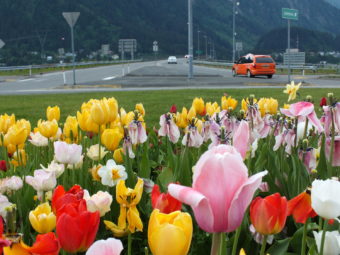
Bulbs bloom in the middle of the Douglas roundabout in Spring 2015. (Photo by Matt Miller/KTOO)

Bulbs are already appearing in Juneau stores right now. But Master Gardener Ed Buyarski says don’t plant them just yet.

Instead, set them aside in a cool, dark place like your garage. Then wait to plant them until at least the middle or end of October, when temperatures are really dropping.

Buyarski says that for best root growth, bulbs should get at least 90 to 120 days in cool soil of about 40 degrees.

“Last year was kind of weird,” Buyarski remembers.

He recalls his flower and garlic bulbs started sprouting their green top growth too early during last December’s mild conditions.

“Then, temperatures on New Year’s Day dropped about 30 degrees,” Buyarski says. The new period of cold temperatures postponed any further top growth.

He says you can start preparing any well-drained soil now. If the soil is too moist, then mix in some sand.

Bulbs come in all varieties, colors and heights and may be specified as early or mid-season bloomers.

Tulips might only bloom well for their first season, but other varieties might bloom year after year.

Unprotected tulip buds are a favorite browsing snack for deer in the higher elevation neighborhoods of Juneau and Douglas. But deer seem to stay away from daffodils, snowdrops and alliums.

Filled reservoirs and better salmon survival are silver linings from this wet, dreary summer

Swan Lake, Thomas Bay
Swan Lake, Thomas Bay (KFSK file photo)

There are a lot of downsides to the kind of heavy, prolonged rainfall that has blanketed Southeast Alaska this year. It can flood rivers and streams, saturating the ground and leading to mudslides. A rainy summer season can also affect the mood and mental health of people living here.

But the rain does have benefits.

During the dry conditions and drought of 2018 and 2019, hydroelectric projects around the panhandle suffered from low water levels.

Trey Acteson is the CEO of the Southeast Alaska Power Agency, which runs hydroelectric projects that supply electricity to Petersburg, Wrangell and Ketchikan. Acteson says communities had to fire up more expensive diesel generators to fill their electricity needs during those dry years. He says Ketchikan even had to lease extra portable generators.

“It was an anomaly,” he said. “Hopefully, we don’t have to deal with that again, but unfortunately, it did impact rates.”

The Swan Lake dam prior to an expansion of the reservoir’s capacity in 2016 (Photo courtesy Southeast Alaska Power Agency)

This year is different. Acteson says he can count the number of warm, sunshiny days in Ketchikan on one hand. He says their reservoirs filled up by July 24th, and he expects they have enough water stored up to supply electricity well into fall and winter.

“It’s been a pretty miserable summer,” he said. “But if you’re in the hydro business, you know, it has been a great year!”

And then there’s the salmon.

Aaron Dupuis, a Sitka-based commercial fisheries biologist for the Alaska Department of Fish and Game, remembers summers when salmon streams literally dried up because the snowpack was so poor and so little rain fell. Drought can keep salmon from getting far enough upstream to spawn.

Even if there is a little water, the eggs might not hatch.

“Without adequate stream flow, they could not get enough oxygen,” Dupuis said. “Or, if there’s not any, they dry out. They don’t survive too long without any water over them.”

It’s not just the eggs. It’s the same for the little fry on up to old spawners.

“Some of those days, it was 80 degrees out,” Dupuis said. “You look down at it like, man, that water’s got to be really hot. And, salmon don’t do well in hot water.”

Dupuis says this summer, there was plenty of cooler water in salmon streams.

Humpies
Pink salmon, plus an occasional silver and red, congregate in a pool above the weir before spawning. John Joyce says the males will put on displays and fight with other males as part of the competition for mating females which have already started a nest. (Photo by Matt Miller/KTOO)

Communities all over the panhandle registered historic levels of rainfall during June, July and August.

For example, downtown Juneau had the wettest summer in 59 years, with 34.42 inches of rain. When it comes to the number of days of measurable rain, Rick Fritsch of the National Weather Service says Juneau had nearly double the rainy days of last summer — 68 days of measurable rain in summer 2020 in Juneau compared to only 36 days of measurable rain in summer 2019.

Fritsch says the big difference this year was that the jet stream, a super-fast river of air high up in the atmosphere, had moved back down south of Alaska.

So if you want a clue about whether it’ll be another dreary wet summer next year — or if your electricity bills will be higher — just look where the jet stream is next spring.

Mystery seed packets showing up in Alaskans’ mailboxes

Seed inspection
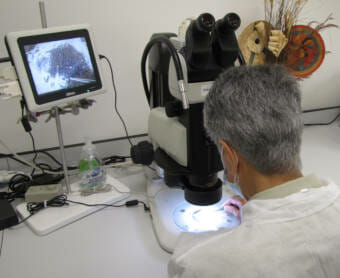
U.S. Department of Agriculture, Animal and Plant Health Inspection Service botanists examine Amaranthus seeds sent to U.S. residents to determine if they harbor any plant pests or disease. (Photo courtesy USDA)

People all around the country say they’re getting mysterious packages in the mail from overseas. Inside are little packets of seeds they did not order or ask for.

Agriculture officials say they’re likely part of a world-wide, internet-related scam.

The seeds could also harm the environment.

Rhonda Guest said she wanted to do something nice for her church in Juneau. She was looking for seeds and bulbs that would bloom just in time for services next Easter. She found them on the discount shopping app Wish. All she had to do was pay the shipping.

Seed mailer
This mailing package originated from Malaysia and does not list seeds as its contents, it has been edited to protect Rhonda Guest’s privacy. (Photo courtesy Rhonda Guest)

She tracked the packages through Malaysia and China. But they didn’t arrive for a couple months.

“I was so excited,” Guest said.

That turned to confusion when Guest opened the packages that finally came in the mail She wasn’t even sure if they were what she ordered.

“Some of it is not identified. There’s no instructions from these seeds on how to do it, do it yourself,” Guest said.

“So, I thought that was weird. I mean, usually when you order something, it gives instructions on how to prepare it or whatever.”

Guest is not the only one. The state has received at least fifty such reports from all around Alaska already this summer.

Alaskans got seed packets from places like Solomon Islands in the South Pacific, Kazakhstan and China.

In some cases, the seeds mysteriously arrive in mailboxes unsolicited. Alaskans did not even order them.

“These seeds are not coming in legally, because they’re not being sent as seeds, said David Schade, head of the Alaska Division of Agriculture. “They’re being sent as jewelry or some other kind of non-agricultural product.”

Schade said it’s happening all across the country.

There are a few theories as to why.

“What the USDA believes is a ‘brushing’ scheme to where these organizations send out packages that are not necessarily solicited, and then write reviews to boost their scores on the internet,” Schade said.

In other cases, people are ordering what they believe are U.S. seeds through Amazon or another retailer. But the seeds are actually arriving from overseas.

“We really don’t need unintended seeds growing and then invasives coming in,” Schade said “And there is, you know, a low probability of pathogens being on these seeds. So, we’re also having a look at is there any kind of disease or virus or bacteria, anything along those lines that might come in on the seeds.”

Schade said they’re investigating some seeds that were already planted in Southcentral Alaska. He said don’t plant the seeds and don’t even open the clear plastic baggies the seeds come in.

If you get a such a seed packet, then he asks Alaskans to call his office in Palmer at 745-7200, talk to his staff about how you got the seeds, and then prepare to send the seeds to them.

They’ll pass them off to the U.S. Department of Agriculture for an examination which will determine if they’re a weed or invasive species, or contain some disease.

And that’s exactly what Rhonda Guest did.

Garden experts suggest ordering seeds directly from a reputable U.S. source and not through giant ecommerce websites like Wish or Amazon.


Mystery seeds
Packet containing unidentified seeds. (Photo courtesy Rhonda Guest)

Juneau’s Mendenhall Lake and River flood for the 3rd time this summer

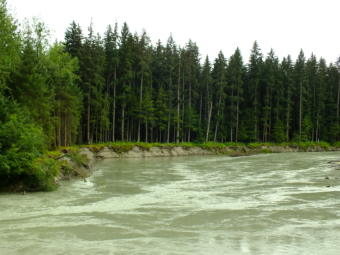
View from Meander Way of Mendenhall River as water levels begin to rise on July 14, 2019.
View from Meander Way of Mendenhall River as water levels begin to rise on July 14, 2019. (Photo by Matt Miller/KTOO)

There was another glacial dam release that dumped a lot of water into Mendenhall Lake and Mendenhall River over the weekend. Starting Friday afternoon, water started flowing down from Suicide Basin, a glacially dammed lake located about two miles up from the face of Mendenhall Glacier.

Rick Fritsch with the National Weather Service in Juneau says he went out to Skaters Cabin and the nearby campground to take a look Saturday afternoon.

“The usual places where you see the water creeping in as you’re driving out on Skaters Cabin Road, on the right hand side, you can see it infiltrating in amongst the trees there on the shoreline,” he said. “I was thinking to myself, ‘Wow, boy, if I had my kayak, I could paddle right up to the edge of the road’.”

Mendenhall Lake crested at 8.3 feet Saturday evening. That’s above bank full height.

This is at least the third time that both the lake and river flooded this summer. Heavy rains drove up lake levels to 10.2 feet on August 10.
The first glacial dam release of the season, called a jökulhlaup, forced the lake to crest at 11.5 feet on August 1. That’s moderate flood stage, but just short of the record of 12.0 feet.

At least one Alaska Airlines employee at the Juneau airport tested positive for COVID-19

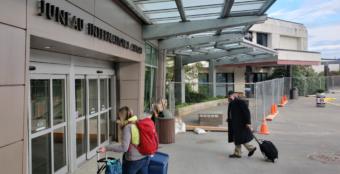
Travelers head into the terminal of Juneau International Airport on May 15, 2020.
Masked travelers head into the terminal of Juneau International Airport on May 15, 2020.  (Photo by Jeremy Hsieh/KTOO)

Two Alaska Airlines employees who work at the Juneau airport tested positive for COVID-19 in early August according to the International Association of Machinists and Aerospace Workers, the workers union that represents the company’s ground employees.

But accounts differ on how many people may have been exposed to the virus.

In a statement, Alaska Airlines said only one employee tested positive and another was told to isolate and monitor for symptoms because they had close contact with that employee. The airline says both employees had limited contact with the public and can now return to work.

In addition, the airline refers to an unspecified number of other employees who were required to stay home because of possible exposure outside of the workplace. They say many of those employees are now being allowed to return to work.

But an Alaska Airlines employee in Juneau says as many as nine other people were also exposed and continued working for several days afterward. The person, who does not want to be publicly identified because they fear retaliation, says a ramp agent tested positive after attending a wedding on August 1. They say as many as seven additional ramp workers and two customer service agents were also at the wedding, and those employees were later put on emergency leave as they awaited their own test results.

The airline says they have protocols in place and have provided equipment and supplies for employees to protect themselves and sanitize their work areas. They ask that any employee stay home and call their health care provider if they develop symptoms.

A spokesperson for the employees union, Jonathon Battaglia, declined to answer questions, but wrote in a short statement: “Proper protocols are being followed to ensure that other employees who had contact with them are quarantined in accordance with CDC guidelines as precaution.”

Gardentalk – Should you plant mystery seeds? Should you squish woolly bear caterpillars?

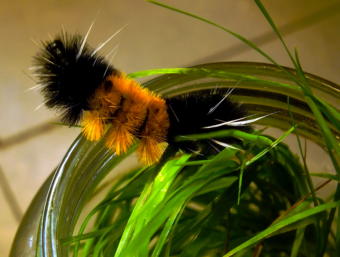
Woolly bear caterpillar tries to escape its glass prison located in a North Douglas kitchen in August 2019. (Photo by Matt Miller/KTOO)
A woolly bear caterpillar tries to escape its glass prison in a North Douglas kitchen in August 2019. (Photo by Matt Miller/KTOO)

Alaskans say they’ve been getting unsolicited packets of seeds in the mail. Or seeds that Alaskans think they ordered from U.S. seed retailers, but they ended up coming from China or other places overseas instead.

Don’t plant them, says Master Gardener Ed Buyarski. They have not been inspected for disease and may be an invasive species. They also may have not been approved for importation into the U.S.

“There’s rules for that too,” Buyarski says. “Some things are not allowed because of crop seed protection.”

Tomato seeds from Uzbekistan
U.S. Department of Agriculture, Animal and Plant Health Inspection Service botanists examine tomato seeds sent to U. S. residents from Uzbekistan to determine if they harbor any plant pests or disease. (USDA photo)

Dave Schade, head of the Alaska Division of Agriculture, encourages Alaskans to call his office at 745-7200 if they get any mystery seeds from overseas. He says his staff will ask questions about the packages and how the seeds arrived in the mail. They’ll also ask you to send the packages to their office in Palmer. From there, the mystery seeds will go to the U.S. Department of Agriculture for further examination and investigation.

“Tell us what you have. We’ll tell you how to get it to us,” says Schade. “We’ll collect the information of what you think happened”

Schade also said the agriculture division would love to get the original packaging — and don’t open the little plastic bags with the seeds.

Buyarski advises gardeners to stick with known varieties from reputable U.S. seed companies.

If you do know where your seeds came from, now is the perfect time for a second planting of fast-growing greens like lettuce, mustard greens and kale.

Buyarski also warns that the root maggot may be infesting root vegetables in Juneau. Do not put root maggot-infested vegetable remains into your compost. Buyarski says gardeners may be able to keep the main portion of the vegetable, but they should get rid of the roots and surrounding soil by burning them or putting them in a bag for the dump.

Also, the woolly bear caterpillar is back in Juneau, chewing on trees, bushes, vegetables and herbs. They’ve been seen feasting on apple trees, alders, parsley and berry plants.

Buyarski encourages gardeners to squish the caterpillars and throw them in the trash.

He advises against letting children play with the caterpillars because their white hairs can irritate the skin.

Site notifications
Update notification options
Subscribe to notifications