Rashah McChesney

Daily News Editor

I help the newsroom establish daily news priorities and do hands-on editing to ensure a steady stream of breaking and enterprise news for a local and regional audience.
Lawmakers to quiz Department of Labor over its handling of COVID-19 related safety

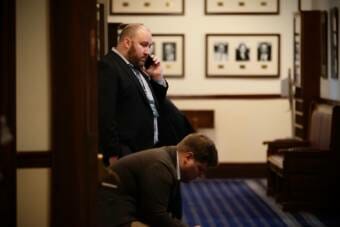
Anchorage Democratic Reps. Ivy Spohnholz and Zack Fields.

House lawmakers will be questioning a Department of Labor director Wednesday evening over its handling of COVID-related safety violations at two seafood plants. 

“This is a fact-finding hearing. We wanted to give the Department of Labor an opportunity to explain how it made these decisions that seems to be unprecedented in terms of blocking enforcement of workplace safety laws,” said Anchorage Democrat Zack Fields.

He and his Labor & Commerce Committee co-chair scheduled the meeting after whistleblowers leaked documents to them showing that Department of Labor commissioner Tamika Ledbetter blocked about $450,000 in fines that her agency’s inspectors wanted to levy against Copper River Seafoods. 

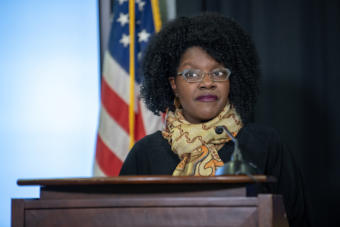
Department of Labor and Workforce Development Commissioner Tamika Ledbetter during a press conference on the COVID-19 pandemic on April 3, 2020, in Anchorage, Alaska. (Creative Commons photo courtesy Alaska Governor's Office)
Department of Labor and Workforce Development Commissioner Tamika Ledbetter during a press conference on the COVID-19 pandemic on April 3, 2020, in Anchorage. (Creative Commons photo courtesy Alaska Governor’s Office)

Those inspectors say the company didn’t protect its Anchorage workforce from COVID-19 — a claim the company has denied since the inspection records became public. 

Ledbetter blocked the huge fine proposed for Copper River Seafoods, saying there wasn’t enough evidence or precedent to charge the company willfully violating COVID-19 safety standards. 

She also threw out citations for other safety violations inspectors found. Including a repeat violation of a safety hazard the company had already been cited for after an employee lost most of an arm at a plant in Bristol Bay in 2018. 

The company’s legal team, including former Attorney General Jahna Lindemuth, has also objected to having safety violations litigated in a public hearing rather than in confidential meetings with the Department of Labor.  

“… we ask that you focus on the work within the department related to investigations as a whole, and not on the Copper River Seafoods’ investigation where you have incomplete knowledge as the investigation is and should remain confidential,” they wrote in a letter to lawmakers. 

Ledbetter also denied her inspectors’ request to fine Juneau’s Alaska Glacier Seafoods more than $130,000 for COVID-19 safety issues. She will not be answering questions from lawmakers during the hearing, as an assistant says she is out of town and can’t call into the meeting. 

Fields has strong ties to organized labor and works outside the Legislature for a laborers union. He and Anchorage Democrat Ivy Spohnholz also say they’re concerned about the Dunleavy administration retaliating against the whistleblowers who exposed the canceled fines. 

“We heard from employees within the department that high ranking political appointees in the department were interrogating civil servants trying to figure out who the whistleblowers were and it seemed the intent was to retaliate against whistleblowers,” Fields said.

Alaska’s Whistleblower Act blocks employers from retaliating against state workers who report to public bodies on matters of public concern. Still, Fields says the whistleblowers are concerned about losing their jobs. 

“But they’re also concerned about enforcing the law and protecting Alaska workers on the job and I think anyone who’s a whistleblower is doing something in the public interest that does put themselves at some risk and that’s precisely why we have whistleblower protection statutes,” Fields said.

The Attorney General’s office has also weighed in, asking lawmakers to turn over any evidence of wrongdoing so that it can be investigated by the Department of Law. 

The Labor & Commerce Committee will meet at 5:45 p.m. The meeting will be streamed online.

Who is a journalist? Question remains after Dunleavy settles lawsuit with online news outlet Alaska Landmine

Jeff Landfield, founder of the Alaska Landmine at work at the Capitol in 2020. (Photo courtesy Brian Hild)
Jeff Landfield, founder of The Alaska Landmine at work at the Capitol in 2020. (Photo courtesy Brian Hild)

Last week, Gov. Mike Dunleavy and independent media owner Jeff Landfield settled a lawsuit over media access. 

The governor’s office agreed to pay $65,000 to cover legal fees that Landfield’s company, Alaska Landmine, incurred during the lawsuit. 

And both parties agreed that Landfield can have the same access to the Governor’s press conferences that other members of the media get. 

But the lawsuit didn’t settle one big question: Who gets to be called a journalist in Alaska — and who doesn’t?

During the lawsuit, Dunleavy’s administration argued that Landfield isn’t a journalist. At least, not a traditional one. And ultimately that argument didn’t go anywhere. 

But the question has lingered. This isn’t a profession like law — you don’t get licensed to practice journalism. 
And it has been difficult to get any journalists in this state to weigh in on-record on the lawsuit. 

“I got — quietly and privately — support from people in the media and reporters but I got, I don’t know, I think nothing publicly,” Landfield said. “The Press Club didn’t say anything.”

Tom Hewitt, who is on the state’s Alaska Press Club board, said he’s happy about the outcome of the lawsuit. But Landfield didn’t ask them for support and, in any case, he said that’s not really their role. Hewitt said the Press Club is an education and advocacy organization. It doesn’t really have the funds to fight lawsuits.

But, he said, what constitutes journalism in this state is broad, and he thinks it should be.

In the end, Landfield didn’t need that support. He won.

But in the same way that the opinions in Dunleavy’s administration impacted Landfield’s ability to do his job, other journalists do, too. 

This year, lawmakers decided that for COVID-19 safety reasons, only one reporter at a time would be allowed to cover the floor sessions. So news outlets got together and worked out a rotating pool of reporters so that everyone would get a chance to cover them. 

Everyone but Landfield. He was part of the planning process, but the other journalists and their editors didn’t want to work with him, and he said, again, no one would tell him why. But Landfield has a theory:

“A lot of people have not been super receptive to me or my style or my methods which maybe they don’t like or agree with or appreciate,” he said.

He isn’t traditional, at least not in the modern media landscape. He ran for a Senate office last year. He writes news and opinion interchangeably and uses a lot of anonymous sources. But he’s got thousands of readers, and he sees himself as a disrupter in a legacy media industry that’s struggling. He thinks some media outlets see him as a threat.

And he breaks a lot of news. As part of his legal team’s argument during the lawsuit, they compiled a list of times when legacy media outlets in the state and around the country referenced stories that he broke — you know, information that he published. And that list is long. 

“What I would say to the people in the media who don’t appreciate me or like my style or what I do, you know, they should really stop using my work,” he said.

One journalist at KTOO speculated that perhaps ethics could be a good measurement — or the dividing line between who is practicing journalism and who isn’t. 

 The Society of Professional Journalists, for example, has an ethical code that says in part that you “seek truth and report it.”

Suzanne Downing, who writes and edits the conservative-leaning blog Must Read Alaska, laughed when she heard that. She said the idea that journalists at traditional media outlets could decide who practices journalism, but governments shouldn’t “is probably cognitive dissonance quite honestly, to have them decide who is ethical enough to perform journalism.”

Downing has a degree in journalism and worked in legacy newsrooms for a long time. She also edited opinion pages. Then she worked in politics. Now, she writes her news from a particular point of view that happens to be conservative. To her, it feels more honest. 

She regularly criticizes members of the media in Alaska. And she thinks there are going to be more of these types of news-from-a-point-of-view outlets in the future — especially as people in the U.S. seem to be less and less trusting of traditional media. 

“It’s a wild, wild west out there right now, and I think we’re going to see it continue to evolve. We’re going to see a lot more of these platforms develop. They aren’t that difficult to do. They’re difficult to monetize but they aren’t that difficult to roll out,” she said.

Ultimately, Landfield said he’s just happy that he fought for his First Amendment rights and won. 

And, true to form, Landfield said he’s trying to arrange a private meeting with the governor to resolve their differences. 

“I said ‘how about a beer summit. Let’s get a few beers, get Jeff Turner in there, maybe Ben Stevens can come back for a weekend. Have a little chat, you know. Just bro out a little bit,’” Landfield said.

He said he hasn’t gotten a response to that invitation yet. 

‘Apart but together,’ Juneau’s Choir from Cars gives singers a chance to perform again

Every Saturday afternoon, traffic backs up outside of the Holy Trinity Episcopal Church in downtown Juneau. Cars wedge into improbably small parking spots, up on sidewalks or wherever they can find a spot close enough to be in range of the church. 

Everyone who signs up gets a quick crash course in the tech. They get a microphone and headphones and told to tune their car stereos to 107.1. Volunteers pass out sheet music.

It’s called Choir from Cars and the guy who’s responsible for piecing it together is Bruce Simonson. He’s the classic archetype of choir director with wild Beethoven-like hair, which he is constantly tucking behind his ears. He sings all the parts. 

Bruce Simonson talks to singers during his Choir from Cars on Saturday, March 6, 2021, in Juneau, Alaska. (Photo by Rashah McChesney/KTOO)

Simonson is a longtime choir director in Juneau. He said this Choir from Cars thing wasn’t his idea. He saw some people doing it in the Lower 48 and thought it could be replicated in Juneau. 

“By singing from your car, you’re safe. You’re in your own bubble, you’re not sharing any air with other singers,” he said. 

He started gathering equipment in October and launched the choir in January. And, there’s a lot of stuff going into organizing this whole thing. Inside the church, audio producer/volunteer Tim Fullam stands in a tangle of cables at a mixing board. It’s his job to mix the levels and record the performance. 

For the singers in their cars, the experience is pretty simple.

Simonson stands on the sidewalk with a music stand in front of him and leads the group. 

“I’m out here and I’m actually singing at the top of my lungs,” he said. 

For people walking by, it’s a pretty odd sight. You can’t really hear people singing from their cars, so he’s just kind of alone out there just singing to the streets. 

But even isolated and alone in their cars, Simonson said something magical happens. 

“The first time you do it and you haven’t been singing for like a year in a group, it’s really emotional. What’s interesting is the first 20 minutes and you get kind of verklempt — if you want to use that word,” he said. “But then people kind of forget about how weird it is, what we’re really doing here. … In 20 minutes it starts to feel about like a regular choir rehearsal, just people are spread out a little more and not rubbing elbows with each other. People are cracking jokes and it’s just like … it’s a good thing.” 

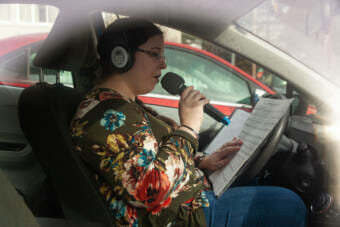
Singers read music and sing along with each other from the safety of their cars on Saturday, March 6, 2021, in Juneau, Alaska. The new Choir from Cars group meets every Saturday afternoon to practice and sing together outside of the Holy Trinity Episcopal Church. (Photo by Rashah McChesney/KTOO)

The songs are a mix of choral and folk music. And, right now they’re working through an arrangement of David Bowie’s “Life on Mars.”

It’s not easy, but Bobbi Mitchell and her friend Susan Loomis are into it. 

“It’s so much fun! And it’s really bizarre,” Mitchell said. 

The two parked right in front of the church. A labradoodle, Duke, bounced around in the back seat. 

They’ve both been coming for a few weeks. When they heard about the choir through friends and social media they immediately joined. 

“It’s the choir, I so miss it,” Mitchell said. 

“We desperately love singing. We miss being able to sing in the choir,” Loomis said. “There’s nothing like the sound of voices singing together.”

Tom Fullam monitors the audio coming in from dozens of cars and at least 30 microphones during a Choir from Cars meeting on Saturday, March 6, 2021 in Juneau, Alaska. (Photo by Rashah McChesney/KTOO)
Tim Fullam monitors the audio coming in from dozens of cars and at least 30 microphones during a Choir from Cars meeting on Saturday, March 6, 2021 in Juneau, Alaska. (Photo by Rashah McChesney/KTOO)

There’s another woman who lives nearby who gets her gear and joins in from her living room. Another stands on the sidewalk across the street and sings from there. 

And, for an hour and a half, if you tune in — it sounds like any other choir rehearsal with just a few more technical problems. 

And at the end instead of clapping — everyone honks their horns.

For now, Simonson said they’re meeting every Saturday at 1 p.m. until they can all start meeting in person again. 

Correction: A photo caption misspelled Tim Fullam’s name. 

SEARHC gives Juneau thousands of Pfizer vaccine doses for its next vaccine clinic

After receiving their COVID-19 vaccination, residents sit in a waiting area to be monitored for adverse reactions on Jan. 17, in Juneau. (Photo by Rashah McChesney/KTOO)

A tribal health organization gave the City and Borough of Juneau thousands of doses of the Pfizer vaccine for its next mass vaccination clinic. 

The Southeast Alaska Regional Health Consortium, SEARHC, donated 2, 100 doses of the Pfizer vaccine for the six-day clinic that starts March 15. 

“Vaccinating the community of Juneau is essential and in line with SEARHC’s mission of Alaska Native People working in partnership to provide the best healthcare for our communities,” SEARHC Vice President Eric Gettis wrote in a media release.   

Starting Monday at noon, Alaska residents in Juneau will be able to sign up online for appointments. You can also call 907-586-6000. 

City Emergency Manager Robert Barr said that eligibility is much broader than it has been at previous clinics. 

Anyone 55 or older qualifies, as well as people 16 or older who have certain medical conditions or who are working as essential workers or who live in multigenerational households. Additionally, anyone 16 or older who helps someone 65 or older get vaccinated is eligible, as are many educational staff and people living or working in congregate settings like assisted living homes or jails. 

For questions about eligibility, there is a quiz available.

Anyone who makes an appointment has to be available for a second dose in early April. If you signed up for an earlier clinic and are on a waitlist — you have to make a new appointment to get into this clinic. The city is asking that if you do that, you email covidquestions@juneau.org to be removed from the waitlist. 

You can call the city at 586-6000 to arrange translation services for anyone who doesn’t speak English and wants an appointment to be vaccinated. 


Homer Republican wants lawmakers to condemn sexist remarks by Rep. Zack Fields

Rep. Liz Snyder, D-Anchorage, and other members of the Alaska House of Representatives' Women's Caucus talk on Wednesday, March 3, 2021 in the Alaska State Capitol at Juneau, Alaska. The caucus was considering the language of a proposed measure denouncing comments made by Rep. Zack Fields, D-Anchorage late February. (James Brooks/Anchorage Daily News via AP, Pool)
Rep. Liz Snyder, D-Anchorage, and other members of the Alaska House of Representatives’ Women’s Caucus talk on Wednesday, March 3, 2021, in the Alaska State Capitol at Juneau, Alaska. The caucus was considering the language of a proposed measure denouncing comments made by Rep. Zack Fields, D-Anchorage in late February. (James Brooks/Anchorage Daily News via AP, Pool)

A Homer Republican asked fellow legislators to weigh-in and condemn comments made by Anchorage Democrat Zack Fields last week.

Fields has been under fire for sexist comments he made to Republican Rep. Sara Rasmussen as part of a birthday message he delivered during a House floor session. He read from what he said was a message from a constituent in her district saying that she could wear a short skirt and stop traffic in Anchorage. He said he, and his colleagues, had bought her a pair of sweatpants to keep residents of her district safe. 

Rep. Sarah Vance wanted Representatives to vote on what’s called a Sense of the House — a way for the chamber to send a unified message —  to say that Fields’ comments discredited the House. 

“And that no member should be objectivized on the House floor and that no member such comments should ever be uttered on the House floor by any member,” Vance said. “I ask for unanimous consent.”

They didn’t vote during the floor session. Members of the House Women’s Caucus met afterward to talk about finding a consensus on the language they wanted to use. 

Later in the day Vance withdrew her motion and said she’d bring it up again on Friday. House Majority spokesperson Austin Baird said the idea is to get as many members present as possible on that day. 

Fields has apologized for his comments, though he had to rewrite it after several people criticized his first one as inadequate. In his apology he said his comments were inappropriate and in poor taste. 

State safety inspectors tried to fine Copper River Seafoods $450,000. Their commissioner blocked it.

Department of Labor and Workforce Development Commissioner Tamika Ledbetter during a press conference on the COVID-19 pandemic on April 3, 2020, in Anchorage, Alaska. (Creative Commons photo courtesy Alaska Governor's Office)
Department of Labor and Workforce Development Commissioner Tamika Ledbetter during a press conference on the COVID-19 pandemic on April 3, 2020, in Anchorage, Alaska. (Creative Commons photo courtesy Alaska Governor’s Office)

Internal documents show that Department of Labor commissioner Tamika Ledbetter blocked nearly $450,000 in fines against a seafood plant her own inspectors said willfully violated COVID-19 workplace safety standards.

Now, state lawmakers are investigating. 

House Rep. Zack Fields, an Anchorage Democrat who used to work for the Department of Labor, said he and his Labor & Commerce committee co-chair got a complaint from a whistleblower that Ledbetter was blocking enforcement of state workplace safety standards. 

“Alaskans have to work to provide for their families,” Fields said. “When they go to work, they shouldn’t have to risk their lives to put food on the table.”

Fields’ committee is holding a hearing to address questions they have about a Copper River Seafoods plant in Anchorage and Juneau-based Alaska Glacier Seafoods. Both companies had large COVID-19 outbreaks last year. 

Seafood plants, by nature, have large numbers of people working in close quarters. 

Workers remove the bones from salmon fillets at Alaska Glacier Seafoods’ Auke Bay processing plant (Photo by David Purdy/KTOO)

But in the case of Copper River Seafoods, inspectors said the company “made a minimal effort” to protect employees from the virus. 

According to Department of Labor documents, state workplace safety inspectors were asked to visit the Copper River plant after the health department flagged that 77% of the company’s Anchorage plant employees had contracted COVID-19. 

State contact tracers told inspectors that 19 employees had complained about the plant when they were being interviewed. Workers described crowded working conditions, having to purchase their own masks and said their complaints to management fell on deaf ears, according to inspection records. 

State inspectors showed up to the Copper River’s East Plant in Anchorage in August and later found out that five employees,  who tested positive for COVID-19 and should have been isolating, were working at the plant during the on-site inspections. 

One inspector noted that despite a substantial outbreak of COVID-19 at the plant — one that caused them to shut down for two weeks — the company took minimal action to protect employees. “During this time, [Copper River Seafoods] was actively engaged with public health officials from the State of Alaska and the Municipality of Anchorage, who described their initial meetings with [Copper River Seafoods] ownership and management as ‘hostile.'”

No one from Copper River Seafoods returned a phone call seeking comment.

State inspectors proposed nearly $450,000 in fines after that site visit, both for COVID-19 issues and other safety problems.  But, the commissioner blocked it, saying that it wasn’t adequately supported by the documentation that inspectors provided. 

In an internal memo to Director Joe Knowles who oversees the Labor Standards and Safety Division, Ledbetter wrote that she was concerned about the way she was notified about the citations. So, she directed a change in the way that citations are handled. Now, Ledbetter says that she must approve any proposed citations of more than $50,000 that safety inspectors want to issue.

Reached via email on Tuesday, Commissioner Ledbetter said the type of citation that inspectors wanted to issue against Copper River Seafoods for its COVID-19 violations is unprecedented in Alaska. 

She wrote that her department is working with the federal Occupational Health & Safety Administration counterpart to figure out its authority going forward. She didn’t answer questions about what her office would do to enforce COVID-19 safety standards with employers who refuse to follow them. 

Fields says Ledbetter’s actions are unprecedented and he wants the commissioner to come before his committee and explain her decision.

“To me, it’s a policy matter because the occupational safety and health staff did their job. They investigated workplace safety issues. They recommended steps to correct problems on the job site. When that didn’t occur, they undertook enforcement action,” Fields said. “The problem I have is a political appointee effectively flushing the law down the toilet by refusing to enforce it.”

Correction: In an earlier version of this story, the percentage of Copper River Seafoods employees who contracted COVID-19 was incorrect. The state’s Department of Health and Social Services flagged that 77% of Copper River Seafoods employees at the Anchorage plant had tested positive for the virus.  

Site notifications
Update notification options
Subscribe to notifications