Tegan Hanlon, Alaska Public Media

The lease sale is set, but how much oil actually is under ANWR’s coastal plain?

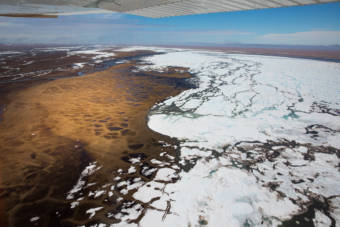
The Canning River in the Arctic National Wildlife Refuge. (Randy Brown/USFWS)

Supporters of drilling in the northernmost slice of the Arctic National Wildlife Refuge often point to its oil potential as a reason to develop the remote stretch of land.

But what does the federal government actually know about how much oil sits under the refuge’s coastal plain, which will be put up for sale on Jan. 6?

While geologists say the rock formations, oil seeps and old seismic results seem promising, big questions remain about where the oil is trapped, and exactly how much of it there is.

“We don’t know very much about this area,” said David Houseknecht, senior research geologist for the U.S. Geological Survey and expert on the coastal plain.

“There are a lot of uncertainties that are difficult to quantify in the absence of better quality data,” he said.

What the government does know about the amount of oil in the coastal plain dates back decades.

In 1998, the USGS calculated there’s anywhere from 4 to 12 billion barrels of recoverable oil under the federal lands, which cover an area roughly the size of Delaware.

A map of the Arctic National Wildlife Refuge coastal plain shows the tracts of land that will be included in an oil and gas lease sale on Jan. 6. The Bureau of Land Management has removed the numbered tracts shaded gray. (Screenshot BLM document)

That’s a whole lot of oil, said Houseknecht, but also — a wide range.

“That range is so big because there’s been no wells drilled on federal land and because the seismic data is pretty old and low resolution and erratic,” he said.

Companies use seismic technology to map underground rock formations, and hunt for oil. The seismic data for the coastal plain is from the mid-1980s.

Technology has come a long way since then, Houseknecht said.

“Going into a lease sale in the coastal plain, with the only data being 35-year-old, 2-D data is quite unusual,” he said.

A worker stands in front of a vibe truck being used as part of BP’s 3-D seismic program at Prudhoe Bay this winter, to the west of the Arctic National Wildlife Refuge’s coastal plain. (Elizabeth Harball/Alaska’s Energy Desk)

An Alaska Native village corporation is trying to get approval to conduct 3-D seismic exploration, using massive trucks that roll over the tundra and vibrate the ground. Conservation groups argue the work will cause too much harm, including to the tundra and to polar bears that den there.

Another key piece missing from the USGS assessment is any data from actual wells drilled in the coastal plain in search of oil, Houseknecht said.

That’s because there’s just one, drilled back in the 1980s, on Alaska Native land. And the results are a closely-guarded secret.

“I signed a confidentiality agreement, and it didn’t have an end date on it,” said Mark Myers, a geologist and former commissioner of the Alaska Department of Natural Resources.

Myers is one of the few people who have seen the results from the test well, outside of the big oil companies that paid for it.

“I can’t comment on it, in terms of what I saw,” he said. “Even though it was a lot of years ago.”

A New York Times investigation based on legal documents suggested the results were not promising.

But Houseknecht said companies with that well data still have critical knowledge.

USGS interpreted the old seismic data to show most of the oil is likely in the western part of the coastal plain and said the other side didn’t appear to have the right conditions to hold a lot of petroleum.

Houseknecht said those companies with the well results, however, would know a lot more about the rocks underground on the eastern side of the refuge, and their potential.

“Whether that source rock is present or absent, whether that reservoir rock is present or absent, is huge,” he said.

Houseknecht said more is not known about the oil potential of the coastal plain because it wasn’t until late 2017 that Congress decided to open the land to drilling, after decades of protections.

An application in 2018 for new seismic work stalled.

The USGS also had the 1980s seismic data commercially reprocessed a couple years ago, Houseknecht said, which resulted “in a much better resolution than we do internally.”

The agency had planned to conduct a new oil assessment using the reprocessed data, he said, but after the 2017 tax act was passed, the Interior Department called off the work.

Houseknecht said the department did not give a reason why.

Myers, the former commissioner, said even without updated seismic data, he thinks one big selling point for oil companies is the fact that the coastal plain is onshore, making it cheaper to access than offshore prospects.

And, he said, there just aren’t a lot of opportunities for companies to get in early on a potentially massive oil find.

“I would say ANWR falls in that high risk, high potential — not high risk of oil, but high risk of execution,” he said. “When you put it all together, will that attract somebody? I think it will.”

When Myers says high-risk of execution, he means there’s opposition that could derail a company’s project.

Critics of drilling in the refuge say the land should be protected, and they’ve raised concerns about oil development’s effects on ecosystems and the global climate. The coastal plain is home to polar bears, migrating caribou and other wildlife.

Conservation and some tribal groups have already filed several lawsuits that aim to stop the lease sale.

While oil potential will likely be the first thing companies weigh when deciding whether to bid in the sale, Myers said, they’ll also take into account a string of other factors, including the lawsuits, costs and the changing administration.

President-elect Joe Biden has said he opposes drilling in the Arctic refuge.

Alaska state-owned agency to weigh bidding in ANWR lease sale

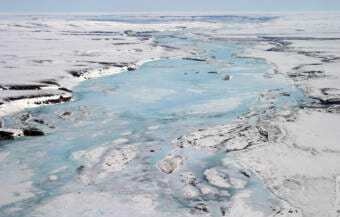
The coastal plain is the northernmost piece of the Arctic National Wildlife Refuge. It covers about 1.5 million acres, or about 8% of the vast refuge. (Lisa Hupp/USFWS)

Alaska’s state-owned development corporation may bid in the upcoming oil and gas lease sale in the coastal plain of the Arctic National Wildlife Refuge.

The Alaska Industrial Development and Export Authority is asking its board to allow it to spend up to $20 million on the sale.
The board will consider the request at its meeting late Wednesday afternoon.

The proposed resolution was first reported Monday by the Anchorage Daily News.

AIDEA’s director, Alan Weitzner, said if the corporation acquired a lease — or multiple leases — it would then partner with companies that would do the drilling. The goal is to develop the land, he said.

“There’s an opportunity here to really establish some economic growth for the state of Alaska,” Weitzner said in a phone interview Tuesday.

AIDEA’s request comes as speculation looms over whether the oil industry has much interest in bidding in the Jan. 6 lease sale.

A map of the Arctic National Wildlife Refuge coastal plain shows the tracts that will be included in an oil and gas lease sale on Jan. 6. The Bureau of Land Management has removed the numbered tracts shaded gray. (Screenshot BLM document)

The sale is surrounded by controversy and lawsuits and will be held two weeks before President-elect Joe Biden takes office. Biden has said he opposes drilling in the refuge and will take steps to permanently protect the land.

Former Alaska Govs. Bill Walker and Frank Murkowski recently urged the state to submit at least the minimum bid on the oil leases so it can secure the drilling rights in case no one else puts in an offer.

If no one bids, the federal government will maintain control of the land “that we have fought long and hard to responsibly develop,” Walker wrote in an opinion column published in the Daily News.

The AIDEA board is scheduled to meet at 3:30 p.m. Wednesday and will take public comment by phone for 90 minutes, the agenda says.

Critics say the corporation did not give enough notice of its proposal to bid.

“AIDEA’s disregard for the public process is evident when providing public notice of meetings only three working days before meeting to discuss and vote on this important and far-reaching resolution,” Veri di Suvero, executive director of the Alaska Public Interest Research Group, wrote in comments to the board Tuesday.

The upcoming lease sale stems from a tax act passed by Congress in late 2017. The bill included a provision that opened the coastal plain to drilling after decades of protections.

The federal Bureau of Land Management posted the details of the sale earlier this month, and on Friday announced it was taking about 30% of the acreage off the table.

Weitzner said if the board approves AIDEA’s proposal, he would then evaluate the remaining 1 million acres and decide on bidding.

He would have until just 4 p.m. on Dec. 31 to submit any offers to the Bureau of Land Management, which will open the sealed bids on Jan. 6.

Weitzner said he was not aware of the corporation submitting bids for federal oil and gas leases in the past.

The $20 million he’s proposing to use to pay for the leases in the refuge would come from the corporation’s Arctic Infrastructure Development Fund, created by the state Legislature.

In last-minute move, Trump administration removes nearly 475k acres from ANWR oil lease sale

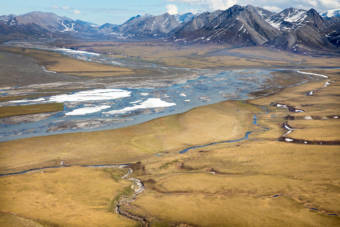
The Canning River in the Arctic National Wildlife Refuge. (Lisa Hupp/USFWS)

The Bureau of Land Management has eliminated close to 475,000 acres of federal land from its upcoming oil and gas lease sale in the coastal plain of the Arctic National Wildlife Refuge.

BLM’s announcement Friday evening shrinks by about 30% the acreage companies can buy drilling rights to.

The agency started accepting bids for the remaining roughly 1.1 million acres on Monday and plans to hold the first-ever lease sale for the coastal plain on Jan. 6.

https://www.facebook.com/BLMAlaska/photos/a.293261867399962/4049600611766050

The 10 tracts removed from the sale are in the southeastern corner of the coastal plain.

BLM says it decided to cut that land from the sale based on comments it got during a 30-day call for nominations period that ended last Thursday, including concerns about caribou, polar bear and bird habitat.
According to the U.S. Geological Survey, the removed land does not have a high potential for oil.

“Most of the tracts removed from the sale are gas prone and have negligible oil potential,” David Houseknecht, USGS senior research geologist, said in an email.

Those opposed to the lease sale have launched criticism at the government’s timeline.

More than a dozen groups, including the Gwich’in Steering Committee, are trying to block the sale and the government’s approval of any seismic work in the coastal plain. They’ve filed motions for a preliminary injunction, and a federal judge says she’ll make a ruling on the requests by Jan. 6.

The groups argue that the government’s plan to open the coastal plain to drilling is rushed and flawed. They say development in the area will cause irreparable harm to wildlife, the tundra and the climate.

But those who support the sale argue it’s good for the economy, jobs and will create more revenue for the state and federal government.

BLM says it’s accepting sealed bids for the oil and gas leases until Dec. 31. The government plans to open those bids on Jan. 6 and will stream the event online.

President-elect Joe Biden will take office two weeks later, and says he opposes drilling in the refuge.

Nearly 8,000 gallons of ‘slop oil’ spilled at onshore Hilcorp facility near Cook Inlet

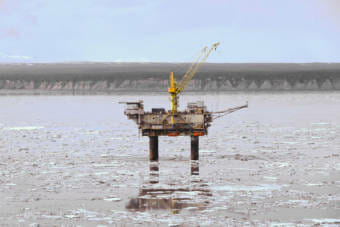
Hilcorp’s Anna Platform in Upper Cook Inlet. The state says nearly 8,000 gallons of oil leaked out of an underground line at Hilcorp’s onshore Trading Bay facility near Cook Inlet. (Photo courtesy Cook Inletkeeper)

Oil and gas company Hilcorp is cleaning up an oil spill on the western side of the Cook Inlet, about 20 miles northwest of Kenai.

That’s according to a report Wednesday from the Alaska Department of Environmental Conservation. The state says nearly 8,000 gallons of “slop oil” leaked out of an underground line at Hilcorp’s onshore Trading Bay production facility.
The slop oil is about 80% crude and 20% water. It’s considered waste and can’t be sold down the pipeline, said the state’s report.

The oil mix pooled in the soil and on top of it but did not go into the Cook Inlet waters, according to Crystal Smith, central region manager for the environmental conservation department.

An operator first noticed the leak Tuesday afternoon.

In a statement Wednesday, Hilcorp spokesman Luke Miller said the underground line was “immediately isolated” and the spilled oil remained within a tank containment wall.

Nine Hilcorp employees on site recovered about 630 gallons of the spilled oil Tuesday, according to the state’s report. More workers were headed to the area to help with cleanup. Also, Hilcorp said, environmental specialists were traveling to the scene.

The state says it has received no reports of impacts to wildlife so far.

The cause of the leak remains under investigation.

Gwich’in, conservation groups ask court to block ANWR oil leasing

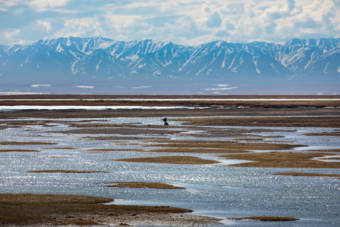
Research biologists pause among the wetlands of the coastal plain, with the Brooks Range in the background. (Lisa Hupp/USFWS)

The Gwich’in Steering Committee, village councils and more than a dozen conservation groups on Tuesday asked a federal judge in Alaska to step in and block the upcoming sale of oil drilling rights in the coastal plain of the Arctic National Wildlife Refuge.

Their motions for a preliminary injunction come in three ongoing lawsuits that challenge the Trump administration’s controversial oil leasing program for the refuge.

“We will not stand idly by while the Trump administration auctions off the wildest place left in America at bargain basement prices,” said a statement from Adam Kolton, executive director at Alaska Wilderness League.

The Trump administration has scheduled the first-ever lease sale in the refuge’s coastal plain for Jan. 6, and it’s moving toward allowing seismic work in the area this winter.

But the groups behind the recent court filings are asking a judge to prevent the administration from doing both until the ongoing lawsuits are resolved.

The legal standard for getting an injunction is higher than it is for winning a normal legal case.

Brook Brisson, a senior staff attorney at the Anchorage law firm Trustees for Alaska which represents the Gwich’in and several conservation groups, said she believes they can prove there will be irreparable harm unless an injunction is issued.

“Exploration, drilling, gravel mining, road building, building pipelines. Those are all very clearly incredibly harmful to the coastal plain and its resources,” she said.

The Bureau of Land Management, which is conducting the lease sale, counters that it’s following the law and has made science-based decisions to determine where and under what conditions oil development can occur.

The groups opposed to the sale are asking the court to decide whether to grant the requested injunction by Jan. 6.

If the court does decide to step in, it could push a decision on the lease sale into the next administration. President-elect Joe Biden takes office Jan. 20 and opposes oil development in the refuge.

This story has been updated with information on a third motion for a preliminary injunction filed Tuesday on behalf of the Native Village of Venetie Tribal Government, Arctic Village Council and the Venetie Village Council.

Dunleavy wants Alaska to cut ties with banks that won’t fund Arctic oil projects

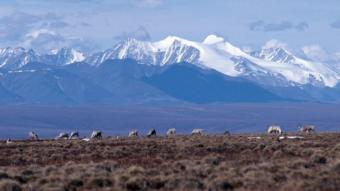
Caribou graze on the coastal plain of the Arctic National Wildlife Refuge, with the Brooks Range as a backdrop in October 2010. (Public domain photo by U.S. Fish and Wildlife Service)

Gov. Mike Dunleavy wants the state government to sever its ties with financial institutions that won’t finance oil and gas development in the Arctic.

Dunleavy announced in a news release Monday that his administration will introduce a bill during the upcoming legislative session that would require state departments and agencies to end any existing relationships with the businesses.

The proposed move by Dunleavy follows a string of announcements from major banks and lenders that say they won’t invest in oil and gas projects in the Arctic. Those companies include Wells FargoBank of AmericaGoldman Sachs and JPMorgan Chase.

Environmental groups trying to block drilling in the Arctic National Wildlife Refuge have lobbied the banks to rule out investing in Arctic oil development.

Monday’s news release from the governor’s office said the proposed legislation would “protect Alaska’s economy.”

“It makes no sense for Alaska to allow financial institutions to benefit handsomely from Alaska’s financial activities on one hand, while working against our interests on the other,” Dunleavy said.

The exact impact Dunleavy’s proposal would have on state agencies wasn’t immediately clear.

Jeff Turner, the governor’s spokesman, said the scope of the change would be included in the draft legislation, and he said that document was not yet available Monday. He also said he did not have a list Monday of the financial institutions that the proposal would bar state agencies from using.

Alaska Wilderness League, a vocal opponent of drilling in the Arctic, swiftly criticized Dunleavy’s plans to introduce the bill, saying the governor is missing the broader point that “speculative, high cost projects in places like Alaska’s Arctic are no longer attractive to investors, especially with the realities of climate change and as more lucrative opportunities in renewable energy or unconventional oil plays down south exist.”

The federal government plans to hold its first-ever oil and gas lease sale in the Arctic refuge’s coastal plain on Jan. 6.

Site notifications
Update notification options
Subscribe to notifications