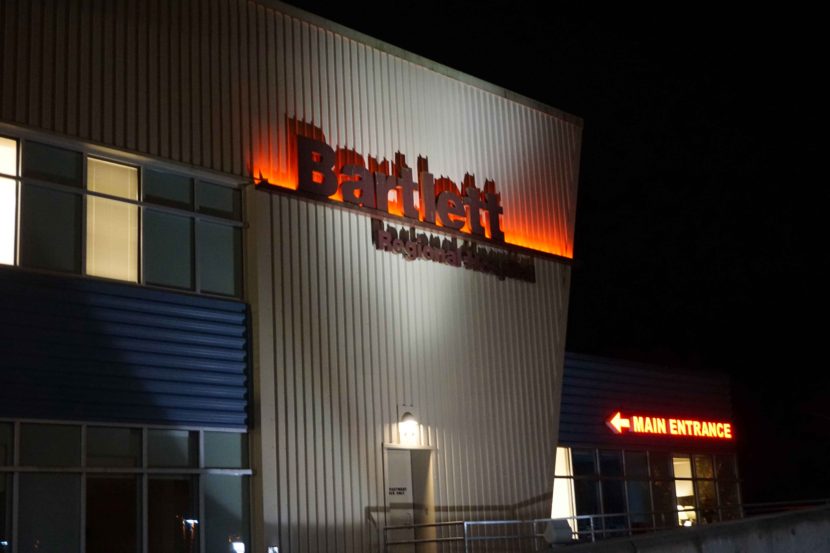
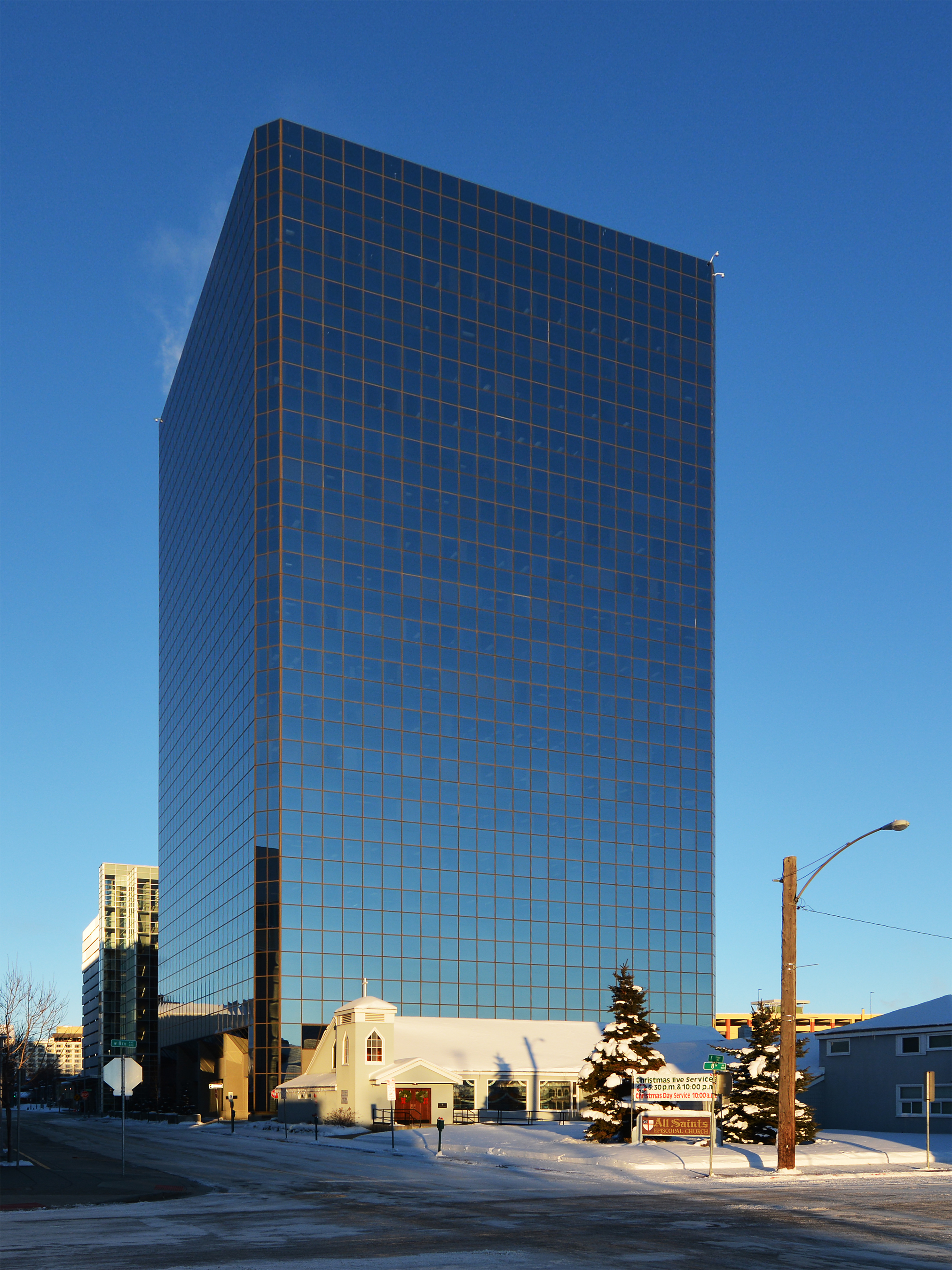
Bartlett Regional Hospital in 2015. (Photo by Jennifer Canfield/KTOO)
Bartlett Regional Hospital officials in Juneau say they’ve expanded their capability to treat incoming patients infected by coronavirus.
But their total capacity is likely to be a tiny fraction of Juneau’s population.
Chief Nursing Officer Rose Lawhorne said they are “doing everything in their power to take care and support their community members.”
Bartlett would likely not take in all of Juneau’s COVID-19 patients — only those who are seriously ill or those who have serious or underlying health issues. The rest could remain in isolation at home.
To treat those seriously-ill patients, Bartlett officials say they have 10 medical ventilators in stock and access to three more. Ventilators, which are in short supply around the country, provide air to patients and help them breathe.
Lawhorne said another 14 machines could be used like ventilators and — in a pinch — they have eight more machines that can be used to provide oxygen to patients.
To keep contagious people away from other patients at the hospital, Bartlett has five isolation rooms which can filter out and remove airborne viruses. Lawhorne said they’ve already turned an entire wing of the hospital into a temporary isolation ward.
In addition to Bartlett’s facilities, Lawhorne said the City and Borough of Juneau also has access to a portable emergency hospital. It can isolate 16 patients and supply oxygen to another 44.
The number of known COVID-19 cases in Alaska jumped to 59 on Wednesday, up 17 from the announcement a day earlier, as the outbreak continues.
Two of the people who tested positive for the disease were hospitalized and in critical condition, Alaska Chief Medical Officer Dr. Anne Zink said at a news conference Wednesday evening. She later announced there was also a third person in the hospital in Alaska with COVID-19, the disease caused by the coronavirus.
Of the new cases, 11 are from Anchorage, one is from Fairbanks, three are from Ketchikan and one is from North Pole, Zink said. Another is from Homer — that person became ill after traveling out of state, tested positive in Anchorage and has not left the city, said the Alaska Department of Health and Social Services.
“As we’ve been seeing every day, the cases continue to climb,” Zink said. “Again, we didn’t know this disease existed a few months ago, and what we’re seeing is that it is very contagious.”
She said the virus is in an “acceleration phase,” with a huge increase in cases across the United States. Alaska is a little bit behind the rest of the country, Zink said, “so we’re not quite at that acceleration curve, but I am highly concerned that we’re headed that direction.”
The total count includes 25 confirmed cases in Anchorage, including on Joint Base Elmendorf-Richardson, three in the Chugiak-Eagle River area and two in Palmer. There’s also 11 cases in Ketchikan, eight in Fairbanks and two in Juneau.
Of the 59 cases, 24 are believed to be related to out-of-state travel, six are not related to travel and 16 had been in close contact with someone who also had the disease. The rest remain under investigation, according to the health department.
More than 1,800 COVID-19 tests had been completed for Alaskans by Tuesday.
The number of known COVID-19 cases in Alaska has continued to grow each day since the first case was announced in Anchorage on March 12. Dunleavy also announced Tuesday that a resident of Southeast Alaska had died of COVID-19 in Washington state on March 16. They were the first Alaskan who’s known to have died of the disease.
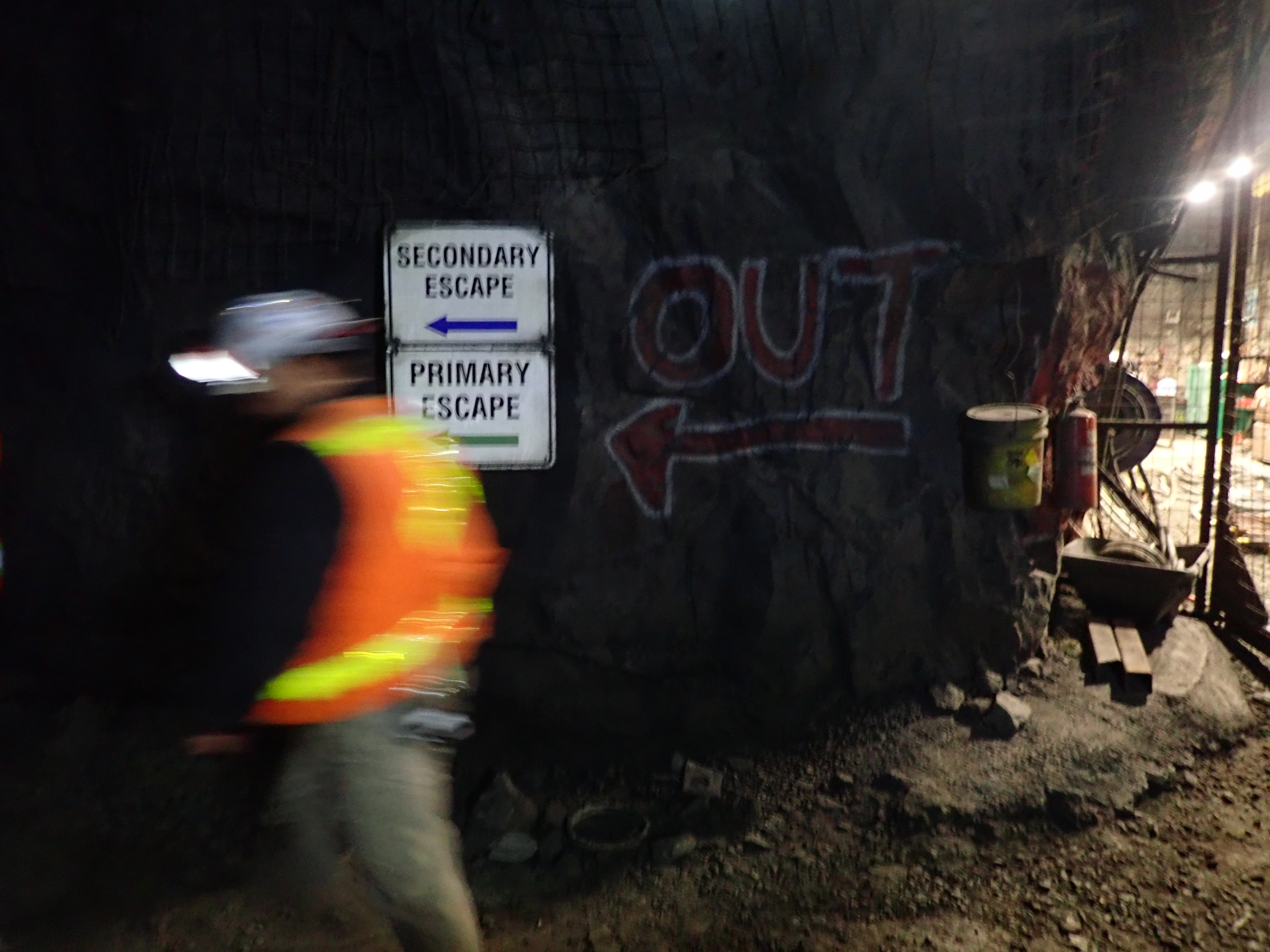
A manager walks past Kensington Gold Mine’s Elmira deposit on Oct. 15, 2019. It’s one of the areas Coeur Alaska is currently exploring. (Photo by Jacob Resneck/CoastAlaska)
Employees and contract workers at Kensington Mine will now be required to spend 14 days in quarantine in a Juneau hotel. That’s if they arrive from outside Alaska or a coronavirus-infected community.
Coeur Alaska announced the new measures — effective immediately — on Wednesday afternoon for the Juneau-area gold mine.
The move follows a similar protocol by Hecla Greens Creek Mine on Admiralty Island. The workforce at both remote mine sites includes out-of-state workers who transit through Juneau’s airport.
Both companies say they are quarantining their workforce in local hotels and moving to 28-day shifts to reduce the frequency of travel.
“Coeur Alaska is working with a hotel and restaurants in Juneau to provide lodging and food for our out of state employees and contractors,” Coeur Alaska spokesperson Jan Trigg wrote in a statement. “Hopefully this will help to offset some of the economic losses these businesses are experiencing due to the COVID-19 situation.”
Employees that live in Juneau that have traveled Outside will be expected to observe the quarantine in their own homes, she added.
Alaska Gov. Mike Dunleavy has exempted a number of industries — including miners — from a statewide quarantine for people arriving from out of state. But employers in industries considered critical must file plans on how they will prevent the spread of coronavirus in Alaska.
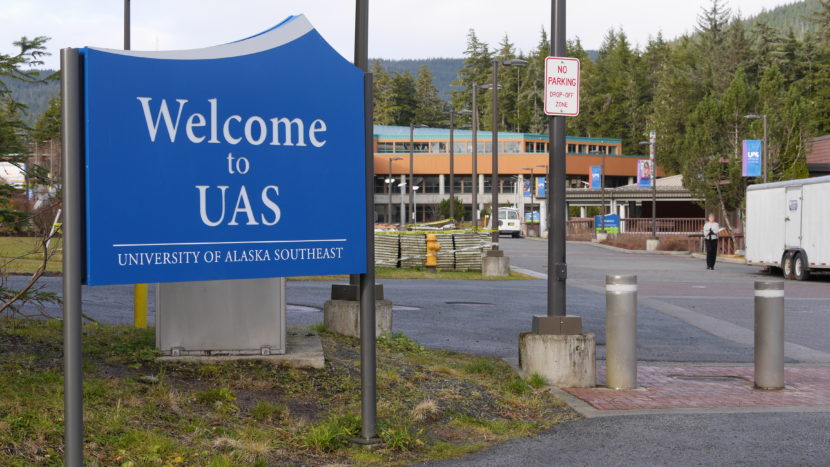
Students returned to classes at the University of Alaska Southeast this week. (Photo by Quinton Chandler/KTOO)
Classes resumed this week at the University of Alaska Southeast after an extended spring break.
Most students are studying remotely, but Lori Klein, vice chancellor of enrollment management and student affairs, said that a handful of classes with 10 students or less are meeting in person with the expressed consent of both faculty and students. Students in those classes who want to study from home have that option.
Klein said campus dorms have also been evacuated except for students who do not have a safe place to return to. Out of about 150 students living on campus, only about 30 are still living on campus within social distancing guidelines.
Most faculty and staff are also working from home except for essential personnel. That includes safety, housing, facilities and dining staff.
“It’s just very quiet around here,” said Klein. “In many cases, (we are) seeing an increase of volume in how we’re serving students compared to past years because some students are making an adjustment to a new normal that they need a lot of support for.”
Klein said the staff is encouraging students to reach out by phone or online for advising, tech support or counseling.
The health clinic is also open for students — but only for phone or video appointments.
For more, see the UAS coronavirus response page and the student services dashboard.
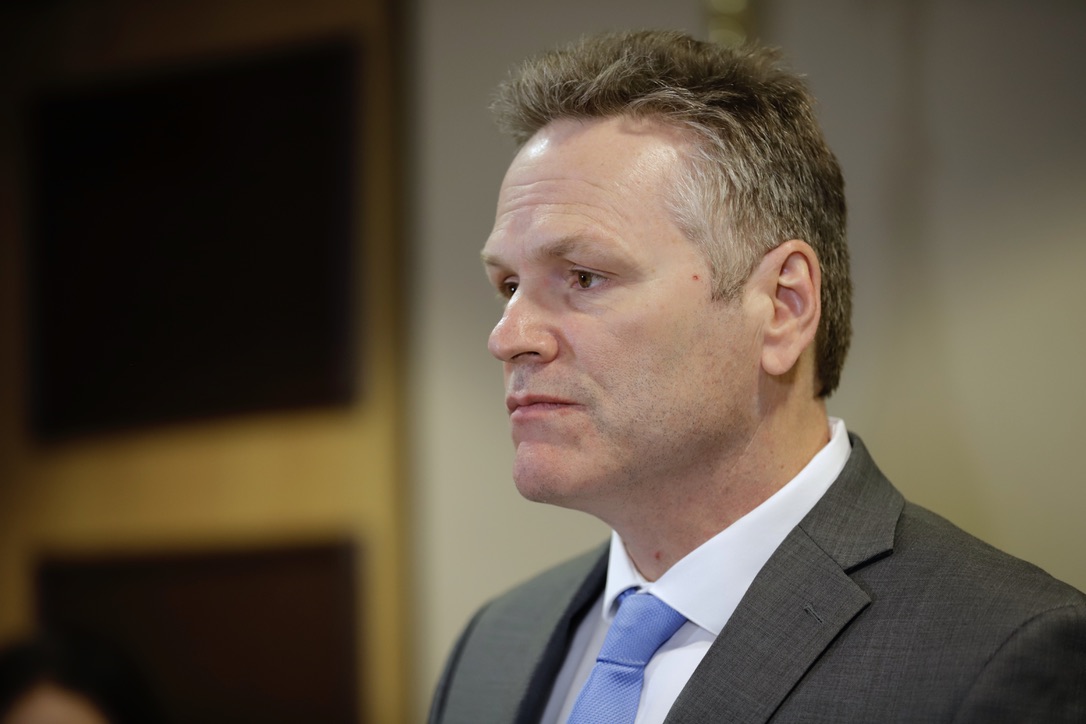
Alaska Gov. Mike Dunleavy at a March 9, 2020, briefing on the coronavirus. (Photo by Joey Mendolia/Alaska Public Media)
Gov. Mike Dunleavy has closed certain businesses and is urging Alaskans to stay home to avoid spreading the coronavirus. But some state employees still have to report to their offices, and outrage is percolating.
Dunleavy said some jobs, like policing, firefighting and essential office jobs, can’t be done from home.
“If we could send everybody home in state and municipal government, and we thought that our governments could function — our society could function, our civilization could function — if we did that, we’d certainly do that,” Dunleavy said Monday. “But we know it can’t.”
That characterization of who still has to report for work has annoyed and infuriated state workers and their friends. They say state workers are forced to violate orders the governor and other political leaders are imposing on other Alaskans to keep Alaskans safe: Avoid gatherings of 10 or more. Stay six feet from anyone not in your family. Stay home.
And, they say, making them report to the office now is not just risky, but, in some cases, pointless.
“If you go in and you really look at the employees working and what they’re doing, the ones that I’m aware of, are not troopers and police officers. They’re not what the governor is representing,” said attorney Cynthia Franklin.
Former Alcoholic Beverage Control Office Director Cynthia Franklin meets with her board members at Centennial Hall in Juneau in February 2015. (Photo by Kevin Reagan/KTOO)
Franklin, who directed the Alcohol and Marijuana Control Office during part of former Gov. Bill Walker’s administration, has friends in two state office buildings: the Brady Building and the Atwood Building, both in downtown Anchorage. She said the state workers she knows, including staffers in the civil division of the Department of Law, worry about their exposure.
“The governor talks out of one side of his mouth for everyone else in the state and then for his own employees,” she said. “He allows decisions to be made that are inconsistent with one another, and inconsistent with the state workers’ safety and health.”
She said she’s particularly concerned for the office assistants, whose desks tend to be closer together and who are often not in a position to object.
“What essentially happens is the support staff, the lowest-paid employees who can least afford to lose their jobs, are asked to work in the tightest physical environments,” she said.
Dunleavy said employees are working at home if they can.
“They’re having a conversation with their supervisors, and for those folks that can work at home, that’s happening,” he said Tuesday evening.
He was more definitive when it came to the general public, urging that all Alaskans keep their distance.
“You’ve got to stay away from others,” he pleaded. “Two weeks is what we’re asking. We believe that in this two-week period we can do so much to combat this virus.”
But several state employees have contacted Alaska Public Media to say their safety does not seem to be a top priority, and they’re afraid of losing their jobs if they speak up publicly.
One said she is part of a support staff for a program that has all but stopped, but she and her coworkers were required to show up anyway.
Another said his office is open to the public, with two bottles of expired hand sanitizer for visitors and none for staff. He shared a message from a supervisor warning employees not to appeal to the commissioner. He also said his colleagues are sent on tasks that may increase everyone’s exposure, like waiting in line at the post office and then distributing mail from office to office.
The Alaska State Employees Association is filing a restraining order, asking a judge to force the state to allow more teleworking, stagger shifts, reconfigure workspaces and provide safety equipment. The union represents 8,000 state employees, including office workers, probation officers and nurses at state institutions.
“I can’t count the number of emails that I’ve gotten from people that are concerned that they either can’t get approval to telework, or they’re not sure their workplace is safe,” said ASEA Executive Director Jake Metcalfe. “And they’re stressed out, and their anxiety level is off the charts about this.”
It’s not clear how many state employees are still required to report to their duty stations. The governor said Monday he didn’t know.
On Tuesday, his spokesperson referred the question to the Department of Administration, which has not responded.
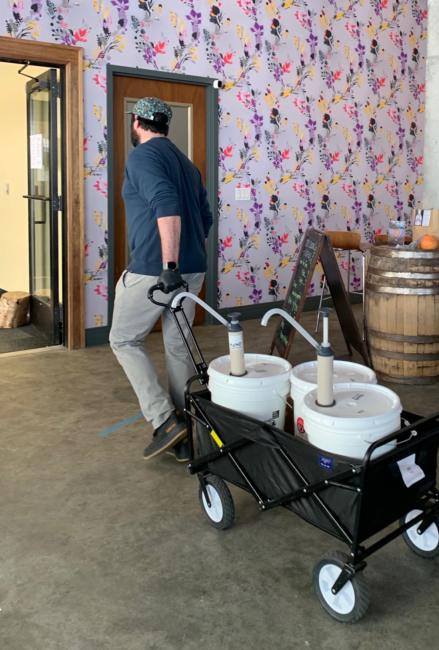
Brandon Howard transports buckets of hand sanitizer for delivery. (Photo courtesy of Amalga Distillery)
With COVID-19 concerns, hand sanitizer has been flying off the shelves in grocery stores across the U.S and in Alaska. Nationally, it’s spurred a kind of movement.
Breweries and distilleries have been quick to respond — creating their own sanitizer out of a byproduct of their booze making process.
Now, one Juneau distillery has gone from serving cocktails to serving its community in a different way.
Brandon Howard makes gin and whiskey at Amalga Distillery. The alcohol is infused with wild botanicals from the rainforest: Labrador tea and juniper berries.
Howard remembers not too long ago people were lining up outside for a special release of rhubarb gin.
“The line started a couple of hours before we even opened, and it wrapped around the block,” Howard said. “And there were hundreds of people, and I can tell you that right now, hand sanitizer is a lot hotter of an item than rhubarb gin.”
It’s also hard to find small pump bottles for the hand sanitizer. So Howard is putting some of it in cans he normally uses for pre-made gin cocktails.
“We’ve been calling it hand canitizer,” Howard said. “Kind of a horrible pun.”
Just a few weeks ago, this scenario would have seemed unthinkable. But the COVID-19 virus is changing the definition of what normal looks like in Alaska and across the world.
Amalga’s hand sanitizer is made from a waste product that comes from distilling gin, a cloudy substance that’s super high in alcohol content — not something you’d want to splash into a drink.
Howard said for distilleries, sanitizing with ethanol isn’t that strange. It’s something they’ve been using to clean surfaces in their business all along.
“I can say with great certainty that the moment there was a rush on hand sanitizer, the moment it became a material that people in need weren’t having access to, distillers knew they had the raw materials to make this product,” Howard said.
But Howard said Amalga Distillery didn’t have everything they needed to make the 70% alcohol-by-volume hand sanitizer, similar to a recipe recommended by the Centers for Disease Control and Prevention.
You need a gel-like substance so it actually sticks to the hands. DIY hand sanitizer recipes are making aloe and glycerin harder to find in bulk. So Howard reached out to another Juneau business, Barnacle Foods, for xanthan gum, which they use to thicken their hot sauce.
Washing your hands with warm, soapy water for at least 20 seconds is still the most effective way to kill the virus. However, using hand sanitizer is a recommended alternative in a pinch.
In the last few weeks, Howard has produced 30 gallons of hand sanitizer, but he said it’s not something he’s looking to sell.
“It wouldn’t be a good example to capitalize on the situation,” Howard said. “It’s not the time for it.”
Instead, Amalga Distillery is focusing their efforts on donating its hand sanitizer. The Southeast Alaska Food Bank was one of the recent recipients.
“What’s nice is he gave us not only the cans, but he also gave us a five-gallon jug with a pump on it,” said Chris Schapp, the manager of the food bank.
Schapp said food donations have dropped significantly with the COVID-19 scare. The organization still has plenty of hand sanitizer. But he said it’s nice to have an extra supply in times of uncertainty.
The food bank is sharing it with its partners in need, like a local domestic violence shelter.
“A couple of our agencies have already come out and refilled their empty bottles with that,” Schapp said.
Amalga Distillery would like to eventually distribute the hand sanitizer to individuals in Juneau.
But it’s complicated. Gatherings of 10 or more are canceled nationally, per guidelines set by the CDC. Howard doesn’t want a repeat of people crowding, like with the rhubarb gin. He said he wants his community to be safe.
He’s still working out how to offer the hand sanitizer responsibly and equitably.
“We’re creative. We’ve gotten through a lot,” Howard said. “We’ve solved a lot of problems. It’s one that we’ll figure out.”
At this point, being flexible is pretty much encoded onto the business’s DNA. Around the time Amalga Distillery first opened, it faced regulatory hurdles from the state’s alcohol control board.
However, the COVID-19 virus presents a new set of challenges.