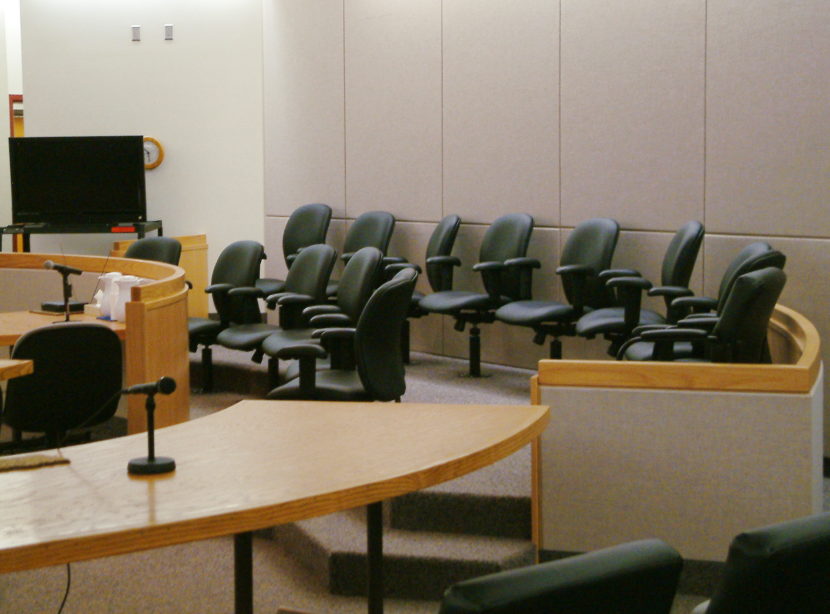
View of the jury box in one of the courtrooms in the Dimond Courthouse in Juneau. (Photo by Matt Miller/KTOO)
There will be no new jury trials in Alaska courtrooms through at least April 3.
Alaska Supreme Court Chief Justice Joel Bolger issued an order March 19 suspending trials and most grand juries to stem the spread of coronavirus.
Bolger’s order also temporarily suspends the rule requiring a speedy trial for defendants.
Low-priority court proceedings, such as small claims cases and minor offense trials, will be postponed.
But courthouses will still be open and operating for high-priority matters like sentencing hearings, child-in-need-of-aid (CINA) cases, domestic violence and mental health hearings, and even quarantine and isolation proceedings.
Visitors are being asked not to enter a courthouse if they are sick, returned from out-of-state in the last 14 days, or have been in contact with someone who has just returned.
Neil Nesheim, court administrator for Southeast Alaska, said everyone is being encouraged to participate in court hearings without physically appearing in courtrooms.
“I think it’s new territory for everybody,” Nesheim said. “I think we’re still kind of learning as we go along, and I think what we’re really doing is we’re definitely practicing social distancing, which is what everybody is encouraged to do. And it’s forced us to take a new look at how we do business, especially from the telephonic standpoint.”
Nesheim is working from home. He’s following court system guidelines in the middle of a 14-day self-quarantine because his in-laws recently came up for a visit.
“We do that as a precautionary measure, of course, because you just don’t know, with people who’ve traveled or family members who’ve traveled, just what their exposure levels (have) been,” Nesheim said.
Nesheim said six court employees in Southeast Alaska are self-quarantined and there are about three-dozen statewide.
He said a number of additional employees are working from home because they have no child care options while schools are closed.
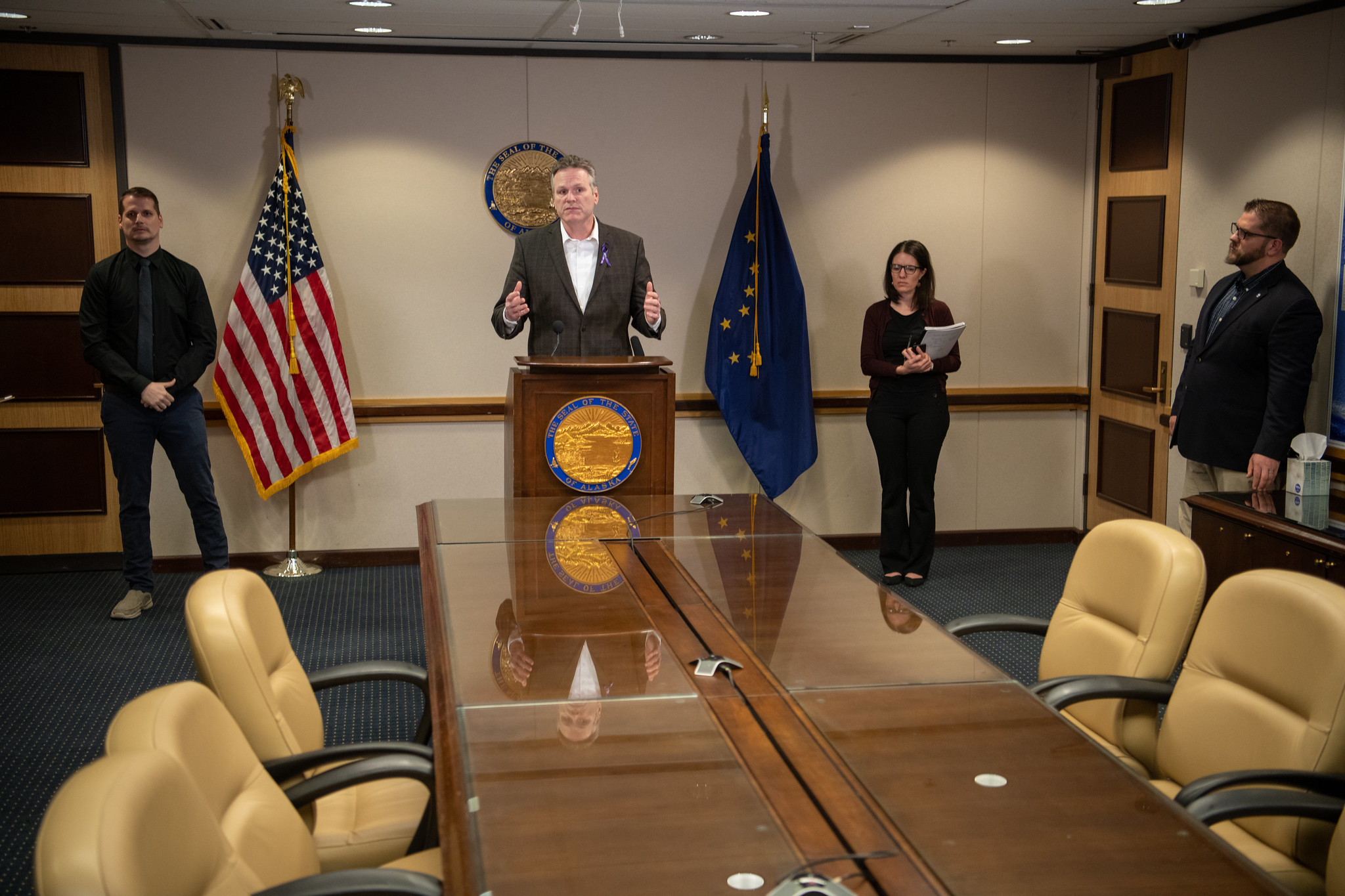
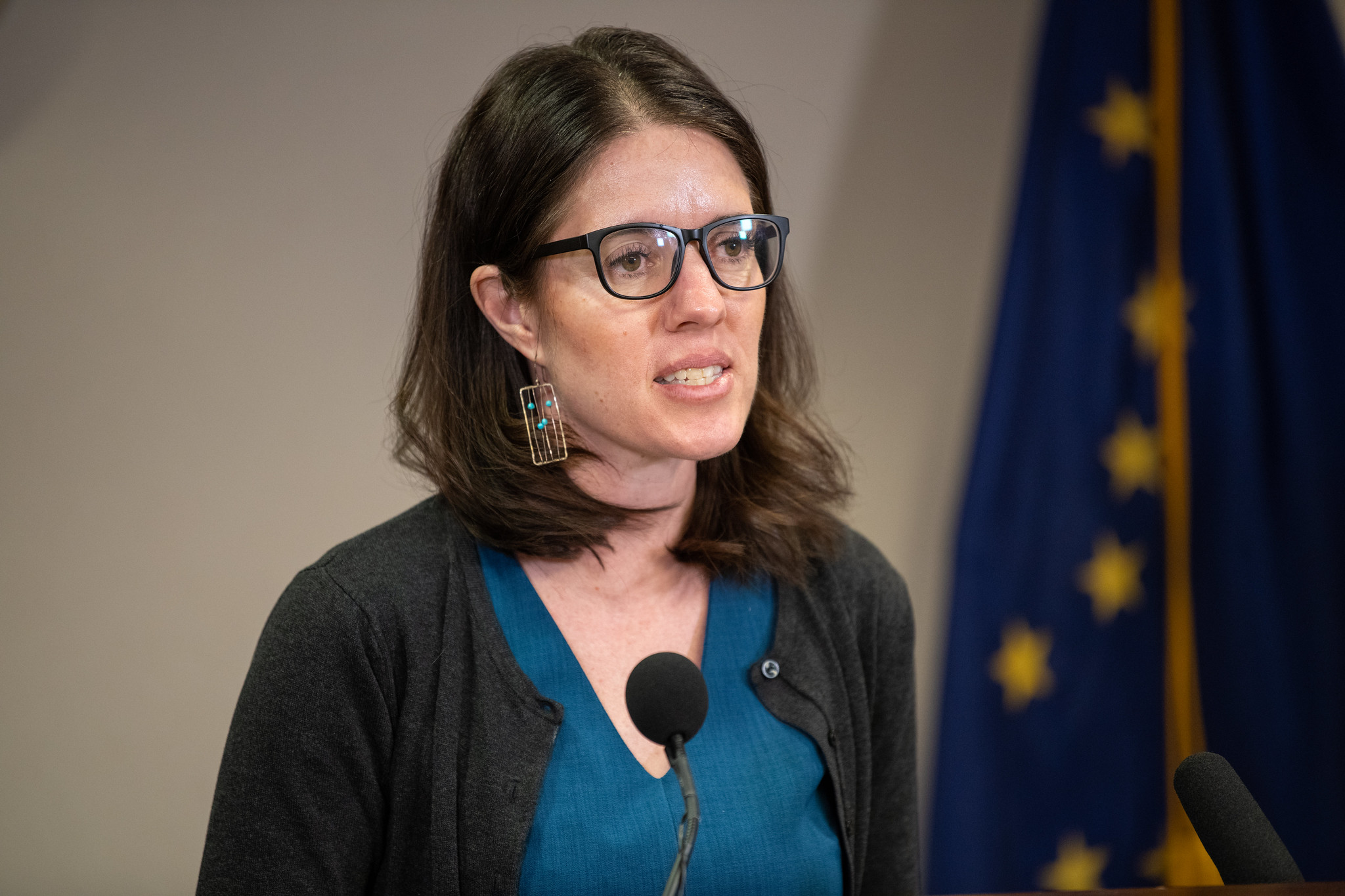
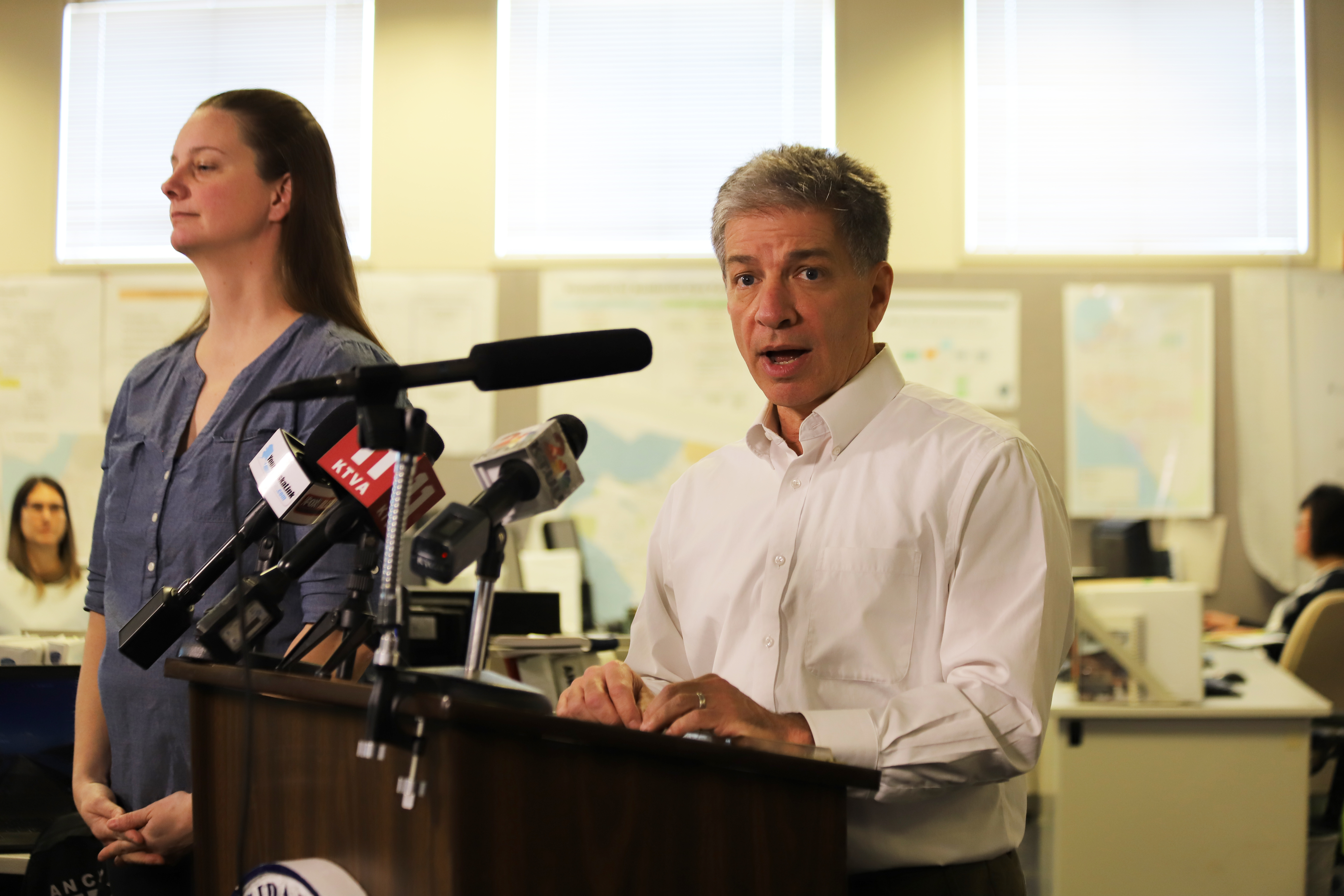
Alaska Gov. Mike Dunleavy speaks during a news briefing about the coronavirus on Tuesday. Joining him were Health and Social Services Commissioner Adam Crum, right, and Chief Medical Officer Dr. Anne Zink, middle right. (Creative Commons photo by Office of Gov. Mike Dunleavy)
Watch an archived version of this press conference on the governor’s Facebook or Livestream pages.
Gov. Mike Dunleavy on Tuesday confirmed the state’s first coronavirus-related death.
The person who died acquired the disease out of state and died in Washington state, but is an Alaska resident, Alaska Chief Medical Officer Dr. Anne Zink said.
In a later press release, state officials said the person was from Southeast Alaska and died on March 16 in a health care facility in King County, Washington.
Dunleavy announced the death at a news conference Tuesday evening. He underscored that Alaskans must stay away from each other to slow the spread of the virus.
“You’ve got to stay away from others,” he said. “Two weeks is what we’re asking. We believe that in this two-week period, we can do so much to combat this virus. We want to do it with your help.”
By Tuesday evening, there were 43 known cases in the state, up from 36 a day before. More than 1,600 Alaskans have now been tested.
Zink appealed to Alaskans to maintain their social distance and to not consider themselves exceptions. Now is the time to make a difference, she said.
Zink said “this is our chance to act,” or Alaska will become overwhelmed by the virus.
“Please, just for two weeks: Stop what you’re doing. Stay away from each other,” she said.
In addition to the person who has died, another Alaskan with COVID-19 was in the critical care unit on Tuesday at a hospital in Juneau.
Zink also said two more people in Fairbanks and one person in Sterling tested positive for the virus. Another positive test for a person in Ketchikan was identified later in the evening.
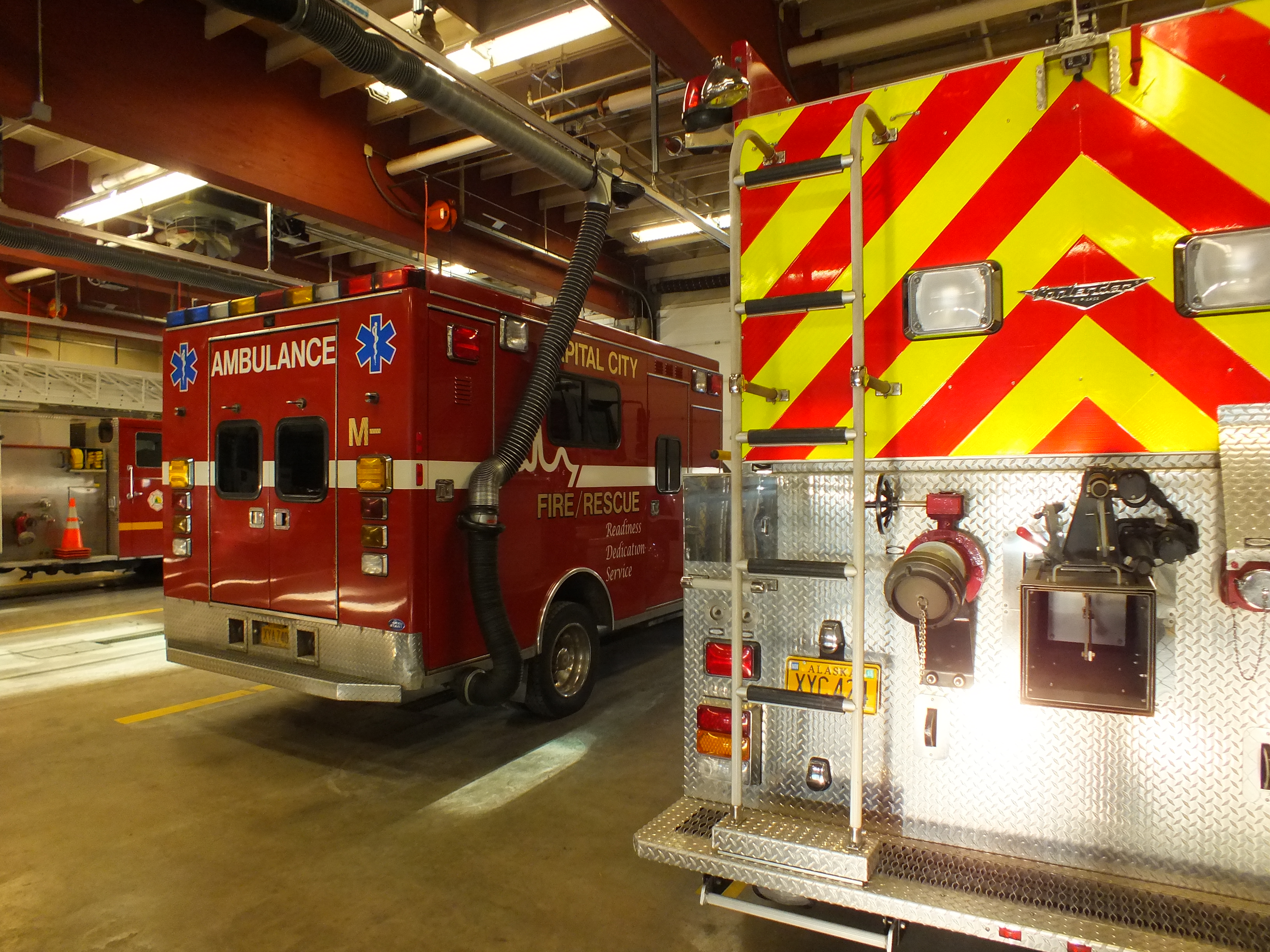
An ambulance and fire truck inside the downtown Juneau fire station. (Photo by Matt Miller/KTOO)
Ambulance crews in Juneau are going to be taking fewer people to the hospital. The change in practice is aimed at freeing up hospital resources for higher-risk patients.
“In the past, pretty much everybody that calls 911 and wants to go to the hospital gets transported,” said Capital City Fire/Rescue Chief Rich Etheridge. “Right now, what they’re doing is it’s giving them the authority to not transport someone if it’s going to be a wasted trip for the patient because there is nothing that the hospital is going to be able to do for them. … You know, we’re not taking somebody with a broken finger to go see a cardiologist.”
That doesn’t mean 911 callers seeking medical attention will be on their own. Ambulance crews will still respond to calls in person. They will screen for COVID-19 cases, which may lead to testing referrals and home quarantine recommendations. And they’ll treat lower priority issues on scene.
“They can give them the guidance on what they can do … how to self-care, and maybe help make, you know, follow-up appointments with someone,” Etheridge said.
Etheridge said a team that goes by CARES, short for Community Assistance Response and Emergency Services, is also getting readied for follow-up care. That team may be better known for working with other service providers to run a sleep-off center for people who are indigent and intoxicated.
“A lot of people are using the emergency room for their primary care health,” Etheridge said. “And, you know, that’s not necessarily an appropriate use of the emergency room. So this will help kind of … ferret some of those out, get them more steered towards … a family physician or urgent care or something like that.”
If you need nonemergency medical care, authorities say to call your doctor first.
The Alaska Legislature has been working on a few bills in response to the coronavirus disease. (Photo by Skip Gray/KTOO)
The Alaska Legislature has been working on a few bills in response to the coronavirus disease.
Both chambers passed a bill, House Bill 308, that would ease access to unemployment insurance benefits for those affected by the pandemic. The measure would eliminate the one-week waiting period for benefits. And it would raise the benefit per dependent, from $25 to $75 per week.
Anchorage Democratic Rep. Ivy Spohnholz said Alaskans who’ve lost their jobs need the bill.
“They’re fearful about how they’re going to pay their rent, (how) they’re going to put food on the table for their children,” she said. “And this bill will go a long way to ensuring that working Alaskans who aren’t able to work are able to get some necessary support at this time.”
All legislators present in both chambers voted for the bill.
Another bill, Senate Bill 241, would extend Gov. Mike Dunleavy’s disaster emergency declaration for the state until Sept. 1 — allowing Dunleavy to proclaim the emergency has ended if Health and Social Services Commissioner Adam Crum finds the virus outbreak or imminent threat of an outbreak no longer exists.
That bill also would provide funding to cover costs from the emergency.
And it would allow Lt. Gov. Kevin Meyer to hold the primary or statewide special elections by mail.
The Senate passed the bill on Tuesday, sending it to the House.
Another measure, House Bill 309, would allow Dunleavy’s appointments to continue to serve, until the Legislature holds a joint session to vote on their confirmations.
Normally, lawmakers must meet during the legislative session to confirm appointments, and any appointee who isn’t confirmed must stop serving. But it doesn’t appear that the Legislature will hold a joint session before leaving Juneau.
The House passed the bill on Tuesday and sent it over to the Senate.
Dunleavy has proposed an economic stabilization plan that the Legislature hasn’t considered. It’s not clear if the Legislature will consider a separate bill that would fund COVID-19 economic relief.
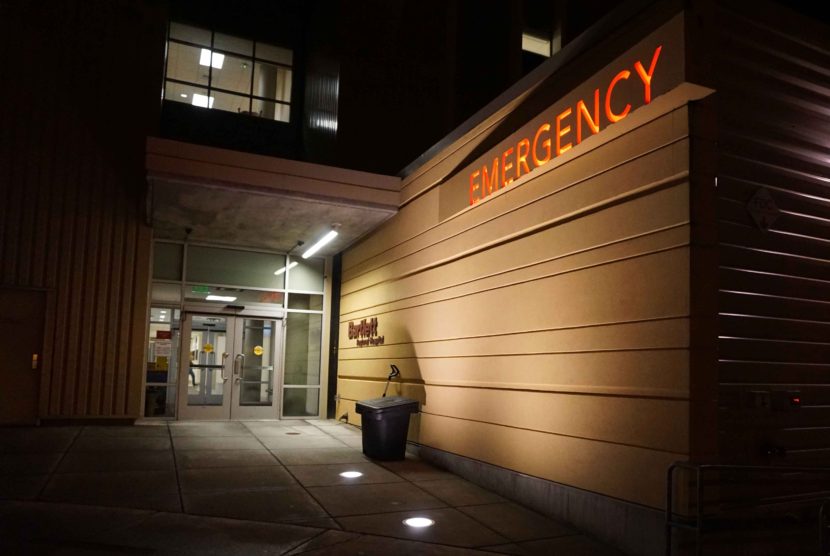
Emergency room entrance at Bartlett Regional Hospital. (Photo by Jennifer Canfield/KTOO)
A patient with COVID-19 is currently in critical care at Bartlett Regional Hospital.
This is Juneau’s second confirmed case of the virus. The city announced on Sunday that another person had tested positive for the disease and is recovering at home.
This is the first case of hospitalization related to coronavirus in Alaska. In a press conference on Monday, the Alaska Department of Health and Social Services said all patients with confirmed cases of COVID-19 were recovering at home.
State health officials say both of the people in Juneau who are sick appear to have caught the virus while traveling. According to a release from the City and Borough of Juneau, the second patient recently visited Portland and Washington state.
State and local health officials are working with the latest patient’s family to track down people who may have recently come into contact with the patient.
The city’s emergency manager Abner Hoage says state public health authorities are investigating who the patients have had recent contact with — all are at home in self-isolation.
As of Tuesday evening, 43 people in Alaska have tested positive for the virus.
The first death of an Alaska resident was also announced Tuesday. State officials said that individual contracted the disease out of state and died in Washington state.
This is a breaking news story that will be updated.
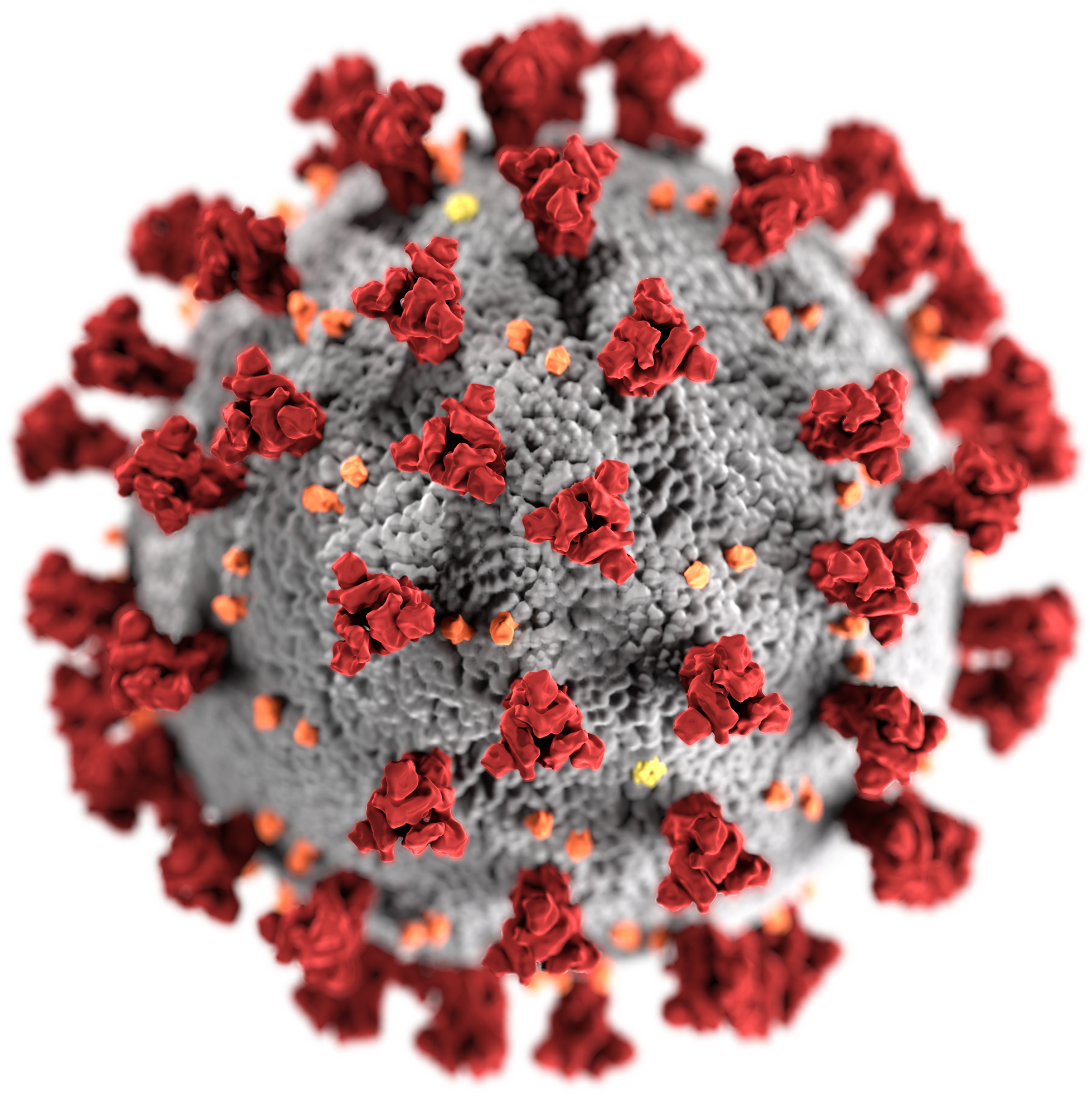
This transmission electron microscope image shows particles of SARS-CoV-2, the coronavirus that causes the disease known as COVID-19. (Image courtesy of National Institute of Allergy and Infectious Diseases Integrated Research Facility)
Alaska still has one of the lowest coronavirus case counts of anywhere in the country, with roughly three dozen. And experts say the disease’s relatively late arrival in the state, combined with its isolation, could give Alaska an advantage over areas that had less time to prepare.
But as the number of new cases ticks upward — eight on Saturday, 10 on Sunday, four more Monday — uncomfortable questions lurk in the background: Will the restrictive measures already adopted stop the virus’ growth from taking off exponentially, and avert a surge of patients that could overwhelm Alaska’s hospitals?
Or, should we do more?
As the coronavirus inflicts huge damage on the state economy, there’s increasing discussion about how far public health mandates should go, and how long they can be sustained. At the same time, doctors and some community leaders are pushing for even more aggressive social distancing measures and limits on travel.
Some Alaskans following the pandemic argue that in general, it’s better to err on the side of caution. And they say that if more restrictions are necessary, it’s best to adopt them soon, to reduce the risk that cases start growing at a rate that can’t be contained.
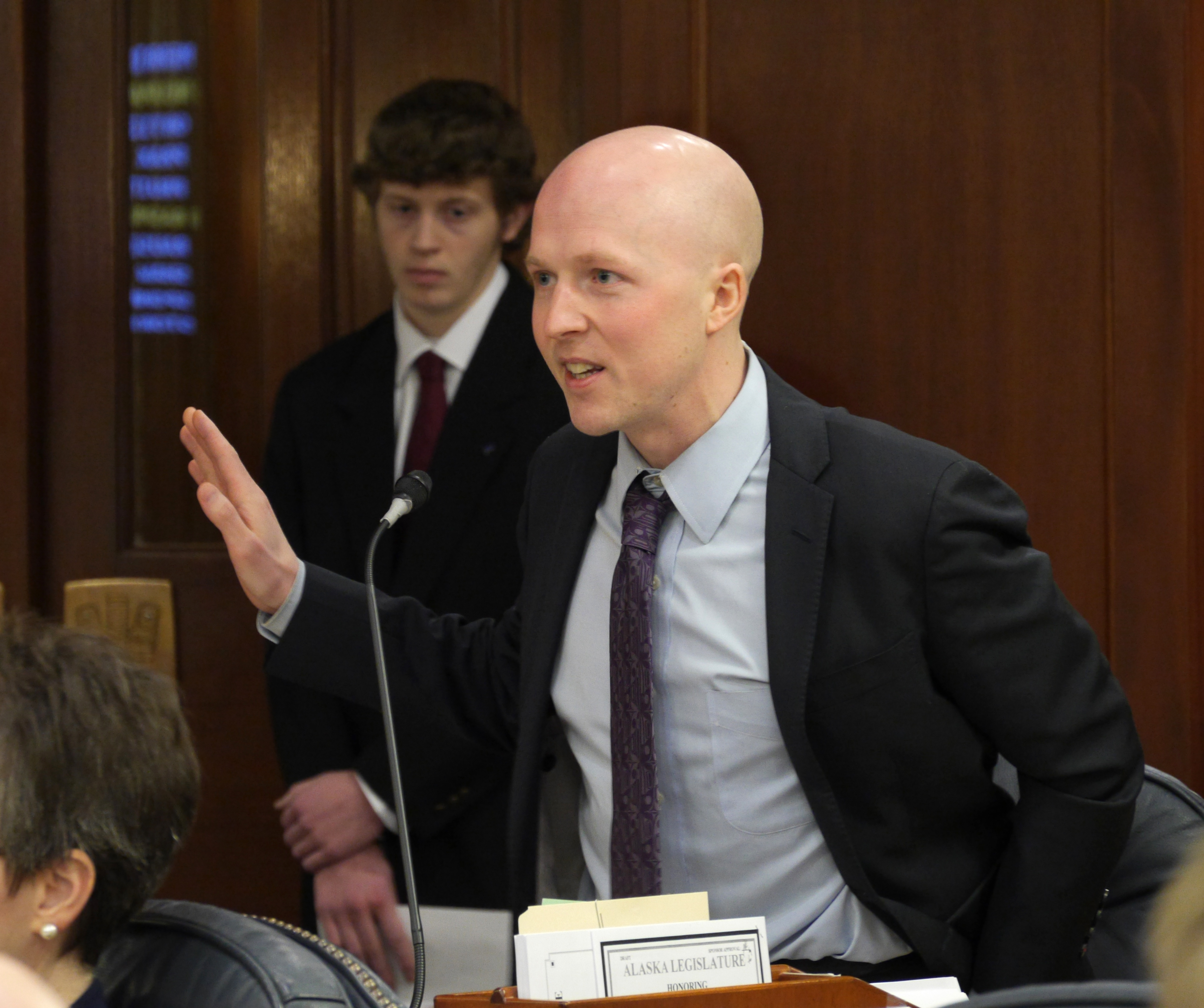
Rep. Jonathan Kreiss-Tomkins, D-Sitka, speaks during a House floor session in the Capitol in Juneau on March 16. (Photo by Skip Gray/KTOO)
“At least in the short term, there’s really only one choice, which is to act aggressively, and to act in the interest of public health. Because if you don’t, or if you dawdle, or if you dither, or if you go halfway, the exponentialism of this thing will just completely overwhelm us,” said Rep. Jonathan Kreiss-Tomkins, a Sitka Democrat who, with engineers and designers, created an online model of the coronavirus’ spread designed to inform policymakers nationwide. “There’s really, morally, one choice we have.”
Experts say it’s probably too soon to judge the effectiveness of some of the initial steps taken to fight the virus, like bans on large gatherings and the closure of in-person food and drink service. That’s because it takes as long as two weeks for people to develop symptoms of COVID-19, the disease caused by the coronavirus.
But doctors, in particular, have been pushing for a ban on nonessential travel in and to Alaska, and for tighter restrictions on social contact. They argue that the longer the state can stave off widespread transmission of COVID-19, the disease caused by the coronavirus, the more time policymakers and providers will have to prepare and learn from the experiences of harder-hit areas.
“We really are moving quickly towards a period where we don’t have an opportunity to limit the spread of this illness. Once it’s endemic in our communities, we do not have that opportunity any more,” Dr. Nathan Peimann, who leads the Alaska chapter of a national emergency room doctors organization, said in an interview last week. “The longer you can wait, the better you can apply those lessons in a way that’s meaningful and helpful to patients.”
At a news conference Monday, Gov. Mike Dunleavy announced a new round of health mandates. Those include a required two-week quarantine for people coming into Alaska, along with closures of hair salons, barbershops and other businesses where social distancing is not possible.
Dunleavy had already closed schools, shut down in-person food and bar service statewide and banned gatherings of more than 10 people. Asked at the news conference whether the response was enough, Dr. Anne Zink, the state’s chief medical officer, said that was the “$1 million question.”
“That’s the real challenge of what we’re trying to figure out. We have a disease that silently spreads with very mild symptoms for a week or more. We have limited ability to test for it,” Zink said. “We are learning as fast and as much as we possibly can.”
Dunleavy’s administration still expects a surge in COVID-19 patients to come at some point, said Adam Crum, the state health commissioner. But its goal remains pushing that surge as far into the future as possible, he said in an interview.
“We want to get to a point that, when our surge does come, it’s something that we can hold within our health-care system,” Crum said.
Crum said Zink has been assessing the effectiveness of the state’s preventative measures through daily conversations with Jay Butler, a former chief medical officer for Alaska who now works as a top official at the U.S. Centers for Disease Control and Prevention.
Alaska officials so far lack a published model of COVID-19’s potential spread around the state that could help guide policymakers’ response, Crum added. But his department is developing one with the help of one of its epidemiologists, Jared Parrish, and data could be released within a couple of days, Crum said.
Dunleavy’s administration has, so far, resisted doctors’ requests that he order residents to shelter in place, though many communities, including Anchorage, have enacted versions of the measure. He’s also resisted instituting a full-blown ban on nonessential travel into and within the state. A spokesman for Dunleavy, Dave Stieren, said travel restrictions are still under consideration as the state’s efforts to fight the spread of the coronavirus evolve daily — though he added that it’s unclear whether the governor actually has the authority to restrict air traffic.
Anchorage Mayor Ethan Berkowitz, who’s imposed his own “hunker down” order inside city limits, said he’s waiting to hear from city attorneys about whether he has the authority to adopt such travel restrictions himself at the state-run Ted Stevens Anchorage International Airport.
Anchorage Mayor Ethan Berkowitz at a COVID-19 news conference on March 12. (Photo by Hannah Lies/Alaska Public Media)
Berkowitz said he’s “incredibly mindful” of the impacts of the COVID-19-related restrictions on workers and the economy. But he said his response is guided by health experts.
“It is unfair,” he said. “But the public health considerations are of paramount concern right now.”
The balance between more aggressive public health measures and the pandemic’s devastating effects on the country’s economy have become the subject of increasing debate at the national level in recent days. And some conservatives, including President Donald Trump, have suggested that public health mandates be relaxed soon.
Dunleavy, at his news conference Monday, said the coronavirus could cause a recession or even a depression, “if we’re not careful.” The economy, he added, won’t function unless people can go to work, and buy products and services.
“I don’t want anyone out there thinking that what I’m saying is the economy is worth more than somebody’s life,” Dunleavy said. But, he added: “It’s going to be an interesting conversation, over the next few weeks, on how we pull ourselves out of this and how we get back to living normal lives.”
One particular challenge for policymakers is that it’s hard to measure the effectiveness of their choices, because the restrictions they put in place are supposed to stop things from happening, said Kevin Berry, a University of Alaska Anchorage economist who’s studied pandemic disease and response.
While Alaskans are painfully aware of the costs of closing schools and businesses, they don’t have a clear understanding of the number of people whose lives might be saved by those steps.
“If things go well, the peanut gallery will have a fine time criticizing everybody as, ‘You overreacted, you did too much,’” Berry said. “But the problem is, if we do less and the truly bad situation occurs, it’s not something anybody really wants to think about.”
He added: “You can write all sorts of criticisms about these policies — which is why this is definitely a moment that calls for political courage.”