Alaska coronavirus news

Live updates and information on COVID-19 in Juneau and Alaska
Alaskans are ‘panic-buying’ at local stores. Here’s why that’s not necessary.

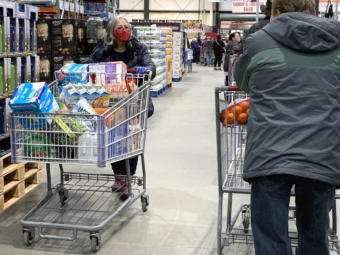
Hundreds of people stood in line to checkout in Costco on Tuesday in Juneau. (Photo by Rashah McChesney/KTOO)

A lot of people have been posting photos of bare store shelves across Alaska. Toilet paper, rice and beans, hand sanitizer and baby wipes have been flying off of the shelves.

But store owners in Juneau say that while the coronavirus-induced panic-buying is straining their supplies, they’re confident nothing is going to disrupt their shipments, so overbuying is unnecessary.

Juneau’s Costco opens at 10 a.m. on weekdays. On Tuesday — the day many people had been waiting for the store’s shelves to be restocked — by 10:45 a.m. hundreds of cars were packed into the parking lot. The line of people waiting in the checkout line stretched from one end of the store to the other, and curved around the aisles at the back of the store.

But not everyone was in line to fill their carts — and homes — for weeks to come.

“We thought it wasn’t going to be busy,” said Kris Cole. “We were wrong.”

Cole, and Dani Cherian, like most others in the store, had a bulk package of toilet paper in their cart and a few other things. But it wasn’t full. Cherian said they were just buying a few things.

“We’re just picking up supplies for our church,” he said. They both belong to Valley Church. “We wanted to be able to help those who need toilet paper.”

But standing in line around them, there were people buying all sorts of things in preparation for being stuck in their homes. Some pushed multiple carts with toilet paper, canned and fresh food and generators in them.

Bare shelves at Foodland IGA on March 14 in Juneau. (Photo by Rashah McChesney/KTOO)

Those long lines and empty shelves are something Gov. Mike Dunleavy brought up during a press conference on Monday evening.

He addressed two groups of Alaskans: First, those who appear not to be concerned by the virus, who are still gathering in large groups. He said they should take it more seriously.

“The other group of Alaskans I want to address are the folks that are very very concerned about this virus,” Dunleavy said. “So much so, that they are shopping and buying things to prepare themselves for two-to-three months without additional shopping. We’ve been told that our supply chains will be maintained, that there will be enough goods to purchase in our markets, in our stores. So we don’t have to buy a large amount of items at one time.”

Alaska Marine Lines containers wait for loading on Yakutat’s dock. AML is part of Lynden. Image by Ed Schoenfeld, CoastAlaska News.
Alaska Marine Lines containers wait for loading on Yakutat’s dock. The company reports business-as-usual despite widespread disruption from COVID-19. (Photo by Ed Schoenfeld/CoastAlaska)

Alaska Marine Lines, or AML, is a transportation company that provides barge service twice a week to Southeast Alaska.

No one from AML was available to talk on Tuesday afternoon. But they did weigh in last week, when there was a similar rush in buying in Sitka. A company representative told Sitka’s public radio station — KCAW — that things are business as usual, and the company’s schedules are running normally.

Two of Alaska’s major maritime cargo companies, Matson Inc. and TOTE Maritime, told KTUU that they are confident the virus wouldn’t disrupt shipments.

Still, the run on supplies is putting a strain on local stores.

(Photo by Matt Miller/KTOO)

“We do not have a food shortage. We do not have any product shortage. We just cannot get the product shipped up here fast enough,” said Super Bear store director Tony DeMelo.

He said people are panic-buying, and he thinks it’s a cycle that will probably last for a few weeks. Because as people see fewer and fewer products on store shelves, they’ll be more and more likely to want to stock up.

DeMelo said if he could talk to each person that walked into the store, he’d tell them this: It’s OK to calm down.

“Just go back home and relax,” he said. “Your 14 packages of toilet paper, your 75 pounds of rice, your 40 pounds of orange juice — all of that will still be good a month from now.”

But it’s tricky to keep up with the current spike in demand. Grocery store owners in town order on a lag. For Super Bear, that means 10-to-12 days out. So when they ordered their last shipment, they didn’t know there was going to be a frenzy of buying.

DeMelo said, in response, stores try to bump up the volume of products in their current orders, but the distributors in the Lower 48 can’t keep up the pace, because the entire country is having this problem.

Rick Wilson, who manages Foodland IGA, said that’s what’s different about this surge in buying — because there’s usually a rush at the grocery store when there’s a local disaster, like a snowstorm or hurricane. But generally that’s not happening everywhere in the country at once, so distributors can rely on stockpiles from other areas to pick up the slack.

“So they’re able to pull from areas that weren’t affected. We can’t do that. Everybody is affected,” Wilson said. “Every retailer. I mean, I’ve talked to other managers down in Washington, and they’re just in worse shape than we are. So, you know, hopefully everything will settle down a little bit. Everybody’s got their pantries full now. And I’m sure we’ll be busy, and I’m sure we’ll have some out-of-stocks. Everybody is going to be busy.”

Employees restock toilet paper at Costco on Tuesday in Juneau. (Photo by Rashah McChesney/KTOO)

Wilson, and other store managers, wanted it to be clear that they are receiving a steady stream of goods, and it should be enough for regular shopping — but they won’t be able to keep up with the people panic-shopping all the toilet paper.

Aside from slimmer shelves and per-person limits on certain items, there may be other changes on the way for Juneau stores. Some stores are considering senior-only shopping hours. Safeway has already made the leap: On Tuesdays and Thursdays from 7 a.m. to 9 a.m., the store has asked that only seniors and other at-risk members of the community — such as pregnant women and those with compromised immune systems — shop in the store.


Bracing for supply shortages, Alaska bush grocers are boosting orders and planning ahead

Alaska Commercial Co. in downtown Dillingham. (Photo by Isabelle Ross/KDLG)

Demand for products like hand sanitizer, cleaning supplies and toilet paper has spiked across Alaska, spurred by concerns over the coronavirus.

That strain has been tough for some rural communities.

The Alaska Commercial Co. operates 33 stores around the state, several of which are in Bristol Bay. In an effort to get ahead of that demand, ACC General Manager Walt Pickett said that at the beginning of March, the company started to increase its orders from suppliers and manufacturers, and stock its warehouses in Washington state and Anchorage.

“We’re making the case with different groups that we should be given special consideration, given the remoteness of our customer base and the remoteness of our stores,” he said. “And we’ve had very good feedback from both manufacture and wholesale groups with regard to who we are and where we are. So that’s definitely a help.”

Those groups include United Natural Foods Inc., which has a location in Centralia, Washington.

Pickett said they are facing demands similar to other stores across the country: more paper goods, shelf-stable foods and cleaning products. He’s expecting shortages on certain things, like hand sanitizer, but he said they are planning to reduce redundancies in stores by going to alternative suppliers if one runs out.

“We do know that — for example, Clorox wipes, some of the hand sanitizers — it’s going to take probably four-to-six weeks before there’s an inventory available again. But we are doing everything in our power to get that,” he said.

ACC is working with carriers to ensure that service continues as scheduled, and according to Pickett, common air carriers like Alaska Airlines and Ravn have said they plan to continue providing service to rural Alaska.

The company is also creating contingency plans to move products into the communities should shipping be compromised. For example, if a water carrier had problems moving goods from Washington to Anchorage, ACC could charter a plane to do so.

N&N Market is one of three grocery stores in Dillingham. Manager John Warch says they are continuing normal orders. (Photo by Isabelle Ross/KDLG)

N&N Market is one of three grocery stores in Dillingham. According to store manager John Warch, suppliers are moving paper products around the country, but since N&N’s products are shipped in on bypass from Seattle, it takes about two weeks to get goods up to the Bristol Bay region.

Warch said stores in the bush will be strained because shipments are less regular than in the Lower 48.

“We get one shipment a week, where they can get up to five or six,” he said. “We’re still doing orders, it’s just a matter of what they have on hand because of the major panic-buying down south.”

N&N is still ordering as usual — Warch said it’s just a matter of waiting for the suppliers to acquire the items and ship them up.

Meanwhile, Bigfoot LGM Inc., the employee-owned bulk item store in Dillingham, is bracing for an impact.

Majority shareholder Darrell Jones said that one of their suppliers, Costco, was no longer exporting certain items.

“Flour, chicken breast, chili, sweet peas, sliced peaches, Vienna sausages, granulated sugar, peanut butter, GermX, napkins, Clorox, all cleaning supplies, period,” he said, reading off an updated list he received Monday.

Jones estimates it will take two months to catch up with the current shortages from manufacturers and suppliers.

“The shelves are wiped out down here,” he said, speaking from Fife, Washington. “As soon as they got it in, it’s gone. I’m not getting anything right now. I mean, they want to take care of us, but I guess they got nothing to take care of us with.”

Bigfoot is bracing for the impact of panic-buying in other parts of the country. Because stores in rural communities are at the end of the supply chain, the effects of panic-buying in other parts of the country hits them later.

“When I do get supplies and finally get it, it’s when all the stores down here have caught back up, and it still takes me three weeks to get it up to you guys, and that’s only if the barge is leaving at the right time,” Jones said.

Consumer anxieties around coronavirus could have prolonged repercussions for rural groceries. According to Jones, it could take five weeks after everything settles down before there is a steady flow of products to the stores.

To combat empty shelves, Bigfoot stores will likely start limiting the number of items customers can buy at a time for certain products. Jones is probably going to limit store hours, but he is sensitive to the toll that could take on employees.

“People got bills to pay. I got employees to take care of. So yeah, it’s a tough thing. It’s a big Catch-22,” he said.

In the meantime, he said, they will do everything they can to get as much product as possible to bush communities.


Juneau business owners hope for the best as Alaska closes bars, dining rooms

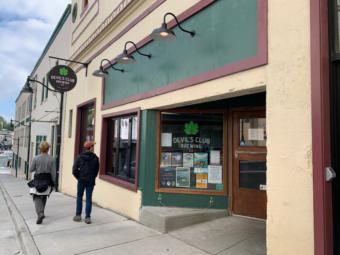
Devils Club Brewery in downtown Juneau. (Photo by Adelyn Baxter/KTOO)

Starting at 5 p.m. Wednesday, eating and drinking establishments throughout the state will have to stop dine-in service.

The health mandate announced by the state Tuesday instructs all bars, breweries, restaurants and other eating establishments to close dining areas and tasting rooms, and encourages them to instead offer delivery service or to-go orders. The mandate is in effect through at least April 1.

“I think we’ll be able to ride it out. I mean, it’s definitely going to affect us and a lot of the small businesses in town, but we can stay optimistic,” said Lionel Uddipa, owner and chef at Red Spruce, a global street food eatery inside Forbidden Peak Brewery in Auke Bay.

They’ll be offering pickup and delivery service and posting daily menus on social media. Wednesday features mushroom korma and spicy brisket stew.

“We deliver pretty much anywhere in the Valley. All the way up to Fred Meyer,” Uddipa said. “But if we get calls from Lemon Creek and, like, the Twin Lakes area, we won’t say no.”

He said they’re open to deliveries in other parts of town too. Many local restaurants are moving to a similar model.

Devil’s Club Brewery started offering 20%-off discounts to anyone willing to order food to go earlier this week. Co-owner Evan Wood said that was meant to encourage social distancing.

Now that the tasting room must close, they’ll drop the discount but continue offering growlers and food to go, starting with pizza night tonight.

“We’re being as nimble as possible and adjusting every day to try to stay as stay as busy as possible and keep people employed, while making sure that we’re being safe to the community,” Wood said.

Devil’s Club has an online store where people can buy merchandise to support the brewery. Many businesses have encouraged customers to purchase gift cards they can use when things eventually reopen.

“The gift cards are a really, really good way of supporting local businesses in these times,” Wood said. “So, money you might have been spending at them anyways down the road. And if you can give that money to us now, it’s going to really help us float through this time of extreme adversity.”

Bars owners have less options than breweries and restaurants right now. Leeann Thomas is a third-generation owner of the Triangle Club Bar downtown. She said she’s trying to stay positive and research options for keeping her staff on the payroll.

Thomas plans to keep them busy right now with deep-cleaning the bar.

The health mandate also requires all entertainment venues to close, including theaters, gyms and bowling alleys.

The restrictions do not apply to grocery or convenience stores or soup kitchens.

KTOO is putting together a Juneau restaurant guide with information for customers who want to order takeout or delivery during the dine-in suspension. Business owners and managers can submit ordering instructions here.


Alaska COVID-19 count jumps to 9 cases, with patients in Anchorage, Seward

This highly magnified, digitally colorized transmission electron microscopic image reveals details of a single Middle East respiratory syndrome coronavirus, or MERS-CoV. It’s a relative of the novel coronavirus identified in Wuhan, China, in December 2019. (Public domain image courtesy National Institute of Allergy and Infectious Diseases)

Alaska health officials confirmed three new cases of the coronavirus in the state Wednesday, bringing the total count to nine.

Two of the new cases were in Anchorage and one was 75 miles south in the Kenai Peninsula town of Seward. All were travel-related — two were in people who’d been in the Lower 48 and another was in a person who had traveled to Europe, said Chief Medical Officer Dr. Anne Zink.

The patients in Anchorage were described as “older individuals,” while the Seward case was described as “younger,” Zink said. None of the patients are hospitalized.

The state also reported 400 negative tests midday Wednesday.

Anchorage bar, restaurant closure throws thousands of workers into limbo

Rita Aleck, 35, served cocktails at McGinley’s Pub in downtown Anchorage. Along with the city’s other bars and restaurants, McGinley’s has been closed to in-person service by Anchorage Mayor Ethan Berkowitz. (Photo by Nat Herz/Alaska Public Media)

Thousands of Anchorage residents who had jobs on Monday woke up without them Tuesday morning.

That’s after Mayor Ethan Berkowitz, seeking to contain the spread of the coronavirus, ordered bars and restaurants to close to sit-down service. Now, business owners and workers are trying to figure out what’s next, after seeing their incomes cut off indefinitely with less than a day’s notice.

“Decisions were made politically that they had their reasons for. But for us, it was a complete blindside,” said Jack Lewis, who co-owns and runs seven different Anchorage area restaurants. “Nobody really was prepared for it, or saw it coming.”
On Tuesday, Lewis said he was stuck with some $50,000 in perishable food, some of which was delivered Monday morning.

He hopes to sell as much as possible in takeout and delivery orders. But he and others in the service industry, including employees, say they’re still waiting to see what kind of assistance will be available to them.

Berkowitz’s closure order runs for two weeks, but it’s far from certain that people will be able to return to work at that point.

Gov. Mike Dunleavy also expanded to closure late Tuesday to cover restaurants and bars statewide.

“I’m like, ‘OL, what can I sell?’” said Rita Aleck, a cocktail server who, until Monday, worked at one of Lewis’ businesses, McGinley’s Pub in downtown Anchorage. “I’m going to do the best I can to take care of myself. But I think the biggest thing is all the question marks in all the different directions. … It’s hard to know how to feel when you don’t know what’s going to come next.”

In the space of a single day, nearly an entire workforce in Anchorage found itself in a similar predicament to Aleck. What’s known as the “eating and drinking” sector is responsible for yearly payroll of about $250 million and some 11,500 jobs in Anchorage, or about 8% of the total, according to Neal Fried, an economist with the Alaska Department of Labor and Workforce Development.

The bar and restaurant closure is also the latest coronavirus-related blow to a state economy already reeling from low oil prices and an expected big hit to Alaska’s tourism industry.

The big question around the closure is its timeline, Fried said.

“If it’s two weeks, obviously the impact would probably be pretty small,” he said. “Most people believe it might be longer than that. But it’s just the uncertainty, I think, that creates the greatest difficulty. We just don’t know how long this could last.”

Restaurant owners said the uncertainty is one of their biggest concerns, too.

Lewis — whose businesses include BurgerFi, Krispy Kreme and Firetap Alehouse — said he hopes to get some relief, whether it’s on his existing, government-backed small business loans or his utility bills, or from his bank. What he really wants to know from policymakers soon is what that relief will look like, so he can work out his own plans.

“Tell us what you’re going to do quickly. Make a decision. How do you ease the pain? Because you can carry us a little bit,” he said.

The number of jobs that vaporized Monday from Lewis’ businesses alone are stark. On Tuesday, he normally would have had 140 workers on the job, but instead, he had about 35 handling takeout.

Another business owner, Matt Tomter, said he had 12 workers between two of his Matanuska Brewing Co. pubs, down from nearly 150 across several locations before the closures.

Laid-off workers can seek unemployment benefits from the state, which is urging people to file online.

But the program is capped at about $1,500 a month — less than half of what many veteran service staff earn. And because many bar and restaurant workers don’t report all their cash tips, a big chunk of their income may not factor into their benefits.

To help workers affected by the coronavirus, Dunleavy’s administration is coordinating with Alaska’s congressional delegation and state lawmakers to try to create tax credits for sick and family leave, and to loosen some of the strict qualifying standards for unemployment, said Cathy Muñoz, deputy commissioner at the Department of Labor and Workforce Development. Congress is eyeing a stimulus package that could include direct cash relief payments of $1,000 or more to each American.

“This is an all-hands-on-deck effort,” Muñoz said. “We are going to get through this, and we are pulling together and getting all of the resources together to help the employer community and help the employees that are directly impacted.”

Carolyn Hall, a spokesperson for Berkowitz, said in a statement that the mayor was also in touch with state and federal leaders to encourage “swift action” in response to the economic havoc caused by the coronavirus pandemic.

She also pointed to announcements that city electric and water utilities had suspended shutoffs, the suspension of eviction proceedings by Anchorage courts and an “Economic Resiliency Task Force” that Berkowitz created.

Aleck said she’ll be okay if Berkowitz’s order doesn’t extend past its two-week time frame. Beyond that, though, she said she’s uncertain — she’s got rent and credit card payments to make.

With two decades of service experience, Aleck said she normally would have no trouble finding another job. But what if her chosen industry doesn’t exist for months?

“My resume looks great to anyone in any restaurant, bar,” she said. “But the rest of the world is like: ‘What can we do with you?’”

Aleck did not object to the decision to close down restaurants and bars. She said she just wants elected officials to make sure they follow through and take care of the people affected.

And right now, based on the level of fear and anxiety she sees at grocery stores and on city streets, she said she’s not sure that’s happening yet.

“There’s a bunch of people out here who really need to know that things are going to be handled — that we’re not going to be shut out, that we are going to be considered,” she said. “That now that they made a decision to go ahead and cut us off from each other, that they are going to help get through that decision by backing up their plan and making it work for all of us.”


State officials release stricter guidelines for travelers returning to Alaska

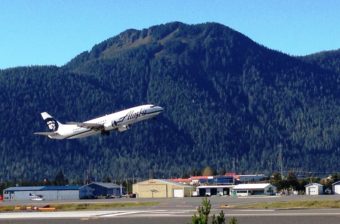
An Alaska Airlines jet takes off from Petersburg's airport in 2014. A Feb. 29, 2016, flight was struck by lightning. (Photo by Ed Schoenfeld/CoastAlaska News)
An Alaska Airlines jet takes off from Petersburg’s airport in 2014. (Photo by Ed Schoenfeld/CoastAlaska)

State officials are taking additional steps to slow the spread of COVID-19 from people traveling to the state.

A new health mandate issued Tuesday says people entering Alaska within 14 days of being in an area with widespread, ongoing community spread of coronavirus are considered higher risk. That includes places like China, Europe and other countries classified as Level 3 by the Centers for Disease Control and Prevention.

The state says higher risk travelers must:

  • Stay home and avoid contact with other household members.
  • Contact your employer and do not got to work or school for the 14-day period after you return.

The state defines medium risk travelers as people who have traveled anywhere outside Alaska within the past 14 days. Officials say those travelers must:

  • Stay about 6 feet away from others.
  • Contact your employer and stay home from work or school if you can’t maintain a safe distance from others.
  • Avoid crowded places and limit your activities in public.

The state maintains the following guidance for higher and medium risk returning travelers:

  1. Take your temperature with a thermometer two times a day and monitor for fever. Also watch for cough or trouble breathing.
  2. Do not take mass transportation during the time you are practicing social distancing.
  3. Avoid crowded places (such as shopping centers and movie theaters) and limit your activities in public.
  4. Keep your distance from others (about 6 feet or 2 meters).
  5. If you get sick with fever (>100.3°F), cough, or shortness of breath, please call your health care provider.
  6. If you seek medical care for other reasons, such as dialysis, call ahead to your doctor and tell them about your recent travel.

The health mandate comes from Gov. Mike Dunleavy, Health and Social Services Commissioner Adam Crum and Chief Medical Officer Dr. Anne Zink.

Site notifications
Update notification options
Subscribe to notifications