Alaska coronavirus news

Live updates and information on COVID-19 in Juneau and Alaska

Campaign to recall Dunleavy provides at-home petition signing during COVID-19 pandemic

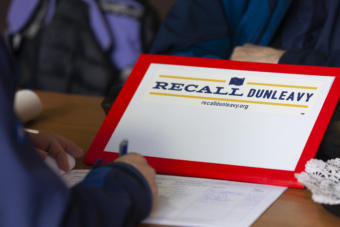
Residents gather on Saturday, February 29, 2020 at a kickoff event for organizers of an effort to Recall Gov. Mike Dunleavy in Juneau, Alaska. (Photo by Rashah McChesney/KTOO)

It may not be the most prominent item in the news cycle, but Governor Mike Dunleavy is still facing a statewide recall. The campaign to remove him from office is in the second of three phases. Right now, the group is trying to gather enough signatures for a special election.

Earlier this month, the Recall Dunleavy followed guidelines from the Centers for Disease Control and Prevention and suspended all signature gathering events.

Volunteers were still allowed to do one-on-one signings, but even meeting just one person could put volunteers’ health at risk.

On Friday morning, the Recall Dunleavy campaign announced that Alaskans can now mail in their signatures. Campaign manager Claire Pywell says this way, both volunteers and signers can stay healthy.

“Given the pandemic in front of us, the recall had to meet people exactly where they are,” Pywell said. “And right now that’s at home.”

Registered voters can go online to the campaign’s website, request a personal booklet and have it sent to their houses.

Sharon Svarny-Livingston is in charge of the recall effort in Unalaska. Before Friday, she was offering to meet people for individual signatures, but requested that they bring their own pen. With the new measures, she can stay safely at home and focus on her family.

“I think it’s probably best for everybody. I know it was giving my daughters a little bit of stress,” she said. “I want to eventually be able to go visit my mother again, so this is one reason why I really couldn’t.”

As of Friday afternoon, the campaign had gathered over 30,000 signatures. It needs 71,252 signatures to move on to the next phase of the recall.

Supporters of the governor have suspended their Keep Dunleavy campaign, by the request of Dunleavy himself. Instead, he asks that volunteers focus on supporting their family and community.

Next week, the Alaska Supreme Court will hear oral arguments in the case the state has with the Recall campaign.

Ketchikan has third positive COVID-19 test, increasing state total to 13

Ketchikan before sunrise in 2007 (Creative Commons photo by traveler7001)

Ketchikan now has three confirmed cases of coronavirus.

That’s according to media release from the Ketchikan Emergency Operations Center sent midday Friday.

This most recent case adds to two others in Ketchikan that have been reported by the state this week, increasing the total number of known coronavirus cases in Alaska to 13.

“Upon experiencing symptoms of illness, the individual self-isolated and sought testing through the PeaceHealth Medical Center Emergency Room,” the release said. “This individual was a close contact of the first identified positive case in Ketchikan. The individual is an employee of the Ketchikan Gateway Borough and works at the White Cliff Building.”

Ketchikan officials closed the borough’s offices in the White Cliff Building on Tuesday following news that Ketchikan’s first positive case worked in the building.

“The building has been thoroughly cleaned, sanitized, and disinfected with a commercial disinfectant service,” the release said.

Officials said the building will remain closed until April 1. Ketchikan Public Health is conducting an investigation to determine who came into contact with the third case, according to the release.

“Through the contact investigation, Public Health will direct testing of persons that meet criteria based on contact with any confirmed case of COVID-19,” the release said.

Glenn Brown, Ketchikan’s borough attorney and a KRBD board member, was the area’s first confirmed case. He self-identified on Facebook Tuesday evening. On Thursday afternoon, Ketchikan emergency operations center officials said the second case was Brown’s spouse.

As of midday Friday, there are three confirmed cases of COVID-19 in Southeast Alaska.

Curbside coronavirus testing available in some Southeast Alaska communities

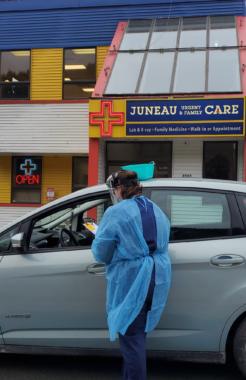
Sky Womack, of Juneau Urgent & Family Care, administers a drive-up test for coronavirus on Thursday, March 19, 2020 in Juneau, Alaska. (Photo courtesy Alicia McGuire)
Sky Womack, of Juneau Urgent and Family Care, administers a drive-up test for coronavirus on Thursday in Juneau. (Photo courtesy Alicia McGuire)

Two Southeast Alaska organizations are offering curbside testing for coronavirus.

Southeast Alaska Regional Health Consortium will offer curbside testing in five Southeast communities.

Possible COVID-19 patients in Juneau, Sitka, Wrangell, Haines and Klawock will be tested for the virus from their vehicles. A vehicle is not required to get a test. Walk-up patients will be swabbed.

The goal is to keep contamination out of primary care facilities.

Juneau and Sitka SEARHC facilities began curbside testing on Thursday. The group has access to 1,300 specimen collection kits. The organization expects test results will take two to three days.

In a press release, SEARHC Chief Medical Officer Dr. Elliott Bruhl said the organization is “preparing for the inevitable spike in testing as the virus progresses and available test quantities increase.”

Test sites will be staffed by SEARHC clinicians wearing masks, goggles, gloves and gowns. Patients will first be tested for the flu. If that test is negative, they will get the COVID-19 test. Patients must have a referral to be tested and may need an appointment.

Juneau Urgent and Family Care is also offering community-level drive up testing for coronavirus.

A spokesperson from the clinic said patients must call 907-790-4111 or e-register at their website prior to coming into the clinic.

Both organizations are following federal and state guidelines to determine who should be tested.

That means, patients must show symptoms of the virus — fever, cough and shortness of breath — as well as meet CDC requirements, which are that the patient must have had contact with a confirmed case, travel outside Alaska within 14 days, or be high risk.


Dunleavy’s COVID-19 economic plan includes PFD payments in April, plus $1B in statewide relief

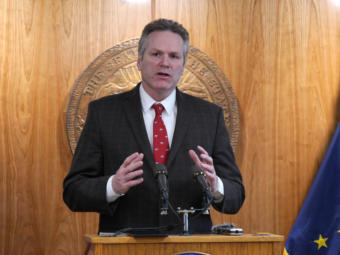
Gov. Mike Dunleavy held a news conference Friday to announce a COVID-19 economic plan. He called for $1,300 permanent fund dividend payments in April, as well as for a $1 billion fund, to stabilize the state’s economy.

“Immediate and far-reaching economic relief is needed right now,” he said. “Not tomorrow, not too weeks from now, but right now.”

Dunleavy called for the Legislature to immediately approve the dividend amount. It’s based on the difference between what Alaskans received in October and what they would have gotten if the state followed the formula in state law.

“This will be the quickest way to get cash in the hands of all Alaskans so they can pay their rent, buy gas, keep on with their daily lives,” he said.

Dunleavy says Congress appears to be headed toward approving its own version of direct cash payments. But he says Alaskans need money right now.

House Speaker Bryce Edgmon, a Dillingham independent, says Dunleavy hadn’t communicated to him the details of the plan.

“Well, (it) largely caught us off-guard down here in Juneau,” Edgmon said. “We’ve had some productive conversations with the governor and some members of his team. But in terms of the particular announcement today, including the back pay of the 2019 PFD, we had not talked about that.”

Edgmon says the Legislature is working quickly to pass a bill to ease access to unemployment insurance benefits. And he says the Legislature will use every tool it has to assist in the COVID-19 relief.

Sitka Republican Senator Bert Stedman says senators would consider the proposal. But he expressed skepticism toward drawing down the permanent fund’s earnings to pay for the dividend, like Dunleavy has proposed.

Dunleavy also said effective immediately, he established a $1 billion fund for disaster relief. This money would expand unemployment insurance for those affected by COVID-19. State officials say the money will come from the permanent fund’s earnings reserve and may be largely reimbursed by the federal government.

“Fellow Alaskans, I want you to know your government is here to protect your health, welfare and safety,” he said. “And that includes doing everything possible in our power to stabilize our economy following this economic shutdown that was through no fault of your own.”

Dunleavy says he came to an understanding Friday morning with local lenders to provide loans to small businesses, aimed at ensuring business owners can continue to pay workers while waiting for a federal Small Business Administration loans.

He also signed an executive order protecting 13,000 Alaskans who receive rental assistance from the Alaska Housing Finance Corporation (AHFC) from evictions for at least 60 days. AHFC also is being directed to suspend foreclosures.

Dunleavy authorized $75 million for emergency health care facilities and personal protective equipment for health care providers. He also authorized $100 million for an expected increase in state worker and public health workload, as well as funds for health safety equipment for all state workers.

“We need our workers protected and safe, and we need them to continue the functions of state government,” he said.

He says municipalities also will receive support.

Dunleavy says the state will roll out more measures, based on recommendations from the new Alaska Economic Stabilization Team.

Details on which pieces of the plan would require action by the Legislature weren’t immediately available.

This story has been updated.

Some Alaskans still struggling to access coronavirus testing, even if providers think they might have it

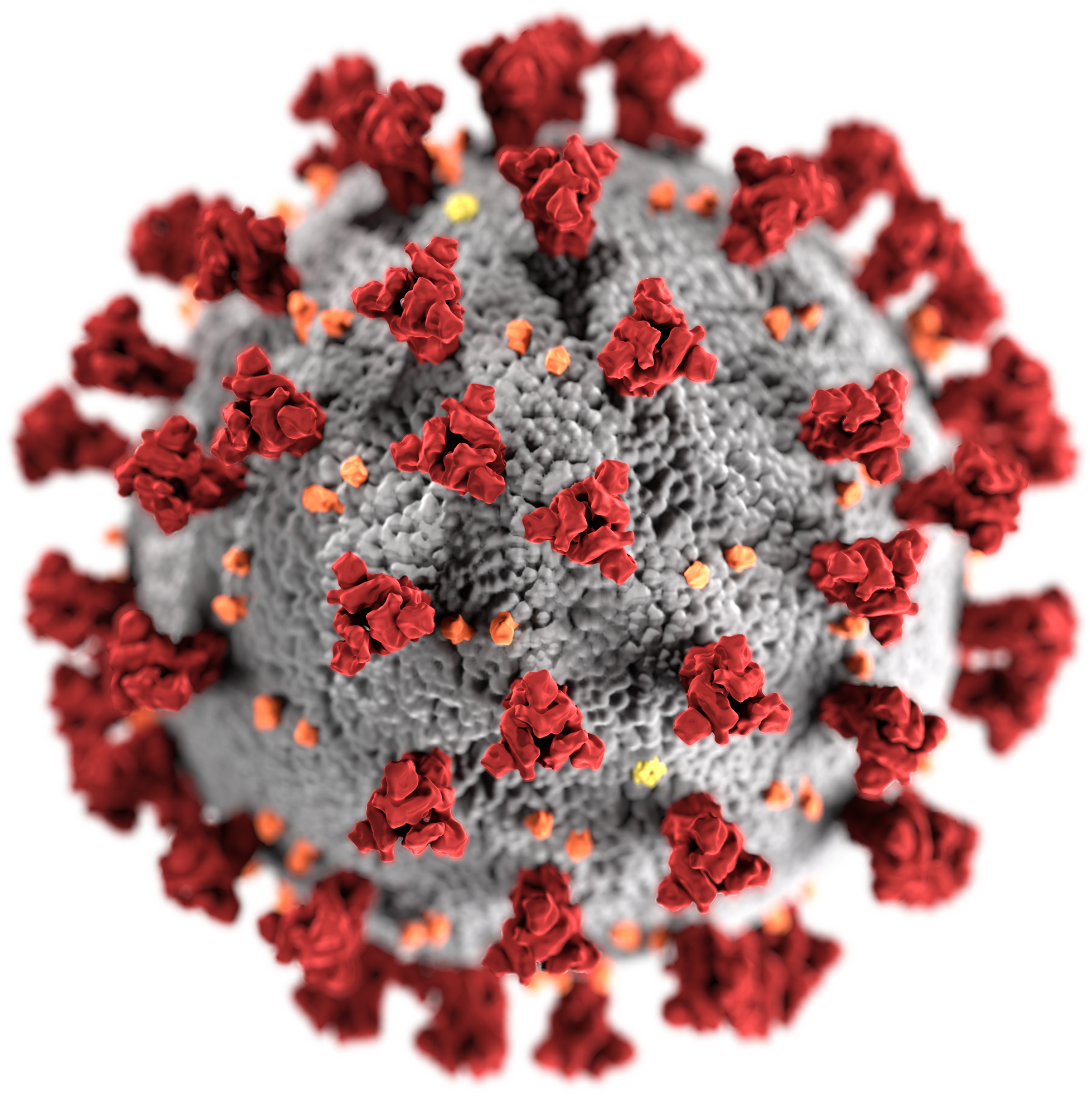
This scanning electron microscope image shows SARS-CoV-2 (in yellow) — the coronavirus that causes COVID-19 — isolated from a patient in the U.S., emerging from the surface of cells (in blue/pink) cultured in a lab. (National Institute of Allergy and Infectious Diseases – Rocky Mountain Laboratories)

The World Health Organization’s top official earlier this week urged countries to “test every suspected case” of coronavirus. But as the United States lags in its testing ability, that still doesn’t appear to be happening yet, including in Alaska.

Mitchel Howell lives in the Matanuska-Susitna Borough, and a couple weeks ago, he started having a tough time breathing, he said in an interview.

Earlier this week, he woke up with a sore throat, too, and then he came down with a fever. So he called a nurse’s hotline at Mat-Su Regional Medical Center, and they told him to come in, he said.

“They did X-rays to check for pneumonia, did a few other tests to rule everything out,” he said. “And they came back and said I’m ‘suspected confirmed.’”

But Howell said he was told the medical center is only testing people in high-risk groups, or if they’re quarantined at the hospital.
“They gave me a note with quarantine procedures on it and told me to go home and come back if it gets worse,” he said.

The note given to Mitchel Howell by his medical provider at Mat-Su Regional Medical Center after Howell says he was told he was a “suspected confirmed” case of the coronavirus.

Howell is not the only person with a story like this.

In Fairbanks, a woman named Sarah Seifert said she called Fairbanks Memorial Hospital’s hotline and was told by a doctor that based on her symptoms, she most likely had COVID-19 and should stay home.

She said she subsequently went to the emergency room when her symptoms worsened and was ultimately tested; the results are pending.

In Southeast Alaska, Courtenay Kinkade went to her health care provider in Ketchikan with a respiratory illness and was given a note saying that she could be sick with the flu or a common cold, but added that “the novel coronavirus is also a concern.”

“Please understand that testing is limited and we will not be able to test everyone for the coronavirus to rule out this as a cause of symptoms,” her doctor wrote in a note.

Experts say testing is crucial in fighting the coronavirus because it helps health officials understand where to focus their efforts.

“You cannot fight a fire blindfolded. And we cannot stop this pandemic if we don’t know who is infected,” Tedros Adhanom, the WHO’s top official, said at a virtual news conference this week. “We have a simple message for all countries: test, test, test.”

When it comes to the Alaskans who weren’t tested, providers are still telling them to isolate themselves as if they have COVID-19.

But Howell works at a grocery store. And if he does have the coronavirus, he could have spread it to other people before he isolated himself.

Those people, if they’re showing symptoms, would also need to be quarantined to prevent further spread.

State health officials say they’re not tracking cases like Howell’s – when a provider makes the decision not to test someone that they think could be infected with COVID-19. But they also say they’re in constant conversations with providers about what they’re seeing from patients, beyond just the basic testing numbers.

“We are getting a lot of information from providers who are really paying attention to what they’re seeing in front of them, as far as the symptoms and the exposures, and asking really good questions about travel and contact,” said Louisa Castrodale, a state epidemiologist. “I think that’s really coming from across the state.”

Health officials point out that they’ve loosened restrictions on testing that were in place earlier in the pandemic. At this point, public and private labs will conduct tests on samples from any patient that, in a provider’s judgment, needs one, they said.

“We have opened it up. We are not limiting the providers,” Adam Crum, the state health commissioner, said at a news conference Wednesday. “If the provider wants to provide a sample and send that in, we will run that test.”

That said, health officials acknowledge that they’d still like to be doing more testing, and they say it’s possible some of the limitations might be at the provider level. One problem right now is that there aren’t enough of the swabs providers use to collect samples, Anne Zink, Alaska’s chief medical officer, said at Wednesday’s news conference. A day later, she asked communities to look in their clinics to see if they had extra swabs that could be used.

In the cases in the Mat-Su and Fairbanks, it’s hard to know exactly why the patients weren’t tested because the hospitals wouldn’t say. The Fairbanks hospital didn’t respond to requests for comment, and the Mat-Su hospital, in a prepared statement, said it can’t speak about specific cases and is following state guidelines.

“Our medical staff is working in collaboration with the State of Alaska Department of Health, closely following their recommendations and the U.S. Centers for Disease Control and Prevention’s screening guidelines for patients with upper-respiratory ailments that could potentially be identified as a COVID-19 case,” spokesman Alan Craft said. “If the physician determines a patient meets the appropriate risk criteria for COVID-19, the patient is tested.”

Two dynamics likely affecting testing are the infrequency of pandemics, and a response by providers and agencies that’s evolving daily, said Castrodale, the state epidemiologist.

“Things aren’t going by the book, because the book was just theoretical,” she said. “And so there are quite a few things that I think everybody learns every day.”

The state has so far prioritized tests for people who’ve been traveling, and health officials acknowledged that could make it more difficult to detect a big problem: When the coronavirus starts spreading among people in Alaska who haven’t been traveling.

But Castrodale said that the focus on travel-related transmission does not mean that the state is ignoring other possible COVID-19 cases. She noted that more than 500 tests have been run in Alaska on people whose results were negative — including dozens at out-of-state private labs, which are used for sick people who don’t have an obvious potential link to the disease.

“We’re still actively looking for COVID-19 and trying to really chase down the cases that we have and make sure we’re not going to allow this virus to take hold in our community,” Castrodale said.

While Alaskans may be tempted to blame providers or state officials for the lack of more widespread testing, they should really be focused on the federal government, said Kevin Berry, an economics professor at University of Alaska Anchorage who has studied pandemic disease.

“Most of the testing elsewhere is run, basically, by national governments,” he said. “This is something that should have been stockpiled by the federal government beforehand.”

But developing ways to test more people more quickly is more important than assigning blame, Berry said. For now, he added, Alaskans should follow public health officials’ advice: Isolate yourself if you’re sick and keep your social distance from other people.

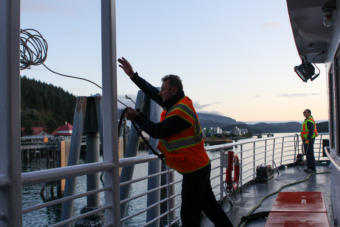
Alaska Marine Highway to turn away passengers with flu-like symptoms

Passengers load and unload luggage at the Haines Ferry Terminal. (Photo by Henry Leasia/KHNS)

The Alaska Marine Highway System says it will begin turning away ferry passengers with coronavirus- or flu-like symptoms.

That’s in an effort to avoid disruptions or a situation involving potentially infected passengers quarantined on board.

A statement Thursday notes that the state ferry system is required to immediately report any illness of passengers or crew to federal authorities. Those turned away will be given a full refund. Bookings can be canceled without any fees or penalties through April 8

Site notifications
Update notification options
Subscribe to notifications