Alaska coronavirus news

Live updates and information on COVID-19 in Juneau and Alaska

COVID test kits, treatments and vaccines won’t be free to many consumers much longer

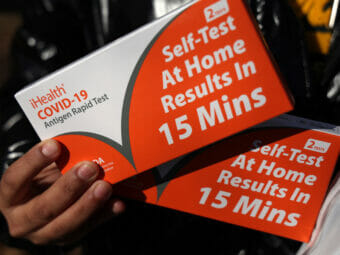
Starting May 11 most people will have to pay for those at-home test kits for COVID-19, as the federal government’s declaration of a COVID-19 public health emergency officially ends. (Alex Wong/Getty Images)

Time is running out for free-to-consumer COVID-19 vaccines, at-home test kits and even some treatments.

The White House announced this month that the national public health emergency, first declared in early 2020 in response to the pandemic, is set to expire May 11. When it ends, so will many of the policies designed to combat the virus’s spread.

COVID vaccine makers are poised to raise prices

Take vaccines. Until now, the federal government has been purchasing COVID-19 shots. It recently bought 105 million doses of the Pfizer-BioNTech bivalent booster for about $30.48 a dose, and 66 million doses of Moderna’s version for $26.36 a dose. (These are among the companies that developed the first COVID vaccines sold in the United States.)

People will be able to get these vaccines at low or no cost as long as the government-purchased supplies last. But even before the end date for the public emergency was set, Congress opted not to provide more money to increase the government’s dwindling stockpile. As a result, Pfizer and Moderna were already planning their moves into the commercial market. Both have indicated that as soon as that happens, they will raise the price they charge, somewhere in the range of $110 to $130 per dose, though insurers and government health programs could negotiate lower rates.

“We see a double-digit billion[-dollar] market opportunity,” investors were told at a JPMorgan conference in San Francisco recently by Ryan Richardson, chief strategy officer for BioNTech. The company expects a gross price — the full price before any discounts — of $110 a dose, which, Richardson said, “is more than justified from a health economics perspective.”

That could translate to tens of billions of dollars in revenue for the manufacturers, even if uptake of the vaccines is slow. And consumers would foot the bill, either directly (in copays) or indirectly (through higher premiums and taxpayer-funded subsidies).

If half of adults — about the same percentage as those who opt for an annual flu shot — get a COVID shot at the new, higher prices, a recent KFF report estimated, insurers, employers and other payors would shell out $12.4 billion to $14.8 billion. That’s up to nearly twice as much as what it would have cost for every adult in the U.S. to get a bivalent booster at the average price paid by the federal government.

As for COVID treatments, an August blog post by the Department of Health and Human Services’ Administration for Strategic Preparedness and Response noted that government-purchased supplies of the drug Paxlovid are expected to last at least through midyear before the private sector takes over. The government’s bulk purchase price from manufacturer Pfizer was $530 for a course of treatment, and it isn’t yet known what the companies will charge once government supplies run out.

The type of health insurance you have will determine how much more you’ll pay

One thing is certain: How much, if any, of the boosted costs are passed on to consumers will depend on their health coverage.

Medicare beneficiaries, those enrolled in Medicaid — the state-federal health insurance program for people with low incomes — and people who have health plans via the Affordable Care Act exchanges will continue to get COVID-19 vaccines without charge, even when the public health emergency ends and the government-purchased vaccines run out. Many people with job-based insurance will also likely not face copayments for vaccines, unless they go out-of-network for their vaccinations.

People with limited-benefit or short-term insurance policies might have to pay for all or part of their vaccinations. And people who don’t have insurance will need to either pay full cost out-of-pocket or seek no- or low-cost vaccinations from community clinics or other providers. If they cannot find a free or low-cost option, some uninsured patients may feel forced to skip vaccinations or testing.

Coming up with what could be $100 or more for vaccination will be especially hard “if you are uninsured or underinsured; that’s where these price hikes could drive additional disparities,” said Sean Robbins, executive vice president of external affairs for the Blue Cross Blue Shield Association. Those increases, he said, will also affect people with insurance, as the costs “flow through to premiums.”

COVID-19 treatments will cost more, too.

Meanwhile, public policy experts say many private insurers will continue to cover Paxlovid, although patients may face a copayment, at least until they meet their deductible, just as they do for other medications. Medicaid will continue to cover it without cost to patients until at least 2024.

Medicare beneficiaries will face cost-sharing for most COVID-19 treatments once the emergency officially ends and the government supply runs out. Meanwhile, the treatment will also need to go through the regular FDA approval process, which takes longer than the emergency use authorization under which it has been marketed

Another complication: The rolls of the uninsured are likely to climb in the next year, with states poised to reinstate the process of regularly determining Medicaid eligibility; that sort of review was halted during the pandemic. In April, states will begin reassessing whether Medicaid enrollees meet income and other qualifying factors.

An estimated 5 million to 14 million people nationwide might lose coverage.

“This is our No. 1 concern” right now, said John Baackes, CEO of L.A. Care, the nation’s largest publicly operated health plan with 2.7 million members.

“They may not realize they’ve lost coverage until they go to fill a prescription” or seek other medical care, including vaccinations, he said.

At-home COVID tests won’t be free for many people

Rules remain in place for insurers, including Medicare and Affordable Care Act plans, to cover the cost of up to eight in-home test kits a month for each person on the plan, until the public health emergency ends.

For consumers — including those without insurance — a government website is still offering up to four test kits per household, until they run out. The Biden administration shifted funding to purchase additional kits and made them available in late December.

Starting in May, though, beneficiaries in original Medicare and many people with private, job-based insurance will have to start paying out-of-pocket for the rapid antigen test kits. Some Medicare Advantage plans, which are an alternative to original Medicare, might opt to continue covering them without a copayment. Policies will vary, so check with your insurer. And Medicaid enrollees can continue to get the test kits without cost into mid-2024.

Overall, the future of COVID tests, vaccines and treatments will reflect the complicated mix of coverage consumers already navigate for most other types of care.

“From a consumer perspective, vaccines will still be free, but for treatments and test kits, a lot of people will face cost-sharing,” said Jen Kates, a senior vice president at KFF. “We’re taking what was universal access and now saying we’re going back to how it is in the regular U.S. health system.”

KHN correspondent Darius Tahir contributed to this report. KHN (Kaiser Health News) is a national, editorially independent program of KFF (Kaiser Family Foundation).

Copyright 2023 Kaiser Health News. To see more, visit Kaiser Health News.

The White House plans to end COVID emergency declarations in May

""
(Brendan Smialowski/Getty Images)

The White House is planning to end the COVID-19 national emergency and public health emergency on May 11. The declarations have been extended multiple times since enacted by the Trump administration in 2020.

Ending the emergency declaration could have implications for funding for tests and vaccines as well as impact other pandemic-related policies. Congress has already begun pushing back on efforts to extend programs that had been tied to the pandemic.

The plan from the White House came in a statement opposing two House bills that would end the emergency declarations sooner.

“An abrupt end to the emergency declarations would create wide-ranging chaos and uncertainty throughout the health care system — for states, for hospitals and doctors’ offices, and, most importantly, for tens of millions of Americans,” the statement says, calling the bills a “grave disservice to the American people.”

Copyright 2023 NPR. To see more, visit https://www.npr.org.

FDA considers major shift in COVID vaccine strategy

""
Licensed vocational nurse Denise Saldana vaccinates Pri DeSilva, associate director of Individual and Corporate Giving, with a fourth Pfizer COVID-19 vaccine booster at the Dr. Kenneth Williams Health Center in Los Angeles, Nov. 1, 2022. (Damian Dovarganes/AP)

The Food and Drug Administration is considering a major shift in the nation’s COVID-19 vaccine strategy.

The goal is to simplify vaccination against COVID and perhaps adopt an approach similar to what is used for the flu vaccine, with annual updates to match whatever strain of the virus is circulating. This is according to a federal official who spoke under the condition of anonymity because they were not authorized to speak publicly.

NPR reported the proposed shift early Monday morning, and later Monday the FDA outlined it publicly in a set of documents released in advance of a meeting Thursday of the agency’s Vaccine and Related Biological Products Advisory Committee (VRBPAC). The committee will vote on the agency’s proposal.

Currently, people who want to be fully vaccinated against COVID have to first get their primary vaccinations — two shots of the original vaccine spaced weeks apart. That’s followed at least two months later by a booster, currently the bivalent shot that’s tailored to protect against omicron.

Under the new approach, most people would be advised to simply get whatever the latest version of the vaccine is annually each fall like the flu vaccine. They wouldn’t have to worry about how many shots they’ve already gotten and which one they got when. Those who still need to receive two doses initially, such as young children and older people, would use the same formulation for all three shots.

Vaccine makers would update the annual shot through a process that would begin each spring to try a match the vaccine as closely as possible to whatever variant will likely be dominant in the coming winter. That’s how the flu vaccine is formulated each year.

“FDA anticipates conducting an assessment of SARS-CoV-2 strains at least annually and to engage VRBPAC in about early June of each year regarding strain selection for the fall season,” the FDA wrote in its briefing document, adding that updated vaccines would be readied for use by September each year.

The agency notes that if a more dangerous COVID variant were to emerge, it might reconsider the vaccine strain at other times of the year on an “as-needed and emergent basis.”

Some immunologists and vaccine researchers say simplifying the process along the lines of the flu vaccine is appropriate at this point in the pandemic. However, many questions remain about emerging booster strategy.

“As far as the tools that we have right now, I think it just makes the most sense to plan to update each year as close as we can to the currently circulating variant,” says Deepta Bhattacharya, an immunologist at the University of Arizona. “So I think all the things the FDA is considering make a lot of sense.”

Questions about efficacy of updated shots

There’s an intense debate about the wisdom of updating the COVID vaccines regularly to try to match new variants. Some researchers question whether that really makes the vaccines more effective. They also argue the low demand for the latest booster shows the public has little appetite for continued boosting with the vaccines, even if they’ve been updated with new strains.

“The public is voting with their arms if you will and said, ‘No. I’m not going to get this. This doesn’t make sense to us,'” says Dr. Gregory Poland, a vaccine researcher at the Mayo Clinic.

While endorsing continued boosters for those at high risk, such as the elderly, some question whether the current bivalent vaccines updated to target omicron have enhanced protection compared to the original vaccines. Most people are still well-protected against severe disease by the immunity they already have, they say.

“We have no solid data about the performance of the bivalent boosters,” says John Moore, an immunologist at Weill Cornell Medical College. “The hard evidence is lacking, and the evidence that is out there is at the very least inconclusive and to me trends towards saying the bivalent boosters were little if no better.”

Moore and others argue the virus is changing so fast that it’s pointless to constantly try to match the vaccines to the latest variants.

“We shouldn’t really be chasing these variants, which are evanescent and are often gone by the time you’ve created the vaccine,” says Dr. Paul Offit of the University of Pennsylvania, one of the FDA’s advisers.

Offit and others also question whether everyone will necessarily need to be boosted regularly, or just those at high risk, like the elderly.

Arguments for alternate vaccine strategies

Critics of the FDA’s proposed new strategy argue it would be better to invest in developing better vaccines that might be more appealing to people, and in campaigns to get more people vaccinated. Better vaccines could include those that could keep people from catching the virus in the first place not just from getting seriously ill — such as a nasal spray vaccine. Or perhaps vaccines that provide longer protection or are administered in pill form, to make them more acceptable to the needle-averse.

“Particularly now when Congress is not allocating new funds for COVID response, we have to be especially judicious in how we spend our money and what would be most cost-effective,” says Dr. Celine Gounder, a senior fellow at the Kaiser Family Foundation. “It’s unclear whether updating the booster formulations and repeatedly boosting people is the most effective approach to controlling COVID at this stage.”

Another concern some researchers have is that the FDA continues to rely on antibody levels to test vaccine efficacy.

“I think we need to raise the bar and require more evidence of clinical efficacy,” says Dr. Eric Rubin, a professor of immunology and infectious diseases at Harvard who is also a member of the advisory committee. For instance, Rubin says the FDA should require proof the updated vaccines are actually reducing the risk of getting infected, getting sick, hospitalized and dying.

Others say updating the vaccines make sense to make sure people are as well-protected as possible while researchers continue to try to develop new vaccines.

“Even if you don’t have a booster that matches 100% what’s circulating, you will have a booster that matches 75% to 80% to 90% of what’s circulating,” says David Martinez, an immunologist at the University of North Carolina, Chapel Hill. “And that will be good enough. It would probably benefit most people.”

The FDA looks ahead to endemic COVID

Some researchers think it’s too soon to rely on annual boosters. COVID hasn’t quite settled into a seasonal pattern like the flu, they note, and the SARS-CoV2 virus is changing more quickly than the flu virus. So people may need to be boosted more frequently, especially since protection against severe disease may only last about four to six months, they say.

“We’re going to be reaching that pretty soon with the early adopters of the bivalent boosters, like myself,” says Dr. Peter Hotez, co-director of the Center for Vaccine Development at Texas Children’s Hospital and dean of the National School of Tropical Medicine at Baylor College of Medicine. “I don’t know if an annual strategy is going to cut it.”

The FDA’s plan comes as COVID appears to be moving toward becoming an endemic disease. That doesn’t mean it’s going away or it’s not a threat anymore. The disease will continue to be a threat for the foreseeable future, making many people sick and even potentially killing hundreds a day, making it a major public health problem and a leading cause of death, health experts say.

But unless some more dangerous version of the virus suddenly emerges, the world might finally be settling into a more predictable co-existence with the virus. The federal official NPR spoke to says the goal of the new vaccine strategy is to make the vaccines, which are the major weapon for protecting ourselves, simpler and hopefully therefore more appealing. The latest boosters have found very few takers.

The thinking is that at this point in the pandemic the overwhelming majority of people have a significant levels of immunity, either from having gotten vaccinated and boosted, or infected one of more times, or both. And while that immunity appears to protect most people from severe disease, that protection does appear to fade with time.

The FDA is also considering making the shots interchangeable. That way people wouldn’t have to worry which brand they’re getting. Again, the change is aimed at making COVID shots more like the flu shots. People don’t typically worry about the brand of the flu vaccine they receive.

The vaccine would still be administered at different doses for different ages. And very young children and older people would still get two shots each year, much like the flu vaccine.

If the FDA advisory committee endorses the approach Thursday, the FDA would work with the vaccine companies and Centers for Disease Control and Prevention to finalize the details. And the FDA advisers would meet again in the spring to pick the specific strain or strains of the virus the new shots should target.

Copyright 2023 NPR. To see more, visit https://www.npr.org.

Is it time for a reality check on rapid COVID tests?

Rapid antigen tests are ubiquitous, but some Americans have learned the hard way that a negative test result isn’t necessarily the final word. (Mahmoud Illean/AP)

As the COVID-19 pandemic enters its fourth year, a negative result on a little plastic at-home test feels a bit less comforting than it once did.

Still, you dutifully swab your nostrils before dinner parties, wait 15 minutes for the all-clear and then text the host “negative!” before leaving your KN95 mask at home.

It feels like the right thing to do, right?

The virus has mutated and then mutated again, with the tests offering at least some sense of control as the Greek letters pile up. But some experts caution against putting too much faith in a negative result.

So it’s only fitting to do a reality check on what those rapid COVID-19 tests, also called antigen tests, can do — and what they can’t.

Is the latest omicron variant tripping up at-home tests?

For the most part, the answer is no.

That’s because as the virus evolves, scientists are mainly seeing changes in its spike protein, which is what the virus uses to attack and enter healthy cells. But the rapid antigen tests aren’t actually looking for that spike protein.

“[The tests] rely on detection of the nucleocapsid protein, which is the protein that is directly encapsulating the viral RNA,” says Dr. Robin Colgrove, a professor at Harvard Medical School and chair of the Diagnostics Committee of the Infectious Diseases Society of America.

He says this interior protein really hasn’t changed much as the virus has mutated over the years. So, at least for now, the rapid tests can detect it.

Federal health agencies are monitoring the situation in case that changes. The Food and Drug Administration is working with the National Institutes of Health to study just how well the at-home tests work as the virus continues to evolve.

So far, the agencies have identified only one test — the Luminostics Inc. Clip COVID Rapid Antigen Test — that has been rendered less reliable in the face of new variants. And even then, the FDA says “the impact does not appear to be significant.”

Are antigen tests taking longer to show a positive?

Some people report having negative antigen test results for days, despite having a known COVID-19 exposure and the telltale symptoms. Eventually, they test positive, but it can sometimes take as long as a week.

The phenomenon is somewhat mysterious, says Colgrove. He acknowledges that doctors are seeing it, but so far, it’s only anecdotal.

“What kind of an experiment would you have to do to answer that question?” he says, explaining that it would be difficult to study.

Many factors could make it seem as though home tests are taking longer to register a positive result, such as the virus multiplying faster somewhere other than the nostrils in some patients, says Dr. Geoffrey Baird, chair of the Department of Laboratory Medicine and Pathology at the University of Washington School of Medicine.

But Baird says perhaps the biggest factor is human error. After all, people doing these tests at home make mistakes and aren’t trained like those who are doing COVID-19 tests in a lab.

“There’s going to be some people who stick it in their mouth,” he says, explaining that not everyone follows the testing instructions as written. Some people even get mucus on the swab, mistakenly thinking mucus will have plenty of virus in it. “Actually you don’t want snot on the thing.”

And while, on average, people will get a positive antigen test result around the time they become infectious, Baird says it’s important to remember that there will always be plenty of people on either side of that average: those who test positive much earlier than most and those who test positive much later.

How well do these tests really work?

Antigen tests can be useful in certain situations (more on that in a minute), but Baird stresses that they have their limits. That was true even before the pandemic.

“Similar technology has existed for influenza for years and the recommendation was not to use them,” he says.

Antigen tests look for specific proteins inside the virus. Users typically swab their nostrils, and the tests take about 15 minutes to render a positive or negative result. But these at-home tests need much more virus to generate a positive result than a PCR test, which is done in a lab and involves letting trace amounts of viral genetic material “amplify” over time — usually a day or so. So even if very little virus is present, there should be enough to trigger a positive result (PCR tests may also keep turning up positive long after someone has cleared the infection).

Both kinds of tests have their advantages and disadvantages. And there are two measures of test performance to know about: specificity and sensitivity.

Specificity is how good the test is at avoiding false positives. And sensitivity is how good the test is at finding the virus.

According to the CDC, antigen and PCR tests are both good at avoiding false positives, but PCR tests are generally more sensitive than home tests. That means antigen tests aren’t all that useful for ruling out COVID-19, but they can be valuable for confirming that cold really is COVID-19.

If you don’t have any symptoms though, don’t count on antigen tests to give you a definitive answer on whether or not you’re in the clear. This is also what researchers found when they took a look at more than 100 studies of antigen tests and published their findings in the Cochrane Database of Systematic Reviews this past July.

“Rapid antigen tests are considerably less accurate when they are used in people with no signs or symptoms of infection, but do perform better in people who have been in contact with someone who has confirmed COVID‐19,” they wrote.

The same researchers also found that not all home tests were equally accurate. Their review included 49 different kinds of tests.

“We saw a lot of variation in the sensitivity of different brands of tests and our overall results combine findings from different studies that evaluated the same tests,” lead author Jacqueline Dinnes from the University of Birmingham said in a podcast about the report.

So what are these tests actually good for?

Even though it seems like a good idea to have everyone take a rapid COVID-19 test the day of a gathering to make sure they’re negative, experts say that’s not how the tests were meant to be used.

“A positive test is almost always true,” Colgrove says. “So in a person with an exposure or a person with suggestive symptoms, if they do a test and it’s positive, you’re done. You have your diagnosis.”

It’s a slightly different story if you are getting over COVID-19 and are testing to see whether you’re still positive.

But a negative “does not rule out” a COVID-19 infection, according to the Centers for Disease Control and Prevention. If someone tests negative, they’re supposed to take another antigen test 48 hours later to see if it turns positive. And if that person has a known COVID exposure or symptoms, the FDA recommends a third test 48 hours after that.

The best way to use the tests is to know their limits and follow instructions for retesting when you get a negative result.

“In a person who had suggestive symptoms now, in the middle of the epidemic where the prevalence of the infection is high, a single negative test is not enough to rule out infection,” Colgrove says.

If you have COVID-19 symptoms, even if your test is negative, it’s a good idea to be cautious and just stay home.

Copyright 2023 NPR. To see more, visit https://www.npr.org.

COVID-19 pushed Alaska’s death rate higher and life expectancy lower in 2021

A masked musher on a snowy Anchorage street holding a dog that's wearing a sweater that says "lead the way, get vaccinated" on it
Musher Paige Drobny, wearing the required face mask at the ceremonial Anchorage start of the 2022 Iditarod Treail Sled Dog Race on March 5, carried a pro-vaccine message on her way to Nome. A race rule mandated masking at large gathering sites during the race to prevent the spread of COVID-19. (Photo by Yereth Rosen/Alaska Beacon)

Alaskans’ life expectancy dropped and death rate rose in 2021, with COVID-19 ranking as the third-highest cause of death during the year, according to the Vital Statistics Annual Report released last week by the Alaska Division of Public Health.

The difference between 2021 and 2020 was driven mostly by COVID-19. In 2021, there were 6,216 total deaths in the state, compared to 5,183 in 2020.

In 2021, 762 Alaskans died of COVID-19, and another 79 Alaskans died with COVID-19 as a contributing factor, the report said. That compares to 2020, the first year of the pandemic, when 182 Alaskans died from the disease and another 15 died with COVID-19 as a contributing factor.

The age-adjusted death rate in 2021 was 908.3 per 100,000 people, and Alaskans’ life expectancy was calculated at 77.5 years. That compares to an age-adjusted death rate of 785.3 per 100,000 people and a calculated life expectancy of 80 years in 2020.

A bar graph showing the ten leading causes of death in Alaska in 2021. COVID is third behind cancer and heart disease -- and well ahead of accidents.
The 10 leading causes of death in Alaska in 2021, as reported by the state Division of Public Health, show malignant neoplasms (cancer) at the top and COVID-19 in third place. (Graph from Alaska Vital Statistics 2021 Annual Report)

It was similar to a national decline in life expectancy, as reported by the Centers for Disease Control and Prevention. U.S. life expectancy fell to 76.1 years from 77 years in 2020, with the decline driven by COVID-19, according to the CDC. It was the second consecutive year of declining life expectancy, from 79 years in 2019, according to the CDC.

In Alaska, aside from COVID-19, the death and disease statistics in 2021 were mostly similar to those of the previous year.

Alaska’s top two leading causes of death in 2021 were cancer and heart disease, the same as in 2020. Suicide continues to rank in the top 10 of causes of death, in seventh place in 2021, as it was in 2020.

One difference between the years, in addition to the pandemic-caused deaths, were noticeable increases in alcohol-related and drug-related fatalities in 2021, according to the report.

People walking through a giant inflatable colon that has inflatable tumors on it.
An attendee at the Alaska Federation of Natives 2022 convention in Anchorage walks through an inflatable display about colon cancer. Cancers of all types remained the top cause of death in Alaska in 2021, as has been the case in other years, according to the latest annual report on state vital statistics. But in 2021, COVID-19 was third on the list of causes of death. (Photo by Yereth Rosen/Alaska Beacon)

Aside from becoming the third-leading cause of death in Alaska, COVID-19 imposed far greater treatment costs in 2021 than in the prior year, according to a separate report released by the division.

It ranked third as a cause for hospitalization, after childbirth and septicemia, according to the Alaska Health Facilities Data Reporting annual report. There were 4,184 inpatient hospitalizations for COVID-19 in 2021, compared to 1,629 in 2020, and the intensive care unit total of 2,167 was more than twice the total for 2020. Costs for treating COVID-19 in Alaska hospitals totaled about $595 million in 2021, up from $195 million in 2020, with an average per-patient charge of $142,095 compared to $119,579 in 2020. The average COVID-19 hospital stay was 9.2 days in 2021, compared to the 2020 average of 8.2 days.

Despite the increased number of deaths, they were well outnumbered by births in 2021, the same as in previous years, with 9,410 babies born in the year. That compares to the 9,479 born in 2020.

Total births have decreased each year since 2017, when there were 10,452 babies born in Alaska, the report said.

A bar graph showing Alaska birth rates declining from 2017 on.
Total births in Alaska, as reported by the state Division of Public Health, have declined every year since 2017. (Graph from Alaska Vital Statistics 2021 Annual Report)

Fertility rates slipped in 2021 to 64.3 births per 1,000 women of child-bearing age, defined as 15 to 44. That was down from 65 in 2020 and continuing a years-long slide. In 2017, according to the division, Alaska had 71.3 births per 1,000 women.

Both the vital statistics and health facility annual reports provide detailed breakdowns about varying demographic groups, geographic regions and medical conditions.

The vital statistics report even noted the most popular names for Alaska babies born in 2021: Amelia for girls and a tie between Noah and Oliver for boys.

This story originally appeared in the Alaska Beacon and is republished here with permission.

You can order free COVID tests again by mail

""
Households can order four free COVID tests on COVIDtests.gov starting on Thursday. They’ll begin shipping by mail next week. (Justin Sullivan/Getty Images)

Americans can order four more free COVID-19 tests through the mail, starting on Thursday. It’s part of the Biden administration’s plan to deal with an increase in COVID cases sparked by indoor holiday gatherings.

The tests can be ordered on COVIDtests.gov and will start to ship the week of Dec. 19, a senior administration official told reporters on a conference call. The government is urging people to test themselves when they have symptoms, and before visiting with family.

It’s the fourth round of free rapid tests this year. The White House had suspended the program in September and said that it would not be able to send out more kits because Congress denied requests for more funding for the program. But the administration shuffled around funds to buy more of the tests for the national stockpile, the official said.

“We know that the virus will circulate more quickly and easily as folks gather indoors for the winter holiday season,” the official said, speaking on condition of anonymity. Officials saw cases increase after Thanksgiving, and anticipate that there could be another uptick after December holiday celebrations.

Tests are also available at community testing sites, food banks and schools, and through Medicare. People covered by private health insurance plans can get fully reimbursed for eight tests per month.

The federal government is trying to make it easier for Americans to get vaccines, tests and COVID treatments like Paxlovid during the winter months. It is staging supplies like ventilators as well as personal protective equipment, and wants to help states set up mobile and pop-up vaccination sites.

The government has a particular focus on nursing homes and long-term care facilities and wants to work to vaccinate residents with the latest booster shot and offer Paxlovid to people who get the virus.

“We are a few years into this pandemic, and we are prepared for this moment,” the official said.

Copyright 2022 NPR. To see more, visit https://www.npr.org.

Site notifications
Update notification options
Subscribe to notifications